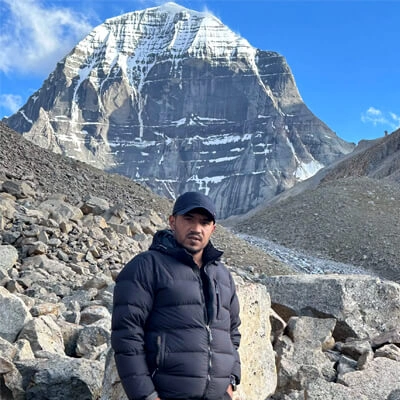
Altitude is the single biggest variable that separates a successful Himalayan trek from a failed one. The Everest Base Camp route reaches 5,545 meters at Kala Patthar. The Mount Kailash kora crosses Drolma La at 5,630 meters. The Annapurna Circuit's Thorong La pass sits at 5,416. At these elevations, the air contains roughly half the oxygen available at sea level, and the human body responds with a physiological adjustment that takes time and cannot be hurried.
Most travelers who fail to summit a base camp or complete a high pass do so not because of fitness but because of altitude, usually because the itinerary did not allow enough time to acclimatize, or because early symptoms were ignored until they became severe. This guide explains the physiology honestly, profiles the three altitude illnesses (AMS, HACE, HAPE), walks through the prevention and treatment options, and explains how our team builds altitude safety into every itinerary above 3,000 meters.
AMS, HACE, HAPE, Acclimatization, and Emergency Response
Altitude sickness is the dominant health risk on every Himalayan trek above 3,000 meters. It is not a budget issue. It is not a fitness issue. It is a physics issue — the higher you go, the lower the air pressure, the less oxygen each breath delivers to your blood. At 5,500 metres each lungful contains roughly half the oxygen of a sea-level breath.
The human body can adjust to this, but the adjustment takes time and follows physiological rules that cannot be rushed. Travelers who fail to summit Everest Base Camp, complete the Mount Kailash kora, or cross Thorong La rarely fail because of fitness. They fail because the body's acclimatization timeline does not match the itinerary, or because early symptoms are dismissed until they become dangerous.
After two decades of running departures across Nepal, Tibet, and Bhutan, our team has guided thousands of travelers above 4,000 meters without a single fatal altitude incident. The single most important lesson we have learned: altitude rewards the patient and punishes the rushed. Acclimatization days are not optional. Hydration is not optional. Honest reporting of symptoms is not optional. Travelers who follow the rules complete their trips. Travelers who treat the rules as suggestions occasionally do not.
This guide explains the physiology, the three altitude illnesses you should know by name, the prevention strategies that work and the ones that do not, the medications that genuinely help, and the emergency response we have built into every high-altitude itinerary. It is written for travelers who want to know what they are walking into, honestly, not for travelers who want reassurance.
Medical disclaimer: This guide explains general altitude physiology and best practice for high-altitude trekking. It is not a substitute for medical advice. All altitude medications mentioned require physician supervision. Travelers with pre-existing heart, lung, or blood conditions, pregnancy, or any history of altitude illness must consult a doctor specializing in travel medicine before departure. Our team does not prescribe medications, and the advice here is for general education only.
How Altitude Affects the Human Body
At sea level, the atmosphere exerts a pressure of approximately 760 mmHg. At 3,500 meters — roughly the elevation of Namche Bazaar in the Khumbu — atmospheric pressure drops to around 490 mmHg. At 5,500 meters — Kala Patthar, the Drolma La pass on the Kailash kora — pressure drops further to around 380 mmHg, roughly half the sea-level value.
The percentage of oxygen in the air does not change. What changes is the partial pressure of oxygen — the force pushing oxygen molecules across the membrane of your lungs into your bloodstream. Less force means less oxygen reaches the blood with each breath.
The body responds to lower oxygen availability with a series of physiological adjustments collectively called acclimatization. Breathing rate increases. Heart rate increases. The kidneys excrete bicarbonate to acidify the blood, which in turn signals further increases in breathing.
Within forty-eight to seventy-two hours, the body begins producing additional red blood cells to carry more oxygen per unit of blood. Within 1 to 10 days, capillary density at the muscle level increases. These adjustments only happen if the body is given time. Ascending too quickly outpaces the acclimatization timeline, resulting in altitude sickness.
The widely accepted threshold for altitude-related illness is 2,500 meters. Below that elevation, altitude sickness is rare. Between 2,500 and 3,500 metres mild symptoms are common but rarely serious. Between 3,500 and 5,500 meters, the risk rises sharply — this is the Everest Base Camp band, the Annapurna Circuit Thorong La approach, and most of the Mount Kailash kora. Above 5,500 meters, the body cannot acclimatize indefinitely. It deteriorates progressively, which is why summit climbers above 5,500 meters operate within strict time budgets.
The Three Altitude Illnesses
Three distinct altitude illnesses can affect trekkers above 2,500 meters, and they exist on a continuum from mild to immediately life-threatening. Recognizing each by name and by early symptoms is the single most important safety skill a high-altitude traveler can develop.
Acute Mountain Sickness (AMS)
Acute Mountain Sickness is the most common altitude illness and occurs in roughly one-quarter to one-third of trekkers ascending to 3,500 meters or higher. AMS is the body's signal that it is struggling to keep up with the rate of ascent.
Symptoms typically appear six to twelve hours after arriving at a new altitude and include headache, nausea, loss of appetite, fatigue disproportionate to the effort, and disturbed sleep. The Lake Louise scoring system, used by mountain medicine specialists, rates AMS based on these symptoms and is the standard reference our guides use on the trail.
Mild AMS is uncomfortable but not dangerous if it does not worsen. The treatment is simple: stop ascending. Most travelers with mild AMS recover within twelve to twenty-four hours of rest at the same altitude. Continuing to ascend with active AMS is the single most common mistake that turns a manageable condition into a serious one. Our guides will not allow ascent above the current altitude for any guest with active moderate or severe AMS — this is non-negotiable and is built into the safety protocol of every itinerary above 3,500 meters.
High Altitude Cerebral Edema (HACE)
High Altitude Cerebral Edema is the severe progression of AMS. It occurs when fluid accumulates in the brain in response to low oxygen and rising intracranial pressure. HACE is uncommon — perhaps one in two hundred trekkers above 4,500 meters in untreated populations — but it is rapidly fatal if untreated.
The hallmark sign is ataxia, a loss of coordination that presents as the inability to walk a straight line heel-to-toe. Other signs include a severe headache that does not respond to medication, confusion, drowsiness, hallucinations, and progressive deterioration of consciousness.
HACE is a medical emergency. The single effective treatment is immediate descent. A loss of even three hundred meters of altitude often produces dramatic improvement. Our guides carry a portable Gamow bag (hyperbaric chamber) on every trek above 4,500 meters for use during descent if conditions prevent immediate evacuation, and dexamethasone is part of the standard high-altitude medical kit. A traveler showing signs of HACE is descended immediately, regardless of the time of day, the difficulty of the descent, or the impact on the itinerary.
High Altitude Pulmonary Edema (HAPE)
High Altitude Pulmonary Edema occurs when fluid accumulates in the lungs in response to low oxygen and elevated pulmonary blood pressure. HAPE is the most common cause of altitude-related death and accounts for the majority of trekking fatalities above 4,000 meters. The key symptoms are progressive shortness of breath at rest (not just with exertion), a persistent dry cough that may progress to a wet, frothy cough, chest tightness, fatigue disproportionate to effort, and gurgling sounds with each breath in the later stages.
HAPE develops faster than HACE and can progress from first symptoms to severe pulmonary distress in six to twelve hours. The treatment is identical to HACE — immediate descent. Supplementary oxygen, nifedipine, and sildenafil (Viagra) all reduce pulmonary blood pressure and are effective interim measures during descent. Our standard practice is to administer supplementary oxygen at the first sign of HAPE and begin descent within thirty minutes. Helicopter evacuation is initiated if the trail or weather makes manual descent impractical.
Symptom Recognition Quick Reference
The table below summarises the three altitude illnesses, their primary symptoms, and the response we follow on the trail.
|
Illness |
Key Symptoms |
Severity |
Response |
|
AMS |
Headache, nausea, fatigue, loss of appetite, sleep disturbance |
Common, manageable |
Stop ascending. Rest. Hydrate. Diamox if appropriate. |
|
HACE |
Loss of coordination (ataxia), confusion, severe headache, drowsiness |
Rare but rapidly fatal |
Immediate descent. Dexamethasone. Oxygen. Evacuate. |
|
HAPE |
Shortness of breath at rest, persistent cough, chest tightness, gurgling breath |
Most common altitude death |
Immediate descent. Oxygen. Nifedipine. Evacuate. |
Acclimatization: The Rules That Actually Work
Acclimatization rules are not arbitrary. They are based on decades of mountain medicine research and on a clear physiological principle: the body needs time to adjust to each new altitude before being asked to climb higher. The three rules below are followed by every reputable high-altitude operator worldwide.
The 500-Metre Rule
Above 3,000 meters, do not increase your sleeping altitude by more than 500 meters in any twenty-four-hour period. Day excursions to higher elevations are acceptable and even helpful — the climbing-high-sleeping-low principle accelerates acclimatization. What matters is the altitude where you sleep. Itineraries that violate the 500-meter rule routinely produce AMS in even well-acclimatized trekkers.
The Rest Day Rule
For every 1,000 meters of cumulative ascent above 3,000 meters, build in one full rest day. On the Everest Base Camp route, this means a rest day at Namche Bazaar (3,440 m) and a second at Dingboche (4,410 m) before reaching base camp altitudes. On the Annapurna Circuit, it means a rest day at Manang (3,540 m) before the climb to High Camp and Thorong La. These rest days are not a luxury — they are the difference between a successful summit and a failed one.
Climb High, Sleep Low
On rest days, hike to a higher altitude than your current sleeping altitude before returning to your lodge for the night. The brief exposure to a higher elevation triggers acclimatization responses, and sleeping at a lower altitude allows the body to recover. Standard practice on the EBC route is to climb from Namche to Khumjung (3,790 m) on the rest day before returning to Namche for the night, and from Dingboche to Nagarjun Hill (5,100 m) before returning to Dingboche.
Standard Acclimatization Profile: Luxury Everest Base Camp
The table below shows the standard acclimatization profile we use for our Signature Everest Base Camp Trek. Each step honors the 500-meter rule, builds in two rest days, and uses the climb-high, sleep-low principle.
|
Day |
Location |
Sleep Altitude |
Day High |
Notes |
|
1 |
Lukla to Phakding |
2,610 m |
2,860 m |
Helicopter from Kathmandu |
|
2 |
Phakding to Namche Bazaar |
3,440 m |
3,440 m |
First major ascent day |
|
3 |
Namche rest day |
3,440 m |
3,790 m |
Hike to Khumjung |
|
4 |
Namche to Tengboche |
3,860 m |
3,860 m |
Within 500m rule |
|
5 |
Tengboche to Dingboche |
4,410 m |
4,410 m |
550m gain — borderline |
|
6 |
Dingboche rest day |
4,410 m |
5,100 m |
Hike to Nagarjun Hill |
|
7 |
Dingboche to Lobuche |
4,910 m |
4,910 m |
Within 500m rule |
|
8 |
Lobuche to Gorak Shep + EBC |
5,140 m |
5,364 m |
EBC visit |
|
9 |
Kala Patthar + descent |
Lower |
5,545 m |
Sunrise summit, then descent |
Prevention: What Actually Works
Pre-Departure Preparation
Cardiovascular fitness helps you walk longer days at altitude, but does not protect against altitude sickness — fit athletes get AMS at the same rate as unfit travelers. What does help is prior altitude exposure within the last six weeks. Travelers who have spent time above 2,500 meters in the month and a half before a Himalayan trek acclimate noticeably faster. We do not require pre-departure altitude exposure, but we recommend it where logistically possible.
Hydration
Acclimatization results in significant water loss due to increased breathing and bicarbonate diuresis. Trekkers should drink three to four liters of water per day above 3,500 meters. Dehydration mimics and worsens altitude sickness symptoms — most travelers reporting AMS-like headaches at altitude are actually dehydrated rather than altitude-affected, and increased fluid intake resolves the symptoms within hours.
Diet and Carbohydrates
The body metabolizes carbohydrates more efficiently than fats at altitude because carbohydrate metabolism uses less oxygen per calorie. High-altitude trekkers benefit from a carbohydrate-heavy diet — rice, pasta, potatoes, oatmeal, and dried fruit. Loss of appetite is one of the most common AMS symptoms, but eating consistently is part of the prevention strategy. Our luxury lodges build carbohydrate-dense menus into every dinner above 3,000 meters.
Avoiding Alcohol and Sedatives
Alcohol depresses the breathing reflex, which is the worst possible thing to happen at altitude when the body is already struggling to oxygenate. Sleeping medications and sedatives have the same effect. Both should be avoided entirely above 3,500 meters. The single drink at base camp is one of the most common contributors to severe sleep apnea episodes during the night.
Diamox (Acetazolamide)
Diamox is the most studied and most effective prophylactic medication for altitude sickness. It works by acidifying the blood, which prompts the breathing center to compensate by increasing breathing rate — effectively pre-acclimatizing the body. The standard dose is 125mg twice daily, starting 1 to 2 days before reaching 3,000 meters and continuing through the highest altitudes of the trek.
Side effects include tingling in the fingers and toes, mild diuresis, and altered taste of carbonated drinks. Diamox is sulfa-based and is contraindicated for travelers with sulfa allergies. Diamox prescriptions must be confirmed with a physician before departure.
Dexamethasone
Dexamethasone is a steroid used both for HACE prevention and for emergency treatment. It is not typically used for routine altitude prophylaxis due to its side-effect profile, but it is included in every standard high-altitude medical kit for emergency use. Travelers requiring dexamethasone for AMS or HACE should descend regardless of how much improvement the medication produces — dexamethasone masks symptoms without resolving the underlying altitude exposure.
Nifedipine and Sildenafil
Nifedipine is a calcium channel blocker that lowers pulmonary blood pressure and is used both for HAPE prevention in travelers with prior HAPE history and for emergency treatment. Sildenafil — better known as Viagra — works through a similar mechanism and is occasionally substituted. Neither is used for routine prophylaxis, but both are part of the high-altitude medical kit for travelers with prior HAPE history.
All altitude medications described above require physician supervision. Diamox, dexamethasone, nifedipine, and sildenafil should not be self-prescribed. Travelers planning high-altitude trekking should consult a doctor specializing in travel medicine four to six weeks before departure to discuss appropriate medications, doses, and contraindications. Our team carries emergency medications for use under guided supervision, but does not prescribe medications to guests.
How Our Team Builds Altitude Safety into Every Itinerary
Acclimatization Days Are Non-Negotiable
Every itinerary above 3,500 meters includes proper acclimatization days. The Everest Base Camp Trek is a minimum of twelve days because that is the shortest itinerary that respects acclimatization rules. Operators offering eight or nine-day EBC trips are skipping acclimatization days, and the AMS rate on those itineraries is significantly higher. We do not run shortened high-altitude itineraries even at the client's request.
Pulse Oximetry on Every Trek
Our guides carry pulse oximeters and check every guest's blood oxygen saturation and resting heart rate at breakfast and dinner above 3,500 meters. Readings are tracked across days. Sustained drops below seventy percent saturation at rest, or rising heart rates that fail to recover, prompt closer monitoring and possible itinerary adjustment. The pulse oximeter is the single most useful diagnostic tool on the trail.
Oxygen Support at Luxury Lodges
Several of the luxury lodges on our Everest Base Camp route include oxygen enrichment in the bedrooms. Sleeping at a lower effective altitude reduces overnight desaturation, improves sleep quality, and accelerates morning recovery. Our team confirms which lodges offer oxygen support at the time of booking and prioritizes lodges with this feature for guests with altitude concerns.
Helicopter Evacuation Capability
Every high-altitude itinerary we run is within helicopter evacuation range. The Khumbu, Annapurna, Manaslu, and Langtang regions all have established helicopter evacuation networks operating from sunrise to sunset year-round. Mount Kailash and the Tibet north face routes have more limited evacuation capability — we discuss this honestly with travelers at booking and confirm insurance covers high-altitude helicopter evacuation in those regions specifically.
Gamow Bag on Treks Above 4,500 Meters
We carry a Gamow portable hyperbaric chamber on every trek that crosses 4,500 meters. The Gamow bag effectively reduces a patient's altitude by 2,000 meters for the duration of treatment, providing a critical bridge during descent or while waiting for helicopter evacuation. The Gamow bag is not a substitute for descent, but it gives our guides an additional emergency tool that lower-tier operators lack.
Altitude Profiles for Our Major Routes
Everest Base Camp (Luxury Itinerary)
Maximum sleeping altitude 5,140 meters at Gorak Shep, maximum daily altitude 5,545 meters at Kala Patthar. Twelve days minimum with two acclimatization days at Namche Bazaar and Dingboche. AMS is common at Dingboche and above; HAPE and HACE are rare but documented. Helicopter evacuation capability throughout the route from Kathmandu via Lukla.
Annapurna Base Camp
Maximum sleeping altitude 4,130 meters at Annapurna Base Camp. The route reaches base camp altitudes more gradually than the EBC route, with no single day requiring the rapid altitude gain that the EBC route demands between Tengboche and Dingboche. AMS rates at ABC are noticeably lower than at EBC. The trek is well-suited to first-time high-altitude trekkers.
Annapurna Circuit and Thorong La
Maximum altitude 5,416 meters at Thorong La pass. Sleeping altitudes peak at 4,925 meters at High Camp the night before the pass crossing. The pass crossing is one of the most demanding single days in Nepalese trekking — a long climb in cold, thin air to the pass before a steep descent. Acclimatization in Manang for two nights at 3,540 meters is mandatory before continuing toward the pass.
Mount Kailash Kora
Maximum altitude 5,630 meters at Drolma La pass. Sleeping altitudes throughout the kora region range from 4,600 meters at Darchen to 4,900 meters at the second-night camp. The kora is a serious high-altitude undertaking — the entire three-day circuit takes place above 4,500 meters. Acclimatization in Lhasa at 3,650 meters for at least three nights is mandatory before any movement toward Kailash, with additional acclimatization in Saga, Paryang, and Manasarovar built into our standard Kailash itineraries.
Lhasa to Everest North Face from Rongbuk
Maximum altitude 5,200 meters at Rongbuk Monastery and the Everest north face viewpoint. Acclimatization in Lhasa at 3,650 meters for three nights is mandatory, followed by additional acclimatization in Shigatse and Tingri before reaching Rongbuk. Helicopter evacuation from the Tibet side is more limited than from the Nepal side — we discuss evacuation logistics specifically for Tibet itineraries at the time of booking.
When to See a Doctor Before Departure
All travelers planning to trek above 3,500 meters should consult a physician specializing in travel medicine four to six weeks before departure. The consultation is particularly important for travelers with any of the following conditions or histories.
- Prior history of altitude sickness, AMS, HACE, or HAPE on any previous trip
- Heart conditions, including coronary artery disease, heart failure, arrhythmias, or recent cardiac surgery
- Lung conditions, including asthma, COPD, chronic bronchitis, or pulmonary hypertension
- Pregnancy at any stage — high-altitude trekking is generally not recommended
- Sickle cell trait or sickle cell disease
- Sleep apnea, particularly if untreated
- Diabetes, particularly insulin-dependent diabetes
- Recent surgery within the last three months
- Any chronic medication regimen, particularly diuretics, beta blockers, or ACE inhibitors