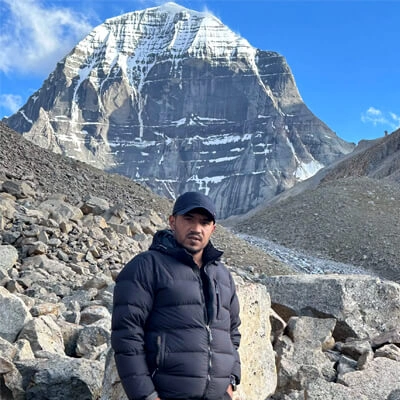
Nepal is a year-round country, but not for the same reasons. Spring brings rhododendron-lit ridgelines and the long blue mornings that frame Everest and Annapurna at their clearest. Autumn brings the post-monsoon air that every photographer chases and the tightest window for trekking visibility of the year.
Winter belongs to the lower foothills, the cultural cities, and travelers who prefer empty trails to crowded ones. Monsoon belongs to Upper Mustang, Dolpo, and the rain-shadow valleys behind the Himalaya. This guide breaks the calendar down month by month, weighs each window against your travel intent, and explains how we plan our luxury departures around the country's actual climate — not the brochure version.
A Month-by-Month Guide for 2026 and Beyond
The best time to visit Nepal is not a single date on a calendar. It is a window matched to what you actually want to do here. The trekker chasing Everest visibility, the photographer waiting for the monsoon to break, the pilgrim walking the Kathmandu Valley, and the traveler booking a quiet honeymoon in Pokhara are all looking at four different countries inside the same passport stamp. Nepal sits at the meeting point of two enormous weather systems — the Indian Ocean monsoon and the dry Tibetan plateau — and the Himalaya splits the country into four climate zones that can behave very differently from one another within the same week.
After two decades of running departures across Nepal, our team has narrowed the calendar down to windows that work and those that disappoint. Most travelers are told there are two seasons here. The truth is closer to six. There is high spring, late spring, the early monsoon, the deep monsoon, the post-monsoon clear window, and winter. Each opens different parts of the country and closes others. Booking the wrong window in the wrong region is the single most common reason a trip underdelivers.
We have written this guide to do one thing: help you choose the right month for the experience you actually want. We explain the weather honestly, name the trade-offs, and tell you which region rewards which season. By the end, you will know whether you are a March traveler, an October traveler, or a January traveler — and why that distinction matters more than the marketing brochures admit.
The Two Primary Windows: Spring and Autumn
Most international travelers arrive at one of two windows. The first runs from mid-March to mid-June. The second runs from mid-October to mid-December. These are the seasons when the trekking corridors open fully, when domestic flights to Lukla and Jomsom run on schedule, and when the high passes are crossable without ice axes or specialist gear. They are also the seasons when our private departures fill first.
Spring delivers warmer days at altitude, longer daylight, and the famous rhododendron forests in full bloom along the Annapurna and Everest corridors. The skies are usually clear in the early morning and cloud over by mid-afternoon. Autumn delivers the sharpest mountain visibility of the year. Monsoon rains scrub the haze out of the atmosphere, and the first six weeks after the rains end produce the photographs you have seen on every magazine cover. Both windows are excellent. The choice between them depends on what you weigh more: blossom and warmth, or visibility and crispness.
Spring: Mid-March to Mid-June
Spring is the warmer of the two main seasons. Daytime temperatures in Kathmandu and Pokhara sit in the low to mid-twenties Celsius. Trekking lodges in the Khumbu and Annapurna regions are fully open. The rhododendron belt between 2,000 and 3,500 meters comes alive with red and pink flowers in late March and through April. By May, daytime temperatures at base-camp altitudes are warmer than in autumn, making acclimatization more comfortable for first-time high-altitude trekkers.
The trade-off is haze. As the air warms and dries, dust from the Indo-Gangetic plain drifts north and settles against the Himalayan wall. Mornings stay clear. Afternoons often soften into a pale yellow film that mutes the contrast on the peaks. Photographers who want sharp horizons usually prefer to shoot before nine in the morning. Our spring departures are scheduled around early morning viewpoints for exactly this reason.
Autumn: Mid-October to Mid-December
Autumn is the visibility season. The monsoon has just ended, the air is washed clean, and the temperature has begun to cool, but not yet bite. Mid-October to mid-November delivers the sharpest mountain views of the year. Skies stay clear from sunrise to sunset for stretches of seven and eight days at a time. The Annapurna, Manaslu, Langtang, and Everest corridors all run at their photographic best.
The trade-off is crowds and pricing. Autumn is the most popular trekking season in the country, and the busiest weeks fall between mid-October and mid-November. Lodges fill in advance, domestic flights run at capacity, and luxury accommodation in Kathmandu and Pokhara books out three to four months ahead. Our team holds inventory for autumn departures from the previous spring. If you want autumn, we recommend confirming your dates by April at the latest.
The Quiet Windows: Winter and Monsoon
The two windows most travelers are told to avoid are exactly the windows that reward the right traveler. Winter is the secret season for cultural travel and lower-altitude trekking. Monsoon is the only season for the rain-shadow valleys behind the Himalaya. Both are answers to specific travel intents — and both are seasons in which our private departures run year-round.
Winter: Mid-December to Mid-February
Winter in Nepal does not behave the way most travelers imagine it. The days are dry, the skies are usually clear, and the mountain views from cultural cities are often better than in spring. What changes is altitude. Above 4,000 metres the cold becomes serious. Lodges at Gorak Shep and Lobuche on the Everest route can drop to minus twenty Celsius at night. Some lodges close entirely in January and reopen in March. Above 5,000 meters, the high passes — Cho La, Renjo La, Larkya La, Thorong La — are often blocked by snow or ice.
Below 3,500 metres the picture is different. The Annapurna foothills, Pokhara, the Kathmandu Valley temples, and the Chitwan and Bardia jungle parks are all excellent in winter. Wildlife viewing in the Terai is at its best because tigers and rhinos move to water sources visible from open vehicles. Cultural travel is quieter, hotel rates are softer, and the air is at its driest. Our winter departures focus on Pokhara, Bandipur, the Kathmandu Valley heritage circuit, and the lowland safari parks. Travelers who want mountain views without long high-altitude days find winter ideal.
Monsoon: Mid-June to Mid-September
Monsoon is the most misunderstood season in Nepal. The rains do not fall everywhere. The Himalayan wall blocks most of the moisture from reaching the valleys behind it, which means Upper Mustang, Lower Mustang, Dolpo, and the trans-Himalayan reaches of Manang sit in a dry pocket while the rest of the country gets soaked. These are the only months when those regions are at their best. The barley fields of Mustang turn green. The cliff monasteries of Lo Manthang are reachable. The light is clean and long.
The mainstream trekking corridors — Everest, Annapurna Circuit south of Manang, Langtang, Manaslu south of the Larkya La — are wet, leech-prone, and often clouded over for days at a time. We do not run these treks in the monsoon.
Cultural travel in Kathmandu and Pokhara remains entirely possible because the rain falls mostly at night and in short bursts during the day, but visibility on the peaks is poor. Monsoon is a niche season that rewards travelers who know exactly which valleys to choose. Our team plans every Mustang, Dolpo, and Upper Manang departure for July and August.
Month-by-Month Breakdown
January
Cold, dry, and clear. The Kathmandu Valley sees crisp mornings around five degrees Celsius and afternoon highs in the high teens. Pokhara is warmer by two or three degrees. Mountain views from Sarangkot, Nagarkot, and Bandipur are excellent.
The Annapurna Sanctuary and Mardi Himal treks remain open with extra layers. Above 4,000 metres expect deep snow and very cold lodges. This is our preferred month for jungle safaris in Bardia and Chitwan, when wildlife sightings peak. Festivals: Maghe Sankranti in mid-January marks the end of the coldest period and is celebrated with sesame and molasses sweets across the hills.
February
The shoulder of winter. Days warm noticeably in the second half of the month. Rhododendrons begin to flower at the lower elevations of the Annapurna foothills by late February. Mountain visibility remains strong. The Everest corridor is still cold above Tengboche, and we do not run Everest Base Camp departures this month.
Lower-altitude trekking — Poon Hill, Mardi Himal, the Kathmandu Valley rim — is at its quietest and most rewarding. Festivals: Losar, the Tibetan and Sherpa New Year, falls in February or early March, depending on the lunar calendar, and is celebrated in Boudhanath, Helambu, and the Khumbu villages.
March
The first true trekking month of spring. Daytime temperatures rise quickly. Rhododendron forests between 2,000 and 3,000 meters are in full bloom by the end of the month. Everest Base Camp lodges reopen in earnest from mid-March. The Annapurna Sanctuary, Langtang, and Mardi Himal are all in excellent condition.
Mornings are still crisp and clear. Afternoons begin to cloud over with the first warm-air haze of the year. Festivals: Holi, the festival of colors, falls in March and is a memorable day to be in Bhaktapur, Pokhara, or the Terai. Maha Shivaratri brings tens of thousands of pilgrims to Pashupatinath in early March.
April
The peak of spring. Rhododendrons in full color up to 3,500 meters. Daytime temperatures comfortable across all trekking corridors. This is the busiest month for Everest Base Camp departures and the strongest month for the Annapurna Circuit south of Thorong La.
Lodges fill, and the trails are visibly busier than in autumn, but it's rarely uncomfortable on the luxury circuit because we route guests away from peak-congestion points. Photographic light is best in the morning. By midday, the haze settles in. Festivals: Bisket Jatra in Bhaktapur is one of the most theatrical festivals in the Kathmandu Valley and falls in mid-April.
May
Late spring. The warmest month at trekking altitude before the monsoon arrives. Daytime temperatures in the Khumbu reach the low teens Celsius even at 4,000 meters. The rhododendrons have peaked at lower elevations and are now blooming at 3,500 to 4,000 meters. Acclimatization is more forgiving for first-time altitude trekkers because the cold is no longer an additional burden.
The trade-off is afternoon haze, which is at its strongest of the year by late May. Festivals: Buddha Jayanti, the celebration of the Buddha's birth, Enlightenment, and parinirvana, falls on the full moon of May and is observed at Lumbini, Boudhanath, and Swayambhunath.
June
The transition month. The first half of June is still trekkable across most corridors with hot days and increasing afternoon cloud. By mid-June, the monsoon arrives in the eastern Himalaya and works west across the country over two to three weeks. We continue running Mustang and Upper Manang departures in late June because they sit in the rain shadow. Standard mainstream trekking ends. Cultural travel in Kathmandu and Pokhara remains possible, though it can be humid. This is also a strong month for jungle safari before the rains soak the lowland parks.
July
Deep monsoon. Daily rain in the lowlands and the southern foothills. Heavy cloud on the Annapurna and Everest corridors. We do not operate mainstream Himalayan trekking this month. Upper Mustang and Dolpo are at their best — green fields, dry cliffs, no other travelers.
Yartung, the Mustang horse festival in Muktinath, falls in July or August, depending on the lunar calendar, and is one of the most distinctive cultural experiences in the trans-Himalaya. The Kathmandu Valley sees brief warm-air showers, but the temples remain accessible.
August
Continued monsoon in most of the country. The rain-shadow valleys behind the Himalaya remain excellent. Upper Mustang, Lo Manthang, and Dolpo are reachable. Janai Purnima, the sacred-thread festival, falls in mid-August and brings pilgrims to Gosainkunda Lake. Indra Jatra begins in Kathmandu's Durbar Square in late August or early September and is the most theatrical festival of the year in the capital. Air is cleaner than in spring once the rains have washed the dust out.
September
The month the country waits for. Monsoon retreats from west to east through September. The first half is still wet at lower elevations. By the third week of September, the trekking corridors begin to dry and visibility returns rapidly. Late September often delivers the cleanest air of the year before the autumn crowds arrive. Festivals: Indra Jatra in early September is one of Kathmandu's most important annual events. Teej, the women's festival, falls in late August or early September and turns Pashupatinath into a sea of red saris.
October
The strongest month in the trekking calendar. Air is at its clearest. Temperatures comfortable across all altitudes. The Khumbu, Annapurna, Manaslu, and Langtang corridors all run at full capacity. This is the photographic peak of the year. Lodges and luxury hotels book out months in advance.
Our team holds the October inventory from April. Festivals: Dashain, the longest and most significant Hindu festival in Nepal, falls across late September and October, with the main public days in early October. Tihar, the festival of lights, follows in late October or early November and is one of the most beautiful weeks to be in Kathmandu or Bhaktapur.
November
The second-strongest trekking month. Mornings begin to cool noticeably. Daytime temperatures remain comfortable up to 4,500 meters. Visibility holds through most of the month. Late November sees the first serious cold above 4,000 meters at night.
The Annapurna Circuit, Everest Base Camp, and Three Passes departures all run well. Tihar, Mha Puja, and Bhai Tika fall in early to mid-November and bring an extraordinary atmosphere to the Kathmandu Valley. We schedule cultural-trekking combinations around these festival dates.
December
The first half of December is still strong for lower-altitude trekking and excellent for cultural travel. Mornings are cold and clear. Mountain visibility from Pokhara, Nagarkot, and Bandipur is at its sharpest. Above 4,000 meters, the cold becomes a serious factor, and we recommend Everest Base Camp travelers book before the second week of December.
The lowland safari parks are at their peak. Pricing softens in the second half of the month outside the Christmas-New Year holiday week. Festivals: Yomari Punhi, the Newari rice-cake festival, falls in December and is best experienced in Patan.
Choosing the Right Window for Your Trip Type
For Everest Base Camp and High-Altitude Trekking
April, May, October, and November. These four months are the only windows we recommend for Everest Base Camp, the Three Passes, Manaslu Circuit, and Upper Annapurna. May and October deliver the strongest balance of weather and visibility. April rewards rhododendron lovers. November rewards travelers who want crisper air and slightly thinner crowds than October.
For Annapurna Foothills and Lower Treks
Late February through May, and late September through early December. The Poon Hill, Mardi Himal, and Annapurna Sanctuary routes are workable in winter for travelers comfortable with cold mornings and the occasional snow day. The Annapurna foothills are the most flexible region in the country.
For Upper Mustang, Dolpo, and Trans-Himalayan Travel
July and August. The rain-shadow valleys behind the Himalaya are dry and green during the monsoon, while the rest of the country is wet. June and September also work but lack the lush green of peak monsoon. This is the only season we run our Mustang and Dolpo departures.
For Kathmandu Valley, Pokhara, and Cultural Travel
Year-round. The cultural cities work in every season. October and November deliver the festival calendar at its richest. December, January, and February are the quietest months at the heritage sites. March through May adds warmth and longer daylight. Even the monsoon months are workable for travelers focused on temples, museums, and the Newari old towns.
For Honeymoons and Slow Travel
Late February to early April, and mid-October to early December. These windows give honeymooners the strongest balance of weather, visibility, and atmosphere across the cultural cities and Pokhara. The shoulder weeks of late September and late November are particularly strong because they sit just outside the busiest crowds.
For Wildlife and Jungle Safari
December, January, February, and early March. Bardia and Chitwan are at their best when the grass is short, the weather is dry, and animals concentrate around water sources. Tiger sightings in Bardia peak in February. The lowland heat builds rapidly from late March, which is why our luxury safari departures cluster in the cooler months.
For Pilgrimage and Festival Travel
September, October, and the full moon of May. The pilgrimage calendar in Nepal is governed by the lunar cycle, which means the exact dates shift from year to year. Indra Jatra, Dashain, Tihar, and Mha Puja cluster in autumn. Buddha Jayanti and Saga Dawa fall on the May full moon. We confirm festival dates at the time of booking and align route itineraries with the public days.
At-a-Glance Seasonal Reference
The table below summarises the four primary seasons against the major travel categories. We use this as our internal planning matrix.
|
Season |
Months |
Best For |
Avoid For |
|
Spring |
Mid-March to mid-June |
High-altitude trekking, rhododendron forests, photography mornings |
Sharp afternoon visibility, fewest crowds |
|
Monsoon |
Mid-June to mid-September |
Mustang, Dolpo, trans-Himalayan travel, cultural cities |
Mainstream trekking, mountain photography |
|
Autumn |
Mid-October to mid-December |
Trekking, photography, festival calendar, and mountain visibility |
Quiet trails, soft pricing |
|
Winter |
Mid-December to mid-February |
Lower treks, Pokhara, cultural travel, jungle safari |
High passes above 4,500m, Everest Base Camp comfort |
How Our Team Plans Around the Calendar
After two decades of running departures, our planning has settled into three rules that help guests get the season right rather than the brand-name month.
- Book autumn windows by April. Inventory across luxury lodges in the Khumbu and Annapurna corridors fills six months out for October and November. The earlier we confirm, the better the room category, the smoother the domestic flight slots, and the cleaner the helicopter scheduling.
- Book spring windows by November. April and May fall behind autumn but ahead of every other month. Rhododendron-focused travelers, in particular, should confirm late March and early April dates by the previous winter.
- Build buffer days into every itinerary. Domestic flights to Lukla, Jomsom, and Pokhara depend entirely on the weather. Our standard practice is to add a buffer night in Kathmandu before international departure after every Himalayan trek so a flight delay does not cost a guest their flight home.
Frequently Asked Questions
What is the overall best time to visit Nepal?
There is no single best month. October and November deliver the sharpest mountain views and the strongest trekking weather. April and May bring warmth, rhododendrons, and longer daylight hours. The right answer depends on whether you weigh visibility or temperature more heavily.
Which months should travelers heading to Everest Base Camp avoid?
June through September because of monsoon clouds and rain. Late December through February because of extreme cold above 4,000 meters and lodge closures around Lobuche and Gorak Shep. Early December and early March are workable but require extra layers.
Is the monsoon really a problem for travel in Nepal?
It depends on where you go. Mainstream trekking in the Annapurna, Everest, Manaslu, and Langtang corridors becomes wet, leech-prone, and clouded. Cultural travel in Kathmandu and Pokhara stays workable. Upper Mustang, Lo Manthang, Dolpo, and the trans-Himalayan reaches sit in a rain shadow and are at their best in the monsoon.
When is the best time to see the Himalaya without trekking?
Late October through early February for the sharpest mountain visibility from Sarangkot, Nagarkot, Bandipur, and Pokhara. Winter mornings deliver the clearest air of the year for non-trekkers.
Which months are the busiest in the Khumbu and Annapurna regions?
Mid-October to mid-November is the peak. Mid-April to mid-May is the second peak. Lodges and luxury accommodation are booked four to six months in advance in these windows. We recommend confirming dates well in advance for both seasons.
Are flights to Lukla reliable year-round?
Lukla flights depend entirely on weather and are most reliable in late October, November, March, and April. Spring afternoons can produce cloud build-up that delays departures. Monsoon months see frequent cancellations. Our team builds buffer days into every Khumbu itinerary.
Is winter trekking in Nepal possible?
Yes for lower-altitude routes. The Annapurna foothills, Mardi Himal, Poon Hill, and the Kathmandu Valley rim all work in December and January with proper layers. Above 4,000 metres the cold becomes serious and many lodges close in January and February.
When is the wildlife safari season in Nepal?
December through early March. Bardia and Chitwan are at their best when the grass is short, and animals concentrate around water sources. February offers the highest probability of tiger sightings in Bardia.
How far in advance should travelers book Nepal trips?
Six months for autumn departures, four to five months for spring departures, and two to three months for winter and monsoon departures. Festival weeks book earlier. Our team holds inventory from the previous season for the strongest windows.
Does the festival calendar change each year?
Yes. Most major festivals follow the lunar calendar and shift by two to three weeks year on year. We confirm exact dates at the time of booking and structure cultural itineraries around public holidays. The general month window for each festival stays the same.
Which season is best for honeymoons in Nepal?
Late February to early April and mid-October to early December are the strongest windows for honeymooners. The weather is settled, visibility is strong, and the cultural cities and Pokhara are at their most atmospheric. Shoulder weeks just outside the busiest dates deliver the best balance of weather and quiet.