Tibet has the most layered permit system of any destination in Asia. Most travelers expect a single visa, the way they would for Nepal or Bhutan. The reality is a stack of four documents that must be issued in a specific sequence, by specific authorities, for specific routes. The Chinese visa allows you to enter the People's Republic of China.
The Tibet Travel Permit, issued by the Tibet Tourism Bureau in Lhasa, allows you onto the plateau. The Aliens' Travel Permit allows you to enter restricted prefectures beyond Lhasa. The Military and Border Permits cover the most sensitive areas — Mount Kailash, Mount Everest's north face, and any region close to the Indian or Nepalese border.
Independent travel for foreign visitors is not permitted. Every document must be applied for through a licensed Tibetan tour operator. This guide explains the full chain of paperwork honestly — what each permit is, when it is required, how long it takes to issue, and how our team handles the entire process on your behalf.
The TTB Permit, Aliens' Travel Permit, Chinese Visa, and Entry Procedures
Tibet permits are the single most misunderstood part of planning a journey onto the plateau. Most travelers begin a Tibet inquiry assuming they need a Chinese visa and a Tibet permit, two documents in a clean sequence. The reality is a stack of four — the Chinese visa, the Tibet Travel Permit, the Aliens' Travel Permit for restricted prefectures, and the Military and Border Permits for the most sensitive regions like Mount Kailash and the Everest north face.
Each is issued by a different authority, each follows a different timeline, and each must be in place before you can move through the relevant part of the country. Independent travel for foreign visitors is not allowed. The system is administered tightly and consistently by the Tibet Tourism Bureau and the Public Security Bureau.
After two decades of arranging Tibet permits for our guests, our team has learned that the single biggest source of trip cancellation is paperwork issued in the wrong sequence or applied for too close to departure. Permits cannot be rushed. The Tibet Tourism Bureau works on its own calendar, and applications submitted late are simply rejected.
The good news is that the system is predictable when followed correctly — what looks complicated on paper becomes routine when the application sequence is respected, and the right documents are submitted in the right order.
The summary you should hold in your head as you read on: you need a Chinese visa or a Chinese Group Visa, plus the TTB permit, plus additional permits for any region beyond Lhasa. Our team handles every permit on your behalf. You do not visit a Chinese embassy in most cases. You do not communicate directly with the Tibet Tourism Bureau. The entire process is consolidated through our Lhasa-based partners and us.
The Four Permits You Need to Know
The Tibet entry system rests on four distinct documents, each issued by a different authority and each covering a different layer of access. Understanding what each one does — and what it does not — is the foundation for planning a genuine Tibet journey.
1. The Chinese Visa or Chinese Group Visa
The Chinese visa allows you to enter the People's Republic of China. Without it, you cannot board a flight to mainland China, and you cannot cross any Chinese border. Two distinct visa types apply to travelers to Tibet, and the right one depends on how you enter the country.
Travelers entering Tibet from mainland China — flying into Beijing, Shanghai, Chengdu, or Xi'an before continuing to Lhasa — apply for a standard Chinese tourist visa (L visa) at a Chinese embassy or consulate in their home country. The application requires a passport, photographs, an application form, hotel and flight bookings, and the supporting documents requested by the consulate.
Once the L visa is issued, our team applies for the TTB permit separately, and together the L visa and TTB permit allow entry into Tibet from any mainland Chinese city.
Travelers entering Tibet from Kathmandu — by Air China or Tibet Airlines flight to Lhasa Gonggar Airport, or by overland route through the Gyirong border — apply for a Chinese Group Visa, not the standard L visa. The Group Visa is issued by the Chinese Embassy in Kathmandu and is processed only through our Nepalese-Tibetan licensed operator chain.
It is named after the group it covers, lists every traveler's passport details on a single sheet, and is valid only for the specific group named on it. If you already hold a valid Chinese L visa, that visa is automatically canceled when the Group Visa is issued — this is a Chinese government rule and is not negotiable.
2. The Tibet Travel Permit (TTB Permit)
The Tibet Travel Permit is the document that actually allows you onto the plateau. It is issued by the Tibet Tourism Bureau in Lhasa and is required for all foreign travelers, including Hong Kong and Macau passport holders entering Tibet on foreign passports. The permit lists every traveler's name, passport number, nationality, occupation, and the specific itinerary covered by the application — including dates, regions, and the registered tour operator handling the trip.
The TTB permit is required to enter Lhasa and to board any flight or train to Tibet. Airlines and railway operators check the permit before allowing boarding. Without it, you cannot physically enter the region regardless of any other document you hold.
Standard processing through the Tibet Tourism Bureau takes seven to ten working days, and our team submits applications a minimum of fifteen working days before departure to allow for any administrative review. Permit issuance can be suspended around politically sensitive anniversaries, particularly throughout most of March, and our team continuously monitors the issuance calendar.
3. The Aliens' Travel Permit (ATP)
The Aliens' Travel Permit, sometimes called the PSB Permit, is issued by the Public Security Bureau and is required for foreign travelers visiting any prefecture in Tibet beyond Lhasa. The permit is region-specific, which means a separate ATP is issued for each restricted prefecture on your itinerary.
Travelers visiting only Lhasa do not need an ATP. Travelers continuing to Shigatse, Tsedang, Gyantse, the Yarlung Valley, or any region toward the north face of Everest require ATPs covering each prefecture they will enter.
The ATP is processed by our Lhasa-based partners after arrival in Tibet, not before departure from your home country. The TTB permit must be approved first. Once you arrive in Lhasa, our local partners apply for the ATPs covering the regions on your onward itinerary. Standard ATP processing takes one to two days in Lhasa, which is why most extended Tibet itineraries include two to three nights in Lhasa before continuing to the prefectures beyond.
4. The Military and Border Permits
The Military Permit and the Border Permit cover the most sensitive regions of Tibet. The Military Permit is required for travel to any region under restricted military designation, which includes most of the route to Mount Kailash, the Mount Everest north face Base Camp area beyond Tingri, and parts of the Yarlung Valley near the Indian border in Arunachal Pradesh.
The Border Permit is required for any travel within 20 kilometers of an international border — including the entire Kailash region, the Nyalam corridor leading into Nepal, and the routes leading into the Indian-administered border areas.
These two permits are applied for after the TTB permit and ATPs are in place. They require additional supporting documents and longer processing windows — typically three to five working days each — and our Lhasa partners handle them through the relevant Public Security Bureau and military district offices.
Travelers heading to Mount Kailash, the Everest north face, or any sensitive border region need to confirm their itineraries early enough for the Military and Border Permits to be issued without delay. Late applications for these permits are the most common reason a Tibet itinerary has to be revised at the last minute.
Tibet Permits Quick Reference
The table below summarises the four permits, what each covers, who issues them, and where in the application sequence they fall.
|
Permit |
Issued By |
Required For |
Processing Time |
|
Chinese Visa (L) or Group Visa |
Chinese Embassy (home country or Kathmandu) |
Entry into the People's Republic of China |
4–14 days, depending on the consulate |
|
Tibet Travel Permit (TTB) |
Tibet Tourism Bureau, Lhasa |
Entering Lhasa and the Tibet Autonomous Region |
7–10 working days |
|
Aliens' Travel Permit (ATP) |
Public Security Bureau, Lhasa |
Prefectures beyond Lhasa (Shigatse, Tsedang, etc.) |
1–2 days after Lhasa arrival |
|
Military Permit |
Tibet Military District |
Kailash, Everest, the North Face, sensitive regions |
3–5 working days |
|
Border Permit |
Public Security Bureau, district offices |
Areas within 20km of any international border |
3–5 working days |
How the Application Sequence Actually Works
The Tibet permit system runs in a strict sequence. Documents must be issued in order; earlier permits are prerequisites for later ones, and skipping the sequence will cause the entire application to be rejected. Our team handles every step. Here is the order it follows.
Step 1: Itinerary Confirmation
We confirm your travel dates, party size, and full route through Tibet. The TTB permit is issued against a specific itinerary — every region you plan to visit must be listed accurately on the application. Adding regions later requires a new permit application, so we lock in routes before submitting paperwork. This is also where we identify which additional permits you will need (ATP, Military, Border) based on your route.
Step 2: Chinese Visa Application
Travelers entering from mainland China apply for the standard L visa at the Chinese consulate in their home country. The application typically takes 4 to 14 days, depending on the consulate. Travelers entering from Kathmandu skip this step and instead receive the Chinese Group Visa in Kathmandu shortly before departure — applied for through our Nepalese-Tibetan licensed operator chain.
Step 3: TTB Permit Application
Once the Chinese visa is in hand (or the Group Visa is being processed in Kathmandu), our Tibetan partners submit the TTB permit application. We require scanned passport copies, the Chinese visa scan or Group Visa application reference, occupation details, and confirmed flight or train tickets to Tibet.
Standard processing takes seven to ten working days. We submit applications fifteen working days before departure as a buffer. The TTB permit is issued as a physical document that is couriered to your point of departure — Kathmandu, Beijing, Shanghai, Chengdu, or Xi'an — for collection or hotel delivery before your flight.
Step 4: Travel to Tibet
With the Chinese visa and TTB permit confirmed, you board your flight or train to Tibet. Airlines and railway operators check the TTB permit at boarding. You must present both the Chinese visa and the TTB permit at the boarding gate. Without either, you will not be permitted to board, and the airline is not authorized to issue a refund for permit-related boarding refusals.
Step 5: Aliens' Travel Permit in Lhasa
On arrival in Lhasa, our local partners apply for the ATPs covering your onward itinerary. This is processed during your acclimatization days in Lhasa — typically two to three nights — and the ATPs are ready before you depart for the prefectures beyond. This is one of several reasons our standard Tibet itineraries include two or three nights in Lhasa at the start, beyond the benefit of acclimatization alone.
Step 6: Military and Border Permits
Travelers heading to Mount Kailash, the Everest north face from Rongbuk, or any sensitive border region receive their Military and Border Permits during their stay in Lhasa or at the appropriate provincial office along the route. Our local partners handle these applications, and we adjust departure times from Lhasa to ensure all permits are in hand before entering each restricted region.
Restricted Areas: Where Each Permit Applies
Lhasa (TTB Permit Only)
Lhasa itself requires only the TTB permit. Travelers visiting only Lhasa, the Potala Palace, Jokhang Temple, the Barkhor circuit, Sera Monastery, Drepung Monastery, Ganden Monastery, and the Yarlung Valley up to Tsedang need the TTB permit and standard Chinese visa. No ATP, Military, or Border Permits are required for Lhasa-only itineraries.
Shigatse, Gyantse, Tsedang (TTB + ATP)
Travel beyond Lhasa to the central Tibetan prefectures — Shigatse, Gyantse, Tsedang, and the Yamdrok Lake region — requires the TTB permit and the ATP. Tashilhunpo Monastery in Shigatse, Pelkhor Chode Monastery in Gyantse, and the Samye Monastery in the Yarlung Valley all fall in this category. No Military or Border Permit is needed for these regions.
Mount Everest North Face from Rongbuk (TTB + ATP + Military + Border)
The Everest north face Base Camp area beyond Tingri requires all four permits. The road from Tingri to Rongbuk Monastery passes through restricted military zones, and Rongbuk itself sits within twenty kilometers of the Nepal border. The Border Permit is required for any travel beyond Tingri toward the Everest base region.
Mount Kailash and Manasarovar (TTB + ATP + Military + Border)
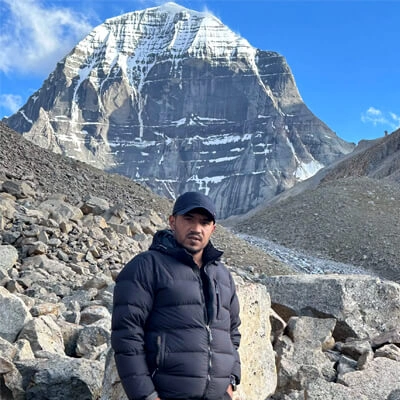
The Kailash region requires all four permits. The route from Lhasa to Darchen passes through multiple restricted zones; the Manasarovar Lake area lies close to the Nepalese and Indian borders; and the Kailash kora itself is in a sensitive border region. Military and Border Permits are non-negotiable for any Kailash itinerary, and our team confirms permit availability before any deposit is collected.
Nyalam Corridor and the Gyirong Border
Travelers entering or exiting Tibet overland at the Gyirong border with Nepal pass through the Nyalam corridor, a Border Permit zone. The route from Lhasa to Gyirong passes through Shigatse and Tingri and requires TTB, ATP, and Border Permits. Military Permits are required if the route passes through additional sensitive zones, which our team confirms based on the specific itinerary.
Restricted and Closed Regions
Some regions of the Tibet Autonomous Region remain entirely closed to foreign travelers. These include parts of the eastern prefectures bordering Sichuan and Yunnan, the entire stretch along the Indian border in the south-east, and any military training areas designated by the Tibet Military District. Itineraries into these regions are not approved by the Tibet Tourism Bureau, and we do not market trips that would require entry into them.
Practical Considerations Before You Apply
Passport Requirements
Your passport must be valid for at least six months beyond your intended date of departure from China. The TTB permit application requires high-resolution scanned copies of the passport's biographical page and, once issued, the Chinese visa page. Passports with damage or insufficient blank pages will be flagged and may delay the application.
Occupation and Sensitive Professions
The TTB permit application asks for occupation details. Travelers identifying as journalists, diplomats, religious workers, or military personnel face additional scrutiny and longer processing windows. Some applications in these categories are denied.
Travelers in sensitive professions should declare honestly at the time of booking — our team can advise on whether the trip is feasible before any deposit is collected. False declarations on the TTB application will void the permit on arrival in Lhasa and result in immediate deportation.
Photographs
Standard passport-size photographs against a white background, taken within the last six months, in color. We confirm the exact specifications at the time of booking, and the photographs are submitted as part of the TTB and Chinese visa applications.
Solo Travellers and Small Groups
Historically, the Tibet Tourism Bureau required tours of five or more foreign travelers. The current rule allows smaller groups and solo travelers, but TTB application fees scale per person, and the cost of the licensed Tibetan guide and vehicle is not significantly reduced for smaller groups. Solo travelers and couples find the per-person cost of Tibet trips higher than that of larger groups for this reason.
When Permit Issuance Pauses
The Tibet Tourism Bureau periodically suspends the issuance of new permits for foreign travelers around politically sensitive anniversaries — most commonly throughout most of March, occasionally during major Chinese national events, and sometimes around regional anniversaries.
These suspensions are announced with limited notice. Our team monitors the issuance calendar continuously and confirms permit availability at the time of booking. We never collect a deposit for a Tibet trip during a suspension window.
Entry Procedures on Arrival
Flying into Lhasa Gonggar Airport
Upon arrival at Lhasa Gonggar Airport, you proceed through Chinese immigration with your passport and either a Chinese visa or a Group Visa. The TTB permit is checked by airport security personnel, and our representative meets you in arrivals to confirm onward transport to Lhasa city. The drive from Gonggar to Lhasa takes approximately ninety minutes through the Yarlung Tsangpo valley.
Train to Lhasa from Mainland China
Travelers arriving on the Qinghai-Tibet Railway from Xining, Beijing, Chengdu, Xi'an, Shanghai, or Guangzhou clear initial Chinese immigration at their departure city and present the TTB permit at the station before boarding. The train is checked again at intermediate stops and on arrival in Lhasa. Our representative meets you at Lhasa Railway Station and confirms transport to your hotel.
Overland from Kathmandu via Gyirong
Travelers entering Tibet overland from Nepal cross at the Gyirong border post. The Chinese Group Visa is checked at the Nepalese exit immigration in Rasuwa, the Tibet Travel Permit and Border Permit are checked at the Chinese entry immigration in Gyirong, and our Tibetan partners meet you on the Chinese side to begin the journey into Tibet. The Gyirong border crossing has been the operational overland route since the Kodari border was closed after the 2015 earthquake.
How Our Team Handles the Entire Process
After two decades of arranging Tibet permits for our guests, our process has settled into three rules that protect our travelers from the most common permit pitfalls.
- We never collect a final deposit during a permit suspension. If the TTB issuance calendar shows any uncertainty for your travel window, we will confirm the suspension status directly before collecting any non-refundable payment. This protects you from booking a trip that cannot legally happen.
- We submit applications with a fifteen-day buffer. Standard TTB processing takes seven to ten working days, but the Tibet Tourism Bureau occasionally requires additional review for specific applications. The buffer gives us time to address any administrative queries before your departure date.
- We coordinate every permit through our Lhasa-based partners. The TTB, ATP, Military, and Border Permits all run through partners we have worked with for over a decade. The Chinese visa is the only document you handle directly with a Chinese embassy — every other permit is processed on your behalf.