Kathmandu: The Fine Dining Capital
Krishnarpan at Dwarika’s Hotel
The meal that justifies the flight to Nepal. A ritualistic, slow-dining journey through the regional cuisines of Nepal, served in a red-draped dining hall designed to evoke the court of the Malla kings.
You choose between 6, 12, or 22 courses. The 22-course version takes three hours and moves through the culinary traditions of the Terai, the Kathmandu Valley, the Himalayan midlands, and the high-altitude communities.
Every ingredient is sourced from the hotel’s own organic farms. The staff wear traditional attire. The plates are bronze and earthenware. The cutlery is secondary — you eat several courses with your hands, which is how Nepali food is meant to be eaten.
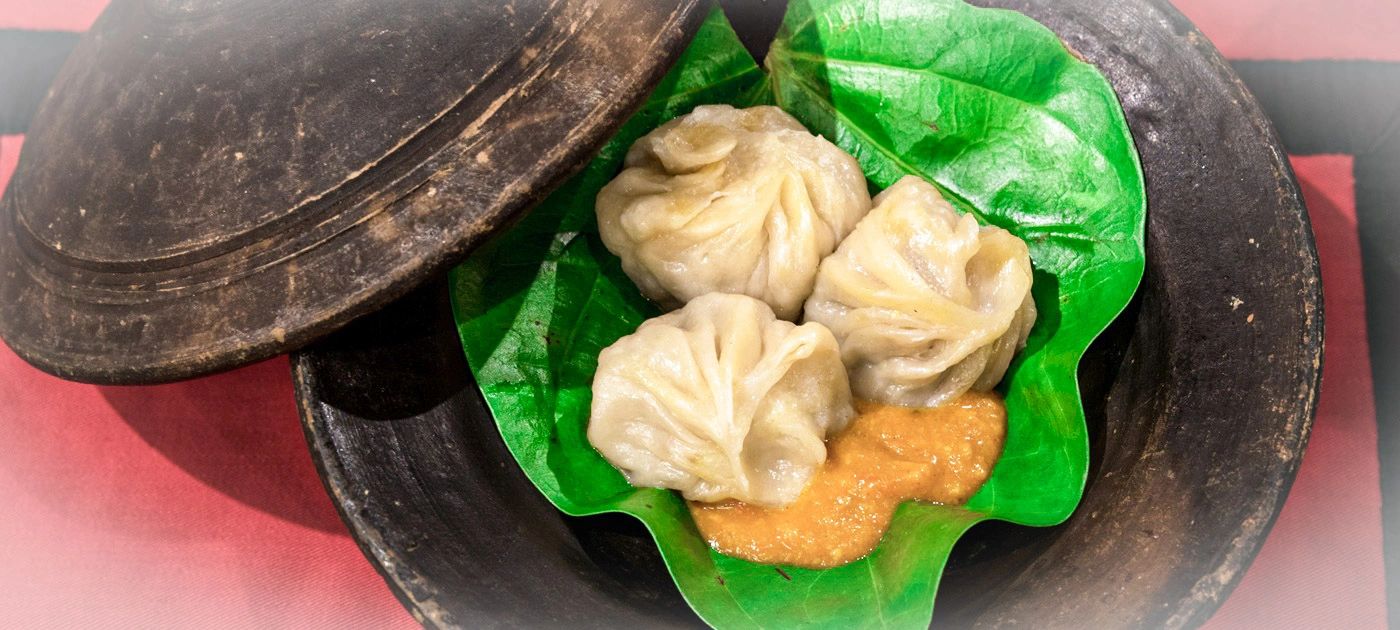
What you taste: wild honey from the Chitwan forests. River fish from the Trishuli. Dried meats from the Khumbu. Buckwheat from Mustang. Lentils are cooked in seven different regional styles. Momos filled with buffalo, chicken, and seasonal vegetables. Cardamom ice cream. Aila (traditional rice spirit) and tongba (fermented millet beer served in a wooden vessel with a bamboo straw).
Book at least two weeks in advance. Cost: approximately NPR 8,000-12,000 per person ($60-90) for the full 22 courses. This is the single most important dining reservation in Nepal.
Le Sherpa
An entire culinary estate in Kathmandu. European and French-focused international cuisine is served in a serene indoor dining room and a candlelit outdoor courtyard strung with warm lights. The menu moves between continents with confidence: smoked salmon bruschetta with goat’s cheese. Rabbit choila — a Nepali preparation of slow-cooked rabbit with mustard oil and Himalayan spices, presented with French technique. Roast quail with sautéed potatoes.
Pork belly in red wine reduction. Delicate tofu-based mains for vegetarians. The wine cellar is serious. The coffee is from Nuwa Estate, a Nepali specialty roaster. Every Wednesday and Saturday, Le Sherpa hosts an organic farmers’ market selling artisan bread and European cheeses produced in Nepal. You eat at Le Sherpa when you want the technical execution of Paris in the courtyard of Kathmandu.
The Old House
Just outside the city center. French-Asian fusion in a retro-chic setting. A leafy courtyard with heaters and a striking vertical garden covering one entire wall. The menu takes local Himalayan ingredients and applies French fine-dining technique: beetroot, nut, and shiitake momos (the momo elevated to a composition).
Sweet lime trout — river fish with a citrus treatment that has no equivalent anywhere else in Nepal. Vol-au-vents with seasonal fillings. Sophisticated charcuterie boards using Nepali cured meats. If Krishnarpan is the ritual, The Old House is the surprise.
The Chimney at Hotel Yak & Yeti
Founded by Boris Lissanevitch, a Russian ballet dancer who became the pioneer of Nepali tourism in the 1950s. He opened Kathmandu’s first Western restaurant inside a Rana palace. The Chimney preserves his legacy: copper-shafted fireplaces, vaulted ceilings, and the original Borsht recipe that Boris himself developed.
The rack of lamb with eggplant and sesame is the dish the restaurant is known for. Continental classics executed in an atmosphere of faded grandeur and genuine historical weight. You eat at The Chimney for the story as much as the food.
Tukche Thakali Kitchen
Family-run since 1997. Mrs. Rekha Bhattachan oversees the kitchen. The cuisine is from the Kali Gandaki region of Mustang — Thakali food, which occupies a specific culinary niche between the dal-bhat lowlands and the Tibetan highlands. The buckwheat dhedo (a dense, nutritious porridge eaten with meat and vegetable accompaniments) is the signature.
The momos are handmade, filled with yak meat or seasonal vegetables, and served with a complex tomato-sesame chutney. International travel magazines have featured this restaurant precisely because it refuses to modernize its recipes. You eat here for the authenticity that fine dining cannot replicate.
The Newari Feast: Dining in a Heritage Home
The most immersive food experience in the Kathmandu Valley is not in a restaurant. It is in a restored heritage home in the backstreets of Patan, arranged through our cultural program. A local historian hosts you. Live ethnic music plays. The table is set with brass plates and clay cups. And then the food arrives.
The Newari feast is a ceremonial meal structure called Samay Baji. It begins with flattened beaten rice (chiura) arranged on a leaf plate with accompaniments: marinated spiced meat (chuya lah), black soybeans, ginger pickle, egg curry, roasted fish, and aila served in a traditional clay cup.
The dishes are closely guarded family recipes. The ingredients are sourced from the specific markets and farms that each family has used for generations. The historian tells you the story of each dish — which festival it belongs to, which deity it honors, which season it represents. You are not eating dinner. You are eating a civilization’s relationship with food.
The Bhaktapur Food Trail
Bhaktapur is the food city of the Kathmandu Valley. The trail we build for you: start at a Bara Shop (hearty lentil breads fried on an iron griddle, served with spiced buffalo meat and beaten rice). Walk to the Juju Dhau makers — the King of Curd, thick sweet yogurt set in unglazed clay pots, where the pot is part of the recipe.
Taste Samay Baji is assembled by a street vendor who has been making it for 40 years. End at The Nanee’s Chef’s Table for a 6-10 course Contemporary Newari Tasting Menu that takes every street dish you just tasted and presents it through fine-dining technique. The trail takes half a day. It moves from street to studio. It is the single best food experience you can have in the Kathmandu Valley for understanding how Newari cuisine works from the ground up.
Pokhara: The Restaurants Nobody Expected
|
Restaurant
|
What It Does
|
Why You Go
|
|
Vrikshya
|
Rooftop Italian
|
Live Italian kitchen producing gourmet wood-fired pizza. Extensive cheese and wine selection. Raniban forest and Annapurna panorama from the rooftop. The best restaurant in Pokhara.
|
|
Rosemary Kitchen
|
Nepali-Western fusion
|
Open inner garden with a Balinese aesthetic. Organic chicken momos. River trout with lemon. The place where Pokhara’s culinary scene took a serious turn.
|
|
Frituur No. 1
|
High-end deli
|
No sign on the door. Buffalo and pork gourmet burgers are frequently rated the best in Nepal. Hidden gem. Ask your guide to find it.
|
|
Belle Lyipa
|
Bakery and café
|
Bite-sized chocolate-and-blueberry egg tarts made with imported ingredients. Afternoon indulgence with Phewa Lake views.
|
|
Deck by the Lake
|
Lakeside fine dining
|
Fish Tail Lodge’s waterfront restaurant. Signature cocktails while mountain reflections ripple on the water's surface. Sunset dining.
|
|
OR2K
|
Vegetarian Israeli-Nepali
|
High-end vegetarian. Middle Eastern and Himalayan fusion. The restaurant that proves Pokhara’s dining diversity.
|
Dining at Altitude: Where Water Boils at 85°C
Cooking at 4,000 meters is a different discipline. Water boils at approximately 85°C instead of 100°C, which means rice takes longer to cook, pasta is always slightly underdone, and pressure cookers are essential. The oxygen deficit affects fermentation — bread rises differently. The cold reduces ingredient freshness within hours of delivery. And every ingredient arrives on the back of a porter or inside a helicopter.
The champagne breakfast at Hotel Everest View (3,880m) defies all of this. Chefs who have worked at this altitude for over a decade have recalibrated every recipe. Continental breakfast spreads. Japanese-style oyakodon. Club sandwiches. Filet mignon with fresh green vegetables. Aromatic Himalayan tea. Sherpa butter tea.
You sit on a stone terrace at the world’s highest hotel with Everest directly ahead and eat food that should not be this good at this altitude. At Kongde Lodge (4,250m), the MLN network serves chef-crafted meals using greenhouse-grown produce — lettuces, herbs, and vegetables cultivated in solar-heated greenhouses at an altitude where nothing should grow.
At Shinta Mani Mustang (2,800m), Chef Kamala prepares authentic Thakali meals at her kitchen table in Marpha village. You eat where she cooks. The meal is not presented on hotel china. It is served on the same plates her family uses. The apple brandy is local — Marpha is famous for its apple orchards. On trek days, the Shinta Mani culinary team executes mountaineer-inspired picnics on ridgelines: high-energy gourmet foods, sustainably foraged ingredients, and chilled rosé against a backdrop of the Nilgiri peaks.
The Bush Dinner: Eating in the Jungle
Chitwan’s bush dinner is dinner as theatre. A clearing in the jungle. Two hundred lanterns and bonfires create a perimeter of light against the black forest. A multi-course Tharu-inspired menu is served on tables set with white linen, while the nocturnal jungle soundscape provides the score. Traditional Tharu stick-dance performers circle the fire.
The lantern light catches the dancer’s faces. Beyond the firelight, you hear the jungle — barking deer, cicadas, and the occasional alarm call of a spotted deer. Barahi’s Rangshala Dinner is the benchmark. Meghauli Serai offers private setups for two. You are eating dinner inside a national park, and the menu is as good as anything in Kathmandu.
BARC: The Cocktail That Starts as a Smoke Bubble
Behind a disguised mirror-door on the top floor of a Tripureshwor commercial building. Private library atmosphere. Dark wood. Low light. The mixologists fill aromatic smoke bubbles and place them in your cocktail glass. You pop the bubble.
The smoke cascades into the drink. The Bloody Nepali is inspired by traditional Nepali sweets. The Khattu is sharp and complex. This is Kathmandu’s first proper speakeasy and the city’s best after-dark food-adjacent experience. We arrange reservations.
Cooking Classes: Your Hands in the Dough
The Momo cooking class is the food experience that people remember five years later. You stand in a Kathmandu kitchen. A Newari cook shows you how to make the dough (flour, water, salt, nothing else). She shows you the filling (buffalo, ginger, onion, garlic, coriander, cumin, soy).
Then she shows you the fold — the 18-pleat crimp that closes the momo into a crescent. You try. Your first one looks wrong. Your fifth one looks close. Your tenth one holds. You steam them and eat them with a tomato-sesame chutney that the cook has been making since she was a child.
Beyond momos: dal bhat cooking classes (learning the seven-component structure of Nepal’s national meal). Sel roti classes (ring-shaped rice-flour doughnuts fried during festivals). Yomari classes in Bhaktapur (steamed rice flour dumpling filled with chaku molasses — the dish of the Yomari Punhi festival).
Thakali cooking in Pokhara (the Kali Gandaki cuisine). Gurung cooking in Ghandruk (on the Annapurna trail, cooked in a traditional stone kitchen). Every class ends with you eating what you made. Every recipe is written down for you to take home.
Frequently Asked Questions
What is the best restaurant in Nepal?
Krishnarpan at Dwarika’s Hotel. The 22-course ceremonial feast is the single most important dining experience in the country. Book at least two weeks in advance. NPR 8,000-12,000/person ($60-90). For French technique: Le Sherpa. For authentic Thakali: Tukche Thakali Kitchen. For fusion: The Old House.
What is a Newari feast?
A ceremonial meal called Samay Baji was arranged in a restored heritage home in Patan. Flattened rice, spiced meat, black soybeans, ginger pickle, roasted fish, egg curry. Family recipes guarded for generations. A local historian hosts and narrates. You eat a civilization’s relationship with food.
What should I eat in Bhaktapur?
Bara (lentil breads with spiced buffalo meat). Juju Dhau (King of Curd, thick yogurt in clay pots). Samay Baji is a street vendor. Then, the Nanee’s Chef’s Table for a 6-10 course Contemporary Newari menu. The half-day food trail from street to studio is the best food experience in the valley.
What is the best restaurant in Pokhara?
Vrikshya for rooftop Italian with Annapurna views and live kitchen. Rosemary Kitchen for Nepali-Western fusion. Frituur No. 1 for what may be Nepal’s best gourmet burger (no sign on the door). Belle Lyipa for afternoon tarts. Deck by the Lake at Fish Tail Lodge for sunset cocktails.
Can you eat well at altitude?
Yes. Hotel Everest View (3,880m) serves continental breakfast, filet mignon, and Japanese oyakodon. Kongde Lodge (4,250m) uses greenhouse-grown produce. Shinta Mani Mustang (2,800m) offers unlimited fine dining. MLN lodges serve chef-crafted meals with organic ingredients. Water boils at 85°C at 4,000m — the chefs have recalibrated every recipe.
What is BARC?
Kathmandu’s first speakeasy. Hidden behind a mirror-door in Tripureshwor. Smoke-filled aromatic bubble cocktails. The Bloody Nepali. The Khattu. Private library atmosphere. We arrange reservations.
What is a bush dinner?
Dinner in a jungle clearing in Chitwan National Park. Two hundred lanterns and bonfires. Multi-course Tharu-inspired menu. Traditional stick-dance performance around the fire. Barahi’s Rangshala Dinner is the benchmark. Meghauli Serai offers private setups for two.
Can I take a cooking class?
Yes. Momo folding in Kathmandu (learn the 18-pleat crimp). Dal bhat (the seven-component national meal). Sel roti (festival doughnut). Yomari in Bhaktapur. Thakali cooking in Pokhara. Gurung cooking on the Annapurna trail. Every class ends with eating what you made. Recipes provided.
Is Nepali food vegetarian-friendly?
Very. Dal bhat is inherently vegetarian. Newari cuisine has extensive vegetarian preparations. The Old House and OR2K in Pokhara serve refined vegetarian menus. Temple Tree Resort offers Jain food. Krishnarpan can be adapted to vegetarian on advance request. Buddhist monastery meals are entirely vegetarian.
What food should I try that I cannot get anywhere else?
Juju Dhau in Bhaktapur (the clay pot is part of the recipe — it cannot be replicated outside Bhaktapur). Yak cheese at 3,870m in Kyanjin Gompa or Sing Gompa. Tongba (fermented millet beer in a wooden vessel with a bamboo straw). Wild honey from Chitwan. Apple brandy in Marpha, Mustang. Buckwheat dhedo at Tukche Thakali Kitchen.
The Final Word
Nepal’s food is not a side attraction. It is a narrative. The 22 courses at Krishnarpan trace the geography of the country from the Terai to the Himalayas. The Newari feast in a Patan heritage home traces the history of a civilization through its recipes. The momo you fold in a Kathmandu kitchen traces back to a woman who learned it from her mother, who learned it from hers.
The champagne breakfast at 3,880 meters traces the ingenuity of a chef who figured out how to cook filet mignon where water boils 15 degrees below normal. And the bush dinner in Chitwan traces the relationship between a culture and its jungle — fire, dance, food, and the sound of the forest beyond the lanterns.
You do not eat in Nepal. You eat Nepal.