What Makes a Day Hike Luxury
A day hike becomes a luxury experience through three things. First, the guide: not a porter with a radio, but a naturalist or cultural expert who knows every bird call in the Shivapuri canopy, or an art historian who can read the Licchavi inscriptions at Changu Narayan. Second, the logistics: your private vehicle drops you off at the trailhead and picks you up at the endpoint (which is often a different location — point-to-point hikes, not loops).
Third, the food: a packed gourmet breakfast or lunch prepared by your hotel kitchen or a Kathmandu caterer, carried in an insulated bag by your guide, and served at the viewpoint with real plates and a thermos of hot tea. You walk at your pace. You stop when you want. There is no group.
The Five Hikes
1. Shivapuri National Park — The Forest Above the City
|
Detail
|
Shivapuri
|
|
Distance
|
12 km round trip (summit route from Budhanilkantha gate)
|
|
Elevation
|
1,400m (gate) to 2,732m (summit). Gain: 1,332m.
|
|
Duration
|
5-6 hours round trip. 3 hours up, 2 hours down.
|
|
Difficulty
|
Moderate-hard. Sustained uphill on a well-maintained forest trail. The final 30 minutes are steep.
|
|
The view
|
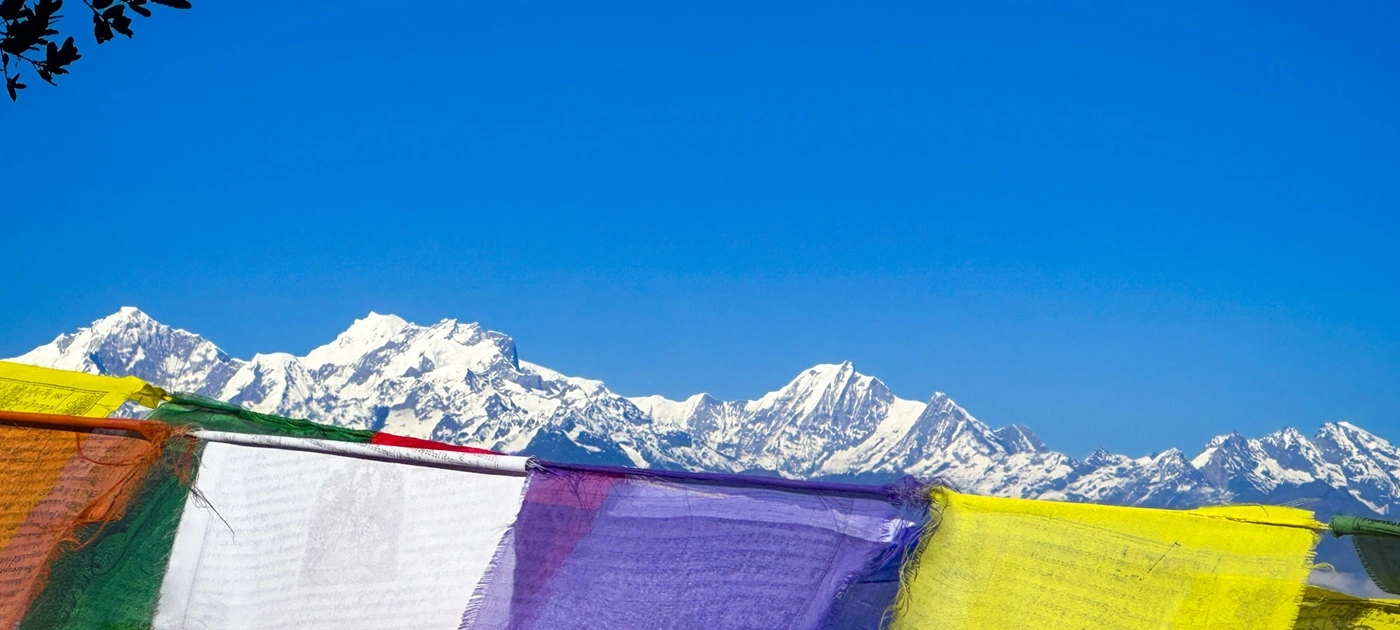
Langtang Lirung (7,227m), Ganesh Himal, Manaslu (8,163m), and on clear winter mornings, the distant Annapurna range. The entire Kathmandu Valley is laid out below.
|
|
Why this one
|
Shivapuri is the water source of Kathmandu. The springs on this mountain feed the valley’s rivers. The forest is dense, protected, and home to 318 bird species, 102 butterfly species, Himalayan black bears, and red pandas (rarely seen). The national park entry fee (NPR 1,000 for foreigners) limits crowds.
|
|
Best for
|
Fit hikers want a physical morning. Birdwatchers (318 species). Forest immersion. The most challenging day hike on this list.
|
The trail starts at the Budhanilkantha entrance (20 minutes from Thamel by private vehicle). You climb through subtropical forest that transitions to temperate oak and rhododendron as you gain altitude. The canopy closes overhead. The city noise disappears within 15 minutes.
By the midpoint, you hear nothing except birdsong and the occasional rustle of langur monkeys in the branches. The summit clearing has a small army post and a 360-degree panorama. Your guide unpacks breakfast. You eat facing the Langtang range. The descent is faster and kinder on the legs.
2. Nagarkot to Changu Narayan — The Heritage Downhill
|
Detail
|
Nagarkot to Changu Narayan
|
|
Distance
|
12 km one way (point-to-point, vehicle meets you at Changu Narayan)
|
|
Elevation
|
2,175m (Nagarkot) to 1,550m (Changu Narayan). Net descent: 625m.
|
|
Duration
|
3-4 hours walking. Half a day, including the Changu Narayan visit.
|
|
Difficulty
|
Easy-moderate. Almost entirely downhill. Well-maintained trail through farmland.
|
|
The view
|
Himalayan panorama from the Nagarkot ridge at the start. Terraced rice paddies and mustard fields throughout. The ancient Changu Narayan temple at the finish.
|
|
Why this one
|
The only day hike that combines a Himalayan sunrise (from Nagarkot), a rural trail through the agricultural landscape, and a UNESCO World Heritage Site at the finish. Changu Narayan is Nepal’s oldest temple (5th-century Licchavi). Your vehicle meets you and drives to Bhaktapur for the afternoon.
|
|
Best for
|
All fitness levels. Families (downhill, engaging for children). Seniors. Photographers (terraced fields in golden light). Culture-seekers (the temple).
|
The ideal format: stay at Kavya Himalayas or another property in Nagarkot the night before. Watch the sunrise from bed. Eat breakfast. Start walking at 8 AM. The trail descends through pine forest, then opens into terraced farmland. You pass through Tamang villages where farmers wave from their fields.
Children in school uniforms walk the same trail. The landscape is pastoral, gentle, and beautiful in every season. After 3-4 hours, you reach the hilltop of Changu Narayan. Your private guide — ideally an art historian — walks you through the temple complex: the 5th-century stone inscriptions (the oldest historical records in the valley), the Vishnu sculptures, the Garuda at the entrance. Your vehicle meets you in the parking area and takes you to Bhaktapur (30 minutes) for the afternoon cultural program.
3. Champadevi — The Closest Himalayan Viewpoint
|
Detail
|
Champadevi
|
|
Distance
|
8 km round trip from Pharping road trailhead
|
|
Elevation
|
1,600m (trailhead) to 2,278m (summit). Gain: 678m.
|
|
Duration
|
3-4 hours round trip. 2 hours up, 1.5 hours down.
|
|
Difficulty
|
Moderate. Steady uphill. Some steep sections. Forest trail, well-marked.
|
|
The view
|
The closest Himalayan viewpoint to Kathmandu city. Langtang, Ganesh Himal, Manaslu, Dorje Lakpa. The valley below. On exceptionally clear days, Everest is on the eastern horizon.
|
|
Why this one
|
Shortest approach from the city. The ridge summit has a small Hindu shrine dedicated to the goddess Champa. The forest is quieter than Shivapuri. The trailhead is 30 minutes from Thamel. You can submit before 9 AM and be at Dwarika’s for a late breakfast.
|
|
Best for
|
Early risers. Photographers wanting pre-9 AM Himalayan light. Fit walkers wanting a quick morning summit. Pairs perfectly with a Pharping afternoon (Buddhist caves, Hindu temples).
|
4. Jamacho — The Forest Above the Monkey Temple
|
Detail
|
Jamacho / Nagarjun
|
|
Distance
|
6 km round trip from the Nagarjun gate
|
|
Elevation
|
1,500m (gate) to 2,095m (summit). Gain: 595m.
|
|
Duration
|
2.5-3.5 hours round trip.
|
|
Difficulty
|
Easy-moderate. Paved road for the first section, then a forest trail. The shortest and most accessible hike on this list.
|
|
The view
|
Kathmandu Valley and the Himalayan range from a wooded hilltop. The Buddhist stupa at the summit. Swayambhunath visible below.
|
|
Why this one
|
Nagarjun Forest Reserve is a protected deer park and bird sanctuary on the northwestern rim of the valley. The forest is dense, ancient, and cool. The summit has a small Buddhist stupa. The gate is 15 minutes from Thamel. This is the hike for people who want forest immersion more than panoramic views.
|
|
Best for
|
Families with children (short, shaded, deer in the forest). Seniors (gentle gradient). Birdwatchers. Combine with Swayambhunath (10 minutes by car from the gate).
|
5. Pharping Circuit — The Pilgrimage Trail
|
Detail
|
Pharping
|
|
Distance
|
Variable (3-8 km depending on the route chosen). Circuit through Pharping village and temple complex.
|
|
Elevation
|
1,400-1,600m. Minimal gain. Rolling terrain.
|
|
Duration
|
3-5 hours, depending on how many temples and caves you visit.
|
|
Difficulty
|
Easy. Mostly paved paths between temples. The gentlest option on this list.
|
|
The view
|
Not a panoramic viewpoint hike. The interest is cultural: the Asura Cave, where Guru Rinpoche (Padmasambhava) is said to have attained realization; the Dakshinkali Temple (the most powerful Kali shrine in the valley); Tibetan Buddhist monasteries; Hindu shrines; and the Pharping village itself.
|
|
Why this one
|
The only day hike that is primarily spiritual rather than scenic. The Asura Cave is one of the most sacred Vajrayana Buddhist sites in the Himalayas.
Dakshinkali is the valley’s most visceral Hindu temple (animal sacrifice on Tuesdays and Saturdays — your guide will advise on timing). The juxtaposition of Buddhist caves and Hindu blood sacrifice within 1 km of each other is uniquely Nepali.
|
|
Best for
|
Spiritual travellers. Cultural depth-seekers. Pair with the Champadevi summit in the morning for a full day (Champadevi trailhead is 15 minutes from Pharping).
|
The Comparison Table
|
Hike
|
Distance
|
Gain
|
Time
|
Difficulty
|
Best For
|
|
Shivapuri
|
12 km RT
|
1,332m
|
5-6 hrs
|
Hard
|
Fitness + birds
|
|
Nagarkot-Changu
|
12 km OW
|
-625m
|
3-4 hrs
|
Easy
|
All levels + culture
|
|
Champadevi
|
8 km RT
|
678m
|
3-4 hrs
|
Moderate
|
Quick summit + photo
|
|
Jamacho
|
6 km RT
|
595m
|
2.5-3.5 hrs
|
Easy-mod
|
Families + forest
|
|
Pharping
|
3-8 km
|
Minimal
|
3-5 hrs
|
Easy
|
Spiritual + cultural
|
The Hiking Breakfast
We pack a gourmet breakfast or lunch for every day hike. Your hotel kitchen or a Kathmandu caterer prepares it that morning: fresh pastries, seasonal fruit, hard-boiled eggs, cheese, dried nuts, and a thermos of Nepali milk tea or coffee. Your guide carries it in an insulated bag and serves it at the viewpoint — real plates, real cups, a cloth napkin. You eat with the Himalayas in front of you. When you finish, the guide packs everything out. No litter. No plastic. The food is as considered as the trail.
Combining Hikes with Your Itinerary
We build day hikes into the Kathmandu Valley portion of every itinerary. Champadevi on arrival morning (jet-lag breaker, physical reset, mountain views before the cultural programme begins). Nagarkot-Changu Narayan as a full valley-rim day (sunrise at Nagarkot, hike to Changu Narayan, drive to Bhaktapur for the afternoon). Shivapuri on a rest day between cultural and trekking segments (forest immersion, physical preparation for the trek). Jamacho as a family morning (short, shaded, combine with Swayambhunath). Pharping as a spiritual afternoon (after Champadevi morning). Every combination ends with you back at your hotel by 1-3 PM with the afternoon free.
Frequently Asked Questions
Which is the best day hike near Kathmandu?
Nagarkot to Changu Narayan for the complete experience (sunrise, a downhill trail, terraces, and a UNESCO temple). Champadevi for the quickest Himalayan panorama. Shivapuri for fitness and birding. Jamacho for families. Pharping for spiritual depth.
Do I need a guide?
Since March 2023, guides are required for treks in national parks (Shivapuri, Nagarjun/Jamacho). For the other hikes, a guide is not legally required but is operationally valuable: navigation, birding identification, cultural interpretation at Changu Narayan and Pharping, vehicle coordination for point-to-point routes, and the packed breakfast.
Are these hikes suitable for children?
Jamacho (6 km, shaded forest, deer): ages 5+. Nagarkot-Changu Narayan (12 km, downhill): ages 8+. Champadevi (8 km, moderate uphill): ages 10+. Shivapuri (12 km, sustained climb): ages 12+. Pharping (easy, paved): all ages.
Are these hikes suitable for seniors?
Nagarkot-Changu Narayan (downhill, 3-4 hours): suitable for fit seniors. Jamacho (short, gentle): suitable for most seniors. Pharping (easy, paved): suitable for all. Champadevi and Shivapuri require moderate-to-good fitness.
What should I wear?
Trail shoes or light hiking boots (not sandals). Comfortable walking trousers. Layers (mornings are cool, midday is warm). Sun hat and sunscreen. No technical gear needed. No Gore-Tex unless monsoon season.
What is the Changu Narayan temple?
Nepal’s oldest temple. 5th century Licchavi. UNESCO World Heritage Site. Dedicated to Vishnu. Stone inscriptions that are the oldest historical records in the valley. Vishnu sculptures in multiple incarnations. Garuda at the entrance. Fewer visitors than any other major valley temple. 12 km downhill hike from Nagarkot.
What is the Asura Cave at Pharping?
One of the most sacred Vajrayana Buddhist sites in the Himalayas. The cave where Guru Rinpoche (Padmasambhava) is believed to have attained realization before bringing Buddhism to Tibet. A handprint in the rock wall is venerated as his. Active Tibetan Buddhist monasteries surround the cave.
Can I combine two hikes in one day?
Yes. Champadevi summit (3-4 hours, morning) + Pharping circuit (3-5 hours, afternoon) makes a full day that combines physical and spiritual experiences. Jamacho (2.5 hours, morning) + Swayambhunath (1 hour, midday) makes a family half-day. Shivapuri is a standalone — it takes the full morning.
When is the best time for day hikes?
October-February: clearest Himalayan views, cool mornings, comfortable walking. March-April: warmer, rhododendrons blooming on Shivapuri and Jamacho trails. May: getting hot by midday. Monsoon (June-September): trails are wet and leechy — Shivapuri and Jamacho are leech territory. Pharping and Nagarkot-Changu Narayan remain viable in light rain.
How much does a guided day hike cost?
$80-150 per person, including private guide, private vehicle (drop-off and pickup), national park entry fees, and packed gourmet breakfast or lunch. The cost is per group, not per person, for the vehicle and guide — solo travelers pay the same as a couple.
The Final Word
A multi-day trek commits you to the mountains for a week. A helicopter delivers you to a viewpoint for 15 minutes. A day hike gives you something neither provides: five hours of walking through a forest that feeds the capital’s water supply, or along a ridge where the terraces glow gold in the morning light, or through a cave where a saint achieved realization, and then you are back at Dwarika’s in time for a hot shower and the Krishnarpan reservation you made for that evening.
Day hikes are not lesser treks. They are a different format. The mountains are the same mountains. The forest is the same forest. The temple at the end of the trail is 1,500 years old, whether you walked 12 kilometers to reach it or 1,200. Tell us which morning you want the mountains, and we will have the breakfast packed and the guide waiting at 6 AM.