Is Nepal Safe to Travel Right Now?
Nepal is safe to travel right now: the airport, the heritage cities, the national parks, and every major trekking region are open and operating in their normal season.
Most foreign offices rate Nepal at or near their baseline advisory level, with notes on monsoon roads and altitude rather than on security. We recommend reading your own government's page, then reading this one for what those notes mean in practice.
The gap between the headlines and the trail is mostly geography. Nepal's political life happens within a few square kilometers of central Kathmandu.
Namche Bazaar sits 140 kilometers east of it as the helicopter flies; Pokhara and the Annapurna trailheads lie 200 kilometers west; Chitwan's tiger country is a full day's drive south.
Nothing that closes a Kathmandu street has closed a mountain trail.
Political demonstrations, when they happen, are short and concentrated. The autumn trekking season went ahead the year the capital's protests made international news, the airport reopened within days, and our departures flew.
That is not spin; it is the pattern our own logs show every time the news cycle turns to Nepal.
What Actually Happens in Kathmandu During a Strike or Protest
A strike in Kathmandu changes your sightseeing day, not your trip, and we run a fixed drill for it. Nepali general strikes, called bandhs, are announced in advance and typically last one day.
Shops close, private cars stay home, and the city goes quiet. Tourist vehicles carry green number plates and are, by long practice, allowed to move during bandhs; airport transfers run.
Our practice on a bandh day is simple. You stay inside the hotel compound or walk the old lanes on foot with your guide.
The Durbar Square and Pashupatinath visits are moved to the next morning, and we keep the domestic flight or helicopter unchanged because mountain aviation does not stop for a city strike.
The rest day we build into every Nepal itinerary after international arrival absorbs the shuffle without touching the trek.
Protests are rarer, and we treat them differently. If one is called, we route transfers around the announced ground, shift you to the hotel's quieter entrance, and keep you off the ring road until it clears.
Our office is a fifteen-minute drive from the airport, and your guide and our operations line stay reachable around the clock. In practice most guests learn a protest happened from the evening news, not the window.
Monsoon Floods and Landslides: Where They Matter and Where They Don't
Monsoon floods and landslides are a road problem, not a trail problem, and they belong to a season most luxury travelers never see.
The monsoon runs from mid-June to mid-September. Hill roads slip, rivers rise, and the lowland Terai floods. The trekking regions themselves are wet and cloud-bound but not dangerous; they are simply not worth the visit.
Nepal's best travel windows sit on either side of it: mid-March to mid-June (spring) and mid-October to mid-December (autumn). Roads are dry, rivers are low, and mountain flights run to schedule.
If you are reading about a flood in July, you are reading about a season we would never sell you.
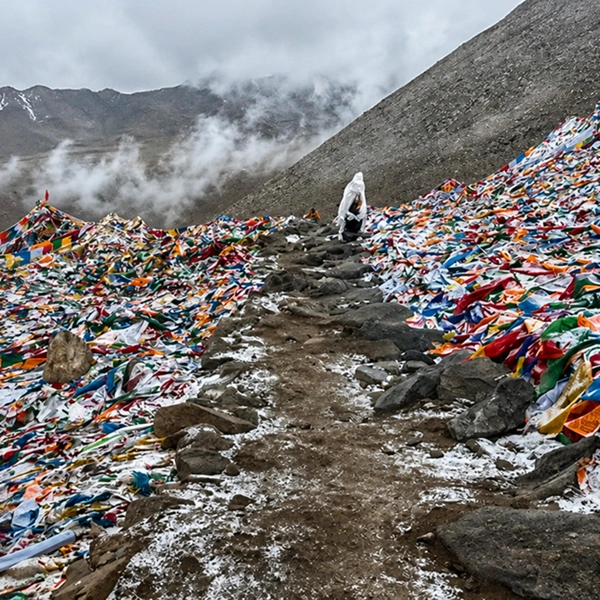
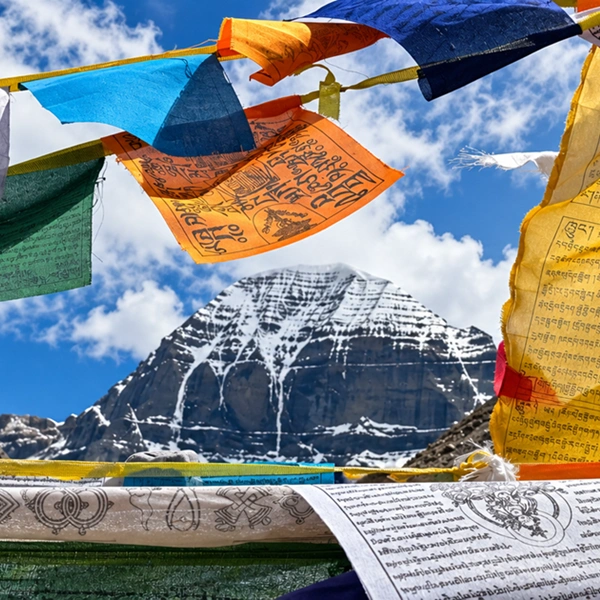
The flood that made the most news recently hit the Tibet border at Rasuwagadhi, closing the Kathmandu–Kerung road to Kailash.
It changed nothing on the Everest, Annapurna, Langtang, or Mustang routes, none of which use that corridor. It also changed nothing on our Kailash yatras, which switched to the Lhasa and Hilsa routes.
Where roads do carry monsoon-shoulder risk, we remove them. Every Alpine luxury journey flies when the standard route involves four or more hours of mountain road, so guests traveling to Langtang, Manaslu, Upper Mustang, and Kanchenjunga board a private helicopter instead of a jeep.
Our Nepal monsoon travel guide covers what the wet months offer and what to avoid.
Safety on the Trail: Altitude, Weather and Evacuation
Altitude is the single real risk on a Nepal trek, and it is a risk that itinerary design controls almost entirely. Everest Base Camp sits at 5,364 meters and Kala Patthar at 5,545; the Thorong La on the Annapurna Circuit tops 5,416. The body copes with these heights only if the itinerary climbs slowly, sleeps low, and rests where it should.
Ours does. Every Alpine trek carries an acclimatization night at Namche Bazaar or its Annapurna equivalent, a second at Dingboche or Manang, and a private guide who checks your blood oxygen with a pulse oximeter each evening above 3,500 meters. Because the trip is private, a slow morning or an extra rest day costs nothing but a phone call. Group treks cannot offer that, and it is where most altitude trouble begins.
Evacuation is planned, not improvised. In clear weather, a helicopter can reach Gorak Shep from Kathmandu in under an hour, and our guides carry the operator's contact information and insurance protocols to call one without waiting for approval. We require travel insurance with helicopter evacuation cover to 6,000 meters for every trekking guest.
Our Everest altitude safety guide sets out the symptoms and the decisions in detail. Weather is the other trail variable, and the seasons above manage most of it. Spring afternoons cloud over; autumn skies stay clear until December. Outside those windows, the high passes are covered in snow, and we do not send guests over them.
Flying in Nepal: Mountain Flights, Helicopters, and How We Reduce the Risk
Flying in Nepal is safe when the aircraft, the operator, and the weather rules are all chosen carefully, and we choose all three. The Lukla sector is the one most travelers worry about.
Its runway is 527 meters long on a 12-degree slope at an elevation of 2,860 meters, which is why fixed-wing pilots need clear visibility and why cancellations are common in the clouds.
Our answer is to fly Khumbu guests back and forth by helicopter. A helicopter departs Kathmandu, lands at Lukla or flies on to Namche in around forty minutes, and does so from a hover rather than an approach.
It waits for the weather rather than pushing it. On the return, we never put a luxury guest on a fixed-wing out of Lukla; the helicopter that brought you in brings you out.
For Pokhara and Bharatpur, we use scheduled domestic flights operated by the operators with the most modern fleets and the best on-time record, and we have a road alternative on the Prithvi Highway if fog closes the sector.
Our guide to Nepal's domestic flights explains which sectors run reliably and when.
Crime, Health and Everyday Safety for Luxury Travelers
Violent crime against visitors in Nepal is rare, and the everyday risks are the ordinary ones of any Asian city: pickpockets in a crowded lane, a taxi meter left off, a bag on a café chair.
Thamel is busy and loud but not threatening at night. A Tourist Police unit operates in Kathmandu specifically for visitors, and your guide handles any incident before it becomes your problem.
Health precautions are practical rather than exotic. Drink only filtered or bottled water, which we supply on every trek; eat cooked food and peeled fruit; carry your own basic medicines at altitude.
Kathmandu has international-standard hospitals and travel-medicine clinics, and Pokhara has a good private hospital. On the trail, your guide carries a first-aid kit and the evacuation plan above.
Women traveling alone, families with children, and guests in their seventies all trek with us every season, and each asks a slightly different safety question.
The honest answer to all three is that a private guide, private vehicle, and a planned itinerary remove almost every situation a guidebook warns about.
Our guide for women travelers in Nepal addresses the specifics.
Which Nepal Treks and Tours Are Running Now
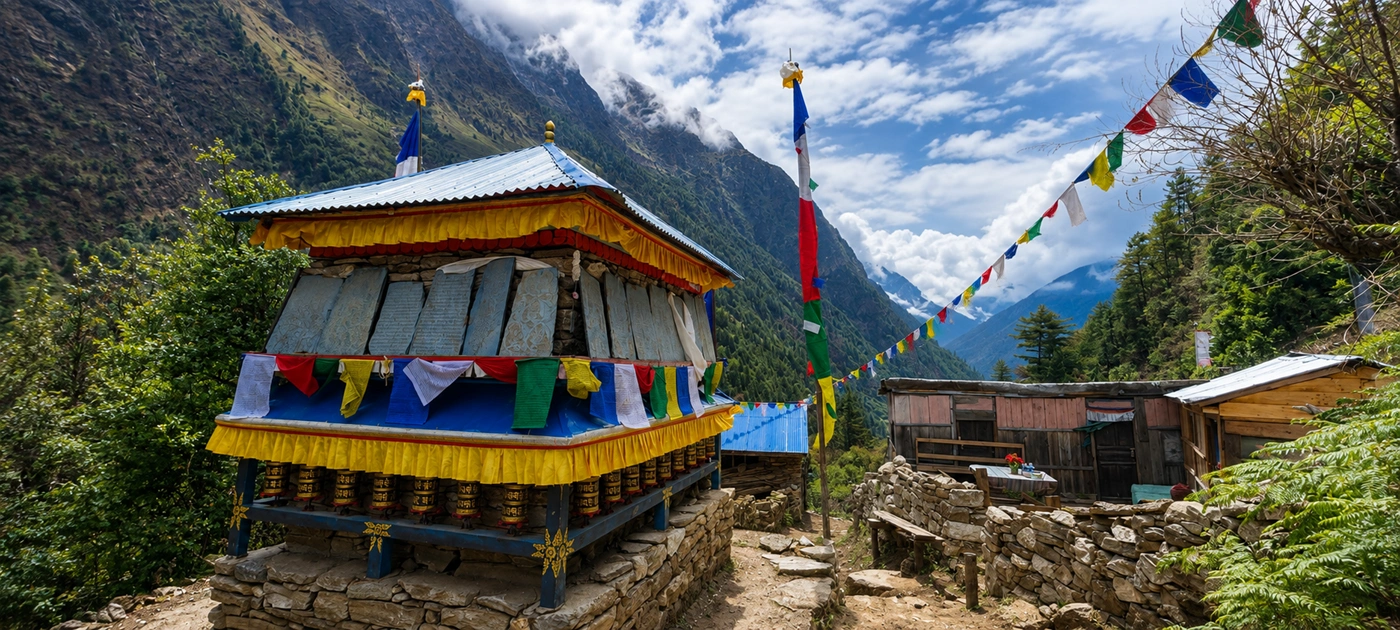
Every Nepal journey we operate runs during its normal season, from the Khumbu to the Terai. The Everest Base Camp luxury trek flies by helicopter both ways and sleeps in lodges with hot showers in Dingboche.
The Annapurna routes leave from Pokhara, where Sarangkot sunrises can be seen from the hotel itself. Langtang and Mustang fly in by private helicopter. Chitwan and Bardia run jeep and river safaris through the dry months when tiger sightings peak.
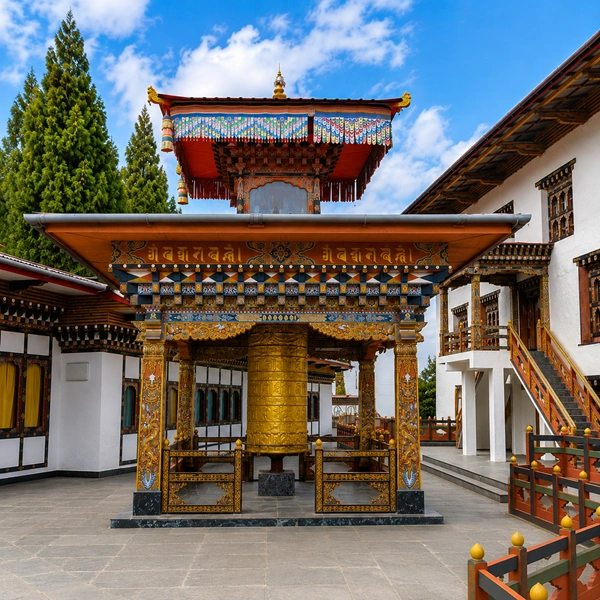
The Kathmandu Valley's seven UNESCO monument zones are open, and the cities feel as they always have: incense at Boudhanath at dawn, the Newari courtyards of Patan, the evening aarti on the Bagmati at Pashupatinath. Nothing in the last few seasons has changed what a guest sees or how a guest is received.
If anything, the welcome is warmer. Nepal's tourism economy felt every canceled booking, and the lodge owners, guides, and drivers who work with us know exactly what a returning traveler means. You will not be treated as a tourist. You will be treated as someone who came back.
How We Keep You Safe From Inquiry to Departure
Safety on an Alpine journey starts before you book and runs until you land at home, and it works because the trip is private and the company is local.
When you enquire, we give you an honest picture of the season, route, and altitude for your dates. When you confirm, you receive a pre-departure brief covering insurance, health, permits, and what to do in the one-in-a-hundred case that Kathmandu has a strike on your arrival day.
On the ground, a single named guide stays with you from the airport to the airport. Your vehicle is ours, your itinerary is yours to slow down, and our Kathmandu operations line answers at any hour.
We check border and road status before every departure, hold buffer nights before international flights, and never book a same-day mountain-to-international connection.
That is what "held, not handled" means when the question is safety. Nepal is a country we would send our own families across, and we do. Start with the wider picture in our guide to luxury travel in the Himalayas, then let us plan your Best of Nepal private tour for a season we would choose ourselves.
Frequently Asked Questions About Nepal Travel Safety
Is Nepal safe to travel to after the protests in Kathmandu?
Yes. Political protests in Nepal are concentrated in central Kathmandu, announced in advance, and usually short. The trekking regions, Pokhara, Chitwan, and the heritage cities are unaffected, and the trekking season went ahead on schedule the year the capital's protests made international news. We route airport transfers around any announced gathering and use the built-in Kathmandu rest day to absorb a shifted sightseeing morning.
Is it safe to trek in Nepal without a group?
Trekking privately in Nepal is safer than trekking in a group, provided you have a licensed guide, which current regulations require in the national parks. A private guide sets your pace, checks your oxygen saturation each evening above 3,500 meters, and can add a rest day without consulting anyone. Every Alpine trek runs this way, with a private vehicle and a helicopter evacuation plan in place before you leave Kathmandu.
Are Nepal's mountain flights to Lukla safe for luxury trekkers?
The Lukla sector is safe when the weather rule is followed, and we address most concerns by flying Khumbu guests in and out by helicopter. Helicopters approach Lukla's 527-meter sloping runway from a hover, wait for clear weather rather than pushing through cloud, and never run the fixed-wing return that causes most Lukla delays. Pokhara and Bharatpur sectors use scheduled flights on the most modern regional fleets.
Does the Rasuwagadhi flood affect treks in Nepal, like Everest or Annapurna?
No. The Rasuwagadhi flood damaged the Kathmandu–Kerung border road into Tibet, a corridor used only by overland Kailash pilgrims and Tibet tours. The Everest, Annapurna, Langtang, Manaslu and Mustang routes never touch it. Our Kailash yatras switched to the Lhasa fly-in and Hilsa helicopter routes, and every Nepal trek and tour continued on its normal season and itinerary.
What travel insurance do I need for a trek in Nepal with helicopter evacuation?
You need a policy that covers trekking to your itinerary's maximum altitude and pays for helicopter evacuation, which we require to 6,000 meters for every trekking guest. Check that the policy names Nepal, covers altitude explicitly rather than "hiking", and pays the operator directly or reimburses within days. We confirm your policy details before permits are filed, so the evacuation call, if ever needed, can be made without delay.
Is Kathmandu safe at night for luxury travelers?
Kathmandu is safe at night for visitors who keep to the busy districts and use hotel- or guide-arranged transport. Thamel and Lazimpat stay lively until late, violent crime against tourists is rare, and the main risks are pickpockets and unmetered taxis. We provide a private vehicle for evening outings and a guide who knows which lanes are lit; most guests find the city calmer after dark than its daytime traffic suggests.
When is the safest time of year to visit Nepal for trekking?
The safest and best trekking windows in Nepal are mid-March to mid-June in spring and mid-October to mid-December in autumn. Roads are dry, rivers are low, mountain flights run to schedule, and the high passes are clear of deep snow. November, after the tenth, is our own favorite month for clear skies and thinner trails. We do not sell high treks in the monsoon or over the passes in deep winter.
Is Nepal safe for solo women travelers on a private tour?
Yes. Women traveling alone with us have a named guide, a private vehicle, and confirmed accommodation from arrival to departure, which removes the unplanned situations that cause most concern. Nepali culture is respectful toward visitors, and modest dress in villages and temples is the only adjustment most guests make. We assign female guides on request and brief every woman traveling solo on the specifics of her route before she flies.