Bhutan in winter, December to February, means dry air, clear mountain views and cold mornings, with comfort set by valley altitude. Punakha, at about 1,200 metres, runs roughly ten degrees warmer than Paro and Thimphu, so we plan winter loops to sleep low, visit high, and catch the cranes and December festivals.
Bhutan in Winter: What December to February Is Really Like

Bhutan in winter is dry, bright and quiet, and it is far more comfortable than the word "winter" suggests in the valleys most visitors use. From December to February, the monsoon haze is long gone. The Himalaya stands clear from the passes most mornings, and the October crowds have gone home.
The catch is cold, and cold in Bhutan depends almost entirely on altitude. A frosty dawn in Paro and a shirt-sleeve lunch in Punakha can happen on the same day, a few hours' drive apart. Plan around that difference and a winter week works beautifully.
This guide covers December to February only. For the four-season picture, our guide to the best time to visit Bhutan compares every month of the year.
Bhutan in winter: Paro valley under clear December skies with frost on the rice terraces
What Is Bhutan Like in Winter?
Winter in Bhutan brings cold, clear, and almost rain-free weather to the western valleys, with strong sun by day and frost at night. Daytime highs in Paro and Thimphu usually sit in the low to mid teens Celsius. After dark, both drop below freezing.
Light is the reward. Winter air is the driest of the year, so the views from Dochula and Chele La are at their sharpest, and the low sun turns whitewashed dzong walls gold in the late afternoon.
Days are short, though. It is dark soon after five, so we start early and keep evenings by the fire.
Snow falls a few times each winter, mostly on the high passes and sometimes on Thimphu itself. Paro and Punakha valley floors rarely hold it for long.
Bhutan in Winter Is a Valley-Altitude Question
The single most useful fact about Bhutan in winter is that a valley's altitude matters more than the month. Punakha, at about 1,200 metres, runs roughly ten degrees warmer than Paro and Thimphu at 2,200 to 2,300 metres on the same day. Phobjikha, near 2,900 metres, is colder again.
Here is how the main valleys feel between December and February:
- Punakha, about 1,200 m. Mild days near 20°C, oranges on the trees, the dzong in full sun. The warmest place on a western loop.
- Paro, about 2,200 m. Crisp mornings, frost on the fields, bright clear afternoons. The airport valley and the base for Tiger's Nest.
- Thimphu, about 2,300 m. Like Paro, but a touch colder at night. The capital stays busy all winter.
- Phobjikha, about 2,900 m. Properly cold, with snow possible. Go for the cranes.
- Bumthang, about 2,600 to 3,000 m. Cold and beautiful, with long drives over high passes. Better added only with a flexible schedule.
That pattern shapes every winter itinerary we build. The rule is simple to say and easy to forget when choosing hotels: sleep low, visit high.
Punakha Dzong in winter sunshine, the warmest valley on a Bhutan winter itinerary
Bhutan in December, January and February
Each winter month in Bhutan has its own character, and the differences matter for festivals and wildlife more than for weather.
Bhutan in December
December opens winter with the season's clearest skies and the first real cold. Black-necked cranes settle in Phobjikha, and the Druk Wangyel Tshechu fills Dochula Pass in mid-December. Christmas and New Year bring a short rise in visitors, so book flights early for those weeks.
Bhutan in January
January is the coldest and quietest month. Mornings in Paro and Thimphu often start well below freezing, and the passes see their most frequent snow. Trongsa and Lhuentse hold their tshechus around the turn of the year, and Tiger's Nest sees fewer walkers than at any time outside the monsoon.
Bhutan in February
February warms by the week and ends winter on a festival. The cranes begin leaving Phobjikha in mid-February. In late winter, Punakha holds its Drubchen and Tshechu, the reenactment of a 17th-century battle followed by masked dances in the dzong courtyard.
Bhutan Winter Festivals
Bhutan's winter festivals are smaller and less crowded than those in Paro or Thimphu in spring and autumn, and several fall between December and February. Most follow the lunar calendar, so dates shift each year and are confirmed at booking.
- Druk Wangyel Tshechu, Dochula Pass, mid-December. The army-danced festival beside the 108 chortens, and the only one on a fixed date each year. Our Druk Wangyel Tshechu guide covers the day in detail.
- Trongsa and Lhuentse Tshechus, around the turn of the year. Held in the royal family's ancestral seats in central and eastern Bhutan. Both need a longer trip.
- Punakha Drubchen and Tshechu, late winter. The armoured pazap warriors, then the tshechu, in the warm Punakha valley. Usually February or early March.
The Black-Necked Crane Festival at Gangtey falls in mid-November, just before winter proper. It opens the crane season rather than sitting inside it.
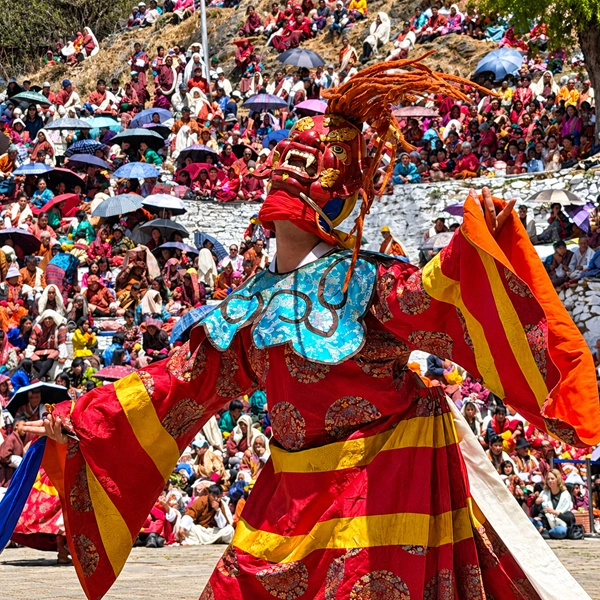
Masked dancers at a Bhutan winter festival in a dzong courtyard, with spectators in gho and kira
How We Plan a Winter Loop in Bhutan
Our winter routing comes down to three habits: sleep in the warm valley, cross the high pass early, and climb to Tiger's Nest before the sun is high. Each one answers a winter problem before it starts.
Sleep low. On the Paro, Thimphu, and Punakha loop, we spend the longest time in Punakha, the warmest valley on the route. A late-afternoon walk among the rice terraces there feels like early autumn.
Cross Dochula by late morning. Heavy snow can close the Dochula road for a few hours, and ice lingers in the shade. So the Thimphu-to-Punakha drive leaves in the morning, with time to stop at the 108 chortens while the mountains are clear. If the pass is shut, we wait it out in Thimphu rather than push.
108 chortens at Dochula Pass with fresh snow and clear Himalayan views in Bhutan in winter
Tiger's Nest before nine. In winter, the upper steps of the Taktsang trail are frosty and nearly empty in the early morning. We start soon after breakfast, walk in the cold shade, and reach the monastery as the sun clears the ridge.
The Black-Necked Cranes of Phobjikha
Black-necked cranes winter in the Phobjikha valley from late October to about mid-February, making it a great reason to include a colder valley in a winter trip. Several hundred cranes fly in from the Tibetan plateau each year. They feed on the open marsh below Gangtey Goenpa and roost in the wetland at dusk.
Phobjikha sits over the Pele La from the Punakha side, so it adds two nights to a western loop rather than a separate journey. Expect real cold here, and a quiet that is hard to find anywhere else in Bhutan. Our Black-Necked Crane Festival tour centres on the start of the season.
Black-necked cranes feeding on the Phobjikha valley marsh below Gangtey Goenpa in winter
What Winter in Bhutan Does Not Give You
Winter suits valley travel, not high trekking. Snow closes Bhutan's high routes, from Jomolhari to the Snowman, and even the Druk Path is cold and often impractical. The trekking seasons are spring and autumn.
Days are short, and the high country is cold. Nights in Bumthang and Phobjikha are well below freezing, and a long drive over two or three passes can stretch on snow. We keep those valleys optional unless your dates are flexible.
There is no winter discount on Bhutan's Sustainable Development Fee. At the time of writing it is US$100 per adult per night all year, and we include it in our quoted price.
Combining Bhutan and Nepal in Winter
Bhutan in winter pairs well with Nepal's lower valleys and cities, which share the same dry, clear season. Kathmandu has a direct flight to Paro, so a winter trip can open with temples and heritage squares in Nepal and finish in Punakha's sun. Our guide to visiting Nepal in winter covers that half of the journey.
What to Pack for Bhutan in Winter
Pack for frost and sunshine on the same day. A warm down jacket, thermal layers, a fleece, a warm hat and gloves cover the mornings and evenings. Light layers and sunglasses cover Punakha's afternoons.
Bring sturdy walking shoes with good grip for frosty steps on the Tiger's Nest trail. Dzongs and temples require long sleeves and covered legs, so warm, modest layers do double duty. A good moisturiser and lip balm help in the very dry winter air.
Bhutan in Winter FAQs
Is Bhutan in winter too cold to enjoy?
Bhutan in winter is cold in the mornings and evenings but comfortable by day in the valleys most visitors stay in. Paro and Thimphu reach the low to mid teens Celsius under clear skies, and Punakha runs about ten degrees warmer. With warm layers and a hotel in Punakha, most of our guests find winter far easier than they expected.
Can you hike to Tiger's Nest in Bhutan in winter?
Yes, the Tiger's Nest hike stays open through Bhutan's winter, and it is one of the quietest times to do it. The upper steps can be frosty in the early morning, so good grip and a warm layer matter. We start soon after breakfast to reach the monastery as the sun reaches the cliff.
Does the Dochula Pass close in winter in Bhutan?
The Dochula Pass road between Thimphu and Punakha can close for a few hours after heavy snow, and it has done so in December. Closures are usually short. We plan the crossing for the morning and keep a flexible window in Thimphu, so a snow closure costs a few hours, not a day.
When are the black-necked cranes in Phobjikha during Bhutan's winter?
The black-necked cranes are in Phobjikha from late October until about mid-February, so they overlap all of December and January. Sightings thin out in February as the birds leave for Tibet. Allow two nights in the valley to see the cranes feeding by day and returning to roost at dusk.
Which festivals happen in Bhutan in winter?
Bhutan's winter festivals include the Druk Wangyel Tshechu at Dochula in mid-December, the Trongsa and Lhuentse tshechus around the turn of the year, and the Punakha Drubchen and Tshechu in late winter. Most follow the lunar calendar and shift each year, so we confirm exact dates when you book.
Is the Sustainable Development Fee lower in winter in Bhutan?
No, Bhutan's Sustainable Development Fee does not drop in winter. As of now, it is US$100 per adult per night year-round, with reduced rates for children. We include the fee in our quoted price, and your booking proposal confirms the rate that applies to your dates.
Plan Your Winter in Bhutan
We think of a winter week in Bhutan as a way to experience the Himalaya as a whole: choose the season that suits the place, then build the route around the weather. Our guide to luxury travel in the Himalayas explains that approach across Nepal, Bhutan and Tibet.
For a first winter visit, our 7-day Bhutan luxury tour runs the Paro, Thimphu, and Punakha loop described here, with a private guide and vehicle included in the price. Tell us your dates, and we'll shape it around the cranes or a December festival.
Need Help? Call Us+977 9851013196orChat with us on WhatsApp
Need Help? Call Us+977 9851013196