Nepal in winter is the season almost everyone skips, and that is exactly why we keep recommending it.
From December through February, the monsoon is a distant memory, the air over the Kathmandu Valley dries out, and the high peaks stand in a clarity that autumn trekkers rarely see past ten in the morning. The trails are empty. Lodge dining rooms that held sixty people in October hold six.
We tell our guests the honest version: our headline windows remain from mid-March to mid-June (spring) and from mid-October to mid-December (autumn). Look closely at that second window, though. The first half of December already sits inside it.
Winter is not a separate, forbidden season — it is the quiet continuation of the best one.
This guide covers what the cold months actually feel like on the ground, which journeys work, which we hold back for spring, and how our winter operation differs from the rest of the year.
Why Nepal in winter works
Winter works in Nepal because it is the driest time of year, and dry air is what mountain views are made of. Kathmandu records some of its lowest monthly rainfall of the year across November, December, and January, which is why winter visibility is so dependable.
Where an October afternoon often hazes over by lunch, a January afternoon can stay pin-sharp until the light goes.
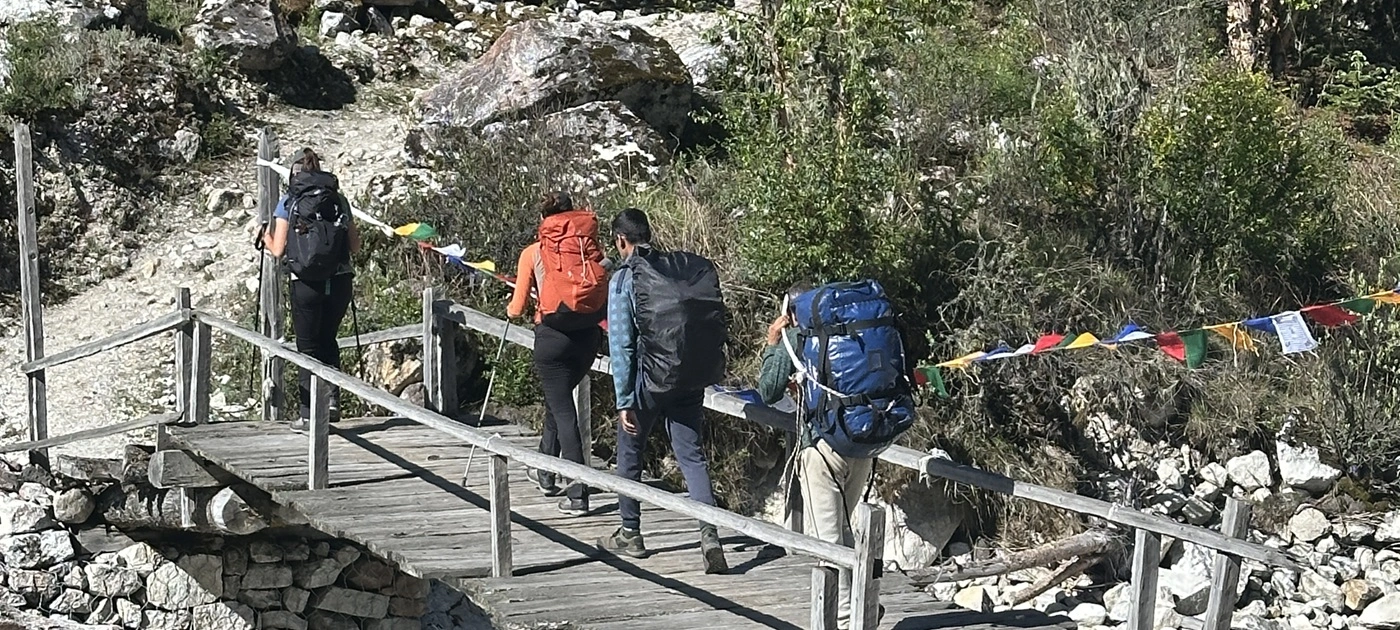
The second advantage is space. Namche Bazaar's bakeries, the stone steps of Ghorepani, the sunrise platform at Poon Hill — places that feel like queues in peak season return to being places. On a private trip that matters twice over.
Your guide sets the pace without weaving through groups, and the lodges can give you their best rooms, the ones facing the mountains, without negotiation.
The third is the cost of comfort, in the practical sense. Flights, guides, and rooms are easier to secure at short notice. A winter journey can be confirmed weeks out, not months, which suits guests planning around a December holiday break.
Winter weather in Nepal: what to actually expect
Expect dry, sunny days almost everywhere, sharp cold at night, and a wide temperature range with altitude. Daytime temperatures in Kathmandu in winter typically reach 17–20°C, while nights drop to around 2–4°C between late December and early February. The valley's famous morning fog is real but short-lived; it usually burns off by mid-morning, leaving a blue sky behind.
Pokhara, five hundred meters lower beside Phewa Lake, runs a few degrees warmer. Chitwan and the Terai lowlands are genuinely mild — shirt-sleeve afternoons in the low twenties, cool, misty dawns that suit wildlife drives.
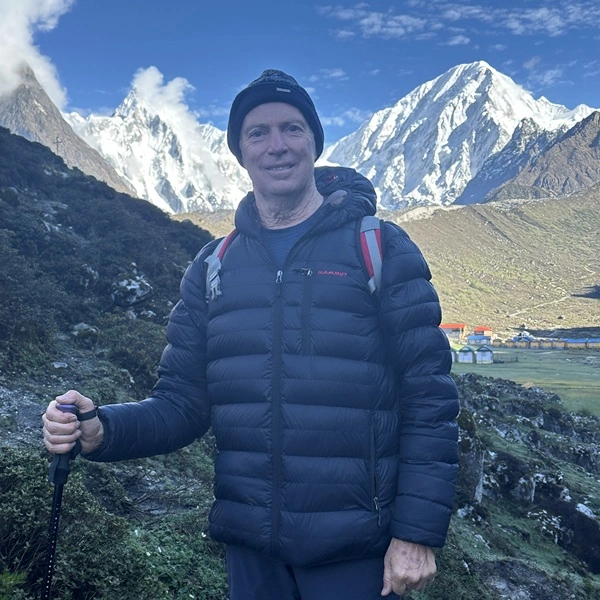
The mountains are a different arithmetic. At Namche Bazaar (3,440 m) expect sunny trekking days around 5–10°C and nights well below freezing. Above 4,000 m, night temperatures of −10°C to −15°C are normal in January. The cold is dry and still rather than damp and windy at trekking altitudes, which makes it far more manageable than the numbers suggest. Snowfall comes in occasional short systems, dusts the trail, then yields to sun again.
The treks that work in winter, and the ones we hold for spring
The best winter treks in Nepal are those that stay below roughly 4,000 m, and they include some of the country's most beautiful walks. Our Luxury Everest View Trek is the clearest example.
It tops out at a sleeping altitude of about 3,880 m near Tengboche, low enough to stay comfortable and open right through the winter months, with Everest, Lhotse and Ama Dablam standing in the driest air of the year.
In the Annapurna foothills, the Ghorepani–Poon Hill circuit runs all winter. The rhododendron forest goes quiet and frost-silvered, and the 3,210 m sunrise viewpoint gives you Dhaulagiri and Machhapuchhre with a fraction of the usual company. Short valley-rim walks near Kathmandu — Nagarkot, Namobuddha, the Shivapuri ridgeline — are at their finest now, because the views they exist for are finally reliable.
What we hold back: the high crossings. Thorong La on the Annapurna Circuit, the Everest Three Passes, and Larkya La on the Manaslu route — all sit above 5,100 m and carry genuine snow and cold risk in deep winter.
We schedule those for spring and autumn without exception. Everest Base Camp itself is possible for well-acclimatized guests in December, and we run it then with extra rest built in, but January and February at Gorak Shep are for the committed few, and we say so plainly.
Helicopters change the equation entirely. A winter Everest helicopter flight from Kathmandu trades on exactly what the season does best — cold, stable, transparent air — and lands you back for lunch in the valley's warmth.
Kathmandu, Pokhara and Chitwan in the cold season
Winter is the best season of the year for Nepal's cities and lowlands. Kathmandu's courtyards and temple squares are made for crisp, bright walking weather. Patan's Durbar Square, the great white dome of Boudhanath, the morning circuit at Swayambhunath — all of it is more pleasant at 18°C under a clear sky than in the pre-monsoon heat.
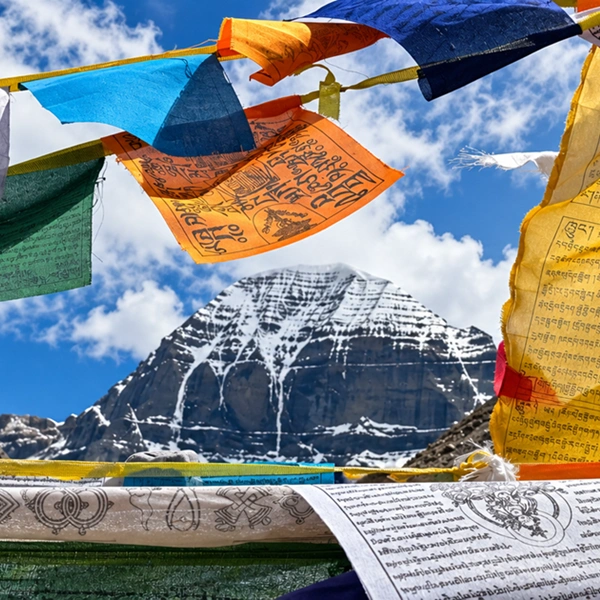
Winter also carries the valley's living calendar. Maghe Sankranti arrives in mid-January with sesame sweets and river-ghat gatherings, and Losar, the Tibetan and Sherpa new year, falls later in the season on dates set by the lunar calendar. Boudhanath during Losar — butter lamps, fresh prayer flags, whole families in their best brocade — is one of the most vivid cultural scenes Nepal offers, and it belongs to winter alone.
Chitwan National Park is arguably at its peak. The post-monsoon elephant grass has been cut low by late winter, so one-horned rhinos and deer stand visible across open ground, and tiger sightings improve for the same reason. Cool mornings on the Rapti River, warm afternoons in the sal forest. Pokhara gives you the view of Machhapuchhre reflected in Phewa Lake on windless winter mornings, the photograph everyone came for.
What we do differently on winter departures
Our winter operation is built around three standing practices, and they are the reason our guests remember the season warmly in both senses. First, we run Kathmandu on a late-start rule: because valley fog lifts by mid-morning, we schedule the temple squares and courtyards after ten and keep the clear early hours for hilltop viewpoints like Nagarkot, where winter dawn does its best work.
Second, warmth is engineered, not hoped for. In the Khumbu, we book lodges with heated dining rooms and have hot water bottles placed in beds at turndown — a small thing at 3,800 m in January that changes everything about how you sleep.
Down jackets and four-season sleeping bags are part of our standard winter kit, so guests can fly in with light luggage.
Third, we keep our helicopter standard through winter: both directions between Kathmandu and the Khumbu on our luxury Everest programs, flown in the calm early-morning window when winter air is at its most stable.
No cold pre-dawn waits at a fixed-wing terminal, and no exposure to the multi-day flight backlogs that can follow a weather system. Our guides carry pulse oximeters year-round and check guests each evening; in winter, they also watch for signs of cold exposure on the trail with the same routine attention.
Packing for a Nepal winter journey
Pack for two climates in one bag: mild, sunny days and hard-freezing nights. The core is layering — a merino base, a fleece mid-layer, a serious down jacket for evenings — plus a warm hat, liner gloves under insulated gloves, and sunglasses rated for high-altitude glare, because winter sun off snow is fierce. Sunscreen matters more in January than in July here.
For trekking routes, add four-season-rated sleeping gear, microspikes for the occasional icy morning stretch of trail, and a thermos your guide will keep filled with ginger tea. City-and-lowland itineraries need far less: a warm jacket for evenings, comfortable walking shoes, and one lighter layer for Chitwan afternoons. Our full checklist lives in our Himalayan packing guide, and we confirm a trip-specific list with every booking.
Nepal in winter FAQs
How cold does it get on the Luxury Everest View Trek in January?
Expect sunny trekking days of roughly 5–10°C and nights of −5°C to −12°C at the trek's high lodges around Tengboche and Namche Bazaar. The cold is dry rather than damp; daytime walking remains comfortable in layers, and heated dining rooms, plus hot water bottles at turndown, handle the evenings. The route sleeps below 3,900 m, so it remains fully open all winter.
Are Everest views really clearer in winter than in autumn?
Generally, yes — winter air over the Khumbu is the driest of the year, so views of Everest, Lhotse and Ama Dablam often hold sharp from dawn until dusk. Autumn mornings are equally clear, but afternoon haze builds more often once the trails warm. In January, it is common to photograph the peaks in full clarity at four in the afternoon.
Can you trek to Poon Hill in December and February?
Yes — the Ghorepani–Poon Hill route stays open through the entire winter. Its highest point is the 3,210 m sunrise viewpoint, well below serious snow-closure altitude, and lodges in Ghorepani operate year-round. Expect frost on the stone staircases at dawn, occasional light snow that clears within a day, and a fraction of the peak-season crowd at sunrise.
Is flying to the Khumbu reliable during Nepal's winter months?
Winter mornings are among the most stable flying conditions of the Nepali year — cold, calm, high-visibility air. Weather systems do pass through and can pause flights for a day, which is why we operate helicopters in the early-morning window and build buffer time into every Khumbu itinerary. Helicopters also recover from a weather pause faster than fixed-wing backlogs do.
Does Chitwan National Park stay warm enough for a winter safari?
Comfortably, yes — Chitwan sits at an altitude of under 200 m, so winter afternoons reach the low-to-mid twenties Celsius while dawns are cool and misty. Wildlife viewing actually improves in late winter because the tall elephant grass has been cut, leaving rhinos, deer and the occasional tiger visible across open ground. Bring one warm layer for early-morning drives and canoe trips.
Which Nepali festivals fall during the winter season?
Two stand out. Maghe Sankranti, in mid-January, marks the sun's turn toward longer days with sesame-and-molasses sweets and gatherings at sacred river confluences. Losar, the Tibetan and Sherpa New Year, follows later in winter on dates set by the lunar calendar each year — Boudhanath fills with butter lamps and fresh prayer flags. We confirm the exact festival timing when we build your itinerary.
Winter will not suit everyone, and we would rather tell you that than sell you the wrong season. But if what you want from Nepal is clear mountains, quiet trails, and cities at their most walkable, the December–February window gives you all three at once. When you're ready to see what those weeks could look like for you, start with our Luxury Everest View Trek — the journey we consider winter's finest.