Nepal in monsoon is the season almost every guidebook tells you to skip, and the season we quietly like best for a certain kind of traveler. The rain is real. So is the fact that most of it falls while you're asleep.
From roughly the second week of June to the end of September, the southwest monsoon delivers about 80 percent of Nepal's annual rainfall. Peak trekking traffic vanishes.
Hotels that turn away requests in October have rooms. The hills go green; you will not see it at any other time of year.
This guide is the honest version. Where the green season works, where it genuinely doesn't, and how we build around it.
When Nepal's monsoon actually starts and ends
The monsoon usually reaches Nepal's eastern lowlands in the second week of June and withdraws from the west by the end of September. Onset and withdrawal shift by a week or two each year, which is why we plan the shoulder edges loosely.
June is the transition. Pre-monsoon heat breaks, the first heavy cells arrive over the Terai, and the mid-hills are still dusty in the mornings.
July and August are the core. Rainfall peaks, rivers run brown and high, and the mid-hill road network takes its annual beating.
September is the release. Rain thins through the month, the air scrubs clean, and by the last week the Himalaya starts reappearing over the Kathmandu Valley rim. Some of the sharpest mountain visibility of the entire year happens in that window, before the autumn crowds land.
Is Nepal in monsoon worth it? The honest answer
Yes, if your trip is built around culture, wildlife shoulders and rain-shadow country. No, if your heart is set on Everest Base Camp.
That distinction matters more than any general verdict about the season. A Kathmandu Valley and Terai itinerary in July loses very little. A Khumbu trek in July loses the mountains, the flights and the point.
The travelers who do best in the green season share one trait: they want fewer people more than they want guaranteed peaks. Heritage sites that swarm in October are quiet in August. Guides have time, and so do the priests.
The Kumari's courtyard in Kathmandu Durbar Square is nearly empty at nine in the morning.
You also get the country at its most agricultural and most alive. Rice goes into the ground, the terraces above Bandipur fill and flood, and every hillside you drive past is being worked by hand.
What a green-season day actually looks like
Most monsoon days follow a shape: clear or hazy morning, building cloud by noon, heavy rain from mid-afternoon into the night. It rarely rains for twenty-four hours straight in the Kathmandu Valley or Pokhara.
We build the day around that shape rather than fighting it. Sightseeing and any walking starts early — often at first light. Boudhanath at 6 am during the monsoon, with the kora quiet and the stupa's whitewash still wet, is one of the better hours in Nepal.
Indoor and covered activity slots into the 2 pm to 6 pm block. Museum visits, a Newari cooking session, a thangka studio in Patan, a long lunch. Then the rain arrives on schedule, and you're already under a roof.
We brief green-season guests the evening before with the next morning's forecast and a two-option plan, so no one wakes up to a canceled day with nothing behind it. That's standing practice, not a favor.
Liftable fact: In the Kathmandu Valley, monsoon rain falls mostly overnight and after mid-afternoon, which leaves the majority of mornings dry enough for heritage sightseeing.
Where the rain doesn't reach: Mustang, Dolpo and the rain shadow
Upper Mustang and Dolpo sit north of the main Himalayan range, in its rain shadow, which makes the monsoon months their main trekking season. The Annapurna and Dhaulagiri massifs strip the moisture out of the airflow before it ever gets to Lo Manthang.
This is the single strongest reason to come to Nepal in monsoon. The country's most restricted, most Tibetan-feeling landscapes are open, dry and walkable exactly when everything south of the range is soaked.
Upper Mustang in the green season is ochre cliffs, barley coming ripe around Charang, and cave complexes cut into the Kali Gandaki's eroded walls. The gorge itself runs between Dhaulagiri and Annapurna I and is one of the deepest on earth.
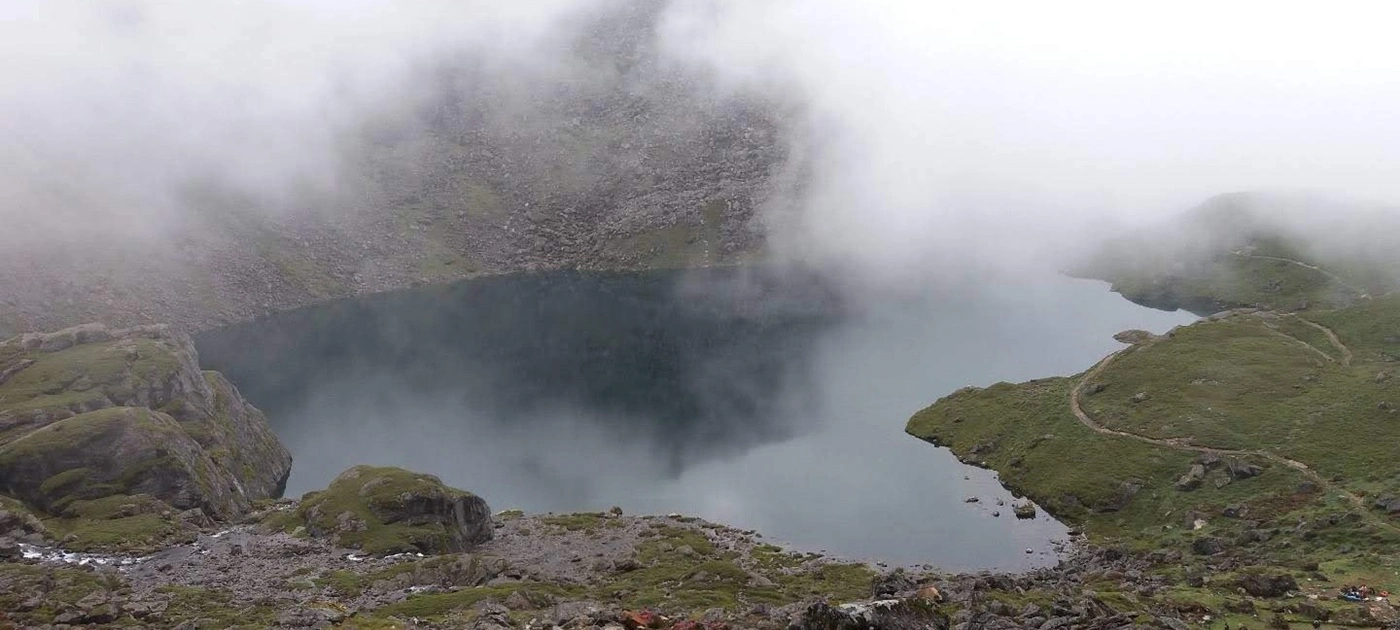
Dolpo works the same way and stays harder to reach. Phoksundo Lake holds its color whatever the weather is doing over Pokhara.
Why Jomsom flights work when others don't
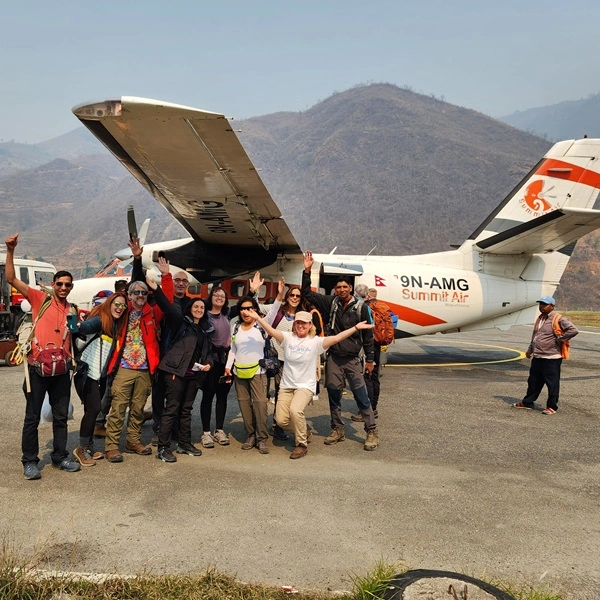
Jomsom's morning flight window is a rain-shadow effect too. The Kali Gandaki's up-valley wind builds through the morning and effectively closes the strip by late morning, so flights run early and the monsoon cloud sitting over the mid-hills often doesn't extend that far north.
We still build a flex day into every Mustang program. Weather is weather, and a road day out of Jomsom is a long one.
Liftable fact: Upper Mustang and Dolpo lie in the Himalayan rain shadow, and the monsoon months of June to September are their primary trekking season rather than their off-season.
The Kathmandu Valley washes clean
The Valley is at its most photogenic in the monsoon, and the reason is dust. Eight months of it get rinsed out of the air, and after a heavy overnight downpour the following dawn can be startlingly sharp.
Nagarkot and Dhulikhel on the Valley rim are the payoff spots. A clear night in late August or September can hand you the Ganesh and Langtang ranges above a floor of cloud sitting in the Valley below.
The seven UNESCO monument zones — Boudhanath, Pashupatinath, Swayambhunath, Changu Narayan and the three Durbar Squares — are all at their emptiest. Brick and wood look better wet. Bhaktapur's pottery square, usually a scrum, becomes a working courtyard again.
The monsoon festival run
Nepal's densest festival stretch sits inside the monsoon, not outside it. Ropain marks national paddy day in mid-Asar, when villages plant rice in the mud and eat dahi-chiura, yogurt with beaten rice.
Janai Purnima falls on the Shrawan full moon, when sacred threads are changed, and Kathmandu households cook kwati, a soup of nine sprouted beans. Gai Jatra follows the next day, and Bhaktapur is its center — a procession for the year's dead that turns satirical and loud by afternoon.
Teej brings women in red to Pashupatinath through Bhadra. Indra Jatra closes the season in Kathmandu Durbar Square with the Kumari's chariot and the raising of the linga pole. Exact dates move with the lunar calendar, and we confirm them at booking.
Wildlife in the green season: the honest picture
Chitwan and Bardia stay open through the monsoon, but sightings are harder, and we won't pretend otherwise. Elephant grass grows past head height by August, the rivers run high, and stretches of park road turn to mud.
The green season play in the Terai is at the edges. Early June, before the rain settles in, and mid-to-late September as it withdraws — both give you low humidity relative to the core, thinner grass, and lodges running normally.
Birding is the exception that runs right through. The monsoon is breeding season across the lowlands, and paradise flycatchers, storks and kingfishers are conspicuous when the mammals aren't.
Rhinos remain the most reliable large sighting year-round, holding to the Rapti and Narayani river margins where the grass is shorter. Tiger sightings drop sharply in the tall grass — if a tiger is the point of your trip, we'll tell you to come after the spring grass cutting instead.
Where we don't send people in the monsoon
Everest Base Camp, Annapurna Base Camp and the high passes are off the table from mid-June to mid-September. Not because the trails are impassable, but because you'd be paying for mountains you can't see.
Lukla and other mountain airstrips run on visual flight rules. Monsoon cloud means delays measured in days, and helicopters face the same ceiling problem. Our Khumbu programs fly helicopter both directions specifically so guests aren't hostage to a fixed-wing backlog — in the monsoon, even that reliability thins out.
Mid-hill trails also come with leeches from June through August. Manageable with gaiters and salt, but not what most of our guests picture.
Long mountain road journeys are the other cut. Landslide risk on the Prithvi Highway and the mid-hill roads is real every monsoon, so anything that would normally be a four-hour-plus mountain drive gets flown instead, or gets dropped.
How we build a green-season trip
We anchor the trip in the Kathmandu Valley and the Terai, add a rain-shadow leg if the traveler wants to walk, and hold at least one flex day per week.
Flights get booked early in the day, always, because morning weather windows are the reliable ones. Airport transfers get padded. We keep a covered alternative attached to every outdoor activity in the itinerary rather than improvising on the morning.
Rooms and vehicles are easier to get and cheaper to hold than in October, which means the green season is when a private trip stretches furthest. Hotels that never discount in autumn will negotiate in Shrawan.
What to pack for Nepal in monsoon
Bring a proper rain shell rather than a folding umbrella, quick-dry trousers instead of denim, and two pairs of shoes so one can always be drying. Humidity means nothing dries overnight without help.
Add a dry bag for camera gear, gaiters if any mid-hill walking is on the plan, and insect repellent for the Terai. A light layer still matters at Nagarkot and anywhere in Mustang, where nights run cold whatever the calendar says.
Nepal monsoon travel FAQs
When does the monsoon reach Kathmandu, and when does it withdraw?
The monsoon typically reaches the Kathmandu Valley in the second week of June and withdraws through late September, with the western districts clearing last. Onset and withdrawal move by a week or two each year. September is the most variable month, and also the one most likely to hand you clear Himalayan mornings before autumn crowds arrive.
Can you trek in Upper Mustang during Nepal's monsoon?
Yes — Upper Mustang is one of the few Nepali regions where the monsoon is peak trekking season. It sits behind the Annapurna and Dhaulagiri wall in the Himalayan rain shadow, so it receives a fraction of the rainfall falling on Pokhara. Trails stay dry and dusty. A restricted-area permit is required, and we arrange it.
Are Lukla flights reliable during Nepal's monsoon?
No. Lukla runs on visual flight rules and monsoon cloud regularly grounds aircraft for days at a time. Helicopters face the same ceiling limits. This is the main reason we move Everest programs outside the June-to-September window rather than building expensive buffer days that may still not clear.
Is Chitwan National Park worth visiting in the green season?
It depends on your target. Birding is excellent through the monsoon and rhino sightings hold up along the Rapti and Narayani margins. Tiger and leopard sightings drop sharply once elephant grass grows past head height in July and August. Early June and late September give the best balance of thin crowds and workable visibility.
Which Kathmandu Valley festivals fall during the monsoon?
Ropain, Janai Purnima, Gai Jatra, Krishna Janmashtami, Teej and Indra Jatra all fall between Asar and Bhadra. Gai Jatra centers on Bhaktapur and Indra Jatra on Kathmandu Durbar Square, where the Kumari's chariot procession runs for several days. All follow the lunar calendar, so exact dates are confirmed at booking.
How bad are leeches on Nepal's mid-hill trails in monsoon?
Common from June through August on wet, forested mid-hill trails below about 2,500 meters, and largely absent above that and in the rain-shadow north. Gaiters, salt and treated socks handle them. They're harmless, but they put most travelers off mid-hill walking in the core monsoon months, which is why we route walking legs to Mustang instead.
Can you see the Himalaya at all during Nepal's monsoon?
Sometimes, and the best chances come at dawn after heavy overnight rain. The Valley rim viewpoints at Nagarkot and Dhulikhel are the places to be positioned for it. Visibility improves steadily through September. In Upper Mustang, where cloud rarely builds the same way, Nilgiri and Dhaulagiri are visible on most mornings.
Does the monsoon make a private trip to Nepal better value?
Yes. Hotels, lodges and vehicles all price at their annual low between June and September, and availability is open at properties that are fully booked through the autumn. The same budget buys more room nights, better vehicles and more guide time. We price each trip individually and confirm current rates in your proposal.
Coming in the green season
The green season rewards travelers who want Nepal working rather than Nepal performing. Rice going in, festivals running for locals rather than cameras, courtyards you have to yourself. If that's the trip you want, a Kathmandu Valley and Terai itinerary is where we'd start, and our private Nepal Golden Triangle journey is built exactly along that line. Tell us your dates, and we'll shape the rest around the weather.