Luxury travel in the Himalayas is not the same product as luxury travel anywhere else, and the difference is worth understanding before you spend money on it. Above 3,000 meters, there is no five-star inventory available for purchase.
What there is instead: the best building in the village, a private guide who has walked the trail every season for a decade, a helicopter when the alternative is nine hours of mountain road, and a team that has already solved the problem you haven't noticed yet.
We're based in Kathmandu, and we operate across Nepal, Bhutan, and Tibet. This page is the map of everything we do — the three countries, the seasons, the altitude, the money, and the lead time. Every regional guide on our site runs off it.
What luxury actually means at altitude
Luxury in the Himalayas is measured in reduced friction, not in thread count. The mountain doesn't negotiate. What changes between a standard trip and ours is how much of the mountain's difficulty reaches you.
That plays out in specific ways. Your party is private, so the pace is set by you rather than by the slowest stranger in a group of fourteen. Rooms are held in the best property in each village, and where the best property is still a lodge, our crew arrives ahead to make it right — bedding, heating, hot water, food we've inspected.
Altitude is managed rather than endured. We take oximeter readings in the morning and evening, we build acclimatization into the route rather than bolting on a rest day, and we carry the means to descend fast if a number goes the wrong way.
And where the standard route asks for four hours or more of mountain road, we fly. That's the single biggest quality-of-life improvement available in this part of the world, and we apply it by default on Langtang, Manaslu, Upper Mustang, Kanchenjunga, and Makalu.
The tagline we work to is "Held, not handled." The distinction matters to us. Handling is what a group operator does to a coachload. Holding is what a guide does when he notices your breathing change on the climb out of Namche and quietly slows the whole day down without saying why.
Choosing between Nepal, Bhutan, and Tibet
Pick what you want the trip to feel like: Nepal for walking into high mountains, Bhutan for living culture at moderate altitude, Tibet for the high plateau and pilgrimage. All three are Himalayan, and they are not interchangeable.
Nepal: the walking country
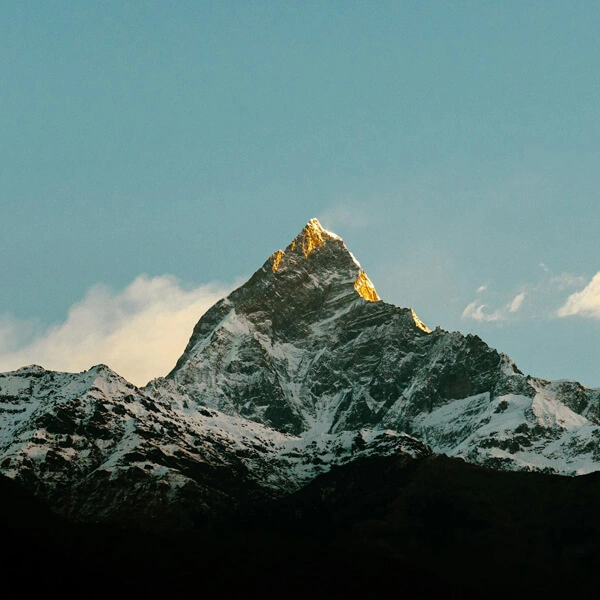
Nepal is where you go to be among 8,000-metre peaks on foot, and it has the deepest lodge infrastructure in the range. The Khumbu delivers Everest, Lhotse, and Ama Dablam via well-served trails; the Annapurna region offers the same scale with an easier altitude profile and better food.
Everest Base Camp sits at 5,364 meters, and Kala Patthar, the viewpoint most people actually come for, is at 5,545. Annapurna Base Camp tops out at 4,130 meters inside a ring of walls that closes over your head. Neither requires climbing skills. Both require you to walk uphill for days.
There is a second Nepal that involves no trekking at all — Kathmandu's seven UNESCO monument zones, the lake at Pokhara, one-horned rhino in Chitwan and Bardia, and helicopter mornings that put you at 5,000 meters for breakfast and back in the city by lunch.
Nepal journeys:Everest Base Camp luxury trek · Everest Base Camp with helicopter return · Annapurna Base Camp with helicopter return · Upper Mustang with helicopter return · Langtang Valley · Nepal wildlife safari
Bhutan: culture at a kinder altitude
Bhutan is the easiest of the three physically and the richest culturally, which makes it the one we recommend most often to travelers who want the Himalayas without the thin air. Paro sits at about 2,200 meters, and Thimphu is a little higher.
Nobody gets altitude sickness at those numbers.
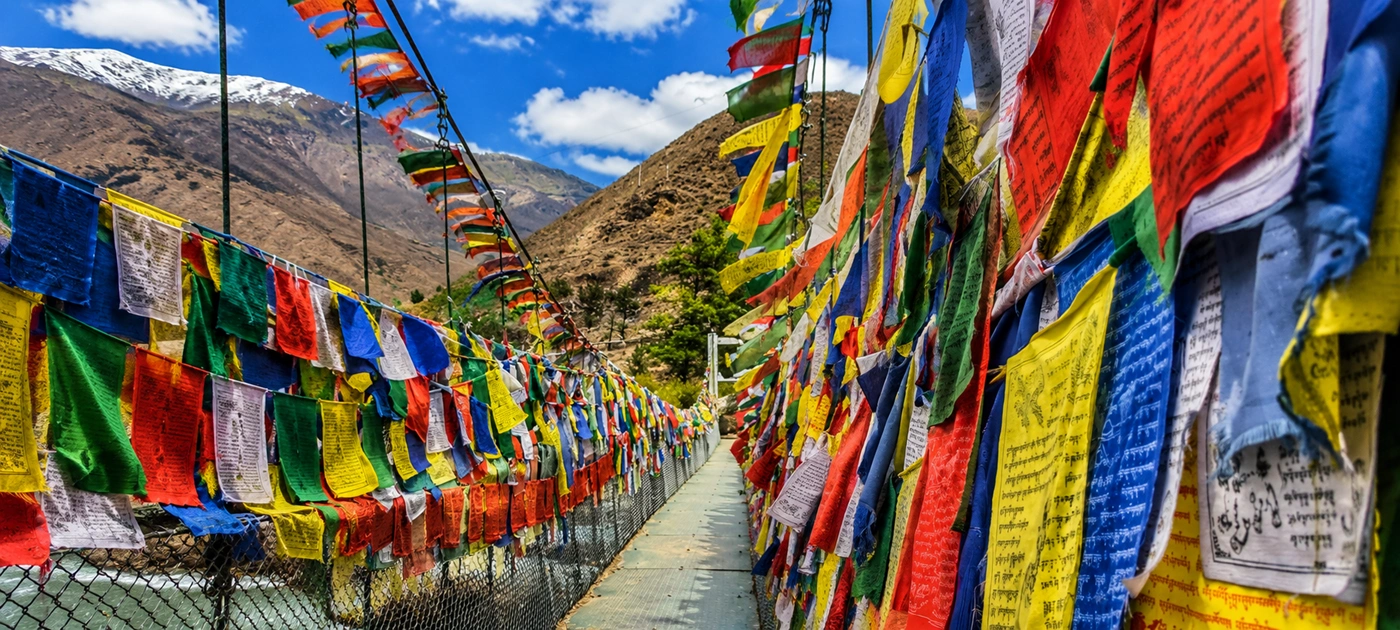
The country runs on a high-value, low-volume tourism policy, so you arrive somewhere that has deliberately not been overrun. The fortress-monasteries — Rinpung Dzong in Paro, Punakha Dzong at the river confluence — are working institutions, not preserved ruins.
The tshechu festivals fill their courtyards with mask dances for days on end.
The walk to Taktsang, the Tiger's Nest, is the one physical thing almost everyone does: a half-day climb to about 3,120 meters, hard on the lungs and completely worth it.
Bhutan journeys:Bhutan luxury tour · Paro Tshechu festival tour · Bumdra trek · Snowman trek · Eastern Bhutan
Tibet: the plateau and the pilgrimage
Tibet is high, and it asks for altitude tolerance before you take a single step. Lhasa sits at 3,656 meters, so the plateau begins working on you from the afternoon you land, which is why our Tibet itineraries open slowly and never stack the first two days.
The Potala Palace and Jokhang Temple are the anchors in Lhasa. Beyond the city, the road runs to Yamdrok Lake, Shigatse, and the north-side Everest Base Camp at around 5,150 meters, where the mountain shows you the face Nepal never does.
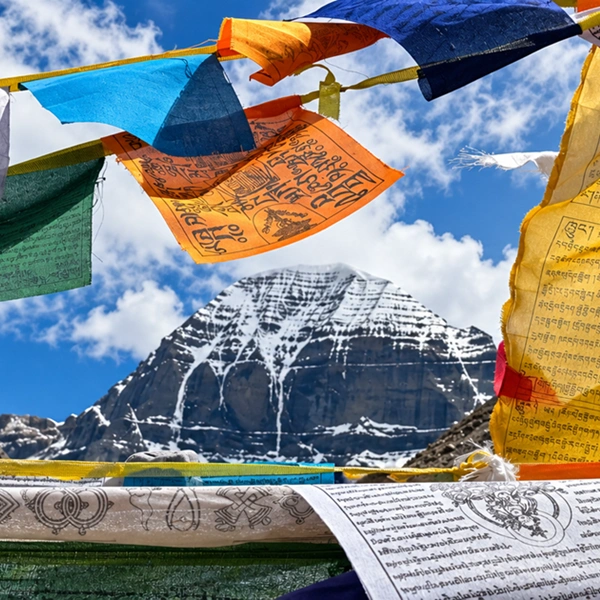
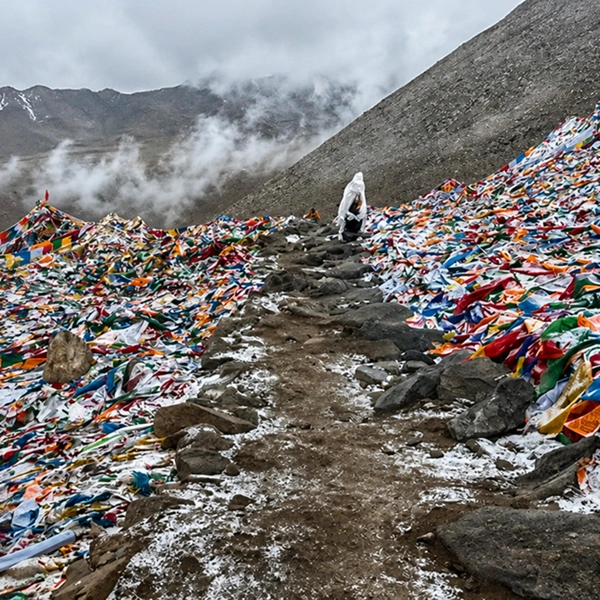
Mount Kailash is another reason people come. The Kora is a three-day walk around the mountain, crossing the Dolma La at 5,630 meters, with Lake Manasarovar at 4,590 meters below it. It is a pilgrimage before it is a trek, and it is the hardest thing we run.
Tibet journeys:Lhasa to Everest and Namtso Lake · Kailash Mansarovar Yatra · Lhasa private tour · Lhasa to Kathmandu overland
Where you sleep, and how the standard changes with altitude
Accommodation quality falls with altitude, and any operator who tells you otherwise is selling something. The honest version is a three-tier picture, and knowing it in advance is what stops disappointment at 4,000 meters.
In the cities and valleys — Kathmandu, Pokhara, Paro, Thimphu, Lhasa — you get genuine international-standard hotels, heritage properties, and resorts with spas and proper kitchens. Nothing is compromised here.
At mid-altitude, roughly 2,500 to 3,500 meters, the best mountain lodges are excellent: private bathrooms, heating, real beds, glass facing the peaks. Namche, Deboche, Ghandruk, and the Annapurna lodge circuit all sit in this band.
Above about 4,500 meters, the buildings get simpler regardless of what you pay, because construction at that altitude is limited by what a yak or a helicopter can carry.
This is where we do the most work. Our crew goes ahead, and we bring our own bedding, hot water bottles, and kitchen standards into rooms that would otherwise be bare.
The lodges on the Everest route are covered property by property in our regional guide. We confirm the exact property in your booking proposal.
How helicopters change a Himalayan trip
A helicopter buys back days, and days are the scarcest thing on a Himalayan itinerary. That's the whole argument, and it's why aviation sits at the center of how we design trips rather than at the edge.
On every luxury Khumbu program, we fly a helicopter in both directions between Kathmandu and Lukla. We never put guests on a fixed-wing return.
The reason is reliability, not glamour: when Lukla closes in, the fixed-wing schedule collapses, and people lose international flights, while a helicopter works when a plane can't.
Elsewhere, the rule is simpler. Where standard access involves four hours or more of mountain road, we fly it—inbound and outbound.
Then there are the flights that are the trip itself. A morning helicopter from Kathmandu can land you at Kala Patthar for sunrise on Everest and have you back for a late breakfast, which is the whole mountain for travelers who don't want to walk for two weeks.
We also fly to Annapurna Sanctuary in the mornings and return from Langtang.
Weather governs all of it. We build buffer days around every helicopter leg, and we hold a night in Kathmandu before your international departure rather than connecting on the same day. That single rule has saved more trips than anything else we do.
When to go, region by region
Nepal has two windows, and they are firm: mid-March to mid-June (spring) and mid-October to mid-December (autumn). Spring brings rhododendrons on the lower trails and the Everest climbing season in the high camps.
Autumn brings the clearest air of the year after the monsoon washes the sky.
Bhutan also runs spring and autumn festivals, with festival timing set by the lunar calendar rather than fixed dates, so a tshechu trip is planned around the year's announced calendar. Its valleys stay green and mild through both windows.
Tibet has a longer season, roughly late April into October, with the plateau at its best in May, June, September, and early October. The Kailash kora season sits inside that, closing when the passes get unreliable.
Winter is not off-limits, and it is badly underrated. Kathmandu, Pokhara, Lhasa, and the Bhutan valleys are cold, bright, and nearly empty from late December, and the mountain views in that dry air are the best of the year. What we don't do in winter is high trekking.
There's more on the shape of each season in our Nepal season guide.
What drives the cost of a private Himalayan journey
Four things move the price, and it isn't the hotel list. Understanding them lets you spend where it matters and stop spending where it doesn't.
Party size is the biggest lever. A private trip's fixed costs—guide, permits, vehicles, aircraft—are divided among your group, so two people pay a great deal more per head than six for the same itinerary.
Helicopter hours are the second. Every leg you fly instead of drive or walk adds real cost, and the honest question on each one is whether it buys a day you'd otherwise lose.
Season is third: festival weeks and the middle of autumn carry peak rates on rooms and air.
Country rules are fourth — Bhutan charges a daily Sustainable Development Fee per traveler, and Tibet requires permits and licensed guiding that Nepal does not.
We don't publish prices on this page because they move. Your proposal includes live figures, and our breakdown of what a private trip to Nepal costs explains the structure in detail.
Fitness, altitude, and who these trips suit
Most Himalayan journeys require steady walking fitness rather than athleticism, and the cultural and helicopter programs require very little. The mountain favors endurance and acclimatization, not speed or strength.
For a trek to Everest or Annapurna Base Camp, expect five to seven hours of walking on the longest days, sustained over a week or more, with the real difficulty coming from thin air rather than gradient.
If you can walk uphill for six hours and get up and do it again tomorrow, you can do it.
Altitude is the actual risk, and it doesn't discriminate based on fitness— young athletes get sick, and grandparents don't.
Our defense is route design: gain altitude slowly, sleep below the day's high point where the terrain allows, and check oxygen saturation twice daily.
At the Thukla Ridge memorials above Dughla, we stop and talk about what happened to the people named on those stones, because the lesson lands better there than in a briefing room.
Non-walkers have real options. Helicopter mornings, valley touring in Bhutan, Lhasa and the plateau by vehicle, and lodge-based short treks with heli return all put you in the high Himalaya without a multi-day walk.
Our altitude and health guide covers preparation and symptoms properly.
Permits, visas, and lead time
Every country here has paperwork; it's all our job, and none of it should reach you as a task. What you need to know is the lead time each one forces.
Nepal is the simplest: visa on arrival at Tribhuvan International for most nationalities, plus trekking permits by area — Sagarmatha National Park entry and the Khumbu Pasang Lhamu Rural Municipality fee for Everest, ACAP for Annapurna, and restricted-area permits for Upper Mustang and Manaslu that must be filed well in advance.
Bhutan requires a visa arranged through a licensed operator before travel, along with the daily Sustainable Development Fee. There is no arrival visa. Details are in our Bhutan visa and SDF guide, and the fee is confirmed at live rates in your proposal.
Tibet requires a Chinese visa and a Tibet Travel Permit, with additional permits for travel beyond Lhasa and to the Kailash region. Independent travel is not permitted; you travel with a licensed guide throughout.
Lead time, plainly. Six to nine months for a standard season trip, nine to twelve for festival weeks and October in the Khumbu, and twelve for Kailash, where permit windows and the season are both narrow.
How we build a private journey
We start with the shape of your time rather than with a fixed itinerary, then we build the days around it. Nothing on our site is a template you have to accept whole.
Two rules apply to every trip regardless. You get a rest day in Kathmandu after your international arrival before anything demanding starts, and you get a buffer night in the city before you fly home.
Both exist because tight connections in this part of the world are how good trips end badly.
From there, it's yours. Longer in Bhutan, a helicopter instead of the road out of Mustang, a photography focus, a family pace, a festival at the center of the route. Tell us the constraints, and we'll tell you what's possible.
Frequently asked questions
What counts as luxury travel in the Himalayas?
Private guiding, the best available accommodation at each altitude, helicopter access where the road would cost a day, managed acclimatization, and a ground team that handles permits, logistics, and food safety. Above roughly 4,500 meters, buildings are simple everywhere, so luxury shows up as service, safety margin, and comfort brought in rather than as hotel category.
Which Himalayan country is best for a first visit?
Nepal for trekking among 8,000-metre peaks, Bhutan for culture at low altitude with minimal physical demand, Tibet for the high plateau and pilgrimage. First-time visitors who want to walk usually choose Nepal; those who want depth without altitude choose Bhutan. Many travelers combine Nepal and Bhutan in a single journey.
Can you travel in the Himalayas without trekking?
Yes, and a large share of our guests do. Helicopter mornings land at Everest viewpoints and return to Kathmandu the same day; Bhutan's valleys and fortress-monasteries need no trekking; Tibet's plateau highlights are reached by vehicle; and Nepal's cities, lakes, and national parks fill a full journey on their own.
How fit do you need to be for a Himalayan luxury trek?
Fit enough to walk uphill for five to seven hours on consecutive days. Speed and strength matter far less than endurance and how your body handles thin air, neither of which fitness predicts. Three months of hill walking with a light pack is the preparation we recommend for base camp routes.
What is the best time of year for the Himalayas?
Nepal runs from mid-March to mid-June and from mid-October to mid-December. Bhutan follows the same two windows with festival timing set by the lunar calendar. Tibet runs from late April into October, with the best months being May, June, September, and early October. Winter suits cities, valleys, and clear mountain views, but not high trekking.
Do you need helicopters on a Himalayan trip?
Not always, but they change what a fixed number of days can hold. We fly both directions between Kathmandu and Lukla on every luxury Khumbu program, and we fly wherever standard access means four hours or more of mountain road. Every helicopter leg has a buffer day built in for weather.
How far in advance should you book Himalayan travel?
Six to nine months for a standard season departure, nine to twelve for Bhutanese festival weeks and October in the Everest region, and twelve months for Kailash, where the season and permit windows are both narrow. Air seats and the best mountain rooms are what disappear first, not availability in general.
Can families and older travelers do these trips?
Yes, with the route chosen to suit. We run family journeys on the lower Annapurna trails and in Bhutan, and helicopter and lodge-based programs work well for guests in their seventies. Private departures mean pace, daily distance, and rest days are set around your group rather than a fixed schedule.
Is altitude sickness a serious risk?
It is the main medical risk on any high Himalayan itinerary, and it does not correlate with fitness or age. We manage it through slow ascent rates, sleeping at elevations lower than the day's high point when terrain allows, twice-daily oxygen saturation checks, and a descent plan for every route. Travel insurance covering helicopter evacuation is required.
Can you combine Nepal, Bhutan, and Tibet in one trip?
Nepal and Bhutan combine easily, with direct flights between Kathmandu and Paro on a clear morning, giving you an Everest view along the way. Adding Tibet is possible but needs a longer window for permits and acclimatization. Two countries in two to three weeks work comfortably; three need closer to four.
Where to start
The Himalaya rewards deciding what you want the trip to feel like before you decide where to go. Walking or riding, altitude or culture, one country or two — settle that, and the rest is our problem. Tell us your dates, your party, and which days you'd like, and we'll build a private journey around them. Start with our trip planner or write to us directly.