Nepal Wellness Year is the government's designation of 2027 as the year the country leads in wellness tourism, backed by a 2026–2035 national strategy, quality standards for spas and retreats, and certified therapist rules. For private travellers, it means clearer standards, new seasonal programs, and wellness built into trekking routes.
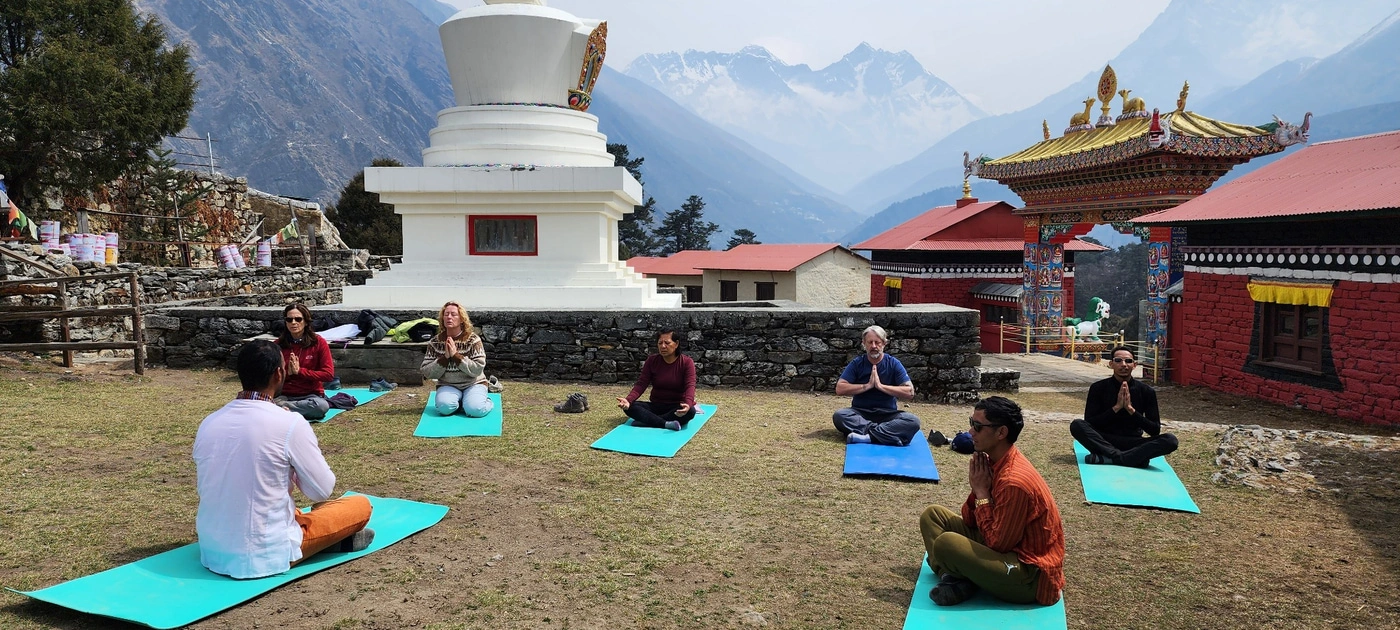
Nepal Wellness Year 2027: What It Changes for Private Travel

The government has named 2027 the Nepal Wellness Year, marking the first time Nepal has asked the world to see it as a place to heal before a place to climb. For anyone planning private travel around the Nepal Wellness Year, the change is practical, not cosmetic. A national quality standard, a minimum training bar for therapists, and a deliberate plan to spread yoga, Ayurveda, meditation, and Himalayan herbal medicine across the country's seasons and regions now exist.
We plan private journeys across Nepal every season from our Kathmandu base. This guide explains what the designation includes, where each kind of wellness lives on the map, and how we build it into a trip without turning a holiday into a clinic stay.
Our longer guide to luxury wellness retreats in Nepal covers individual retreat styles. This piece is about the bigger shift, and how to use it.
What Is Nepal Wellness Year?
Nepal Wellness Year is the government's declaration that 2027 will be the country's Wellness Tourism Year, backed by a national "Arogya Nepal" (Wellness Nepal) campaign. It sits inside a ten-year plan, not a single-year promotion.
The Ministry of Culture, Tourism and Civil Aviation issued the National Wellness Tourism Strategy for 2026 to 2035, paired with a five-year action plan running to 2030. The year 2027 is the deadline for the first hard milestone: national wellness standards and a code of conduct in force by the end of that year.
There is a diplomatic layer too. The United Nations General Assembly adopted Nepal's proposal to mark 15 April as International Wellness Day each year, and Nepal observed the first in April 2026. That date now gives the spring travel season a natural anchor.
The Standards Behind Nepal Wellness Year
The most useful part of the strategy for a traveller is quality control. Until now, "wellness" on a Kathmandu hotel menu could mean anything from a trained Ayurvedic physician to a massage room with a candle. The new rules start to close that gap.
The Nepal Wellness Quality Standard
The strategy introduces a Nepal Wellness Quality Standard with bronze, silver and gold ratings. It covers ashrams, community wellness centres and resorts alike, so a village retreat and a hilltop resort sit on the same scale.
The hygiene rules are specific. Every client gets fresh linen and towels, equipment is disinfected to medical grade, and waste handling is strict. Under the strategy, therapists need at least a three-month CTEVT-recognised course, or its equivalent, plus 12 hours of refresher training every year.
That training rule is the line we care about most. CTEVT is Nepal's Council for Technical Education and Vocational Training, the body that already accredits technical trades. A therapist with that certificate has sat a recognised course, not a weekend workshop.
Targets and What They Signal
The government is starting small on purpose. The first phase, covering 2026 and 2027, aims for 500 to 1,000 international wellness travellers using a handful of model facilities. The longer goal is for wellness travellers to make up 11% of all international arrivals by 2030.
Those numbers matter for one reason. In the first phase, demand will outrun certified supply.
Rooms with real practitioners will fill early in spring and autumn, and the best programs will be booked by people who planned six months out. We already see that pattern with the handful of properties that run serious resident programs today.
Where Wellness Lives in Nepal
The strategy maps wellness to six zones, each suited to a different traveller. The quickest way to plan is to pick the practice first and let it choose the region.
Kathmandu Valley. The heritage and Buddhist meditation hub. Morning kora around Boudhanath Stupa, teachings at valley monasteries, and traditional spa work near the old Newar towns of Patan and Bhaktapur. Most wellness journeys start here, on the rest day we build in after your international flight lands.
The rim stations: Dhulikhel, Nagarkot and Sarangkot. These hilltop towns sit at roughly 1,500 to 2,200 metres above the valley haze. Dhulikhel is about an hour east of Kathmandu by road and holds the country's most established Ayurvedic resort retreats. At Sarangkot above Pokhara, guests can watch the sunrise over Machapuchare and the Annapurna range from the hotel itself. No pre-dawn climb is needed.
Pokhara and the Annapurna foothills. The strategy names this the yoga capital. Phewa and Begnas lakes set the pace, and the low trails to Ghandruk and Poon Hill turn into walking meditation with mountain views. Poon Hill, at 3,210 metres, is our favourite point on this side of Nepal for both sunrise and sunset.
Lumbini. The birthplace of the Buddha and a UNESCO World Heritage Site, in the flat Terai near the Indian border. The monastic zone holds monasteries built by Buddhist nations from Thailand to Germany, and it is the home of silent, multi-day meditation. Our Lumbini travel guide covers the site in depth.
Manang and Mustang. The strategy's "Altitude Wellness" frontier. Here the practice is Sowa Rigpa, the Tibetan medical system, delivered by Amchi healers, alongside monastery visits in a dry, rain-shadow landscape. Lo Manthang, the walled capital of Upper Mustang, sits at 3,840 metres.
Pokhara Lakeside. Planned as a pedestrian wellness corridor with yoga gardens. It is the easiest place in Nepal to drop into a single-morning class between other plans.
Timing a Wellness Journey by Season
The best time for a Nepal Wellness Year journey is mid-March to mid-June (spring) and mid-October to mid-December (autumn), when trails are open, and mountain views are clearest. The strategy also builds programs for the quieter months, which suits travellers who care more about the treatment than the view.
The government's seasonal framing is simple. Detox programs sit in the monsoon, thermal and immunity programs in winter, renewal in spring, and gratitude-themed programs in autumn. Here is how that maps onto real travel.
Spring and Autumn
These are the trekking windows and the busiest months for retreats.
Spring brings rhododendron forest in bloom between about 2,000 and 3,500 metres on the Annapurna side. In autumn, we steer guests toward November over October. After the second week of November, the crowds thin and the air is at its sharpest.
The Monsoon
From late June to September, rain closes most high views but suits a Panchakarma course. These structured Ayurvedic detox programs run for seven to 14 days at low altitude, where humidity is high and the body is at rest. Kathmandu Valley and Dhulikhel retreats are the natural base.
Winter
December to February is cold at altitude but clear and quiet below 2,000 metres. Pokhara and Chitwan stay mild. This is the window for warming herbal treatments, hot-stone work and the sound sessions with Himalayan singing bowls that Kathmandu is known for.
Wellness at Altitude: What We Combine and What We Don't
Altitude and deep detox do not belong in the same week. A full Panchakarma course leaves the body light, depleted and deliberately rested. Climbing 1,000 metres in that state works against both the treatment and acclimatisation.
So we sequence. A detox or intensive Ayurvedic program runs first, low and slow, in the valley or at Dhulikhel. The walking comes after, once energy has returned, or the trip runs the other way: trek first, then recover.
Yoga and meditation are different. They travel well.
On the Everest View route, we have built private journeys around a daily practice, flying both ways between Kathmandu and Lukla by helicopter and walking short days through Phakding and Namche. We time sessions for the morning light, before clouds build in the valleys.
For Mustang, we fly rather than drive.
The road into Upper Mustang takes many hours on rough mountain track, so we default to helicopter access in and out. That turns a gruelling approach into a 40-minute arrival and leaves the energy for the place itself. The altitude and health guide explains how we pace ascent on these routes.
A Note on Health Claims
Wellness in Nepal is ancient, sincere and often deeply calming. It is not a substitute for medical care.
We describe what a treatment involves and what guests tell us they feel; we do not promise cures. If you take regular medication or are pregnant, tell us early so the practitioner can adjust the program.
Getting There: Pokhara Now Has a Daily International Link
Since September 2026, flydubai has operated a daily scheduled service between Dubai and Pokhara International Airport, the city's first daily international route. It operates with Emirates, so travellers from Europe, the Gulf and beyond can connect through Dubai on one ticket.
That matters for wellness travel. Before, every international arrival came through Kathmandu, then took a domestic hop or a long drive. Now a guest heading for lake yoga or the Annapurna foothills can land in Pokhara directly and be in the hills the same evening.
We still recommend Kathmandu for most first visits. The valley holds the heritage sites and the strongest Ayurvedic practitioners. The Pokhara route works best as an exit, or for a second trip built entirely around the lakes and foothills.
How We Plan a Nepal Wellness Year Journey
We plan around the person, then the practice, then the route. The first conversation covers your health, fitness, the practices you want (and the ones you don't), and how much walking you enjoy.
From there, a few rules hold across every journey we build:
- A rest day in Kathmandu after your international flight, before any program or trek starts
- Treatments placed at the right altitude, never stacked against a climb
- Practitioners checked against the training standard, with the property confirmed in your booking proposal
- A buffer night in Kathmandu before you fly home, so the trip ends calm rather than rushed
- Your own guide throughout, handling permits, pacing and every transfer
Here's context that rarely appears in wellness marketing.
Nepal's average visitor in 2025 stayed a record 16.34 days but spent about USD 33 a day, according to tourism ministry data. The Wellness Year is the government's bet that longer, slower stays can be built around care rather than cost-cutting. Our journeys are designed to sit on that slower side.
Every journey is private. No group departures, no shared vehicles, and no fixed lodge menus. If a morning session runs long, the day moves with it.
For a broader view of how wellness fits into private travel across Nepal, Bhutan, and Tibet, see our guide to luxury travel in the Himalayas. If you're interested in emotional recovery and life transitions, our piece on intentional healing tours in Nepal goes deeper.
Frequently Asked Questions
What exactly is Nepal Wellness Year 2027?
Nepal Wellness Year is the government's designation of 2027 as the country's Wellness Tourism Year. It launches the "Arogya Nepal" (Wellness Nepal) campaign and sits within the National Wellness Tourism Strategy for 2026 to 2035. Its first hard milestone is to have national wellness standards and a code of conduct in force by the end of 2027, so travellers can expect clearer quality signals from then on.
How can I tell if a spa or retreat meets the Nepal Wellness Year standards?
Look for the Nepal Wellness Quality Standard rating, which will run bronze, silver, and gold once it is in force. Ask whether therapists hold a CTEVT-recognised course of at least three months, the training bar set under the strategy. We check practitioner background for every program we book and confirm the exact property in your booking proposal.
Is Nepal Wellness Year only for yoga and meditation?
No. The strategy covers four broad fields: spa and massage, Ayurveda clinics, yoga and meditation, and natural healing and spirituality. That last field includes Sowa Rigpa, the Tibetan medical system practised by Amchi healers in Mustang and Manang, and singing bowl sound sessions in the Kathmandu Valley.
Which season suits a Nepal Wellness Year detox program?
The monsoon, from late June to September, suits a Panchakarma detox best. The national strategy places detox programs in the rainy season, and low-altitude retreats in the Kathmandu Valley and Dhulikhel run these as seven- to 14-day courses. Spring and autumn suit travellers who want treatment combined with mountain walking.
Can I combine trekking with an Ayurvedic program during Nepal Wellness Year?
Yes, if you sequence the two rather than stack them. We run an intensive Ayurvedic or detox program at low altitude first, then add walking once energy returns, or trek first and recover afterwards. Yoga and meditation, by contrast, fit naturally into a trek, and we build daily practice into routes like the Everest View journey.
Does Nepal Wellness Year make Upper Mustang easier to reach for a wellness trip?
Access is a route question, not a designation question. Upper Mustang is reached by a long, rough mountain road, so on our luxury journeys we fly private helicopter in and out instead. That turns a full-day approach into roughly a 40-minute flight and leaves your energy for Lo Manthang, the monasteries and time with Amchi practitioners.
Can I fly straight to Pokhara for a Nepal Wellness Year retreat?
Yes. Since September 2026, flydubai has run a daily scheduled service between Dubai and Pokhara International Airport, connecting with Emirates on one ticket, which makes Pokhara a practical arrival point for lakeside yoga and Annapurna foothill retreats. We still suggest Kathmandu for first visits because of its heritage sites and practitioners.
What is International Wellness Day and how does it link to Nepal Wellness Year?
International Wellness Day falls on 15 April each year, after the UN General Assembly adopted a proposal Nepal put forward. Nepal observed the first one in April 2026. It sits inside the spring travel window, so a journey timed around mid-April can include the day's events in Kathmandu.
Planning Your Own Wellness Journey
The Nepal Wellness Year gives travellers something they rarely get here: a standard to hold a retreat to. Use it. Ask about training, pick the season for the practice, and keep detox and altitude apart.
If the high, dry quiet of the trans-Himalaya calls to you, our private Upper Mustang luxury lodge tour pairs helicopter access with Amchi healing and monastery days above the Kali Gandaki. Send us a note about the practice you want, and we'll shape the route around it.
Need Help? Call Us+977 9851013196orChat with us on WhatsApp
Need Help? Call Us+977 9851013196