What to expect on the Everest Base Camp Luxury Trek in 2027: fourteen private days, round-trip helicopter flights, a private room every night, and a lodge roster confirmed village by village from Lukla to Gorak Shep. You reach Base Camp at 5,364 m, climb Kala Patthar at 5,545 m for sunrise, and fly home the same morning.
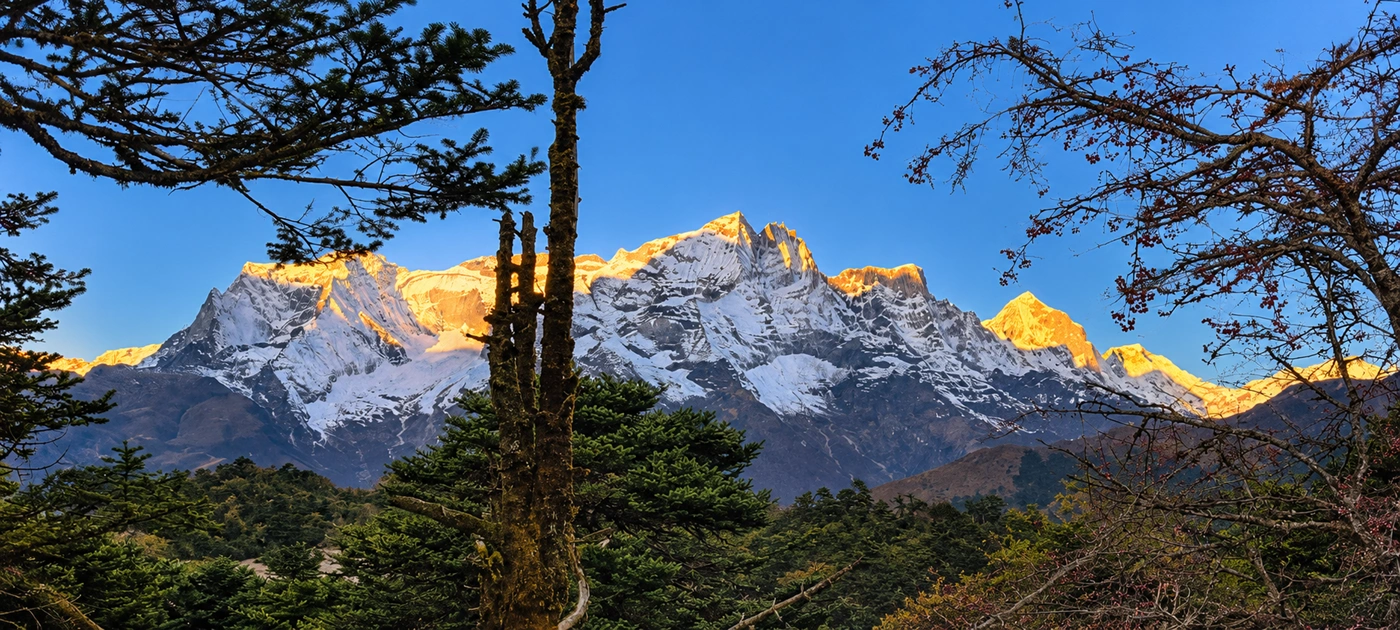
What to Expect on the Everest Base Camp Luxury Trek in 2027

Expect fourteen private days on the Everest Base Camp Luxury Trek in 2027, with helicopter flights both ways and a private room every night. The lodge roster is already confirmed, village by village. You walk the classic Khumbu trail from Lukla to Everest Base Camp at 5,364 m, climb Kala Patthar at 5,545 m for sunrise, and fly out from Gorak Shep the same morning.
This is the honest version. It names the lodges we book for 2027, including the two high stops where luxury means an electric blanket rather than a spa. It also explains what the helicopter days, the food, the cold, and the altitude will feel like in practice.
What to expect on the Everest Base Camp Luxury Trek: the route in one read
The route runs Lukla, Phakding, Monjo, Namche Bazaar, Tengboche, Dingboche, Lobuche and Gorak Shep, with Everest Base Camp and Kala Patthar at the top and a helicopter home. Ten days on the trail, nine nights in the Khumbu, and the only ground you cover twice is the morning out-and-back to Base Camp.
You spend your first two nights in Kathmandu. The second is a deliberate rest and briefing day, which we never cut, before the roughly 45-minute helicopter flight to Lukla at 2,860 m. We split the climb to Namche into two short stages through Phakding and Monjo, rather than pushing 800 m of gain on unacclimatised legs.
From Namche, the trail climbs to the monastery at Tengboche, then on to Dingboche at 4,410 m for two nights, then Lobuche and Gorak Shep. The route carries three acclimatisation moves. The Monjo split comes first, then a climb to the Syangboche ridge at 3,880 m above Namche, then the Nangkartsang ridge at 5,083 m from Dingboche before any night above 4,500 m.
Base Camp is a walk out and back across the Khumbu Glacier moraine, and the next dawn you climb Kala Patthar. By that afternoon, you are in Kathmandu with a hot shower and a buffer night before your international flight. No repeat trail, no fixed-wing lottery, no tight connection.
Where you sleep in 2027: the lodge roster, village by village
For 2027 departures, we book the lodges below, and we confirm the exact property in your booking proposal. Which one you get depends on your dates and on which has the best rooms free, so read each village as a shortlist, not a promise of a single building.
Lukla, 2,860 m. Mountain Lodges of Nepal. On a normal departure, you land and walk straight on to Phakding. We hold this lodge for a weather hold at either end of the trek, or as a first night if you ask us to add one.
Phakding, 2,610 m. Mountain Lodges of Nepal or The Himalayan Phakding. Both sit beside the Dudh Koshi with en-suite rooms, hot showers and a heated dining room, and you fall asleep to the river.
Namche Bazaar, 3,440 m. Mountain Lodges of Nepal, Hotel Camp de Base or Hotel Sheryang. All three have en-suite bathrooms and hot water, and Namche's bakeries are a five-minute walk from any of them.
Tengboche, 3,860 m, or Deboche, 3,820 m. The Himalayan Tengboche is the newest lodge on the route, standing beside the monastery with underfloor heating and an indoor heated pool. Mountain Lodges of Nepal's Deboche lodge sits fifteen minutes below in the rhododendron forest, quieter and warmer at night.
Pangboche, 3,930 m. Everest Summit Lodge. On some dates, we sleep here instead of Tengboche, shortening the next morning's walk to Dingboche and putting Ama Dablam outside your window.
Dingboche, 4,410 m. Dingboche Inn, Countryside Resort or Dingboche Resort, all with attached bathrooms. You spend two nights here, so the room matters, and these are the best beds above Pangboche.
Lobuche, 4,940 m. New EBC Lodge, and be clear-eyed about this one. It is not in the class of the Mountain Lodges, the Himalayan or the Dingboche Inn. Your room has an attached bathroom and an electric blanket, and at nearly 5,000 m, that is what counts.
Gorak Shep, 5,164 m. Himalayan Lodge. An electric blanket on the bed, a shared toilet along the corridor, and one night only; the helicopter moves you down the next morning.
The Everest Base Camp Luxury Trek sleeps four nights above 4,000 metres: two at Dingboche (4,410 m), one at Lobuche (4,940 m) and one at Gorak Shep (5,164 m). If you are weighing what the higher price buys at those altitudes, our luxury versus standard Everest Base Camp trek comparison answers it stop by stop.
The helicopter days: what actually happens
You fly Kathmandu to Lukla in about 45 minutes with four guests per helicopter, and you fly out of Gorak Shep with two guests per lift. Both flights are included, and they're why this trek takes fourteen days rather than seventeen. Weigh and tag your duffel the night before (15 kg maximum) so the morning runs clean.
The inbound flight leaves from Kathmandu itself. In the busy months, Nepal routes fixed-wing Lukla flights through Manthali, four to five hours by road east of the capital. A helicopter skips that drive, and it flies in weather windows the aeroplanes cannot use.
The outbound is the part nobody explains: above 4,500 m the thin air limits a helicopter to two passengers per rotation. So from Gorak Shep the aircraft shuttles you two at a time down to a lower pad at Pheriche or Lobuche, then carries the whole party on to Kathmandu. A couple leaves in one lift; a party of four leaves in two, and the first pair waits in the valley with tea.
If cloud holds the flight, we walk. Gorak Shep to Lobuche is two to three hours downhill, and we fly from there when the window opens; the Kathmandu buffer night exists for exactly this. Your guide is on the phone to our Kathmandu operations room throughout, and we rebook connections before you ask.
A trekking day, hour by hour
Most days begin with tea at your door before seven and boots on within the hour. You reach the next lodge by early afternoon, with the rest of the day your own. The long stages are Namche to Tengboche and Tengboche to Dingboche, each around 10 to 11 km and five to six hours including lunch.
The short ones are deliberately short. Phakding to Monjo is 5 km in under three hours. Monjo to Namche is 6 km, but it carries 600 m of switchbacks after the Hillary Suspension Bridge, which hangs 120 m above the Dudh Koshi.
Our guides aim to get you across that bridge before the first yak trains of the morning. They call the passing rule on every stretch: stand on the hillside, never the drop side.
Lunch is at a trail lodge your guide knows, not a packed sandwich. You carry a daypack with water, layers and a camera; one porter carries your duffel. At the Thukla ridge, 4,830 m, we stop at the memorial cairns to climbers before the final hour into Lobuche, and nobody hurries that stretch.
After dinner your trek leader records your blood oxygen and pulse on an oximeter, sets the next morning's start time, and holds full authority to slow the day or add a rest. We insure every guide and porter on your trip for NPR 1 million.
Food and water on the trail
You order from the lodge menu at every meal; we have no set menu, and we never charge for tea or coffee by the cup. Dal bhat is the trail's working meal: lentils, rice, seasonal greens and achar, refilled until you say stop.
Sherpa stew, called shyakpa, and garlic soup appear from Namche upward, and the bakeries in Namche and Dingboche turn out apple pie and cinnamon rolls at altitude. Above Dingboche the menus narrow for everyone, and appetite often goes with them. We carry snacks matched to what you will actually eat on the high days.
We boil or filter water and refill it into your own bottles, and because the Khumbu's rural municipality has banned small single-use plastic bottles, refills are the norm. Our guides brief each lodge kitchen personally on allergies rather than leaving it to a note. We can accommodate vegetarian, vegan, and gluten-free diets with notice; dal bhat is naturally both vegetarian and gluten-free.
Cold, altitude and how your body will feel
Nights at Gorak Shep range from minus 10°C to minus 20°C in the main seasons, and the air at Base Camp has roughly half the oxygen of sea level. Both are manageable because of structure, not toughness.
Rooms are heated or have electric blankets the whole way. Your sleeping bag should still be rated to minus 15°C; the dining stove, a hot dinner, and a bottle of boiled water inside the bag do the rest. We keep Gorak Shep to a single night.
Altitude is handled by the route: the Monjo split, the ridge climbs at Syangboche and Nangkartsang, and two nights at Dingboche before anything above 4,500 m. Expect a dull headache or broken sleep at Dingboche; that is normal acclimatisation, and it is why the oximeter readings happen nightly rather than when someone feels unwell. Our guide to altitude sickness on the luxury Everest Base Camp trek covers the symptoms your guide watches for and the ones you should report.
Bottled oxygen travels on standby from Dingboche upward. In a genuine emergency, an evacuation helicopter launches immediately, without waiting for insurer authorisation; the claim is settled afterwards.
Phones, Wi-Fi, charging and showers above Namche
Your phone works the whole way. NCell and NTC now cover the trail from Lukla to Gorak Shep, including the high Khumbu. Messages go through from the moraine, and your guide stays in daily contact with our Kathmandu office by phone rather than satellite tracker.
Lodges sell Wi-Fi vouchers, and the connection thins with altitude: messages send, video calls stall above Dingboche. Charging is in your room through Dingboche. Above that it happens in the dining hall and more slowly, so a power bank earns its weight, and our luxury EBC packing list says which one.
Hot showers are standard through Deboche and Pangboche and available at Dingboche. At Lobuche and Gorak Shep, plan on a bowl of hot water and a wash in the room; two nights of that is the trade for standing at Base Camp. Dingboche's two nights are for laundry.
Planning a 2027 departure: seasons, permits and booking
The 2027 windows are the same as the Khumbu has always had: mid-March to mid-June (spring) and mid-October to mid-December (autumn). Spring brings expedition tents at Base Camp and rhododendron below Tengboche; autumn gives the clearest Kala Patthar sunrise and the steadiest helicopter windows, and after 10 November the trail quiets further.
We don't run this route in the monsoon, when clouds ground helicopters. Our month-by-month best-time guide breaks down each window, including the festival weeks at Tengboche.
Two permits cover the trek: the Sagarmatha National Park entry permit and the Khumbu Pasang Lhamu Rural Municipality entry fee, and we arrange both before you land in Lukla. You don't need a TIMS card in the Khumbu. Fees change, so we quote them in your proposal rather than here, and your insurance must name trekking to 5,500 m and helicopter evacuation in writing.
We run private departures only for parties of two to eight who already know each other, so you can choose your dates. The lodges above hold few rooms and sell out first in late October and the second half of April, so the earlier you confirm, the better the room. This trek sits at the centre of our Nepal programme, and our guide to luxury travel in the Himalayas places it alongside our offerings in Bhutan and Tibet.
Frequently asked questions
Do the lodges at Lobuche and Gorak Shep have electric blankets on the Everest Base Camp Luxury Trek in 2027?
Yes: for 2027 departures, both the New EBC Lodge at Lobuche and the Himalayan Lodge at Gorak Shep provide an electric blanket on your bed. That changes the two coldest nights of the trek more than anything else. Lobuche also has an attached bathroom; Gorak Shep does not, and neither is a luxury lodge in the sense of the Mountain Lodges below Dingboche; we say so before you book.
Why is the toilet shared at Gorak Shep on the Everest Base Camp Luxury Trek?
At 5,164 m, with water lines that freeze most nights and no permanent residents, Gorak Shep lodges run shared facilities rather than plumbed en-suite rooms. We book Himalayan Lodge for its electric blankets and keep the stay to one night, with the helicopter lifting you out the next morning after Kala Patthar. For most guests the shared toilet is a footnote by breakfast.
How many passengers does the helicopter carry out of Gorak Shep on the Everest Base Camp Luxury Trek?
Two per lift. Above 4,500 m the thin air cuts the aircraft's payload, so from Gorak Shep's pad the pilot shuttles two guests at a time down to Pheriche or Lobuche before the full party flies on to Kathmandu. A couple leaves in one lift and a party of four in two, while from Kathmandu to Lukla the same helicopter carries four.
Is there a set menu on the Everest Base Camp Luxury Trek, or can I order what I like?
You order from the lodge menu at every meal. We don't run a fixed set menu; we never charge by the cup for tea or coffee, and the only limit is what the kitchen can cook at that altitude. Expect wide menus through Dingboche and shorter ones at Lobuche and Gorak Shep, where we add our own snacks to cover the high days.
What happens if a weather hold puts us in Lukla on the Everest Base Camp Luxury Trek?
You sleep at Mountain Lodges of Nepal's Lukla property, which we hold as the contingency lodge at both ends of the trek. On the way in, a late inbound flight means you'll spend the night in Lukla and walk to Phakding the next morning. On the way out, if the weather lets us reach Lukla but not Kathmandu, the same lodge takes you for the night, and we rebook your connections before you need to ask.
When should I book a 2027 departure of the Everest Base Camp Luxury Trek?
Spring 2027 dates are best confirmed by the end of 2026, autumn 2027 dates by April. The lodges we use at Namche, Tengboche and Dingboche hold few rooms, and they sell out first in late October and the second half of April. Private departures run on your dates, so booking early secures the lodge you want rather than a seat on a schedule; we confirm exact properties in your proposal.
If 2027 is the year, the fourteen-day Everest Base Camp Luxury Trek page carries the current from-price and the full day-by-day. Send us your dates and we will check the lodge roster above against them, then come back with a proposal that names your rooms.
Need Help? Call Us+977 9851013196orChat with us on WhatsApp
Need Help? Call Us+977 9851013196