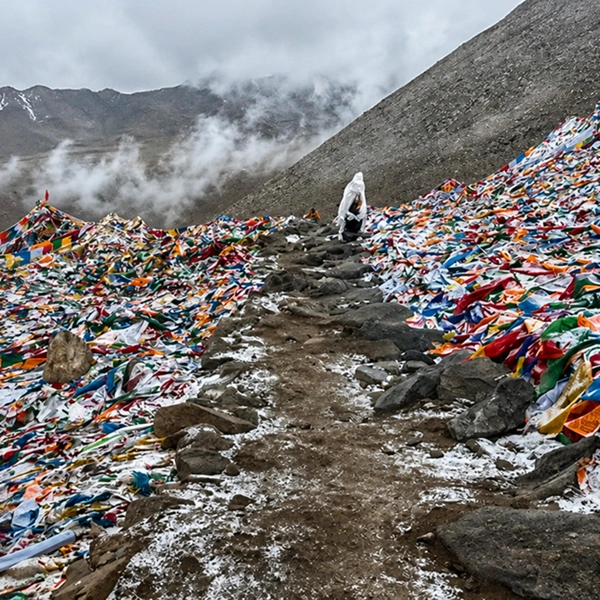
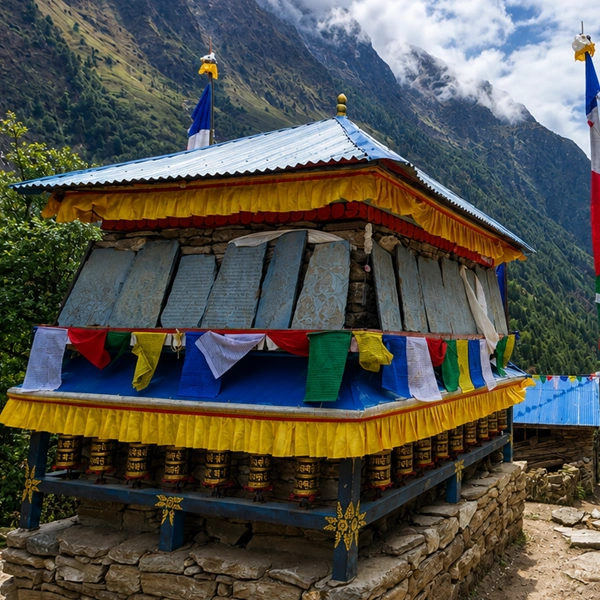
The global luxury travel landscape has shifted decisively over the past decade. The ultra-high-net-worth traveler no longer seeks opulent isolation or passive leisure. The demand has moved toward intentional healing — a curated synthesis of ancient spiritual practice, personalized somatic wellness, and profound environmental connection.
Nepal, positioned at the geopolitical, geological, and spiritual crossroads of the Tibetan Plateau and the Indian subcontinent, offers an unparalleled canvas for this new frontier. The integration of heritage resort architecture, esoteric Himalayan healing wisdom, and seamless private aviation produces a transformative arena for the elite traveler.
What follows is the complete blueprint for architecting this experience — the properties, the modalities, the logistics, the access, and the itinerary that holds it together. For broader context across the Himalayan luxury landscape, see our full overview of luxury travel in the Himalayas.
The Three Pillars of Himalayan Healing
Before any luxury narrative becomes credible, indigenous healing modalities must be understood on their own terms. Nepal's wellness architecture is built on three foundational systems, each with its own diagnostic framework, therapeutic vocabulary, and historical depth.
Pancha Kosha and Ayurvedic Mastery
The concept of Pancha Kosha, drawn from ancient Vedic philosophy, holds that human well-being unfolds across five interwoven sheaths — Annamaya (the physical body), Pranamaya (the energy or breath body), Manomaya (the mental and emotional body), Vijnanamaya (the wisdom or insight body), and Anandamaya (the bliss body). The Ayurvedic clinical framework operates within the regulatory authority of India's Ministry of AYUSH — the government body overseeing Ayurveda, Yoga, Unani, Siddha, and Homeopathy.
Elite retreats in Nepal — most notably Dwarika's Resort Dhulikhel — structure the guest experience around diagnosing and aligning these five layers. On arrival at a serious Ayurvedic sanctuary, guests undergo extensive consultation with resident Ayurvedic physicians. These are not formalities. The doctor assesses dosha (the elemental constitution — Vata, Pitta, Kapha), reviews sleep patterns, digestion, skin behavior, emotional temperature, stress triggers, and preferred climate. The therapeutic protocol that emerges is specific to the guest, not drawn from a standard menu.
The interventions are exhaustive. Shirodhara pours a continuous stream of warm medicated oil across the forehead to ease insomnia and mental strain. Shiro-Abhyanga is a traditional head massage tracing the vital energy centers. Kati-Vasti forms a ring of warm dough on the lower back, filled with medicated oil to relieve sciatica and spinal tension.
Janu-Vasti applies the same dough-dam principle to inflamed joints. Mukha-Lepa is a traditional facial using herbal pastes specific to dosha type. Each treatment is administered only after the dosha consultation has prescribed it; nothing is administered as a generic spa option.
Sowa Rigpa: The Tibetan Science of Healing
In the high-altitude, trans-Himalayan regions of Nepal — particularly Mustang — the dominant healing paradigm shifts from Indian Ayurveda to Sowa Rigpa, the traditional Tibetan medical system with roots stretching back more than 2,000 years. The foundational medical text, the Gyushi (Four Tantras), dates to the 12th century and remains the canonical reference for practitioners today. Sowa Rigpa was inscribed on UNESCO's Representative List of the Intangible Cultural Heritage of Humanity in 2018 — the UNESCO Intangible Cultural Heritage listing is the standard international authority on the tradition's significance.
At Shinta Mani Mustang, the resident Amchi — a traditional Tibetan physician — comes from an 11th-generation family of practitioners. The Amchi uses ancestral knowledge spanning botanical pharmacology, pulse reading, and astrological charting to craft personalized healing protocols.
The diagnostic toolkit leads to bespoke treatments: Ku Nye traditional massage, Hor Gyi Metsa (warm herbal bundles applied to spinal pressure points to regulate the body's wind channels), specialized cupping to draw out somatic stagnation, and aromatic herbal steam baths using plants foraged from the Kali Gandaki gorge — specific flora from that microclimate, not standardized imports. Treatments are frequently administered with resonant chanting to the Medicine Buddha, creating a psycho-spiritual atmosphere that enhances the physiological effect.
The Physics and Spirituality of Vibrational Sound Therapy
Vibrational healing through Himalayan Singing Bowls has evolved from a regional esoteric tradition into a globally recognized luxury wellness modality. The undisputed epicenter of the practice is the Kathmandu Valley, where master Newari metal artisans in Patan maintain a metallurgical tradition that has endured for generations.
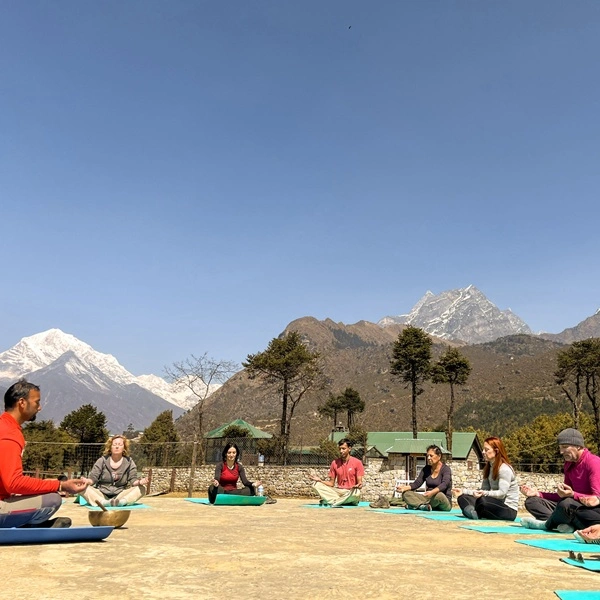
Authentic Himalayan singing bowls are forged from a seven-metal alloy — lead, tin, iron, copper, zinc, silver, and gold — representing the solar system and the human chakras. The metallurgy is precise; the proportions matter; the hammering technique is centuries old. The bowls are used in sound therapy sessions, where their resonant tones shift brainwave states from active beta to deeply restorative theta, bypassing the cognitive resistance that can prevent conventional relaxation.
For executives suffering from burnout, chronic stress, or insomnia, the effect is immediate and unlike conventional meditation. Sessions can be arranged at most luxury retreats; the most authentic come from masters working in the Patan workshops, where the bowls themselves are forged.
The Architectural Vanguard of Intentional Healing
The physical environment of a retreat dictates the psychological depth of the healing experience. Nepal's premier luxury lodges have mastered the integration of topographical drama, heritage preservation, and sustainable architecture to create transformative spaces.
Dwarika's Resort Dhulikhel — 1,550m
An hour east of Kathmandu, at 1,550 meters on the rim of the Kathmandu Valley, Dwarika's Resort, Dhulikhel, represents the zenith of holistic architectural design in Nepal. The property spans 20 acres of pristine forest with views of the Langtang range. It is built from lime plaster, wooden beams, and local terracotta, drawing on Newari and Gurung architectural heritage. Dwarika's is part of the Relais & Châteaux portfolio — a meaningful credential for travelers who calibrate by international luxury hotel standards.
The wellness infrastructure is staggering in its intentionality. The Himalayan Salt House is a chamber lined with 20 tons of Himalayan rock salt, designed to support respiratory and energetic purification during breathwork sessions. The Crystal Room uses Himalayan quartz to refract light and amplify meditative stillness.
The grounds also include the Shiva Lingam Maze (a meditative labyrinth used for ancient blessing rituals and evening Aarti), a Meditation Cave for sensory deprivation work, dedicated Chakra Chambers, the Navagraha Garden for nine-planet balancing rituals, and the Ananta Infinity Pool.
Accommodation provides total seclusion. The Royal Suite is inspired by the spectacular northern region of Dolpa and reflects the stillness of the high Himalayas. Executive Suites offer private terraced gardens and outdoor daybeds. The kitchen pulls from six on-site organic farms, and meals are designed around the morning dosha assessment — food is treated as medicine in the literal Ayurvedic sense, not as a metaphor.
Shinta Mani Mustang — 2,800m
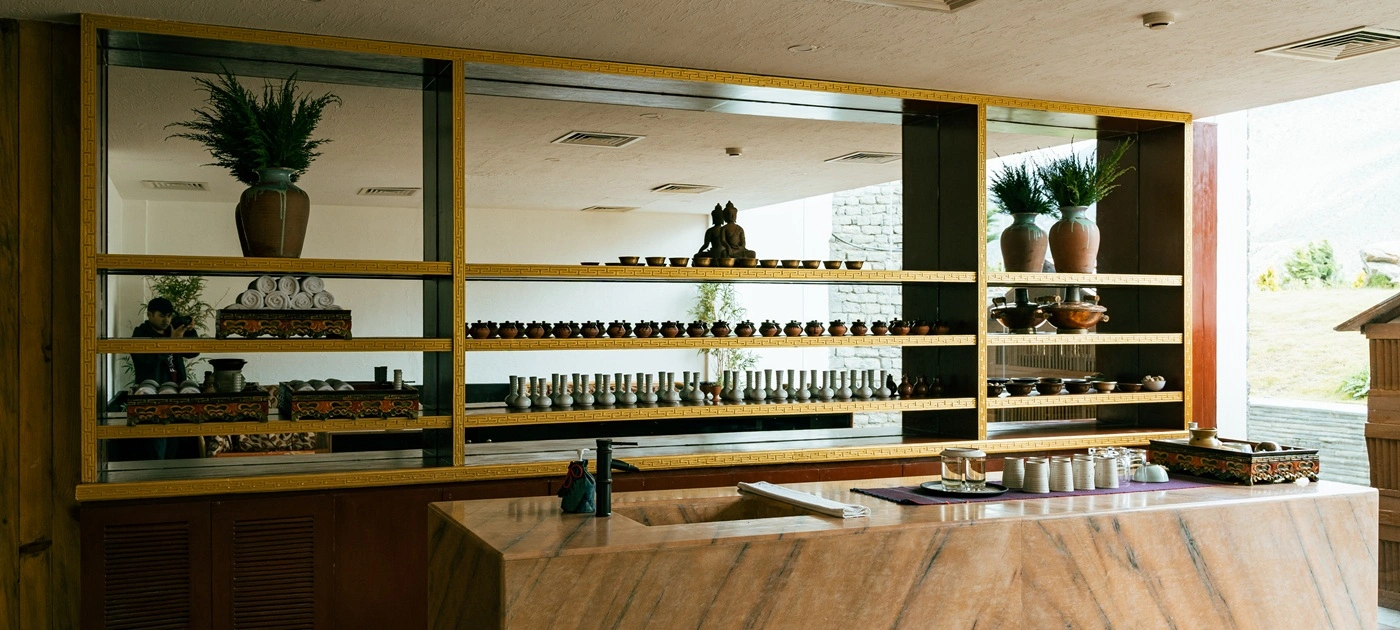
At 2,800 meters in Jomsom — the gateway to the formerly forbidden Kingdom of Upper Mustang — Shinta Mani Mustang operates at the absolute frontier of luxury adventure and wellness. The 29-suite property, designed by architect Bill Bensley in partnership with the Sherpa Hospitality Group, is engineered to resemble a traditional Tibetan homestead.
Constructed from local Baglung stone and timber, the resort is a masterclass in contextual luxury. The interiors layer upcycled furnishings, rich Tibetan textiles, Irish linens, cashmere blankets, and handmade tiger rugs. Suite windows are floor-to-ceiling and perfectly frame the towering, snow-capped Nilgiri range, blurring the boundary between the harsh exterior landscape and the opulent interior. The resort operates on a fully inclusive basis with a minimum five-night stay; rates are confirmed at the time of booking based on suite category and season. Pricing positions the property at the upper end of the global ultra-luxury market.
Meghauli Serai, A Taj Safari — Chitwan
A complete intentional healing journey must contrast the Himalayan severity with the fecundity of the Terai lowlands. Meghauli Serai, located on the banks of the Rapti River bordering Chitwan National Park — a UNESCO World Heritage Site and one of the last remaining habitats of the greater one-horned rhinoceros — fulfills this role.
The lodge has 29 accommodations, including 16 Rapti One-Bedroom Villas (103 square meters) and a Presidential Two-Bedroom Villa. The villas feature netted four-poster beds, private plunge pools, and luxurious bathrooms adorned with Nepalese stone spouts. The architectural centerpiece is the main lounge with a chandelier crafted from 10,000 hand-painted Nepalese beads.
Wellness at the Miraaya Spa is administered through the sacred elements — Jal (water), Vayu (air), Agni (fire), Prithvi (earth), and Akash (space). Treatments are administered with the ambient sound of the Rapti River as the acoustic backdrop. Guests can opt for in-villa therapies after a day of tracking the elusive Bengal tiger or the greater one-horned rhinoceros alongside expert naturalists.
Pokhara's Regenerative Refuges
Pokhara offers two distinct luxury paradigms. Tiger Mountain Pokhara Lodge, founded in 1998 by Tiger Tops founder Jim Edwards, has set the gold standard for zero-impact luxury tourism on a ridge 300 meters above the Pokhara valley floor. Seventeen stone-and-timber cottages built in the vernacular style, no televisions in the rooms (intentionally), and Tibetan hand-knotted carpets throughout. Guests meditate by the iconic infinity pool, which reflects Machhapuchhre (the Fishtail Peak).
The Pavilions Himalayas offers an eco-sensitive alternative — a property set within an organic farm in a lushly forested valley. The unique Lakeview satellite resort is accessible only by boat across Phewa Lake and comprises eight luxurious tented villas that offer opulent glamping intertwined with total immersion in nature. For travelers who want to combine the Pokhara lodges with a luxury walk into the Annapurna range, our complete luxury Annapurna Base Camp trek guide covers the lodge network, day-by-day itinerary, and helicopter return options.
The 14-Day Bespoke Healing Itinerary
To market this paradigm to high-end travelers, the itinerary must flow seamlessly — cultural immersion, high-altitude awe, deep somatic healing, profound spiritual introspection, lowland wildlife, and a return to integration. 14 days is the minimum required to deliver the full sequence without compression.
Phase 1: Kathmandu Valley Heritage Immersion (Days 1–2)
Arrival begins with a VIP meet-and-greet at Tribhuvan International Airport — fast-track customs processing, private vehicle transfer, and check-in at Dwarika's Hotel in Kathmandu. The hotel itself is a living museum, built around a collection of salvaged 15th- to 17th-century Newari wood carvings.
The first two days ground the traveler. Private guided exploration of Patan Durbar Square's metalworking heritage and the massive Boudhanath Stupa — one of the largest Buddhist stupas in the world. A private session with a Newari sound therapy master in Patan helps relieve travel fatigue and recalibrate the nervous system. Culinary immersion peaks at Krishnarpan, the heritage restaurant offering a customized 6- to 22-course tasting menu of traditional Nepalese cuisine.
Phase 2: The High Himalayan Aerial Pilgrimage (Day 3)
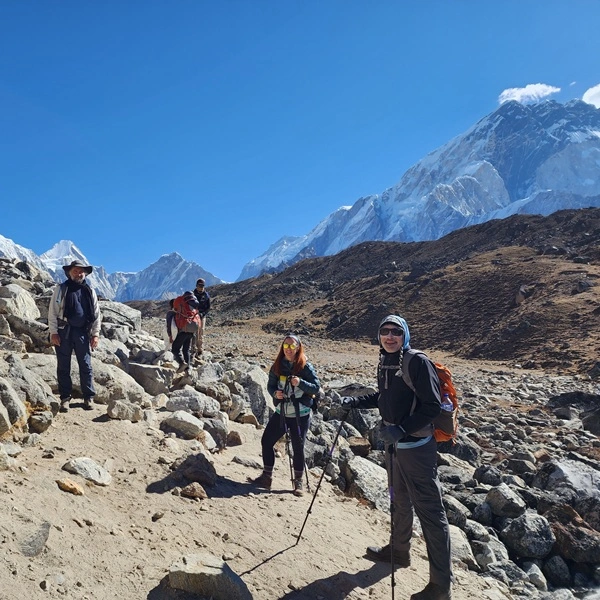
Day three is the visual crescendo. A private helicopter charter departs Kathmandu at dawn, flies over the Lamjura-La Pass, and enters the Khumbu region. The aircraft lands briefly at Kala Patthar (5,545m) for an awe-inspiring viewing of Mount Everest, Lhotse, and Nuptse with the Khumbu Glacier filling the valley below.
The helicopter then descends to Syangboche, landing at Hotel Everest View (3,880m), where guests enjoy a gourmet breakfast at 8:00 AM on a terrace with a 360-degree Everest panorama. The full format is detailed in our Everest without trekking guide. The psychological impact of witnessing this geological majesty triggers a profound sense of ego dissolution, preparing the mind for the introspective work to come.
Phase 3: The Dhulikhel Retreat and Monastic Integration (Days 4–6)
Helicopter transfer to Dwarika's Resort Dhulikhel for three days of intensive immersion. An Ayurvedic physician conducts a comprehensive dosha assessment on arrival. Days follow a rhythmic, restorative schedule — sunrise Hatha yoga on the outdoor pavilions, personalized breakfast, mid-morning pranayama in the Himalayan Salt House drawing the mineral-rich air deep into the lungs.
Afternoons feature bespoke spa therapies. Evenings culminate with walking meditations through the Shiva Lingam Maze and silent contemplation in the Crystal Room. A mindful hike to Namo Buddha — one of the three holiest Buddhist stupas in Nepal — anchors the spiritual dimension; guests share a spartan lunch with the resident monks of Thrangu Tashi Yangtse Monastery and may engage in a private Dharma dialogue with a senior teacher when the monastery schedule allows.
Phase 4: The Wild Terai (Days 7–8)
Domestic flight to Bharatpur, followed by a luxury transfer to Meghauli Serai in Chitwan. The thick, humid air of the jungle provides a stark contrast to the crisp mountain atmosphere, opening different energetic channels in the body. Wellness here integrates with wildlife — private jeep and canoe safaris to track leopards and the prehistoric greater one-horned rhinoceros, followed by restorative therapies at the Miraaya Spa. Afternoons in the private plunge pools of the Rapti Villas. Dinner served on the riverbank under the stars, accompanied by the nocturnal sounds of the jungle.
Phase 5: The Pokhara Lakeside Respite (Days 9–10)
A brief flight to Pokhara and transfer to Tiger Mountain Pokhara Lodge on its ridge above the valley. This phase is dedicated to active, regenerative wellness. Expert local guides lead gentle customized hikes through Gurung communities and oak forests, focused on bird-watching and botanical discovery. Hours are spent on private balconies or by the infinity pool, gazing at the sharp pyramidal peak of Machhapuchhre.
Organic Nepali Thali meals from the on-site farm and deep-tissue aromatherapy massages complete the physical restoration. For travelers who want to combine a lakeside retreat with active wellness, see our guide to luxury resorts in Nagarkot for an alternative on the Kathmandu Valley rim.
Phase 6: The Forbidden Kingdom Ascension (Days 11–13)
The pinnacle of the tour requires a flight through the Kali Gandaki gorge — the deepest in the world — to Jomsom and Shinta Mani Mustang. At 2,800 meters, the landscape transforms into a high-altitude, trans-Himalayan desert. The wellness focus shifts entirely to Sowa Rigpa, with the resident Amchi prescribing herbal steam baths and specialized massage therapies to combat the effects of the dry mountain air.
The highlight of this phase is a private helicopter charter to the sacred Muktinath Temple (3,710m) — bypassing the grueling overland route, guests arrive at the liberation arena (Mukti Kshetra) revered by both Hindus and Buddhists. An eternal natural flame burns in the temple, symbolizing the elements of fire and water, located beside 108 holy water taps.
A holy bath or private puja ceremony at Muktinath is traditionally believed to cleanse the sins of a lifetime. The return journey passes through Marpha village, famous for its apple orchards, and Lubra, an ancient stronghold of the animistic Bon Buddhist tradition that has remained unchanged for 800 years.
Phase 7: Integration and Departure (Day 14)
Return flight to Kathmandu. The final day is reserved for integration — luxury shopping for artisanal cashmere or certified Newari singing bowls, a final farewell dinner featuring traditional cultural performances, and the VIP transfer to the international terminal for departure.
Exclusive Spiritual Access and Private Monastic Retreats
For ultra-high-net-worth travelers, true luxury is defined by access — the ability to transcend the velvet ropes of mass tourism and engage in authentic, unvarnished spiritual experiences. A premier intentional healing tour must leverage deep local connections to orchestrate these encounters.
Neydo Monastery, Pharping
For clients seeking an immersive monastic experience without sacrificing fundamental hospitality comforts, the Neydo Tashi Choeling Monastery in Pharping offers an exceptional hybrid model. Pharping, in the southwest corner of the Kathmandu Valley, is a major Buddhist pilgrimage site — home to the Asura Cave where Guru Rinpoche (Padmasambhava) is said to have achieved Enlightenment.
A short drive away lies Dakshinkali Temple, a powerful Hindu site dedicated to Goddess Kali. The Neydo Hotel is physically attached to the monastery complex. Guests stay in comfortable en-suite rooms but wake to the reverberating sound of monastic horns and chanting. They sit in the main hall during morning prayers, dine with the monks, and witness the intense, physical debates on Buddhist philosophy. Private blessing ceremonies conducted by high-ranking Lamas can be orchestrated for clients on the right itinerary.
Kopan Monastery, Boudhanath
On a hill overlooking the Boudhanath Stupa, Kopan Monastery is the headquarters of the Foundation for the Preservation of the Mahayana Tradition (FPMT) — the global network founded at Kopan in 1975 by Lamas Thubten Yeshe and Thubten Zopa Rinpoche. Home to 360 monks, Kopan is a powerhouse of Tibetan Mahayana Buddhism within the Gelug tradition. While Kopan is famous for its rigorous month-long meditation courses, a bespoke luxury itinerary can secure private audiences with resident scholars.
Elite travelers can arrange personalized instruction in Lam Rim (the gradual path to enlightenment) or engage in specialized practices such as Vajrasattva purification. The recently consecrated Stupa of Complete Victory houses the sacred relics of the late Kyabje Lama Zopa Rinpoche; the Mahabodhi Memorial Stupa at the nearby Khachoe Ghakyil Ling Nunnery makes the surrounding area a profoundly charged energetic center for private meditation and spiritual realignment.
Logistical Mastery and Seasonal Optimization
Executing an ultra-luxury itinerary in a developing nation with extreme topography requires flawless logistical oversight. This is the invisible architecture of the journey.
Permits and Bureaucratic Architecture
Restricted geographical zones require specific permits, all of which are arranged in advance by the operating team. The Upper Mustang Restricted Area Permit costs USD 500 per person for the first 10 days plus USD 50 per day thereafter — funding flows directly to conservation work in the formerly forbidden kingdom.
The Annapurna Conservation Area Project permit costs USD 30 and supports ecological preservation across the Annapurna region. The Trekkers' Information Management System (TIMS) card is USD 20 and provides national database registration for safety and search-and-rescue tracking. These are not optional. They are not negotiable. They are simply part of the operating reality of luxury travel to Nepal's most restricted regions, and they should be handled entirely by the operator so that the guest never encounters them as a source of friction.
Aviation Logistics
Himalayan weather is unpredictable. Coordinating private helicopter charters requires real-time meteorological intelligence and deep industry relationships. If a flight to Lukla or Jomsom is grounded due to high-altitude winds or cloud cover, the operator must instantly pivot the itinerary — deploying luxury ground transport or rerouting to a comparable luxury lodge without breaking the seamless illusion of the trip.
The science behind the altitude effects on the human body is documented by the International Society for Mountain Medicine, and any operator coordinating helicopter flights to 5,545m must understand the physiological context of brief high-altitude exposure.
Seasonal Intelligence
The timing of an intentional healing tour is critical. The weather directly impacts both physical safety and the visual majesty required to catalyze the healing experience.
Autumn (September to November): The gold standard. Crisp, stable air. Crystal-clear blue skies. Moderate daytime heat. Perfect for high-altitude helicopter tours and outdoor yoga and meditation with unobstructed Himalayan views. Mid-October to late November is the absolute apex of the calendar.
Spring (March to May): Excellent. Warming temperatures, blooming rhododendron forests across the lower trail systems, comfortable evening meditation conditions. Slightly increased haze may obscure long-range views from late April onward.
Winter (December to February): Mixed. Clear skies but severe nighttime cold, frequently dropping below freezing at altitude. Ideal for low-altitude valley retreats like Chitwan, Pokhara, and the Kathmandu Valley rim. Prohibitive for Mustang and most high-altitude helicopter operations.
Monsoon (June to August): Not recommended for luxury travel. Heavy torrential rains, high humidity, cloud cover. Frequent flight cancellations. Obscured mountain views throughout.
For the 14-day multi-regional itinerary outlined above, mid-October to late November remains the absolute apex — the highest probability of executing complex helicopter logistics combined with the aesthetic perfection demanded by luxury clients.
Higher-Order Implications for the Luxury Market
Three deeper observations are worth surfacing for travel architects, luxury publishers, and elite destination management companies building this category.
The Synergistic Relationship Between Extreme Geography and Ego Dissolution
The trend of integrating wellness with extreme high-altitude environments — taking a helicopter to 5,545m at Kala Patthar before meditating — is not merely an exercise in ostentatious wealth. From a psychological standpoint, witnessing the staggering scale of the Himalayas induces an acute state of "awe," an emotion clinically associated with diminished ego and a sense of interconnectedness.
When high-net-worth individuals — often plagued by the stress of executive decision-making and hyper-individualism — are subjected to the overwhelming vastness of the Everest or Annapurna massifs, their cognitive defenses lower. Following the geographical shock with a deeply introspective practice (vibrational sound healing, Vipassana meditation, or Ayurvedic dosha realignment) exponentially magnifies the therapeutic efficacy of the wellness treatments.
The landscape itself becomes the primary catalyst for healing — the luxury paradigm shifts from passive relaxation to active psychological reconstruction.
Luxury Tourism as a Financial Vehicle for Preserving Esoteric Medical Lineages
The integration of Sowa Rigpa into ultra-luxury resorts like Shinta Mani Mustang represents a critical socio-economic feedback loop. Traditional indigenous medical systems are often threatened with extinction — by modernization, lack of funding, and the migration of younger generations to urban centers.
By framing the local Amchi as an elite, highly sought-after wellness expert whose consultations are a cornerstone of a multi-thousand-dollar resort experience, luxury tourism assigns massive global economic value to localized knowledge. The capital and prestige sustain current practitioners and incentivize subsequent generations to endure the rigorous, decades-long monastic and medical training required to keep the lineage alive.
The luxury traveler is not merely consuming a spa treatment — their capital acts as a direct conservation mechanism for ancient human heritage.
From Sustainable to Regenerative Luxury
Properties like Tiger Mountain Pokhara Lodge and Shinta Mani Mustang highlight an industry evolution from sustainable tourism (which aims to minimize harm) to regenerative tourism (which aims to leave the environment and community demonstrably better than before).
The high-end demographic increasingly experiences eco-guilt about the carbon footprint of long-haul flights and private helicopter charters. To offset that psychological friction, intentional healing tours must demonstrate regenerative outputs. Whether through funding mountain community healthcare initiatives, operating fully organic farms supporting local agriculture, or directly employing local Amchi and Newari artisans, the narrative must show that the luxury guest's presence actively heals the destination — just as the destination heals the guest.
Conclusion
The blueprint for the ultimate intentional healing tour in Nepal requires masterfully calibrated synthesis — stark geographical beauty, uncompromised luxury infrastructure, and authentic spiritual transmission. The work moves beyond the superficiality of standard global resort spas, delving instead into the rigorous frameworks of Pancha Kosha Ayurveda, Sowa Rigpa Tibetan medicine, and Newari vibrational sound therapy.
Orchestrating a journey that transitions from the heritage-steeped monastic sanctuaries of the Kathmandu Valley to the oxygen-thin altitudes of the Khumbu, through the lush biodiversity of the Terai, and up into the harsh, mystical deserts of Upper Mustang provides an experience that shatters and rebuilds the traveler's baseline state of well-being. Facilitated by elite operators, executed during the pristine autumn window, and grounded in regenerative ethics, the itinerary does not merely represent the pinnacle of travel in Nepal — it defines the absolute vanguard of global luxury wellness.
FAQs
What makes an intentional healing tour in Nepal genuinely different from a luxury wellness retreat in Bali or the Maldives?
Three distinguishing factors. First, the indigenous healing modalities — Pancha Kosha Ayurveda, Tibetan Sowa Rigpa, and Newari vibrational sound therapy — are not imports or adaptations. They are unbroken lineages with diagnostic frameworks, herbal pharmacopeia, and clinical training systems that exist nowhere else in this concentration.
Second, altitude itself acts as therapy at high elevations — with measurable effects on the nervous system that cannot be replicated at sea-level resorts. Third, the combination of private helicopter access to genuinely extreme environments (Kala Patthar at 5,545m, Muktinath at 3,710m) with deeply introspective ground-level wellness produces a psychological reset that no other luxury wellness destination can engineer.
How does the resident Amchi at Shinta Mani Mustang differ from a spa therapist at a five-star resort elsewhere?
The Amchi is a traditional Tibetan physician trained in Sowa Rigpa — the medical system inscribed by UNESCO as Intangible Cultural Heritage of Humanity. The diagnostic process uses pulse reading, traditional observation, and an assessment of the balance between the three humors (Wind, Bile, Phlegm).
The treatments prescribed are personalized clinical interventions, not spa menu items. The resident Amchi comes from an 11th-generation practicing family — meaning the knowledge has been transmitted within the lineage for over 200 years. This is a clinical consultation with a physician who has trained in a specific medical tradition, not a wellness treatment with a Tibetan name.
What is the minimum duration required for a serious intentional healing itinerary in Nepal?
14 days is the minimum required to deliver the full sequence without compression. Shorter itineraries can deliver excellent individual experiences — a 3-night Dhulikhel retreat, a 5-night Mustang program, a Kathmandu Valley cultural immersion with sound therapy — but the integration of high-altitude awe, deep Ayurvedic protocol, monastery immersion, and Tibetan medicine cannot be compressed to less than two weeks without diminishing the cumulative effect. Eighteen to twenty-one days is the ideal window for travelers who want unhurried pacing throughout.
How do private helicopters fit into a wellness itinerary that emphasizes stillness and recovery?
The helicopter resolves the most persistent friction in a Nepal wellness journey — ground transport. The roads between Kathmandu, Pokhara, and the higher-altitude properties are slow, dusty, and physically tiring, the opposite of what a wellness itinerary is designed to produce. Private helicopters eliminate that friction entirely.
The aerial perspective also adds a therapeutic dimension of its own — seeing the Annapurna or Everest massifs from altitude, landing at 4,500 to 5,545m for brief silence, and returning to a spa session the same morning is a format that no ground journey can replicate. We deploy helicopters as standard for transfers between retreat locations wherever geography allows.
Can the Upper Mustang segment be replaced with an alternative high-altitude experience if access permits are difficult?
Yes, though it requires careful design. Upper Mustang requires a Restricted Area Permit (USD 500 per person for the first 10 days) and a minimum group size of 2 travelers. For solo travelers or itineraries where a trip to Mustang is not feasible, the alternative high-altitude wellness experience offers extended time in the Khumbu region — combining helicopter access to Kala Patthar, a stay at Hotel Everest View (3,880m), and lower-Khumbu cultural exploration. The Sowa Rigpa element is more limited outside Mustang, but the geographical drama and ego dissolution effect are equivalent.
Does Alpine Luxury Treks arrange the bureaucratic permits and Amchi consultations, or does the guest handle them?
We handle everything. The Restricted Area Permit, the Annapurna Conservation Area Project permit, the TIMS card, the monastery access arrangements, the Amchi consultation booking, the Ayurvedic physician scheduling, the helicopter charter coordination, the seasonal weather assessment — all of it is handled by our team before the guest arrives. The luxury traveler's only role is to board the aircraft, present at the consultation, and engage with the experience. No paperwork, no bureaucratic navigation, no logistical friction.