Bhutan with kids is one of the easiest decisions in Himalayan family travel, and one of the least understood.
Parents assume the kingdom is remote, high, and formal. In practice, the classic family route through Paro, Thimphu, and Punakha sits between 1,240 and 2,700 meters, the roads between them take one to three hours, and the country's entry rules actively favor children.
Add a private guide and driver, as every Bhutan journey operates, and you'll have a destination that bends around nap schedules instead of breaking them.
We have planned Bhutan for families with toddlers in carriers and for teenagers who wanted to out-shoot the guide at archery.
This guide covers what parents actually ask us: what children pay, how the altitude behaves, what a nine-year-old does all day, and where the honest hard points sit.
Bhutan with Kids: Why the Kingdom Suits Families
Bhutan suits families because its structure removes the two things that break trips with children: crowds and rigidity. There are no tour buses to board at 7 am.
Your guide and vehicle belong to your family alone, so a meltdown in Thimphu costs you twenty minutes, not a group's goodwill.
The scale helps too. Thimphu is a capital city of around 115,000 people with no traffic lights; a white-gloved policeman directs cars from a painted pavilion at the main junction, and children find him more interesting than most museums.
Distances stay short. Paro to Thimphu takes about 75 minutes on a good valley road, and nothing on the standard family circuit demands more than a half-day drive.
Bhutanese culture is the final piece. Children are welcomed into farmhouses; monasteries treat well-behaved kids with warmth; and hoteliers routinely serve plain rice and mild dishes without being asked twice. Your children will be talked to, not tolerated.
What Children Pay: the SDF and Visa Rules
Children get a significant break on Bhutan's Sustainable Development Fee. At the time of writing, children aged five and under are fully exempt from the SDF, and children aged six through eleven pay half the adult rate; from age twelve, the full rate applies.
Every visitor, including infants, still needs a visa, which we arrange on your behalf before you fly.
For a family of four with children under twelve, this changes the arithmetic considerably against what most parents expect after reading adult-focused cost articles.
The SDF is paid per night, so a shorter, well-designed itinerary also trims the fee in direct proportion. Our guide to the fee and visa process walks through the mechanics; the practical point is that the paperwork is entirely ours to handle.
You send us passport scans. We send you a visa clearance before departure.
One flag worth stating plainly: SDF rates and concessions are set by the Royal Government of Bhutan and have changed before. We confirm the current figures in your written proposal, never from a blog post, ours included.
Altitude, Drives, and How We Pace Family Days
Altitude is rarely a problem for children on Bhutan's cultural circuit, because the route stays low by Himalayan standards. Paro sits at 2,200 meters, Thimphu at 2,320, and Punakha drops to a subtropical 1,240 meters, low enough for banana trees and warm winter afternoons.
The one high point is the Dochu La pass at 3,100 meters, which you cross by road in about half an hour, with 108 memorial chortens and, on clear mornings, a wall of eastern Himalayan summits.
Because you drive over Dochu La rather than sleep at it, your exposure to the altitude is brief. We still build family itineraries to land in Paro, take the first afternoon gently, and save the Taktsang hike for the final days once everyone has adjusted.
The honest challenge is the roads, not the height. Bhutanese highways wind, and children prone to motion sickness feel it.
Our standing practice on family trips is simple: the queasiest traveler rides up front beside the driver, we schedule a leg-stretch stop at least every hour, and the Dochu La crossing doubles as a hot-chocolate break rather than a photo sprint.
What Children Actually Do in Bhutan
Children in Bhutan get to participate, not just spectate, and that is the difference that makes the trip land.
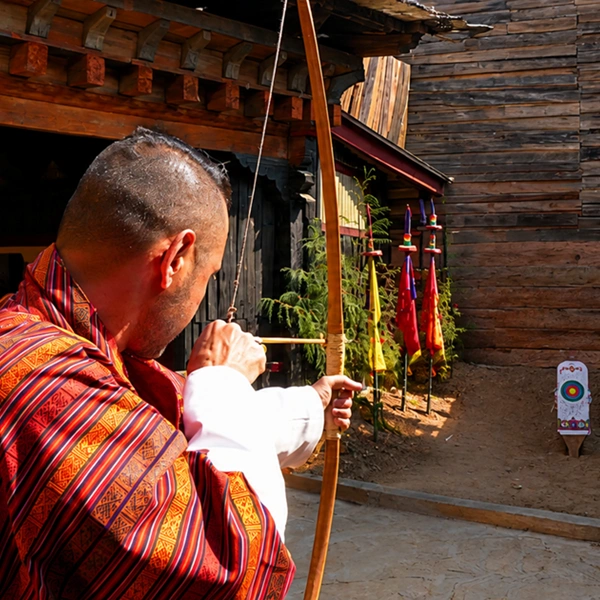
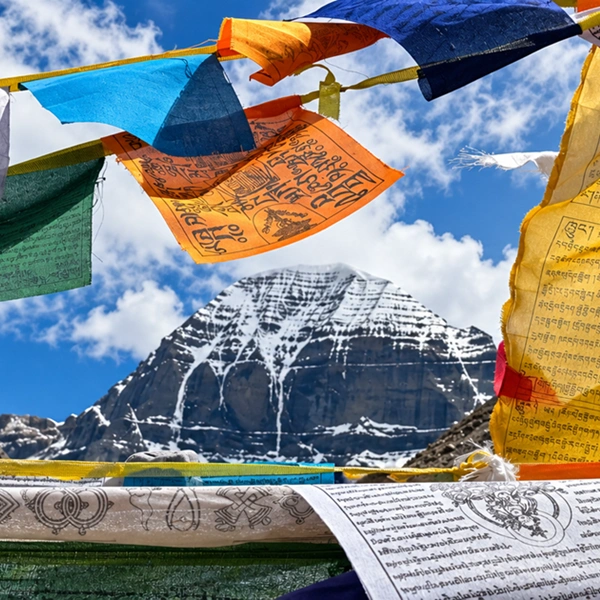
The kingdom's daily culture is hands-on by nature: archery is the national sport, darts fly across village fields, and prayer wheels are there to be spun.
Paro
Paro is the arrival valley and the gentlest introduction. Kids spin the great prayer wheel at Kyichu Lhakhang, one of Bhutan's oldest temples, and try their arm at traditional archery with bamboo bows on a private range.
Rinpung Dzong looks like a fortress from a storybook because it is one; the cantilever bridge below it is a reliable hit with anyone under twelve.
Thimphu
Thimphu earns a full day with children. The Motithang Takin Preserve shows off Bhutan's improbable national animal, which looks like a bee-stung moose and has a creation legend involving the Divine Madman that kids retell for weeks.
At the Bhutan Postal Museum, children design a personalized stamp with their own photograph, then mail a postcard home wearing it, our favorite souvenir in the country because it costs almost nothing and arrives after you do.
The weekend market, the giant Buddha Dordenma above the city, and a momo-making session round out the day.
Punakha
Punakha is the valley children remember most. The dzong stands at the meeting point of the Pho Chhu and Mo Chhu rivers, and the walk crosses a covered wooden bridge over glacier-fed water.
Nearby hangs one of Bhutan's longest suspension footbridges, roughly 160 meters of prayer-flagged sway that eight-year-olds treat as a rite of passage. Families with children about eight and up can add a gentle raft on the Mo Chhu's easy Class I–II water.
The short walk to Chimi Lhakhang through rice paddies takes less than half an hour and comes with a legend that parents can share with the audience.
On our family departures, the guides carry child-sized gho and kira, the national dress, so children can wear them for a farmhouse dinner. It is standing practice because it works: dressed the part, kids stop observing Bhutan and start joining it.
Can Kids Hike to Tiger's Nest?
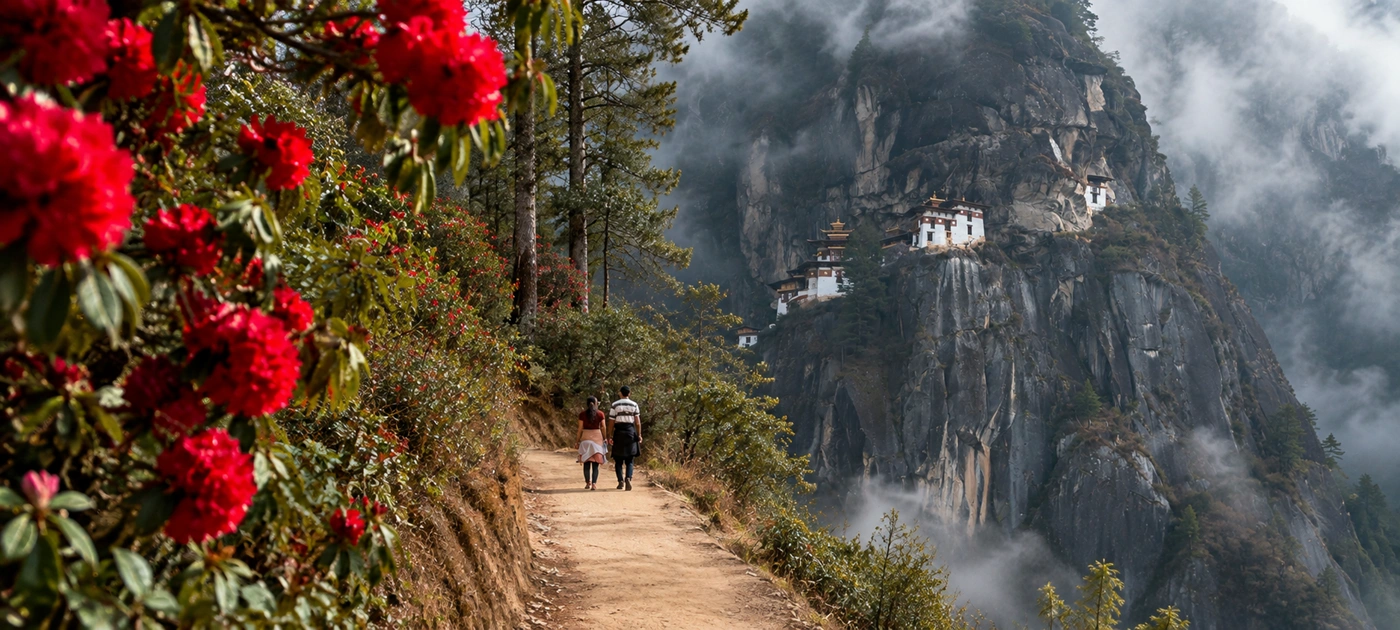
Most children aged eight and up complete the Tiger's Nest hike, and younger ones can still see it well. Paro Taktsang clings to a cliff about 900 meters above the valley floor; the full round trip runs four to six hours at a family pace.
The halfway cafeteria at roughly 2,940 meters has a full, dramatic view of the monastery and makes an entirely respectable turnaround point for tired legs.
Ponies carry riders as far as the cafeteria on the way up, which suits children who can sit in a saddle confidently.
The final section past the viewpoint involves stone steps down and up across a waterfall gully, so we save it for kids with steady footing and full water bottles.
We brief families the evening before, start early to beat the sun on the open switchbacks, and let the slowest hiker set the speed. There is no schedule to defend. That is the point of private.
Food: What Picky Eaters Eat in Bhutan
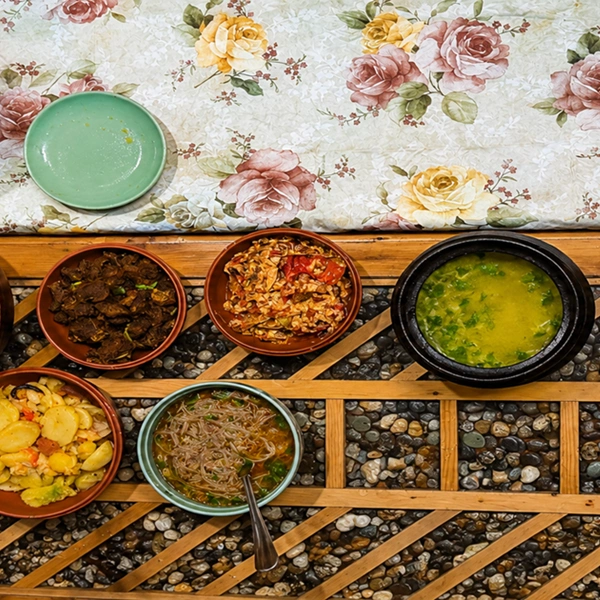
Picky eaters manage fine in Bhutan because the national love of chili is optional for guests. Ema datshi, the beloved chili-and-cheese dish, is genuinely hot, but every hotel kitchen on the family circuit cooks it mild on request.
The reliable child staples are red rice, steamed or fried momos, plain noodles, eggs, seasonal fruit, and surprisingly good potatoes from high-valley farms.
Hotels serving international guests keep pasta and pancakes within reach, and your guide phones ahead so the kitchen knows a family is coming.
For allergies and strict diets, we notify every property in writing before arrival. Bottled and boiled water only, for adults as much as children, and we keep a supply in the vehicle.
Best Time and Trip Length for a Family
The best times to visit Bhutan with children are spring, roughly March to May, and autumn, roughly September to November, when the skies are clear and daytime temperatures are suitable for long days outdoors.
Winter is the underrated family season: Punakha stays mild through the coldest months due to its low altitude, crowds thin, and the clear December light is superb, though mornings in Paro and Thimphu require real jackets.
Five to seven nights is the family sweet spot. It covers Paro, Thimphu, and Punakha without a single punishing drive, keeps the per-night SDF total sensible, and leaves margin for the day that goes sideways.
Families combining Bhutan with Nepal usually give the kingdom the calmer second half, landing in Paro on the short flight from Kathmandu, one of the great descents in commercial aviation, past the eastern Himalayas on a clear morning.
How We Run Bhutan for Families
Every Bhutan journey we operate is private, and for families, that is the whole product.
Your itinerary flexes daily: a slow breakfast when the youngest slept badly, an extra hour at the archery range when it catches fire, a dzong swapped for a river walk without a phone call to anyone.
Our guides on family trips are chosen for patience and storytelling as much as knowledge, and the vehicle is sized up so nobody shares a seatbelt.
We handle the logistics, the visa clearance, the SDF payment, the kitchen warnings, and the pony bookings, so parents can go on holiday too. Held, not handled, applies doubly when the travelers are small.
If Bhutan is on your family's horizon, our family short escapes are the natural place to start, and we will shape any of them around your children's ages, from a first passport stamp at four to a Taktsang summit photo at fourteen.
FAQs
Do children pay the Sustainable Development Fee in Bhutan?
Not fully. At the time of writing, children aged five and under are exempt from Bhutan's SDF, and children aged six to eleven pay half the adult nightly rate; the full rate applies from age twelve. Rates are set by the Royal Government of Bhutan and can change, so we confirm current figures in your written proposal. Every child still requires a visa, which we arrange before travel.
What is the best age to take children to Bhutan?
Any age works, but the trip takes on a different shape. Under five, Bhutan is a gentle valleys-and-farmhouses journey with the SDF waived. From about eight, children can hike to the Tiger's Nest viewpoint, raft the Mo Chhu's easy water, and hold their own at archery. Teenagers get the most from the culture and the legends. We match pacing and activities to the youngest traveler in the party.
Is altitude dangerous for kids on a family tour in Bhutan?
On the standard cultural circuit, no. Paro, Thimphu, and Punakha all sit between 1,240 and 2,320 meters, well below the altitudes where sickness typically appears, and the one high point, the Dochu La at 3,100 meters, is crossed by road in about thirty minutes rather than slept at. We still pace the first day gently and keep the Taktsang hike for late in the trip.
Can a seven-year-old hike to Tiger's Nest?
Usually to the halfway cafeteria, and often further. The cafeteria viewpoint at about 2,940 meters gives a full view of Paro Taktsang and is a fair family turnaround. Confident riders can take a pony that far. The final stone-step section past the viewpoint suits children with steady footing, typically eight and up, at a relaxed pace with an early start.
What do kids eat in Bhutan if they don't like spicy food?
They eat well. Kitchens on the family circuit cook mild on request, and the dependable staples are red rice, momos, plain noodles, eggs, potatoes, and fruit, with pasta and pancakes at hotels serving international guests. Ema datshi stays on the adults' side of the table. We notify every property of allergies and preferences in writing before you arrive.
How many days do families need in Bhutan?
Five to seven nights covers Paro, Thimphu, and Punakha at a child-friendly pace, with no drive longer than about three hours and margin built in for slow mornings. Shorter four-night trips work for Paro and Thimphu alone. Because the SDF is charged per night, trip length also directly shapes the family's total fee.
Is winter a good time to visit Bhutan with children?
Better than most parents expect. Punakha sits at 1,240 meters and stays mild through the coldest months; the light is exceptionally clear, and the sites are quiet. Mornings in Paro and Thimphu are genuinely cold, so pack proper layers. For first-time family trips we still favour spring and autumn, when the whole circuit is comfortable all day.
Do families in Bhutan travel in tour groups?
Not with us, and rarely at all. Bhutan requires visitors to travel with a licensed guide, and we run every journey privately: your own guide, driver, and vehicle, with an itinerary that flexes daily around your children. No fixed departures, no strangers on the bus, no schedule that outranks a nap.