Bhutanese food treats the chili as a vegetable, not a spice. That single fact explains most of what lands on your plate in the kingdom, from ema datshi bubbling in a clay pot to strings of red sha ema drying on farmhouse roofs in October sun.
Eat well here, and you understand the country faster than any museum can teach you. This guide walks through the dishes, the grains, the drinks, and the practical side — spice levels, dietary needs, and where your meals actually happen on a private journey.
What Is Bhutanese Food Actually Like?
Bhutanese cuisine is farmhouse cooking from high valleys: chilies, soft cheese, red rice, buckwheat, pork, beef, and river greens, simmered rather than fried.
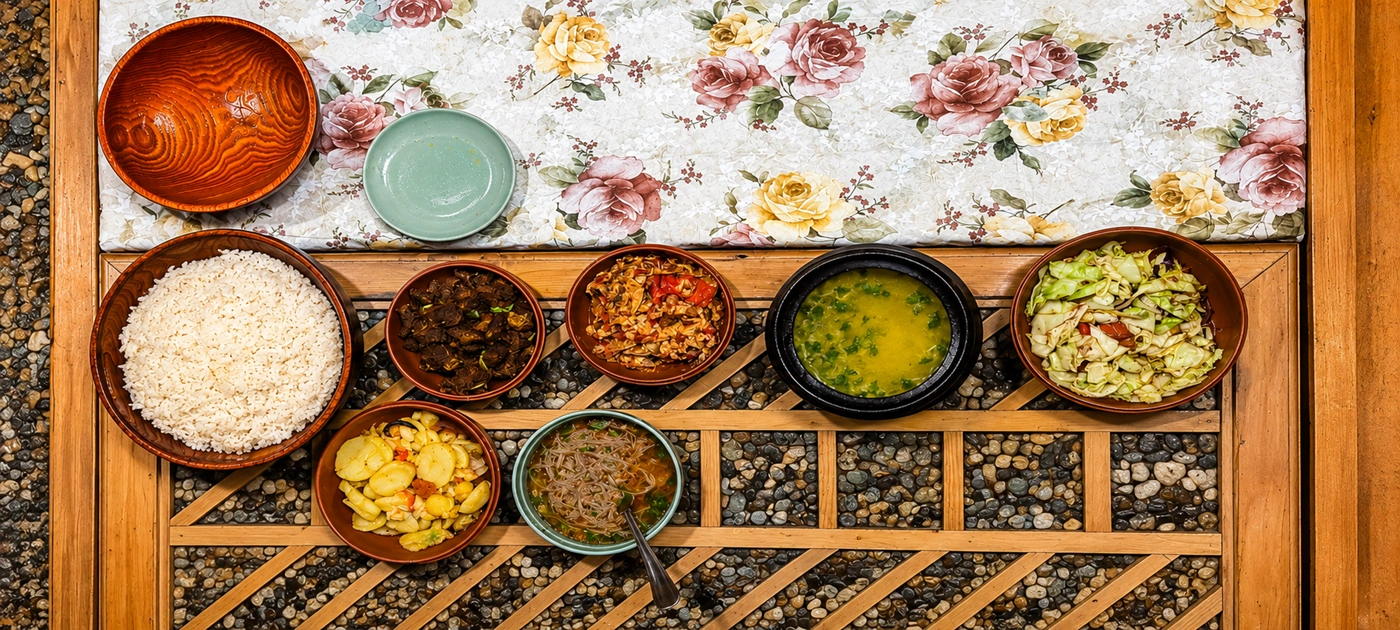
Meals are built around a mound of rice with three or four shared dishes beside it, eaten family-style.
Two things surprise first-time visitors. The heat is real — Bhutanese cooks measure a dish by its chili content the way Italians measure one by its olive oil.
And dairy is everywhere, in the form of datshi, a fresh, soft cheese that melts into sauces rather than sitting on top of them.
The food is honest rather than ornate. A farmhouse lunch above Punakha might be five dishes in dented steel bowls, and it will stay with you longer than most tasting menus.
Food is one thread of what makes luxury travel across the Himalayas feel different in Bhutan — the table is part of the route, not a pause from it.
Ema Datshi: The National Dish, Explained
Ema datshi, Bhutan's national dish, is a stew of fresh or dried chilies simmered with datshi, a soft farmhouse cheese, and it appears at almost every Bhutanese meal. "Ema" means chili, "datshi" means cheese — the name is the recipe.
The chilies are the vegetable, sliced lengthwise, seeds in. The cheese melts into a pale, glossy sauce, sometimes loosened with a little butter and a tomato. Ladled over red rice, it is comfort food with a kick that builds rather than punches.
The Datshi family extends well past the original. Kewa datshi swaps chilies for potato and is far milder; shamu datshi uses mushrooms and is the version we suggest to guests testing the waters.
Order all three over the course of a week, and you'll have a spice map of your own tolerance.
Bhutan Red Rice and the Grains of the High Valleys
Bhutanese red rice is a medium-grain heirloom rice grown in the Paro Valley at around 2,200 meters, and its russet color comes from the bran left on the grain.
It cooks in about 20 minutes, faster than most whole rices, and tastes nutty and faintly earthy — closer to a grain than to white rice.
It pairs with datshi dishes the way bread pairs with stew: the sauce needs it. Farmers flood the Paro terraces with glacial meltwater from the Pa Chhu River, which locals credit for the flavor.
Come around harvest — our best season to visit Bhutan — guide maps the windows — and the terraces turn gold while chilies redden on the rooftops above them.
Head east to Bumthang, and rice gives way to buckwheat. Khuli — buckwheat pancakes — and puta, hand-pressed buckwheat noodles, are the valley's staples, and a Bumthang farmhouse breakfast of khuli with honey is one of our favorite meals in the country.
This is the shift worth traveling east for: the kingdom changes its grain as it changes its altitude.
Dishes Worth Ordering by Name
Learn six names, and you can order confidently anywhere in Bhutan. Direct your appetite here first.
- Phaksha paa — pork stewed with dried chilies and mountain radish, often with a ribbon of fat that Bhutanese consider the best part.
- Jasha maru — minced chicken with ginger, garlic, tomato, and chili; the closest thing to a mild curry on most menus.
- Sikam paa — sun-dried pork belly fried with chilies, chewy and intense; farmhouse food at its most Bhutanese.
- Momos — steamed dumplings filled with cheese, cabbage, or beef, served with ezay, the chili relish that varies from house to house.
- Hoentay — the Haa Valley's own dumpling, wrapped in buckwheat dough and stuffed with turnip greens and datshi; hard to find outside Haa and worth the detour.
- Goen hogay — a cold cucumber salad with chili, Sichuan pepper, and crumbled datshi; the dish that cools the rest of the table down.
Ezay deserves its own line. Every kitchen makes this chili relish differently — some pound it fresh with tomato and coriander, some age it with fermented cheese — and comparing ezay across valleys becomes a quiet sport on a two-week journey.
How Spicy Is Bhutanese Food — and Can You Go Milder?
Bhutanese food is genuinely hot by international standards, but every dish can be cooked mild on request, and kitchens are used to adjusting for visitors.
Heat lives in the chilies themselves, so a cook simply uses fewer of them, swaps in kewa or shamu datshi, or serves the ezay on the side.
Our standing practice: we record each guest's spice tolerance before arrival, and our guide passes it to every kitchen in Dzongkha, so the request never gets lost between you and the cook.
Guests who want the full farmhouse experience get it; guests who don't have to negotiate at the table.
A useful ladder for a first trip to Bhutan: start with shamu datshi and jasha maru, then work toward ema datshi mid-trip. By Punakha, most of our guests are adding ezay unprompted.
Where You'll Eat: Farmhouses, Lodges, and the Thimphu Market
Your meals in Bhutan are split three ways: lodge dining rooms, farmhouse tables, and picnics our crew sets on trails and passes. Lodge kitchens cook a dual menu — refined Bhutanese alongside continental — so a day can hold both buckwheat noodles at lunch and a proper espresso after dinner.
The farmhouse meal is the one guests remember. You sit on floor cushions in the family shrine room's shadow, dishes arrive in courses without ceremony, and the grandmother usually decides you haven't eaten enough.
We arrange these with families we've worked with for years, in the Paro, Punakha, and Bumthang valleys.
Make time for the Centenary Farmers' Market in Thimphu, held from Thursday to Sunday, where the kingdom's produce piles up in one hall: dried chilies by the sack, yak cheese cubes strung like beads, fiddlehead ferns, and doma — the betel-nut parcel you'll see stain half the smiles in the country. Walking it with a guide turns every stall into a story.
Suja, Ara, and What to Toast With
Suja is Bhutanese butter tea — black tea churned with butter and a pinch of salt — and it makes more sense the higher and colder you are.
Drink it with zow shungo, roasted rice pressed into your palm, the way farmhouse hosts serve it. Some guests convert; others make one polite cup last an hour. Both are fine.
Ara is a home-distilled spirit, brewed from rice, wheat, or barley, sometimes warmed with butter and a fried egg stirred in.
It is offered, not sold, in most farmhouses — a hospitality gesture with a gentle burn. Bhutan also brews good beer and, in Bumthang, surprisingly good Swiss-style cheese and cider, a legacy of a decades-old Helvetas project.
Eating Well with Dietary Needs in Bhutan
Vegetarians eat exceptionally well in Bhutan — the datshi tradition is meat-free at its core, and many Bhutanese avoid slaughter for Buddhist reasons, so kitchens understand the request without explanation.
Vegans need one adjustment: datshi is dairy, so ask for chili and vegetable dishes cooked without cheese, which every kitchen can do.
Gluten-free travel is easier here than in most of Asia. Rice anchors every meal, and Bumthang's buckwheat is naturally gluten-free, though we confirm preparation methods kitchen by kitchen.
On a private journey, we send your requirements ahead to every lodge and farmhouse — the same system that runs our dietary planning across all routes — so the answer at the table is already yes.
The one caution is standard for the region: drink bottled or boiled water, and let your guide steer street-food choices in Thimphu.
In eight days of lodge and farmhouse meals, food safety is rarely the thing our guests write to us about — second helpings are.
FAQs
What does ema datshi taste like the first time you try it?
Expect melted-cheese comfort with a heat that builds over three or four bites rather than hitting at once. The cheese sauce is mild, creamy, and slightly tangy; the chilies carry all the fire. Eaten the Bhutanese way — folded into red rice rather than alone — the dish balances out, and the rice resets your palate between bites. Ask for it mild on your first try; you can escalate for the rest of the trip.
Is Bhutanese red rice different from other red rice varieties?
Yes — Bhutanese red rice is a distinct heirloom variety grown on the irrigated terraces of the Paro Valley, softer and quicker-cooking than Camargue or Himalayan red rices sold abroad. The bran stays on the grain, giving it a nutty flavor and a russet-pink color once cooked. It's semi-milled, which is why it cooks in about 20 minutes instead of 40. Buy a kilo at the Thimphu market; it travels well and cooks the same at home.
Can dishes in Bhutan be made mild for children or sensitive palates?
Every kitchen we work with can cook mild, and the request is routine rather than awkward. Heat comes from whole chilies, so cooks reduce or remove them and serve ezay relish on the side for anyone who wants it back. Kewa datshi (potato) and shamu datshi (mushroom) are naturally gentler entry points, and lodge kitchens run continental menus alongside Bhutanese ones. We pass spice preferences to each kitchen before you sit down.
Can vegetarians and vegans eat well on a tour of Bhutan?
Vegetarians eat some of the best food in the country — datshi dishes, buckwheat noodles, fern shoots, and farmhouse vegetable stews are all meat-free by design. Vegans should flag the dairy: datshi cheese and butter appear widely, but kitchens will cook chili-and-vegetable dishes without them on request. We send dietary requirements to every lodge and farmhouse ahead of arrival, so nothing needs explaining at the table.
What is suja, and is it polite to decline it?
Suja is salted butter tea, churned from black tea and butter, and it is the default gesture of welcome in Bhutanese homes. Accepting a cup matters more than finishing it — take a sip, let it be refilled once, and no host will mind if it sits after that. Served with zow shungo (roasted rice), it works as a light snack at altitude. Some guests grow to like it by the trip's end; the cold-morning cups convert the most people.
What happens at a Bhutanese farmhouse meal?
You eat seated on cushions in the family home, sharing four to six dishes served with red rice — typically a datshi, a meat stew, seasonal greens, and ezay. Courses arrive without formality, hosts refill plates as a point of pride, and the meal often ends with ara, the home-distilled spirit, offered around the room. We arrange farmhouse meals with families we know in the Paro, Punakha, and Bumthang valleys, and they consistently rank among the moments guests mention most.
Are meals included in the price of a private tour of Bhutan?
Yes — Bhutan's package-based travel model, set by Bhutan's SDF and visa system, means all meals are included in your daily rate, from lodge dinners to farmhouse lunches and trail picnics. You won't settle restaurant bills inside the kingdom; the only food spending is optional — market purchases, extra drinks, or a cafe stop in Thimphu. This is one of the quiet luxuries of the system: the eating is decided by appetite, not arithmetic.
Is street food in Thimphu safe to try?
Selectively, yes — momos steamed to order at busy stalls are the safest bet, and your guide knows which vendors we trust. Skip anything sitting pre-cooked, raw salads outside lodges, and tap water everywhere. The Centenary Farmers' Market is fine for packaged goods, dried chilies, and fruit you peel yourself. With those rules, food trouble is rare; our guides carry the same caution list on every departure.
Hungry travelers plan better trips. If the farmhouse table and the Paro rice terraces are calling, our Bhutan private tours put every meal in this guide on your table — and the kitchen already knows how you like your ema datshi.