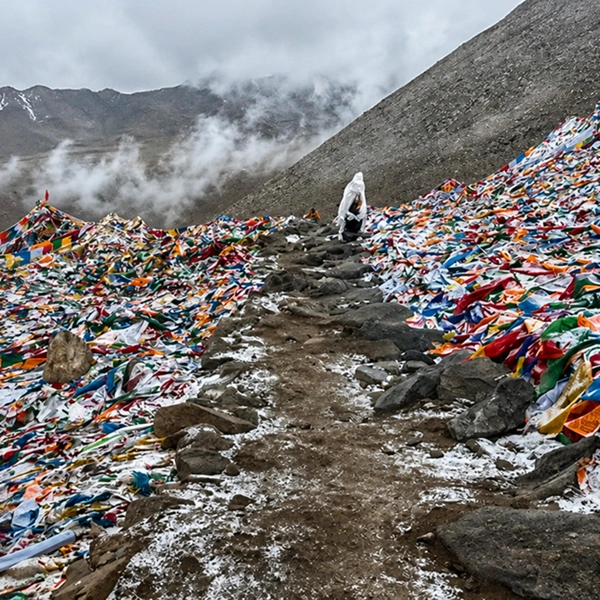
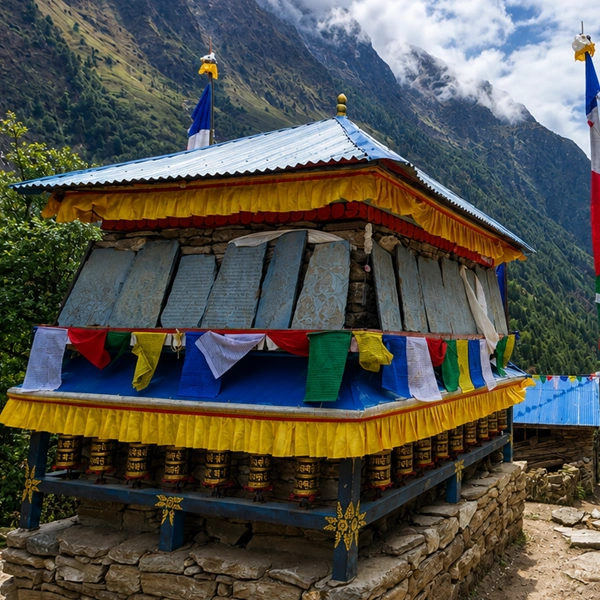
Trekking in Bhutan is unlike trekking anywhere else in the Himalayas, and the difference starts before you take a single step. There are no teahouses. There is no independent hiking.
Every route, from a one-night camp above Paro to the 25-day crossing of Lunana, runs as a fully supported private expedition with a licensed Bhutanese guide.
That structure changes what each trek asks of you and which one you should choose.
We run five trekking programs in Bhutan, and we grade them below the way we grade them for our own guests: by sleeping altitude, pass height, escape options, and honest daily effort — not by how the brochure wants them to sound.
How trekking in Bhutan works
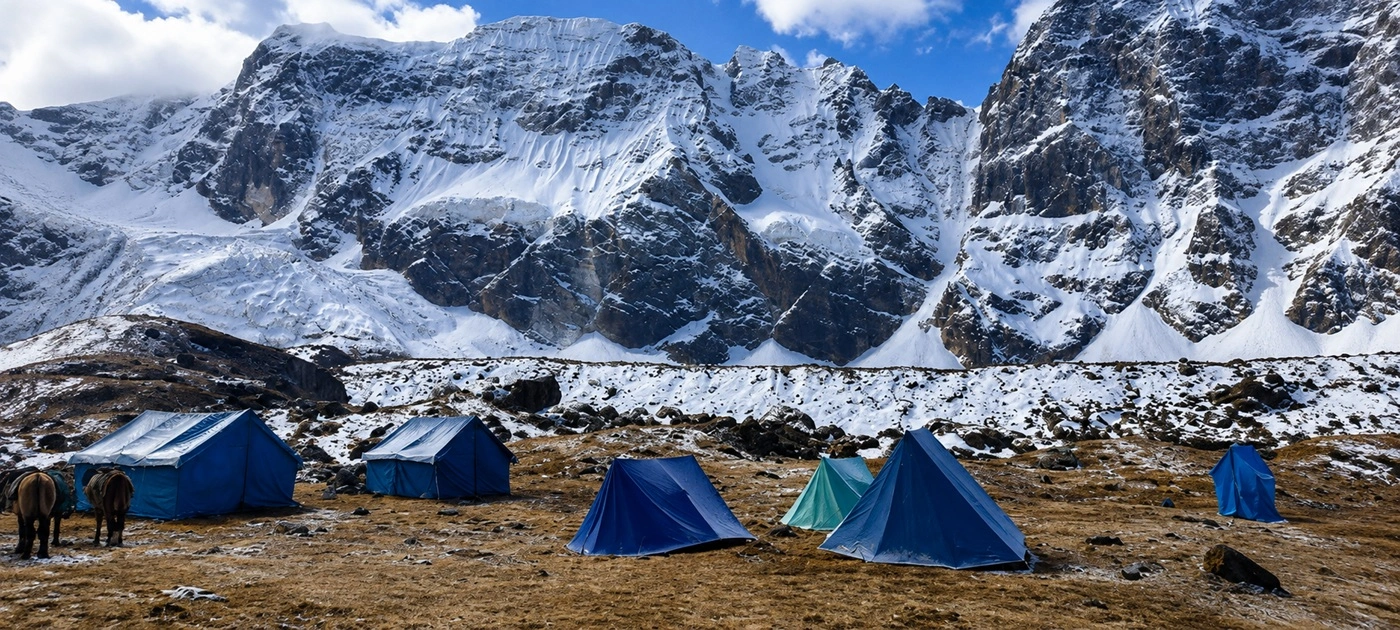
Every trek in Bhutan is fully supported: a licensed guide, cook, and horseman team travel with you, because the kingdom has no teahouse network.
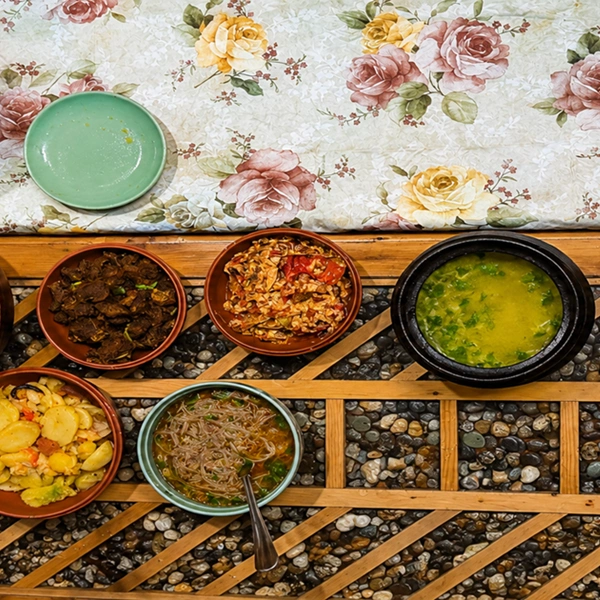
Camps are set up and struck for you each day. Meals come from your own cook tent, not a lodge menu.
This is national policy, not a luxury add-on. Bhutan requires a certified guide for all visitors, and trekking permits are issued through registered operators only.
The Sustainable Development Fee, paid per night, funds the trails, the free healthcare system, and the forest cover that keeps these valleys as quiet as they are — the current rate and what it includes are on our [Bhutan SDF and visa guide].
The practical result is a different rhythm from Nepal. You carry a daypack and nothing else.
Your crew handles loads with pack horses or yaks above the horse line, and your guide manages route timing, river crossings, and camp placement day by day.
Even the gentlest Bhutan trek arrives with more logistics behind it than a comparable lodge walk in the Annapurnas — and on the hard routes, that support is the entire margin of safety.
One more structural fact: road access is thin. Once you leave the Paro or Punakha valleys, there are few points where a vehicle can reach you, which is why our grading below weighs escape options as heavily as altitude.
How we grade Bhutan treks
We grade every Bhutan trek on five measurable factors, not on feel: highest sleeping altitude, consecutive nights above 4,000 meters, highest pass crossed, number of road-access escape points, and the width of the safe weather window. A route scores Grade 1 to Grade 5.
The scale is deliberately strict. A trek only earns Grade 5 when all five factors run against you at once — and in Bhutan, exactly one route does.
Grade 1 means any healthy walker with a weekend of hill practice can do it. Grade 3 means genuine trek fitness: back-to-back six-hour days at altitude. Grade 5 means the fittest month of your life, planned half a year out.
We publish the grade with the reasoning every time. At this price level, you deserve to know which day will hurt, not just which day will photograph well.
Bumdra trek — Grade 1, the one-night camp above Tiger's Nest
The Bumdra trek is Bhutan's gentlest true trek: two walking days, one night under canvas at about 3,800 meters, and a descent that drops you past the Tiger's Nest monastery on the second morning.
It earns Grade 1 on our scale — one night at altitude, no passes, and the Paro road under an hour below camp the whole time.
The first day climbs about four hours through blue pine and juniper from the trailhead above Paro, passing the meditation cells of Chhoe Tse Lhakhang before the ridge opens onto the Bumdra meadow.
The camp sits below Bumdra monastery — the "cave of a hundred thousand prayers" — with a line of 6,000-meter snow peaks across the northern horizon at sunrise.
Day two is the reason this trek exists. You descend the cliff path past Zangto Pelri and the upper hermitages, then arrive at Taktsang from above, meeting the crowds only for the final hour.
Most visitors climb to the Tiger's Nest; on the Bumdra trek, you walk down into it.
Choose Bumdra if you have two spare days in Paro and want one honest night in a Himalayan camp without committing a week. It also acclimatizes you usefully before any longer route.
Druk Path trek — Grade 2, ridge lakes between Paro and Thimphu
The Druk Path crosses between Paro and Thimphu in four to six walking days, topping out at the Phume La at about 4,210 meters.
We grade it 2: real altitude and real weather exposure on the ridge, balanced by short walking days and towns at both ends.
This is the classic first Bhutan trek, and it deserves the reputation. The route follows the high ground the whole way — past Jele Dzong on the first climb, then along a chain of trout lakes at Jangchhu Lakha, Jimilang Tsho, and Simkotra Tsho, each one a camp with clear-day views to Jomolhari on the northwest skyline.
The days are short, typically four to six hours, but almost everything happens above 3,500 meters.
Nights are cold in any season. The final morning crosses the Phume La and descends through hermitages to Phajoding monastery, then steeply down into Thimphu — a knee-testing 1,100-meter drop that surprises more guests than the pass does.
Choose the Druk Path trek if you want a genuine multi-day Himalayan trek during a one-week visit to Bhutan, with monasteries and lakes as the payoff rather than a single summit view.
Jomolhari trek — Grade 3 to 4, to the base of Bhutan's sacred mountain
The Jomolhari trek walks up the Paro Chhu valley to Jangothang base camp at 4,080 meters, directly beneath the 7,326-meter face of Jomolhari, in seven to nine days.
We grade the out-and-back version 3, and the loop over the Bhonte La at about 4,890 meters a firm 4.
The approach itself is the education. From the ruined Drukgyel Dzong, the trail climbs gradually through rice terraces, then oak and rhododendron forest, then yak pasture, gaining altitude at a rate that lets most fit walkers acclimatize on the move.
Blue sheep graze the slopes above Jangothang most mornings, and the camp's rest day usually includes the side walk to the twin Tshophu lakes at about 4,380 meters.
What earns the higher grade is what comes after base camp. The loop crosses the Bhonte La in a single long day of scree and wind, then descends the remote Dhumzo valley — spectacular and committing, because once over the pass the only sensible way out is forward.
The reward is the best effort-to-mountain ratio in the kingdom. Nowhere else in Bhutan do you sleep this close to a 7,000-meter peak this early in a trek.
The Snowman trek — Grade 5, the hardest regularly run trek in the Himalaya
The Snowman trek crosses roughly eleven passes above 4,500 meters in about 25 walking days, traversing the Lunana district where no road reaches within days of the trail.
It is the only Grade 5 route in Bhutan, and we grade nothing else in our Nepal or Tibet range at the same level.
Every factor on our scale runs red here. Sleeping altitudes sit above 4,000 meters for around two weeks straight, with the highest camps near Thanza at about 4,180 meters and passes including the Rinchen Zoe La at roughly 5,320 meters.
The weather window is a narrow band in late September and October, after the monsoon and before pass-closing snow. Escape options barely exist: an evacuation from Lunana means a helicopter from Royal Bhutan Helicopter Services or a multi-day walk out.
None of that is a reason not to go. It is the reason to go prepared, six months of structured training out, with a buffer built into your flights home.
The route itself — Laya's turquoise-hatted herders, the glacial lakes under Table Mountain, village rest days in Thanza — repays every one of those 25 days. Our full route breakdown lives in the [Bhutan Snowman trek guide].
The Snowman at our private standard
We also run the Snowman as a fully private expedition rather than a fixed group departure. The route is the same; the margin is different — your own guide and full crew, camps placed to your acclimatization rather than a group schedule, daily pulse-oximeter checks from the first night above 3,500 meters, and helicopter evacuation cover arranged before you walk in.
On a 25-day route with no roads, that flexibility is not comfort. It is contingency. A private program can hold a rest day when the group timetable never could. Details are on the [private Snowman expedition] page, alongside the classic departure format on the [Snowman trek] page.
When to go trekking in Bhutan
Trekking in Bhutan runs in two windows: spring from March to May, and autumn from late September through November, with the Snowman confined to the narrow autumn slot. This is a different calendar from Nepal, where our operating windows are mid-March to mid-June (spring) and mid-October to mid-December (autumn) — Bhutan's monsoon arrives earlier and lingers.
Spring is the rhododendron season. The Druk Path ridges and the lower Jomolhari valley flower through April, and daytime temperatures are the kindest of the year. The trade-off is haze: big-mountain views come and go before the pre-monsoon build-up.
Autumn is the clarity season. October mornings on the Druk Path routinely show Jomolhari sharp on the horizon, and it is the only responsible season for the Snowman's high passes. Book autumn early — Bhutan caps trekking capacity through its operator system, and October fills first.
Bumdra is the exception that proves the rule. At 3,800 meters, with a road an hour below, it walks comfortably every month outside the June-to-mid-September monsoon, making it the one Bhutan trek that fits a winter cultural itinerary.
Trekking in Bhutan vs trekking in Nepal
Bhutan trades Nepal's lodge infrastructure for solitude, and that single trade explains almost every other difference. On our last-season Everest programs, you share the trail with thousands; on the Druk Path, you can cross the Phume La and meet nobody but your own crew.
Costs read differently, too. Nepal prices build up from permits and lodges; Bhutan prices build down from the nightly Sustainable Development Fee, which folds your guide requirement, your trail upkeep, and the kingdom's conservation model into one figure.
Comparing the two on headline price alone misses what each number carries.
Difficulty compares more directly. The Druk Path sits near Nepal's Poon Hill in terms of altitude; Jomolhari parallels an Everest Base Camp trek with wilder camps and fewer people; the Snowman has no Nepal equivalent at all.
If you have trekked in Nepal and want something different from what you experienced there, Bhutan is the honest answer.
Which Bhutan trek should you choose?
Match the trek to your calendar and your last twelve months of fitness, in that order. Two days in Paro: Bumdra. One week and first-time trek legs: Druk Path. Nine days and genuine hill fitness: Jomolhari. A month, a training plan, and the appetite of your life: the Snowman.
If you are still deciding, start where most guests start: the [Jomolhari trek] gives the fullest measure of trekking in Bhutan per day walked—sacred-mountain base camp, yak-herder valleys, and camps you will not share. Tell us your dates and we will build the route, the crew, and the pace around you. Every itinerary we run is a starting point, not a fixed product.
FAQs — trekking in Bhutan
Do you need a guide for trekking in Bhutan?
Yes — a licensed Bhutanese guide is mandatory for all trekking in Bhutan, on every route without exception. Independent trekking is not permitted under national tourism policy. In practice, this works in your favor: your guide carries the permits, sets the daily pace, manages river and pass timing, and runs acclimatization checks. On our private programs, the guide leads a full camp crew, so you walk with only a daypack.
Are there teahouses on treks in Bhutan like there are in Nepal?
No — Bhutan has no teahouse or lodge network on its trekking routes, so every trek is a camping trek with a full support crew. Your operator provides tents, a cook team, and pack animals; meals are prepared in your own kitchen tent. The exception is Bumdra, where our camp is a standing fixed camp with proper beds. Expect wilder trails and emptier camps than in Nepal, in exchange for carrying nothing.
What is the hardest trek in Bhutan?
The Snowman trek is the hardest trek in Bhutan and among the hardest regularly run treks anywhere, with about 25 walking days and roughly eleven passes above 4,500 meters. Around two weeks of it is spent sleeping above 4,000 meters, and the Lunana section has no road access. We grade it 5 on our five-point scale — the only route in our whole range to score it — and ask guests to start structured training six months out.
Which trek in Bhutan is best for beginners?
The Bumdra trek is the best beginner route in Bhutan: two walking days, one night at a fixed camp at about 3,800 meters, and a descent past the Tiger's Nest monastery. Any healthy walker with basic hill practice can complete it. The Druk Path is the best first multi-day trek — four to six days between Paro and Thimphu with short stages, though its 4,210-meter pass and cold ridge camps still ask for preparation.
How many days do you need for trekking in Bhutan?
Plan two days minimum for Bumdra, six to eight total for the Druk Path with Paro sightseeing, ten to twelve for Jomolhari, and a full month for the Snowman, including arrival, acclimatization, and a buffer before international departure. Bhutan itineraries also work best with at least one full valley day before any trek starts, both for altitude and because Paro's dzongs deserve it.
Can you see Jomolhari without doing the full Jomolhari trek?
Yes — clear-day views of Jomolhari appear from the Druk Path lake camps and the Phume La, and from several Paro Valley viewpoints, without walking the full route to base camp. The difference is proximity. Only the Jomolhari trek itself puts you at Jangothang, 4,080 meters, directly beneath the 7,326-meter face at sunrise. If the mountain is your reason for coming, walk to it.
What wildlife do you see while trekking in Bhutan?
Blue sheep are the most reliable sighting on Bhutan treks, grazing the slopes above Jangothang on the Jomolhari route most mornings, with Himalayan griffons overhead on every high stage. The Snowman route adds yak-herding country where takin — Bhutan's national animal — range in the side valleys. Bhutan keeps more than two-thirds of its land forested by constitutional mandate, so birdlife on the lower approach days is constant.
Which Bhutan treks run in spring, and which only in autumn?
Bumdra, the Druk Path, and Jomolhari all run in both spring (March to May) and autumn (late September to November), while the Snowman runs only in the autumn window. Spring brings rhododendron bloom and softer temperatures with hazier big-mountain views; autumn brings the sharpest skies of the year. The Snowman's high passes need the post-monsoon, pre-snow band — miss it, and the route closes.