Why Bhutan Feels Special for First-Time Visitors
There is something about Bhutan that catches people off guard.
Maybe it’s the quiet. No honking traffic. No crowds jostling for space at a famous monument. No one is trying to sell you anything on the street. You land in Paro, step off the plane, and the loudest sound is the river.
Or maybe it’s the way everything is already taken care of. In Bhutan, every international visitor travels with a licensed guide and a private driver. Your visa is handled before you arrive. Your hotels are confirmed. Your days are planned but flexible. You don’t have to figure anything out on the ground. You just… arrive.
For first-time visitors, this matters more than you might expect. Bhutan removes the friction that makes travel stressful. It replaces it with space. Space to look at mountains. Space to wander through a temple courtyard. Space to sit on a hotel terrace in the evening and realize you have nowhere to be.
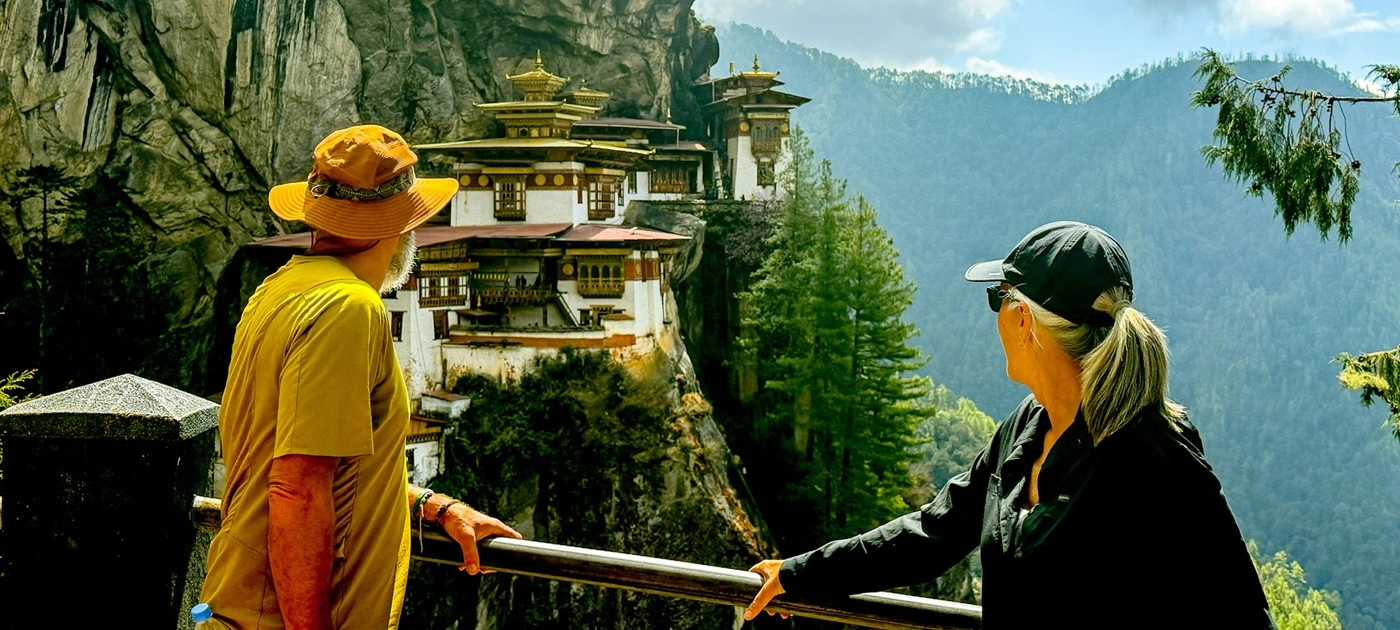
The standard first-time route moves through three valleys: Paro, Thimphu, and Punakha. Most guests spend seven to ten days. The highlight for nearly everyone is the hike up to Tiger’s Nest monastery — the cliff-hanging temple that appears in every Bhutan photograph. But there is much more around it: the fortress of Punakha Dzong, the memorial chortens in Thimphu, the 108 stupas at Dochula Pass, the stillness of a monastery courtyard at 6 AM.
A luxury guided journey means you see all of this without ever worrying about logistics. Your guide translates, navigates, and explains. Your driver knows the roads. Your hotels are warm, comfortable, and quiet. You set the pace.
What a First-Time Luxury Bhutan Trip Usually Looks Like
Every trip is different, but most first-time itineraries follow a similar shape. Here is a typical 7- to 10-day flow to give you a sense of the rhythm.
Days 1–3: Paro
You fly into Paro International Airport — the only international gateway into Bhutan. The approach through the mountain valley is dramatic. Your guide and driver meet you at the terminal, handle your bags, and drive you to your hotel.
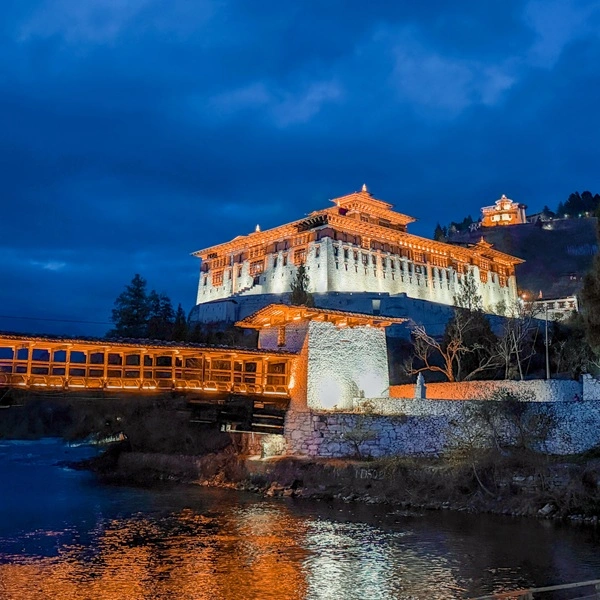
The first day is about settling in. A short walk around the town. Maybe a visit to Rinpung Dzong, the old fortress above Paro, or a quiet wander through the National Museum. Nothing strenuous. Your body needs a day to adjust to the altitude (Paro sits at about 2,250 meters).
On your second or third day, you hike to Tiger’s Nest. This is the one thing nearly every first-time visitor wants to do, and it is worth the effort. The trail takes about four to five hours round-trip, with a teahouse halfway up for a rest and a view. Your guide sets the pace. There is no rush. If you want to turn back at any point, you can. If you want to go slowly, you go slowly.
Days 4–5: Thimphu
From Paro, you drive about an hour along a river valley road to Thimphu, the capital. Thimphu is a small city — the only national capital in the world without a traffic light. It has a gentle energy.
You’ll visit the massive Buddha Dordenma statue overlooking the valley, the Tashichho Dzong (the working government fortress), and the National Memorial Chorten, where elderly Bhutanese locals gather every afternoon to spin prayer wheels and chat. Your guide explains the iconography, the politics, and the daily rhythms of the city.
There is no pressure to see everything. If you’d rather spend an afternoon walking through the weekend market or sitting in a café watching the town go by, that is a perfectly good use of a day.
Days 6–8: Punakha
The drive from Thimphu to Punakha takes about three hours and crosses the Dochula Pass at 3,100 meters. On a clear day, you can see the entire Himalayan range from the pass. There are 108 memorial stupas built on the hilltop. It is one of the most photographed spots in Bhutan, and your guide will know the best time of day to stop.
Punakha sits lower than Paro and Thimphu, around 1,300 meters. The air is warmer. The valley is lush. Rice terraces and orange groves line the roads.
The highlight here is Punakha Dzong, which most people consider Bhutan's most beautiful fortress. It sits at the meeting point of two rivers. Your guide will walk you through the courtyards, explain the murals, and give you quiet time to simply absorb the place.
Other options in Punakha: walking across the longest suspension bridge in Bhutan, visiting Chimi Lhakhang (a small temple with a quirky fertility tradition), or simply resting at your lodge. Punakha is the valley where most guests slow down and realize they don’t want to leave.
Days 9–10: Return to Paro and Departure
The final day or two usually involves a gentle return to Paro. If there’s time, you might visit Kyichu Lhakhang — one of the oldest temples in Bhutan, built on perfectly flat ground, easy to walk through. You light a butter lamp. You say goodbye to your guide. You drive to the airport.
A FIRST-TIMER’S EXPERIENCE
“We recently hosted a couple from Amsterdam, Pieter and Anke, on their first Bhutan trip. Pieter was worried about the Tiger’s Nest hike because of a knee issue. Our guide adjusted the pace, stopped at the teahouse for 30 minutes, and walked beside him the whole way. Anke later told us: ‘We thought we’d need to be trekkers. We’re not. The guide made it feel like a walk in a very beautiful park.’ They returned to Bhutan eight months later.”
Why a Luxury Guided Journey Makes Sense (Instead of DIY)
You cannot visit Bhutan independently. The government requires every international traveler to go with a licensed Bhutanese guide and driver. This is not a suggestion — it is a legal requirement.
For some travelers, this sounds restrictive. In practice, it is the opposite. Here is what it actually means for you.
Logistics Are Handled
Your visa is processed before you arrive. Your Sustainable Development Fee (100 USD per person per night — required for every international visitor) is paid through your operator. Your hotels are booked. Your internal transfers are arranged. You do not need to negotiate, navigate, or problem-solve anything on the ground.
Your Guide Is a Cultural Translator
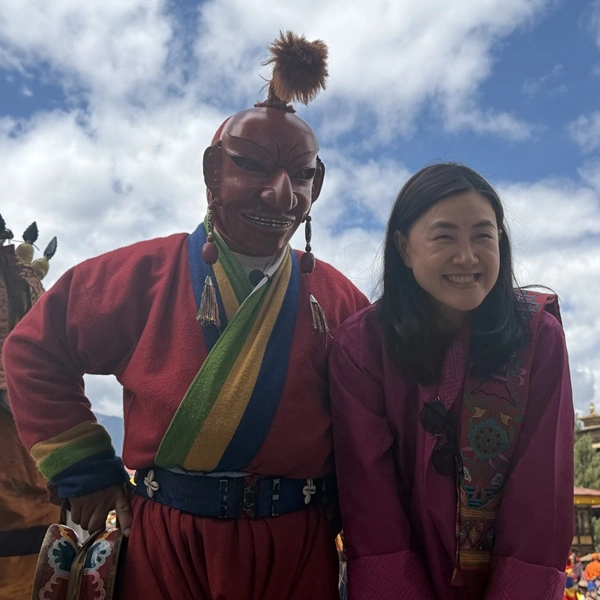
A good Bhutanese guide does far more than drive logistics. They explain the meaning of the masked dances at a Tshechu festival. They know when to take your shoes off before entering a temple and when it’s fine to keep them on. They know which angle gives the best photograph of Tiger’s Nest in the morning light. They know the monks at the local monastery and can arrange a quiet moment inside when the tourists have left.
We select our guides based on personality fit, language skills, and experience with first-time visitors. The guide can make or break the trip. We take this seriously.
The Pace Is Flexible
This is the part that surprises most first-timers. A luxury guided trip is not a rigid schedule. If you wake up tired and want to skip a morning activity, you skip it. If you want to spend an extra hour at Punakha Dzong, you can stay. If you’d rather replace a valley hike with an afternoon at the hotel spa, your guide rearranges the day.
Your guide and driver are exclusively yours. The schedule bends to your energy, not the other way around.
What to Expect: A Simple Checklist
If you’re still in the early planning stage, here is a straightforward overview of what a first-time luxury trip to Bhutan includes.
Accommodation: Comfortable four- and five-star hotels in Paro, Thimphu, and Punakha. Clean rooms, hot water, good beds, warm blankets. Many properties have fireplaces, spa facilities, and beautiful views. You won’t be roughing it.
Transport: A private vehicle with your own dedicated driver for the entire trip. No large tour buses. No sharing with strangers. The SUVs are comfortable and well-maintained. Bhutan’s roads are winding and mountainous, but your driver knows them well.
Guiding: An English-speaking Bhutanese guide who stays with you throughout the trip. They handle all logistics, explain the cultural context, help with photography, and adjust the schedule to your energy level. If you need a guide who speaks another language, we can arrange that.
Pace: Light days. Short walks mixed with market visits, monastery stops, and free time at your hotel. There are no forced marches. The only significant physical effort is the Tiger’s Nest hike, and even that can be adjusted or shortened if needed.
Food: Bhutanese cuisine centers on red rice, chili peppers, cheese (ema datshi is the national dish), and hearty stews. Most hotels also serve international food. If you have dietary restrictions, your guide briefs every restaurant and hotel kitchen in advance.
Best Times to Visit for First Timers
Two windows work best.
Spring: March to May
The valleys are blooming. Rhododendrons and wildflowers cover the hillsides. Temperatures are mild — comfortable for walking and for sitting outside. Tiger’s Nest views are usually clear in the mornings. The Paro Tshechu festival often falls in late March or early April, which is one of the most visually stunning cultural events in Asia.
Autumn: September to November
The clearest skies of the year. After the summer monsoon clears, the Himalayan views are at their sharpest. Comfortable daytime temperatures. Cool evenings. The Thimphu Tshechu festival happens in September or October. This is the most popular season for first-time visitors, so hotel availability can tighten — book early.
What About Summer and Winter?
Summer (June to August) is the monsoon season. Rain, muddy trails, low visibility. Not ideal for a first trip.
Winter (December to February) is cold at night, especially in Paro and Thimphu. But the skies are brilliant, the monasteries are empty, and hotel rates are often lower. Some first-timers who dislike crowds actually prefer winter. It depends on your tolerance for cold mornings.
How We Design First-Time Bhutan Journeys
We start by understanding what interests you. Some people come for the temples and monasteries. Some come for the mountain views and gentle walks. Some come for the food, or the quiet, or just the idea of being somewhere genuinely different. There is no wrong answer.
Once we know what you’re drawn to, we build a simple 7- to 10-day plan. We suggest hotels that match your budget and style. We select a guide who fits your personality. We build in rest days and flexibility so the trip breathes. Then we share it with you, you give us feedback, and we adjust until it feels right.
We don’t overload first-time itineraries. Most of our guests tell us afterward that the best moments were the unplanned ones — an unexpected conversation with a monk, a sunset they caught from a hotel balcony, a breakfast where they realized they had nothing to do and nowhere to be. We leave room for those moments.
“A guest from Toronto, Rachel, told us she wanted ‘temples and quiet’ for her first Bhutan trip. We built a 9-day itinerary that included every major monastery in the western valleys but also three completely free afternoons with nothing scheduled. She later wrote: ‘The free afternoons were the best part. I sat on a bench at Punakha Dzong for two hours and just watched the monks walk past. That was the trip.’”
Frequently Asked Questions
Is Bhutan difficult for first-time travelers?
Not at all. Bhutan is one of the easiest countries to travel in because everything is organized for you. Your guide handles logistics, your driver knows the roads, and your hotels are booked in advance. There are no language barriers — English is widely spoken. The only thing you need to plan is what interests you. We handle the rest.
Do I need to be physically fit to visit Bhutan?
Most of the trip is gentle. Short walks, market visits, monastery tours, scenic drives. The only significant physical effort is the Tiger’s Nest hike, which takes about four to five hours round-trip with a rest stop halfway. If you’d rather not do the full hike, we can adjust the pace, turn back at the teahouse viewpoint, or substitute the hike with a different activity entirely. Bhutan is not a fitness test.
Can I still see Tiger’s Nest without doing the full hike?
Yes. The teahouse viewpoint, roughly halfway up, offers a beautiful, direct view of the monastery on its cliff. Many of our guests reach the teahouse, take their photos, have a cup of tea, and walk back down comfortably. If even that feels like too much, we can arrange a horseback ride for the lower section. Your guide adjusts everything to your comfort.
How much does a first-time luxury Bhutan trip cost?
A well-planned 7- to 10-day luxury Bhutan trip for two people typically costs between 8,000 and 18,000 USD per person. This includes all accommodation, meals, the mandatory 100 USD-per-night Sustainable Development Fee, a private guide, a private driver, internal transfers, entrance fees, and visa processing. International flights to Paro are additional. Pricing varies based on hotel category and season.
How far should I book?
We recommend booking at least four to six months ahead for autumn (September-November) travel, and five to seven months for spring if your dates coincide with the Paro Tshechu festival. Winter trips can often be arranged on shorter notice. The earlier you book, the better your hotel options — Bhutan’s best properties have limited rooms by design.
Ready to Plan Your First Bhutan Trip?
If you’re thinking about Bhutan for the first time, you don’t need to have everything figured out. You just need to know what interests you — temples, nature, food, quiet, or all of the above.
Send us your dates and your interests. We’ll design a simple, guided luxury journey through Bhutan's main valleys and share it with you for your feedback. No commitment. No pressure. Just a starting point.
Planning your first trip to Bhutan?
Send us your travel dates and interests. We’ll build a simple guided luxury itinerary and share it with you.