Bhutan is not a destination you stumble into. The country has spent fifty years deliberately constructing a tourism model that filters out everyone who is not serious about being there.
Mandatory licensed guide. Mandatory daily Sustainable Development Fee. Limited international flight access. No backpacker hostels. No mass tourism.
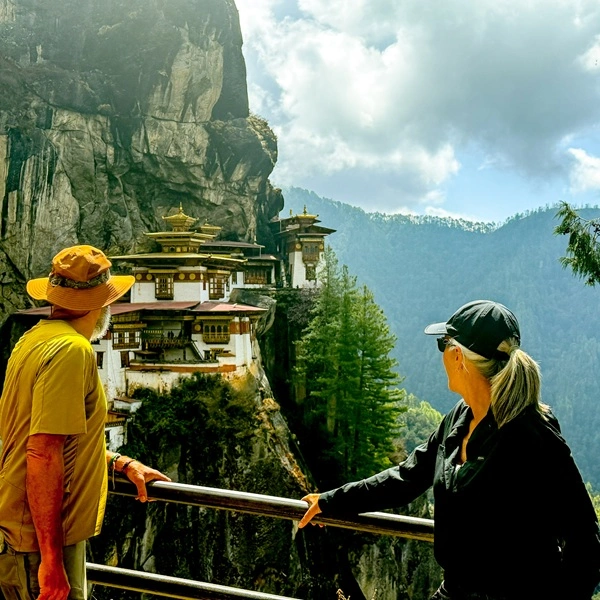
What this creates, for the discerning luxury traveler, is the rarest commodity in modern travel: a country where the tourist infrastructure has been engineered around quality rather than volume. Where Tiger’s Nest is not crowded. Where the masked dancers at the Paro Tshechu are performing for the Bhutanese, not for tour groups. Where the spa therapist at Bhutan Spirit Sanctuary is trained for three years before touching a guest.
At Alpine Luxury Treks, we have been building Bhutan itineraries for fifteen years. We have watched the market mature from rough lodges with marketing language to genuine world-class properties recognized with MICHELIN Keys and Condé Nast Gold List inclusions. We know the experiences that define Bhutan luxury in 2026 — not what was true in 2018, not what marketing brochures still claim.
These are the five we build most often. Each accesses something specific. Each requires the local relationships our team has spent years developing.
Why 2026 Is a Pivotal Year for Bhutan Luxury Travel
Three shifts have made this year different from any year before it.
New Properties from Major International Brands
Taj opened two new purpose-built resorts in late 2025 and early 2026. Taj Paro Resort & Spa (December 2025) and Taj Gangtey Resort & Spa (January 2026). The TUI Blue Paro Taktsang opens in May 2026. The market is at a competitive inflection point — properties are being forced to elevate their offerings to compete with new entrants.
MICHELIN Keys Have Arrived
In 2025, MICHELIN extended its hotel awards to Bhutan for the first time. Amankora and Gangtey Lodge each received two MICHELIN Keys. Six Senses Bhutan received one. This is the international validation the Bhutanese hospitality sector has been waiting for. It also means the bar has been raised globally — a Bhutan luxury experience now sits in the same conversational tier as Aman Tokyo or Soneva Fushi.
Gelephu Mindfulness City Construction Underway
Bhutan has formally initiated construction on the Gelephu Mindfulness City — a 2,600 square kilometer Special Administrative Region designed as the world’s first modern Vajrayana Buddhist city. The Gelephu International Airport is under construction. A Digital Nomad Visa program is open for ultra-high-net-worth remote workers. For our future-focused clients, this is the most ambitious sustainable urbanism project on earth, and Bhutan is building it.
How Luxury Experiences in Bhutan Actually Work
Before we get into the five experiences, understand the operational reality.
Mandatory Guide and Driver
Every international visitor must be accompanied by a licensed Bhutanese guide and a dedicated driver throughout the trip. This is not a recommendation. It is government policy. For luxury travelers, this is structurally beneficial — you do not navigate logistics, you do not deal with permits, you do not handle inter-valley transfers. Everything is handled.
The 100 USD Sustainable Development Fee
Every international visitor pays 100 USD per person per night, in addition to the accommodation cost. Children under 5 are exempt. Children 6-12 pay 50 USD. Indian nationals pay approximately 1,200 INR. The fee is locked at this rate until August 31, 2027.
This is not a hidden tax absorbed into hotel pricing. It is a direct contribution to Bhutan’s public infrastructure. Between 30 and 40 percent of accumulated SDF funds finance free public healthcare, free Education, environmental conservation, and tourism workforce training. When you pay the SDF, you are subsidizing the reasons Bhutan still looks like Bhutan.
Circuit vs Modular Itineraries
Bhutan luxury splits into two structural models. The Circuit Model (Aman, Six Senses) keeps you within one brand across multiple valleys — seamless service, consistent culinary philosophy, internal brand transfers. The Modular Model (for boutique properties such as Pemako, Gangtey Lodge, Taj, and Bhutan Spirit Sanctuary) lets you experience multiple hospitality philosophies in a single trip.
Most of our 2026 itineraries blend both. Three nights at a Six Senses lodge for the wellness infrastructure, then three nights at Gangtey Lodge for the boutique intimacy, then back to Amankora for the farmhouse authenticity. Strategically mixing brands is how the best Bhutan trips are built.
How We Picked These Five Experiences
Four criteria. Every experience on this list clears all four.
Geographical or cultural exclusivity. Each experience either accesses a place most travelers never see or accesses a familiar place in a way most travelers cannot.
Operational complexity. These experiences require precise coordination between aviation, ground transport, permits, lodging, and cultural facilitators. Our team handles each link personally.
Repeat-booking validation. The strongest validation of an experience is whether guests return for it. Every experience here has generated repeat bookings within two years.
Honest Bhutanese delivery. We will not recommend an experience that feels staged, performative, or disconnected from authentic Bhutanese life. Each one passes our integrity bar.
The Five Luxury Bhutan Experiences at a Glance
|
Experience
|
Duration
|
Best For
|
Signature Element
|
|
The Aman Circuit
|
8-12 days
|
Seamless ultra-luxury immersion
|
MICHELIN-Key 5-valley brand circuit
|
|
Bhutan Spirit Sanctuary Wellness Retreat
|
5-7 days
|
Sowa Rigpa traditional medicine
|
All-inclusive Traditional Doctor consultation
|
|
Pemako Punakha Tented Villas
|
3-5 days
|
Honeymoons, design-focused travelers
|
Bill Bensley-designed tented luxury
|
|
Paro Tshechu Festival Experience
|
7-10 days (festival window)
|
Cultural depth, festival photographers
|
Thongdrel unfurling at sunrise
|
|
Bespoke Private Multi-Valley Tour
|
10-14 days
|
Returning visitors, custom itineraries
|
Private monk blessings, restricted access
|
1. The Amankora Circuit: 5-Valley Ultra-Luxury Immersion
8-12 days · Paro → Thimphu → Punakha → Gangtey → Bumthang · Best for: seamless ultra-luxury and definitive Bhutan circuits
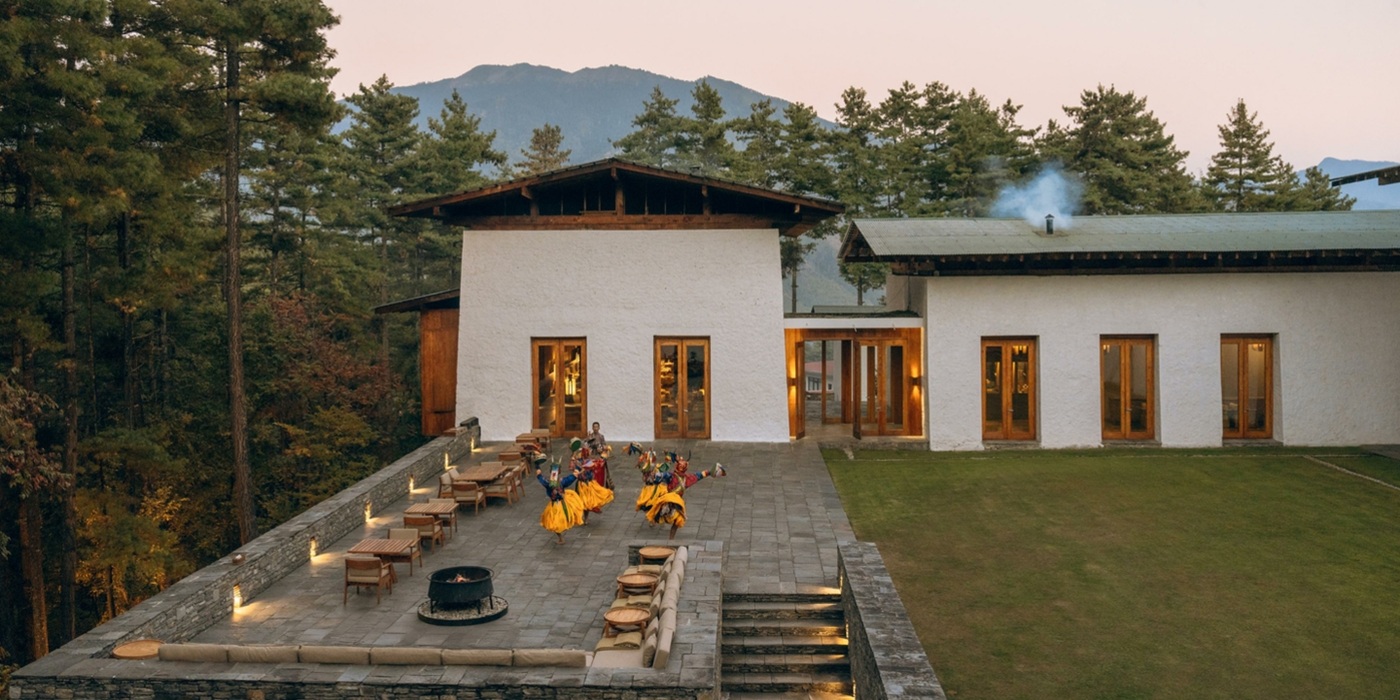
Amankora is what defines ultra-luxury in Bhutan. Aman entered the country in 2004, and every property that has come since has measured itself against what they built.
The brand operates five lodges across the western and central valleys: Paro, Thimphu, Punakha, Gangtey, and Bumthang. Designed by the late Kerry Hill, one of the most important hospitality architects of the past forty years. In 2025, the Amankora circuit was awarded Two MICHELIN Keys — the highest hotel recognition in global hospitality.
The genius of the Amankora experience is the circuit itself. You do not stay at one Aman lodge. You move through all five, and the brand becomes your invisible infrastructure for the entire trip. Private guides hand you off at the valley borders. Drivers are brand-trained. Even the cedar wood smoke from the bukhari stoves is calibrated identically across lodges. The experiential consistency is profound.
The Five Lodges
Amankora Paro is hidden in a pine forest near the trailhead for Tiger’s Nest. Designed for first-night arrivals and final-night departures.
Amankora Thimphu has sixteen suites in a virgin pine forest above the capital. Fortress aesthetic. The most urban-adjacent of the five.
Amankora Punakha is built around a 300-year-old farmhouse, accessed dramatically via suspension bridge over the Mo Chhu river. Ten minutes from Punakha Dzong. Surrounded by rice paddies and orange groves.
Amankora Gangtey faces the wide Phobjikha Valley — wintering ground for endangered black-necked cranes.
Amankora Bumthang is in central Bhutan’s spiritual heartland, near the kingdom's oldest temples.
The Culinary and Operational Layer
Amankora’s farm-to-table program draws from extensive on-site kitchen gardens at every lodge. Forest and Fortress Barbecue Dinners. Log Cabin Lunches near Tiger’s Nest. Riverside picnics on the Mo Chhu. Each meal is calibrated to the specific valley and the specific moment in your itinerary.
Pricing reflects the apex positioning. Rates typically run between 800 and 1,500 USD per night, with peak festival rates reaching higher. A complete 8-day Aman circuit for two people, including SDF and all internal logistics, ranges from 18,000 to 28,000 USD depending on suite category and seasonality.
“We booked an 8-night Amankora circuit for William and Charlotte Pemberton from London in November 2024. They had previously stayed at Aman Tokyo and Aman Venice and wanted to experience the brand in a less obvious destination. By their third night at Amankora Punakha, William emailed us: ‘We’ve always known Aman delivers consistency. We didn’t expect them to deliver Bhutan with this much soul.’ They are returning in autumn 2026 to add Bumthang.”
2. The Bhutan Spirit Sanctuary Wellness Retreat
5-7 days all-inclusive · Neyphu Valley, Paro · Best for: traditional Bhutanese medicine and serious restoration
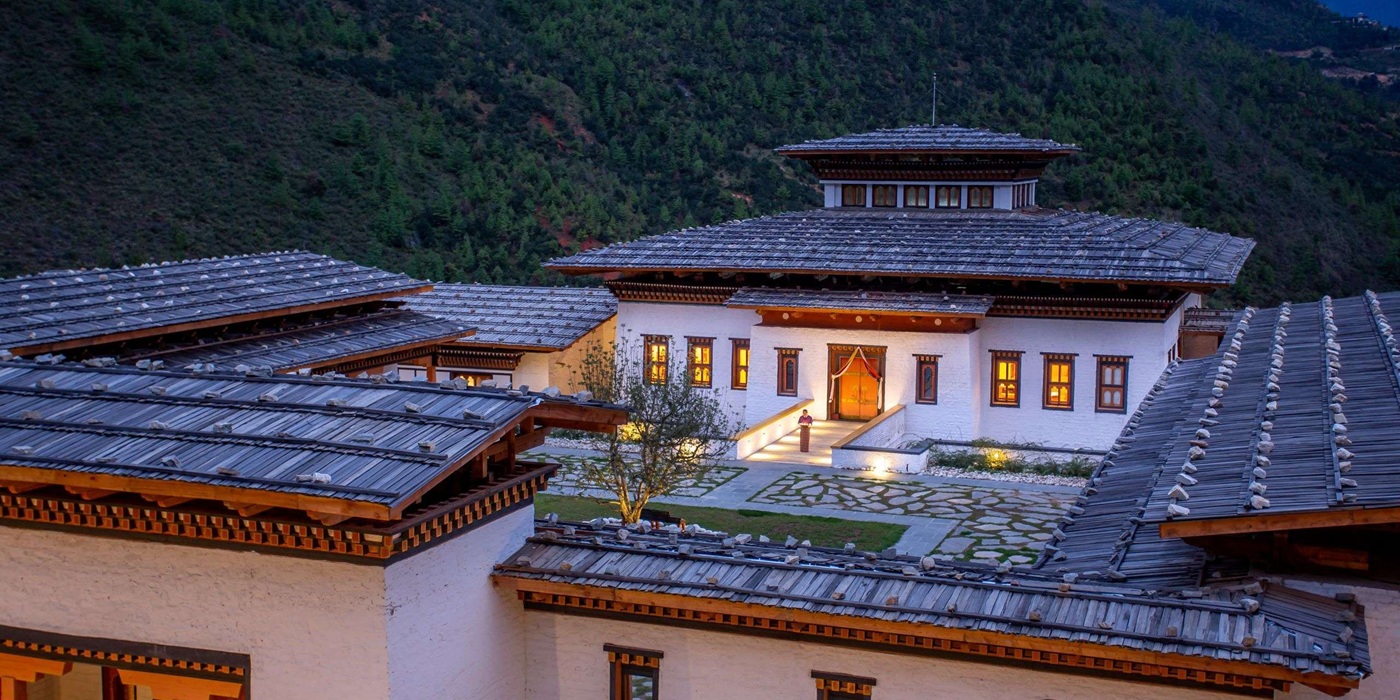
Bhutan Spirit Sanctuary is the only all-inclusive luxury retreat in Bhutan with a wellness program completely rooted in Sowa Rigpa — the ancient Himalayan system of traditional medicine. The distinction matters.
Most luxury hotels offer wellness as an amenity. The Sanctuary offers wellness as the core program. Accommodation, meals, and the resort itself exist to support the wellness work, not the other way around.
The Traditional Doctor Consultation
The retreat begins with a complimentary, extensive private consultation with the in-house Traditional Bhutanese Medicine Doctor. The session lasts roughly an hour. The physician assesses your physical, mental, and spiritual state through pulse reading, observation, and dialogue. Then they design a highly personalized wellness program for the duration of your stay.
Equally important: the doctor teaches you techniques to sustain that newfound balance after you return home. The treatment does not end when you check out. It ends when you stop practicing what you learned. For our most thoughtful guests, this is the single highest-value hour of their entire Bhutan trip.
The Treatment Modalities
All treatments are 100 percent herbal-based. The Sanctuary maintains a dedicated wellness lounge with over 60 native Bhutanese medicinal herbs. Guided herbal walks teach you the curative properties of local flora directly on the property grounds.
Six rustic treatment rooms house ten beds. Separate male and female saunas and steam rooms. A heated indoor pool with floor-to-ceiling glass overlooking the valley.
Signature treatments include the 60-minute Ku Nye massage — a traditional Himalayan technique focused on meridian points to release deep physical tension. Hot oil and herbal compression therapies. Moxibustion (ancient heat therapy with burned herbs). And the quintessential Bhutanese Dotsho — a hot stone bath where river stones are roasted in an open fire until glowing red, then submerged in spring water to release therapeutic minerals.
The Daily Schedule
A typical retreat day flows like this. 10:00 AM herbal tea tasting. 10:45 AM medical consultation. 11:15 AM yoga with singing bowl meditation. 12:30 PM nutritious four-course lunch. 3:00 PM 60-minute Ku Nye massage followed by hot oil compression. 6:00 PM closing restorative mocktail.
The structure is deliberate. The pace is slow. The transformation is real.
“We sent Sophia and Markus Hoffmann from Vienna to a 7-night Bhutan Spirit Sanctuary retreat in October 2024. Sophia was recovering from a difficult medical year. By Day 4, she told her husband she had not felt so present in her own body in two years. Markus emailed us from the airport on the way home: ‘This place did what twelve months of therapy could not.’ They have referred three couples to us since.”
3. The Pemako Punakha Tented Villa Experience
3-5 days · Mo Chhu river, Punakha · Best for: honeymoons and design-focused travelers
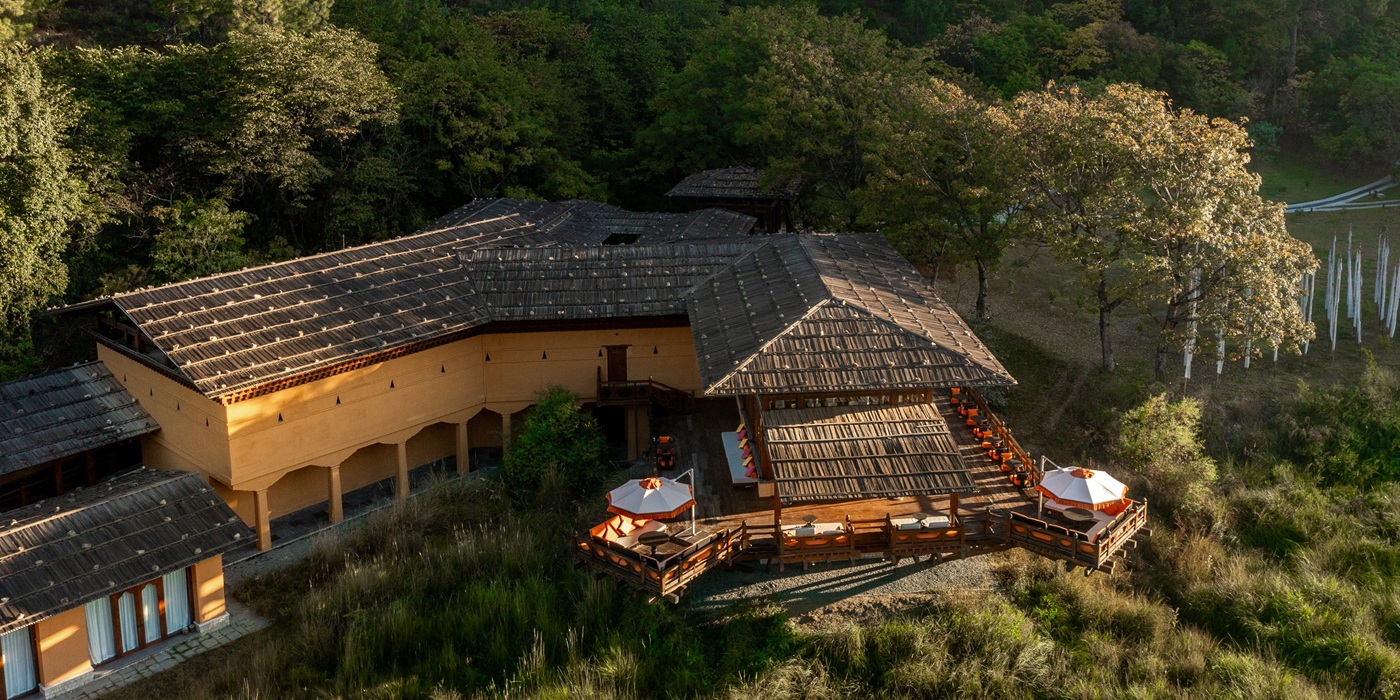
Pemako Punakha is the most photographed luxury accommodation in Bhutan, and the property generates more honeymoon repeat bookings than any other we work with.
Designed by Bill Bensley — one of the most celebrated hospitality architects in the world — the property opened in 2023 to widespread acclaim. 21 luxury tented pool villas nestled along the mountainside above the Mo Chhu river. This was Bhutan’s first luxury tented resort, and it remains the benchmark.
The Tented Villas
Each villa is a complete sensory environment. Striking copper details. Curved architectural lines. Bold Bhutanese interiors with vibrant orange accents drawn from monastic robes. Oversized custom beds. Freestanding copper bathtubs positioned against massive viewing windows.
The defining feature is the private temperature-controlled plunge pool on each villa’s outdoor deck, overlooking the rice fields and the meandering Mo Chhu. You can swim before breakfast with the river below you. The proximity to nature is intimate without ever feeling exposed.
The Bhutanese-Owned Difference
Pemako is Bhutan’s first luxury hotel group, fully Bhutanese-owned and managed. This matters operationally. The workforce is 99 percent locally sourced. The cultural authenticity in service interactions does not feel performed because it is not performed.
The brand is expanding rapidly. They are partnering with Bjarke Ingels Group (BIG) on a new property in Paro slated for 2029. For our guests who care about supporting Bhutanese ownership over international hospitality giants, Pemako is the obvious choice.
The Surrounding Punakha Experience
A Pemako Punakha stay typically pairs with key Punakha Valley experiences. The magnificent Punakha Dzong is widely considered the most beautiful fortress in Bhutan, located just 10 minutes from the property. A private white-water rafting excursion on the Mo Chhu River is one of our most-booked add-ons. The walk across Bhutan’s longest suspension bridge. A visit to Chimi Lhakhang, the temple associated with fertility, is particularly meaningful for honeymoon couples.
“We booked Liam and Aoife Murphy from Dublin into a Pemako Punakha tented villa for five nights as part of their honeymoon in March 2025. On their fourth morning, Aoife sent us a single photo from the villa’s private plunge pool with the Mo Chhu visible behind her. Caption: ‘We don’t want to leave.’ They extended their stay by two nights on the spot.”
4. The Paro Tshechu Festival Experience
7-10 days during festival window · Paro → Thimphu → Punakha · Best for: cultural depth and festival photographers
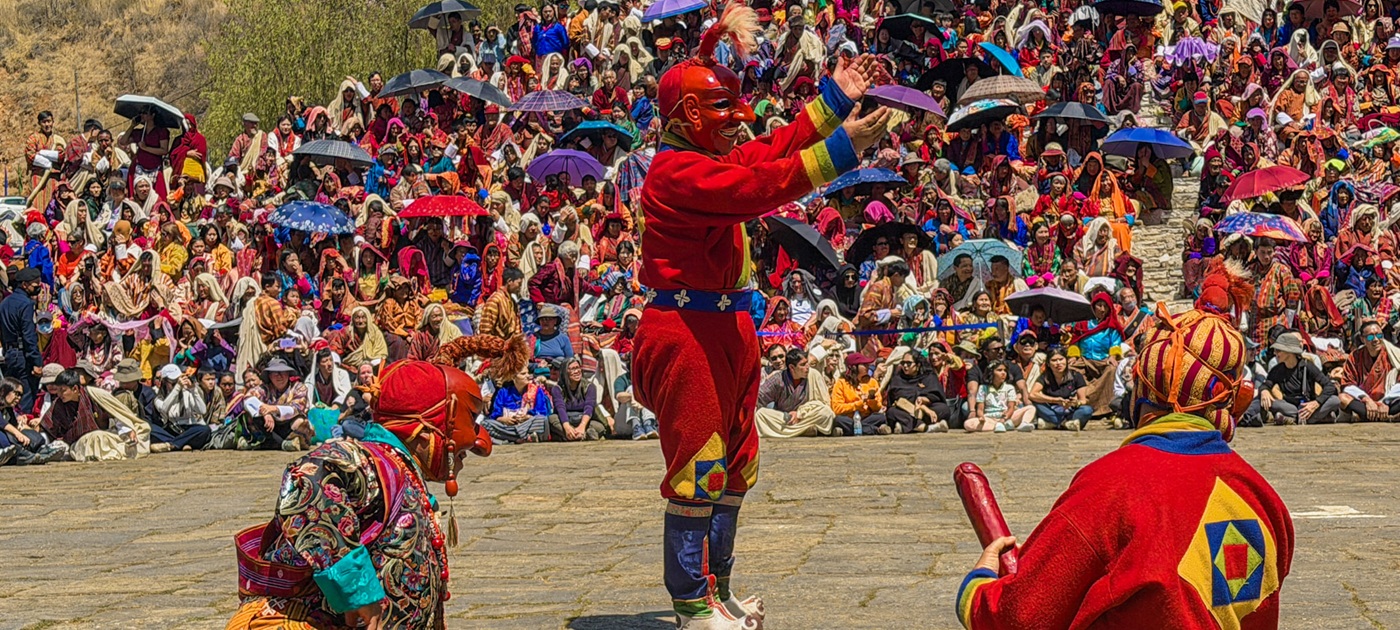
If your Bhutan trip aligns with the Paro Tshechu, you should build the entire itinerary around it.
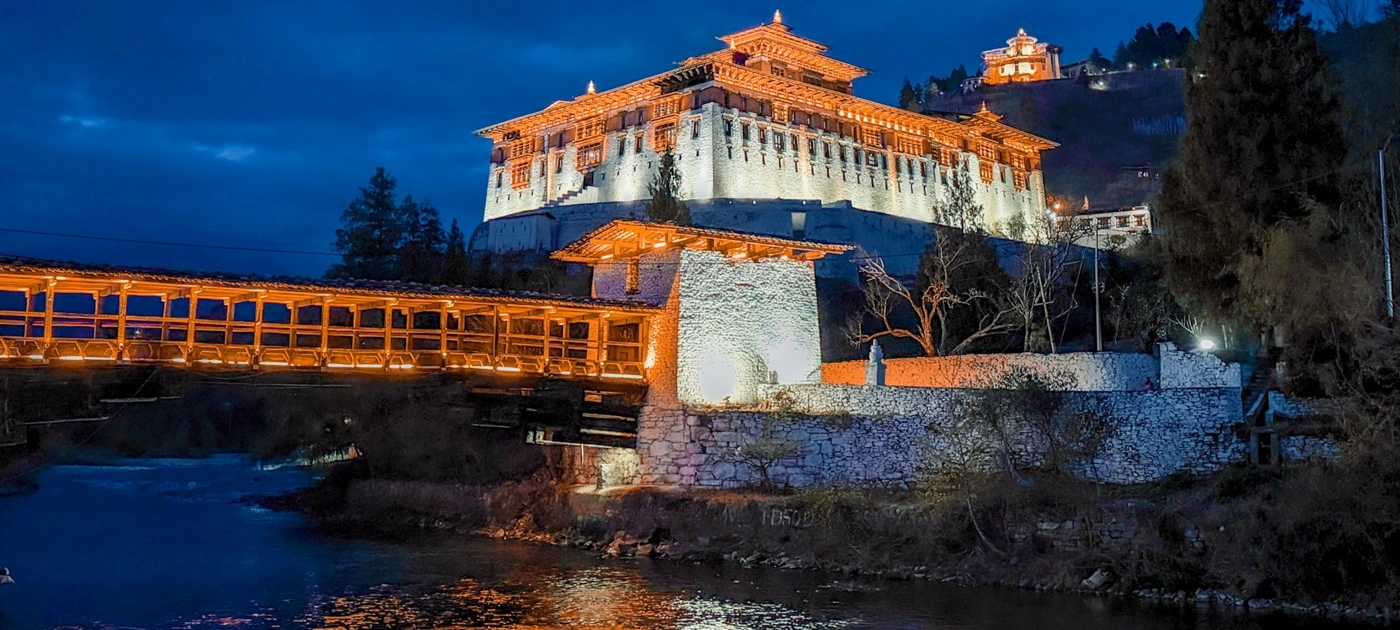
The Paro Tshechu is one of the most visually stunning religious festivals in Asia. Held annually at the historic Rinpung Dzong in Paro, the 2026 dates are March 29 to April 2. The festival features mesmerizing Cham masked dances performed by monks and laymen — a kaleidoscope of color, percussive sound, and deep spiritual devotion that has remained largely unchanged for centuries.
The Thongdrel Unfurling
The pinnacle of the entire festival happens on the final morning. Just before sunrise on April 2, 2026, a massive religious tapestry called the Thongdrel will be unfurled in the Rinpung Dzong courtyard.
The Thongdrel is believed to instantly cleanse the sins of anyone who views it. Witnessing the unfurling is the spiritual peak of the entire event. We arrange for our guests to be present at the dzong by 4:30 AM to ensure they have a clear viewing position before the sunrise reveal. It is the single most powerful spiritual moment of any Bhutan trip we run.
How We Run the Festival Experience
Mass tourism does not work at Tshechu. The crowds at Rinpung Dzong are dense, the dances are long, and the cultural context is impossible to absorb without expert interpretation. Our luxury approach entirely restructures the experience.
Private elevated viewing positions are arranged at the dzong courtyard. A senior cultural guide who can explain the symbolic meaning of each Cham dance — the Black Hat dance, the Dance of the Lord of Death, the Dance of the Eight Manifestations of Guru Rinpoche — in real time. Strategically timed entry and exit from the festival grounds to avoid peak crowds. Private blessings arranged with festival monks during quieter moments.
Between festival days, we organize cultural visits to Tiger’s Nest, the National Museum, and traditional craft workshops. Accommodation at Taj Paro Resort & Spa, Le Méridien Paro, or Amankora Paro — whichever fits your trip style best.
Other 2026 Tshechu Dates
If Paro Tshechu does not fit your calendar, we run alternative festival itineraries around the Thimphu Tshechu (September 21-23, 2026, in the Tashichho Dzong courtyard) and the Black-Necked Crane Festival (November 11, 2026, in the Phobjikha Valley). Each has its own character. Each requires aggressive advance booking due to limited premium accommodation inventory.
“We ran the full Paro Tshechu experience for the Tanaka family from Tokyo — Hiroshi, Yumi, and their two adult daughters — in March 2024. Hiroshi is a corporate photographer. He told us at sunrise on the final morning, as the Thongdrel unfurled, that it was the single most powerful image opportunity of his 30-year career. They are returning for the 2026 Tshechu and bringing Hiroshi’s mother to witness the Thongdrel before she turns 80.”
5. The Bespoke Private Multi-Valley Tour
10-14 days · Paro → Thimphu → Punakha → Gangtey → Bumthang · Best for: returning visitors and fully customized itineraries
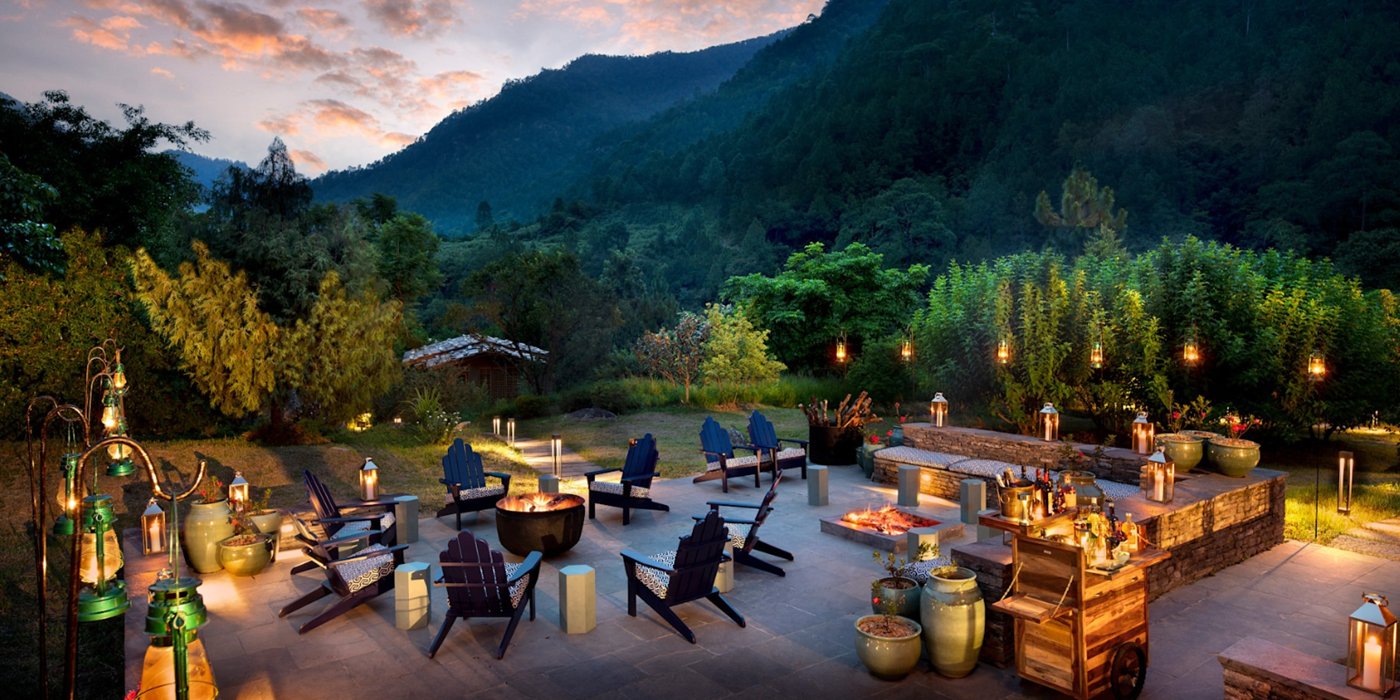
For travelers who want the maximum possible Bhutan experience without committing to a single-brand circuit, we build a bespoke private multi-valley tour.
This is not an off-the-shelf package. We build each itinerary from scratch based on the specific traveler’s priorities, pace, dietary needs, physical fitness level, and cultural interests. The licensed local guide assigned to your trip is selected from a pool of senior Bhutanese guides we have worked with for years — not the next available person on a roster.
What “Bespoke” Actually Includes
Private blessings conferred by high-ranking Buddhist monks at temples that do not normally host non-pilgrim visitors. Exclusive silent meditation sessions inside centuries-old restricted shrines. Private consultations with a respected local astrologer in Thimphu — a tradition that remains deeply meaningful to Bhutanese culture and is rarely accessible to standard tourists.
Customized hiking pace for Tiger’s Nest, with porter support, oxygen if needed, and a private champagne breakfast at the viewpoint. Private rafting expeditions on the Mo Chhu River. Specialized black-necked crane observation tours led by ornithologists in Gangtey. Hands-on cooking lessons in traditional rural farmhouses to learn the art of making ema datshi.
Behind-the-scenes tours of indigenous handmade paper factories and elite textile weaving centers. Pre-arranged hot stone baths at the end of strenuous hike days. Private yoga instructors for sessions overlooking glacial valleys.
Hotel Selection
The bespoke model lets us mix luxury hotel brands across the trip. Three nights at Taj Paro for the first arrival and Tiger’s Nest base. Two nights at Pemako Thimphu for the urban heritage. Two nights at Pemako Punakha tented villas for rice-paddy luxury. Two nights at Gangtey Lodge or Six Senses Gangtey for the Phobjikha Valley. Optional additional nights in Bumthang for the spiritual heartland.
The structural advantage of the modular approach is that each valley gets the right hotel, not the same brand’s adaptation of that valley. This is how we build trips that feel deeply considered rather than templated.
“We built a 12-day bespoke tour for the Hassan family from Dubai in October 2024 — Omar, his wife Layla, and his elderly mother. We adjusted the entire pace because Omar’s mother could not manage the Tiger’s Nest hike. Instead, we arranged a private blessing ceremony with a senior monk at Kyichu Lhakhang for her, while Omar and Layla did the hike. Omar later said that watching his mother receive the blessing while he could see Tiger’s Nest from her temple courtyard was the most meaningful moment of his entire family’s travel life. We have now built two more family trips for him.”
How to Combine These Experiences Into One Trip
Our most-requested 2026 Bhutan itineraries strategically stack these experiences. Three combinations we book most often.
The Festival + Wellness Combination (10 days)
- Days 1-5: Paro Tshechu Festival Experience, including Thongdrel unfurling.
- Days 6-10: 5-Night Bhutan Spirit Sanctuary all-inclusive wellness retreat.
- The visceral high of festival immersion followed by deep restorative wellness work. This is the most balanced 2026 Bhutan trip we offer for first-time visitors with serious intent. See our [Bhutan Festival & Wellness Package].
-
The Aman Circuit Plus Pemako Honeymoon (12 days)
- Days 1-8: Full Amankora 5-valley circuit.
- Days 9-12: Transfer to Pemako Punakha tented villa for the honeymoon.
For honeymoon couples who want both the seamless ultra-luxury circuit AND the most photographed accommodation in Bhutan. The contrast between Aman's austere minimalism and Pemako's tented opulence is the structural beauty of this trip. See our [Bhutan Luxury Honeymoon Package].
The Returning-Visitor Deep-Dive (14 days)
For guests who have already done a Bhutan circuit. The 14-day bespoke private tour pushes east into Bumthang, includes specialized cultural access (private monk blessings, astrologer consultations, restricted-temple meditation), and pairs the western valleys with the deeper, less-visited central spiritual heartland. See our [Bhutan Grand Cultural Tour].
Bhutan's luxury inventory is structurally low. Gangtey Lodge has only 12 suites. Pemako Punakha has 21 villas. Taj Gangtey has just 35 rooms. Six to nine months advance booking is required for peak season (October-November, March-April). Festival weeks (Paro Tshechu, Thimphu Tshechu) require 9-12 months advance booking. We process all visa applications, SDF payments, route permits, and lodge reservations as a single coordinated package. Drukair and Bhutan Airlines are the only two carriers serving Paro — we secure your flights as part of the booking and build a 24-hour weather buffer at the connection hub (typically Kathmandu, Delhi, or Bangkok).
Frequently Asked Questions
What is the best luxury travel experience in Bhutan?
It depends on what you want. For seamless ultra-luxury immersion, the Amankora 5-valley circuit. For deep wellness transformation, the Bhutan Spirit Sanctuary all-inclusive retreat. For honeymoon couples or design-focused travelers, the Pemako Punakha tented villas. For cultural depth, the Paro Tshechu Festival experience. For returning Bhutan visitors, a fully bespoke private multi-valley tour. At Alpine Luxury Treks, we often combine multiple experiences into one trip.
How much does a luxury Bhutan trip cost?
A genuine luxury Bhutan trip for two people typically ranges from 8,000 USD per person for a 7-night COMO Uma or Zhiwa Ling-anchored itinerary, up to 28,000 USD per person for a full 12-day Amankora circuit. Pricing includes accommodation, all meals, the 100 USD per person per night Sustainable Development Fee, private licensed guide, private driver, internal valley transfers, and entrance fees. International flights to Paro are additional.
What is the Sustainable Development Fee?
Bhutan charges every international visitor a Sustainable Development Fee of 100 USD per person per night. This fee is locked at this rate until August 31, 2027. Children under 5 are exempt; children 6-12 pay 50 USD. Indian nationals pay approximately 1,200 INR. The fee funds free public healthcare, free Education, environmental conservation, and tourism workforce training. A 5% Goods and Services Tax applies to tour package components (excluding the SDF itself) from January 2026.
When is the best time to visit Bhutan for luxury travel?
Spring (March-May) and autumn (September-November) are the two peak luxury travel windows. October-November offers the clearest Himalayan views and aligns with Thimphu Tshechu. March-April brings rhododendron bloom and Paro Tshechu. Winter (December-February) offers crowd-free monastery access and crystal-clear views, ideal for the Phobjikha Valley and black-necked crane viewing. The summer monsoon (June-August) is not recommended for high-end travel.
How far in advance should I book a luxury trip to Bhutan?
Six to nine months minimum for standard peak-season travel. Nine to twelve months for any trip aligned with Paro Tshechu or Thimphu Tshechu. Pemako Punakha tented villas, Amankora circuits, and Gangtey Lodge’s 12-suite property are the hardest to secure and require the longest lead times. The Bhutan Spirit Sanctuary requires advance booking for the Traditional Doctor consultation slot.
Can I do Bhutan independently without a guide?
No. Government policy requires every international visitor to be accompanied by a licensed Bhutanese guide and a dedicated driver throughout their trip. This is structural to Bhutan’s tourism model and cannot be waived. Alpine Luxury Treks coordinates the licensed guide, driver, vehicle, and all necessary permits for every booking.
How do I get to Bhutan?
Paro International Airport is the only international gateway. Drukair and Bhutan Airlines are the only two carriers permitted to operate flights into Paro. There are no direct flights from Europe or the Americas. Standard connections route through Kathmandu (1-hour flight), New Delhi (2.5-hour flight), Bangkok (4-hour flight), or Singapore (5-hour flight). The Paro approach requires specially trained pilots and is heavily weather-dependent. We always build a 24-hour buffer at your connection hub.
Is Bhutan suitable for honeymoons?
Exceptionally. Pemako Punakha is our most-booked honeymoon property in Bhutan, followed by Amankora Punakha and Gangtey Lodge. We structure honeymoon itineraries with private hot-stone baths, exclusive cultural blessings from in-house lamas, candlelit dinners on hotel terraces, and visits to Chimi Lhakhang (the temple associated with fertility and blessing of new families). See our Bhutan Luxury Honeymoon Package for full details.
What is the dress code for Bhutan?
For luxury hotels, modern Western dress is appropriate. For monasteries, dzongs, and religious sites, modest dress is required — long pants, covered shoulders, and removed shoes upon entry. For Tshechu festivals, modest dress is mandatory, and our team will brief you on respectful conduct. Your guide will manage all access protocols on your behalf.
Can these luxury experiences be combined with a trip to Nepal or India?
Yes. Most of our guests combine Bhutan with at least one neighboring destination. Nepal pairs naturally because Kathmandu is the closest international hub to Paro. India pairs well via Delhi. A Bhutan-plus-Nepal trip typically lasts 14-21 days. Bhutan, Sikkim, and Nepal can be covered in 21-28 days. We build all multi-country itineraries with the same end-to-end logistical management.
The Final Word
Bhutan is the rarest kind of luxury destination. The country has actively chosen to be difficult to visit. The 100 USD nightly SDF, the mandatory licensed guide, the limited international flight access — these are not bugs in the system. They are features.
What this creates, for the discerning traveler, is something almost extinct in modern travel: a country where exclusivity is structural rather than performative. Where the spaces are not crowded. Where the luxury hotels are MICHELIN-recognized for genuine reasons. Where the wellness programs are run by traditional doctors trained in Sowa Rigpa for years before they touch a guest.
These five experiences are the distillation of what we believe Bhutan does better than anywhere else on earth. You cannot fly into Paro and assemble them yourself. The relationships, the timing, the permit logistics, the festival access, the lodge inventory — all of this requires fifteen years of operational expertise to execute reliably.
Tell us what kind of traveler you are. We will match you to the right experiences, structure them into one seamless journey, and handle every logistical detail so your entire trip feels effortless from arrival at Paro to departure.
Planning a luxury trip to Bhutan for 2026?
Talk to our team about an itinerary tailored to your preferences. We handle hotels, permits, SDF processing, licensed guides, and every transfer in between.
Updated April 2026 by the Alpine Luxury Treks team — based on fifteen years of firsthand Bhutan itinerary execution.