Here is something no other country can claim: Bhutan absorbs more carbon dioxide than it emits. Every year. By a wide margin. The country is not working toward net zero. It is already net negative, and it has been for years.
More than 70 percent of the country is covered in forest. The constitution legally mandates that this figure never drop below 60 percent. Roughly 95 percent of the electricity is generated from hydropower. The state philosophy is Gross National Happiness — not an advertising slogan, but a formal metric that every public policy must satisfy before being approved.
For the 2026 luxury traveler, this matters in a way that it does not matter in other destinations. When you visit Bhutan, the Sustainable Development Fee you pay (100 USD per person per night) does not disappear into a multinational tour conglomerate. It goes directly to the national exchequer to fund free universal healthcare, free Education, and forest conservation for Bhutanese citizens. Your leisure expenditure is structurally regenerative.
This is the part of Bhutan that changes how luxury travelers think about their own trips. At Alpine Luxury Treks, we have been building Bhutan itineraries for over a decade. Our guests frequently tell us, afterward, that Bhutan made other luxury destinations feel slightly hollow by comparison. Not because Bhutan’s hotels are more opulent — they are not. But because everything around the hotels is philosophically aligned with the reason the guests came in the first place.
This guide is the complete 2026 reference to sustainable luxury travel in Bhutan. How the “High Value, Low Volume” policy actually works. What Gross National Happiness means in practice. Which luxury lodges lead on sustainability and how? What the Gelephu Mindfulness City signals for the country’s future. How to plan a trip that fits this value system.
In This Guide
- Why Bhutan is different: the carbon-negative kingdom
- How the Sustainable Development Fee actually works
- Gross National Happiness: the philosophy behind the destination
- The luxury circuit model (Amankora, Six Senses, COMO Uma)
- Independent and boutique sustainable lodges
- Sowa Rigpa: Bhutan’s traditional medicine luxury wellness
- Private cultural access that mass tourism cannot replicate
- Gelephu Mindfulness City: the future of sustainable luxury
- How to plan a sustainable luxury trip to Bhutan
- Frequently asked questions
Why Bhutan Is Different: The Carbon-Negative Kingdom
Most luxury destinations market sustainability. A few practice it. Bhutan is the only one that has a constitutionally enshrined one.
The Numbers That Matter
More than 70 percent of Bhutan is covered in forest. The country absorbs roughly nine million tonnes of carbon dioxide annually while emitting far less. Approximately 95 percent of the national electricity supply is generated by hydropower, with major developments such as the 1,200 MW Punatsangchhu-I and Punatsangchhu-II projects.
These are not voluntary corporate targets subject to quarterly revision. They are binding constitutional requirements. Article 5 of the Bhutanese Constitution requires that at least 60 percent of the national land area remain under forest cover in perpetuity. No future government can legally overturn this.
For luxury travelers accustomed to destinations where “sustainability” means a note in the hotel bathroom asking you to reuse towels, this is a qualitatively different environment.
The High Value, Low Volume Policy
When Bhutan first opened its borders to international tourists in 1974 under King Jigme Singye Wangchuck, the country welcomed exactly 287 visitors. The caution was intentional. While neighboring Asian countries were rapidly commodifying natural and cultural heritage for short-term economic gain — and accepting the consequences of noise, overcrowding, cultural dilution, and environmental degradation — Bhutan established a policy framework built on the opposite principle.
The policy is called High Value, Low Volume (sometimes updated to High Value, Low Impact). It says, in effect, we would rather have fewer travelers who stay longer, spend more per day, and treat the country with the respect it expects, than large volumes of mass-market visitors whose presence would erode the reasons they came in the first place.
In 2025, Bhutan recorded a total of 209,376 tourist arrivals. For context, Nepal receives approximately 1.5 million visitors annually. Bangkok receives more than 22 million. Paris receives more than 30 million. Bhutan’s entire annual tourist volume would fit into a Premier League stadium on a single weekend.
For the luxury traveler, this volume ceiling is the product. The temples are not crowded. The monasteries are quiet. The trails are uncongested. The dzongs are not overrun with tour buses. You are genuinely one of a few thousand visitors in the country on any given day.
How the Sustainable Development Fee Actually Works
The Sustainable Development Fee is the mechanism through which the High Value, Low Volume policy actually operates. Every international visitor pays a mandatory per-night fee, regardless of the hotel they stay in or the length of their stay. Understanding how this fee works — and where the money actually goes — is central to understanding sustainable luxury in Bhutan.
The Current SDF Structure
|
Traveler Category
|
SDF Rate (Locked Until Aug 2027)
|
|
International adults (over 12 years)
|
USD 100 per person, per night
|
|
International children (6 to 12 years)
|
USD 50 per person, per night
|
|
International children (0 to 5 years)
|
Exempt
|
|
Indian nationals
|
INR 1,200 per person, per night
|
The SDF is separate from your accommodation, meals, guide, and transport costs. It is a standalone daily tariff paid directly to the Bhutanese government. A 7-day trip for two international adults means 1,400 USD in SDF alone, in addition to everything else.
Where Your SDF Actually Goes
This is the part that makes the fee philosophically different from taxes or entry charges in other countries. The SDF revenue is not absorbed into the private tourism industry profits. It is funneled directly into the Bhutanese national Consolidated Account and strictly allocated to public goods that benefit ordinary Bhutanese citizens.
Specifically: free universal healthcare for all Bhutanese citizens. Free education from primary through university, including overseas university funding for exceptional students. Historic site preservation, including active funding for Taktsang Monastery (Tiger’s Nest) and the Punakha Dzong. Conservation of the forest cover that keeps the country carbon-negative. Tourism workforce training.
In 2025, SDF collections reached approximately 43.31 million USD. Tourism receipts grew 35 percent year-over-year. The country’s international reserves have been rebuilt to USD 574 million. The fee works. And it works because the government does not use it to build gold-plated ministerial palaces; it uses it to ensure that ordinary Bhutanese people benefit visibly from the presence of luxury travelers in their country.
For HNW travelers who have grown tired of the extractive logic of mass tourism elsewhere — where luxury dollars often fatten foreign hotel chains while local communities see comparatively little benefit — this structure feels like a different model entirely. And that is exactly what it is.
PLANNING NOTE: THE 2026 GST CHANGE
Beginning January 1, 2026, Bhutan implemented a 5 percent Goods and Services Tax applied to certain tourism-related goods and services. This is a modest addition to the overall trip cost and does not directly affect the SDF structure. The net effect for luxury travelers is typically an additional 2-4 percent on total trip cost, depending on how the package is structured. Your Alpine Luxury Treks quote will reflect this transparently.
Gross National Happiness: The Philosophy Behind the Destination
Introduced in 1972 by the Fourth King, Gross National Happiness (GNH) is Bhutan’s alternative to Gross Domestic Product. It posits that holistic well-being cannot be reduced to industrial output or per capita income, and that national policy should be evaluated against a richer set of measures.
For most international visitors, GNH registers as a quirky phrase repeated in airport welcome banners. In practice, it is a rigorously operationalized framework that shapes every major policy decision in the country.
The Nine Domains of GNH
|
Domain
|
What It Measures
|
|
Psychological wellbeing
|
Mental health, stress levels, and spiritual fulfillment
|
|
Health
|
Physical wellness, access to healthcare, and traditional medicine
|
|
Time use and balance
|
Work-life balance, adequate rest, time for community and family
|
|
Education
|
Literacy, knowledge transmission, cultural Education
|
|
Cultural diversity and resilience
|
Preservation of traditions, festivals, artisan crafts, and language
|
|
Good governance
|
Institutional trust, political participation, and transparency
|
|
Community vitality
|
Social cohesion, neighborhood relationships, safety
|
|
Ecological diversity and resilience
|
Conservation, carbon neutrality, wildlife protection
|
|
Living standards
|
Housing quality, financial security, basic material needs
|
The GNH Index evaluates individuals across 33 indicators within these nine domains using the adapted Alkire-Foster method. Every proposed public policy must be screened against the index before approval by the Prime Minister’s office. This is why you cannot build a high-rise in Thimphu that would block mountain views for existing residents. Why there are no casinos. Why is advertising restricted in rural areas? Why did the country wait until 1999 to introduce television and the internet?
Why GNH Matters to Luxury Travelers
The HNW traveler demographic increasingly shares certain psychological traits: chronic time poverty, hyper-acceleration fatigue, decision overload, and what researchers now describe as “affluent alienation” — the sense that material wealth has not delivered the well-being it promised.
For this demographic, GNH reads as something genuinely unusual. A country that prioritizes time use in legislation. A country that measures community vitality. A country where every public decision is weighed against nine dimensions of human flourishing, not just economic output. This is not a marketing story. This is the state's actual operating system.
What luxury travelers report after a week in Bhutan is not specific to any single monastery, dzong, or hotel. It is the aggregate effect of spending time in a country whose default settings are different from those they live with at home. People speak more slowly. Traffic is light. Commercial signage is modest. The natural landscape is intact because the Constitution requires it to be. The result is an involuntary deceleration of pace that most guests describe afterward as the most restorative element of the entire trip.
“In October 2024, we hosted Alessandro and Francesca Lombardi from Milan — both partners at a European private equity firm — on a 10-day sustainable luxury circuit through Paro, Thimphu, Punakha, and Gangtey. Francesca told us at the departure: ‘I arrived expecting beautiful scenery. I did not expect to stop checking my phone after Day 3 and only realize it on Day 7. That is a luxury I did not know was missing from my life.’ They booked their second Bhutan trip — a wellness-focused return to the Bhutan Spirit Sanctuary — within four weeks of returning home.”
The Luxury Circuit Model
Because Bhutan’s topography consists of distinct isolated valleys — each with its own microclimate, cultural character, and historic dzong — the country’s premier luxury hospitality brands have built networks of boutique lodges across these valleys. This is called the circuit model.
Instead of a single large resort that serves as your base, you move through a connected sequence of smaller, site-specific lodges — usually Paro, Thimphu, Punakha, Gangtey, and sometimes Bumthang. Each lodge is sized for 16 to 30 suites, not 200. Each lodge reflects the architecture and climate of its valley. The service continuity across the circuit is seamless.
Three brands dominate this space at the highest tier, each with a distinct sustainability identity.
Amankora: The Pioneer
Aman Resorts was the first international luxury operator granted permission to build in Bhutan, arriving on the inaugural Drukair flight to Paro in 1989. Over nearly two decades, Aman built the Amankora circuit — five lodges across Paro, Thimphu, Punakha, Gangtey, and Bumthang, totaling 76 suites across its Bhutan footprint.
The architectural language, originally conceptualized by the late Kerry Hill, uses local stone, traditional bukhari wood-burning stoves, vegetable-dyed Himalayan rugs, and — most importantly — rammed-earth construction techniques. Rammed earth provides massive thermal mass insulation, naturally cooling interiors in summer and retaining heat in winter, drastically reducing the energy load needed for mechanical climate control.
Amankora’s community integration is deeply institutional. The Paro lodge assumes financial responsibility for the electricity bills of the adjacent Drukgyel Dzong historical fortress. The Punakha lodge partners with the Bhutan Elder Sangha Sanctuary — a 73-acre retirement facility for aging Buddhist monks designed with ADA-compliant features, including low beds that double as meditation platforms. Guests who stay at Amankora Punakha can directly support the well-being of Bhutan’s spiritual elders.
Six Senses: The Sustainability Maximalist
Six Senses Bhutan operates a parallel five-lodge circuit with 82 suites and villas ranging from 645 to 3,681 square feet. The brand’s distinguishing characteristic is an uncompromising, heavily audited commitment to sustainability that resonates deeply with eco-conscious travelers.
As of December 2024, all eligible Six Senses properties achieved Global Sustainable Tourism Council (GSTC) certification through third-party audits by Control Union. Six Senses has also committed to LEED Silver certification as the baseline for all new hotels. These are not self-reported sustainability claims. They are independently verified, auditable standards.
The operational depth is remarkable. Each Six Senses property operates an Earth Lab dedicated to environmental innovation. In 2025 alone, Six Senses Bhutan data showed: 77,007 kilograms of organic vegetables produced on-site; 118,701 organic eggs served; 142,365 kilograms of compost produced to enrich local soil; 28,323 kilograms of timber upcycled; 2,593,299 plastic water bottles avoided through on-site filtration and bottling (in place since 2003). And 0.5 percent of total hotel revenue is funneled directly into a dedicated Sustainability Fund that supports local habitats and wildlife populations.
The Six Senses Paro location operates a 17-acre eco-village in Damchena, built entirely from upcycled timber salvaged during the lodge’s initial construction phase. Greenhouses designed in collaboration with Bhutan’s Ministry of Agriculture and Forests allow year-round cultivation of organic produce at altitude. Six Senses has also spearheaded major architectural expansions at the 16th-century Chorten Nyingpo monastery in Punakha, including classrooms, dining renovations, and a football field for the 170 resident monks, with a two-story library currently underway.
COMO Uma: Reforestation and Social Equity
COMO Uma operates two properties in Bhutan: COMO Uma Paro and COMO Uma Punakha. The brand’s sustainability identity focuses on reforestation and social equity philanthropy.
COMO Uma actively cultivates indigenous tree species — blue pine, cypress, oak, hemlock, fir, maple — in collaboration with local authorities to develop mixed-species woodlands and wildflower meadows that attract native birdlife. This is direct, measurable habitat restoration, not carbon-offset accounting.
The brand’s philanthropic fundraising focuses on vulnerable Bhutanese demographics. Recent initiatives have raised substantial funds for Jurwa — a center in Paro providing aftercare and counseling for recovering addicts — and Draktsho, a vocational training institute in Thimphu dedicated to empowering differently abled children with practical skills for independent living. This demonstrates a specific philanthropic choice: not vague community goodwill, but targeted support for populations that tourism otherwise overlooks.
Independent and Boutique Sustainable Lodges
The circuit brands dominate the multi-valley model, but several independent and locally owned lodges push sustainable luxury in directions international operators cannot match. These properties are often worth building your itinerary around, even if they require more custom logistics.
Bhutan Spirit Sanctuary: The Medical Wellness Paradigm
Located in the Neyphu Valley near Paro, the Bhutan Spirit Sanctuary represents a paradigm shift in wellness tourism. Unlike traditional luxury hotels, where spas function as recreational amenities, the Sanctuary places traditional Bhutanese medicine (Sowa Rigpa) at the absolute core of the guest experience.
Upon arrival, every guest receives a complimentary comprehensive consultation with an in-house traditional medical doctor (Drungtsho), who assesses physical, mental, and spiritual state through pulse reading, extended dialogue, and behavioral observation.
The physician then designs a highly personalized, all-inclusive wellness program for the duration of the stay. The Sanctuary uses more than 60 native Bhutanese medicinal herbs across Ku Nye meridian massages, hot oil therapies, herbal compression treatments, and traditional hot-stone baths. The treatment protocol includes instructing the guest in techniques to maintain biological and psychological balance upon returning home — the goal is a lasting physiological effect, not just a pleasant week.
Gangtey Lodge: Micro-Community Economic Stability
Gangtey Lodge, in the ecologically sensitive Phobjikha Valley (the designated wintering ground for endangered Black-Necked Cranes), exemplifies socio-economic sustainability at a local scale. The lodge maintains a workforce that is more than 95 percent Bhutanese, hiring aggressively from the immediate farming vicinity and promoting from within.
A dedicated Green Team leads biodiversity protection programs in direct collaboration with the Royal Society for the Protection of Nature (RSPN), planting over 100 trees annually and conducting monthly anti-litter campaigns across the valley. The lodge uses energy-efficient Swiss wood stoves fueled entirely by timber from sustainable government-regulated forests. All drinking water is filtered, treated, and bottled on-site. Wastewater is recycled for local gardens and agricultural fields.
Zhiwa Ling Heritage: 100 Percent Bhutanese-Owned
Zhiwa Ling Heritage in the Paro Valley is distinguished by being entirely Bhutanese-owned, designed, and staffed. A member of the prestigious RARE Community, the property required five years of meticulous craftsmanship to build. Every architectural element — hand-carved wooden cornices, intricate stonework, traditional paintwork — honors Bhutanese heritage.
For guests who want their luxury accommodations to directly benefit Bhutanese entrepreneurs rather than international hotel conglomerates, Zhiwa Ling is the clearest option. The hotel demonstrates that domestic ownership can successfully compete at the highest echelons of global luxury.
&Beyond Punakha River Lodge: Safari Meets Bhutan
&Beyond’s first fully owned lodge in Asia, located on the banks of the Mo Chhu River in Punakha. Six safari-style tented suites suspended from traditional Bhutanese timber structures, plus a private one-bedroom River House. The property blends light-footprint African safari aesthetics with Bhutanese architectural traditions, offering a distinct visual experience from the Amankora or Six Senses circuits.
The lodge serves as a basecamp for active river adventures — whitewater rafting on the Pho and Mo Chhu rivers, kayaking, mountain biking — and supports global conservation initiatives including Tiger Watch, which protects the satellite populations of Bengal tigers that roam remote Bhutanese wilderness.
Sowa Rigpa: Bhutan’s Traditional Medicine Luxury Wellness
Sowa Rigpa (literally “the science of healing”) is Bhutan’s indigenous medical tradition. It shares deep roots with Indian Ayurveda and traditional Tibetan medicine, and focuses on the harmonization of body, mind, and spirit through three biological humors and a pharmacopeia of more than 60 native Himalayan medicinal plants.
For a global luxury wellness market dominated by clinical bio-hacking and algorithmic optimization, Sowa Rigpa offers something different: ancient healing practices that work at the level of the whole person.
The Dotsho: The Traditional Hot Stone Bath
The most iconic expression of Sowa Rigpa wellness is the Dotsho — the traditional hot stone bath. Historically used by Bhutanese farmers to soothe tight muscles, ease joint pain, and recover from illness after long days of agricultural labor, the Dotsho has been refined by luxury properties into a therapeutic centerpiece of the Bhutanese wellness experience.
The ritual is grounded in precise alchemy. Large smooth river stones, chosen for their specific mineral composition, are fire-roasted in an open wood fire for several hours until they glow luminescent red. They are then transferred via a wooden chute into a secluded chamber of a traditional wooden bathtub (usually oak or local timber, chosen for their heat retention and grounding properties).
The bathwater itself, called Menchu (“medicinal water”), is drawn from fresh mountain springs and heavily infused with Khempa — the local name for Artemisia leaves gathered from high-altitude meadows. As the red-hot stones hit the cold water, they crack violently and release a rich concentration of embedded minerals: iron, magnesium, calcium, and trace elements absorbed over centuries. Simultaneously, the extreme heat extracts essential oils from Artemisia, which act as a natural analgesic, muscle relaxant, and circulatory booster. The steam clears respiratory congestion and provides aromatherapeutic mental relaxation.
A proper Dotsho runs 45 to 60 minutes at 38-42°C. Personal attendants continuously manage the stone-heating process, adding fresh red-hot stones or cold water as needed to maintain the therapeutic temperature. At properties like Amankora Paro and &Beyond Punakha River Lodge, private riverside bathhouses create a stark sensory contrast between the hot mineral immersion and the crisp cold mountain air.
Our expert guides schedule Dotsho baths strategically — immediately after the Tiger’s Nest ascent to flush lactic acid and accelerate recovery, or on Days 1 and 2 of a trip to aid altitude acclimatization and jet lag. Post-bath: warm robes, Bhutanese herbal teas, and frequently a specialized oil massage on pre-relaxed musculature. The combination is physiologically transformative in a way that a conventional spa treatment is not.
Private Cultural Access That Mass Tourism Cannot Replicate
The final component of sustainable luxury in Bhutan is access — specifically, the kind of deep cultural access that exists only because the country’s volume ceiling makes it possible. This is where Bhutan definitively separates itself from other Asian luxury destinations.
Because independent, unguided travel is structurally prohibited under the High Value, Low Volume policy, every visitor moves through the country with a licensed guide. For HNW travelers working with established operators, this requirement becomes the primary access mechanism for the entire trip.
Private Spiritual Audiences
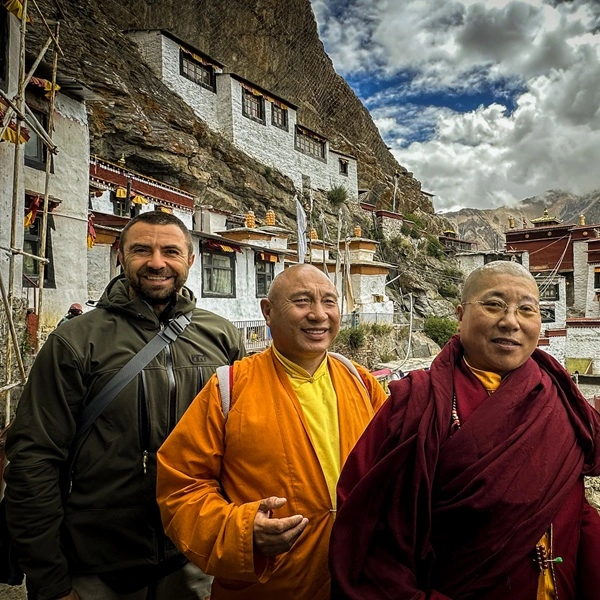
Bhutan’s spiritual leadership is not theoretically inaccessible, but actually inaccessible to independent visitors. Luxury operators with long-standing relationships in the monastic community can arrange private audiences with high-ranking lamas, meetings with resident monks at historic shedras, and private Tshewang blessing ceremonies in secluded temples.
These are not performative experiences. They are extensions of the genuine relationships that have been cultivated over decades between specific operators and specific monasteries. We arrange these access moments selectively and only for guests who approach them with appropriate preparation and respect.
Tiger’s Nest as Private Pilgrimage
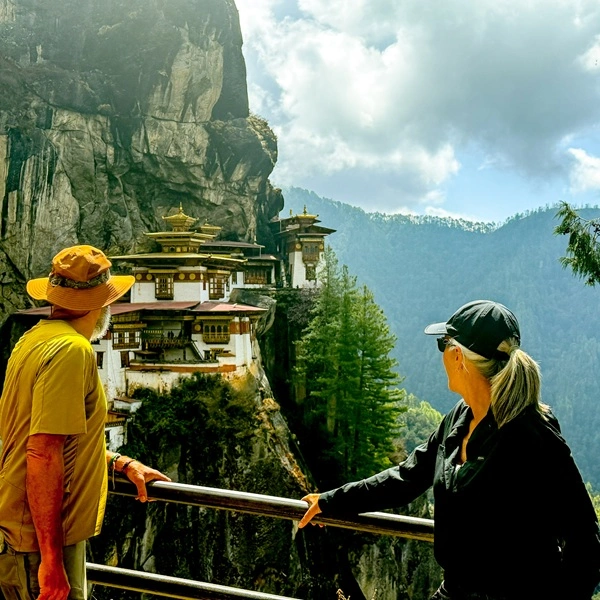
Taktsang Goemba — the Tiger’s Nest Monastery — is Bhutan’s most iconic religious site. It sits 3,220 meters above sea level on a sheer cliff face in the Paro Valley, where Guru Rinpoche is said to have meditated for three years, three months, three days, and three hours in the 8th century.
Most international visitors hike Tiger’s Nest as part of a standard tour. Luxury travelers can experience it as something entirely different. We arrange early-morning private ascents that begin before public trail opening hours, allowing our guests to reach the teahouse viewpoint or the monastery itself before the day-trip crowds arrive. We can also coordinate private lessons or blessings within the monastery complex for guests who wish to turn the hike into a full pilgrimage.
Inside the monastery, strict rules apply regardless of who you are. Cameras, phones, walking sticks, and bags are forbidden. All guests are patted down by government security personnel before entry. This enforced technological absence, combined with the altitude and the exertion of the climb, produces a surprisingly concentrated psychological experience that many guests describe afterward as the defining moment of their trip.
VIP Festival Access and Heritage Dining
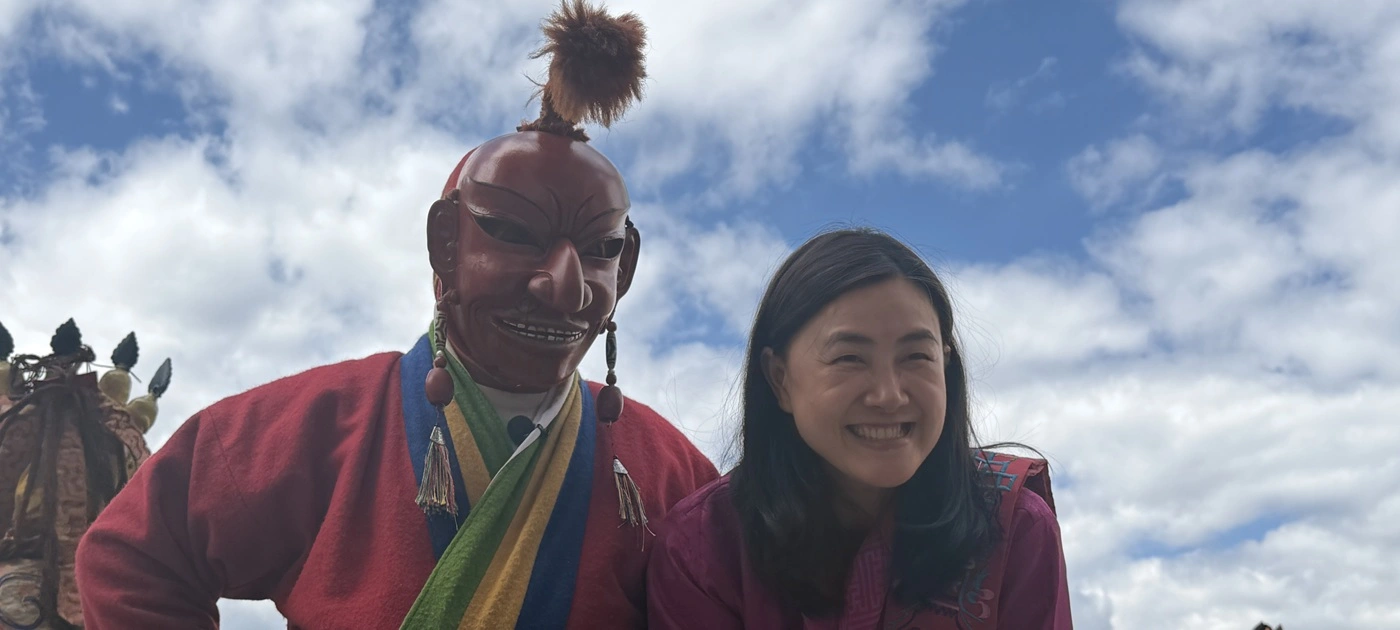
During festival seasons, luxury travelers are afforded genuinely privileged access. Whether attending the Paro Tshechu for the dawn unfurling of the Thongdrol, the Black-Necked Crane Festival in Phobjikha, or the remote Royal Highland Festival in Laya, HNW travelers can participate as honored guests with reserved seating and be guided by experts who explain the intricate symbolism of the masked dances as they unfold.
For heritage dining, specialized operators (including our own team) arrange private meals in 200-year-old noble family homes, where guests are welcomed with saffron-infused rice wine and serenaded by live Bhutanese folk musicians. Riverside picnics along the Mo Chhu on traditional wooden platforms. Forest foraging dinners at Six Senses properties using native mountain produce. For milestone celebrations, bespoke luxury camps in remote wilderness areas with full-sized beds, traditional hot-stone baths, on-site masseuses, and private astrological readings around a campfire.
Gelephu Mindfulness City: The Future of Sustainable Luxury
While the luxury lodges of Paro, Thimphu, and Punakha represent the current state of the art, the geopolitical and economic future of Bhutan is anchored in an ambitious urban initiative: the Gelephu Mindfulness City (GMC).
Officially unveiled by His Majesty King Jigme Khesar Namgyel Wangchuck, GMC is a designated Special Administrative Region spanning 1,000 square kilometers, with full executive and legislative powers and an independent judiciary. It scales the principles of Gross National Happiness from a resort-level amenity into a functioning sovereign urban masterplan designed to serve as a vibrant economic hub for conscious, sustainable businesses.
The Architectural Vision
Developed by Bjarke Ingels Group (BIG) in partnership with the global engineering firm Arup, GMC represents a radical departure from traditional Cartesian urban planning. The architectural strategy strictly preserves all existing forests and integrates ecological corridors specifically engineered to accommodate natural elephant migration routes.
The city is organized into eleven distinct neighborhoods structured according to Buddhist Mandala principles, with density transitioning from rural highlands to an urban core. The neighborhoods are arranged like ribbons cascading from the hills into the valley, directly mimicking the terraced paddy fields of traditional Bhutanese agriculture. This biomimetic design naturally manages water flow, enhances flood resilience, and integrates urban agriculture directly into the civic fabric.
Connectivity prioritizes active travel (walking and cycling) and public transit over private cars, safeguarding Bhutan’s carbon-negative mandate. The Sankosh Temple-Dam — a hydroelectric facility planned for the city’s western border — doubles as a step-well retaining wall with staircases designed for meditative walking, scenic viewpoints, and a functioning temple nested on the face of the man-made cliff. Energy generation as architectural poetry.
What This Means for 2026 and Beyond Travelers
Gelephu Mindfulness City is still under development and will unfold over multiple years. For luxury travelers in 2026, the practical implications are specific. First: Bhutan is signaling that its commitment to sustainable luxury is not a tourism marketing position but a civilizational direction. Second: early-stage visitors to GMC will be traveling to a city whose very urban grammar was written from first principles, which is an increasingly rare experience globally. Third: the property and investment opportunities emerging from GMC — including potential residency for certain categories of sustainable investors — will reshape what “luxury travel to Bhutan” means within the next decade.
We do not yet build standard GMC itineraries because the tourist infrastructure is still maturing. For early-interest visitors or potential investors, we can arrange bespoke exploratory trips that include Gelephu briefings and specific access arrangements.
How to Plan a Sustainable Luxury Trip to Bhutan
Duration and Pacing
For sustainable luxury travel in Bhutan, 7 to 10 days is the minimum to feel the cumulative effect of the country’s pace. Shorter trips (4-5 days) treat Bhutan like a checklist. Longer trips (10-14 days) allow you to push beyond Paro and Punakha into Gangtey or Bumthang for deeper cultural immersion.
Our typical sustainable luxury circuit runs 10 days across Paro, Thimphu, Punakha, and Gangtey. This matches the three major circuit brands (Amankora, Six Senses, COMO Uma) to their strongest valleys and leaves two days for wellness or unstructured time.
Choosing Your Circuit
Amankora suits travelers who prioritize architectural purity, minimalist interiors, and the deepest integration with the community through the Elder Sangha Sanctuary and similar initiatives. Six Senses suits travelers who want the most aggressively audited sustainability standards, the strongest wellness programming, and the largest suites. COMO Uma suits travelers who want reforestation-specific philanthropy, two-property depth over five-property breadth, and excellent culinary programs. A mixed circuit — Amankora Paro plus Six Senses Punakha plus Gangtey Lodge, for example — works equally well and is what many returning travelers choose for their second trip.
Booking Timeline and Cost Range
Nine to twelve months ahead for peak-season travel (spring and autumn). Six months for off-peak. A genuine sustainable luxury trip for two people typically runs 12,000 to 25,000 USD per person for 10 days, all-inclusive of SDF, accommodation at circuit-brand lodges, all meals, a private licensed guide and driver, all transfers, festival access where applicable, and visa processing. International flights to Paro are additional.
THE HONEST VALUE COMPARISON
A 10-day sustainable luxury Bhutan trip at 15,000 USD per person sounds expensive in isolation. Compared to a comparable week in the Maldives (25,000-40,000 USD per person at the top tier), a week at a Tanzanian luxury safari camp (18,000-30,000 USD per person), or a bespoke private-jet European tour (30,000+ USD per person), Bhutan is actually competitively priced at the high end — and every dollar you spend is subsidizing measurable public goods in the host country. Few other destinations offer this value proposition.
Frequently Asked Questions
What makes Bhutan a sustainable luxury destination?
Bhutan is the only country in the world that is officially carbon-negative — absorbing more carbon dioxide than it emits. The constitution legally mandates 60 percent forest cover (currently exceeding 70 percent). The government operates under Gross National Happiness rather than GDP as the primary development metric. The mandatory Sustainable Development Fee (100 USD per night) funds free universal healthcare, free education, and conservation for Bhutanese citizens. No other luxury destination has this level of structural sustainability.
How much does a sustainable luxury trip to Bhutan cost in 2026?
A genuine luxury trip for two people typically costs between 12,000 and 25,000 USD per person for 7-10 days. This includes accommodation at circuit-brand lodges (Amankora, Six Senses, COMO Uma, or equivalents), all meals, the mandatory 100 USD per person per night Sustainable Development Fee, a private licensed guide, a private driver, a vehicle, all internal transfers, monument entrance fees, and visa processing. International flights to Paro are additional. The 5 percent GST implemented in January 2026 adds a modest 2-4 percent to the total trip cost.
Is the Sustainable Development Fee worth it?
The SDF is not a tourism tax in the traditional sense — it is a redistributive mechanism that funds free universal healthcare, free Education, and forest conservation for Bhutanese citizens. For luxury travelers tired of extractive tourism models in which their money primarily benefits foreign hotel conglomerates, the SDF represents the opposite logic: your leisure spending subsidizes measurable public goods in the country you visit. It also structurally limits tourist volume, which is why Bhutan’s temples, monasteries, and dzongs remain uncrowded.
How is Bhutan carbon-negative?
More than 70 percent of Bhutan’s land area is covered in forest, with the constitution mandating a permanent minimum of 60 percent. Approximately 95 percent of the national electricity supply is generated by hydropower (led by the 1,200 MW Punatsangchhu developments). The country absorbs approximately nine million tonnes of carbon dioxide annually while emitting significantly less. These are binding constitutional commitments, not voluntary corporate targets subject to revision.
Which luxury lodge should I choose: Amankora, Six Senses, or COMO Uma?
Amankora suits travelers who prioritize minimalist architecture, the deepest community integration (via the Elder Sangha Sanctuary and similar projects), and the most refined pioneer-era luxury aesthetic. Six Senses suits travelers who want the most aggressively audited sustainability standards (GSTC-certified, LEED Silver baseline), the strongest wellness programming, and the largest suites. COMO Uma suits travelers who prioritize reforestation-focused philanthropy and depth across two properties. Many returning Bhutanese travelers build mixed circuits that combine the three.
What is Gross National Happiness, and how does it affect a traveler?
Gross National Happiness (GNH) is Bhutan’s alternative to GDP as the primary metric of national development. It measures well-being across nine domains: psychological well-being, health, time use, education, cultural diversity, good governance, community vitality, ecological resilience, and living standards.
Every proposed public policy must be screened against the GNH Index before approval. For luxury travelers, the practical effect is that Bhutan operates at a different default pace than most countries — slower, quieter, less commercially intensive. Many visitors describe this decelerated pace as the most restorative element of their trip.
Can I combine Bhutan with other sustainable luxury destinations?
Yes. The most popular combination is Nepal + Bhutan — Kathmandu’s cultural depth combined with Bhutan’s pristine sustainability. Flights from Kathmandu to Paro take 45-75 minutes and offer spectacular Himalayan views. Private jet charters from Kathmandu to Paro are also available (Cessna Citation CJ3+ from 8,000-12,000 USD one-way). Other common extensions include Singapore, Bangkok, or direct from Delhi. We build multi-country itineraries regularly.
What is Sowa Rigpa, and what is a Dotsho?
Sowa Rigpa (“the science of healing”) is Bhutan’s indigenous traditional medicine system, sharing roots with Indian Ayurveda and Tibetan medicine. A Dotsho is the traditional Bhutanese hot stone bath — a therapeutic ritual that uses river stones heated over an open fire, then placed in a wooden bathtub filled with mineral spring water and Artemisia leaves.
The 45-60-minute session at 38-42°C releases deeply embedded minerals and botanical compounds with significant therapeutic effects. Luxury properties like Amankora Paro, Bhutan Spirit Sanctuary, and &Beyond Punakha River Lodge offer private Dotsho experiences as a centerpiece of their wellness programming.
Is Gelephu Mindfulness City open to visit yet?
Not as a standard tourist destination. Gelephu Mindfulness City is a 1,000-square-kilometer Special Administrative Region currently under development, designed by Bjarke Ingels Group (BIG) and Arup. It is intended to serve as a global hub for conscious, sustainable businesses. The tourist infrastructure is still maturing through 2026 and 2027. For early-interest visitors or potential investors, we can arrange bespoke exploratory trips that include Gelephu briefings, but we do not yet offer standard GMC tourist itineraries.
How far in advance should I book a sustainable luxury trip?
Nine to twelve months ahead for peak-season travel (spring and autumn). Six months for off-peak travel. Longer lead times for festival weeks — Paro Tshechu (March-April 2026) and Thimphu Tshechu (September 2026) require hotel inventory to be locked twelve months in advance. Multi-valley circuits (staying at 4-5 different lodges) require early booking because the entire lodge network needs to be coordinated.
The Final Word
Luxury travel has slowly been changing for years. The material signals — thread counts, brand names, suit sizes — still matter, but less than they used to. What has begun to matter more is whether the trip itself was worth taking. Whether it did something. Whether the guest returned home more like themselves, not less.
Bhutan answers this version of the question as well as any destination on earth. The country is carbon-negative. The policy framework redistributes your trip cost into genuine public goods. The pace of daily life is structurally slower than in the places most luxury travelers come from.
The lodges — Amankora, Six Senses, COMO Uma, Bhutan Spirit Sanctuary, Gangtey Lodge, &Beyond Punakha, Zhiwa Ling — compete with one another primarily on the depth of their sustainability, not on superficial opulence. Cultural access (Tiger’s Nest at dawn, private blessing ceremonies, Tshechu festivals with reserved seating) is available at a level that mass tourism cannot match elsewhere.
Tell us your dates, your travel style, and what you are looking for from a Bhutan trip. We will design an itinerary that matches the country’s rhythm and your interests — and handle every logistical detail in between, from SDF processing to circuit-lodge booking coordination to private guide matching.
Planning a sustainable luxury trip to Bhutan?
Send us your travel window and preferences. We will design a circuit that matches your pace, coordinate every lodge and transfer, and handle the SDF, visa, and licensed-guide logistics in between.