Most people who postpone an Everest Base Camp trip aren't worried about the altitude. They're worried about the calendar. A traditional itinerary asks for two and a half to three weeks, and a meaningful chunk of that time is spent walking back down a trail you've already seen. The hybrid heli-trek removes that chunk. You still earn the view — every step of the ascent stays on foot, through the same forest trails, suspension bridges, and Sherpa villages trekkers have walked for decades — but the return happens by helicopter, in under an hour, instead of three more days on foot.
We've built our 10-day Everest Base Camp itinerary around this exact trade. It keeps the parts of the journey that matter — the climb, the culture, the acclimatization your body actually needs — and removes the part that adds nothing except time and knee strain: retracing your own footsteps back to Lukla.
Who This Trip Is Actually For
This itinerary suits travelers who want the physical accomplishment of reaching Base Camp on foot but can't or won't give up three weeks of the year to do it — a 10-day window fits inside a single vacation allowance in a way a 16-day expedition rarely does. It also suits anyone who has read about the descent's toll on the knees and decided in advance that they'd rather spend that time somewhere warmer.
It does not suit someone hoping to skip the walking altogether — for that, a same-day Everest helicopter tour without trekking is the better fit, and an honest one. Budget-wise, expect this itinerary to fall between a standard teahouse trek and a full private expedition: lodge upgrades and the helicopter charter both carry a real cost, and we price each trip individually once we know the group size and exact dates, since helicopter charter rates shift with fuel and season.
What Changes Against the Standard 14-Day Version, in Numbers
The honest comparison isn't “luxury” versus “standard” — it's what you get back for the days you save. A standard Everest Base Camp trek runs 14 to 16 days, with three to four of those spent walking back down the same trail you climbed. This itinerary holds the ascent and acclimatization schedule identical day for day, then replaces that three-to-four-day descent with a single helicopter flight of roughly fifty minutes.
That's the trade in full: the same number of climbing days, four fewer days on the ground afterward, and zero repeated descent mileage on already-tired knees. We've watched enough guests wince their way down from Lobuche to call that descent the single least-loved part of the standard itinerary, every season.
What “hybrid” Actually Means
A hybrid heli-trek is not a helicopter tour. A helicopter tour flies you in and out of the Khumbu in a single day, often without ever setting foot past Lukla's runway. That's a different product for a different traveler — useful for someone with four hours to spare, not for someone who wants to say they reached Base Camp on their own legs.
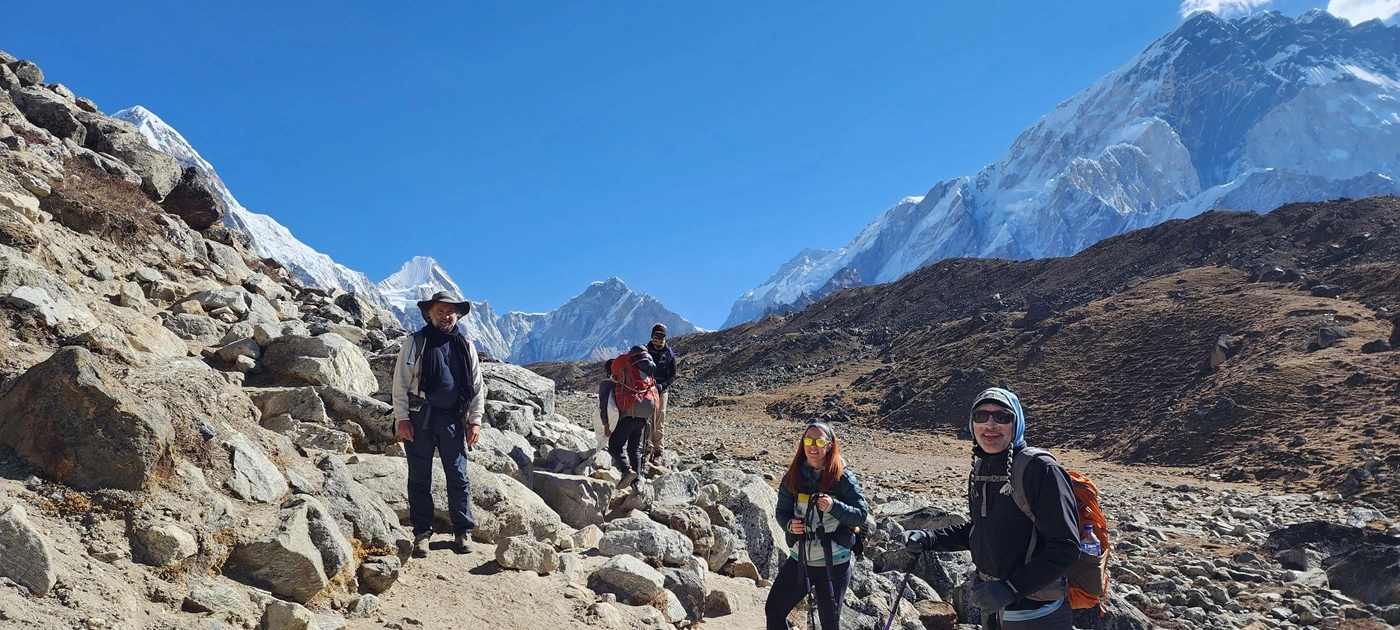
The hybrid model keeps the full ascent intact. You fly into Lukla, then walk to Phakding, Namche Bazaar, Tengboche, Dingboche, Lobuche, and Gorakshep, sleeping at altitude each night so your body can adjust as needed. You still feel your lungs working on the climb above Namche.
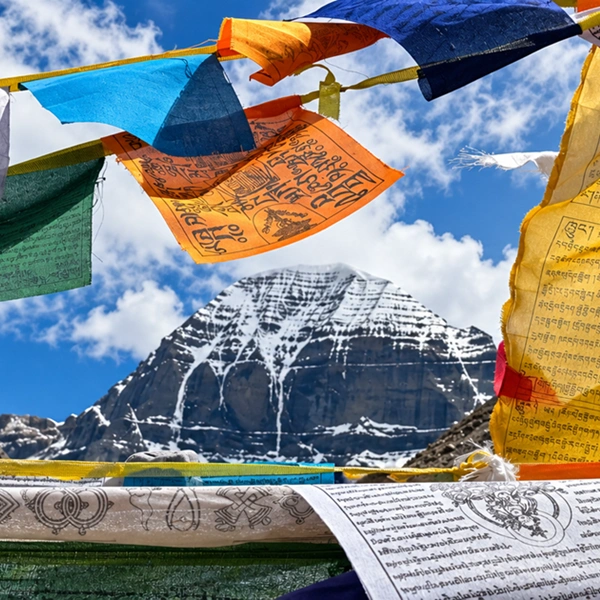
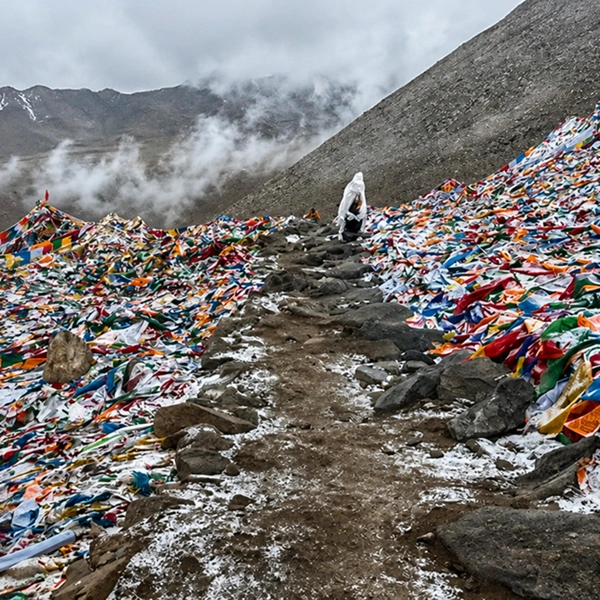
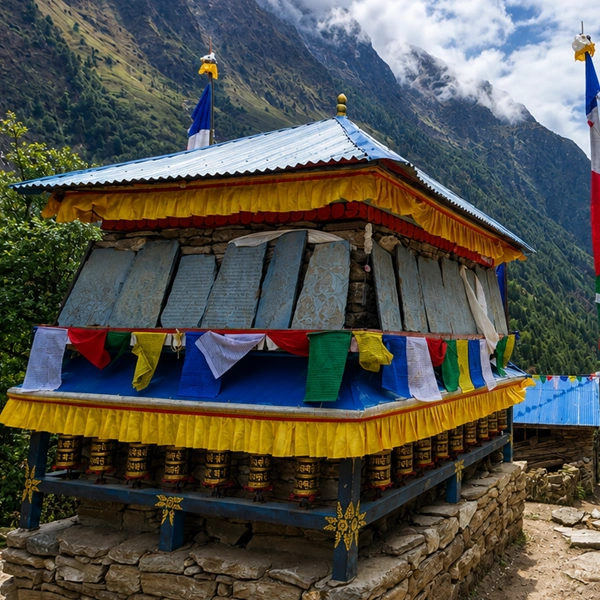
You still pass the chorten above Tengboche Monastery with its long row of prayer flags snapping in the wind, and the mani walls below Pangboche carved with centuries of mantras. None of that changes. What changes is the last page of the itinerary: instead of three more days walking the same trail in reverse, a helicopter meets you at Gorakshep or Kala Patthar and takes you home in fifty minutes.
Getting the Trip Started Properly
The logistics begin before the trek does. Our team meets guests at Tribhuvan International Airport, handles the immigration queue and luggage retrieval, and gets you to your Kathmandu hotel without the usual arrival chaos. We built in a full rest day in Kathmandu before any walking starts — jet lag and a 14-hour time difference deserve a day, not a rushed transfer straight to Lukla. That second day includes a Boudhanath or Patan Durbar Square visit and a full briefing on the days ahead, so by the time the Lukla flight departs, you're acclimatized to the time zone, not just excited about the mountains.
The Ascent: Forests, Monasteries, and Lodges Built for Altitude
The trekking days follow the route every Everest Base Camp expedition has followed for half a century — through rhododendron and pine forest below Namche, across the Dudh Koshi on swaying steel suspension bridges, up the switchbacks into Namche Bazaar's terraced market town, and on to Tengboche, where the monastery courtyard opens onto your first full view of Ama Dablam.
What sets this trip apart from a standard trek is where you sleep. The lodges along this route — including properties in the Yeti Mountain Home network — have invested in heated dining rooms, attached bathrooms, and proper duvets at altitudes where most teahouses still rely on a wood stove and a shared outhouse.
That matters more than it sounds like it should. Sleep quality at 3,500 to 4,400 meters has a direct effect on how your body acclimatizes, and a warm room with an en-suite bathroom means you're not making a 2 a.m. walk down a frozen corridor. Meals on this route lean toward dal bhat, thukpa, and momos, but the better lodges also manage a creditable bowl of pasta or a plate of eggs done properly — useful when appetite drops at altitude, which it does for almost everyone.
Altitude Sickness on a Shorter Itinerary
Compressing the trip's length doesn't mean compressing the acclimatization schedule, and that distinction matters more here than almost anywhere else in this article. Acute mountain sickness comes from gaining altitude faster than the body can adjust, not from the total number of days a trip lasts, so the nights spent at Namche and Dingboche on this itinerary follow the same gradual gain — roughly 300 to 500 meters of net altitude per day above 3,000 meters — that any safely run Everest Base Camp trek follows.
We watch for the standard early symptoms (headache, nausea, disrupted sleep, unusual breathlessness at rest) at every overnight stop, carry a pulse oximeter and a supply of supplemental oxygen, and will hold a guest at a lower altitude for an extra night rather than push forward against the symptoms. The one place this itinerary asks for genuine respect is the push from Gorakshep to Kala Patthar before dawn — the highest point of the trip, reached on tired legs in cold, thin air — which is exactly why we keep that climb early enough in the morning to allow a slow pace and a same-day descent back to Gorakshep if anyone needs it.
The Climax: Kala Patthar at Sunrise
Base Camp itself, at 5,364 meters, is a flat field of glacial moraine and prayer flags — moving to stand on, but not visually dramatic. The view everyone actually remembers comes the next morning, before dawn, on the climb to Kala Patthar at 5,545 meters. You leave Gorakshep in the dark, headlamp on, breath visible in the cold, and arrive on the ridge as the sky turns from black to grey to the specific orange that only happens above 5,000 meters. Everest itself sits just out of full view from Base Camp, but from Kala Patthar its summit pyramid is unmistakable, flanked by Nuptse, Lhotse, and — turning south — the sharp profile of Ama Dablam catching the first direct sun.
The Return: A Helicopter Instead of Three More Days
This is the part that changes everything about how the trip feels afterward. Instead of walking back down through Lobuche, Dingboche, and Namche — three to four days retracing a route you've already covered, with your knees absorbing every downhill step — a chartered helicopter collects guests at Gorakshep or Kala Patthar and flies directly toward Kathmandu.
The flight itself is part of the experience, not just a transfer. From the air, the Khumbu Icefall's blue-white seracs are visible in a way no ground vantage point allows, the full curve of the Khumbu Glacier resolves into a single shape, and villages like Tengboche and Namche appear as small clusters in a landscape that took days to walk through.
The descent into Kathmandu's warmer air, after a week above 4,000 meters, arrives faster than most guests expect — the change in temperature and oxygen levels happens in roughly 50 minutes rather than 3 days. We close the trip with a final dinner in Kathmandu, and build in a full buffer night before any international departure, so the last 24 hours aren't spent rushing for a connection.
What the Helicopter Logistics Actually Involve
High-altitude helicopter operations in the Khumbu are a different discipline from flying at sea level. Thin air at 5,000 meters plus reduces rotor lift significantly, and mountain wind patterns shift quickly enough that a clear morning can close a flight window by midday. Even the trip's first flight makes the point: Lukla's runway sits at 2,860 meters, runs barely 527 meters end to end, and slopes uphill into a mountainside with a sheer drop at the other end — among the more demanding approaches a commercial pilot in this region will fly, and the reason every pilot on this route trains specifically for it rather than transferring in from flatland flying.
The aircraft used for the Gorakshep return — typically the Airbus AS350 B3e (H125), the workhorse of high-altitude Himalayan flying — is specifically rated for these conditions, and the pilots flying them hold type ratings and mountain-flying endorsements tailored to this terrain, not a generalist commercial license.
We schedule helicopter days with flexibility built in, because the weather decides the timetable more than any itinerary does. A pilot's call to delay a flight by two hours, or push it to the following morning, is the system working as intended, not a failure of planning. Every flight goes through a pre-flight weight-and-balance check, a verified weather briefing, and continuous radio contact with the ground team in Kathmandu — the same operational discipline used for emergency evacuation flights in the region, applied here for a much more pleasant reason.
One practical note worth stating plainly: travel insurance covering helicopter use and high-altitude evacuation up to at least 6,000 meters is mandatory for this itinerary, not optional. Standard travel policies frequently exclude both helicopter transport and altitudes above 4,000 to 5,000 meters, so this trip requires a policy specifically for high-altitude trekking. We ask for proof of coverage before confirming a booking, and we're glad to point guests toward providers that routinely write Himalayan policies if their current insurer doesn't.
When to Go
The two reliable windows for this itinerary are mid-March to mid-June and mid-October to mid-December. Spring brings rhododendron blooms through the lower forest and milder overnight temperatures at altitude. Autumn brings the clearest skies of the year and the most stable flying conditions, which matters more on a trip where the final day depends on a helicopter window.
Both seasons book out the available lodge rooms and helicopter charters months ahead, particularly for departures in October and November, so guests planning a hybrid heli-trek should expect to confirm dates well before the season they're traveling in.
Frequently Asked Questions
How is the 10-day Everest Base Camp helicopter return itinerary different from the standard 14-day trek?
The trekking route to Base Camp and the acclimatization schedule stay the same. The difference is the way down: instead of three to four days walking back through Pheriche, Tengboche, and Namche, a helicopter collects you at Gorakshep or Kala Patthar and flies you to Kathmandu in under an hour, compressing the total trip into roughly 10 days.
Is the hybrid heli-trek the same as an Everest helicopter tour?
No. A helicopter tour is a same-day flight in and out of the Khumbu, often without any trekking at all. The hybrid heli-trek keeps the entire walking ascent — from Lukla to Namche to Tengboche to Gorakshep — and replaces only the descent with a helicopter flight.
What aircraft handles the Gorakshep-to-Kathmandu leg, and what makes it suited to that altitude?
The Airbus AS350 B3e (H125), the standard aircraft for high-altitude Himalayan flying, makes the Gorakshep-to-Kathmandu leg. It's flown by pilots holding mountain-flying endorsements specific to the Khumbu terrain, and every departure includes a pre-flight weight-and-balance check and a verified weather briefing.
How much schedule flexibility is built around the helicopter day on a 10-day itinerary?
Himalayan weather can close a flight window with little warning, so the final days of this itinerary carry built-in flexibility. A short delay of a few hours or a push to the next morning is normal and already factored into how we schedule the trip — it rarely changes the overall length by more than a day.
Do I still get proper acclimatization on a 10-day itinerary if the descent is removed?
Yes. The acclimatization schedule happens entirely on the ascent — the nights spent at Namche, Tengboche, Dingboche, and Lobuche follow the same gradual altitude gain as the standard trek. Removing the descent doesn't change how your body adjusts on the way up; it only changes how you get home afterward.
Where exactly does the helicopter pick guests up after reaching Everest Base Camp?
Pickup happens at Gorakshep or Kala Patthar, depending on the weather and the day's flight schedule, rather than at Base Camp itself, since Base Camp's terrain isn't suitable for a helicopter landing.