A luxury Everest Base Camp trek doesn't repressurize the mountain—everyone breathes the same thin air. What it does is remove the cold, sleeplessness, poor food, and exhaustion that turn ordinary altitude stress into altitude sickness. Heated lodges, active acclimatization, daily oxygen checks, and a slower schedule are why well-supported treks finish far more often. Here's the physiology behind it.
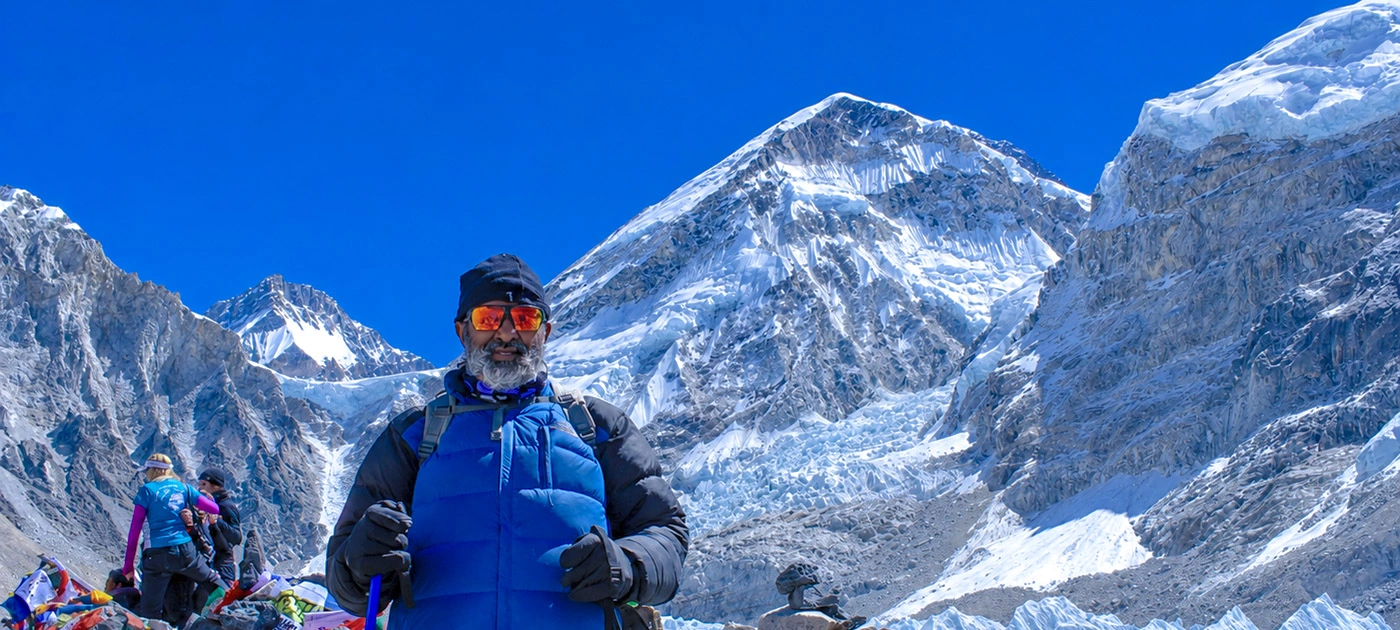
The Luxury Everest Base Camp Trek: How Comfort Actually Keeps You Safer

Do Luxury Trekkers Still Get Altitude Sickness?
Yes. Anyone who tells you a luxury trek makes you immune to altitude sickness is selling you something, and we won't. At Everest Base Camp, 5,364 meters, the air holds roughly half the oxygen of sea level, and no amount of money changes the barometric pressure outside the lodge. Every trekker on the trail, in any package, faces the same physics.
So why does a luxury trek matter? Because altitude sickness is rarely caused by thin air alone. It's caused by thin air, cold, broken sleep, poor nutrition, and exhaustion. Those compounding stressors are what push a body from "adapting" into "failing." And those are exactly the things a well-built luxury trek removes.
This is the honest version of the pitch, and it's the one worth trusting. We can't give you more oxygen. We can give you every other advantage—warmth, rest, real food, a slower schedule, and a guide watching your numbers every day—so your body spends its energy adapting instead of just surviving. That difference is why our longer itineraries finish so much more reliably than the trail average.
What Actually Happens to Your Body Up There
Your body starts adapting to altitude the moment you arrive, and understanding that process explains why patience beats fitness every time.
The first response is faster, deeper breathing—your system automatically working to pull in more oxygen. That hyperventilation flushes out carbon dioxide, which shifts your blood chemistry and, over days, triggers your kidneys to adjust and your body to start building more oxygen-carrying red blood cells. This deeper adaptation takes weeks to fully develop, so you can't rush it. Your heart rate rises too, working harder to pump oxygen-rich blood.
Here's the part that surprises people: fitness does not protect you. A sea-level marathon time means nothing to your lungs at 5,000 meters. In fact, very fit trekkers often get into trouble more quickly because they feel strong and climb too quickly, outrunning their bodies' ability to adapt. The trekkers who succeed aren't the fittest. They're the ones who ascend slowly and let the adaptation happen.
That single fact reshapes how a good itinerary is built. The whole game is pacing, not power—and pacing is something an itinerary can engineer.
The Three Illnesses Worth Knowing By Name
Altitude illness runs on a spectrum from mild to fatal, and recognizing the early signs is the most important safety skill on the trail.
Acute Mountain Sickness (AMS) is the most common one. It usually shows up within a day of gaining altitude and feels like a bad hangover: throbbing headache, fatigue, no appetite, nausea, poor sleep. Mild AMS is a normal warning that your body is working to catch up, and it usually settles if you stop climbing and rest where you are. The danger isn't AMS itself—it's ignoring it and climbing higher anyway.
If AMS is ignored, it can progress to High-Altitude Cerebral Edema (HACE), which is fluid on the brain. The warning signs are a staggering, drunk-looking walk, confusion, and strange behavior. This is a genuine emergency that requires immediate descent.
The other emergency is High-Altitude Pulmonary Edema (HAPE), fluid in the lungs, and it's the leading cause of altitude deaths. Watch for breathlessness at rest, a cough that turns wet or pink, and blue-tinged lips. Cold makes HAPE worse by driving up pressure in the lungs—which is precisely why the warmth of a good lodge is a medical asset, not a comfort.
This is general safety information, not medical advice. Before an Everest trek, see a travel or high-altitude medicine clinic for personal guidance, and tell your guide about any symptoms immediately.
Why "Rest Day" Is a Dangerous Word
An acclimatization day is not a day off, and treating it like one is one of the most common ways trekkers get sick.
The rule that keeps people safe at altitude is "climb high, sleep low"—you spend the day walking up to a higher elevation to stimulate adaptation, then come back down to a lower altitude to sleep. That mild, deliberate stress is what tells your body to keep adapting. Sitting still does the opposite.
On budget teahouse treks, "rest days" often collapse into people lying in sleeping bags in a cold dining room, waiting for the hours to pass. That passive stagnation slows the very adaptation the day is meant to produce. Cold and boredom win, and the body doesn't get the signal it needs.
We build these days as active acclimatization instead. You climb, you explore, you engage—and while your mind is on a monastery or a cooking class, your body is quietly doing the medical work of adapting. The activity is the point. It executes "climb high, sleep low" without letting you either exhaust yourself or stagnate. Namche Bazaar is where this matters most.
Namche Bazaar: Where the Trek Is Won or Lost
Namche, at 3,440 meters, is the single most important acclimatization stop on the route, and how you spend your days here largely decides whether you reach Base Camp.
The climb into Namche is brutal—an 830-meter gain up a steep, switchbacking trail after crossing the Dudh Koshi. That fast rise puts real hypoxic stress on your body, which is why a minimum two-night stay here isn't negotiable. One night is not enough. The trekkers who skip the second night tend to turn back higher up.
The cornerstone of the Namche layover is the acclimatization hike up to Hotel Everest View, the Guinness-record highest hotel in the world at 3,880 meters. It's a textbook "climb high, sleep low" exercise: a 440-meter ascent through rhododendron forest that gently stresses your system, rewarded at the top with an unobstructed view of Everest, Lhotse, Nuptse, Ama Dablam, and Thamserku.
You sit with a hot coffee at nearly 3,900 meters, let the altitude register, then descend to the richer air of Namche to sleep. That stress-and-recovery cycle is the best AMS prevention we have.
We fill the rest of the day with movement that keeps you lightly active without wearing you out. A walk through the stepped village is low-intensity cardiovascular work that aids recovery. It's acclimatization disguised as a good afternoon.
Culture as Medicine: The Active-Rest Advantage
The cultural stops on an acclimatization day aren't just decoration—they're how we keep you moving and engaged, not stagnant and cold.
Above Namche, a visit to the Sherpa Culture Museum and the Everest Documentation Center offers low-effort walking and genuine context for where you are. The museum recreates a traditional Sherpa home and traces the history of high-altitude climbing, including the legacy of Tenzing Norgay, who first summited Everest with Hillary in 1953, and Ang Rita Sherpa, who summited ten times without supplemental oxygen. Understanding the Sherpa relationship with these mountains shifts your focus from your own suffering to something larger, and morale is a real physiological factor at altitude.
For those with energy on the acclimatization hike, the green-roofed villages of Khumjung and Khunde at 3,790 meters offer a quieter, more honest look at Sherpa life, along with Hillary's school and the monastery that famously guards a purported yeti scalp.
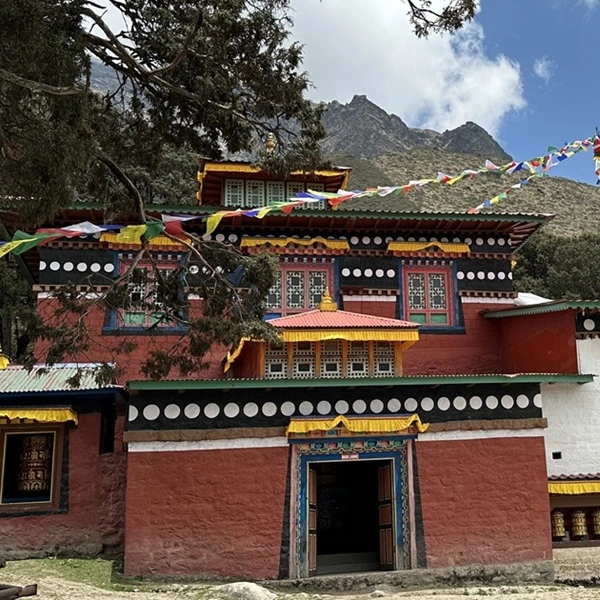
Higher up the main route, Tengboche monastery is the spiritual heart of the Khumbu. Each of these turns a medically necessary day into something you'll actually remember.
The Cooking Class That's Secretly an Acclimatization
The private Sherpa cooking class is our favorite active-rest tool because it keeps you gently moving for hours while feeding you exactly what your body needs at altitude.
The dish is usually Shyakpa—Sherpa stew—a hearty one-pot meal built over centuries for survival in extreme cold. You knead and hand-pull the dough, learn how to temper mustard oil with garlic, ginger, turmeric, cumin, and Himalayan timur pepper, then add dense root vegetables. Standing, moving, and using your hands keep you lightly active and out of the cold-room stagnation that slows adaptation.
The physiology of eating it is just as useful as making it. The broth hydrates you, which matters enormously because altitude drives fluid loss. The root vegetables and dough deliver easily digestible carbohydrates for energy. The warmth and spice fight the appetite loss that altitude causes, so you actually eat enough to fuel the next day. It's one of the rare activities that's culturally rich, physically helpful, and medically helpful all at once.
Alongside it, the trail runs on dal bhat—lentils, rice, and vegetable curry that functions as genuine all-day fuel—plus potato pancakes and roasted barley. Eating well at altitude isn't a luxury. It's how you keep enough energy in the tank to keep adapting.
Warmth, Sleep, and the Hidden Physiology of Comfort
The comforts of a good lodge aren't about pampering—each one blunts a specific trigger of altitude sickness, and this is where the luxury model earns its keep medically.
Warmth is the clearest example. On budget treks, rooms above 4,000 meters can drop to -15°C, and a shivering body drives up pressure in the lungs through your stress-response system—the same pressure spike that fuels HAPE. Sleeping in a heated, insulated room with proper bedding keeps that nighttime pressure lower. Because HAPE often develops on the second night at a new altitude, keeping you warm at night is a real preventive measure, not a nicety.
Sleep is the underrated one. Altitude naturally wrecks sleep with periodic breathing—cycles of deep breaths and pauses that fragment your rest. Pile a freezing, noisy teahouse on top of that, and you get severe sleep deprivation, which spikes stress hormones, worsens fluid retention, and weakens immunity—all of which make altitude sickness more likely. A quiet, warm, soundproofed room helps your body achieve the deep sleep it needs to recover before the next day's climb.
Hot running water and en-suite bathrooms matter too, and not just for comfort. They let you stay clean without exposing you to freezing corridors, which reduces the respiratory infections that make the lungs more vulnerable to HAPE. Every one of these comforts maps to a specific physiological risk it reduces. That's the whole design.
The Medical Backbone: Monitoring, Oxygen, and Evacuation
Behind the comfort lies a clinical safety system, the part that turns a good trek into a genuinely safe one.
Our guides check your blood oxygen and heart rate daily from the early days of the trek. They're not looking for a single scary number—at Gorak Shep, a healthy, well-acclimatized trekker reads a blood oxygen level that would be a hospital emergency at sea level, and that's normal up there.
What guides the watch is the trend. If your oxygen drops well below the group's level or fails to recover after a night's rest, that's an early warning that lets us act—with an extra rest day, treatment, or descent—before things get serious. Here's the rough shape of what's normal as you climb:
| Location | Elevation | Typical blood-oxygen range |
|---|---|---|
| Kathmandu | 1,400m | 97–99% |
| Namche Bazaar | 3,440m | 87–94% |
| Tengboche | 3,860m | 83–91% |
| Dingboche | 4,410m | 79–88% |
| Gorak Shep / Base Camp | 5,164–5,364m | 70–81% |
These are typical ranges for context, not targets to chase. Your guide interprets them alongside how you feel and how your numbers trend over days.
Our guides are trained in high-altitude first aid and carry comprehensive medical kits, including acetazolamide for acclimatization and the emergency medications used to stabilize HACE and HAPE. We don't publish dosing here on purpose—that's a conversation for you and a travel-medicine doctor before you leave, because the right approach depends on your health and history.
For emergencies, the rule is absolute: immediate descent, because losing even a few hundred meters of altitude quickly reverses the problem. Where descending on foot isn't possible, higher lodges carry supplemental oxygen and a portable altitude chamber—an inflatable bag that simulates a rapid descent of well over a thousand meters within minutes, buying critical time.
We maintain standing helicopter rescue arrangements and carry satellite communication, so above Namche, where phone networks fail, we can launch an evacuation to Kathmandu immediately rather than improvise.
Why the Longer Itinerary Wins
The most important safety feature of a luxury Everest trek is also the least glamorous: time.
We build our Base Camp itineraries over 14 to 16 days precisely because a slower ascent is the strongest protection against altitude sickness. The extra days aren't padding—each one gives your body more time to adapt before the next push. Rushing the trail to save two days is the single most common reason people fail or get hurt.
Many of our clients also fly out from Gorak Shep or Pheriche by helicopter rather than walking the multi-day descent. It spares your knees the pounding of a fast downhill and, more importantly, gets you to rich, low-altitude air and real recovery far sooner. The walk-in earns the arrival. The flight out protects what's left of you.
That combination—slow up, supported throughout, fast down—is the whole philosophy. Luxury here isn't the aesthetic. It's the safety margin.
FAQs: Altitude Safety on a Luxury Everest Trek
Can you avoid altitude sickness completely on a luxury Everest Base Camp trek?
- No, and be wary of anyone who promises it. At Base Camp, the air holds about half the oxygen of sea level, regardless of your package. What a luxury trek does is remove the compounding stressors—cold, poor sleep, bad nutrition, exhaustion—that turn normal altitude stress into sickness. That's why well-supported treks finish far more reliably, not because anyone is immune.
Does being physically fit protect me from altitude sickness?
- No. Fitness helps you enjoy walking, but it offers no protection against altitude illness. Very fit people sometimes get sick faster because they feel strong and push themselves too hard, outrunning their bodies' adaptation. Success comes from ascending slowly and following a proper acclimatization schedule, not from sea-level fitness. This is one of the most important things to understand before you go.
Why do luxury Everest treks last 14 to 16 days?
- Because a slower ascent is the strongest protection against altitude sickness. The extra days give your body time to adapt before each higher push. Shorter, rushed itineraries are the most common reason trekkers fail or get sick. The length isn't padding—it's the core safety feature, and it's the main reason longer treks finish so much more reliably.
What is an acclimatization day actually for?
- It's for active acclimatization, not rest. The rule is "climb high, sleep low"—you walk up to a higher altitude during the day to trigger adaptation, then descend to sleep. Sitting still in a cold room actually slows the process. We fill these days with guided hikes, monastery visits, and cooking classes so your body adapts while your mind is engaged, avoiding both exhaustion and stagnation.
How do guides monitor for altitude sickness?
- They check your blood oxygen and heart rate daily and track the trend over time, not just a single reading. A low absolute number is normal at altitude—what matters is whether you're tracking below the group or failing to recover after rest. That early warning lets us add a rest day, begin treatment, or descend before mild symptoms become dangerous. Our guides are trained in high-altitude first aid.
What happens if someone develops serious altitude sickness on the trek?
- The rule is immediate descent, since dropping even a few hundred meters quickly reverses the problem. Where walking down isn't safe, higher lodges carry supplemental oxygen and a portable altitude chamber that simulates rapid descent within minutes. We maintain standing helicopter rescue arrangements and carry satellite communication equipment to launch an immediate evacuation to Kathmandu from above Namche, where phone networks fail.
Why does a heated lodge matter medically, not just for comfort?
- Cold drives up pressure in your lungs through your stress response—the same pressure spike involved in HAPE, a dangerous form of altitude sickness. Sleeping warm keeps that nighttime pressure lower, which matters because HAPE often develops on the second night at a new altitude. Warmth also protects your sleep and energy. It's genuinely a medical asset, which is why we prioritize heated lodges.
Should I take altitude medication like Diamox?
- That's a decision for you and a travel or high-altitude medicine doctor before your trip, based on your health and history—which is why we don't publish dosing here. Our guides carry acetazolamide and emergency medications and are trained to use them, but personal prophylaxis should be arranged with a clinic in advance. See a travel-medicine specialist a few weeks before departure.
The Trek We Build Around Keeping You Safe
A luxury Everest Base Camp trek isn't about softening the mountain. The mountain doesn't soften. It's about arriving at Base Camp healthy enough to actually take it in, instead of enduring the whole trail on the edge of illness.
We do that by attacking every trigger of altitude sickness except the one we can't change. We give you time, warmth, deep sleep, real food, genuinely enjoyable active acclimatization days, and a guide who watches your numbers every single day. The thin air stays thin. Everything else, we hold.
If you want to reach Base Camp on a trek built around your safety and your recovery, our team will plan it with you from the first conversation. Explore our Luxury Everest Base Camp Trek, or write to us directly.
Need Help? Call Us+977 9851013196orChat with us on WhatsApp
Need Help? Call Us+977 9851013196