EBC vs ABC: An Honest Comparison of Nepal's Two Most-Booked Treks
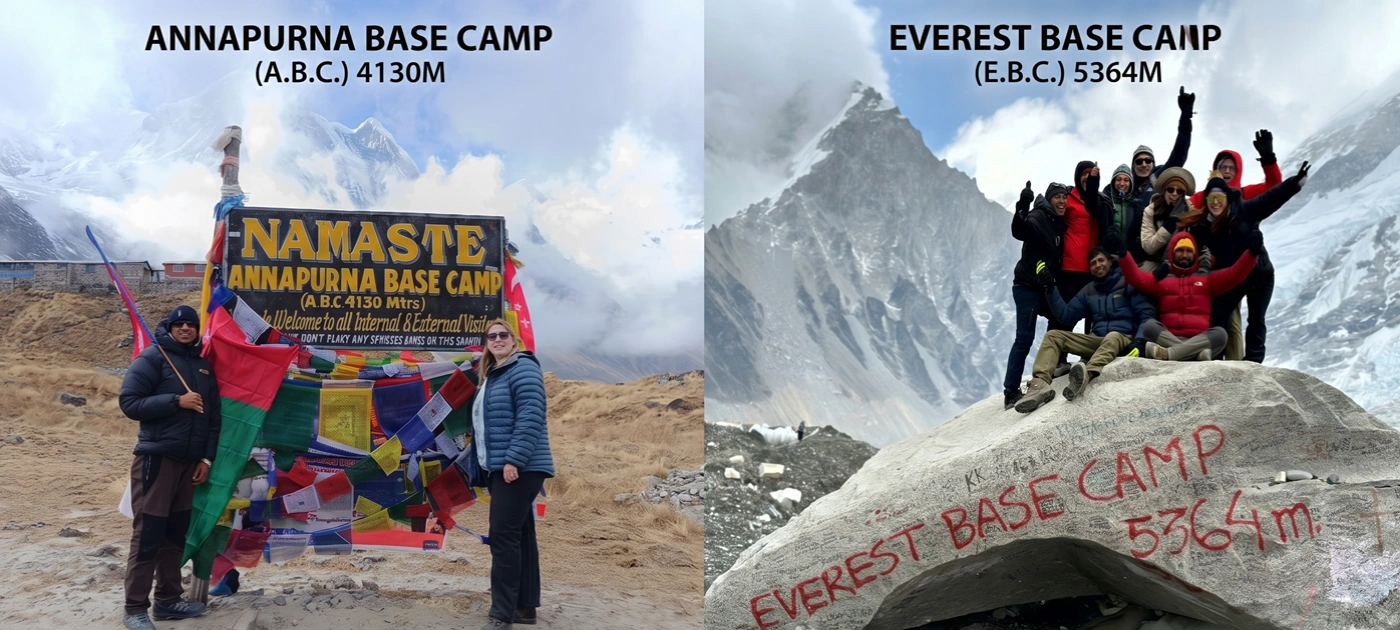
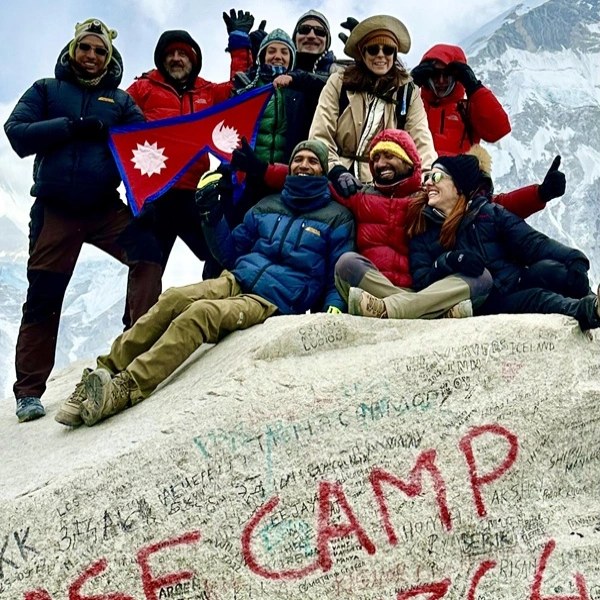
EBC vs ABC is the choice almost every first-time Nepal trekker comes to during research, and the choice that the standard guidebooks fudge by listing both as roughly equivalent. They are not equivalent. EBC — Everest Base Camp — climbs to 5,545 meters at the Kala Patthar viewpoint and runs across 12 to 14 days through the Khumbu region, with the most-photographed mountain in the world as its anchor.
ABC — Annapurna Base Camp — tops out at 4,130 meters at the base camp itself and runs across 7 to 11 days through the Annapurna sanctuary, ending in the most dramatic natural amphitheater in the wider Himalayan range. Both are extraordinary. They are not the same trek with different names.
After two decades of running both treks at the luxury tier, our team has watched thousands of first-time trekkers make this decision. The pattern is consistent. Travelers who choose well — meaning they pick the trek that actually matches their fitness, their time available, their previous altitude experience, and their reasons for traveling to Nepal, almost universally finish their trek elated.
Travelers who choose poorly typically choose EBC for the brand recognition when ABC would have suited them better, or choose ABC because they thought EBC was too hard when, in fact, they had the fitness and time. The good news is that the decision is not actually that hard once the genuine differences are laid out side by side.
This guide covers the differences honestly across nine dimensions: altitude, total trekking days, daily distances, weather sensitivity, accommodation quality at altitude, scenery and cultural texture, helicopter logistics, total cost, and the kind of traveler each trek suits. We do not have a commercial preference between the two — we run both at the luxury tier, and the right answer is the one that fits the specific traveler. By the end of the comparison, you should have a clear sense of which of the two is the right answer for you.
Important: Both treks have both luxury and budget operating tiers. The comparison below assumes the luxury operating tier for both treks — heated lodges where available, helicopter transfers where appropriate, and the standard pacing our team operates. Budget operations on both treks compress the schedule, use unheated lodges, and reduce the helicopter component. The luxury vs. budget comparison is a separate question covered in our dedicated blog on the cost difference.
At a Glance: The Numbers
The table below is the most-requested single piece of information in any EBC vs ABC search. It is the answer to 'just give me the numbers' and the foundation for the deeper analysis that follows.
|
Metric
|
EBC (Everest Base Camp)
|
ABC (Annapurna Base Camp)
|
|
Maximum altitude
|
5,545m at Kala Patthar viewpoint
|
4,130m at base camp itself
|
|
Standard luxury duration
|
12–14 days on the trail
|
7–11 days on the trail
|
|
Average daily distance
|
8–14 km per day
|
6–12 km per day
|
|
Total elevation gain
|
~6,500m cumulative ascent
|
~4,500m cumulative ascent
|
|
Difficulty rating
|
Strenuous
|
Moderate
|
|
Acclimatization days needed
|
2 (Namche, Dingboche)
|
0–1 (Chhomrong optional)
|
|
Air access
|
Lukla flight (weather-sensitive)
|
Pokhara flight + drive (reliable)
|
|
Luxury lodge quality
|
Excellent at lower altitudes; basic above 4,500m
|
Good throughout; uniform across the trail
|
|
AMS risk
|
Significantly above 4,500m
|
Mild; rare below 4,000m
|
|
Helicopter return option
|
Standard (Gorak Shep to Kathmandu)
|
Available (ABC to Pokhara)
|
|
Anchor mountain
|
Mount Everest (8,849m)
|
Annapurna I (8,091m)
|
Altitude: The Most Important Difference
Altitude is the single most consequential difference between EBC and ABC. EBC reaches 5,545 meters at the Kala Patthar viewpoint — the elevation at which Acute Mountain Sickness (AMS) risk is significant for unacclimatized travelers and the elevation at which oxygen partial pressure drops to roughly 50 percent of sea level. ABC reaches 4,130 meters at the base camp itself — high enough to require basic acclimatization but well below the threshold at which serious AMS and HACE risk become common.
What 1,400 Meters of Altitude Actually Means
The altitude difference between the two trek high points (5,545m vs 4,130m) is not small. It changes the acclimatization requirement, the AMS risk profile, the suitability for travelers with cardiac or respiratory conditions, and the kind of fitness preparation needed.
EBC requires two structured acclimatization days (one at Namche Bazaar at 3,440m, one at Dingboche at 4,410m), and the second half of the trek runs at altitudes where 30 to 40 percent of unacclimatized trekkers experience some AMS symptoms. ABC requires no formal acclimatization day, and AMS rates are well below 10 percent for most luxury-tier trekkers. The trek profiles are simply different difficulty categories.
Who EBC's Altitude Is Suitable For
- Trekkers in good general fitness (consistent cardio for at least three months pre-trek)
- Trekkers without cardiac, respiratory, or recent stroke history
- Trekkers with at least 12 days available for the full trek, including acclimatization
- Trekkers willing to take Diamox (acetazolamide) prophylactically
- Trekkers who have done at least one previous high-altitude experience or whose physician has cleared them for above 5,000 meters
Who ABC's Altitude Is Suitable For
- Trekkers in moderate fitness (regular hiking or comparable cardio)
- Trekkers with mild cardiac or respiratory considerations who have physician clearance for moderate altitude
- Trekkers with 7 to 11 days available
- First-time Himalayan travelers wanting a complete experience without the demands of EBC
- Older trekkers (60+) for whom the EBC altitude is medically contraindicated
This is where most of the EBC vs ABC mistake happens. Travelers default to EBC for brand recognition, without considering whether the altitude actually suits them. Travelers in their sixties with normal cardiac health who do not have prior altitude experience routinely complete ABC in style and routinely struggle on EBC. The right answer for that traveler is ABC, even if Everest is the more famous name.
Scenery and Mountain Experience
EBC: The Anchor of the World's Highest Mountains
The EBC trek's scenic anchor is Mount Everest itself — the world's highest mountain at 8,849 meters. The trek offers views of Everest from multiple angles throughout the second half of the route. The first sighting from Tengboche at 3,860 meters is the famous Everest-Lhotse-Ama Dablam composition that defines the photographic identity of the Khumbu region.
The Kala Patthar sunrise view — earned by waking at 4:30 AM and climbing 200 meters in pre-dawn cold — is the most direct view of Everest available to a traveler who is not on the mountain itself. The Khumbu icefall pours down from the south-west face of Everest like a frozen river. Lhotse, Nuptse, and Pumori close the panorama on three sides. The mountain experience at the high points of the EBC trek is, simply, the experience of being inside the highest range on earth.
ABC: The Most Dramatic Natural Amphitheater
The ABC trek's scenic anchor is the Annapurna sanctuary itself — a glacial bowl ringed by 7,000-meter peaks on every side. Annapurna I at 8,091 meters rises to the north. Annapurna South at 7,219 meters rises to the south. Machhapuchhre (the Fishtail) at 6,993 meters rises to the east. Hiunchuli, Gangapurna, and Tarke Kang complete the encirclement.
Standing at base camp at sunrise as the first light catches the south face of Annapurna I is the photographic and emotional anchor of the trek. ABC does not offer the singular dominance of Everest as a peak, but it offers the most enclosed mountain amphitheater in the wider Himalaya, the kind of natural arena that no photograph quite captures.
Cultural Texture: Sherpa vs Gurung
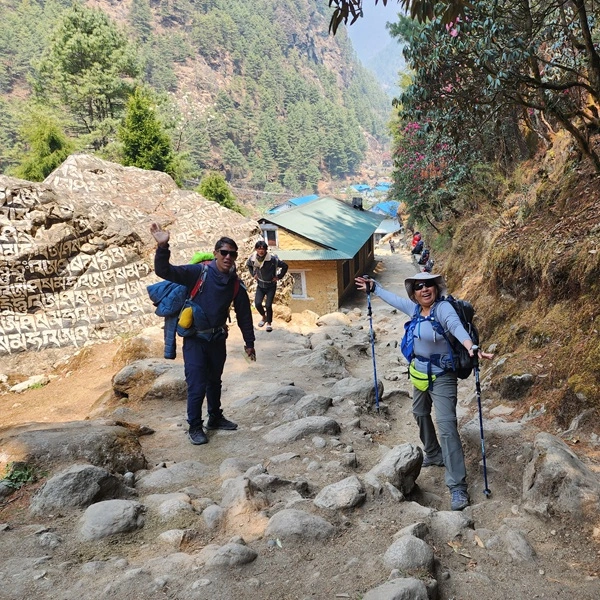
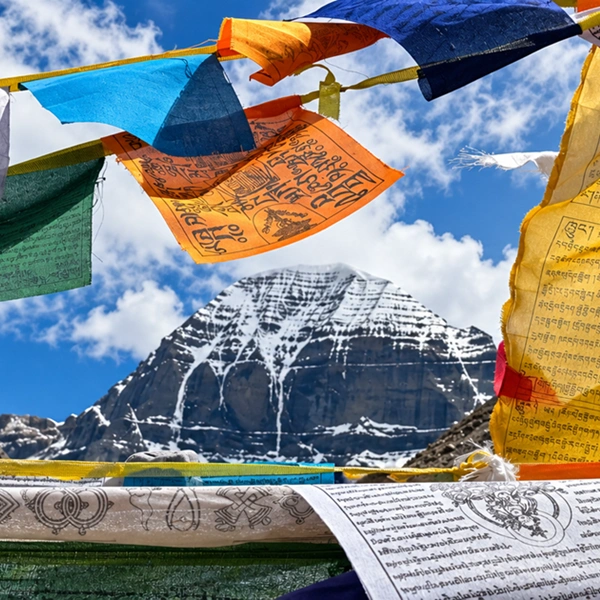
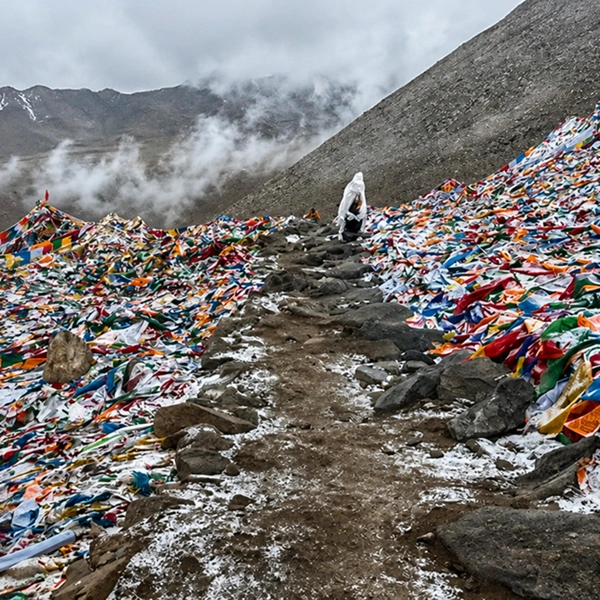
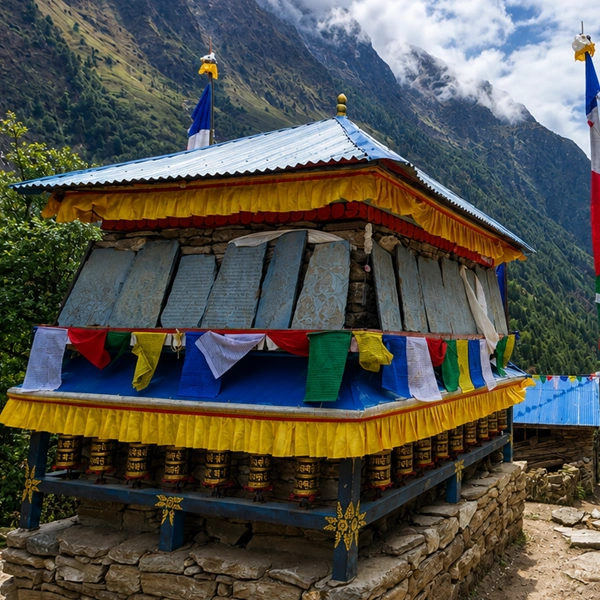
The EBC trek runs through Sherpa culture — the Tibetan-origin mountain people who have inhabited the Khumbu for the past 500 years. Sherpa monasteries, Sherpa lodges, Sherpa families running tea houses across the trail. The cultural texture is unmistakably Tibetan Buddhist — prayer flag arrays at every pass, mani stones along the trail, the long ridge of Tengboche Monastery as one of the trek's spiritual anchors.
The ABC trek runs through Gurung culture — the Tibeto-Burman mountain people who inhabit the Annapurna foothills. Gurung villages along the lower trail (Ghandruk, Chhomrong) have a different architectural language from Sherpa villages. The Gurung have historical connections to the British Gurkha regiments that distinguish them from the Khumbu Sherpa. Both cultural textures are rewarding. They are not the same.
Accommodation Quality at Altitude
Lodge quality on luxury operations differs significantly between EBC and ABC at the higher altitudes. This is one of the most overlooked differences and one that experienced trekkers weigh heavily when choosing between the two.
EBC Luxury Accommodation Profile
EBC luxury lodges are exceptional at the lower altitudes. Properties like Yeti Mountain Home in Lukla, Phakding, and Namche Bazaar; Hotel Everest View at Syangboche; Rivendell Lodge in Deboche; and Everest Summit Lodge in Pangboche operate at four-to-five-star standards through 4,000 meters.
Heated rooms, hot showers, proper bedding, dining rooms with mountain views, and reliable WiFi at the lower altitudes. Above 4,500 meters, the situation changes — the highest commercially operated lodges (at Lobuche, Gorak Shep) are basic teahouse standard regardless of operator because the altitude and supply chain make luxury construction impractical. The luxury EBC trek deals with this honestly by running the high-altitude segment through basic lodges and using a helicopter return from Gorak Shep to skip the descent.
ABC Luxury Accommodation Profile
ABC luxury accommodation is more uniformly good across the trail. The maximum altitude on ABC (4,130 meters at base camp itself) is below the threshold at which luxury construction becomes impractical. Most ABC luxury operations use Ker & Downey lodges (Ghandruk, Chhomrong, Bamboo) and selected boutique trekking lodges across the route, all of which maintain comparable standards.
Heated rooms throughout, hot showers throughout, proper bedding throughout, and reliable WiFi at most overnights. The accommodation experience on ABC is more consistent than on EBC, and travelers who prioritize lodge comfort throughout the trek typically find ABC more satisfying for that reason.
Weather Sensitivity and Air Access
The Lukla Problem
EBC's air access is the famous Lukla airport — the steep, mountainous runway at 2,860 meters that is the gateway to the entire Khumbu region. Lukla is one of the most weather-sensitive airports in the world and operates only when visibility is clear.
Cloud cover that builds in the mid-morning routinely grounds Lukla flights. Multi-day weather windows that close Lukla entirely happen several times per season. Travelers on tight EBC itineraries can lose 24 to 72 hours waiting for clear weather, compressing the trekking schedule and risking missing the trek entirely if the weather window closes for too long.
The luxury solution to the Lukla problem is helicopter access. Most of our luxury EBC departures use a helicopter for the inbound Kathmandu-to-Lukla leg, specifically because it offers greater weather flexibility than fixed-wing flights and can sometimes find clear windows that fixed-wing flights cannot.
The helicopter is also typically used for the return leg from Lukla to Kathmandu after the trek. The combined cost of bidirectional helicopter access is part of why the luxury EBC trek is priced the way it is.
Pokhara Access
ABC's air access is Pokhara Airport, a regional airport with significantly better weather reliability than Lukla. The flight from Kathmandu to Pokhara is 25 minutes and is rarely canceled. From Pokhara, the road transfer to the trek start point (Nayapul or Birethanti, depending on the route) takes 1 to 1.5 hours through pleasant lower-altitude valley landscapes.
The combined weather reliability of the Pokhara flight and the road transfer means ABC departures rarely lose schedule time to weather access issues. This is one of the most underweighted advantages of ABC for travelers with rigid date constraints — flying out of Nepal on a fixed date is meaningfully easier from ABC than from EBC.
Total Cost: Honest Numbers
The total cost difference between luxury EBC and luxury ABC is significant and worth understanding. The figures below are typical ranges for luxury-tier operations at the standard durations.
|
Cost Component
|
EBC (12–14 days)
|
ABC (7–11 days)
|
|
Total luxury package per person
|
USD 5,500–9,500
|
USD 3,000–5,000
|
|
Helicopter component included
|
Bidirectional Lukla typical
|
Optional ABC helicopter return
|
|
Days of paid leave required
|
16–18 days end-to-end
|
11–14 days end-to-end
|
|
Travel insurance premium
|
Higher (6,000m altitude rider)
|
Standard (4,500m rider sufficient)
|
|
Pre-trek training cost
|
Significant (3–6 months prep)
|
Modest (general fitness sufficient)
|
The cost ratio between luxury EBC and luxury ABC is approximately 1.7 to 2.0 to 1. EBC is genuinely more expensive — the trek is longer, the helicopter component is essential rather than optional, the insurance premium is higher, and the supply chain to the highest lodges is more expensive. Travelers weighing the two should weigh this honestly. For travelers whose primary constraint is the total trip budget, ABC delivers a complete Himalayan experience at a fraction of the cost of the EBC.
Which Trek Suits Which Traveler
EBC Is the Right Answer If...
- You have specifically wanted to see Mount Everest for years
- You have 16 to 18 days of total trip time available (including buffer days for Lukla weather)
- You are in good general fitness and have either prior altitude experience or physician clearance for above 5,000 meters
- You are willing to invest 3 to 6 months in pre-trek training
- You want the most photographed luxury trekking experience in the world
- Your budget is at the higher tier (USD 5,500+ per person for the trek alone)
ABC Is the Right Answer If...
- You want a complete Himalayan trekking experience without the altitude demands of EBC
- You have 11 to 14 days of total trip time available
- Your fitness is moderate rather than high (regular hiking, weekend cardio)
- You have mild cardiac or respiratory considerations that limit extreme altitude exposure
- You are traveling with mixed fitness levels (couples, family groups, multi-generational parties)
- Your trip dates are fixed, and you cannot afford Lukla weather delays
- Your budget is moderate (USD 3,000–5,000 per person for the trek alone)
- You want the most enclosed natural mountain amphitheater experience in Nepal
Both Are Wrong If...
Both EBC and ABC require multi-day treks at a high altitude. They are not the right answer for travelers who want to see Nepal but do not actually want to trek. For travelers in this category, the right answer is the Everest helicopter day tour (covered in our dedicated guide), the Annapurna helicopter day tour, or one of the shorter cultural-trekking combinations, such as the Nepal Honeymoon route or the Kathmandu Valley + Pokhara combined tour. Trying to compress EBC or ABC into a less-than-trekking-friendly schedule results in a trip that satisfies no one.
The Hidden Third Option: Annapurna Foothills
Most travelers researching EBC vs ABC do not know that there is a third option that often suits them better than either. The Annapurna foothills treks — Ghandruk, Mardi Himal, Poon Hill, the Annapurna sanctuary lower section — operate at altitudes between 1,500 and 3,200 meters and deliver the same cultural texture as ABC at lower altitudes with shorter durations.
The Mardi Himal trek specifically reaches 4,500 meters at the Mardi Himal Base Camp, which is high enough to feel meaningfully high but lower than ABC and significantly lower than EBC.
For travelers in their late sixties or early seventies with normal cardiac health, travelers with mild altitude concerns, travelers with limited time who still want a serious Himalayan experience, and first-time trekkers who are uncertain whether they will enjoy multi-day mountain travel at all, the Annapurna foothills treks are often the right answer rather than ABC or EBC. They deliver the mountains, the lodges, and the cultural depth at a level of exertion that produces a trip people enjoy rather than endure.
How Our Team Helps Travelers Decide
After two decades of running both treks, our process for helping travelers choose between EBC and ABC has settled into the questions below. We send these to every traveler who reaches out with the EBC vs ABC question, and the answers determine which trek we propose.
- What is your previous altitude experience? Travelers who have summited Mont Blanc, hiked above 4,000m in Peru or Bhutan, or completed previous high-altitude treks are EBC candidates. Travelers whose highest previous altitude is below 3,000m are ABC candidates unless they have completed pre-trek training time.
- How much total trip time is available? Travelers with 16 to 18 days end-to-end have time for EBC. Travelers with 11 to 14 days are better suited to ABC. Travelers with less than 11 days should consider the Annapurna foothills treks or the Everest helicopter day tour rather than a base camp trek.
- What does your current weekly cardio look like? Travelers who run, cycle, or hike for 4+ hours per week are consistently EBC-fit. Travelers exercising 1–3 hours per week are ABC-fit. Travelers exercising less than 1 hour per week need pre-trek training before either base camp trek.
- Do you have any medical considerations? Cardiac, respiratory, recent stroke, third-trimester pregnancy, or recent severe altitude sickness are all reasons to consider ABC over EBC, or the Annapurna foothills over ABC. We coordinate with the traveler's physician where appropriate.
- What is the primary motivation for the trek? Travelers whose primary motivation is seeing Mount Everest are correctly choosing the EBC route. Travelers whose motivation is 'a serious Himalayan trekking experience' have multiple equally valid options and should weigh the practical factors above more heavily than the brand-recognition pull of EBC.
Frequently Asked Questions
Which trek is harder, EBC or ABC?
EBC is significantly harder than ABC. The maximum altitude on EBC (5,545m at Kala Patthar) is 1,400 meters higher than the maximum on ABC (4,130m). The trek duration is longer (12–14 days vs 7–11 days), the daily distances are slightly longer, and the AMS risk profile is meaningfully different. ABC is a moderate trek. EBC is a strenuous trek. Travelers without prior altitude experience or strong pre-trek training should choose ABC over EBC, even if Everest is the more famous route.
Can I do EBC if I have never trekked at altitude before?
Yes, but only with serious pre-trek preparation. Travelers without prior altitude experience who attempt EBC need 3 to 6 months of dedicated cardio and elevation-gain training before departure. Diamox (acetazolamide) prophylaxis is recommended. Physician clearance for above 5,000 meters is recommended. With this preparation, first-time altitude trekkers complete EBC successfully. Without it, the AMS rate climbs significantly and trip-ending illness becomes more likely.
Which trek is more scenic?
Different rather than better or worse. EBC delivers the world's highest mountain as the photographic anchor and the experience of being inside the highest range on earth. ABC delivers the most enclosed natural mountain amphitheater in the wider Himalaya and the most direct base-camp setting (you sleep at the foot of an 8,000-meter peak rather than below it). Both are extraordinary. The right answer depends on what you value — the singular dominance of Everest or the encircled mountain experience of the Annapurna sanctuary.
How fit do I need to be for ABC?
Moderately fit. Travelers who hike regularly (weekend hikes of 4 to 6 hours, weekly cardio of 2 to 3 hours), run 5 kilometers comfortably, or cycle regularly have the baseline fitness for ABC. The trek requires walking 5 to 7 hours per day for 7 to 11 days at moderate altitudes. It does not require gym-rat fitness — it requires consistent endurance fitness. Most travelers with sedentary baselines who commit to 8 to 10 weeks of hiking and cardio preparation arrive in shape for ABC.
How fit do I need to be for EBC?
Significantly fitter. Travelers attempting EBC should have either established hiking fitness (consistent 6+ hour hikes with elevation gain) or 3 to 6 months of dedicated pre-trek training. Cardio sessions of 4+ hours per week, regular hiking with a loaded backpack, and elevation-gain training (stair climber, hill repeats, weighted hiking) are all part of EBC preparation for non-hiking baselines. Our team sends a detailed pre-trek training program to every confirmed EBC guest 6 months before departure.
Can I do EBC and ABC on the same trip?
Yes, with sufficient time. The combined itinerary takes 22 to 26 days end to end, including buffer days. Travelers wanting both treks typically do them in sequence — ABC first as acclimatization and confidence-building, then EBC as the headline trek. The double-trek itinerary is significantly more expensive (USD 10,000+ per person) and physically demanding (a full month of consecutive trekking days). It is the right answer for travelers with the time, fitness, and budget who want the complete Nepal trekking experience.
Which is better for older travelers?
ABC for most travelers above 60 with normal cardiac health. EBC's altitude (5,545m at Kala Patthar) introduces medical risks for older travelers that ABC does not. ABC's maximum altitude (4,130m) is well within the safety profile of healthy travelers in their sixties and seventies. The Annapurna foothills treks (Mardi Himal, Ghandruk, Poon Hill) are even better for travelers in their seventies or those with mild cardiac concerns. Travelers with specific medical considerations should always confirm with their physician before booking either trek.
Which trek has better luxury accommodation?
ABC has more uniformly good luxury accommodation across the trail. The maximum altitude on ABC is below the threshold where luxury construction becomes impractical, which means properties like Ker & Downey lodges and selected boutique trekking lodges maintain consistent standards throughout the route. EBC has exceptional luxury lodges at the lower altitudes (Yeti Mountain Home, Hotel Everest View, Rivendell Lodge, Everest Summit Lodge), but the highest commercially operated lodges (above 4,500m) are basic teahouse standard regardless of operator. Travelers who prioritize lodge comfort throughout the full trek often find ABC more satisfying for that reason.
Is ABC more or less crowded than EBC?
Slightly less crowded in peak season, but the difference is smaller than most travelers expect. Both treks see significant traffic in October, November, March, and April. ABC has the slight advantage of being shorter, allowing trekkers to move through the crowded sections more quickly. EBC has more visible crowding because the trekking corridor is narrower at altitude, and the lodges concentrate trekkers at fewer overnight points. Both treks feel crowded in peak season at the most popular bottlenecks. Travelers who specifically want lower crowds should consider Mardi Himal (much quieter than ABC) or Manaslu Circuit (much quieter than EBC) as alternatives.
How much should I budget for either trek?
Luxury ABC: USD 3,000–5,000 per person for the trek package itself, plus international flights, travel insurance, gratuities, and optional Pokhara extension. Luxury EBC: USD 5,500–9,500 per person for the trek package itself, plus international flights, travel insurance, gratuities, and optional Kathmandu extension. The total trip budget for either trek is approximately 1.3 to 1.5 times the trek package price after international flights and incidentals are added. ABC is the meaningfully cheaper of the two without compromising the luxury operating tier.
Which trek is better for couples or honeymooners?
ABC is the more common choice for couples and honeymooners because of its shorter duration, lower altitude, more reliable weather, and greater accommodation consistency. EBC works for athletic couples who specifically want the Everest experience, but the 14-day duration is harder on most relationship pacing than the 7 to 11-day ABC. We design a dedicated Nepal honeymoon route that combines the ABC sanctuary trek with a romantic Pokhara stay extension, a strong choice for couples who want the trekking experience without the demands of EBC.
What if I cannot decide between the two?
Tell us about your fitness, your time available, your previous altitude experience, your medical considerations, and your reasons for wanting to trek in Nepal. Our team has helped thousands of first-time Nepal travelers make this decision, and we can usually return a clear recommendation within 48 hours of receiving your detailed information.
Our recommendation is honest — we operate both treks at the luxury tier, and we have no commercial preference between them. The right answer is the one that fits the specific traveler, and our job is to help you find it rather than talk you into the more expensive option.
Tell Us Which Trek Fits, and We Will Build It
Send us your fitness baseline, your time available, your previous altitude experience, and your reasons for wanting to trek. Our team returns a clear EBC vs ABC recommendation within 48 hours, and we build the proposal around the trek that actually suits you. We operate at both the luxury tier and have no commercial preference between them.