Everest North Face vs South Side: The Honest Comparison for Luxury Travelers
|
|
|
|
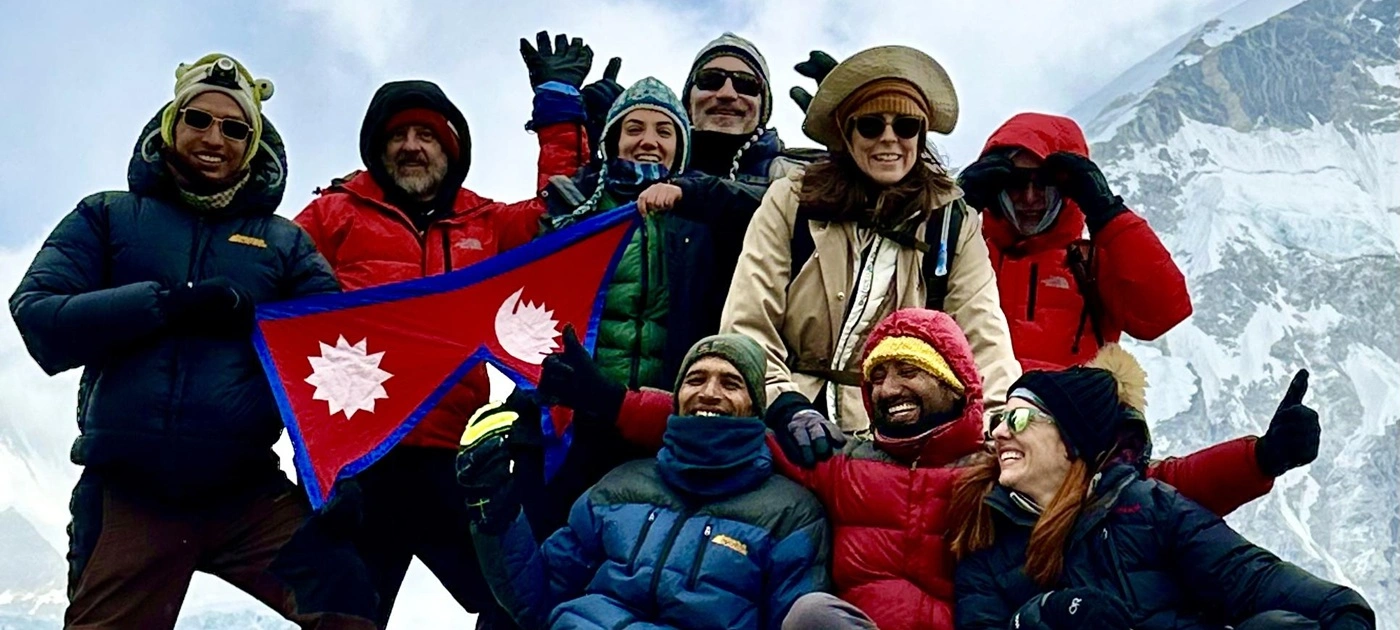
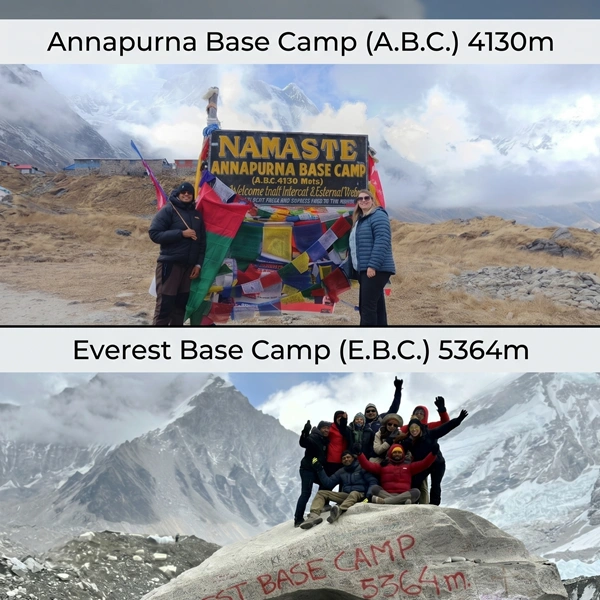
South Side (Nepal) base camp
|
5,364 m — at the foot of the Khumbu Icefall
|
|
North Face (Tibet) base camp
|
5,200 m — at Rongbuk on the Rongbuk glacier
|
|
The highest point on each itinerary
|
Kala Patthar 5,545 m (Nepal) / Gyatso La 5,220 m by road (Tibet)
|
|
Trip length
|
12–14 days (Nepal trek) / 8–10 days (Tibet overland)
|
|
Trekking required
|
Yes — 80–100 km on foot (Nepal) / No (Tibet)
|
|
The view itself
|
Approach views, partial summit (Nepal) / Full vertical North Face (Tibet)
|
|
Permit complexity
|
Two simple Nepal permits / Tibet Travel Permit + visa + 20-day lead time
|
|
Best for
|
Active travelers, trekkers, lodge culture seekers (Nepal)
|
|
Best for (alt)
|
Families, senior travelers, drive-in luxury, photography (Tibet)
|
|
Combinable
|
Yes — Nepal + Tibet overland is a strong 16–21 day combined trip
|
Mount Everest has two base camps. One in Nepal at 5,364 meters on the south side, accessed by a 12 to 14-day trek through the Khumbu valleys. One in Tibet, at 5,200 meters on the north side, accessible via an 8- to 10-day overland journey from Lhasa. Same mountain, two completely different experiences.
This question — north or south — is one we are often asked by guests planning their first Everest trip. The honest answer is that neither side is better in absolute terms. They suit different travelers. We run luxury departures on both sides and have no interest in steering you toward one over the other. This guide compares the two on the factors that actually matter: geography, access, altitude, comfort, cost, permits, season, what you see at base camp, and who each experience suits.
The Geographic Reality: Same Mountain, Two Different Faces
Mount Everest sits on the international border between Nepal and Tibet (the Tibet Autonomous Region of China). The mountain itself is shaped by three principal ridges and three principal faces:
- South Face / Southwest Ridge — rises above Nepal and is the route used by the original 1953 first ascent. Nepal's Everest Base Camp sits at the foot of the Khumbu Icefall on this side.
- The North Face — rises above Tibet and was the focus of the 1920s and 1930s British expeditions. Tibet's Everest Base Camp sits at Rongbuk, on the Rongbuk Glacier directly below this face.
- East Face (Kangshung) — rises above the remote Kangshung Valley in Tibet. Almost never visited by tourists; no luxury access exists.
The two base camps are separated by the entire mountain — and by a complex international border that requires different permits, different operators, different time windows, and a fundamentally different style of journey to reach them. They are not interchangeable. Choosing between them is choosing between two different trips with the same mountain at the center.
The South Side: Nepal's Khumbu Trek to EBC
On the Nepal side, the experience is the trek. The Luxury EBC Trek runs over 12 to 14 days, beginning in Kathmandu and accessing Lukla by helicopter. From Lukla (2,860 m), the route climbs gradually through Phakding, Namche Bazaar, Tengboche, Pheriche, Lobuche, and Gorak Shep to Everest Base Camp at 5,364 meters. The summit-day climb to Kala Patthar at 5,545 meters provides the most direct view of Everest from the south.
What defines the South Side experience
- Active trekking — typically 4 to 7 hours per day on the trail
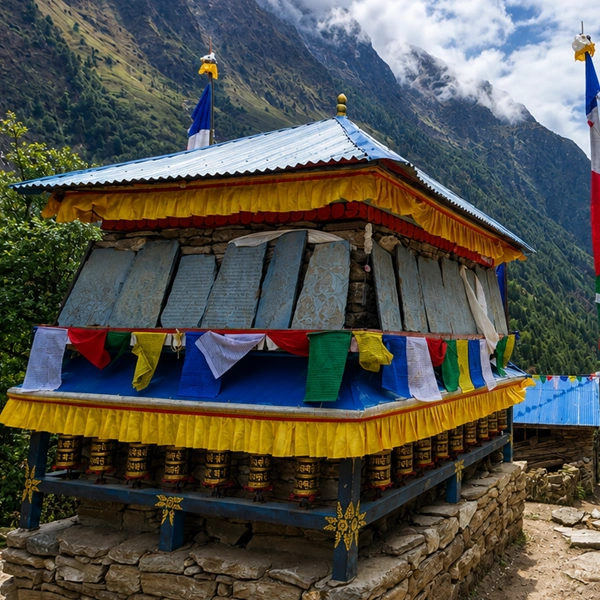
- Sherpa villages and the cultural depth of Khumbu — Tengboche Monastery, traditional tea houses, the Sherpa Cultural Museum at Namche
- Luxury lodges with heated rooms, attached bathrooms, hot showers, and full kitchens at every overnight stop
- Approach views — the build-up of mountain scenery as you climb is itself the experience
- Summit-day Kala Patthar — early morning ascent at 5,545 m for the iconic Everest sunrise photograph
- Helicopter returns from Lukla to Kathmandu — a 35-minute flight closing the loop
What you see from the South Side
Everest itself is partially obscured from the actual base camp by the Khumbu Icefall and the southwest face of Nuptse. The classic Everest view from the south is from Kala Patthar — a 5,545-meter viewpoint reached at sunrise. From there, you see Everest's south summit profile, Lhotse to the right, Nuptse below, and the entire upper Khumbu glacier. It is one of the great mountain panoramas. But it is not a frontal view of the summit — that view exists only on the north side.
Who are the South Side suits
- Active travelers comfortable with multi-day trekking at moderate altitude
- Travelers who want lodge culture, Sherpa hospitality, and the cultural depth of Khumbu
- Photographers and trekkers who value the experience of arriving on foot
- Those for whom the journey is the destination
For full details on the Nepal side, see our Luxury Everest Base Camp Trek package and our Luxury vs Standard EBC Trek guide.
The North Face: Tibet's Lhasa-to-Rongbuk Overland Route
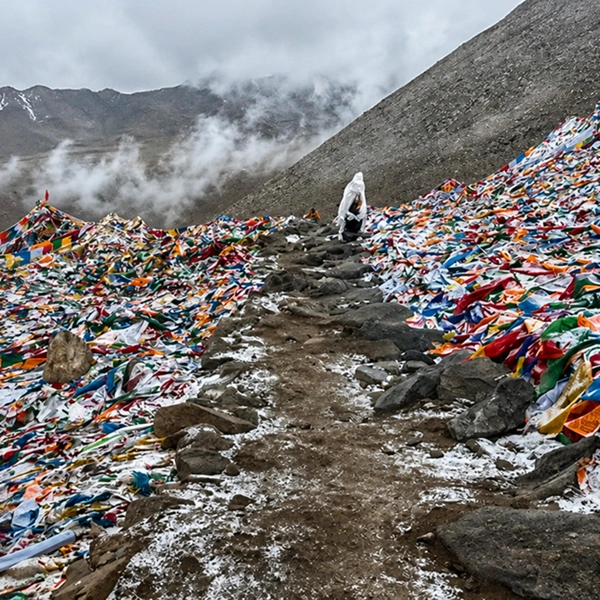
On the Tibet side, the experience is the journey across the high plateau. The Lhasa to Everest Base Camp tour runs over 8 to 10 days, beginning in Lhasa (3,656 m) and traveling overland by private 4WD vehicle along the Friendship Highway. The route passes Yamdrok Lake, Gyantse, Shigatse, Tashilhunpo Monastery, Tingri, and finally to Rongbuk Monastery and Everest Base Camp at 5,200 meters. The road tops out at Gyatso La pass at 5,220 meters, crossed by vehicles.
What defines the North Face experience
- Drive-in access — no trekking required at any point
- Cultural depth concentrated in Lhasa, Gyantse, and Shigatse — Potala Palace, Jokhang, Tashilhunpo Monastery, Sakya
- Tibetan plateau landscapes — high desert, turquoise lakes, Buddhist hill villages
- The most direct, frontal view of Everest in the world — the full 3,500-meter vertical wall of the North Face
- Rongbuk Monastery — the highest monastery in the world at approximately 5,000 m, with Everest framed directly behind it
- Suitable for families and senior travelers with no trekking capability
What you see from the North Face
This is where the North Face has the South Side beat — and it's not even close. From Rongbuk Monastery and from base camp, you stand 18 kilometers from Everest's summit with no intervening peaks. The full 8,848-meter summit rises in front of you with the entire vertical North Face visible from base to summit pyramid. On a clear morning, this is the most direct view of Everest accessible to non-climbers anywhere on earth. Photographically, it is the iconic Everest photograph.
Who wears the North Face suits?
- Travelers who cannot or do not wish to trek for multiple days
- Families with children or senior travelers who want Everest without the physical demands of the Khumbu
- Photographers who want the most direct possible view of the mountain
- Travelers interested in Tibetan culture, monasteries, and the high plateau
- Those for whom the destination is the destination
For full details on the Tibet side, see our Lhasa to Everest Base Camp tour package.
South Side vs North Face: The Direct Comparison
Every factor that actually matters in choosing between the two is in a single table.
|
Factor
|
South Side (Nepal)
|
North Face (Tibet)
|
|
Base camp altitude
|
5,364 m
|
5,200 m
|
|
Highest point on tour
|
Kala Patthar 5,545 m
|
Gyatso La 5,220 m (by road)
|
|
Trip length
|
12–14 days
|
8–10 days
|
|
Trekking required
|
Yes — 80–100 km total
|
No
|
|
Daily walking
|
4–7 hours per trekking day
|
Light walking at sites only
|
|
Acclimatisation profile
|
Gradual on foot — natural
|
Gradual by vehicle — managed with rest days
|
|
View of the summit
|
Approach views: Kala Patthar at sunrise
|
Direct frontal view of the full North Face
|
|
Cultural depth
|
Sherpa villages, Tengboche Monastery
|
Lhasa, Gyantse, Shigatse, Sakya, Rongbuk
|
|
Accommodation style
|
Luxury Khumbu lodges
|
5-star hotels Lhasa & Shigatse + simple guesthouse Rongbuk
|
|
Lukla flight risk
|
Yes — fixed-wing or helicopter
|
No air travel weather risk on the Tibet route
|
|
Permits needed
|
2 (Sagarmatha + Khumbu Municipality)
|
Chinese visa + Tibet Travel Permit + Aliens' Permit
|
|
Permit lead time
|
Same week (we arrange in Kathmandu)
|
20+ days minimum
|
|
Best season
|
Mar–May, Oct–early Dec
|
Apr–early Jun, mid-Sep–Oct
|
|
Suitable for families with children
|
Older children only (10+ recommended)
|
Yes — most ages
|
|
Suitable for senior travelers
|
Active seniors only
|
Yes — accessible
|
|
Combinable with the other side
|
Yes — overland or via Kathmandu
|
Yes — overland or via Kathmandu
|
Permit and Entry Requirements: A Different Game on Each Side
Nepal — South Side
Two permits, both arranged on arrival in Kathmandu by your operator. Total fees approximately USD 37 per person. No advance lead time is required — permits can be issued within 24 hours of your arrival in Kathmandu. A Nepal entry visa is available on arrival at Tribhuvan International Airport for most nationalities. The full Nepal-side process is straightforward and handled by the operator. For complete details, see our EBC Permits and TIMS guide.
Tibet — North Face
Significantly more complex. Foreign visitors to Tibet require:
- Chinese tourist visa (obtained from a Chinese consulate before travel)
- Tibet Travel Permit — issued by the Tibet Tourism Bureau via your tour operator
- Aliens' Travel Permit — required for travel beyond Lhasa to Yamdrok, Shigatse, EBC
- Border Permit — for the EBC area near the Nepal border
- Military Permit — for some restricted segments of the route
Total lead time: minimum 20 days for permit processing, 25–30 days during peak season. Independent travel is not permitted in Tibet — you must travel with a licensed operator and a registered Tibetan guide. We handle all permits through our partner operators in Lhasa. For complete details, see our Tibet Permits and Entry Guide.
The complexity of permits is one of the most important practical differences between the two sides. Tibet is not a last-minute destination.
Cost Comparison: South Side vs North Face
Pricing varies by operator, season, group size, and luxury tier. The figures below reflect typical luxury operator pricing for a private departure with single-room accommodation throughout.
|
Cost Component
|
Nepal South Side
|
Tibet North Face
|
|
Trip length
|
12–14 days
|
8–10 days
|
|
Total per-person rate (private luxury)
|
USD 8,000–14,000
|
USD 5,500–9,000
|
|
Per-day equivalent
|
USD 600–1,000
|
USD 700–900
|
|
Helicopter included
|
Yes — Lukla, both directions
|
No — not required
|
|
Permit fees
|
~USD 37
|
~USD 250 in permits + visa
|
|
Domestic flights
|
Lukla helicopter included
|
Lhasa flight from Kathmandu is separate
|
|
Vehicle/transport
|
Walking + porter included
|
Private 4WD with driver throughout
|
Per-trip, the South Side runs higher because it's longer and includes a private helicopter on both legs. Per day, the two sides cost in similar ranges. The North Side is more cost-effective for a shorter trip; the South Side is more cost-effective for guests who want the most days of mountain experience for their budget.
Best Season for Each Side
The two sides have similar but not identical optimal windows. Both are governed by the same monsoon system that affects the entire Himalayan range, but the rain shadow cast by the mountains shifts Tibet's window slightly.
Nepal South Side
- Mid-March to late May — spring trekking, rhododendron forests, stable weather
- Early October to early December — autumn, the clearest mountain views of the year, peak season
- Avoid mid-June to mid-September (monsoon) and deep winter (Jan–Feb) for trekking
Tibet North Face
- April to early June — pre-monsoon, clear air, blooming wildflowers in Lhasa valley
- Mid-September to October — post-monsoon, sharpest air, peak visibility for Everest
- Tibet's rain shadow makes some operators run from May to early August, but afternoon cloud often obscures Everest
- EBC base camp itself closes for most foreign tourist access from late October through early March each year — verify open dates before booking
- For full seasonal details for Tibet, see our best time to visit Tibet guide. For Nepal, see our best time for the Luxury EBC Trek.
Combined Itineraries: When Both Sides Make Sense in One Trip
For travelers with 16 to 21 days available and budget flexibility, combining both sides in a single trip offers the most complete Everest experience. Two practical structures:
Structure 1: Tibet First, Nepal Second (preferred for altitude management)
Begin in Lhasa, do the 8–10-day Tibet North Face overland trek to EBC, exit Tibet via the Kyirong-Gyirong border into Nepal, transit to Kathmandu, then 12–14 days Luxury EBC Trek South Side. Total trip 22–26 days. The Tibet leg pre-acclimatizes you for the Nepal trek, which means easier days in the Khumbu. For the overland route, see our Nepal-Tibet Overland tour.
Structure 2: Nepal First, Tibet Second
Begin in Kathmandu, do the 12–14-day Luxury EBC Trek, return to Kathmandu, fly to Lhasa, then spend 8–10 days in Tibet overland. Slightly less efficient on acclimatization, but allows you to start at a lower altitude in Kathmandu and ease in. Total trip 22–26 days.
Structure 3: Helicopter Cross-Border (premium)
Available for private departures with full charter logistics. Begin and end in Kathmandu, fly into Lhasa, do the Tibet overland, exit via Kyirong, and do a compressed Khumbu helicopter-assisted trek (10 days). Total 18–20 days. Most expensive but most efficient.
If your time is limited and you have to choose one side, the comparison below helps.
Who Each Side Suits: The Honest Match-Up
Choose the Nepal South Side if you want:
- To trek to base camp on foot — earning the destination through the journey
- Sherpa villages, lodge culture, traditional Khumbu hospitality
- Tengboche Monastery, the Sherpa Cultural Museum, and the daily rhythm of Namche Bazaar
- Multiple acclimatization days walking to higher viewpoints
- The Kala Patthar sunrise — one of the great mountain dawn experiences
- A deeper experience that takes more time but rewards more thoroughly
Choose the Tibet North Face if you want:
- The most direct frontal view of Everest is accessible from anywhere
- To reach base camp without trekking — by 4WD vehicle
- Tibetan plateau culture — Lhasa, Gyantse, Shigatse, Sakya, Rongbuk Monastery
- A trip suitable for families with children or senior travelers
- Photography priority — the iconic frontal Everest shot
- A shorter overall trip (8–10 days) without compromising on the view
Choose both if you have:
- 16+ days available
- Budget flexibility for a combined trip
- Genuine interest in seeing the mountain from both sides
- Tolerance for both trekking and overland travel
What We Operate on Each Side
On the Nepal South Side, we run private luxury departures year-round through our Kathmandu operations team. Helicopter both directions on every departure, partner luxury lodges throughout the Khumbu, and senior Nepali guides with deep Khumbu experience. For full details, see our Luxury Everest Base Camp Trek package.
On the North Face of Tibet, we run private luxury departures from Lhasa in coordination with our partner operators in the Tibet Autonomous Region.
Five-star hotels in Lhasa and Shigatse; the best available accommodation at Rongbuk (a luxury tented camp or heated guesthouse); a private 4WD with an experienced Tibetan driver; a senior Tibetan guide throughout. For full details, see our Lhasa-to-Everest Base Camp tour package.
On combined Nepal-Tibet itineraries, we coordinate the cross-border logistics, dual-permit arrangements, and ground operations on both sides. For the overland route specifically, see our Nepal-Tibet Overland tour.
Photography: A Tale of Two Mountains
Photographers ask this question more often than any other guest type. The answer for serious mountain photography:
North Face for the iconic shot
If you want the single most direct, frontal view of Everest's full vertical face — the photograph that defines the mountain in the popular imagination — the North Face is the answer. From Rongbuk Monastery and from EBC North, the entire mountain is visible from the glacier base to the summit pyramid in a single frame. The Tibetan sky is darker and clearer than Nepal's at the same altitude due to lower humidity. Late September and October mornings give the best light.
South Side for the storytelling sequence
If you want a multi-day photographic sequence — Khumbu Icefall, glacial moraines, Sherpa village life, Buddhist monasteries above 4,000 meters, the buildup of the approach over days, the Kala Patthar sunrise — the South Side delivers a portfolio rather than a single image. The cultural depth of the Khumbu also produces stronger people and a more remote place than the more remote Tibet route.
Both for completeness
Many serious photographers do both sides specifically to capture the full mountain. The combined Nepal-Tibet trip is the ultimate Everest photography itinerary.
People Also Ask: Quick Answers
These are the questions guests most commonly ask us, along with the related queries Google surfaces for this topic.
Which side of Everest is better, Nepal or Tibet?
Neither side is better in absolute terms — they suit different travelers. Nepal's South Side delivers the trekking experience, lodge culture, and Sherpa villages over 12-14 days. Tibet's North Face delivers the direct frontal view of Everest and accessibility for families and senior travelers over 8-10 days, with no trekking required. Active travelers usually prefer Nepal; photographers and those wanting drive-in access usually prefer Tibet.
Can you see Everest from both base camps?
From Nepal's South Side base camp at 5,364 meters, Everest is partially obscured by Nuptse and the Khumbu Icefall. The classic view is from Kala Patthar at 5,545 meters, climbed at sunrise. From Tibet's North Face base camp at 5,200 meters, Everest is fully visible — the entire 3,500-meter vertical North Face from base to summit pyramid, just 18 kilometers away. The North Face view is more direct.
How much harder is the Nepal side compared to Tibet?
Significantly harder physically. The Nepal South Side requires 80-100 kilometers of trekking over 12-14 days at altitudes up to 5,545 meters, with 4-7 hours of walking per trekking day. The Tibet North Face is fully drive-in by 4WD vehicle with light walking only at site visits — suitable for guests who cannot or do not wish to trek for multiple days at altitude.
Is the Tibet side cheaper than the Nepal side?
Per trip, Tibet is generally less expensive because the trip is shorter (8-10 days vs 12-14 days). Per day, the two sides cost in similar ranges. Tibet has higher permit and visa costs but no requirement for a helicopter charter. Nepal has lower permit costs but includes helicopter transfers in both directions on luxury departures. Total Nepal trip ranges USD 8,000-14,000 per person; total Tibet trip ranges USD 5,500-9,000 per person at the luxury level.
Can I do both sides of Everest in one trip?
Yes, and this is the most complete Everest experience available. Combined Nepal-Tibet itineraries run 16-21 days. The most efficient structure is Tibet first (which pre-acclimatizes you for the Nepal trek), exit via the Kyirong-Gyirong border into Nepal, transit to Kathmandu, then the Luxury EBC Trek South Side. We operate this as a coordinated departure with permits, ground operations, and logistics handled on both sides.
Which side has the best view of Everest?
Tibet's North Face has the most direct frontal view of Everest accessible to non-climbers anywhere on earth. From Rongbuk Monastery and EBC North, the full vertical North Face is visible from base to summit. Nepal's Kala Patthar sunrise viewpoint offers a famous, dramatic view, but the actual summit is at an angle and partially obscured by adjacent peaks. For the iconic direct Everest photograph, Tibet clearly wins.
Key Takeaways
- Nepal's South Side is the trekking experience — 12-14 days, 80-100 km on foot, lodge culture, Kala Patthar sunrise.
- Tibet's North Face is the overland experience — 8-10 days, drive-in to base camp, the most direct frontal view of Everest.
- Same mountain, two completely different trips. Neither is better in absolute terms — they suit different travelers.
- Permits are simple and processed the same week in Nepal. Permits in Tibet require a minimum of 20 days' lead time and are significantly more complex.
- Best seasons overlap but are not identical — Apr-early Jun and mid-Sep-Oct work for both; Nepal extends into late May and early December.
- Combined Nepal-Tibet itineraries (16-21 days) deliver the most complete Everest experience for travelers with time and budget.
- Active travelers usually prefer Nepal. Families, senior travelers, and photographers prioritizing the iconic shot usually prefer Tibet.
- Tibet's EBC base camp is closed to most foreign tourists from late October through early March each year — verify before booking.
Final Notes from Both Sides
We've operated luxury Everest itineraries on both sides for many years. Our team includes senior Nepali guides who know every lodge in the Khumbu and senior Tibetan guides in Lhasa who have walked the kora at Rongbuk a hundred times. The honest position is that we don't favor one side over the other. We help guests pick the side that genuinely matches what they're looking for, and we run combined trips for those who want both.
If you're undecided, we usually ask: Does the journey or the destination matter more to you? If the journey — the daily rhythm of trekking, the lodges, the Sherpa villages, the build of approach — Nepal is your answer. If the destination — the moment of standing in front of the full Everest North Face — Tibet is your answer. If both, do both.
To plan your Everest itinerary, see our Luxury Everest Base Camp Trek (Nepal South Side), our Lhasa to Everest Base Camp tour (Tibet North Face), or our Nepal-Tibet Overland tour for the combined experience.