Lhasa Cultural Highlights: The Top Monasteries and Sacred Sites in Tibet
|
|
|
|
Lhasa altitude
|
3,656 meters (11,995 ft)
|
|
Recommended days in Lhasa
|
3 to 4 days minimum, 5 days ideal
|
|
Top 5 sites
|
Potala Palace, Jokhang Temple, Barkhor, Sera, Drepung
|
|
Potala Palace entry rule
|
Pre-booked timed entry, 1-hour interior limit
|
|
Best photography hours
|
Early morning (Potala from Chakpori), late afternoon (Jokhang)
|
|
Sera Monastery debate timing
|
3:00–5:00 p.m. weekdays except holy days
|
|
Cultural protocol
|
Walk clockwise, no photos in chapels, remove hats
|
|
Tibetan tea ceremony
|
Available at Tibetan family homes through the ground team
|
|
What we arrange
|
Permits, timed Potala slots, senior Tibetan guide, vehicle
|
|
Mandatory requirement
|
Tibet Travel Permit + Chinese visa, processed 20+ days in advance
|
Lhasa is the only city in the world where a 7th-century temple still functions as the daily devotional center for hundreds of thousands of Tibetans — many walking from villages a thousand kilometers away to circle its perimeter. The Potala rises from a granite hill above the valley, its white and red walls visible from every angle of the city.
Sera and Drepung sit on the city's outskirts, both still functioning monasteries housing hundreds of monks. The Barkhor — the pilgrimage circuit around Jokhang — fills daily with elders in traditional dress, prayer wheels in hand, mantras audible at conversational distance.
This is what makes Lhasa cultural travel different from anywhere else in Buddhist Asia. The sites are not preserved as museums. They are alive.
Why Lhasa Anchors Every Luxury Tibet Itinerary
Lhasa is where Tibetan Buddhism, Tibetan civic life, and Tibetan history concentrate. It's where Buddhism took political form in the 7th century under King Songtsen Gampo. It's where the Potala was built and rebuilt over a thousand years as the seat of the Dalai Lama. It's where the daily rhythm of pilgrimage — the kora, the prostration, the chant — continues unchanged. Skip Lhasa, and you've skipped Tibet.
Beyond the spiritual significance, the city is also the practical staging point for every onward journey. Yamdrok Lake, Shigatse, Gyantse, Everest Base Camp North, Namtso Lake, Mount Kailash — every Tibet itinerary begins here. The Lhasa days are also when guests acclimatize from sea-level arrivals to the 3,656-meter baseline before pushing higher.
For the seasonal context, see our best time to visit Tibet guide. For the full Lhasa-to-EBC overland route, see our Lhasa to Everest Base Camp tour package.
The Top 5 Cultural Sites in Lhasa
1. Potala Palace
The Potala dominates Lhasa visually and historically. Built between 1645 and 1694 on the foundations of a 7th-century palace, the Potala served as the winter residence of the Dalai Lama and the political seat of the Tibetan government until 1959. Today it is a UNESCO World Heritage Site and a museum that still functions as a place of pilgrimage. Tibetans circumnavigate the palace daily along the Tsekhor circuit.
What you'll see
- White Palace — the administrative and residential core
- Red Palace — the spiritual heart, containing the tombs of past Dalai Lamas
- The chapels of the Eighth, Thirteenth, and Fifth Dalai Lamas (the Fifth's tomb is the most ornate, gilded with three tonnes of gold)
- View terraces overlooking Lhasa city and the surrounding mountains
Visiting protocol
Entry is by timed permit — currently a strict one-hour limit inside the palace. Slots are released months in advance and book up rapidly in peak season. We pre-book Potala access for every Lhasa departure as part of itinerary planning. Photography is permitted outdoors and on terraces but prohibited inside the chapels. Guests should expect significant stair climbing — the palace rises 13 stories above its base on the hill.
Best photography hours
From across the central plaza in late afternoon, the western light hits the white and red walls at their strongest. From Chakpori hill (the smaller hill opposite the Potala), early morning gives the cleanest air and the eastern light. Both shots are classic for a reason.
2. Jokhang Temple
Jokhang is the most sacred temple in Tibetan Buddhism. Founded in the 7th century, it houses the Jowo Rinpoche — a statue of Buddha Shakyamuni at age twelve, brought to Tibet as a wedding gift to King Songtsen Gampo from his Chinese wife, Princess Wencheng. For Tibetans, Jokhang is the spiritual center of the world.
What you'll see
- The main hall and the Jowo Rinpoche statue (often surrounded by butter-lamp offerings)
- Original 7th-century carved doorways and pillars
- Side chapels dedicated to specific bodhisattvas
- The rooftop terrace with golden roofs and views of the Potala
- Pilgrims circling the temple interior on the Nangkhor — the inner pilgrimage circuit
Visiting protocol
Photography is restricted in the inner chapels. Walk clockwise around all sacred objects. Remove hats. Speak softly. The temple is at its most active in the morning when local pilgrims arrive for prostrations on the central courtyard. Visiting at this time gives the strongest sense of Jokhang as a living devotional space rather than a museum.
3. Barkhor Pilgrimage Circuit
The Barkhor is the kora — the clockwise pilgrimage circuit — around Jokhang Temple. It is also Lhasa's oldest commercial street and its most authentic cultural space. Pilgrims in traditional Tibetan dress, prayer wheels turning, mantras audible. Vendors sell religious objects, prayer flags, juniper incense, butter, and yak-bone jewelry. Restaurants serving traditional Tibetan dishes — momo, thukpa, sweet milk tea, butter tea.
What to do
Walk the kora at least once — clockwise, slowly, with prayer beads if you have them. Local pilgrims do this multiple times daily. The circuit takes roughly 20 minutes at a walking pace. Observe rather than dominate. Photography of the architecture is welcome; portraits should be done respectfully and only with consent.
Best time
Morning (7-9 a.m.) for the largest pilgrim presence. Afternoon (5-7 p.m.) for the second daily peak as locals end their working day. Avoid midday — many pilgrims rest, the light is harsh, and the area becomes more touristic.
4. Sera Monastery
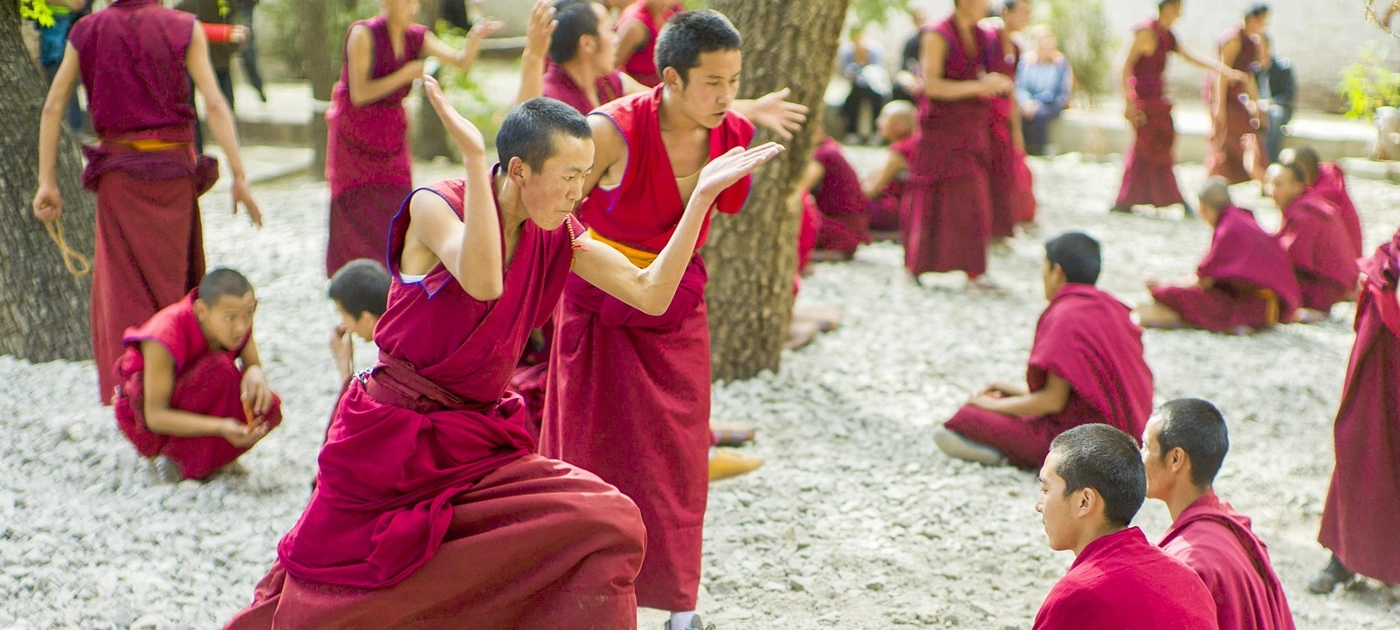
Sera is one of the three great Gelugpa university monasteries founded in the 15th century, alongside Drepung and Ganden. At its height, it housed over 5,000 monks. Today, the population is smaller, but Sera remains a functioning monastery and one of Lhasa's most rewarding visits — primarily because of the daily monastic debate in the courtyard.
What you'll see
- The three principal colleges (datsang) of Sera — Sera Me, Sera Je, and Ngagpa
- The grand assembly hall (tsogchen) and its central image of Hayagriva
- Sand mandala demonstrations on most days
- The afternoon monastic debate — the principal reason most visitors come
Monastic debate timing
Held in the courtyard from approximately 3:00 to 5:00 p.m. on most weekdays, with exceptions on certain Buddhist holy days. Pairs of monks debate Buddhist philosophy, punctuating their arguments with theatrical hand-claps. Visitors are welcome to observe quietly — no photography of individual monks without permission, and silence is essential. Our guide briefs guests on protocol before entering the courtyard.
5. Drepung Monastery
Drepung was historically the largest monastery in the world — at one point housing over 10,000 monks across a small mountain town built into the hillside above Lhasa. Today it is quieter but still active. The architectural scale alone is worth the visit. The Ganden Phodrang within Drepung was the Dalai Lama's official residence before the construction of the Potala.
What you'll see
- The grand assembly hall and its principal Buddha images
- Multiple datsang colleges, each functioning as a sub-monastery
- The sutra library, one of Tibet's largest
- Hillside views over Lhasa valley
Best time
Morning is preferred. The monastery sits at a slightly higher altitude than Lhasa city (around 3,800 meters), and the afternoon weather can become unstable in the shoulder seasons. Plan for moderate walking on stone-paved paths and stairs — Drepung is built on a terraced hillside.
Beyond the Top Five: Other Lhasa Sites Worth Your Time
If your Lhasa stay extends to four or five days, the following sites add significant cultural depth without overlap with the top five.
Norbulingka — The Summer Palace
Norbulingka was the summer residence of the Dalai Lamas from the 18th century onwards. Set in extensive gardens with multiple palace pavilions across different historical periods, it offers a quieter, more contemplative atmosphere than the Potala. The Fourteenth Dalai Lama's apartments — preserved as they were when he left in 1959 — are the emotional center of any visit. UNESCO World Heritage listed.
Tibet Museum
State-curated museum of Tibetan history, art, and material culture. Useful for contextualizing what you've seen at the religious sites — Buddhist iconography explained, traditional craft displayed, royal treasures contextualized. We use it as a Day 1 acclimatization activity for guests who want a contextual overview before deeper monastery visits.
Sky Burial Sites — Observation Note
Sky burial — the traditional Tibetan funerary practice — is sacred and not open to public observation. We do not arrange or facilitate sky burial visits. References to such tours from other operators should be ignored — these visits are inappropriate and disrespectful. We mention it here only because guests sometimes ask. Lhasa is a living devotional city, not a curated experience.
Tibetan Family Cultural Visit
On luxury departures, we arrange visits to Tibetan family homes — typically involving butter tea, traditional snacks, and conversation about daily life translated by our guide. This is one of the most genuinely memorable parts of the Lhasa experience for many guests, more than the buildings themselves. Arranged through our local network, not commercially available.
Cultural Protocol for Visiting Lhasa's Sacred Sites
Lhasa rewards respect. The protocols below apply across all sacred sites in the city and are non-negotiable.
- Walk clockwise — around all temples, monasteries, stupas, prayer wheels, mani walls, and the Jokhang. Counter-clockwise direction is reserved for specific ceremonial purposes and is not appropriate for visitors.
- Remove hats and sunglasses — before entering any chapel or assembly hall.
- No interior photography — in chapels and assembly halls. Photography fees may apply for permitted areas. Our guide signals what's allowed at each site.
- No physical contact with monks — particularly between female visitors and monks. Hands should not be offered for a handshake; respectful nods and brief verbal greetings are appropriate.
- Modest dress — shoulders and knees covered. Tank tops, shorts, and revealing clothing are not appropriate.
- Don't touch sacred objects — including statues, prayer wheels intended for monks' use, and texts in the assembly hall.
- Voices low — in chapels and during ceremonies. Silence during the Sera debate.
- Don't photograph soldiers, checkpoints, or security infrastructure — this is enforced strictly across Tibet.
- Don't display the Tibetan flag or Dalai Lama imagery — this is illegal in Tibet and creates problems for local Tibetans.
Permits, Visas, and Logistics for Visiting Lhasa
Tibet is not visa-on-arrival like Nepal. Independent travel is not permitted. Every foreign visitor to Tibet — Lhasa included — requires:
- A valid Chinese tourist visa (single-entry or multi-entry, obtained from a Chinese consulate before travel)
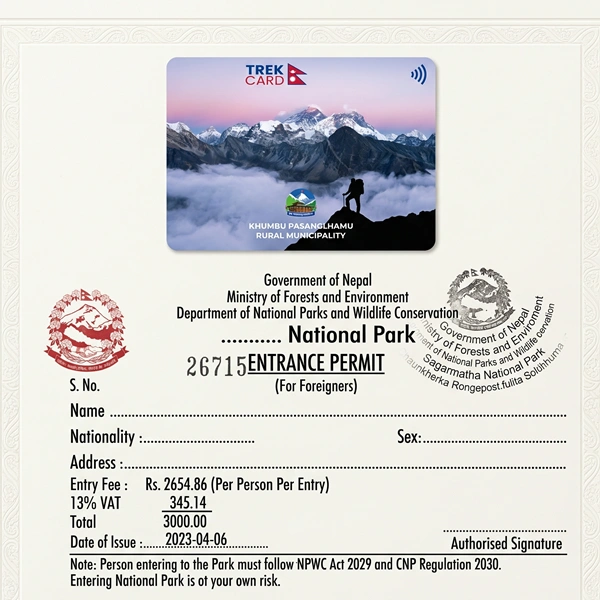
- A Tibet Travel Permit (TTP) issued by the Tibet Tourism Bureau, processed by your tour operator on your behalf
- Sometimes additional permits depending on onward routing — for example, the Aliens' Travel Permit for Yamdrok Lake / Shigatse / EBC, the Border Permit for routes near international borders, the Military Permit for restricted regions
- A confirmed itinerary with a licensed Tibetan ground operator and a registered Tibetan guide
Permits typically require at least 20 days' lead time for the Tibet Tourism Bureau to process foreign passport scans, with longer windows during peak season. We handle all of this through our partner operators in Lhasa. For a full breakdown of Tibet entry requirements, see our Tibet Permits and Entry Guide.
Acclimatizing in Lhasa: The Practical Reality
Lhasa sits at 3,656 meters. For guests arriving from sea-level cities — Beijing, Chengdu, Kathmandu, Hong Kong — this is a significant altitude jump. The first 24-48 hours typically feel different: mild headache, breathlessness on stairs, fatigue, disrupted sleep. This is normal.
On every Lhasa luxury departure with us, the first 24 hours are deliberately quiet — hotel rest, light walking on the Barkhor or in your hotel district, no major monastery climbs. Day 2 begins the cultural program proper. By Day 3, most guests are physiologically acclimated and ready for higher altitudes if the itinerary continues.
Practical acclimatization steps:
- Hydrate aggressively — 3 to 4 liters of water daily for the first 48 hours
- Avoid alcohol entirely on arrival day; minimize it through Day 2
- Eat lightly but regularly — even with reduced appetite, energy intake matters
- Sleep with the head slightly elevated if possible
- Diamox (acetazolamide) is a personal medical decision — discuss with your doctor before travel
- Our hotel provides supplemental oxygen on request for guests who request it overnight
For full altitude management guidance, see our altitude sickness prevention guide.
How Long to Stay in Lhasa
On luxury Tibet itineraries with us, the Lhasa allocation typically runs three to five days, depending on the broader trip:
- 3 days minimum — Day 1 acclimatisation, Day 2 Potala + Jokhang + Barkhor, Day 3 Sera or Drepung. This is the absolute floor and skips Norbulingka, the museum, and the family visit.
- 4 days recommended — adds Drepung properly (rather than rushed), and either Norbulingka or the Tibetan family experience.
- 5 days ideal — the full cultural program plus a half-day at the Tibet Museum and unhurried time on the Barkhor and at lesser-visited temples like Ramoche.
Itineraries that compress Lhasa to two days are common with budget tours. We don't run them — the altitude alone makes a two-day Lhasa program physically rough, and the cultural value is significantly under-delivered.
What Alpine Luxury Treks Arranges for Lhasa Cultural Tours
Behind every Lhasa luxury experience is a coordinated set of arrangements — most of which are invisible to guests by design.
- Tibet Travel Permit application and follow-through with the Tibet Tourism Bureau
- Pre-booked timed entry slots at the Potala (essential in peak season; impossible to secure same-day)
- Senior Tibetan guide with deep cultural knowledge — many of our guides are former monks or scholars of Tibetan studies
- Private vehicle with an experienced Tibetan driver throughout your Lhasa stay
- Five-star hotel accommodation in central Lhasa within walking distance of the Barkhor
- Tibetan family cultural visit with butter tea ceremony
- Sera debate timing alignment within your itinerary
- Restaurant recommendations and reservations for traditional Tibetan dining
- Photography guidance — what's permitted at each site, when light is best
- On-call medical support and altitude monitoring through our Lhasa ground team
- Onward permit chaining for guests continuing to Yamdrok, Shigatse, EBC North, Namtso, or Kailash
Photography in Lhasa: What to Plan For
Lhasa rewards thoughtful photography. The light at 3,650 meters is extraordinary — clean, directional, often dramatic. The architecture is photogenic at every scale. The protocols are also strict, and breaking them creates problems for everyone.
Where photography is permitted
- Outdoors at all sites — Potala plaza, Jokhang exterior, Sera and Drepung exteriors and courtyards
- Barkhor circuit (with respect for individuals)
- Rooftop terraces at Jokhang and Potala
- Street scenes throughout Lhasa, with the standard cautions
Where photography is not permitted
- Inside the chapels and assembly halls of any monastery
- Sacred objects, statues, and paintings inside chapels
- Specific monk debates and ceremonies
- Soldiers, checkpoints, or security personnel
- Some monastery interiors require a separate photography fee — our guide signals this
Recommended kit
- One body, one versatile zoom (24-70mm or 24-105mm), one fast prime (35mm or 50mm) for low-light interiors where permitted
- Tripods are permitted at most exterior sites, but not in chapels
- A polariser is useful for the high-altitude sky
- Spare batteries — cold drains them at altitude, even in mild weather
People Also Ask: Quick Answers
These are the questions guests most commonly ask us, along with the related queries Google surfaces for this topic.
How many days do you need in Lhasa to properly see the cultural sites?
Three days is the minimum for Potala, Jokhang, Barkhor, and one major monastery. Four days is recommended to add Drepung and either Norbulingka or a Tibetan family visit. Five days is ideal for the full cultural program plus unhurried time on the Barkhor and at lesser-visited temples. We don't recommend two-day Lhasa programs — the altitude makes the pace physically rough, and the cultural depth is significantly underdelivered.
Can foreigners visit Lhasa without a guide?
No. Independent foreign travel is not permitted in Tibet. Every foreign visitor to Lhasa requires a licensed Tibetan tour operator, a registered Tibetan guide, and pre-approved permits. This is enforced consistently. On a Luxury Tibet departure with Alpine Luxury Treks, guide and permit logistics are handled end-to-end as part of the package.
What's the best time of year to visit Lhasa for cultural travel?
April to early November is the standard luxury window for Tibet. May, June, September, and October are ideal — clear skies, warm days, photographable light, and cultural festivals concentrated in this period. Winter (December–February) is colder but possible, with the advantage of sharply clear air and far smaller crowds. For full seasonal guidance, see our "Best Time to Visit Tibet" guide.
Is the Potala Palace open to visitors?
Yes, but access is by pre-booked timed entry only with a strict one-hour interior limit. Slots are released months in advance and book up rapidly during peak season. Independent visitors cannot easily secure access to the Potala, which is one practical reason most foreign visitors travel with an operator. We pre-book Potala slots for every Lhasa itinerary.
What time does the Sera Monastery debate take place?
Sera Monastery's monastic debate runs from approximately 3:00 to 5:00 p.m. on most weekdays, with exceptions on Buddhist holy days. Visitors are welcome to observe quietly. No photography of individual monks without permission. Our guide times the Sera visit specifically to coincide with the debate window.
How does altitude affect a Lhasa visit?
Lhasa sits at 3,656 meters. Most guests arriving from sea level experience mild altitude symptoms in the first 24-48 hours — headache, breathlessness, disrupted sleep, fatigue. We deliberately keep the first 24 hours quiet and begin the cultural program on Day 2. By Day 3, most guests are physiologically settled. Hydration, abstinence from alcohol, and gentle pacing manage symptoms effectively for the vast majority of guests.
Key Takeaways
- The five core cultural sites of Lhasa are the Potala Palace, Jokhang Temple, Barkhor pilgrimage circuit, Sera Monastery, and Drepung Monastery.
- Three days minimum for the cultural program; four to five days ideal.
- The Potala requires pre-booked timed entry — secure this through your operator months in advance.
- Sera Monastery's afternoon debate (3:00–5:00 p.m. weekdays) is one of the most rewarding cultural experiences in Lhasa.
- Independent foreign travel is not permitted in Tibet — every visitor must use a licensed Tibetan tour operator, a registered guide, and pre-approved permits.
- Cultural protocol matters: walk clockwise, dress modestly, no interior photography in chapels, no military photography.
- Lhasa's altitude (3,656 m) requires deliberate acclimatization in the first 24-48 hours.
- Norbulingka, the Tibet Museum, and a visit with a Tibetan family add depth to extended stays.
Final Notes from the Ground Team
Lhasa is a city our team knows by texture, not by guidebook. Our senior guides have been guiding foreign visitors here for over fifteen years. They know which chapel at Jokhang holds the sweetest light at 9 a.m., which alley off the Barkhor leads to the best traditional momo, and which monk at Sera will give a longer welcome to a respectful visitor. This kind of knowledge is what separates a luxury cultural experience from a curated tourist itinerary.
If you're planning a Tibet itinerary that includes Lhasa, we're happy to walk you through the cultural program in detail before you book. We can adapt the Lhasa days for guests with specific interests — Buddhist philosophy, Tibetan medicine, traditional crafts, photography, monastery architecture — without inflating the day count or compromising acclimatization.
To plan a luxury Tibet itinerary anchored in Lhasa, see our Lhasa to Everest Base Camp tour package or our 10-day Lhasa to Everest and Namtso Lake itinerary.