Mount Kailash Luxury Pilgrimage: The Most Sacred Journey in Asia
|
|
|
|
Mount Kailash altitude
|
6,638 m — never climbed, never permitted
|
|
Kora circuit length
|
52 kilometers (32 miles), clockwise for Buddhists/Hindus, anticlockwise for Bonpos
|
|
The highest point on the Kora
|
Dolma La Pass — 5,630 m (18,471 ft)
|
|
Lake Manasarovar altitude
|
4,590 m — sacred lake at the foot of Kailash
|
|
Pilgrimage length (full luxury tour)
|
13–15 days from Kathmandu, 11–13 days from Lhasa
|
|
Faiths served
|
Hindu, Buddhist, Jain, Bon
|
|
Best season
|
May to early October
|
|
Permit complexity
|
Tibet Travel Permit + Aliens Permit + Border Permit + sometimes Military Permit
|
|
Permit lead time
|
Minimum 25 days, ideally 35–45 days
|
|
Kora pace (luxury)
|
3 days at altitude, with horses and porters available
|
|
Sky-burial mountain
|
Charan Sparsh — Yes, encountered en route on Day 2 of the kora
|
Mount Kailash is the most sacred mountain on earth, and the only major Himalayan peak that has never been climbed. Not because it can't be — but because the four faiths that revere it have asked, with one voice, that it remain untouched. Climbing permits do not exist. Pilgrims walk around it. They do not walk up it.
The pilgrimage is the kora — a 52-kilometer circuit walked clockwise (by Buddhists and Hindus) or anticlockwise (by Bonpos) at altitudes between 4,600 and 5,630 meters. The highest point, Dolma La Pass at 5,630 meters, is the spiritual climax of the journey. Hindus believe a single circuit washes away the sins of one lifetime. Tibetan Buddhists believe 108 circuits guarantee Enlightenment in this lifetime. Some pilgrims complete the kora in a single 24-hour push. Most take three days. Some prostrate the entire 52 kilometers — a journey that takes weeks.
This is the most spiritually significant journey in Asia. We've operated Kailash luxury departures for many years and know the route, the protocols, and the emotional weight of what guests find there.
Why Mount Kailash Matters Across Four Faiths
Few places on earth concentrate spiritual significance the way Kailash does. Four faiths converge here. Each has its own theology, rituals, and kora direction. Understanding this is part of understanding what you're walking into.
Hinduism — Shiva's Abode
In Hindu tradition, Mount Kailash is the cosmic center of the universe and the eternal abode of Lord Shiva and Parvati. The Vishnu Purana, the Skanda Purana, and the Mahabharata all reference Kailash by name. Hindu pilgrims walk the kora clockwise. A single circuit is believed to absolve the sins of one lifetime.
The journey from India to Kailash is itself part of the merit — the Indian government runs an organized Kailash Mansarovar Yatra each year for this reason. Lake Manasarovar at the mountain's base is the lake that, in Hindu cosmology, was first manifested in the mind of Lord Brahma.
Buddhism — Demchok and the Wheel of the Dharma
Tibetan Buddhists revere Kailash as the home of Demchok (Chakrasamvara), a wrathful tantric deity who symbolizes the union of compassion and emptiness. The mountain is also associated with Milarepa, Tibet's most famous yogi-saint, who, in legend, defeated the Bonpo magician Naro Bonchung in a contest of magical powers on Kailash itself, thereby claiming the mountain for Buddhism. Tibetan Buddhists walk the kora clockwise. 108 circuits — a sacred number — are believed to guarantee enlightenment in this lifetime.
Jainism — Ashtapada and the First Liberation
In Jain tradition, Mount Kailash is Ashtapada — the mountain where Lord Rishabhadeva, the first of the 24 Tirthankaras, attained moksha (liberation from the cycle of rebirth). For Jains, Kailash is therefore the most sacred site in their religious geography — the place where the path to liberation was first realized.
Bon — The Original Mountain
Bon, the indigenous shamanic-animist tradition of Tibet that predates Buddhism, holds Kailash as Yungdrung Gutsek — the nine-storeyed mountain, the spiritual axis of the world. Bonpos walk the kora anticlockwise — the only group that does — and their tradition includes a separate inner kora and a complex sequence of sacred sites around the mountain that pre-Buddhist pilgrims have visited for centuries. Bon and Buddhist iconography overlap at Kailash, and many shrines on the route are sacred to both traditions.
The Geographic Coincidence
There is a geographical curiosity behind the spiritual significance. Four of Asia's great rivers — the Indus, the Sutlej, the Brahmaputra, and the Karnali (a major Ganges tributary) — all originate within 50 kilometers of Mount Kailash. This is hydrologically extraordinary: a single mountain feeding the water systems of an entire continent. Ancient Hindu, Buddhist, Bon, and Jain cosmologies all describe Kailash as the source of the world's rivers. The geography supports the cosmology.
The Kora: What the 52-Kilometer Pilgrimage Circuit Actually Involves
The kora is the heart of any Kailash pilgrimage. It is a 52-kilometer circumambulation of the mountain, traditionally walked over three days by pilgrims at altitude. Some athletic pilgrims complete it in a single day. Some elderly Hindu and Buddhist pilgrims take five days to walk very slowly. Some devotees prostrate the entire route — physically lying flat on the ground, marking the place where the head touched, then standing and lying flat again from that point — a journey that takes three to four weeks.
On a luxury operation, we run the kora in three days with horses available, porters carrying personal kit, and oxygen support carried throughout. Here's what each day actually involves.
Day 1 of the Kora — Darchen to Dirapuk
Starting altitude: Darchen, 4,600 m. Ending altitude: Dirapuk, 4,890 m. Distance: roughly 20 kilometers. Walking time: 6–8 hours at a moderate pace, with horses available for pilgrims who prefer to ride parts of the route.
The day begins at the kora gate above Darchen, where pilgrims of every tradition perform their pre-kora rituals. The path follows the Lha Chu valley north, climbing very gradually past tarboche prayer flag mast — the site of the annual Saga Dawa festival.
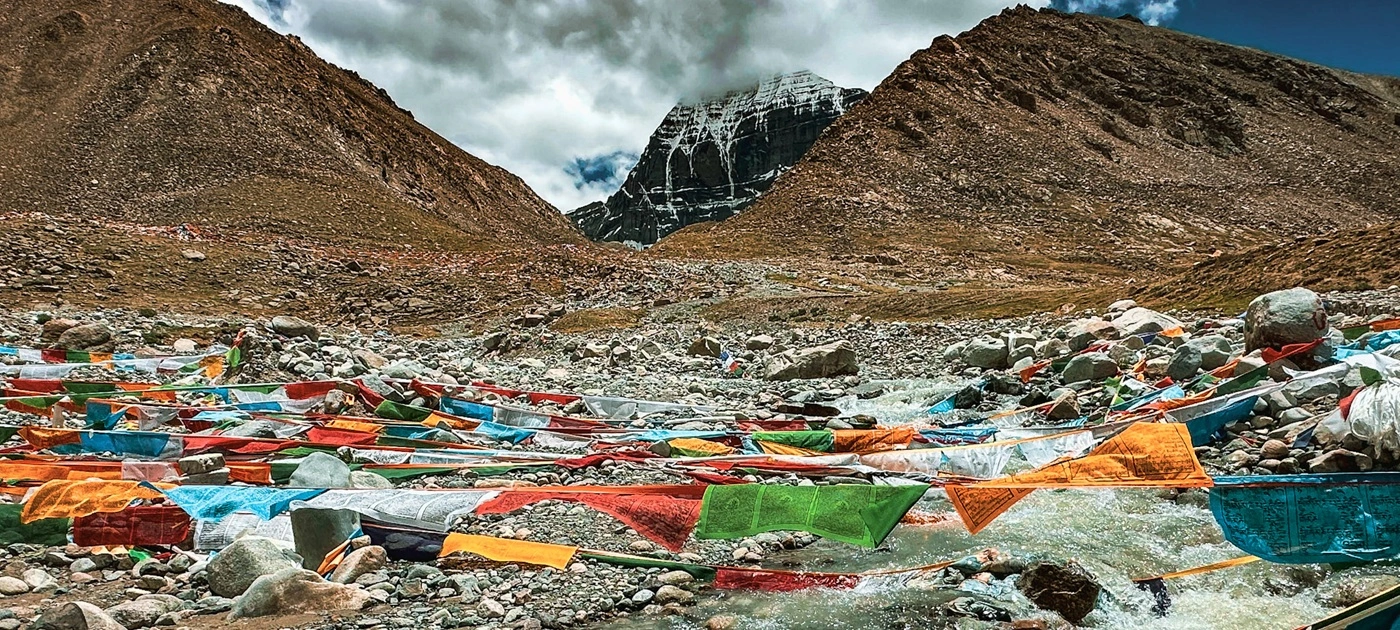
The west face of Kailash dominates the entire walk. The trail passes the Chuku monastery and arrives at the Dirapuk monastery in the late afternoon, with the north face of Kailash directly above. The view from Dirapuk at sunset is one of the world's great mountain views.
Day 2 of the Kora — Dirapuk to Zutulpuk via Dolma La
Starting altitude: Dirapuk, 4,890 m. High point: Dolma La Pass, 5,630 m. Ending altitude: Zutulpuk, 4,820 m. Distance: roughly 22 kilometers. Walking time: 8–10 hours.
This is the spiritual climax of the kora and the hardest day physically. The trail climbs steeply from Dirapuk, passing the Charan Sparsh sky-burial site — a place of profound silence where pilgrims leave hair, clothing, or small possessions as symbolic offerings to mark the death of the old self.
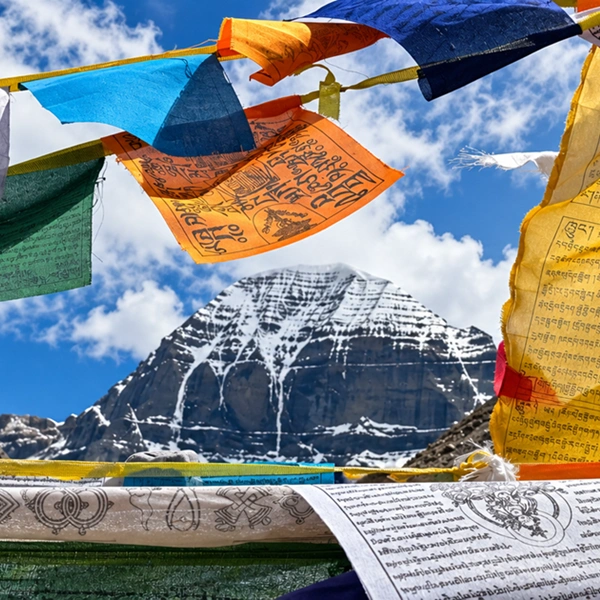
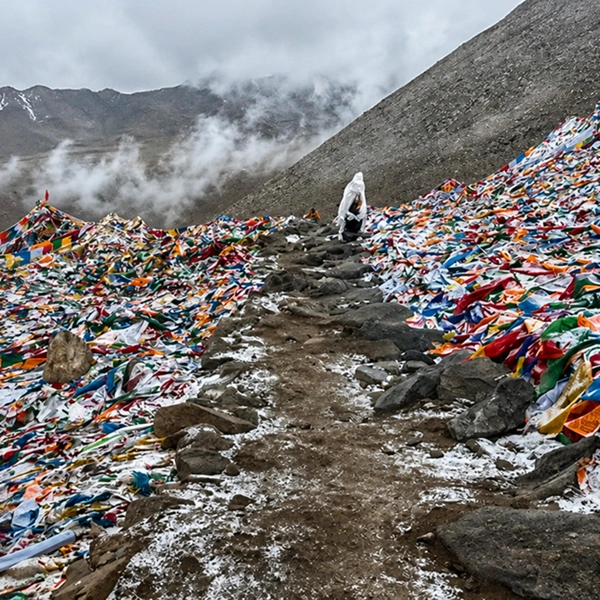
The ascent continues to Dolma La Pass at 5,630 meters, where the trail crosses a sea of prayer flags strung across boulder and ice. At the pass, pilgrims chant, weep, embrace, prostrate, and rest. The descent on the south side is steep and rocky, easing as the trail follows the Lham Chu valley to the small monastery at Zutulpuk.
Many guests describe crossing Dolma La as the most emotionally intense moment of any trip they have ever taken.
Day 3 of the Kora — Zutulpuk to Darchen
Starting altitude: Zutulpuk, 4,820 m. Ending altitude: Darchen, 4,600 m. Distance: roughly 10 kilometers. Walking time: 3–4 hours.
The shortest and easiest day. The trail follows the Lham Chu valley back to the start point at Darchen, completing the circumambulation. Pilgrims emerge slightly different from how they entered — physically tired, emotionally settled, and in many cases spiritually changed in ways that take weeks to process.
Lake Manasarovar: The Sacred Lake at the Foot of Kailash
No Kailash pilgrimage is complete without Lake Manasarovar. The lake sits at 4,590 meters, 30 kilometers south of Kailash itself. It is one of the highest freshwater lakes in the world and one of the four sacred lakes of Tibetan Buddhism. The water is impossibly clear — turquoise at the shore, deep cobalt at depth — and the mountain rises across the horizon to the north.
Pilgrim activities at Manasarovar:
- Ritual bathing (parikrama snan) — Hindus believe a bath in Manasarovar washes away the sins of a hundred lifetimes
- Lake Kora — a separate 90-kilometer circumambulation of Manasarovar itself, completed by some pilgrims over multiple days
- Visit to Chiu Monastery — a small Buddhist monastery on a rocky outcrop with panoramic views of the lake and Kailash
- Sunset and sunrise viewing — the alpenglow on Kailash from the lake shore is one of the great natural light shows in the world
On every Kailash luxury departure, we include at least one full day at Manasarovar before beginning the kora — for both spiritual preparation and altitude acclimatization.
Permits, Logistics, and Why Kailash Is Difficult to Reach
Mount Kailash sits in Ngari Prefecture, far western Tibet — over 1,200 kilometers from Lhasa by road, in one of the most remote regions of the high plateau. The journey is logistically complex even by Tibetan standards. Permits are stricter, distances are longer, and altitudes are unforgiving.
Permits Required
- Chinese tourist visa — obtained from a Chinese consulate before travel
- Tibet Travel Permit — issued by the Tibet Tourism Bureau
- Aliens' Travel Permit — for travel beyond Lhasa
- Border Permit — Kailash is within the restricted border region with India and Nepal
- Military Permit — required for some segments of the western Tibet route
- Frontier Defense Permit — for parts of the Ngari region
Total permit lead time: minimum 25 days, ideally 35–45 days. Independent travel is not permitted at any stage. We arrange all permits through our partner operators in Lhasa and Kathmandu, with passport scans typically required 30–45 days before departure.
Two Routes In
There are two main approaches to Kailash from the foreign traveler's side:
- Via Kathmandu (overland) — drive Kathmandu to the Kyirong-Gyirong border into Tibet, then west across the plateau through Saga and Paryang to Kailash. 13–15 days total. The traditional Hindu pilgrim route. Includes Lake Manasarovar and the kora.
- Via Lhasa (overland or fly) — fly into Lhasa, acclimatize for 3–4 days at 3,656 meters, then drive west through Shigatse, Lhatse, Saga, and Paryang to Kailash. 11–13 days total. Often combined with Tibet cultural sites in Lhasa.
We run both routes. The Kathmandu approach is preferred for Hindu and Indian guests due to cultural alignment with the traditional yatra. The Lhasa approach is preferred for guests combining Kailash with broader cultural travel in Tibet. For the Kyirong border crossing route specifically, see our Nepal-Tibet Overland tour.
Helicopter Option
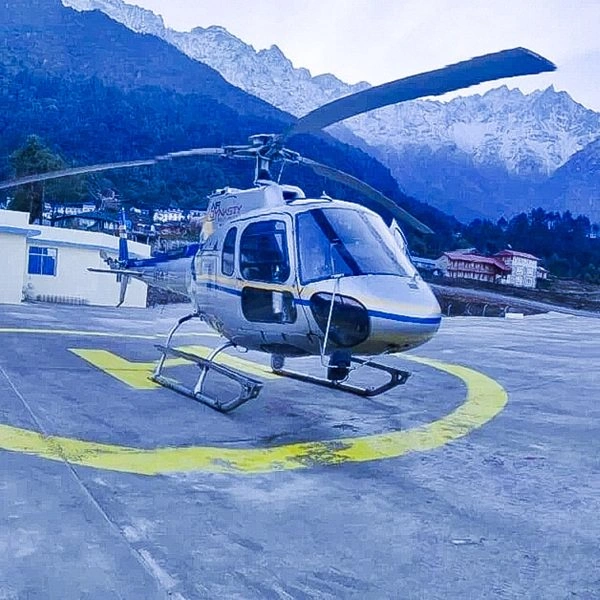
For guests with limited time or physical capacity, helicopter access to Mount Kailash is available via Simikot, Nepal — flying into Hilsa near the Tibetan border, then crossing overland to Kailash. This compresses the journey to roughly 10 days while bypassing significant overland driving. We coordinate this with our partner operators upon request. See our Mount Kailash Helicopter tour for full details.
When to Go: The Kailash Season
Kailash is open to foreign pilgrims from May to early October. Outside this window, the high passes (including Dolma La) are typically snowed in, the road from Lhasa becomes impassable in places, and even hardy local pilgrims do not attempt the kora.
|
Month
|
Conditions
|
Recommendation
|
|
May
|
Cold but stable, snow lingers on Dolma La
|
Excellent for serious pilgrims
|
|
Saga Dawa (lunar full moon, May/June)
|
The most sacred Buddhist festival at Kailash
|
Crowded but spiritually charged
|
|
June
|
Warming, occasional showers, peak pilgrim season
|
Good for first-time pilgrims
|
|
July–August
|
Monsoon affects approach roads, Kailash itself stays drier
|
Possible, but logistical complications
|
|
September
|
Post-monsoon, sharpest air of the year
|
Ideal for photography
|
|
Early October
|
Cold returning, last reliable window
|
Final option before the season closes
|
Saga Dawa: The Most Sacred Date at Kailash
Saga Dawa is the most important Buddhist festival in the Kailash calendar — the celebration of Buddha Shakyamuni's birth, Enlightenment, and parinirvana, all of which fall on the full moon of the fourth Tibetan lunar month (typically late May or early June). On Saga Dawa, thousands of pilgrims gather at Tarboche, just outside Darchen, to witness the raising of the giant prayer flag mast.
A single circumambulation of Kailash on Saga Dawa is believed to equal 100,000 koras at any other time. We run dedicated Saga Dawa departures for guests who specifically want the festival experience — these book up quickly and require permits secured 60+ days in advance.
What Makes a Luxury Kailash Pilgrimage Different
Kailash has historically been an austere journey. The traditional pilgrim experience involves long bus rides over rough roads, basic guesthouse accommodation at Darchen, dormitory-style lodging on the kora, simple food, and minimal medical support. For Hindu pilgrims arriving via the Indian government's annual yatra, this austerity is part of the journey's spiritual discipline. For luxury guests, we apply a different operational standard without compromising the pilgrimage's spiritual integrity.
What the luxury operation changes
- Vehicle quality — private 4WD vehicles with experienced Tibetan drivers across the entire 1,200+ kilometer approach, instead of shared bus or van transport
- Accommodation outside Darchen — five-star hotels in Lhasa and Shigatse, the best available accommodation in Saga and Paryang on transit nights
- Accommodation at Darchen — the best available guesthouse near the kora gate — simple by city standards, but the highest comfort tier in Darchen itself
- Kora support — horses available throughout the kora for pilgrims who prefer to ride parts of the route, dedicated porters carrying personal kit, oxygen support carried by the team
- Medical readiness — pulse oximeter monitoring daily, supplemental oxygen in vehicles and on the kora, our guides are trained in altitude illness recognition
- Cultural depth — senior Tibetan guides who can interpret the religious significance of every site, blessing arrangements at monasteries, and conversations with resident lamas, where possible
- Permit handling — all six permits processed through our partner network with no guest paperwork beyond the initial passport scan and visa application
What we don't change
The spiritual core of the kora is non-negotiable. We don't compress the three-day circuit. We don't skip Lake Manasarovar. We don't avoid Dolma La. The horses, the oxygen, and the medical readiness exist to support guests throughout the pilgrimage — not to remove it from the trip. The ascent of Dolma La is yours to walk if you can. The arrival at Manasarovar is yours to feel. We carry the logistics. We don't carry the meaning.
Physical and Spiritual Preparation for Kailash
Kailash demands more preparation than any other Himalayan pilgrimage we run. The altitude, the duration, the remoteness, and the physical demands of the kora combine in a way that rewards careful preparation and punishes shortcuts.
Physical Preparation
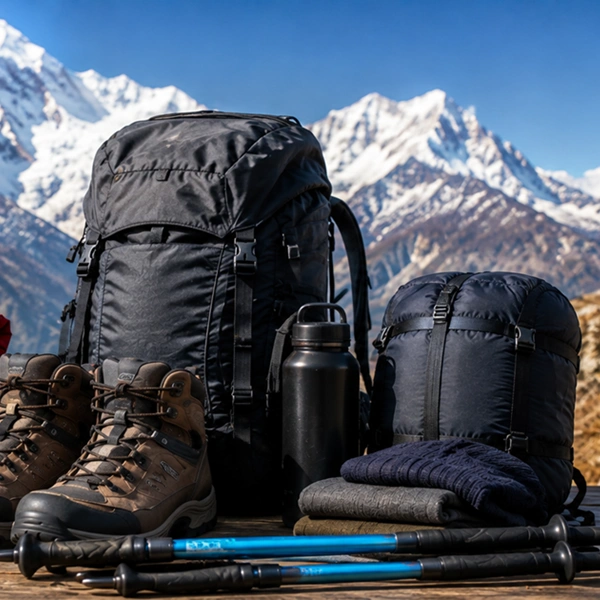
- Cardiovascular conditioning — 6 months minimum of regular hill walking, stair climbing, or cycling
- Altitude exposure, if possible — any prior trekking experience above 4,000 meters significantly helps
- Strength work — focus on legs, core, and back, given the daypack you'll carry on the kora
- Walking distance — practice 6–8 hour walking days with elevation in the months before departure
- Medical clearance — every guest over 60, and any guest with a cardiovascular or respiratory history, should obtain medical clearance from their physician before booking
Spiritual Preparation
This is more difficult to systematize, but matters more than guests typically expect. The kora is not a hike. It is a religious practice. Guests of any tradition — or none — are welcome to walk it, but the experience is meaningfully shaped by what you bring to it. Some practical thoughts:
- Read about the four traditions briefly before travel — context deepens the experience
- Set an intention for the kora — many guests carry a specific personal question or grief into the circuit
- Walk slowly. The kora is not a fitness test. Pilgrims who have walked Kailash for fifty years often walk the slowest
- Observe rather than perform — let the cultural rituals around you wash through without trying to imitate them
- Allow time afterward — most guests describe processing the experience for weeks or months following the trip
Existing Resources We Maintain
For more specific guidance on Kailash preparation, we maintain dedicated resources covering altitude management, packing, and logistical preparation. See our Kailash Mansarovar Yatra page for the prep tips, the Kailash Mansarovar Yatra Difficulty and Safety guide for a full risk briefing, the Kailash packing list, the altitude sickness guide for Kailash, and the Kailash Mansarovar Yatra Registration page if you're booking through the Indian government route.
Who Should Go to Kailash, and Who Shouldn't
This is one of the few trips where we will turn down bookings if the fit isn't right. Kailash is too remote, too high, and too physically demanding for a casual approach.
Kailash is right for you if
- You are physically active and have done multi-day high-altitude travel before, or you are willing to commit 6+ months to dedicated preparation
- You are between 18 and 70 years old and in good general health (older is possible with specific medical clearance)
- You are spiritually motivated — Hindu, Buddhist, Jain, Bonpo, or simply drawn to sacred geography
- You can tolerate basic accommodation at Darchen and on transit nights between Lhasa and Kailash
- You have the time — minimum 11 days from Lhasa, 13 days from Kathmandu
- You have flexibility for weather and permit delays
Kailash may not be right for you if
- You have a significant cardiovascular, respiratory, or neurological history
- You are above 70 with no recent altitude experience
- You are looking primarily for visual scenery — Tibet has scenery; Kailash is a pilgrimage
- You have less than 11 days available
- You require five-star comfort throughout — Darchen and the kora itself cannot deliver that and never will
- You are pregnant, have recently had heart or chest surgery, or have unstable blood pressure
People Also Ask: Quick Answers
These are the questions guests most commonly ask us, along with the related queries Google surfaces for this topic.
Has anyone climbed Mount Kailash?
No. Mount Kailash has never been summited and never will be — climbing permits do not exist. The four faiths that revere the mountain (Hindu, Buddhist, Jain, and Bon) have asked, with one voice, that the summit remain untouched. Reinhold Messner was offered a permit in the 1980s and declined out of respect. A Spanish team was granted permission in 2001 but was forced to abandon its plans after international religious protests. The mountain is walked around, never up.
How difficult is the Mount Kailash kora?
The kora is a 52-kilometer circumambulation completed over three days at altitudes between 4,600 and 5,630 meters. The hardest day is crossing Dolma La Pass at 5,630 meters, with significant ascent and descent. Physical demand rates are moderate to strenuous, depending on your fitness, with altitude significantly increasing effort. On a luxury operation, we provide horses for pilgrims who prefer to ride parts of the route, dedicated porters carrying personal kit, and oxygen support throughout.
Do you need a permit to visit Mount Kailash?
Yes — multiple permits. Foreign visitors require a Chinese tourist visa, a Tibet Travel Permit, an Aliens' Travel Permit, a Border Permit (Kailash sits in restricted border territory), and sometimes a Military Permit and a Frontier Defense Permit. Permit lead time is a minimum of 25 days, ideally 35–45 days. Independent travel is not permitted at any stage — every visitor must travel with a licensed operator and registered Tibetan guide.
What is the best time of year for the Kailash pilgrimage?
May to early October is the open season. Outside this window, the high passes (including Dolma La at 5,630 m) are typically snowed in. May and September deliver the clearest skies. Saga Dawa, falling on the full moon of the fourth Tibetan lunar month (late May or early June), is the most sacred date at Kailash and draws the largest pilgrim numbers. June is the most popular month for Hindu pilgrims; September offers the sharpest air for photography.
Why is Mount Kailash sacred to four religions?
Mount Kailash is sacred to Hindus (as the abode of Lord Shiva), Buddhists (as the home of the deity Demchok / Chakrasamvara, and the legendary site of Milarepa's contest with the Bonpo magician Naro Bonchung), Jains (as Ashtapada, where the first Tirthankara Lord Rishabhadeva attained liberation), and Bonpos (the indigenous Tibetan tradition predating Buddhism, who walk the kora anticlockwise). All four traditions place the mountain at the spiritual center of their cosmology, partly because four of Asia's great rivers originate within 50 km of Kailash.
How long does the Mount Kailash trip take?
From Kathmandu via the Kyirong border crossing, the full overland Kailash pilgrimage, including Lake Manasarovar and the three-day kora, takes 13-15 days. From Lhasa with an overland drive west, 11-13 days. Helicopter access via Simikot in Nepal compresses the trip to roughly 10 days. We do not run trips shorter than 10 days because acclimatization and safety margins are inadequate at that duration.
Key Takeaways
- Mount Kailash is sacred to four faiths — Hindu, Buddhist, Jain, and Bon — and has never been climbed.
- The pilgrimage is the kora, a 52-kilometer clockwise circumambulation walked over three days, with Dolma La Pass at 5,630 m as the spiritual climax.
- Lake Manasarovar at 4,590 m, 30 km south of Kailash, is the second core component of any pilgrimage.
- The best season is May to early October. Saga Dawa (May/June lunar full moon) is the most sacred date.
- Permits are complex — six potential permits, 25-45 day lead time, no independent travel.
- Two main routes in: via Kathmandu and the Kyirong-Gyirong border (13-15 days), or via Lhasa (11-13 days). Helicopter via Simikot is the third option.
- Luxury operations apply quality to vehicles, accommodation outside Darchen, kora support (horses, porters, oxygen), and medical readiness — without compressing the spiritual core of the pilgrimage.
- Kailash is physically demanding and not suitable for all guests. Honest fit assessment matters more than for any other trip we run.
Final Notes from the Operation
Kailash is unlike anything else we operate. Every other trip we run delivers an experience defined primarily by its outer beauty — mountains, monasteries, food, lodges, the daily texture of travel. Kailash delivers something different. The mountain itself is austere, and the journey is hard. Guests come looking for something specific — usually unspoken, often unclear at the start of the trip — and most find a version of it by the time they descend from Dolma La.
Our role is to handle every operational complexity so completely that guests can give the pilgrimage their full attention. That is the only kind of luxury that matters at Kailash. The vehicles, the permits, the oxygen, the medical kit, the senior guides, the meals, the accommodation — all of these exist so that the spiritual center of the trip is what guests carry away.
If you're considering Kailash, we're happy to talk through fit, timing, route, and preparation in detail before you commit. This is one of the few trips where we don't sell — we discuss whether it makes sense for the specific person asking.
To plan a luxury Kailash pilgrimage, see our Kailash Mansarovar Yatra page, our Kailash Helicopter tour, or contact us directly to discuss whether the trip is the right fit for you.
FAQS
Q1. What is the Mount Kailash kora, and how long is it?
The Mount Kailash kora is the sacred 52-kilometer clockwise pilgrimage circuit around the base of Mount Kailash, traditionally walked over three days at altitudes between 4,600 and 5,630 meters. Bonpos walk it anticlockwise — the only tradition that does. The highest point on the circuit is Dolma La Pass at 5,630 meters, the spiritual climax of the pilgrimage. A single circuit is believed to absolve the sins of one lifetime in the Hindu tradition; 108 circuits are believed to guarantee Enlightenment in the Tibetan Buddhist tradition.
Q2. Why has Mount Kailash never been climbed?
Mount Kailash has never been summited, and climbing permits do not exist. The four faiths that revere the mountain — Hindu, Buddhist, Jain, and Bon — have asked, with one voice, that the summit remain untouched. Reinhold Messner was offered a permit in the 1980s and declined out of respect for the sacred status. A Spanish team was granted permission in 2001 but abandoned its plans after international religious protests. Pilgrims walk around the mountain on the kora, never up it.
Q3. How sacred is Mount Kailash, and to which religions?
Mount Kailash is among the most sacred sites in Asia, revered across four traditions. Hindus believe it is the abode of Lord Shiva. Buddhists revere it as the home of the deity Demchok / Chakrasamvara, and as the legendary site of Milarepa's contest with the Bonpo magician Naro Bonchung. Jains call it Ashtapada, the place where Lord Rishabhadeva, the first Tirthankara, attained liberation. Bonpos hold it as Yungdrung Gutsek, the spiritual axis of the world. Four of Asia's great rivers — the Indus, Sutlej, Brahmaputra, and Karnali — originate within 50 kilometers of the mountain.
Q4. What is the best time of year for the Mount Kailash pilgrimage?
May to early October is the open season for Kailash. Outside this window, the high passes, including Dolma La at 5,630 meters, are typically snowed in. May and September deliver the sharpest air. Saga Dawa, the lunar full moon of the fourth Tibetan month (late May or early June), is the most sacred date at Kailash — a single circumambulation on Saga Dawa is believed to equal 100,000 koras at any other time. June is the most popular month for Hindu pilgrims; September offers the sharpest air for photography.
Q5. How long does the Mount Kailash trip take?
The full Kailash pilgrimage, including Lake Manasarovar and the three-day kora, takes 13-15 days from Kathmandu via the Kyirong-Gyirong border crossing, or 11-13 days from Lhasa with an overland drive west. Helicopter access via Simikot in Nepal compresses the trip to roughly 10 days. We do not run trips shorter than 10 days because acclimatization and safety margins are inadequate at that duration.
Q6. What permits are needed for the Mount Kailash pilgrimage?
Foreign visitors to Kailash require multiple permits: a Chinese tourist visa, Tibet Travel Permit, Aliens' Travel Permit, Border Permit (Kailash sits in restricted border territory), and sometimes a Military Permit and Frontier Defense Permit. Permit lead time is a minimum of 25 days, ideally 35-45 days. Independent travel is not permitted at any stage. We arrange all permits through our partner operators in Lhasa and Kathmandu, with passport scans typically required 30-45 days before departure.
Q7. How difficult is the Mount Kailash kora physically?
The kora is moderately to strenuously difficult, depending on fitness, and is significantly more challenging at altitude. The hardest day is crossing Dolma La Pass at 5,630 meters, with significant ascent and descent. Three days of walking 6-10 hours per day at altitudes between 4,600 and 5,630 meters requires good cardiovascular fitness and prior altitude experience or dedicated preparation. For luxury operations, we provide horses for guests who prefer to ride parts of the route, porters to carry kit, and oxygen support throughout.
Q8. What is Lake Manasarovar, and why is it part of the Kailash pilgrimage?
Lake Manasarovar is a sacred freshwater lake at an elevation of 4,590 meters, located 30 kilometers south of Mount Kailash. It is one of the highest freshwater lakes in the world and one of the four sacred lakes of Tibetan Buddhism. In Hindu cosmology, the lake was first manifested in the mind of Lord Brahma. Pilgrim activities at Manasarovar include ritual bathing (parikrama snan), a separate 90 km lake kora, visits to Chiu Monastery, and viewing the alpenglow on Kailash from the lake shore. Every Kailash pilgrimage we operate includes at least one full day at Manasarovar.
Q9. Is the Mount Kailash pilgrimage suitable for elderly or unfit travelers?
Kailash is physically demanding and not suitable for all guests. We typically accept guests aged 18 to 70 in good general health. Older guests may be considered with specific medical clearance. Cardiovascular, respiratory, or neurological history significantly affects suitability. Pregnant guests, those with recent cardiac or chest surgery, and those with unstable blood pressure should not attempt Kailash. Honest fit assessment matters more for this trip than for any other we run.
Q10. Can I do the Mount Kailash kora on horseback?
Yes, in part. On luxury operations, we make horses available throughout the kora for pilgrims who prefer to ride sections of the route. The Dolma La pass crossing is typically walked by all guests because the steep section is not easily passable on horseback, but the long, flatter sections of Days 1 and 3 of the kora can be ridden. This is genuinely useful for senior pilgrims and those with knee issues. Horses are arranged through local providers in Darchen on the day.
Q11. What is Saga Dawa, and why is it significant at Kailash?
Saga Dawa is the most sacred Buddhist festival in the Kailash calendar — the celebration of Buddha Shakyamuni's birth, enlightenment, and parinirvana, all of which fall on the lunar full moon of the fourth Tibetan month (typically late May or early June). On Saga Dawa, thousands of pilgrims gather at Tarboche, just outside Darchen, to witness the raising of the giant prayer-flag mast. A single kora on Saga Dawa is believed to equal 100,000 koras at any other time. We run dedicated Saga Dawa departures, which require permits secured 60+ days in advance and book up quickly.
Q12. What is the difference between the Indian Government Kailash Yatra and a luxury Kailash tour?
The Indian Ministry of External Affairs runs an annual Kailash Mansarovar Yatra program via the Lipulekh Pass and Nathula Pass routes, with places allocated by lottery to Indian citizens. It is government-organized, lower-cost, and follows a fixed itinerary with shared accommodation and bus transport. A luxury Kailash tour is private, operates via Kathmandu or Lhasa, uses 4WD vehicles throughout, includes the best available accommodation at every stage, and offers horses, porters, and oxygen support on the kora. Both reach the same sacred sites; the experience and accessibility differ significantly.
Q13. Are foreigners (non-Indian, non-Hindu) allowed to do the Kailash kora?
Yes. The kora is open to pilgrims and travelers of any nationality and any faith — or none. Foreigners typically arrive at the Kathmandu-Kyirong border or in Lhasa, rather than via the Indian government yatra route, which is reserved for Indian citizens. The four-faith sacredness of Kailash means the route is welcoming to all respectful visitors. Chinese visa, Tibet Travel Permit, and additional border permits apply regardless of nationality.
Q14. What does Alpine Luxury Treks handle on a Mount Kailash departure?
On every Kailash luxury departure with us, we handle: all permits (Chinese visa coordination, Tibet Travel Permit, Aliens Permit, Border Permit, Military Permit where required); private 4WD transport across the 1,200+ kilometre approach; five-star accommodation in Lhasa and Shigatse and the best available accommodation in Darchen, Saga, and Paryang; senior Tibetan guide throughout with cultural and religious expertise; horses, porters, and oxygen support for the kora; daily altitude monitoring with pulse oximeter and supplemental oxygen; medical readiness and emergency evacuation coordination; and complete logistical handover so guests can give the pilgrimage their full attention.