Nepal's Top 5 Motorbike Routes — and the Luxury Alternatives
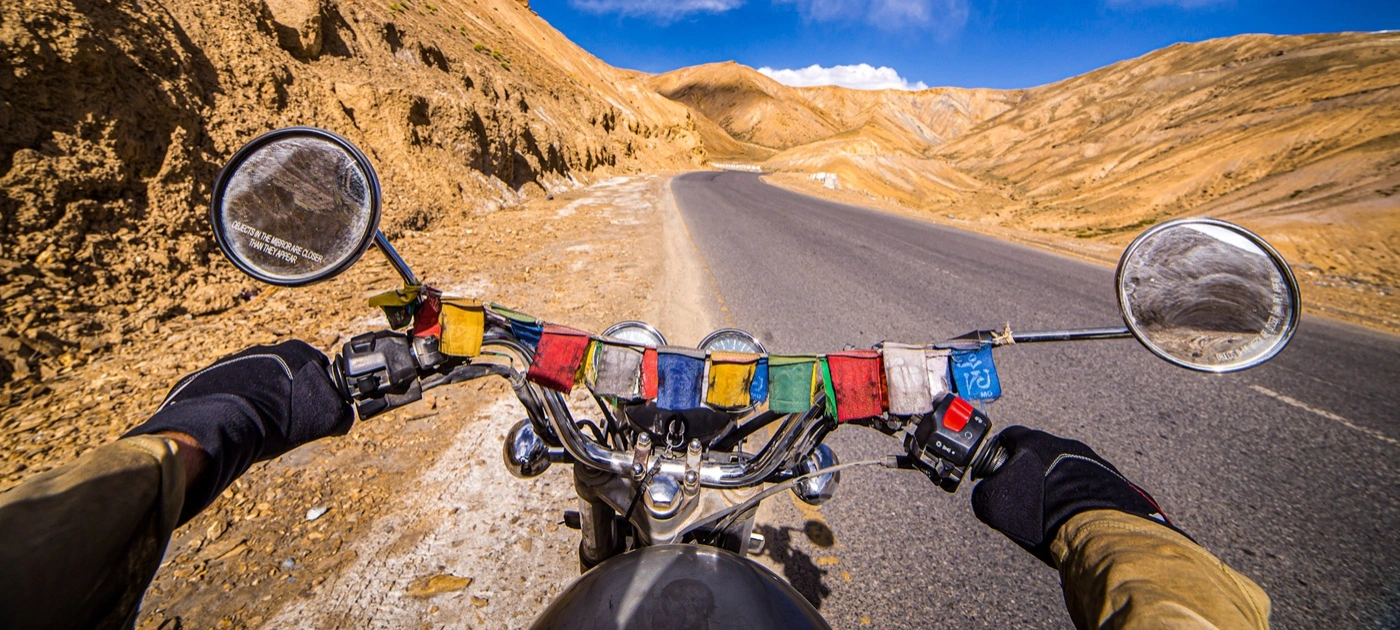
Motorbike expeditions occupy a specific niche in Nepal adventure tourism. The country's road network has extended dramatically over the past two decades, opening regions that were previously accessible only by multi-day trekking to motorized travel.
The Royal Enfield Himalayan and similar adventure motorcycles have become the standard expedition platform, and dedicated motorbike operators run the major routes commercially. Travelers researching Nepal often encounter the motorbike option and weigh it against trekking, vehicle touring, or helicopter-supported alternatives.
Our operating model at Alpine Luxury Treks does not include motorbike expedition operations. We are a luxury trekking and cultural travel operator, and motorbike expeditions fall outside our portfolio for specific reasons — the rider demographic profile, the physical demand pattern, the equipment management requirements, and the risk profile all differ meaningfully from the luxury tier we operate in.
We do, however, run extensive luxury operations in each of the five regions covered by the motorbike routes, using helicopters, 4WD vehicles, and walking-supported infrastructure to deliver the same geographic and cultural experience without the demands of motorbike expeditions.
This guide is written for travelers researching the motorbike option in Nepal and weighing their alternatives. The piece covers what each of the five major motorbike routes entails — the terrain, the altitude, the duration, the cultural experience — and presents the parallel luxury alternative we offer for travelers who want to experience the same region differently. The aim is to be informationally useful regardless of which option travellers ultimately choose.
Note on our operating model: Alpine Luxury Treks does not operate motorbike expeditions directly. The details in this guide on motorbike routes are provided for travelers researching the option. For travelers who decide to book a motorbike expedition, dedicated motorbike operators in Kathmandu and Pokhara are the appropriate operators. For travelers who want the same geographic experience at the luxury tier without the demands of motorbike expeditions, the alternative sections below cover what we actually run.
Why Motorbike Travel Works for Some Travelers and Not Others
Before the route-by-route detail, the honest framing of who motorbike expeditions in Nepal are right for. The motorbike option is genuinely rewarding for a specific profile of travelers.
The Right Traveler for a Motorbike Expedition
- Experienced off-road motorcyclist with prior multi-day touring experience
- Comfortable with technical terrain, including gravel, river beds, mud, and steep mountain switchbacks
- Mechanically aware and able to handle basic roadside repairs
- Physically robust and able to sustain 6-8 hours of demanding riding for multiple consecutive days
- Tolerant of basic accommodation and irregular meal timing
- Comfortable with the inherent risk profile of high-altitude off-road motorcycling
When the Motorbike Option Is the Wrong Choice
- Limited or no prior motorcycle touring experience — the Nepal routes are not appropriate for first-time touring riders
- Pre-existing back, neck, or wrist conditions that off-road riding will aggravate
- Preference for a predictable schedule and comfortable accommodation
- Traveling with a non-riding partner or family group
- Photography or cultural immersion as the primary trip goal (motorbike pace makes both harder)
- Limited time — most serious motorbike routes require 10-14 days minimum
Travelers in the first profile will find the Nepal motorbike expeditions among the most rewarding adventure motorcycling in Asia. Travelers in the second profile will have meaningfully better trips through one of the luxury alternatives covered below for each region. The honest match between traveler and trip is what makes either option work.
The Equipment and Operational Reality
Independent of route choice, motorbike expeditions in Nepal share several operational characteristics travelers should understand before booking.
The Standard Expedition Motorcycle
The Royal Enfield Himalayan (411cc or 450cc, kerb weight around 199 kg) has become the dominant expedition platform because of its long-travel suspension, low-end torque for steep climbs, and the parts and service network across Nepal.
The Honda CRF250L Rally (250 cc, 144 kg) is the lighter technical alternative favored by experienced off-road riders. Royal Enfield Classic 350 is sometimes used on the easier heritage routes, but is not the right machine for serious off-road sections. Honda XR 190 is a lightweight option for short technical tours.
Altitude Affects Engine Performance
Combustion engines lose power at altitude because the air's oxygen density decreases. At 3,500 meters, a motorcycle that produces full power at sea level operates at roughly 70-75% of its rated power. At 4,200 meters (the Kora La crossing near the Tibet border), the figure drops further.
Riders need to anticipate this — engine braking on steep descents becomes more important because the engine recovers more slowly, and acceleration on steep climbs at altitude requires lower gears than the same climbs at lower elevation. Experienced riders adjust intuitively; first-time high-altitude riders are sometimes caught off guard by the drop in performance.
Support Vehicle and Spare Parts
Professional motorbike expeditions in Nepal typically include a 4x4 support vehicle (Mahindra Scorpio is the standard) carrying spare parts, tools, and additional fuel. The distance between fuel stations in remote regions like Upper Mustang or the Karnali frontier can exceed standard motorcycle tank range. Individual riders should also carry basic spares — clutch cables, brake pads, chain lube, tube repair kits, and a multi-tool. Sharp limestone and schist on the trail surfaces produce a relatively high rate of tyre punctures.
Route One: Upper Mustang
Upper Mustang is the most prestigious motorbike expedition in Nepal and the route most commonly cited when travelers research motorcycling in Nepal. The region was politically restricted to foreign travelers until 1992 and remains subject to restricted-area regulations. The terrain is high-altitude desert — eroded sandstone cliffs, ancient cave dwellings, the medieval walled city of Lo Manthang at 3,840 meters, and the Kora La pass at 4,200 meters on the Tibet border.
The Motorbike Reality
- Duration: 12-14 days from Kathmandu return
- Maximum altitude: 3,840 m (Lo Manthang) to 4,200 m (Kora La pass)
- Terrain: roughly 40% tarmac (Kathmandu-Pokhara-Tatopani section), 60% off-road (gravel, sand, river beds north of Jomsom)
- Permits required: Restricted Area Permit (USD 500 for the first 10 days plus USD 50 per additional day), Annapurna Conservation Area Permit, TIMS
- Key technical challenge: the Jomsom Wind — afternoon gales reaching 80 km/h that create stabilization problems for any motorcycle, particularly at lighter weights
- Best season: mid-March to mid-May and mid-September to late November
The Alpine Luxury Treks alternative for Upper Mustang: We run two luxury Upper Mustang options. The 9-day Luxury Mustang Tour combines 4WD travel for the road sections with a helicopter return from Jomsom, eliminating road exposure on the return leg and reducing the trip to 9 days rather than 14. The Luxury Mustang with Shinta Mani version uses the new Shinta Mani Mustang hotel as the base accommodation. Both options deliver the same Upper Mustang cultural and visual experience — Lo Manthang, the Chhoser caves, the Kora La pass, the Tibetan-Buddhist monastery infrastructure — without the demands of a motorbike expedition. The hotel-tier accommodation, in particular, is meaningfully better than the basic guesthouse options used by motorbike expeditions.
Route Two: Manang and Tilicho
The Manang route runs through the Marsyangdi River valley from Besisahar to Manang, at an elevation of 3,540 meters. The terrain is genuinely the most technically demanding of the five motorbike routes — narrow cliff-edge tracks, waterfall crossings where seasonal cascades fall directly onto the trail, steep rocky inclines, and the rapid environmental transition from subtropical Besisahar to alpine Manang in a relatively short distance.
The trek extension to Tilicho Lake (4,919 m) adds a multi-day walking component because the lake is not motorable.
The Motorbike Reality
- Duration: 10-13 days (the longer version includes the Tilicho Lake trek extension)
- Maximum riding altitude: 3,756 m at Khangsar village (motorcycles do not go higher)
- Maximum hiking altitude: 4,919 m at Tilicho Lake (walking only beyond Khangsar)
- Terrain: high technical difficulty throughout — rocky, muddy, waterfall sections, narrow cliff-edge tracks
- Permits required: Annapurna Conservation Area Permit, TIMS
- Key technical challenge: the cliff-edge tracks between Chame and Manang are genuinely demanding even for experienced riders — focused throttle control and route reading required throughout
- Best season: mid-March to mid-May and mid-September to late November
The Alpine Luxury Treks alternative for Manang and Tilicho: The classic luxury alternative is the Annapurna Circuit Trek, which traverses the same Marsyangdi Valley to Manang on foot and continues over the Thorong La Pass at 5,416 meters, rather than reversing the route. The trek takes 14-18 days and includes the cultural villages of Chame, Upper Pisang, Braga, and Manang, which motorbike expeditions pass through quickly. For travelers specifically seeking the Tilicho Lake experience, the lake extension adds 3-4 days to the standard Circuit. The trek pacing produces meaningfully better acclimatization than the rapid motorbike ascent, and the daily distances allow the cultural texture of the villages to register rather than blur. For travelers who want to reach Manang quickly without the trek, helicopter day trips from Pokhara to Manang are operationally feasible, and we arrange them on request.
Route Three: Rara Lake and the Karnali Frontier
Rara Lake at 2,990 meters is the largest freshwater lake in Nepal and the visual anchor of the Karnali region. The Karnali is the most remote major region in the country with limited infrastructure, narrow roads, and significantly lower tourist density than the Annapurna or Everest regions. The motorbike route runs from Kathmandu south to Lumbini, west across the Terai plains, then north into the Karnali hills via Kohalpur and Manma to the Talcha area near the lake.
The Motorbike Reality
- Total distance: approximately 2,150 km return from Kathmandu
- Duration: 10-13 days
- Maximum altitude: 2,990 m (Rara Lake) and 4,000 m on the optional Murma Top side hike
- Terrain: roughly 50% tarmac on the East-West Highway and the Karnali Highway, 50% high-risk off-road in the upper Karnali
- Permits required: Rara National Park entry fee, local area permits
- Key operational challenge: limited refueling and accommodation infrastructure in the Karnali sections — self-sufficiency and support vehicles are essentially mandatory rather than optional
- Best season: late September to mid-November and mid-April to late May
The Alpine Luxury Treks alternative for Rara Lake: Our Rara Lake luxury access uses domestic flights (Kathmandu to Nepalgunj, Nepalgunj to Talcha airstrip) combined with light walking in the Rara National Park rather than motorbike travel. The flight-based approach delivers the Rara Lake experience in 5-6 days rather than 10-13 days, eliminates the long exposure to the Karnali Highway, and supports walking pace for the lake circumnavigation and the Murma Top viewpoint. The Karnali region is one of the great cultural travel experiences in Nepal, precisely because it has been protected from rapid tourism development — slowing down at the lake rather than rushing through on a motorbike captures more of what makes the region special.
Route Four: Lower Mustang and Muktinath
Lower Mustang is the moderate-difficulty version of the Mustang motorbike experience — covering the Kali Gandaki valley, the apple-growing town of Marpha, the administrative hub of Jomsom, and the sacred Muktinath temple at 3,800 meters.
The route does not enter the Upper Mustang restricted area and consequently avoids the USD 500 permit cost, but it captures much of the visual and cultural texture that motorbike travelers come to Mustang for. The route is appropriate for less experienced motorbike riders than the Upper Mustang full expedition.
The Motorbike Reality
- Duration: 7-9 days from Kathmandu return
- Maximum altitude: 3,800 m at Muktinath
- Terrain: mixed tarmac and gravel, with river crossings and high wind exposure in the Jomsom-Kagbeni section
- Permits required: Annapurna Conservation Area Permit, TIMS (no Restricted Area Permit needed for Lower Mustang)
- Key cultural highlight: Muktinath as a dual Hindu-Buddhist pilgrimage site with the 108 sacred water spouts and the eternal flame from a natural gas vent
- Best season: mid-March to mid-May and mid-September to late November
The Alpine Luxury Treks alternative for Lower Mustang and Muktinath: We operate Lower Mustang as both a helicopter day trip (Kathmandu to Pokhara to Muktinath and return in a single day for travelers on tight schedules) and as part of the broader 4WD-supported Mustang circuit (combined Lower and Upper Mustang in 6-9 days with road and helicopter elements). The helicopter day option offers Muktinath darshan and panoramic views of Annapurna and Dhaulagiri from an altitude, without any overnight road exposure. The combined Lower-Upper Mustang circuit at the luxury tier uses 4WD on the road sections and a helicopter where the road section becomes uncomfortable, with hotel-tier accommodation in Pokhara, Marpha, and Jomsom rather than the basic guest houses that motorbike expeditions use.
Route Five: Solukhumbu Everest View via Pattale
The Solukhumbu Everest View motorbike route is the newest of the five major Nepal motorbike circuits. The development of the road infrastructure in Solukhumbu over the past decade has opened the Pattale and Salleri area to motorized access.
Pattale, at around 2,840 meters, has emerged as a viewpoint for the Everest massif, and the route uses the BP Highway — widely regarded as the best-paved mountain road in Nepal — for the lower sections.
The Motorbike Reality
- Duration: 4-7 days from Kathmandu return
- Maximum altitude: approximately 3,150 m at the Pattale ridge
- Terrain: roughly 70% high-quality tarmac on the BP Highway, 30% mountain dirt road for the Pattale climb
- Permits required: local area community permits (typically handled by operators)
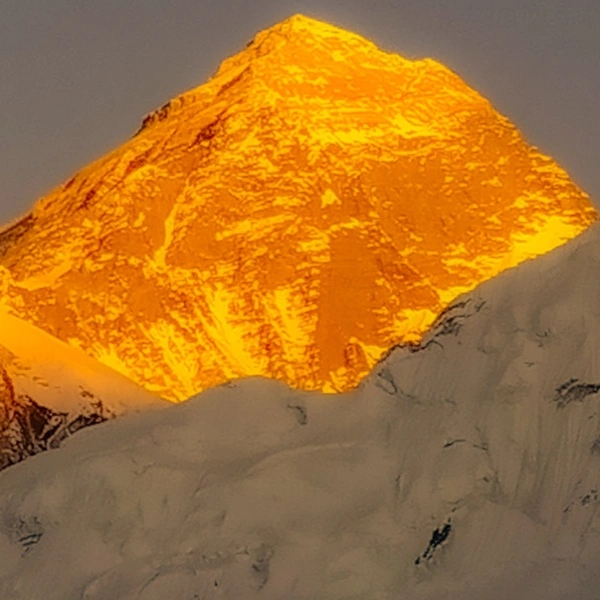
- Key visual reward: Pattale ridge view of Everest, Lhotse, and Makalu from a closer vantage point than Nagarkot or Sarangkot can provide
- Best season: October to December and March to May (the lower altitude profile gives this route a longer operating window than the higher Mustang and Manang routes)
The Alpine Luxury Treks alternative for the Solukhumbu Everest View: The Everest Helicopter Tour is the direct luxury alternative — a single-morning helicopter flight from Kathmandu landing at Kala Patthar at 5,545 meters for the close-quarters Everest view, breakfast at the Hotel Everest View at 3,880 meters, and return to Kathmandu by lunchtime. The helicopter tour delivers a significantly closer view of Everest than the Pattale ridge can provide (the Pattale view is from approximately 70 km away; the helicopter landing is at the foot of the mountain) and fits inside a single morning rather than the 4-7 days the motorbike circuit requires. For travelers wanting the Solukhumbu cultural experience with Sherpa villages and the Tengboche monastery, the standard EBC trek delivers this on foot at the appropriate pace.
Comparing the Five Routes
|
Route
|
Days
|
Max Altitude
|
Rider Level
|
Luxury Alternative
|
|
Upper Mustang
|
12-14
|
4,200 m
|
Advanced
|
4WD + helicopter return
|
|
Manang / Tilicho
|
10-13
|
3,756 m (riding)
|
Expert
|
Annapurna Circuit trek
|
|
Rara Lake
|
10-13
|
2,990 m
|
Intermediate-Adv
|
Flight + walking
|
|
Lower Mustang
|
7-9
|
3,800 m
|
Intermediate
|
Helicopter day trip
|
|
Solukhumbu (Pattale)
|
4-7
|
3,150 m
|
Basic-Intermediate
|
Everest helicopter tour
|
Permits, Insurance, and Documentation
Regardless of route, motorbike travelers in Nepal need specific documentation.
- International Driving Permit (IDP) — required, presented at police checkpoints. A home country motorcycle license alone is not sufficient legal documentation
- Motorcycle Bluebook (registration document) — must be carried at all times. Riding without it produces vehicle impoundment risk
- Travel insurance covering motorcycling at altitude — standard travel insurance often excludes motorcycle activity. Travelers booking motorbike expeditions need specific motorcycling cover
- Restricted Area Permits for Upper Mustang routes — USD 500 for the first 10 days, applied for through registered trekking agencies (cannot be obtained independently)
- Conservation area permits (ACAP for Annapurna and Mustang routes, applicable national park permits for Rara) — NPR 3,000 standard
Why Our Luxury Operating Model Excludes Motorbike Expeditions
Travelers sometimes ask why a comprehensive Nepal operator like Alpine Luxury Treks does not include motorbike expeditions in the portfolio. The answer is specific, and we are direct about it.
- Different operating model and risk profile: Luxury trekking and cultural travel operate with predictable group dynamics, walking pace, and controlled altitude exposure. Motorbike expeditions operate with individual rider skill variability, faster altitude transitions, and a meaningfully different risk profile. Combining both in a single operator stretches the operational competence in both directions.
- Different guide skill sets: Trekking and cultural guides train in altitude assessment, on-foot route navigation, and cultural interpretation. Motorbike expedition guides train in rider skill assessment, mechanical recovery, road reading, and the specific safety protocols for high-altitude off-road riding. Our guide team is built around the former, not the latter.
- Different demographic fit: The traveler profile that books a luxury trekking trip is typically not the same as the one that books a motorbike expedition. We focus on the demographic we serve well — luxury cultural and trekking travelers — rather than attempting to serve every adventure-tourism category.
- Specialist motorbike operators run motorbike expeditions better: Dedicated Nepal motorbike operators (operators specializing specifically in motorbike expeditions) have the equipment management, route experience, and operating focus that produce better motorbike trips than we could deliver as a secondary product line.
Travelers researching the Nepal motorbike option should book through a dedicated motorbike operator rather than expect us to provide that service. Travelers researching the alternatives we cover above — the helicopter-supported Mustang, the Annapurna Circuit trek, flight-supported Rara, and the Everest helicopter tour — are the travelers our portfolio serves well.
Honest Risk Assessment for Motorbike Travelers
For travelers embarking on a motorbike expedition with a specialist operator, several risk factors warrant attention beyond what marketing copy typically addresses.
Road Surface Variability
Nepal road surfaces vary from high-quality tarmac on sections of the Prithvi Highway and the BP Highway to active landslide zones in the Karnali frontier and the upper Marsyangdi valley.
The variability is greater than most riders accustomed to European or North American touring expect. Sections of road that were passable two weeks ago can be impassable today after monsoon damage. Real-time route information from local operators is more reliable than information in published guidebooks.
Altitude and Hypoxia
Motorbike travel produces faster altitude transitions than walking. Riders moving from Pokhara at 800 meters to Muktinath at 3,800 meters can cover the altitude gain in two days, while trekkers take a week. A faster ascent increases the risk of acute mountain sickness symptoms—headaches, nausea, and insomnia.
Riders should follow the standard prevention protocol: gradual ascent where the schedule allows, adequate hydration (3-4 liters of water daily), and rest days at key altitudes (Manang at 3,540 m and Jomsom at 2,720 m are typical rest-day locations).
Mechanical Failure in Remote Sections
Mechanical failure between Jomsom and Lo Manthang, or anywhere in the Karnali frontier, can become a serious operational problem rather than an inconvenience. The support vehicle that accompanies professional expeditions is essential infrastructure for managing this risk. Solo motorbike travel in the remote sections of these routes is genuinely risky and not appropriate for travelers who are not comfortable handling mechanical or medical emergencies independently.
Weather Volatility
Mountain weather in Nepal can shift dramatically within a single day. The morning that begins with clear skies and stable wind in Jomsom can produce afternoon Jomsom Wind gusts above 80 km/h that destabilize even heavy motorcycles. Pre-monsoon and post-monsoon weeks produce particularly volatile patterns. Riders should plan to complete demanding sections during the morning weather window and build flexibility into the schedule to account for weather delays.
If You Are Set on the Motorbike Option
For travelers who have weighed the options and decided the motorbike expedition is genuinely the right experience for them, the practical recommendations:
- Book through a dedicated motorbike operator with multi-year Nepal expedition tenure rather than a generic adventure tour operator
- Verify the support vehicle, mechanic, and spare parts inventory before booking
- Check the operator's safety record, including any reported accidents on previous expeditions
- Confirm the rider screening protocol — operators willing to take any rider regardless of experience produce worse expeditions
- Plan for the Autumn window (mid-September to late November) for the most stable weather
- Confirm comprehensive travel insurance with explicit motorcycle activity cover at altitude
- Build a buffer day in the schedule for weather or mechanical delays
Travelers who reach the end of this research and decide the motorbike option is not the right fit for them have a clear set of luxury alternatives in the regions covered above. We are direct about which alternative fits which traveler profile, and we route inquiries accordingly.
Frequently Asked Questions
Does Alpine Luxury Treks run motorbike expeditions?
No. Our portfolio is focused on luxury trekking and cultural travel. Motorbike expeditions fall outside our operational model for the reasons outlined above — a different risk profile, a different guide skill set, and a different demographic fit. Travelers researching motorbike travel in Nepal should book through dedicated motorbike operators in Kathmandu or Pokhara. We can recommend operators we know by reputation if asked, but we do not operate the trips ourselves.
Which is the best Nepal motorbike route for a first-time rider in Nepal?
The Solukhumbu Everest View route via Pattale and the Lower Mustang Muktinath route are the two most appropriate for less experienced motorbike travelers because of the better road surfaces and the shorter durations. Upper Mustang, Manang, and Rara Lake all require meaningful prior off-road touring experience. First-time motorbike travelers to Nepal who attempt harder routes without prior touring experience consistently report worse-than-expected outcomes.
What is the difference between Upper Mustang and Lower Mustang for motorbike travel?
Upper Mustang requires the USD 500 restricted-area permit, reaches higher altitudes (Lo Manthang at 3,840 m and Kora La at 4,200 m), and adds 5-7 days to the itinerary due to the additional distance and the cultural exploration time at Lo Manthang. Lower Mustang covers the more accessible Kali Gandaki valley up to Muktinath at 3,800 m, does not require the restricted area permit, and fits in 7-9 days. Lower Mustang delivers most of the visual and cultural rewards at a fraction of the cost and time. Upper Mustang is the more demanding commitment for travelers, particularly for Lo Manthang and the cave monasteries.
Can I do these routes as a single rider without a group?
Operationally possible for the easier routes (Lower Mustang, Solukhumbu, parts of the Manang route) but not recommended for Upper Mustang or the Karnali frontier, where mechanical failure or weather can become serious risk events. Solo motorbike travel in the remote sections without a support vehicle is genuinely risky, and most experienced operators discourage it. The restricted area permits for Upper Mustang also require travel through a registered Nepal agency rather than as a solo independent traveler.
How does the cost compare to luxury trekking or helicopter alternatives?
Motorbike expeditions in Nepal typically cost USD 1,800-4,500 per rider, depending on route, duration, and operator. The luxury trekking alternatives in the same regions run USD 3,500-7,500 per traveler for trekking, USD 1,100-1,500 per person for single-day helicopter tours, and USD 4,000-9,000 for combined 4WD-helicopter luxury Mustang circuits. The motorbike option is moderately less expensive than the luxury trekking alternatives, but it operates at a different tier rather than competing directly. The choice is not primarily about cost — it is about the kind of experience the traveler wants.
What about combined trips with a motorbike and trek?
Some travelers do combine motorbike sections with trekking sections — for example, motorbike to Jomsom and trek upward to Mustang or Muktinath. This works operationally and produces an interesting hybrid experience. We do not arrange the motorbike component, but we can arrange the trekking portion if a confirmed motorbike operator handles the rider section. Coordination across two operators adds operational complexity that travellers should account for at the planning stage.
Is motorbike travel safe in Nepal?
Operationally safe with the right preparation, the right operator, and an experienced rider. Operationally risky without them. The Himalayan road environment is among the more demanding motorcycle touring environments globally — altitude, weather, surface variability, and remote-section infrastructure all contribute to the risk profile.
Riders with prior multi-day touring experience and proper preparation handle the routes well. Riders without that experience face meaningfully higher risk. The honest assessment is that motorbike travel in Nepal is not appropriate for casual riders or for travelers without a prior off-road touring background.
What is the best season for motorbike travel in Nepal?
Mid-September to late November (autumn) is the strongest single window — stable post-monsoon weather, clear visibility, dry trail surfaces, manageable temperatures at altitude. Mid-March to late May (spring) is the second-strongest window, with rhododendron blooms in the lower valleys and stable weather. Monsoon (June-August) produces dangerous conditions on most routes and is generally avoided. Winter (December-February) is feasible for the lower routes (Solukhumbu, Lower Mustang), but the higher passes (Kora La, the upper Mustang section) may be blocked by snow.
Can I rent a motorbike independently in Kathmandu?
Yes, motorbike rental is available from multiple operators in Kathmandu (particularly in Thamel) and in Pokhara. Rental rates run USD 30-80 per day, depending on the machine, with damage deposits required separately. Independent rental for the easier routes (Kathmandu valley day trips, Pokhara area, parts of the BP Highway) is reasonable for experienced riders. Independent rental for the harder routes (Upper Mustang, Manang, Rara) is operationally risky without support infrastructure, and most experienced riders use organized expeditions for those routes.
Plan Your Luxury Nepal Alternative
If, after reading this, you have decided the motorbike option is not the right experience for you — and you want to access the same regions at the luxury tier — we run helicopter-supported Mustang, the Annapurna Circuit trek, flight-supported Rara Lake access, and the Everest helicopter tour as alternatives to the five motorbike routes above. Tell us which region you want to experience and what kind of trip works for your schedule and travel style, and our team returns a written proposal within 48 hours covering the appropriate alternative for your profile.