Photography on the Everest Base Camp Trek: A Complete Gear and Viewpoint Guide
Photography on the Everest Base Camp trek is the part of the trip preparation most travelers think about least and regret most. The Khumbu region produces the most photographable mountain landscape on earth — Everest, Lhotse, Ama Dablam, Tengboche Monastery against the south wall of the range, the Khumbu icefall pouring down from the south-west face, the village of Khumjung backed by Khumbila.
Travelers arrive with cameras and lenses but rarely with the cold-weather knowledge that lets the equipment actually function at 5,545 meters in pre-dawn temperatures. The result is a familiar pattern: the headline photographs of the trek — Kala Patthar sunrise especially — are taken in conditions where most travelers' batteries have died, their lenses have fogged, and their hands are too cold to operate the controls.
After two decades of running luxury EBC departures with photography-focused guests, our team has witnessed every type of equipment failure and every type of equipment success. The pattern is consistent. Travelers who prepare specifically for cold-altitude photography come back with images that justify the trip.
Travelers who treat the EBC trek as just another destination for their existing camera kit return with photographs that work at lower altitudes but fail at the highest. The good news is that the preparation is not technically difficult — it is mostly about understanding the cold-weather behavior of camera batteries, the dust and altitude reality of the Khumbu, and the specific timings of the photographic anchor moments along the route.
This guide covers gear (cameras, lenses, accessories), the route (specific viewpoints and timings), cold-weather equipment management (batteries, condensation, lens fogging), and photography ethics (monastery rules, drone restrictions, photographing porters and laity). It is written for travelers who want to bring home photographs that justify the trip, not just record it.
Important: This is a photography guide, not a brand recommendation. We do not have commercial relationships with any camera or lens brand. The brand names below appear because they are the dominant systems for travel photography at this tier and the equipment most likely to be in our guests' bags. Photography is fundamentally about preparation and technique — equipment helps, but the photographer always matters more than the camera.
Camera Body Choice for the EBC Trek
The Mirrorless vs DSLR Question
For travelers buying or upgrading equipment specifically for the EBC trek, mirrorless is the right answer in 2026. The weight advantage matters across 12 to 14 days of trekking — a Sony A7C II body weighs 514 grams, while a Canon EOS R6 Mark II weighs 670 grams, and a comparable Canon 5D Mark IV DSLR weighs 890 grams.
Across a multi-day trek with the camera on a sling for hours per day, the weight difference is meaningful. The other mirrorless advantage at altitude is electronic viewfinder behavior — EVFs work in bright snow conditions where DSLR optical viewfinders struggle with metering, and the live preview lets photographers see the actual exposure before pressing the shutter.
The traditional mirrorless disadvantage was battery life, which is genuinely shorter than DSLR battery life, but cold weather affects both systems comparably, and the mirrorless deficit is usually manageable with two or three spare batteries.
Recommended Mirrorless Bodies
- Sony A7C II — compact full-frame, excellent low-light performance, weatherproofing rated for moderate dust and moisture
- Sony A7R V — high-resolution full-frame for travelers who prioritize landscape detail; battery life is the trade-off
- Canon EOS R5 — proven workhorse at altitude, robust weatherproofing, excellent autofocus in cold conditions
- Canon EOS R6 Mark II — better-priced sibling to the R5; almost identical performance for most landscape work
- Nikon Z8 — strong dust and weatherproofing, particularly suited to the dust-heavy Khumbu trail conditions
- Fujifilm X-T5 — APS-C system at a lighter weight; the right answer for travelers who already own Fuji lenses
Phone Cameras
The current generation of phone cameras (iPhone 15 Pro Max, Google Pixel 8 Pro, Samsung S24 Ultra) produces images that are surprisingly competitive with mid-tier mirrorless cameras for general travel photography. For travelers not committed to bringing a dedicated camera, the phone is a genuinely viable EBC photography option — particularly for landscape work where the computational HDR processing handles the high-contrast snow conditions well.
The phone limitations on the EBC trek are battery life in extreme cold (worse than dedicated cameras because phone batteries are smaller) and zoom range (the standard phone telephoto cannot reach the framing distances needed for the more isolated mountain compositions). Phone-only travelers should bring two large power banks (20,000 mAh each) and accept the framing limitations of the available focal lengths.
Lens Selection for the EBC Route
The Two-Lens Solution
Most photography-focused EBC travelers carry two lenses, sometimes three. The lens combination depends on the camera system, but the focal length coverage that works for the EBC trek is consistent: a wide-to-standard zoom for landscape and trekking environments, plus a longer telephoto zoom for isolated mountain compositions and wildlife.
Travelers carrying more than three lenses typically end up using two — the third lens earns its place in the duffel only if it covers a specific need (ultra-wide for monastery interiors, macro for botanical work, or fast prime for low-light portraits).
Recommended Two-Lens Combinations
For Sony full-frame: 24-70mm f/2.8 GM II (or the lighter 24-105mm f/4 G) plus 70-200mm f/2.8 GM II (or the lighter 100-400mm f/4.5-5.6 GM). For Canon RF: 24-70mm f/2.8L plus 70-200mm f/4L. For Nikon Z: 24-70mm f/4 S plus 70-200mm f/4 S. For Fujifilm X-mount: 16-55mm f/2.8 plus 70-300mm f/4-5.6.
The wide-to-standard zoom handles the trekking environment, the monastery exteriors, the lodge interiors, and most landscape compositions. The telephoto zoom handles the isolated mountain peaks (Ama Dablam from Tengboche, Pumori from Gorak Shep, Lhotse from Kala Patthar) and the occasional wildlife at lower altitudes.
Optional Third Lens
Travelers prioritizing specific photographic categories sometimes carry a third lens. An ultra-wide zoom (Sony 16-35mm GM, Canon 15-35mm L, Nikon 14-30mm) is useful for monastery interiors and the dramatic foreground-mountain compositions at the base camp itself.
A fast prime (50mm or 85mm f/1.4) is useful for low-light lodge work and the rare portrait opportunities with monks or porters who have given consent. A macro lens has limited application on the EBC route — botanical subjects are minimal at altitude, and the monastery interior detail work is better handled by the telephoto. Most travelers leave the third lens at home after weighing the duffel.
Cold-Weather Equipment Management
This is the section that separates EBC photographers who bring home great images from those who bring home great gear that doesn't work. The cold-weather behavior of camera equipment at altitude is the single most consequential variable in EBC photography preparation.
Battery Management
Camera batteries lose 30 to 50 percent of their capacity at minus 10 Celsius and continue degrading down to minus 20 Celsius. The Kala Patthar sunrise — the photographic anchor of most EBC treks — happens at minus 15 to minus 20 Celsius in October to December. A fully charged battery left in a camera bag overnight at lodge temperatures of minus 5 Celsius will read 60 percent or less by the time it reaches Kala Patthar at sunrise.
The single most important cold-weather habit on the EBC trek is sleeping with batteries inside the sleeping bag. Phone, camera bodies, spare batteries, and power banks all sleep in the bag overnight. The body warmth keeps them at near-room temperature, and they retain full capacity for the morning.
During trekking days, batteries in the camera body run down faster than those in the bag because the body is exposed to ambient temperatures. Storing spare batteries in inner jacket pockets close to the body keeps them warm and ready. When a battery in the camera reads low, the spare from the inner pocket goes in.
The warm spare then runs down. The cold battery from the camera is returned to the inner pocket to warm up. This rotation — three batteries cycling between the camera, the inner pocket, and the ready position — dramatically increases per-day shooting capacity.
Condensation and Lens Fogging
Condensation is the second equipment killer on cold-altitude treks. The mechanism is simple — a cold camera brought into a warm lodge dining room produces immediate condensation on every internal surface, including the sensor. The condensation does not always cause permanent damage, but it can produce internal humidity that fogs the lens optics for the next shoot, and on rare occasions, can cause electronic failure.
The defense is straightforward: never bring a cold camera directly into a warm room. The standard practice is to leave the camera bag in the lodge entryway (which is typically unheated) for 30 to 60 minutes before bringing it into the heated dining room. By the time the camera body reaches room temperature, the condensation risk has resolved.
Lens fogging during shooting is a separate problem. When a cold lens is exposed to warm exhaled breath (common when the photographer holds the camera close to compose), the lens front element fogs in seconds. The fogging clears in a minute or two, but can ruin a moment that was waiting.
The defense is to keep the camera away from the face during composition — use the EVF or rear screen at arm's length rather than pressing the camera to the eye. A lens hood reduces fogging risk by buffering the lens front from direct breath exposure.
Dust and Sensor Care
The Khumbu trail is dusty above 4,000 meters. Lodge dining rooms have wood-stove smoke that deposits fine particulate on every exposed surface. The combined dust and smoke load on camera sensors is significant across a 14-day trek. Sensor cleaning at lower altitudes (Lukla, Phakding) is appropriate.
At higher altitudes, sensor cleaning is unwise — dust gets into the cleaning equipment and produces a bigger problem than the original dust. The pragmatic strategy is: clean the sensor thoroughly before departure, change lenses minimally (each change exposes the sensor to dust), use a rocket blower regularly on the lens front and rear elements, and accept that some sensor dust will accumulate and you will clean it at home after the trip.
UV Protection for Optics
UV at 5,000 meters is approximately twice as intense as at sea level. The intensity does not affect digital sensors meaningfully, but it does affect lens coatings on long exposures and the photographer's eyes during composition.
UV filters on the front element of every lens are appropriate at altitude — they protect the lens coating from UV-driven degradation across long days at high altitude, and they protect the front element from dust and accidental contact. The optical penalty of a quality UV filter (B+W, Hoya HD, or similar) is negligible for landscape work, and the protection is worth the modest cost.
The Specific Viewpoints and Timings on the EBC Route
The EBC trek has roughly a dozen photographic anchor moments distributed across the 12 to 14-day route. The list below covers the most consequential, with specific timing and lens recommendations for each.
Tengboche Monastery (3,860 meters)
Tengboche is the spiritual and photographic anchor of the lower Khumbu. The monastery sits on a ridge above the Imja Khola valley, with Ama Dablam, Lhotse, Everest, and Tengboche Peak as backdrops on a clear day. The classic Tengboche composition places the monastery in the foreground with the mountain triple in the background — best photographed from the small ridge to the south of the monastery in the late afternoon (3:30 to 5:00 PM) when the light catches the south face of Ama Dablam at its most dramatic.
The monastery interior is open to visitors during specific hours, but photography inside the assembly hall is generally prohibited. Courtyard photography is permitted. Standard wide-to-standard zoom handles the composition; longer focal lengths isolate Ama Dablam alone for portrait-format shots.
Hotel Everest View (3,880 meters)
Hotel Everest View at Syangboche above Namche is the highest commercially operated luxury hotel in the world and one of the strongest single photographic positions on the trek. The hotel terrace offers a direct view across the valley to Everest, Lhotse, and Ama Dablam.
Most luxury EBC departures stay one or two nights at Hotel Everest View, which means photographers can shoot the terrace view at multiple times — sunrise (6:00 to 7:00 AM in October-November when the south face of Everest catches first light), late morning (clearer light but flatter contrast), and sunset (5:00 to 6:00 PM with alpenglow on the highest peaks). The early morning composition is the most reliable single photograph the trek delivers. Standard zoom or short telephoto handles the composition; ultra-wide is unnecessary at this distance.
Khumjung and Khunde Villages (3,790 meters)
The Khumjung and Khunde villages are the cultural heart of the Khumbu — Sherpa farming communities, with the school founded by Edmund Hillary, the Khumjung monastery (which displays the disputed yeti scalp), and the dramatic backdrop of Khumbila peak.
Late-afternoon photography in these villages is rewarding — Sherpa families returning from fields, prayer flags catching the wind on village rooftops, the monastery walls in low light. Standard zoom handles most compositions. Photography of villagers requires permission and is generally welcomed when asked respectfully through the guide.
Pheriche and Imja Valley (4,371 meters)
Pheriche sits in a wide glacial valley with Tabuche Peak rising directly above the lodges and Lobuche East across the valley. The morning light at Pheriche (6:30 to 8:00 AM) catches the eastern faces of the surrounding peaks at their most dramatic.
The walk above Pheriche toward the Himalayan Rescue Association for the acclimatization talk offers good, wide-angle compositions of the valley, with prayer-flag-strewn ridges. The Pheriche cemetery — the memorial to climbers who have died on the Khumbu peaks — is a distinct photographic and emotional anchor that is worth approaching respectfully and without urgency.
Lobuche and the Approach to EBC (4,910 meters)
Lobuche is the staging point for the final two days of the EBC approach. The morning walk from Lobuche to Gorak Shep climbs along the Khumbu glacier with Pumori (7,161m) rising on the right and Nuptse forming the wall on the left. The compositions here are fundamentally about scale — small trekkers against massive mountain walls. Standard zoom handles the scale shots.
The light direction at this point on the trek is generally lateral (the trek is moving north-east), which means morning light catches the western faces of the surrounding peaks beautifully. The pace of the trek tends to slow at this altitude, giving photographers more time to compose carefully than at lower altitudes.
Everest Base Camp Itself (5,364 meters)
The base camp arrival is the photographic destination most travelers expect, and the photographic disappointment that surprises many. The base camp itself is a moraine field on the lower edge of the Khumbu icefall — the famous prayer flag pile is the visual anchor, but the surrounding scenery is more dramatic in description than in composition.
The photograph most travelers actually want — Everest itself rising above base camp — is not available from base camp because the mountain's geometry hides the peak from the moraine. The Everest summit is visible from Kala Patthar above Gorak Shep, but not from base camp itself. This is worth knowing in advance to manage expectations. Base camp is meaningful as a destination achievement, not as a single photographic frame.
Kala Patthar Sunrise (5,545 meters) — The Photographic Anchor
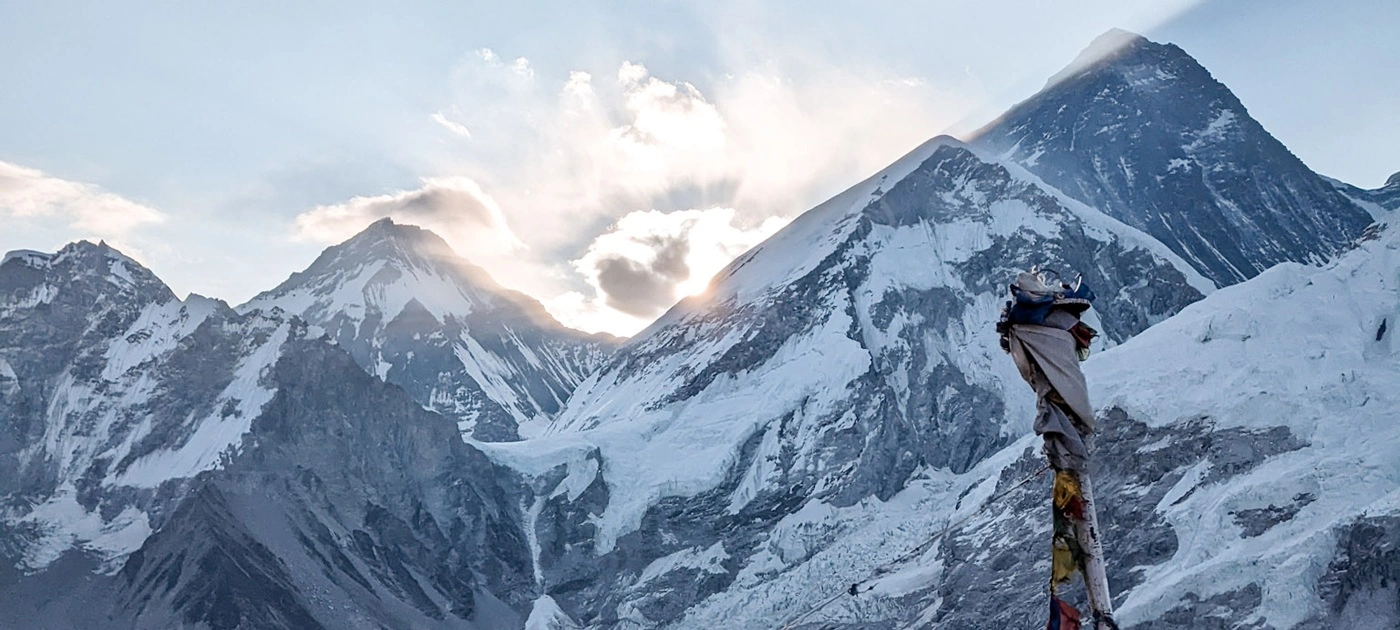
Kala Patthar at sunrise is the photographic anchor of the entire EBC trek. The composition — Mount Everest's south-west face in first light, the Khumbu icefall pouring down to the left, Lhotse closing the right side, Pumori rising directly behind the photographer — is the single most photographed image on the trek, and the photograph most travelers come back wanting to have successfully captured.
The technical demands are significant: pre-dawn alpine start at 4:30 AM from Gorak Shep at 5,140 meters, climb of 400 meters in pitch dark to Kala Patthar at 5,545 meters, arrival at the summit between 5:30 and 6:00 AM, sunrise window between 6:15 and 6:45 AM in October to December (later in spring), temperatures of minus 15 to minus 20 Celsius.
Lens choice for Kala Patthar: standard zoom (24-70 or 24-105) for the wider composition that includes the Khumbu icefall and the Pumori foreground, plus a telephoto zoom (70-200 or 100-400) for isolating Everest's summit pyramid in the first light. A tripod is appropriate for the long blue-hour exposures (the 30 minutes before sunrise) and unnecessary once the sun is up — the brief alpine light at sunrise is best captured handheld with shutter speeds above 1/250s.
The single most useful preparation is a hand warmer in the inner jacket pocket and a spare battery, with the rotation already established. The single most useful technique is shooting in burst mode through the entire sunrise window — the alpine light shifts dramatically across 60 to 90 seconds, and the best frames are sometimes the ones taken when the photographer thought the moment had passed.
Quick Reference: Lens Choice by Viewpoint
|
Viewpoint
|
Best Time
|
Recommended Lens
|
|
Tengboche Monastery
|
3:30–5:00 PM late afternoon
|
24-70mm or 24-105mm
|
|
Hotel Everest View terrace
|
6:00–7:00 AM sunrise
|
24-105mm or 70-200mm
|
|
Khumjung and Khunde villages
|
3:00–5:00 PM late afternoon
|
24-70mm and 50mm prime
|
|
Pheriche valley
|
6:30–8:00 AM morning
|
16-35mm or 24-70mm
|
|
Lobuche to Gorak Shep approach
|
Morning during the trek
|
24-70mm and 70-200mm
|
|
Everest Base Camp
|
11:00 AM–1:00 PM arrival
|
16-35mm wide for prayer flags
|
|
Kala Patthar sunrise
|
6:15–6:45 AM Oct-Dec
|
24-70mm AND 70-200mm
|
Monastery and People Photography Ethics
Inside Monasteries
Photography rules inside Khumbu monasteries vary by monastery and by specific area within each monastery. The general convention is that courtyard photography is welcome, interior photography of religious objects is sometimes permitted for a small fee, and photography of the assembly hall during prayers is generally not permitted. Tengboche, Pangboche, and the Khumjung monasteries each have specific rules, as outlined by the guide at the entry point.
The default behavior is to lower the camera at the threshold and only raise it after explicit permission. Travelers who try to photograph through doorways or windows when interior photography is prohibited are violating the spirit of the rule and are sometimes asked to leave.
Photographing Monks and Lamas
Always ask before photographing monks and lamas. The convention is the same as elsewhere in the Buddhist Himalayan world — eye contact, raise the camera in question, and proceed only if the person nods. Most monks are happy to be photographed when asked. Most are uncomfortable when not asked. Photographing monks during private prayer is considered intrusive, even with permission. Photography of senior lamas requires more careful permission than photography of junior monks — if the senior lama declines, the answer is clearly no.
Photographing Sherpa Families and Porters
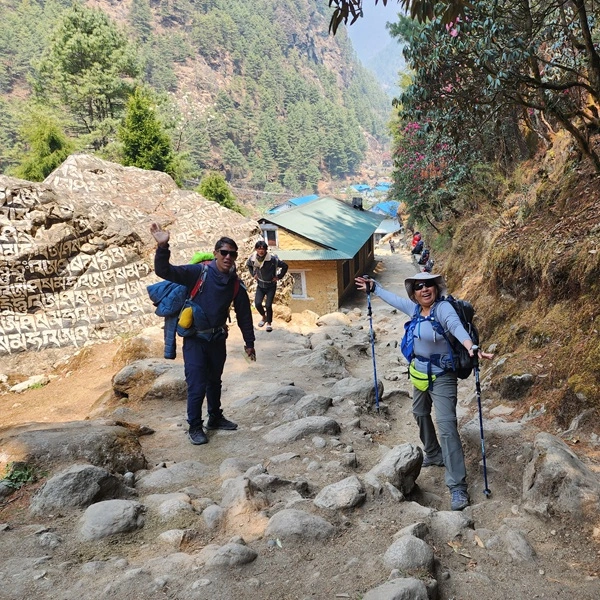
Sherpa families along the trail are accustomed to international visitors with cameras and are generally welcoming when asked. Porters are a more sensitive category — they work, often carrying heavy loads — and a photograph that romanticizes their labor can feel exploitative if taken without their consent.
The convention is to ask the porter for permission, to offer to share the photograph with the porter (most have phones for image transfer), and to avoid photographing porters carrying loads that exceed the operator's stated weight standards. Travelers wanting authentic Sherpa portraits often find that the lodge owners and tea house staff are more willing subjects than working porters.
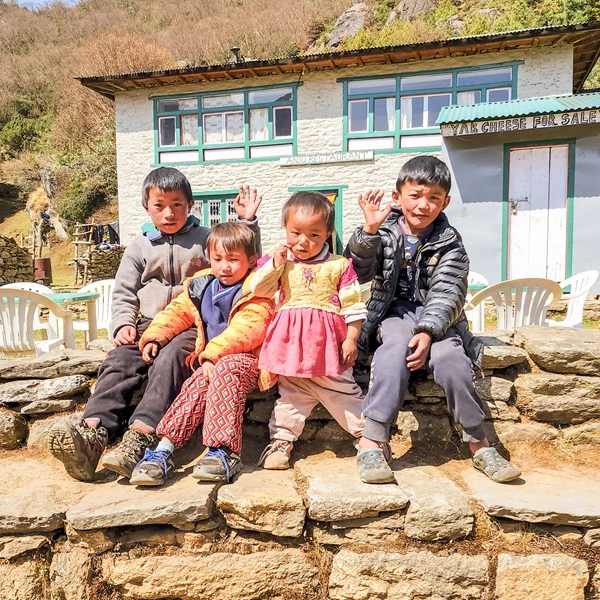
Photographing Children
Photography of children requires both the child's assent and, where possible, a parent's consent. The instinct of most travelers is to photograph children without a second thought. The local ethical convention is more cautious. Our guides facilitate appropriate introductions when guests want to photograph children, and we recommend asking through the guide rather than approaching parents directly because of the language barrier.
Drone Rules on the EBC Route
Nepal Drone Regulations
Nepal's drone regulations have tightened significantly in recent years and continue to change. As of 2026, drone operations in Nepal require permits from the Civil Aviation Authority of Nepal (CAAN) and additional permits from the Department of Tourism for drone work in trekking regions.
The permits are obtainable, but the application process takes several weeks and is not granted for casual tourist flights. Drone operation without permits is illegal, and confiscation at Tribhuvan Airport on departure is a real risk. Most casual EBC travelers should not attempt to bring drones.
Specific Restrictions on the EBC Route
The EBC trek crosses through Sagarmatha National Park, which has additional drone restrictions on top of the national rules. Drone flight over monasteries (Tengboche, Pangboche, Khumjung) is prohibited regardless of permits. Drone flights in the Khumbu icefall area (above Gorak Shep) are restricted due to climbing operations on Everest itself — drones near climbing routes pose a safety hazard. Drone flight that disturbs wildlife or that is judged to disturb other trekkers can result in immediate confiscation by park rangers.
Practical Recommendation
Most travelers should leave drones at home for the EBC trek. The combination of permit complexity, restricted areas, confiscation risk, and genuine ethical issues around drone noise in monastery settings makes the drone option unattractive to casual users. Travelers committed to drone footage should work with our team in advance on the permit application — we can coordinate with CAAN and the Department of Tourism, but the process takes 4 to 6 weeks, and the success rate is below 50 percent for individual tourist applications.
Travel Photography Workflow on the Trail
Daily Backup
Memory card failures at altitude do happen, and the cost of losing a day's photographs cannot be recovered. The standard practice is to back up the day's photographs to a second storage device at the lodge every evening. Two reliable approaches: a USB-C external SSD (Samsung T7 or similar, 1TB+) with the camera connected via USB-C cable and the day's images copied across, or a phone-based backup using the camera manufacturer's app (Sony Imaging Edge Mobile, Canon Camera Connect, Nikon SnapBridge) with the photographs synchronized to the phone storage. Some travelers carry both — the SSD as the primary backup and the phone synchronization as a secondary backup.
Editing on the Trail
Most luxury EBC travelers do not edit photographs on the trail because the lodge environment is not conducive to careful editing work, and the displays on phones and laptops do not handle the high-contrast snow images well. The pragmatic approach is to shoot RAW, back up daily, and edit at home after the trip with the full processing workflow.
Travelers who genuinely want to edit on the trail should bring a tablet or laptop with calibrated color and use it sparingly — the time spent editing is time not spent at the dining table with the other guests, and the lodge evenings are part of the trip experience.
Card Capacity Planning
A typical 14-day EBC trek produces 2,000 to 4,000 photographs for a moderately active photographer, plus video. The total storage requirement is approximately 100-200 GB for RAW shooters, less for JPEG-only shooters. Two 256 GB SD cards (or one 512 GB) handle the trip with room for video. Avoid running cards to capacity—leave 20% headroom on the active card to handle an unexpectedly photogenic afternoon. Spare cards should be stored in a secure, dry location separate from the camera bag.
How Our Team Supports Photography Guests
After two decades of running luxury EBC departures with photography-focused guests, our operating practices for photography travelers have settled into the support below. We publish them so that prospective guests can compare what is available across operators.
- Pre-departure photography brief. Photography guests receive a dedicated pre-departure brief covering the specific viewpoints on their itinerary, seasonal light expectations, cold-weather equipment management protocols, and the monastery and drone rules for their dates.
- Adjusted morning starts for sunrise positioning. Photography guests at Hotel Everest View, Tengboche, and Kala Patthar receive earlier morning calls than standard guests, so they are in position before the sunrise window opens. Coffee is delivered to the room rather than served at breakfast.
- Tripod transport on the trail. Photography guests can include a lightweight travel tripod in the porter-carried duffel without the weight penalty. We brief tripod choice in the pre-departure pack — Peak Design Travel Tripod and similar travel tripods at 1.5-2kg are the standard recommendation.
- Coordinated monastery access where possible. Our guides coordinate with the monastery liaisons at Tengboche and Pangboche for guests with specific interests in monastery photography. Permission for interior photography is sometimes granted for serious photographic projects with advance notice.
- Cold-weather equipment loaner kit. Travelers who do not have hand warmers, lens hoods, rocket blowers, or microfibre cleaning cloths receive these from our equipment kit at no additional cost. The cost of these items is modest, and the photographic difference they make is significant.
- No commercial pressure on equipment choices. We do not have referral relationships with camera or lens brands. Our equipment recommendations reflect what we have seen work for our guests, not what generates affiliate revenue. The recommendations in our pre-departure brief are honest.
Frequently Asked Questions
What is the best camera for the EBC trek?
Mirrorless full-frame is the right answer for travelers buying or upgrading equipment specifically for the trek — Sony A7C II, Canon R6 Mark II, and Nikon Z8 are all strong choices. Travelers who are already invested in a DSLR system can use existing equipment without a significant disadvantage. Phone cameras (iPhone 15 Pro Max, Pixel 8 Pro) are surprisingly competitive for general travel photography and the right answer for travelers not committed to bringing a dedicated camera.
Do I need a tripod for the EBC trek?
Useful but not essential. A lightweight travel tripod (Peak Design Travel Tripod, Manfrotto Befree, or similar at 1.5–2kg) is appropriate for the Kala Patthar sunrise blue-hour exposures and the Hotel Everest View pre-dawn shots. A tripod is unnecessary for the rest of the trek because most compositions work handheld at shutter speeds above 1/250s. Travelers prioritizing weight should leave the tripod and use the camera's image stabilization. Travelers prioritizing serious astrophotography or long-exposure landscape work should bring the tripod.
How do I keep my camera batteries warm?
Sleep with batteries inside the sleeping bag overnight. Store spare batteries in the inner jacket pockets, close to the body, during trekking days. Rotate batteries between the camera, the inner pocket (warming), and the ready position so a warm battery is always available when the camera battery runs low.
Hand warmers in the inner jacket pocket adjacent to the spare battery extend the warm-storage capacity in the coldest conditions. The combination of overnight bag storage and inner-pocket rotation dramatically extends per-day shooting capacity, typically from 2 hours of cold operation to 6-8 hours.
Can I photograph inside Tengboche Monastery?
Photography inside the assembly hall during prayers is generally not permitted. Courtyard photography is welcome. Some interior photography is permitted, subject to a small fee, outside prayer times. Specific rules are posted at the monastery entry point — the default behavior is to lower the camera at the threshold and raise it only after explicit permission. Photographs of monks at private prayer are not appropriate even when other interior photography is permitted.
Can I bring a drone to the EBC trek?
Most travelers should not. Nepal's drone regulations require permits from the Civil Aviation Authority of Nepal and additional permits from the Department of Tourism. The permit process takes 4 to 6 weeks, and the success rate for individual tourist applications is below 50 percent.
Sagarmatha National Park has additional drone restrictions, and drone flight over monasteries is prohibited regardless of permits. Confiscation at Tribhuvan Airport on departure for unpermitted drones is a real risk. Travelers committed to drone footage should work with our team on the permit application well in advance — but most casual users should leave drones at home.
What lens should I bring for Kala Patthar sunrise?
Both. The standard zoom (24-70mm or 24-105mm) handles the wider composition, including the Khumbu icefall and the Pumori foreground. The telephoto zoom (70-200mm or 100-400mm) isolates Everest's summit pyramid in the first light. Travelers carrying only one lens for Kala Patthar should choose the standard zoom and accept the wider composition — the telephoto-only approach misses the foreground context that makes the standard composition memorable.
How many memory cards should I bring?
Two cards minimum. A 14-day EBC trek produces 100 to 200 GB of RAW data plus video for a moderately active photographer. Two 256 GB cards (or one 512 GB and one backup) handle the trip with room for video. Always leave 20 percent headroom on the active card. Spare cards should be stored in a secure, dry location, separate from the camera bag, in case the bag is lost.
Should I shoot RAW or JPEG?
RAW for travelers who edit at home. The Khumbu's high-contrast snow conditions, the sunrise alpine light, and the dramatic shadow recovery needs of the trek all benefit significantly from RAW processing. JPEG is acceptable for travelers who do not edit and want to share images directly from the camera. Most photography-focused travelers shoot RAW + JPEG simultaneously — the JPEG for immediate sharing and the RAW for the final edit at home.
How do I avoid lens fogging in cold conditions?
Keep the camera away from your face during composition — use the EVF or rear screen at arm's length rather than pressing the camera to your eye. Warm exhaled breath fogs cold lens front elements in seconds. A lens hood reduces direct light exposure. When transitioning from cold outside to warm lodge interior, leave the camera in the unheated entryway for 30 to 60 minutes before bringing it into the heated dining room — this prevents condensation on the internal optics.
What about wildlife photography on the EBC trek?
Limited but rewarding. The lower Khumbu has Himalayan tahr (mountain goats), Himalayan monal (the national bird of Nepal, with vivid iridescent plumage), musk deer, and snow leopards (rarely seen). Wildlife photography is most rewarding in the lower section of Sagarmatha National Park, between Lukla and Namche Bazaar. A telephoto zoom (100-400mm or 70-200mm with a teleconverter) is appropriate for wildlife. Most EBC travelers are primarily landscape photographers, and the wildlife photographs are opportunistic rather than planned.
Can the helicopter return ruin my photographs?
No, but it changes the framing. The helicopter return from Gorak Shep to Kathmandu (used on most luxury EBC trips after Kala Patthar) offers aerial views of the Khumbu Valley, Tengboche, the Imja Valley, and the Lukla approach. Most photography-focused travelers value the helicopter return both for the joint preservation and for the unique aerial perspectives on the route they have just walked. Bring a wide-to-standard lens on the helicopter — the windows are not large, and the framing favors wider focal lengths than longer telephotos.
How do I photograph porters respectfully?
Ask for permission first and ask through the guide rather than approaching the porter directly due to the language barrier. Avoid photographing porters carrying loads that exceed the operator's stated weight standards — these photographs glamorize exploitation rather than document the dignified work most porters do. Offer to share the photograph with the porter — most have phones for image transfer. Travelers wanting authentic Sherpa portraits often find that lodge owners and tea house staff are more willing subjects than working porters.
What time should I wake for Kala Patthar sunrise?
4:30 AM departure from Gorak Shep, arrival at Kala Patthar between 5:30 and 6:00 AM, sunrise window between 6:15 and 6:45 AM in October to December. Spring departures (April) are slightly later — sunrise around 5:45 to 6:15 AM. Plan to be at the summit 30 minutes before sunrise to set up the tripod, compose carefully, and capture the blue-hour exposures before the alpine light arrives.
The full sunrise sequence — blue hour, alpine glow, full sunrise, post-sunrise warm light — runs across approximately 90 minutes from arrival to descent. Travelers shooting on autopilot through the entire window typically capture the best frames in the first 20 minutes after first light, but the moment cannot be predicted in advance, and the only reliable approach is to shoot through the entire window.
Plan Your EBC Photography Trek With Us
Tell us your camera system and your photographic interests, and we will return a detailed pre-departure brief covering the viewpoints, the timings, the cold-weather equipment protocols, and the monastery access we can coordinate. Photography-focused EBC departures get adjusted morning starts and direct support from our team on the trail.