Snow Leopard Tracking in Nepal: A Luxury Guide to the Five Best Regions
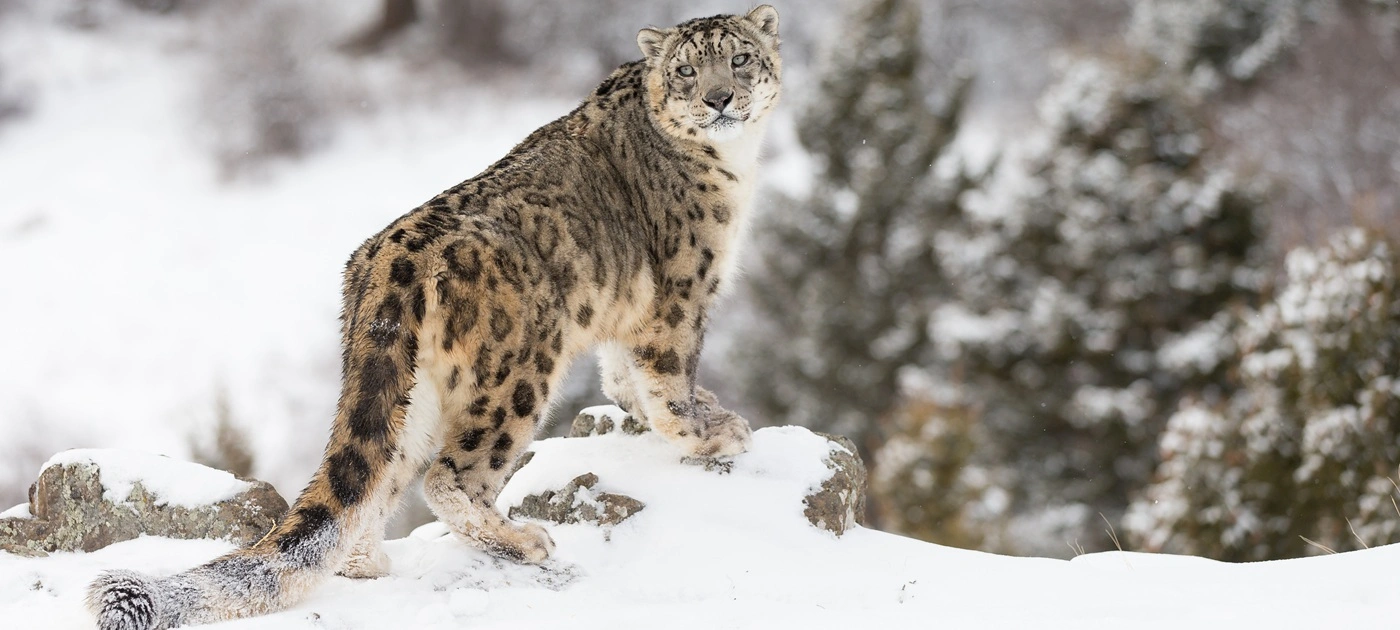
Snow leopard tracking in Nepal is the kind of trip that reaches a small category of traveler — those willing to spend two to three weeks at altitude in the depths of winter, sit on freezing ridges with spotting scopes for hours at a stretch, and accept that the reward may be a single glimpse across a kilometer of rock face.
Twenty years ago, a confirmed sighting was a once-in-a-lifetime achievement reserved for field biologists on multi-month expeditions. Today, the combination of community-led conservation, established tracking infrastructure, and recovered prey populations has made Nepal the world's strongest country for snow leopard observation. Sightings are still not guaranteed. They are no longer impossible.
After years of running winter wildlife departures into the Himalaya, our team has watched the rhythm of these trips settle into a predictable pattern. Travelers who arrive with the right expectations, the right gear, the right physical preparation, and crucially, the right time window have rewarding trips even on the days when the cat does not appear.
Travelers who arrive expecting snow leopard tracking to be a wildlife safari with guaranteed sightings have disappointing trips, even on days when the cat does appear. The difference is preparation. The good news is that preparation is the part we handle as the operator.
This guide covers the five regions where we run snow leopard tracking — Manang in the Annapurna Conservation Area, Upper Mustang, Shey Phoksundo and Upper Dolpo, the Manaslu Conservation Area, and the Kangchenjunga Conservation Area in the far east.
We explain the winter timing that enables sightings, the conservation context that makes it ethical to operate, the permit and logistical realities for each region, the gear and physical preparation that matter most, and how our team manages these departures. It is written for travelers seriously considering this kind of trip, not for casual readers.
Important: Snow leopard sightings cannot be guaranteed, regardless of an operator's capability or financial investment. The cats are wild apex predators with vast home ranges. Our team commits to maximizing the probability of a sighting through expert local trackers, optimal positioning, and proven winter routes — but we are honest with every guest at booking that the reward for a snow leopard expedition is the experience itself, with the sighting as the possible peak rather than the guaranteed outcome.
Why Nepal Is the Strongest Country for Snow Leopard Tracking
Snow leopards range across twelve countries from Mongolia and Russia in the north through China, Bhutan, India, Pakistan, and Afghanistan into the Stans. Nepal is the country where the combination of population density, accessibility, and operational infrastructure produces the best balance for travelers.
Sightings occur in Mongolia and Ladakh as well, but Nepal has invested most heavily in community-led conservation that has stabilized the cat population, and the trekking infrastructure across the major regions makes multi-week winter expeditions logistically practical.
Recent national surveys put Nepal's share of the global snow leopard population at a meaningful percentage despite the country covering only a small fraction of the cat's overall global range. The bulk of that population sits in the western Himalaya — the Dolpo region, the Annapurna conservation area, and the trans-Himalayan zones along the Tibetan border.
The western density makes western itineraries (Manang, Mustang, Dolpo) statistically stronger than the eastern routes for first-time snow leopard travelers, though Kangchenjunga in the east offers a different experience for travelers prioritizing untouched wilderness over sighting probability.
The Conservation Story Behind Today's Sightings
It is worth understanding why snow leopard sightings are even possible in Nepal today. Twenty years ago, they barely happened. The cats raided livestock, herders retaliated, and the population was crashing. The shift came from community-led conservation work — livestock insurance schemes that compensate herders for snow leopard predation, solar-powered predator-deterrent lights for nighttime corrals, and the conversion of historically aggrieved local communities into the primary guardians of the species.
The economic reframe was simple: a live snow leopard generates more income through ecotourism than a dead one prevents in livestock losses. Once the maths worked for local families, the population recovered. The travelers who book snow leopard tracking trips today are participating in the funding model that keeps the species alive.
Winter Timing: Why January to March Is the Only Real Window
Snow leopard tracking is a winter activity. The reason is ecological. Snow leopards are obligate predators of Himalayan blue sheep (bharal). In summer, the blue sheep range across high-altitude meadows above 5,000 meters, where the cats follow them and where humans cannot easily go.
In winter, heavy snow on the highest ridges drives the blue sheep down to grazing terraces between 3,500 and 4,000 meters. The cats follow. This brings the apex predator closer to the trekking corridors and the established tracking ridges, where our scouts position guests with spotting scopes.
The winter window also coincides with the snow leopard mating season (late January through February). During mating season, the cats break their normal pattern of silence — they vocalize, they cross exposed ridgelines to scent-mark territory, and they move further than at any other time of year. The combination of descending prey and active mating makes January to March the only realistic tracking window. Outside this window, snow leopard sightings in Nepal are rare, even with expert tracking.
The Three Sub-Windows
- Late January to mid-February — coldest temperatures, deepest snow, peak prey concentration in the lower terraces, mating activity beginning. Temperature lows of -15 to -20 Celsius at observation altitude
- Mid-February to mid-March — peak mating season, most active cat movement, slightly warmer days. Strongest single window for sightings in most years
- Mid-March to early April — mating season closing, prey beginning to disperse upward as snow recedes, slightly warmer conditions. Last reliable window before the cats move back up to the high ridges
Our team operates dedicated snow leopard tracking departures across this window, with the highest concentration in mid-February to mid-March. We do not run snow leopard departures outside the January-to-April window because the sighting probability outside this window does not justify the difficulty of the trip.
The Five Regions Where We Run Snow Leopard Tracking
1. The Manang Valley (Annapurna Conservation Area)
Manang is our default recommendation for first-time snow leopard travelers, and it offers the highest daily sighting probability on the trail. The valley sits in the rain shadow north of the Annapurna range, producing a high-altitude cold desert with rocky cliffs, fragmented ridges, and accessible blue sheep terraces that make the area ecologically optimal for snow leopards. The infrastructure advantage matters too — Manang has established teahouses, our scout network is densest here, and the winter routes are well-mapped.
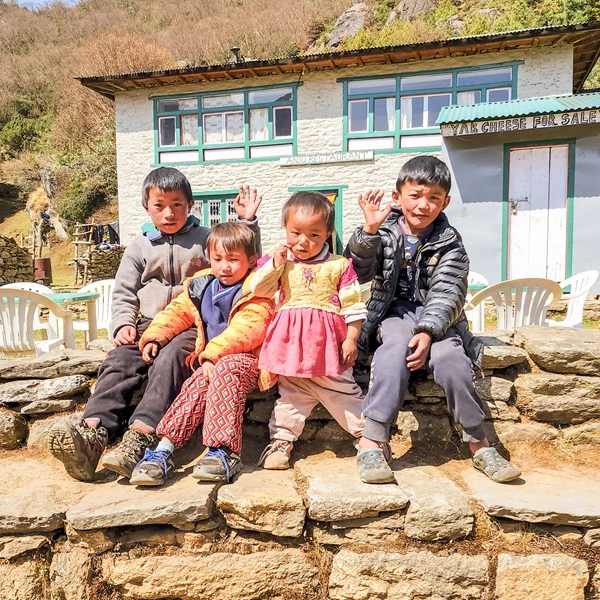
The primary tracking zones are Manang Village itself at 3,519 meters (the staging base for most expeditions), the cliffs above the Khangsar and Tilicho trail, the Yak Kharka migration corridor at 4,050-4,110 meters, and the quieter ridges around Ledar at 4,200 meters.
Our scouts position guests at elevated observation points before sunrise, scan the ridges through high-powered spotting scopes throughout the morning, hike the ridges at midday in search of fresh tracks and territorial scrapes, and return to the scopes in the late afternoon for the evening hunting window. Sightings are most common during dawn and dusk, when the cats are most active.
Manang is the most accessible of the five regions. The drive from Kathmandu to Besisahar takes a day, and the onward jeep transfer to Manang takes another day; the trip is operationally manageable for travelers with reasonable fitness and prior altitude experience. We typically run 12-14-day Manang snow leopard departures with helicopter access on the inbound or outbound leg to compress the schedule and reduce guests' road exposure.
2. Upper Mustang
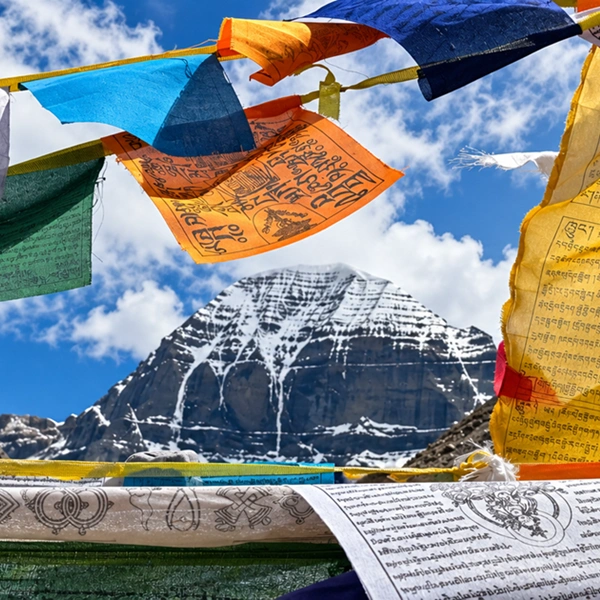
Upper Mustang sits to the northwest of Manang in the trans-Himalayan zone bordering Tibet. The landscape is a high-altitude desert of eroded canyons, multi-coloured sandstone cliffs, and centuries-old Tibetan-style villages. Snow leopard sightings here are growing in frequency as documentation improves, and the region offers a combination not available anywhere else in the country — serious wildlife tracking alongside genuine cultural depth. Travelers on Mustang departures spend mornings scanning canyon rims for cats and afternoons inside Buddhist monasteries that predate most of European architectural history.
The wildlife is broader than just snow leopards. The Tibetan-border position means Mustang supports kiang (Tibetan wild ass), Tibetan gazelle, Himalayan wolves, and musk deer alongside the snow leopards themselves. Travelers who care about the broader ecosystem rather than only the headline species often find Mustang the most rewarding of the five regions.
Mustang is also the region where 4WD jeep access changes the operational reality. Travelers who would struggle with the multi-week trekking elsewhere can move between observation points in jeeps, making Mustang the right choice for travelers prioritizing photography over physical challenge — heavy telephoto lenses and tripods can travel by vehicle rather than by porter.
The standard Mustang expedition flies Kathmandu to Pokhara to Jomsom (a short flight through the deepest gorge in the world) and then proceeds north into the restricted zone toward Lo Manthang. The total trip duration is typically 12-16 days.
3. Shey Phoksundo and Upper Dolpo
Dolpo is the country's most important snow leopard stronghold and the most demanding tracking destination. The Western conservation landscape — of which Dolpo is the heart — holds the majority of Nepal's national snow leopard population. The numbers are higher here than anywhere else in the country, and the wilderness is among the most undisturbed in the wider Himalaya. Travelers who choose Dolpo are choosing the highest probability of sightings and the least infrastructure.
The trade-off is the journey itself. Dolpo is reached by flying from Kathmandu to Nepalgunj on the Indian border plains, overnighting, then taking a small STOL aircraft up to the precarious airstrip at Juphal at 2,475 meters. From there, the trekking is foot-based for several weeks, with no permanent tourist infrastructure beyond basic homestays in the larger villages.
True tactical tracking requires a fully supported camping expedition — kitchen crew, mule trains, satellite communications, and dedicated tents at the observation points. The total investment is significantly higher than in Manang or Mustang.
Dolpo expeditions reach the deepest snow leopard country in Nepal — the Phoksundo Khola valley, the crossing of Kang La pass, the ancient Shey Gompa, and the sacred Crystal Mountain. The sighting probability per expedition is the highest of the five regions, but the cost of getting there is also the highest. Dolpo is the right answer for travelers willing to spend more for less infrastructure in exchange for genuine wilderness.
4. Manaslu Conservation Area
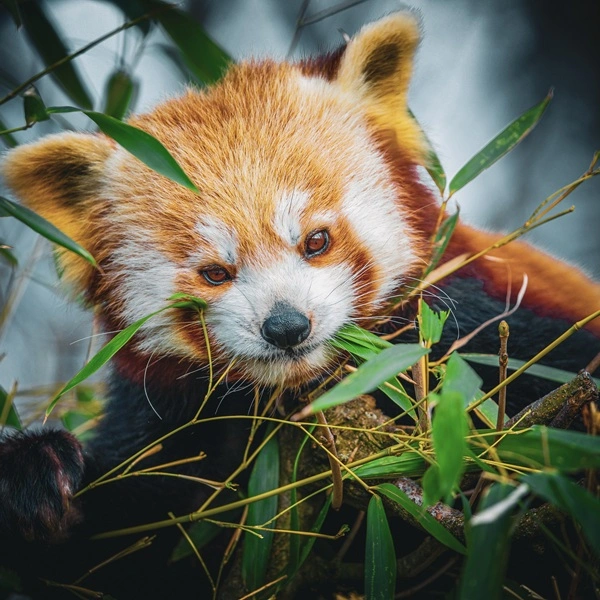
Manaslu sits east of Annapurna and circles the eighth-highest peak in the world. The conservation area has lower foot traffic than Annapurna and Everest, so the wildlife corridors are quieter, and the cats roam closer to the established trekking routes than they would in busier regions. Biodiversity is broader than just snow leopards — the conservation area supports red pandas, Himalayan tahr, Tibetan wolves, and the iridescent Himalayan monal pheasant, alongside the apex cat.
Snow leopard tracking in Manaslu focuses on the upper reaches of the circuit — the high-alpine meadows toward the Larkya La pass at 5,106 meters, the glacial bowls around Samagaun and Birendra Lake, and the approaches to Manaslu Base Camp at 4,800 meters. The Tsum Valley side trip adds another vector — the valley operates under strict religious decrees that prohibit hunting wildlife, creating an unusually safe haven for prey species and stabilizing the predator population accordingly.
Manaslu is the right answer for travelers who want serious wildlife tracking in genuine wilderness without the cost intensity of Dolpo. The trekking infrastructure is more developed than in Dolpo (teahouses exist along the main circuit) but quieter than in Annapurna. Departures typically run 16-20 days with a buffer day at higher altitudes. The Manaslu permit framework is one of the strictest in Nepal, mandating licensed guides and minimum group sizes — covered in the permits section below.
5. Kangchenjunga Conservation Area
Kangchenjunga occupies the far northeastern corner of Nepal, wedged between Sikkim and Tibet. It is the most remote of the five regions and the least visited — the entire conservation area sees a tiny fraction of the foot traffic that Everest receives. Trails are silent. Teahouse interactions are personal. The wilderness is genuinely undisturbed.
The scientific significance of Kangchenjunga matters for travelers who care about conservation. GPS telemetry studies in this region have produced some of the most important data on snow leopard spatial ecology globally — the cats here exhibit home ranges significantly larger than previous estimates suggested, with documented cross-border movement into India and China. Travelers visiting Kangchenjunga are visiting the scientific frontier of snow leopard research and the cats themselves.
The journey is demanding. The standard route flies from Kathmandu to Bhadrapur on the southern plains (a reliable 45-minute flight, unlike the weather-canceled Lukla route), then a 10-12-hour overland drive through the tea gardens of Ilam to Taplejung, where the trekking begins.
The full circuit takes roughly three weeks of high-altitude hiking through Limbu, Rai, Sherpa, and Gurung cultural territories before reaching the tracking grounds at Pangpema (the Kangchenjunga north base camp at 5,140 metres) or Oktang (the south base camp). Camping support is required for serious tracking. Kangchenjunga is the right answer for travelers who want the deepest wilderness experience and are willing to trade higher sighting probability for lower foot traffic.
Five Regions Compared
|
Region
|
Best For
|
Duration
|
Infrastructure
|
|
Manang
|
First-time snow leopard travelers; reliable sightings
|
12–14 days
|
Established teahouses
|
|
Upper Mustang
|
Wildlife plus cultural depth; jeep access for photographers
|
12–16 days
|
Mixed teahouse and heritage
|
|
Upper Dolpo
|
Maximum sighting probability; deepest wilderness
|
18–24 days
|
Camping required
|
|
Manaslu
|
Serious wildlife in quieter wilderness; strong biodiversity
|
16–20 days
|
Teahouse with camping option
|
|
Kangchenjunga
|
Pristine wilderness; conservation science vector
|
18–24 days
|
Hybrid camping required
|
Permits, Logistics, and the Solo-Trekker Prohibition
Snow leopard tracking happens in some of Nepal's most heavily regulated zones. The permit system serves several purposes — it caps the volume of human traffic in fragile alpine ecosystems, generates direct funding for conservation and waste management, and ensures travelers have professional support in the high-altitude winter environments where mistakes get serious quickly.
The Solo-Trekker Prohibition
Solo trekking is prohibited across all the restricted-area regions covered in this guide — Mustang, Dolpo, Manaslu, and Kangchenjunga. The prohibition has three components. First, all expeditions must be booked through a government-registered Nepali trekking agency — permits are not issued to individuals.
Second, a minimum of 2 foreign trekkers is required to obtain a restricted-area permit (agencies often arrange group joinings for solo travelers). Third, a licensed guide must accompany the group at all times, and additional porters or scouts are required on the higher-altitude segments. The Manang region is technically open to solo trekking under standard conservation-area rules, but our team will not operate snow leopard departures without a licensed guide and minimum support team for safety reasons.
Permit Cost Structure
Permit costs vary by region and are subject to change. The cost ranges below are general guidance — our team confirms current fees at the time of booking. Annapurna and conservation-area permits sit at the lower end of the spectrum. Restricted-area permits for Mustang, Dolpo, Manaslu, and Kangchenjunga sit at the upper end.
The full permit cost for a Dolpo expedition can run several hundred US dollars per traveler for the restricted-area component alone, on top of conservation-area entry fees, trekkers' information management fees (where applicable), and agency processing costs.
Lead Time for Booking
- Manang departures: 4–6 months ahead is sufficient. Inventory does not tighten the way summer trekking inventory does
- Upper Mustang departures: 5–7 months ahead because the restricted-area permit processing takes longer, and the luxury heritage inventory tightens earliest
- Dolpo expeditions: 6–9 months ahead because the camping logistics, mule trains, and STOL flight bookings require advance coordination
- Manaslu departures: 5–7 months ahead because the restricted-area permit and minimum group requirement need group-formation lead time
- Kangchenjunga expeditions: 6–9 months ahead because the regional infrastructure (camping, porters, scouts) and the multi-week duration both require long lead times
How Tracking Actually Works on the Ground
Snow leopard tracking is not wildlife safari work, where the operator drives through a national park in the hope of spotting animals from the vehicle. It is closer to specialist mountaineering with extended observation periods built in. The daily rhythm is shaped by the cats themselves — snow leopards are most active at dawn and dusk, which means the tracking schedule wakes early and ends late.
The Daily Rhythm
- 05:00 AM — Wake at lodge or camp. Sub-zero temperatures inside the room. Quick breakfast, gear preparation
- 06:00 AM — Departure to the morning observation point in pre-dawn light. Spotting scopes set up before sunrise
- 06:30–10:30 AM — Active scoping. Scouts scan the ridges through high-powered scopes. Trackers listen for blue sheep alarm calls — the audible indicator of a predator nearby
- 10:30 AM–02:00 PM — Midday hike along ridges looking for fresh tracks, scrape sites, and territorial markings. The cats are typically resting in caves during the warmest hours of the day, so direct sightings are unlikely. The hike itself often produces the most rewarding wildlife observations — Himalayan tahr, blue sheep herds, golden eagles, lammergeiers
- 02:00–04:00 PM — Late lunch and rest at the lodge or camp. Recovery for the evening session
- 04:00–06:30 PM — Afternoon scoping for the evening hunting window. The hour before sunset is statistically the strongest sighting period of the day
- 06:30 PM onward — Return to lodge, hot dinner, gear maintenance, briefing for the following day
What Scouts Actually Look For
Our scouts are the central asset of any snow leopard departure. The scouts read the landscape at a level travelers cannot replicate — fresh pugmarks pressed into unmarked snow at a hundred yards, territorial scrape sites with the disturbed earth still loose, scat that distinguishes between cat species, the specific posture of a blue sheep herd that indicates a predator nearby. The visible work during a tracking day is the scope time. The invisible work is the years of accumulated knowledge that let the scouts position the scopes correctly to begin with.
Patience and Realistic Expectations
The honest truth about snow leopard tracking is that most of the day is spent waiting. Sitting on cold ridges, watching empty rock faces, listening for the alarm calls that may not come. Travelers who do not enjoy the broader experience of being in the high winter Himalaya — the silence, the cold, the slow accumulation of small wildlife observations across hours of scoping — will struggle on a snow leopard departure even if a sighting happens. Travelers who do enjoy that environment will have rewarding trips even on the days when the cat does not appear.
Gear and Cold-Weather Survival
Tracking a perfectly camouflaged predator across rock faces in sub-zero temperatures requires specialized gear and physiological preparation. Tracking-day temperatures during the January-to-March window range from minus 15 to minus 20 Celsius, often colder at the observation altitude. Static observation periods of two to four hours are routine. Hypothermia is a real risk for travellers improperly equipped.
Layering System
- Thermal base layers (top and bottom) — merino or synthetic, never cotton
- Heavy fleece or insulated synthetic mid-layer for active warmth
- Expedition-grade down jacket (high fill, sub-zero rated) for static observation
- Wind-resistant alpine trekking pants over thermal long johns
- Insulated waterproof shell for snow conditions
Extremities Protection
- High-altitude insulated trekking boots, broken in across at least 30 hours of pre-trip wear
- Sock liner plus thick wool sock combination
- Glove liners (for camera and scope operation) plus heavy insulated mittens
- Warm hat, balaclava, and neck gaiter for static observation
- SPF 50+ sunscreen and high-UV-rated sunglasses — snow blindness is a serious risk at altitude
- Microspikes or crampons for icy trail sections at the higher observation points
Optical Equipment
- High-powered spotting scope with stable tripod (we provide the scopes for guests on our departures)
- Personal binoculars — 10x42 is the optimal balance of magnification and field of view for ridge scanning
- Camera body with high low-light sensitivity (full-frame mirrorless preferred) for the dim dawn and dusk hours
- A telephoto lens of at least 400mm focal length for the long-distance compositions, snow leopards typically allow
- Tripod or monopod for the heavy telephoto
- Multiple spare batteries stored in inner jacket pockets close to body warmth — cold drains lithium-ion capacity by 30 to 50 percent
- High-capacity power banks and portable solar panels for camp-based recharging
Medical and Survival
- Personal first-aid kit including blister care, painkillers, and any prescription medications
- Diamox (acetazolamide) is prescribed by your physician for altitude prophylaxis
- Hand and foot warmers — single-use chemical packs are the most useful single comfort item on a tracking day
- Hot water bottle for sleeping bag warmth at higher camps
- Headlamp with spare batteries for early-morning departures and late-evening returns
Accommodation Reality at Altitude
Luxury accommodation expectations need to be calibrated honestly for snow leopard tracking. Even our luxury-tier departures operate in conditions that no five-star hotel can replicate. The lower altitudes (Manang Village, Jomsom, Taplejung) have proper heated lodges with hot showers and reliable bedding.
The higher tracking altitudes (Yak Kharka, Khangsar, the high Dolpo passes, Lhonak in Kangchenjunga) sit beyond the practical limit of luxury construction. Above 4,000 metres the accommodation becomes basic — heated dining rooms, simple bedrooms, plumbing that sometimes works.
Our team handles this honestly. We brief guests at booking that the snow leopard tracking departures are not the same product as the luxury Bhutan circuits or the heated luxury lodges of the lower Khumbu. The compensation for the harsher accommodation is the experience itself — winter wilderness, near-empty trails, the specific reward of being among the few hundred travelers per year who attempt this kind of trip.
Travelers who require five-star accommodation throughout should consider the helicopter day tour to the Khumbu instead, or a Bhutan cultural circuit. Snow leopard tracking is for travelers willing to trade luxury accommodation for genuine wildlife and wilderness.
How Our Team Operates Snow Leopard Departures
After years of running winter wildlife departures into the Himalaya, our operating practices for snow leopard expeditions have settled into the standards below. We publish them openly because the gap between operators on these issues is significant.
- Local scouts are the central asset. Every snow leopard departure is led by experienced local trackers — typically Manangi, Mustangi, or Dolpo scouts who have decades of accumulated knowledge of the terrain, the cat behavior, and the specific scrape sites and migration corridors. The scouts are not casual hires — they are the long-term partners on whom our entire operation depends.
- Small group sizes. Snow leopard departures typically run with 2-4 guests per expedition. Larger groups generate more noise on the trail, more disturbance at observation points, and lower per-person sighting probability. We do not run mass-tourism snow leopard departures.
- Honest sighting probability. We are direct with every guest at the time of booking that sightings cannot be guaranteed. The reward for a snow leopard expedition is the experience of winter Himalayan wilderness, with a possible sighting as the peak. Operators promising guaranteed sightings are either misrepresenting the species or staging encounters in ways that compromise the cats.
- Conservation funding is built into the trip cost. A portion of every snow leopard departure is contributed directly to local conservation funds — the livestock insurance schemes that keep retaliatory killings at zero, the predator-deterrent technology programs, and the community scientist training that produces the next generation of trackers. Travelers who book with us are part of the conservation ecosystem that makes their trip ethically possible.
- Provided expedition gear. Spotting scopes, sub-zero sleeping bags, expedition-grade down jackets, and waterproof duffels are included with every snow leopard departure. Travelers who are not regular winter mountaineers do not need to invest in a full kit for a single expedition.
- Porter welfare to IPPG standards. All porters and scouts on our snow leopard departures are paid above the local market rate, given full insurance cover, equipped with proper cold-weather gear, and accommodated in the same lodges or camps as the trekking team. Our porter welfare policy covers loads up to 25kg, full medical evacuation insurance, and equal treatment in lodge accommodation.
Frequently Asked Questions
Are snow leopard sightings guaranteed?
No. Snow leopards are wild apex predators with vast home ranges and high natural caution. Our team commits to maximizing the probability of a sighting through expert local trackers, optimal positioning, and proven winter routes — but no operator can guarantee a sighting on any given expedition. We are honest about this at the time of booking. Travelers who require guaranteed wildlife sightings should consider African safari operations rather than Himalayan snow leopard tracking.
How long does a snow leopard expedition take?
Twelve to twenty-four days, depending on the region. Manang and Mustang are the shortest at 12-16 days. Manaslu and Kangchenjunga run 16-24 days. Dolpo expeditions typically run for 18-24 days due to camping logistics. The longer durations matter — sighting probability scales with the number of days spent actively in the field, and trips with fewer than 10 active tracking days produce significantly lower sighting rates.
When is the best time to track snow leopards in Nepal?
January through March, with the peak window being mid-February to mid-March during the cat mating season. Outside this window, snow leopards retreat to high-altitude ridges where tracking becomes impractical. We do not run snow leopard departures outside the January-to-April window because the sighting probability does not justify the difficulty of the trip.
How fit do I need to be?
Reasonable cardio fitness is essential. Snow leopard tracking involves multi-hour static observation in sub-zero temperatures plus daily hikes of 4-6 hours at altitudes between 3,500 and 5,000 meters. Travelers who hike regularly (weekend hikes with elevation gain, weekly cardio of 2-3 hours) have the baseline fitness for Manang and Mustang. Dolpo, Manaslu, and Kangchenjunga require greater fitness due to longer durations and more complex camping logistics. We send a pre-trek fitness assessment to every confirmed guest.
How cold does it get?
Tracking-day temperatures range from minus 15 to minus 20 Celsius at the observation altitude during the January-to-March window. Lodge interior temperatures often run minus 5 to plus 5 Celsius — heated dining rooms, but unheated bedrooms. Camp temperatures at the higher Dolpo and Kangchenjunga sites can run colder. The cold is a serious operational variable, and proper gear makes the difference between productive tracking days and survival days.
What gear do I need to bring?
The full layering system covered earlier in this guide — thermal base layers, heavy fleece or synthetic mid-layer, expedition-grade down jacket, wind-resistant pants, insulated boots, glove and mitten combination, warm hat, and neck gaiter. We provide the spotting scopes, sub-zero sleeping bags, expedition down jackets, and waterproof duffels for our snow leopard departures. Travelers bring personal clothing, optical equipment, and any photography gear.
Can I do snow leopard tracking with no prior altitude experience?
Manang and Mustang are appropriate for travelers without prior altitude experience but with reasonable fitness and physician clearance for above 4,500 meters. Dolpo, Manaslu, and Kangchenjunga should not be first-altitude experiences — the duration and logistics demand prior comfort with multi-week high-altitude trekking. We are honest with first-time altitude travelers about which regions are appropriate, and we will not run a Dolpo or Kangchenjunga departure for a guest without prior altitude experience.
Is snow leopard tracking ethical?
With the right operator, yes. The conservation work that has stabilized Nepal's snow leopard population is funded substantially by ecotourism revenue. Travelers booking responsible snow leopard departures are participating in the funding model that keeps the species alive. Our team contributes a portion of every departure cost to local conservation funds, and we operate in small groups to minimize disturbance. Travelers should ask any prospective operator directly about their conservation contributions and group size policies before booking.
What cameras and lenses work for snow leopard photography?
A full-frame mirrorless body with strong low-light performance (Sony A7 series, Canon R5 or R6, Nikon Z series) paired with a telephoto lens of at least 400mm focal length. Snow leopards typically allow distances of several hundred meters, which means longer lenses (500mm or 600mm prime, or 200-600mm zoom) are often necessary for tight compositions. A tripod or monopod is essential for the heavy telephoto. Cold-weather battery management is critical — store multiple spares close to the body and never leave them in the camera bag overnight.
Do I need helicopter access?
Optional but recommended for the Manang and Mustang routes. The road access from Kathmandu adds days of driving, compressing the actual tracking time. Helicopter access on the inbound or outbound leg gives more days at the observation points and reduces road exposure. For Dolpo and Kangchenjunga, the access flights are fixed-wing rather than helicopter (Nepalgunj-Juphal for Dolpo, Bhadrapur for Kangchenjunga). We confirm helicopter availability at the time of booking, based on dates and group size.
What other wildlife will I see?
Snow leopards are the headline species, but the broader winter ecosystem is genuinely rich. Himalayan blue sheep are visible daily — sometimes in herds of 50 or more. Himalayan tahr are common in the lower altitudes. Golden eagles, lammergeiers, and Himalayan griffons soar the ridges throughout the day. Mustang adds the Tibetan wild ass, the Tibetan gazelle, and the Himalayan wolf to the species list. Manaslu adds red panda observations at lower altitudes and the iridescent Himalayan monal pheasant in the rhododendron forests. Travelers who treat the broader ecosystem as the trip rather than the snow leopard alone consistently have more rewarding expeditions.
How much should I budget?
Snow leopard tracking is at the upper end of luxury Nepal trekking pricing due to the duration, the camping logistics in some regions, the small group sizes, the experienced local scouts, and the conservation contributions. Manang and Mustang departures typically run USD 6,000-9,000 per person for the trek package alone. Dolpo, Manaslu, and Kangchenjunga run USD 8,000-15,000 per person, depending on duration and camping support. International flights, travel insurance, gratuities, and any photography rental gear are additional. The lead time for booking is significant, and the operational costs are higher than standard luxury trekking — both reflect the genuine difficulty of the operation.
How early should I book?
Six to nine months ahead. Snow leopard departures run with small group sizes and limited inventory across our scout network. The most experienced scouts are committed to multiple expeditions during the January-to-March window months in advance. Travelers contacting us in November for a February departure are usually too late to secure the best dates. The right lead time is the previous summer for the following winter — we open bookings for the winter season around June each year.
Plan Your Snow Leopard Expedition With Us
Tell us your preferred region, your dates, your prior altitude experience, and your photographic goals. Our team returns a written expedition proposal within 48 hours covering the route, the scout team, the gear we provide, the conservation contribution included, and the realistic sighting probability for your dates. Snow leopard tracking is one of the most demanding trips we run — it is also one of the most rewarding for the travelers who choose it well.