Red Panda Tracking in Nepal: A Luxury Guide to the Five Best Regions
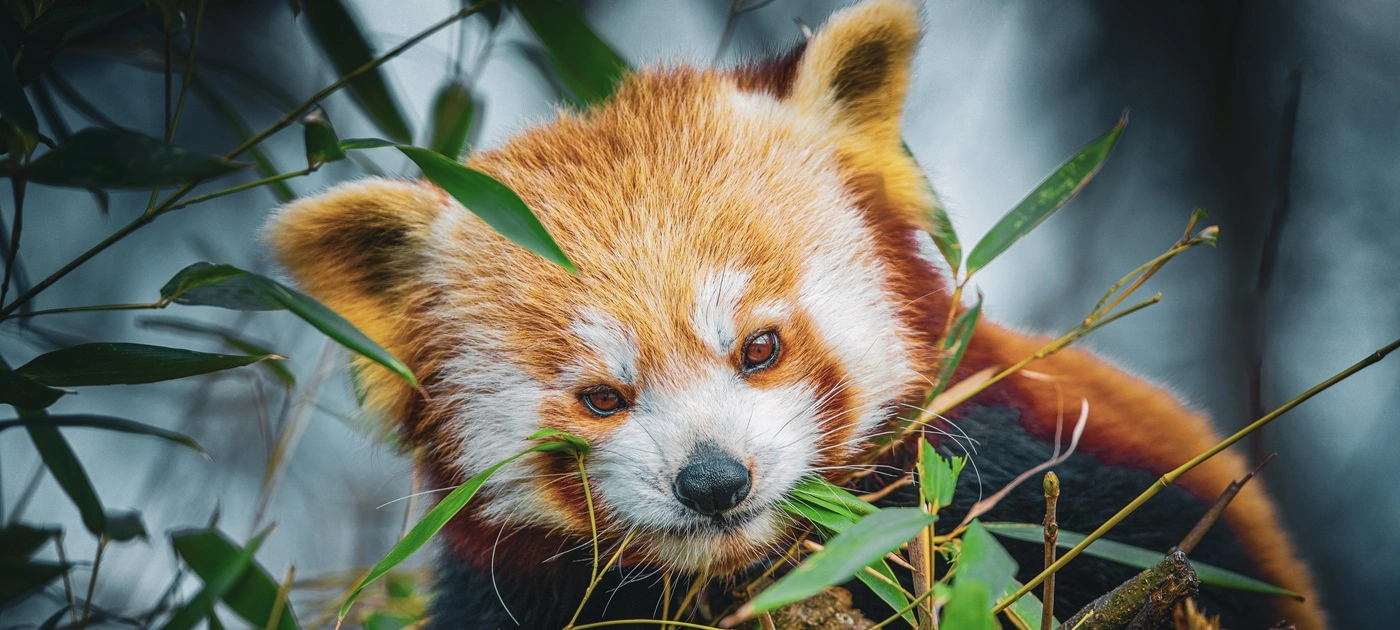
Red panda tracking in Nepal is the wildlife trip that almost no first-time visitor to Nepal knows is possible. The red panda is one of the most photographed animals in international zoos and one of the least photographed in the wild, because the cat-sized arboreal mammal lives high in the bamboo and rhododendron canopy of the eastern Himalaya, sleeps draped over branches twenty meters off the ground, and reduces movement to the minimum that its strict bamboo diet allows. Sightings happen, but they happen because experienced local trackers know exactly which valleys, which feeding zones, and which times of day produce the best probability. They almost never happen by accident.
After years of running wildlife departures into the eastern hills, our team has watched the rhythm of red panda tracking settle into a predictable pattern. The eastern districts of Ilam, Panchthar, and Taplejung — the so-called PIT corridor — produce the highest sighting rates in the country and, by extension, in the world.
The other regions on our list (Langtang, Makalu Barun, Kangchenjunga, Rara) each have specific reasons to choose them over Ilam, but the headline answer for travelers who want the highest probability of sightings with reasonable accessibility is the eastern corridor. The right region depends on what else the traveler wants from the trip — high mountain views, a longer wilderness expedition, a combination with another wildlife species, or a quieter alternative to the busier eastern routes.
This guide covers the five regions where we run red panda tracking — the PIT corridor (Ilam), Langtang, Makalu Barun, the Kangchenjunga conservation area, and Rara National Park. We explain the spring and autumn timing that makes sightings most reliable, the conservation context that has made it ethical to operate, the permit and logistics realities for each region, the community-homestay model that distinguishes red panda tracking from other Himalayan trips, and how our team operates these departures. It is written for travelers seriously considering a dedicated wildlife expedition, not for casual readers.
Important: Red panda sightings cannot be guaranteed, regardless of an operator's capability or financial investment. The species is solitary, naturally low-density, cryptically colored, and spends most of its daylight hours resting motionless in the high canopy. Our team commits to maximizing the probability of a sighting through experienced local trackers, optimal seasonal positioning, and proven feeding zones — but we are honest with every guest at booking that the reward for a red panda expedition is the experience itself, with the sighting as the possible peak rather than the guaranteed outcome.
Why Nepal Is the Strongest Country for Red Panda Tracking
Red pandas range across five countries — Nepal, India, Bhutan, Myanmar, and China — but the combination of population density, accessibility, and structured community-based tracking infrastructure makes Nepal the strongest single country for travellers who want to see the species in the wild.
Recent estimates put Nepal's share of the global wild population at roughly a quarter, with the densest concentrations in the eastern broadleaf forests bordering Sikkim. The wider eastern Himalaya — Nepal plus the Indian states of Sikkim and Arunachal Pradesh — accounts for close to half of the species' total global range.
Beyond the population numbers, Nepal has built something that no other red panda range country has — a network of community Forest Guardians who actively monitor specific red panda territories year-round. These guardians know where individual animals feed, where territorial boundaries lie, and where seasonal movement happens.
A traveler booking with an operator that works with the Forest Guardians is essentially booking access to that monitored knowledge. A traveler booking with a generic adventure operator or attempting a self-organized trip is starting from zero and producing a fraction of the sighting probability.
The Conservation Story Behind Today's Sightings
Two decades ago, red panda sightings in Nepal were rare even for biologists. The forests were under pressure from agricultural conversion, fuelwood harvesting, and unregulated grazing. Stray and feral dogs from expanding human settlements were killing red pandas through both predation and the spread of canine distemper. The species was sliding toward localized extinction in much of its eastern Nepal range.
The shift came from a community-based stewardship model that trained local citizens — particularly those from indigenous, marginalized, and economically disadvantaged backgrounds — as Forest Guardians. The guardians monitor red panda movement quarterly, operate camera traps, manage habitat-restoration nurseries, lead anti-poaching patrols, and run education programs in their own communities.
The same families who once cleared bamboo for grazing now protect it as the source of their livelihood. The conservation infrastructure that makes red panda tracking viable as an ecotourism product today is, fundamentally, the income it generates. Travelers who book with us participate directly in the funding model that keeps the species alive.
Seasonal Timing: Spring and Autumn Are the Two Real Windows
Red panda tracking is built around two seasons — spring and autumn — when forest conditions, weather, and the animal's own foraging behavior combine to produce the highest probability of a sighting.
Spring (March to May) — The Strongest Single Window
Spring is the absolute peak window for red panda tracking. Rising post-winter temperatures trigger the emergence of new bamboo shoots, which are the most nutrient-rich part of the red panda's diet and force the animals into highly active, predictable feeding patterns. The forest understory is at its most photogenic — rhododendron, magnolia, and orchids all flowering simultaneously across the eastern districts.
Late winter mating activity carries into early spring, which adds further animal movement and visibility. Daytime temperatures at tracking altitude (2,500-3,200 meters) are pleasant. Trail conditions are good. This is the window we recommend to first-time red panda travelers.
Autumn (September to November) — The Strongest Photographic Window
Autumn is the second-strongest window and arguably the best for serious wildlife photography. The end of the monsoon clears the atmosphere of airborne dust and particulates, producing the sharpest mountain visibility of the year — Kangchenjunga, Lhotse, Makalu, and Everest are all visible from the eastern ridge tops.
The forest canopy remains lush and green. Wildlife activity increases significantly as animals forage to build caloric reserves for winter. Tracking conditions are reliable, the lodges are comfortable, and the broader trekking ecosystem is at its strongest. Travelers prioritizing mountain photography alongside wildlife often choose autumn for this reason.
Winter (December to February) — Possible but Specialized
Winter tracking is possible, but adds difficulty. Red pandas descend to lower elevations to escape deep snow, which can paradoxically improve sighting rates. The vocal mating season begins. The contrast between a russet-colored red panda and fresh snow is genuinely striking for photographers who can withstand the cold.
The trade-off is the operational difficulty — sub-zero temperatures, blocked passes, and lodge closures at higher altitudes. We run winter red panda departures for travelers with prior cold-weather experience and the right gear, but it is not our default recommendation.
Monsoon (June to August) — Not Recommended
We do not run red panda tracking departures during the monsoon. Torrential rain saturates the slopes, triggers landslides, washes out trails and footbridges, and produces leech-infested forest conditions. Cloud cover reduces visibility to near-zero on most days. The trekking infrastructure is genuinely unsafe for wildlife observation in this window. Travelers planning red panda tracking should schedule their trip around the spring or autumn departure schedule.
The Five Regions Where We Run Red Panda Tracking
1. The Panchthar-Ilam-Taplejung (PIT) Corridor — The Global Epicenter
The PIT corridor in Nepal's far east, bordering Sikkim, is the highest-probability red panda habitat in the world. A meaningful share of Nepal's total red panda population lives in this continuous stretch of community-managed forest, and the corridor is the operational base for the densest network of trained Forest Guardians anywhere in the species' range. The eastern district of Ilam — specifically the village of Dobate at around 2,650 meters — is the operational headquarters for dedicated red panda ecotourism.
The tracking experience here is fundamentally different from a standard Himalayan trek. Rather than covering long daily distances to reach a geographic landmark, travelers settle into a single base of operations and conduct an intensive wildlife search across several days. The community-managed forests around Dobate — including the Choyatar and Padma Sambhava community forests, and the Puwamajhuwa Community Red Panda Conservation Area established in 2024 — are dense ancient stands of rhododendron, oak, and bamboo understory that constitute the highest-quality red panda habitat in Nepal.
The standard 11-day itinerary flies Kathmandu to Bhadrapur (a reliable 45-minute flight to the southern plains, unlike the weather-canceled mountain airstrips), drives 3-4 hours through the Ilam tea estates, then continues by 4WD to the forest base at Dobate.
Travelers spend 3-4 days based at a community-run homestay, conducting dawn- and dusk-tracking under the direct supervision of Forest Guardians. Because the guardians monitor the same forest year-round and know where individual animals feed, the probability of a sighting per expedition is the highest in the country.
Beyond the red panda, the corridor is one of the strongest birding destinations in eastern Nepal, with multiple laughing-thrush species, scimitar babblers, and the brilliantly coloured fire-tailed myzornis among the routine sightings. Most expeditions extend into the multi-day Singalila ridge walk toward Sandakpur at 3,636 meters, where four 8,000-meter peaks (Everest, Kangchenjunga, Lhotse, and Makalu) are visible in a single sunrise panorama.
2. Langtang National Park — The Accessible Central Stronghold
Langtang is our recommendation for travelers who want to combine red panda tracking with a more classical high-altitude Himalayan experience and who do not have time for the full eastern Nepal logistics. The park sits within reach of Kathmandu — the trailhead is a long but manageable drive away, rather than a multi-flight journey — which makes Langtang the right answer for travelers with 10-12 days rather than 14-18.
The ecological character of Langtang is different from that of Ilam. Where Ilam is rolling tea-hill country merging into broadleaf cloud forest, Langtang is a glaciated valley with the red pandas inhabiting the temperate transition zones of silver fir, hemlock, and rhododendron between 2,500 and 3,500 meters.
The trek itself is strenuous — sustained ascents through rocky terrain to reach the optimal bamboo-elevation bands. Sighting probability is somewhat lower than in Ilam, but the photographic compositions are unmatched: russet-coloured red pandas framed against the snow walls of the Langtang Himal.
Tracking expeditions in Langtang center on community-monitoring zones in the upper villages, supported by the long-running WWF Hariyo Ban Program, which works with indigenous Tamang and Sherpa communities. The cultural texture of staying in the historic trekking villages — Lama Hotel, Ghora Tabela, Sherpa Gaun — adds a depth that pure wildlife trips often do not. Standard Langtang red panda departures run 10-12 days end-to-end.
3. Makalu Barun National Park — The Pristine Biodiversity Hotspot
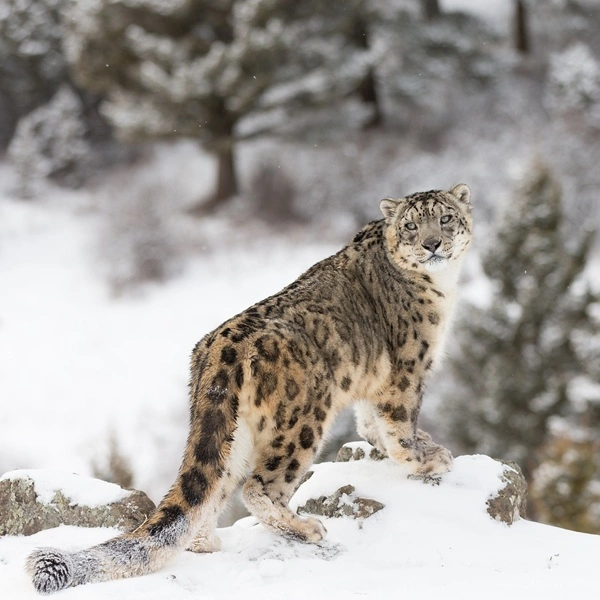
Makalu Barun sits adjacent to the Everest region in eastern Nepal, but receives a fraction of the foot traffic. The park covers a dramatic altitudinal gradient from tropical lowland forest up to the alpine zones below Mount Makalu at 8,481 meters, making it one of the most biologically rich protected areas in the country. Twenty-five rhododendron species, dozens of orchid varieties, and a layered mammalian community that includes red pandas, Himalayan tahr, musk deer, and the very rare snow leopard at the highest elevations.
The trade-off is the difficulty of the journey. The standard route flies Kathmandu to Tumlingtar, drives to Chichila or Num, then begins a serious multi-day approach with steep descents to the Arun River and substantial ascents back up through Rai, Gurung, and Limbu villages — Seduwa, Tashigaon — before crossing high passes including the Shipton La at 4,125 meters and the Keke La at 4,170 meters. Red panda habitat is concentrated around Khongma Danda, the higher Dobato (different from the Ilam village of the same name), and Yangla Kharka at 3,557 meters.
Sighting probability in Makalu Barun is meaningfully lower than in the PIT corridor because the wilderness is vast and the structured tracking infrastructure is less extensive. Encounters depend on the local guide's experience, the season, and luck. Travelers choose Makalu Barun when they want a serious wilderness expedition with the chance of a red panda rather than a structured tracking trip with red pandas as the primary outcome. The biodiversity of the broader trip — high-probability sightings of tahr, musk deer, and a wide range of pheasants — is what makes it worthwhile even if the panda does not appear. Standard Makalu Barun expeditions run 16-20 days.
4. Kangchenjunga Conservation Area — The Eastern Wilderness Frontier
The Kangchenjunga conservation area in the extreme far east of Nepal is the wildest of the five regions and the longest of the expeditions. Bordering Sikkim and Tibet, the area spans the flanks of Mount Kangchenjunga at 8,586 meters and contains some of the most remote, untouched forests left in the eastern Himalaya. Red pandas share this terrain with snow leopards in the higher zones and clouded leopards in the lower forests — a layered ecosystem of apex predators that is rare anywhere on Earth.
Red panda tracking in Kangchenjunga is concentrated in the lower bamboo and broadleaf belts, where Forest Guardian work overlaps with the broader wildlife corridor connecting Nepal to India's Singalila National Park. The area operates under restricted-area permit rules — solo trekking is prohibited, a licensed guide is mandatory, and a registered Nepali agency must process the permits.
Access requires either a flight to Suketar at Taplejung (weather-dependent and unreliable) or a 7-9 hour drive on rough mountain roads from Bhadrapur. Standard Kangchenjunga expeditions run 14-18 days at altitudes from 1,500 to 4,500 meters.
The right traveler for Kangchenjunga is one who wants the deepest possible wilderness experience and who is willing to trade higher sighting probability for genuine isolation. The area receives a tiny fraction of Everest's foot traffic. Trails are silent. The forest is genuinely undisturbed. Sightings happen, but they happen for travelers who have the patience for vast wilderness and the fitness for sustained high-altitude trekking.
5. Rara National Park — The Western Ecological Anomaly
Rara is the surprising answer for travelers who want a red panda destination outside the eastern corridors. The park sits in remote Karnali province in mid-western Nepal, centered on Lake Rara at 2,980 meters — the deepest and largest freshwater lake in the country. A 2016 ecological survey confirmed a significant red panda population in the park, with documented animals in the Nijar, Bulbule Chuchumare, Mili, and Chhahare zones, as well as in nearby community forests around the village of Gaam in the adjacent Rolpa district.
The Rara ecosystem is genuinely different from the eastern habitats. Where Ilam is lush, moisture-heavy cloud forest, Rara is drier, blue-pine-dominated coniferous forest interspersed with localized bamboo thickets. The sighting context is therefore different — red pandas at Rara are observed in an ecology that is more akin to the western Himalayan dry forest than to the eastern broadleaf zones.
Reaching Rara is logistically complex — Kathmandu to Nepalgunj on the southern plains, then a small connecting flight to Jumla or Talcha airstrip, then several days of trekking through the historically significant Sinja Valley (the ancient capital of the Khasa Kingdom) and over the Jaljala Pass at 3,580 meters.
Rara receives a fraction of the tourist volume of Langtang or the eastern corridors, which means the tracking experience is notably quiet. The Red Panda Network is actively developing low-impact tracking routes here in coordination with local community forests, making Rara the most promising emerging destination for travelers seeking undisturbed observation conditions. Standard Rara expeditions run 12-15 days.
Five Regions Compared
|
Region
|
Best For
|
Duration
|
Sighting Probability
|
|
PIT Corridor (Ilam)
|
First-time travelers; highest sighting rate, community homestays
|
10–11 days
|
Highest
|
|
Langtang
|
Combination with high-altitude trekking; Kathmandu-accessible
|
10–12 days
|
Moderate-High
|
|
Makalu Barun
|
Serious wilderness; broader biodiversity; multi-week capacity
|
16–20 days
|
Moderate
|
|
Kangchenjunga
|
Deepest wilderness; pristine forest; layered predator ecosystem
|
14–18 days
|
Moderate
|
|
Rara
|
Quieter alternative; western ecology; blue-pine forest
|
12–15 days
|
Moderate
|
Permits, Logistics, and the No-Guide-No-Trek Mandate
Tracking red pandas in Nepal takes place in protected areas with regulated access. The permit framework is structured to cap human traffic in fragile ecosystems, fund community-led conservation, and ensure travelers have professional support in the high-altitude winter and shoulder seasons, where mistakes can be serious quickly.
The No-Guide-No-Trek Mandate
As of 2026, solo independent trekking is prohibited across all major national parks and conservation areas in Nepal, including every region covered in this guide. Foreign nationals cannot enter these regions without being accompanied by a government-licensed guide hired through a registered Nepali agency. The rule applies to all five red panda regions — PIT corridor, Langtang, Makalu Barun, Kangchenjunga, and Rara.
For specialized activities like red panda tracking, the rule is not a hindrance — it is a benefit. The localized generational knowledge of a Forest Guardian or experienced local tracker is the single most important variable in achieving a sighting. Without their expertise in identifying scat, broken bamboo stems, and territorial markings, the probability of a sighting drops close to zero.
Permit Cost Structure
Permit costs vary by region and are subject to change. The cost ranges below are general guidance — our team confirms current fees at the time of booking. Conservation-area permits sit at the lower end of the spectrum. Restricted-area permits for Kangchenjunga sit at the upper end.
National park entry permits cost modest amounts per traveler, with small additional fees for the Trekkers' Information Management System card, where applicable. Community forest entry fees in the PIT corridor are managed locally and go directly to conservation work that maintains the forest. All permits must be processed through a registered agency — they cannot be obtained directly by the traveler.
Lead Time for Booking
- PIT corridor (Ilam) departures: 4–6 months ahead. The community homestay inventory is small, and the spring window (March-May) tightens earliest
- Langtang departures: 4–6 months ahead. Spring and autumn windows are the only practical seasons
- Makalu Barun expeditions: 5–7 months ahead because the camping logistics, porter coordination, and Tumlingtar flight bookings need lead time
- Kangchenjunga expeditions: 6–9 months ahead because the restricted-area permit, regional infrastructure, and multi-week duration all require long lead times
- Rara departures: 5–7 months ahead because the multi-flight access route and the developing tracking infrastructure require advance coordination
How Tracking Actually Works on the Ground
Red panda tracking is not wildlife safari work. It does not happen from vehicles. It happens on foot, in dense bamboo and rhododendron forest, with experienced guides reading subtle environmental cues across long observation periods. The daily rhythm is shaped by the animal itself — red pandas are crepuscular, meaning peak activity is at dawn and dusk, with the middle of the day spent resting motionless in the canopy.
The Daily Rhythm
- 05:00 AM — Wake at homestay or lodge. Quick breakfast, gear preparation
- 05:45 AM — Departure to the morning tracking zone in pre-dawn darkness with headlamps
- 06:15–10:30 AM — Active tracking through the bamboo understory. Forest Guardians lead the search, reading fresh feeding sign, checking known territorial corners, scanning the canopy for the distinctive ringed tail or moving body
- 10:30 AM–02:00 PM — Return to homestay or rest in the forest if the team is far from base. Red pandas rest motionless during the warmest part of the day, so directed tracking is unproductive in this window. Birding, botanical observation, or photography of supporting species fill the time
- 02:00–04:00 PM — Late lunch and rest at the homestay
- 04:00–06:30 PM — Afternoon tracking through the dusk activity window. Statistically, the strongest single window of the day for sightings
- 06:30 PM onward — Return to homestay, hot dinner, gear maintenance, briefing for the following day
What Trackers Actually Look For
Forest Guardians and experienced trackers read the forest at a level that travelers cannot replicate. The signs of a recently-feeding red panda are subtle — fresh bite marks on tender bamboo stems where the animal has used its pseudo-thumb to strip leaves, scat that distinguishes red panda from other forest mammals (small, greenish-brown, often near a feeding site), claw scratch marks on tree bark where the animal has marked territory, and the subtle visual cue of a striped ringed tail hanging motionless from a high mossy branch.
The tracker's eye instantly picks these up. The traveler's eye almost never does. The tracker's accumulated knowledge of which trees a particular animal favors, which territorial corners are active, and which bamboo zones are currently producing fresh shoots is what converts long days of searching into actual sightings.
Patience and Realistic Expectations
The honest truth about red panda tracking is that most of the day is spent walking quietly through cloud forest watching nothing in particular happen. The pleasure of the trip is the forest itself — the moss-draped trees, the orchid blooms, the calls of the laughing-thrushes and barwings, the slow accumulation of small wildlife observations across hours of patient movement.
Travellers who do not enjoy the broader experience of being in the cloud forest will struggle on a red panda departure even if a sighting happens. Travelers who do enjoy that environment will have rewarding trips even on the days when the panda does not appear.
Ethical Tracking and Photography
Red panda tracking, done badly, can harm the species we are trying to protect. Mass tourism, excessive noise, off-trail pursuit, and aggressive close approaches all stress the animals, disrupt feeding and breeding cycles, and can force pandas to abandon prime feeding territories. Our team operates to strict ethical standards on every departure, and we expect the same from every guest.
Distance and Approach
Trackers maintain a significant physical distance from any sighted animal. Long-lens photography (400mm to 600mm) replaces close approaches. We do not pursue, we do not flush, and we do not push past the comfortable observation distance for the specific animal. The right photograph is the one taken at the right distance, not the closest possible distance.
Silence in the Forest
Red pandas have acute hearing. Conversation in the bamboo thickets is kept to a minimum. Phones are silenced. The forest is treated as the cathedral it functionally is — quiet movement, careful footfall, and silent observation. The travelers who behave this way see more red pandas than the travelers who do not.
No Flash Photography
Flash photography is prohibited on every red panda departure. The sudden burst of light can blind, disorient, and traumatize a crepuscular animal that is already operating in the low-light conditions of dawn and dusk. In extreme cases it can cause the animal to fall from the high canopy. The right photographic strategy is natural light at dawn and dusk — when the pandas are most active anyway — which produces better photographs than flash.
Group Size
We run red panda departures with 2-4 guests per expedition. Larger groups generate more noise and disturbance, and have lower per-person sighting probability. The right group size for serious red panda tracking is small. We do not run mass-tourism red panda departures.
How Our Team Operates Red Panda Departures
After years of running wildlife departures into the eastern hills and beyond, our operating standards for red panda expeditions have settled into the practices below. We publish them so prospective travelers can compare across operators.
- Forest Guardians are the central asset. Every red panda departure in the PIT corridor is led by trained Forest Guardians who monitor the same forest year-round and know individual animals' territorial patterns. In the other regions, we work with the most experienced local trackers available — naturalists, community-monitoring teams, and registered guides with documented red panda experience.
- Community homestays, where they exist. In the PIT corridor, we use community-run homestays managed by indigenous Tamang and Rai families. The accommodation is genuinely simple — the value lies in the cultural texture, the home-cooked dal bhat and momos, and the direct economic flow to the families who serve as the long-term guardians of the forest. Travelers who require five-star hotel-tier accommodation should consider a different itinerary.
- Small group sizes (2-4 guests). Larger groups produce lower sighting probability. We do not run group departures of more than four guests for red panda expeditions.
- Honest sighting probability disclosure. We tell every guest at the time of booking that sightings cannot be guaranteed, and we are direct about which regions have higher and lower sighting rates. Operators who promise guaranteed red panda sightings are either misrepresenting the species or staging encounters that compromise the animals.
- Conservation funding is built into the trip cost. A portion of every red panda departure cost is contributed directly to the community forests, Forest Guardian stipends, habitat restoration nurseries, and the educational scholarships that sustain the long-term conservation infrastructure. Travelers who book with us are part of the funding model that keeps the species alive.
- Strict ethical observation protocols. Distance maintained, silence in the forest, no flash photography, no off-trail pursuit, no playback calls. Our guides enforce these standards on every departure, regardless of guest pressure.
- Porter welfare to IPPG standards. All porters and support staff are paid above the local market rate, provided with full insurance coverage, equipped with proper trail gear, and accommodated in the same lodges or homestays as the trekking team. Maximum 25kg loads, age 18 minimum, full medical evacuation insurance, and equal accommodation.
Frequently Asked Questions
Are red panda sightings guaranteed?
No. Red pandas are wild, solitary, naturally low-density mammals that spend most daylight hours resting in the high canopy. Our team commits to maximizing the probability of a sighting through experienced Forest Guardians, optimal seasonal positioning, and proven feeding zones — but no operator can guarantee a sighting. We are honest about this at the time of booking. The PIT corridor in Ilam has the highest sighting probability of any region we operate in, but even there, the trip should be valued for the broader experience rather than the sighting alone.
Where in Nepal has the highest sighting probability?
The PIT corridor in eastern Nepal — specifically the village of Dobate and the surrounding community forests in Ilam district. The combination of dense red panda habitat, year-round Forest Guardian monitoring, and dedicated community-homestay infrastructure produces the highest sighting probability of any region in Nepal or anywhere in the species' global range. We recommend Ilam as the default for first-time red panda travelers.
When is the best time of year to track red pandas?
Spring (March to May) is the strongest single window because rising temperatures trigger the emergence of fresh bamboo shoots, which prompt highly active feeding in red pandas. Autumn (September to November) is the second-strongest and the best window for combining red panda tracking with mountain photography. Winter is possible for travelers with prior cold-weather experience. The monsoon season (June to August) is not recommended — we do not run red panda departures during this period.
How long does a red panda expedition take?
Ten to twenty days, depending on the region. The PIT corridor (Ilam) is the shortest at 10-11 days. Langtang runs 10-12 days. Rara runs 12-15 days. Makalu Barun runs 16-20 days. Kangchenjunga runs 14-18 days. The longer durations reflect the more remote infrastructure rather than longer dedicated tracking time — the actual tracking days are typically 3-5 days regardless of region, with the rest of the time spent on access logistics.
How fit do I need to be?
Reasonable cardio fitness is essential. Red panda tracking involves walking 4-6 hours per day on uneven, often steep, often muddy bamboo and rhododendron trails between 2,200 and 3,800 meters. Travelers who hike regularly (weekend hikes with elevation gain, weekly cardio of 2-3 hours) have the baseline fitness for the PIT corridor and Langtang. Makalu Barun and Kangchenjunga require greater fitness due to longer durations and multi-day high-altitude approaches. We send a pre-trek fitness assessment to every confirmed guest.
What gear do I need for red panda tracking?
Cloud-forest layering matters more than altitude gear. The temperate forests are damp, foggy, and prone to sudden temperature drops — a quality waterproof shell, fleece mid-layer, thermal base layer, and broken-in waterproof trekking boots are the core kit. Add long-lens camera equipment (400-600mm telephoto), good binoculars (10x42 is the optimal balance), trekking poles for the muddy trails, and a strong headlamp for the pre-dawn departures. We brief specific gear requirements at booking based on the region and season.
Is red panda tracking ethical?
With the right operator, yes. The conservation work that has stabilized Nepal's red panda population is funded in large part by ecotourism revenue. Forest Guardian stipends, community nurseries, educational scholarships, and habitat restoration programs all draw on income generated by tracking expeditions.
Travelers who book responsible departures are supporting the funding model that keeps the species alive. Travelers should ask any prospective operator directly about distance protocols, group size limits, flash photography rules, and specific conservation contributions before booking.
What kind of accommodation should I expect?
Community-run homestays in the PIT corridor — genuinely simple, with shared bathrooms, hot water from a kettle rather than a shower head, and home-cooked meals. The cultural texture is the value, not five-star hotel comfort. Langtang and Rara use a mix of community homestays and standard trekking lodges.
Makalu Barun and Kangchenjunga use trekking lodges where available and camping where not. Travelers who require luxury hotel-tier accommodation throughout should consider a different itinerary or a hybrid trip that combines red panda tracking days in homestays with luxury bookend stays in Kathmandu.
Can I combine red panda tracking with other Nepal experiences?
Yes. The most common combinations are: red panda tracking plus the Singalila ridge walk and Sandakpur sunrise (eastern Nepal); red panda tracking in Langtang plus a Kathmandu cultural circuit; red panda tracking in Kangchenjunga plus snow leopard tracking in the same conservation area (the rare combination expedition that produces both species in a single trip). Our team builds combined itineraries on request.
What other wildlife will I see?
Red pandas are the headline species, but the broader cloud-forest ecosystem is genuinely rich. Common sightings include Himalayan tahr, musk deer, yellow-throated martens, and Himalayan black bears at lower altitudes. Birding is exceptional — multiple laughing-thrush species, Rufous-throated wren-babblers, slender-billed scimitar babblers, fire-tailed myzornis, maroon-backed accentors, and dozens of supporting species. Travelers who treat the broader ecosystem as the trip rather than the red panda alone consistently have more rewarding expeditions.
How much should I budget?
Red panda tracking sits at the upper end of luxury Nepal trekking pricing due to small group sizes, experienced trackers, the community-homestay model, and conservation contributions built into the trip. PIT corridor (Ilam) departures typically run USD 4,500-7,500 per person. Langtang departures run USD 4,000-6,500.
Makalu Barun, Kangchenjunga, and Rara departures run USD 7,000-12,000 per person, depending on duration and infrastructure requirements. International flights, travel insurance, gratuities, and any photography rental gear are additional. The lead time for booking is 4-9 months, depending on the region.
How early should I book?
Four to nine months ahead. The PIT corridor homestay inventory is small, and the spring window (March-May) is the earliest to close. Forest Guardians work with one expedition at a time, which limits how many guests can be in the same forest in any given week. Travelers contacting us in January for an April departure are usually too late for the strongest dates in Ilam. The right lead time for spring is the previous summer or autumn.
The right lead time for autumn is the previous winter or early spring. We open bookings for each season approximately 9 months in advance.
Plan Your Red Panda Expedition With Us
Tell us your preferred region, your dates, your prior wildlife or trekking experience, and your photographic goals. Our team returns a written expedition proposal within 48 hours, covering the route, the Forest Guardian or local tracker team, the homestay or lodge accommodation, the conservation contribution included, and the realistic sighting probability for your dates. Red panda tracking is one of the quietly remarkable wildlife trips we run—and one of the most rewarding for the travelers who choose it.