The Manaslu Circuit Trek: A Complete Honest Guide
The Manaslu Circuit Trek sits in a specific category of Nepal trekking — the restricted-area treks, where access is controlled by special permits, daily trekker volume is limited, and the cultural and ecological experience differs from the more commercial Everest and Annapurna circuits in ways that matter to serious wildlife and cultural travelers.
The route circumnavigates Mount Manaslu (8,163 meters), the eighth-highest mountain in the world, across approximately 175 kilometers of trail. It begins in the subtropical foothills of the Soti Khola at around 700 meters and climbs through every climatic zone in the Nepal Himalaya before crossing the Larkya La pass at over 5,100 meters and descending into the Annapurna Conservation Area on the other side. The trek typically takes 12-14 days of walking plus the road access at either end.
After years of running Manaslu departures, our team has watched the rhythm of these trips settle into a clear pattern. Travelers who choose Manaslu are typically not first-time Himalayan trekkers — they are experienced hikers who have already completed one of Nepal's major commercial routes (Everest Base Camp, Annapurna Circuit, Annapurna Base Camp) and want something genuinely quieter and culturally deeper.
The reward is significant. The cost is genuine — the trek is harder than the standard commercial routes in specific ways, the accommodation tier is more basic in the middle sections, and the permit structure adds complexity that the more commercial routes avoid.
This guide covers the route honestly. We name the harder sections rather than glossing over them, explain the restricted-area permit structure plainly, give the seasonal timing windows that determine whether the trek is rewarding or grinding, and explain how our team operates these departures at the luxury tier within the genuine constraints of what is operationally possible in restricted-area Nepal.
Important: The Manaslu Circuit is a restricted-area trek and operates under specific permit and operational rules that the Annapurna Circuit and Everest Base Camp routes do not. Independent trekking is not permitted. A minimum group size is required by regulation. The accommodation tier in the upper sections is a basic teahouse — there are no hotel options above Soti Khola regardless of operator. We are honest about these constraints at the time of booking. Travelers expecting hotel-tier accommodation throughout should consider the luxury Annapurna Circuit or Everest Base Camp departures rather than the Manaslu Circuit.
Why Manaslu, and Why Now
The Manaslu Circuit was closed to foreign trekkers until 1992, opened gradually under restricted-area regulation across the late 1990s and 2000s, and re-opened with significant infrastructure improvements after the 2015 Gorkha earthquake forced major reconstruction across the entire region. The current state of the route — improved teahouses in most villages, established daily distances, mature porter and guide infrastructure, reliable permit administration — is the result of roughly a decade of post-earthquake rebuilding.
The case for choosing Manaslu over the more commercial Nepal trekking routes comes down to four specific differences. First, visitor density is genuinely lower — the restricted-area regulation caps the daily flow into the conservation area, and trail traffic is a fraction of what the Annapurna Circuit and EBC routes accept. Second, the cultural texture is meaningfully different.
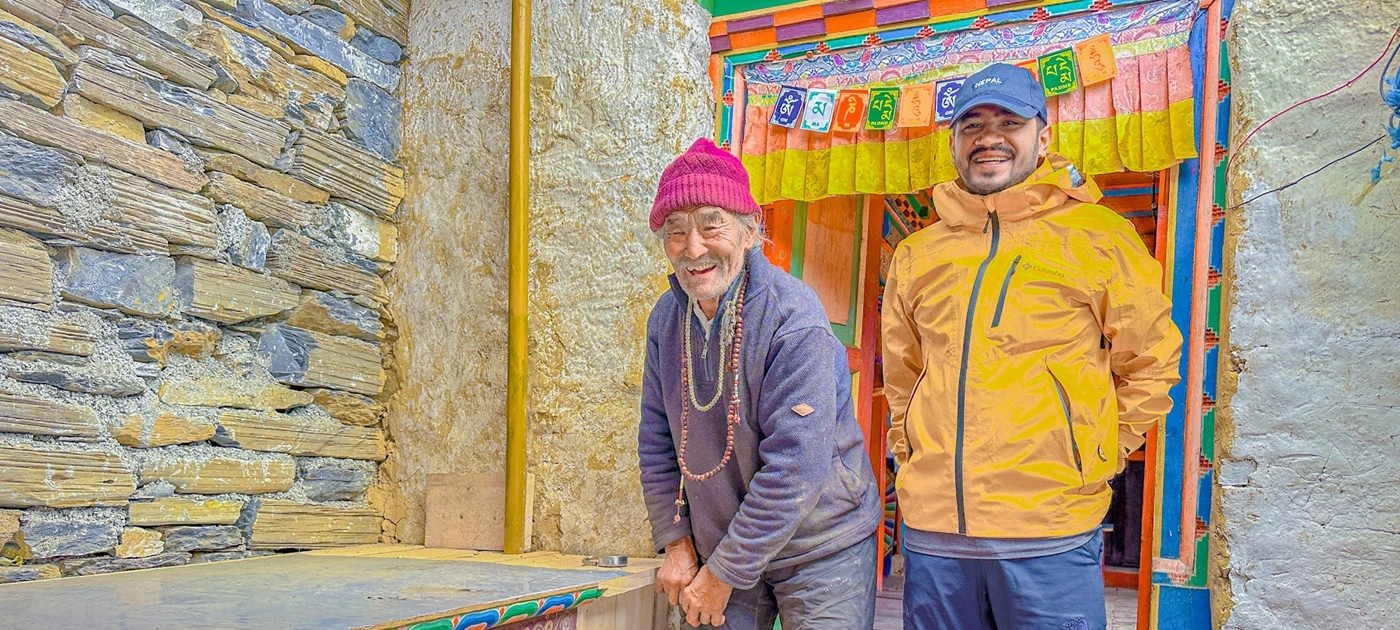
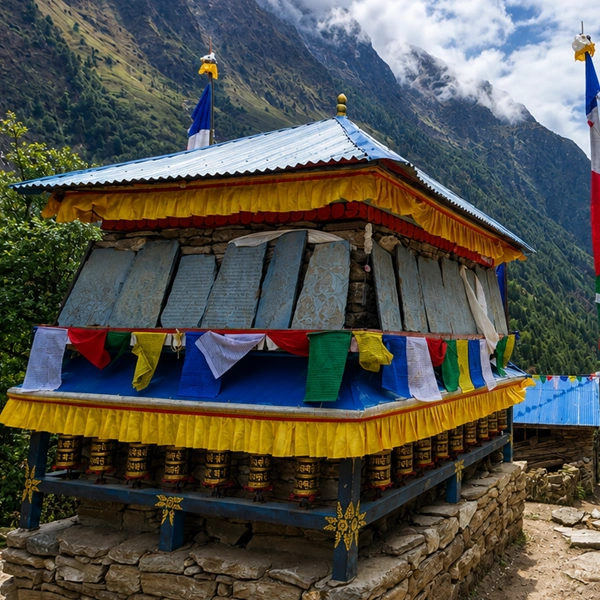
The Nubri valley villages of Lho, Samagaun, and Samdo are Tibetan-Buddhist communities with monastery infrastructure, prayer-wheel architecture, and a daily rhythm that resembles Mustang or upper Khumbu rather than the mid-hill Hindu villages most lowland Nepal trekkers walk through.
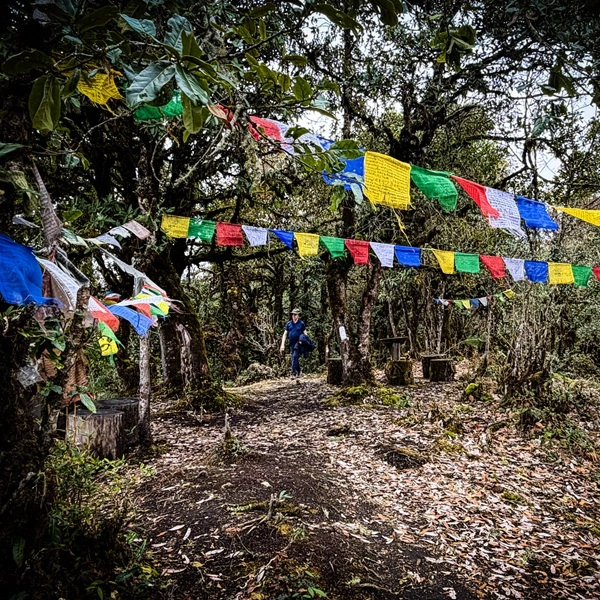
Third, the wildlife and ecological diversity are unusual — the route passes through subtropical foothills, temperate broadleaf forests, alpine meadows, and trans-Himalayan high deserts in a single trekking circuit. Fourth, Mount Manaslu itself is the visual anchor of the entire trek in a way that Mount Everest is not on the EBC route. The mountain dominates the skyline from days four through nine, visible from every village, every meal, every morning.
The Trade-Offs
These differences come with genuine costs that travelers should understand before booking. The accommodation tier in the upper sections is basic teahouse — clean, functional, heated dining rooms, but cold bedrooms and shared bathrooms above Lho. The trek is operationally complex — multiple restricted-area permits are required, a mandatory licensed guide and minimum group size by regulation, and no road bail-out between Jagat (day two) and Dharapani (day twelve or thirteen).
The route is harder in specific ways than the Annapurna Circuit despite being similar in altitude profile — the Larkya La pass is at a higher altitude than the Thorong La with a steeper descent on the west side, the daily distances are longer in the middle sections, and the cumulative ascent is greater because the start altitude is lower.
The Restricted-Area Permit Structure
The Manaslu permit structure is the single biggest practical difference between Manaslu and the commercial Nepal routes. Travelers researching the trek should understand it before booking because it affects pricing, group composition, and the availability of last-minute departures.
What Permits Are Required
- Manaslu Restricted Area Permit (RAP) — the main permit, issued by the Nepal Department of Immigration. Cost varies by season (higher in spring and autumn, lower in summer and winter) and is calculated per person per week
- Manaslu Conservation Area Project (MCAP) permit — covers the conservation area entry
- Annapurna Conservation Area Project (ACAP) permit — required because the trek exits into the Annapurna conservation area at Dharapani at the end
- Tsum Valley Restricted Area Permit (separate) — required only if the itinerary includes the Tsum Valley side trip
How the Restricted-Area Rules Affect Operations
The restricted-area regulation requires every trekker to be part of a registered group of two or more trekkers, accompanied by a licensed guide, and arranged through a registered Nepal trekking agency. Independent trekking is not permitted on Manaslu. Solo travelers cannot legally enter the restricted area regardless of experience.
The minimum group size is two trekkers. Departure dates are typically scheduled as group departures (where solo travelers can join an existing group) or as private trips for couples and small parties. The permit and group-size requirements add operational cost to the trek that operators cannot absorb away — this is part of why Manaslu costs more than the Annapurna Circuit at any tier.
How Lead Time Works
The restricted-area permit must be applied for in advance through a Nepal trekking agency. Same-day or walk-in permits are not available. Travelers who contact us 6 to 8 weeks before departure can usually be accommodated. Travelers contacting us two weeks or less before departure typically cannot — the permit lead time and the trekking agency administrative requirements compress operational flexibility on this route.
The Route Itself: What to Expect Day by Day
The standard 13-14-day Manaslu Circuit trek follows a recognized structure. Daily distances and altitudes vary by operator and pacing, but the broad shape of the route is consistent across departures.
Days 1-2: Kathmandu to Soti Khola, Soti Khola to Machha Khola
The road from Kathmandu to Soti Khola, at around 700 meters, takes most of a long day in a private vehicle, over a rough mountain road through Arughat. Some operators break the journey at Arughat overnight; we typically push through to Soti Khola in a single day to start the trekking proper on day two.
The first trekking day from Soti Khola to Machha Khola covers around 14 kilometers at low altitude through subtropical forest along the Budhi Gandaki river. The pacing is gentle by design — the body is adjusting to the trekking rhythm, and the heat in the lower valleys can be significant.
Days 3-4: Machha Khola to Jagat, Jagat to Deng
The trail continues along the Budhi Gandaki gorge, gaining altitude gradually through Khorlabesi and Tatopani (a small hot spring village) to Jagat at around 1,300 meters. Jagat is the official permit checkpoint for the restricted area — permits are inspected here, and the trek formally enters the restricted zone beyond this point.
Day four climbs further to Deng at around 1,860 meters through Salleri and Sirdibas. The terrain remains forested, and the daily distances are moderate. The cultural transition becomes visible in this section — Buddhist prayer-wheel architecture begins to appear in the villages, and the population shifts from Gurung and Magar in the lower valleys to Tibetan-Buddhist Nubri in the upper valleys.
Days 5-6: Deng to Namrung, Namrung to Lho
This is where the trek changes character. The trail climbs out of the lower forested gorge and into the upper Nubri valley, with altitude gain to Namrung at around 2,630 meters and then to Lho at around 3,180 meters. The cultural texture shifts decisively — the villages from Namrung onward are Tibetan-Buddhist with monasteries, mani walls, and prayer flag arrays at every approach. Manaslu itself becomes visible from Lho on a clear day, dominating the view. We typically build a longer day or an extra acclimatization pause at Lho before pushing higher.
Days 7-8: Lho to Samagaun, Samagaun Acclimatization Day
Samagaun, at around 3,520 meters, is the cultural and operational anchor of the entire trek. The village sits at the foot of Mount Manaslu, in a wide alpine valley with multiple Buddhist monasteries, traditional Tibetan architecture, and a population that has lived there for generations.
The day from Lho to Samagaun is intentionally short — roughly five hours of walking — to allow proper acclimatization. Day eight is the mandatory acclimatization day at Samagaun. We use this day for an acclimatization hike to Manaslu Base Camp at around 4,800 meters, or to the Pungyen Gompa monastery, both of which provide climb-high-sleep-low altitude exposure while the body produces additional red blood cells.
Samagaun is where most travelers fall in love with the Manaslu route — the combination of the mountain, the village culture, the absence of road infrastructure, and the rhythm of the day produces something that the more commercial Nepal routes do not match.
Days 9-10: Samagaun to Samdo, Samdo to Dharmasala
Samdo, at around 3,860 meters, is the last permanent village on the eastern side of the Larkya La pass — a small Tibetan-Buddhist settlement of refugees who crossed from Tibet decades ago and a legitimate trans-Himalayan cultural anchor. The day from Samagaun to Samdo is short, and the altitude gain is modest, again by intent for acclimatization.
Day ten covers the climb to Dharmasala (also called Larkya Phedi) at around 4,460 meters — the staging camp for the Larkya La pass crossing the following morning. Dharmasala is the most basic accommodation on the entire route. The 'lodge' is a stone teahouse at an altitude with limited heating, basic food, and the operational reality of an exposed high-altitude shelter. Travelers should expect this and not be surprised.
Day 11: Larkya La Pass Crossing — Dharmasala to Bimthang
This is the hardest single day of the trek. The crossing starts at 3:00-4:00 AM in pre-dawn cold to clear the pass before afternoon weather develops. The climb from Dharmasala to the Larkya La at over 5,100 meters takes four to five hours through alpine snow and rock at high altitude.
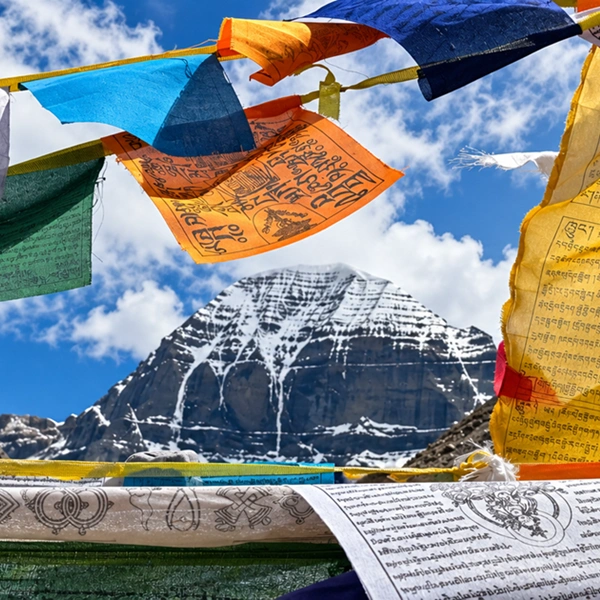
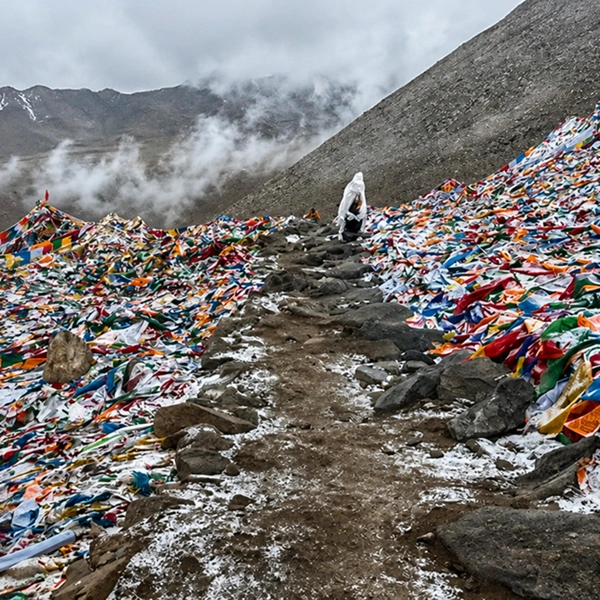
The pass itself is wide, prayer-flag-draped, and on a clear morning produces one of the great panoramic views in Nepal — Annapurna II, Himlung, Cheo Himal, and the western shoulder of Manaslu visible across the high horizon. The descent is the hard part. The west side of Larkya La is significantly steeper than the east, with around 1,500 meters of descent through loose moraine, snow, and exposed terrain across roughly six kilometers.
The day is genuinely long — 12-14 hours from departure to arrival at Bimthang at around 3,720 meters — and demanding on the knees in particular. Most trekkers arrive at Bimthang exhausted but triumphant. The pass crossing is the climactic single experience of the trek.
Days 12-13: Bimthang to Tilije, Tilije to Dharapani
The descent continues from the high Bimthang valley back into the alpine meadow, then into rhododendron and birch forest, then into the broader Manang valley system. Tilije is the first village with road infrastructure and a different operational character. At around 1,860 meters, the trek formally exits the Manaslu restricted area and re-enters the Annapurna Conservation Area. The road access from Dharapani back to Kathmandu via Besisahar and Arughat completes the trek over a final long road day.
The Hardest Sections of the Manaslu Circuit
The five sections that genuinely test most trekkers, ranked from earliest to latest in the itinerary.
1. The Sustained Ascent from Deng to Namrung (Day 5)
Day five climbs nearly 900 vertical meters over roughly 20 kilometers, a section longer and more sustained than most travelers expect. The trail climbs through dense forest with limited views; the heat in the upper subtropical zone can be significant in pre-monsoon, and the cumulative leg fatigue from the previous four days starts to show. This is where the difference between adequate fitness and genuine trekking fitness becomes visible.
2. The Acclimatization Hike at Samagaun (Day 8)
The mandatory acclimatization day at Samagaun involves an optional climb to Manaslu Base Camp at around 4,800 meters or to Pungyen Gompa. Both options gain around 1,300 vertical meters of altitude in a single day before descending back to sleep at Samagaun.
The climb is genuinely demanding because the body has only just reached 3,520 meters and is still adjusting. Trekkers often underestimate this day because it is technically a 'rest day' on the schedule. It is not a rest day. It is the steepest single climb of the entire trek when it is taken from Manaslu Base Camp, and it is the altitude exposure that builds the red blood cell capacity needed for the Larkya La crossing three days later.
3. The Climb from Samdo to Dharamsala (Day 10)
Day ten gains around 600 vertical meters but does so at altitudes between 3,860 and 4,460 meters, where every step costs more than at lower altitudes. Dharmasala itself is the most basic accommodation on the entire route, and the night spent there is genuinely uncomfortable — cold, basic food, limited heating, and the anticipation of the pass crossing the following morning. Trekkers often sleep poorly in Dharamsala, which compounds the challenge the next day.
4. The Larkya La Pass Crossing (Day 11)
The single hardest day of the trek. Pre-dawn 3:00-4:00 AM departure in temperatures that routinely hit minus 10 to minus 20 Celsius, four to five hours of ascent at altitude where the air is at roughly 50% of sea-level pressure, the pass itself at over 5,100 meters, then a 1,500-meter descent on steep, loose terrain that takes another five to six hours.
Total moving time of 10-12 hours plus stops. Most trekkers arrive at Bimthang in late afternoon or early evening, genuinely exhausted. The day is the climactic experience of the trek and also the day when altitude sickness symptoms most often develop. Our pacing protocol for this day is non-negotiable.
5. The Descent to Bimthang and the Knee Toll
The west side of the Larkya La is significantly steeper than the east. The descent involves continuous downward force through loose scree, snow, and uneven terrain across six kilometres of trail. Knee problems that did not exist on the ascent often appear on this descent. Trekkers with previous knee issues should consider trekking poles non-negotiable for this section, and the protein support and recovery infrastructure at Bimthang the following day matters.
Five Hardest Sections at a Glance
|
Day
|
Section
|
Distance
|
Vertical
|
Max Altitude
|
|
5
|
Deng to Namrung — sustained climb
|
~20 km
|
~900 m
|
2,630 m
|
|
8
|
Samagaun acclimatization hike to Base Camp
|
~12 km round trip
|
~1,300 m
|
4,800 m
|
|
10
|
Samdo to Dharmasala — pass approach
|
~7 km
|
~600 m
|
4,460 m
|
|
11
|
Larkya La pass crossing
|
~24 km
|
~700 m up, 1,500 m down
|
5,160 m
|
|
11
|
Larkya La west descent to Bimthang
|
~12 km of total day
|
~1,500 m descent
|
3,720 m
|
Seasonal Timing
The Manaslu Circuit operates in two main seasonal windows. Travelers planning the trek should choose between them based on weather priorities, visibility expectations, and the experience character they want.
Pre-Monsoon Spring (Mid-March to Mid-May) — Strongest for Visibility and Wildflowers
Spring is the strongest single window for the Manaslu Circuit. The lower forest sections are at their best — rhododendron in bloom from mid-March through April, oak and birch in fresh leaf, the lower elevations are warm but not yet pre-monsoon hot. Visibility on the Larkya La pass is good through April and into early May.
Wildlife is most visible because animals move down from the higher summer pastures into the lower forest. The cost is that the higher forest above 3,000 metres still has snow patches in early April, and spring brings the slight risk of late-season snow at Dharmasala and on the pass itself. Mid-April to early May is the operational sweet spot — the snow has cleared at altitude, the rhododendrons are still blooming in the middle altitudes, and the temperature on the pass crossing is manageable rather than brutal.
Post-Monsoon Autumn (Mid-October to Mid-December) — Strongest for Stable Weather
Autumn delivers the most stable weather window of the year. Clear skies, crisp visibility, low precipitation risk, and the snow on the high passes is at its minimum extent before winter accumulation begins. The cost is that the lower forest sections have lost their color, and the upper meadows have browned out — the visual character is less rich than in spring.
October produces the highest visitor density on the route (which, on Manaslu, still means a fraction of Annapurna Circuit traffic, but is the busiest the route gets), and the better-known villages can have lodge availability tightening earlier than other seasons. Late October and early November are typically the strongest single weeks of the year for stable weather.
Winter (Late December to February) — Restricted
Winter Manaslu departures are operationally challenging, and we generally do not run them. The Larkya La pass accumulates significant snow through the winter and can be closed or dangerous between late December and late February.
Several of the higher villages (Samdo, Dharmasala) are partially or fully evacuated during deep winter as residents move to lower wintering grounds. Trekkers with high-altitude winter mountaineering experience can sometimes attempt winter departures on Manaslu, but the route is not suitable for general luxury trekking guests in this season.
Monsoon (Late June to Mid-September) — Not Recommended
We do not run Manaslu departures in the monsoon. The lower trail sections through the Budhi Gandaki gorge become genuinely dangerous in heavy rain — the river rises significantly, landslide risk is high, leeches are everywhere, and visibility in the upper sections is consistently obscured by cloud. Travelers planning the Manaslu Circuit should aim for the spring or autumn seasons.
Manaslu Compared to the Annapurna Circuit
The most common research comparison for travelers considering Manaslu is against the Annapurna Circuit. The two routes share some superficial similarities — both circle a major Himalayan massif, both cross a high pass over 5,000 metres, both end on the western side of central Nepal — but the operational and experiential character is genuinely different.
|
Variable
|
Manaslu Circuit
|
Annapurna Circuit
|
|
Permit type
|
Restricted area; agency required
|
Standard ACAP; agency optional
|
|
Independent trekking
|
Not permitted
|
Permitted
|
|
Pass altitude
|
Larkya La ~5,160 m
|
Thorong La ~5,416 m
|
|
Trail traffic
|
Low — restricted-area cap
|
High in peak season
|
|
Cultural texture
|
Tibetan-Buddhist Nubri Valley
|
Mixed Hindu and Tibetan
|
|
Accommodation tier
|
Basic teahouse, no hotels
|
Better lodges in the lower sections
|
|
Road access in the middle
|
None between Jagat and Dharapani
|
Available at multiple points
|
|
Total trek duration
|
13-15 days
|
14-18 days standard
|
|
Best for
|
Experienced trekkers want solitude
|
First Himalayan high pass crossing
|
The honest framing: travelers doing their first Himalayan high pass crossing should choose the Annapurna Circuit. Travelers who have already done one of Nepal's major commercial routes and want something quieter, culturally deeper, and more operationally demanding should choose Manaslu. Both are excellent treks. They serve different traveler profiles.
The Tsum Valley Extension
Travelers with extra time can extend the standard Manaslu Circuit with a Tsum Valley side trip — typically adding four to five days to the total itinerary. The Tsum Valley branches off the main Manaslu route at Lokpa, around day three of the standard circuit, and runs north into a high-altitude, sacred valley with a profoundly preserved Tibetan-Buddhist character.
The valley operates under its own restricted-area permit (separate from the Manaslu RAP) and has been particularly resistant to outside influence — the local population practices a form of non-violence rooted in Buddhist principles that includes refusing to kill wildlife, which produces unusual wildlife densities and a cultural texture that resembles the deepest valleys of Tibet rather than commercial Nepal.
The Tsum Valley side trip is genuinely demanding — additional distance, additional altitude exposure, additional permit complexity — and adds meaningful cost to the trek. We typically recommend the Tsum Valley extension for travelers on their second visit to Manaslu or for travelers with significant trekking time and a specific cultural interest. First-time Manaslu travelers usually do better with the standard 13-14 day circuit and reserve the Tsum Valley for a future trip.
Practical Logistics
Group Size and Composition
Restricted-area regulations require a minimum of 2 trekkers per group. Maximum group sizes vary by operator policy. Our luxury Manaslu departures cap at six guests per departure, with most trips running 2-4 guests. Many of our Manaslu trips are private (one couple, one family, one small friend group). Solo travelers can join scheduled group departures where space is available, or arrange a private departure at an adjusted price.
Lead Time
- Spring departures (mid-March to mid-May): book 5-7 months ahead — the strongest single window concentrates demand
- Autumn departures (mid-October to mid-December): book 6-8 months ahead — autumn is the highest-demand window for Nepal trekking generally
- A restricted-area permit requires a multi-week lead time — last-minute walk-in trekking is not possible
Access Logistics
- Kathmandu to Soti Khola (start): 8-10 hours private vehicle on rough mountain road via Arughat. The road is consistently the worst part of the trip
- Dharapani back to Kathmandu (end): 8-10 hours private vehicle via Besisahar
- Helicopter alternative for the access road days: available on request at additional cost. Reduces the road exposure but does not change the trek itself
Accommodation Tier
The Manaslu Circuit accommodation tier is honest rather than luxurious. There are no hotels above Soti Khola. The teahouses across the route range from basic but functional in the lower villages to genuinely basic at Dharmasala.
We use the best available teahouses in each village throughout the route — the difference between the better and worse teahouses in places like Samagaun is meaningful — but the upper-altitude lodges remain teahouses rather than hotels regardless of operator.
Travelers expecting hotel accommodation throughout the trek should choose the Annapurna Circuit or the Everest Base Camp instead. Travelers who can accept the basic accommodation tier in exchange for the route's other strengths will have rewarding trips.
How Our Team Operates Manaslu Departures
Our operating standards across the Manaslu portfolio:
- Maximum group size of 6 guests, with most departures running 2-4. Many departures are private. We do not run mass-tourism groups on this route.
- Senior guides with multi-year Manaslu tenure. Manaslu is operationally different from the commercial routes and requires guides who know the restricted-area procedures, permit checkpoints, village relationships, and pass-day weather patterns. Our lead guides on this route have multi-year tenure rather than rotating across our portfolio.
- IPPG-standard porter welfare. Maximum 25-kilogram loads, age 18 minimum, full medical evacuation insurance, equipment provision where the route requires it, equal lodge accommodation, equal food rations from the same kitchen as the guest team. Particularly important on Manaslu because the porter team is together with the guest team for 13-14 days without rotation.
- Mandatory pacing protocol on the Larkya La pass crossing. Pre-dawn departure, calibrated ascent rate, regular hot drink stops, descent pacing matched to the slowest member, and contingency plan for trekkers who develop altitude symptoms en route. The pacing is non-negotiable regardless of guest preference.
- Mature evacuation infrastructure. Helicopter evacuation is available from most points along the route in normal weather conditions. Travel insurance with helicopter evacuation cover up to 6,000 meters is mandatory and confirmed at booking. Our guides carry a satellite communication and altitude assessment kit on every departure.
- Six-month structured pre-trek training program. Manaslu requires more sustained fitness than the commercial Nepal routes because of the longer daily distances and the harder pass day. Every confirmed guest receives a structured training program covering cardio progression, weighted hiking, strength work, and altitude familiarisation strategies.
- Detailed pre-departure briefing covering the operational specifics of restricted-area trekking. Travelers booking Manaslu should understand the permit structure, daily distances, accommodation tier, and pass-day plan before they arrive in Kathmandu. We send the briefing a month before departure and review it on the pre-trek day in Kathmandu.
- Honest accommodation expectation setting. The accommodation tier on Manaslu is what it is. We use the best available teahouses in each village, and we are honest about the basic tier in Dharmasala specifically. We do not pretend the accommodation is hotel-grade because it is not, on any operator's departure.
Frequently Asked Questions
How hard is the Manaslu Circuit Trek?
Genuinely demanding. The trek is harder than the standard EBC route and meaningfully harder than the typical Annapurna Base Camp trip. It is comparable to the Annapurna Circuit but with a longer daily distance profile and a steeper descent off the pass. Travelers in good general fitness with three to six months of focused preparation handle the trek well. Travelers without that preparation find the longer days and the pass crossing significantly harder than expected. We send a structured six-month training program to every confirmed guest.
Is the Manaslu Circuit harder than the Annapurna Circuit?
In specific ways, yes. The pass altitude is similar (Larkya La at ~5,160 m vs Thorong La at ~5,416 m). The overall daily distance profile on Manaslu is longer in the middle sections. The descent from the Larkya La is steeper and longer than the descent from the Thorong La. The accommodation tier on Manaslu is more basic in the upper sections. The pass-day altitude exposure is similar, but the Manaslu pass-day total walking time is typically longer because of the steeper west-side descent. Most experienced trekkers who have done both routes find Manaslu marginally harder day to day, but agree the cultural and scenic rewards are greater.
Why do I need a restricted-area permit?
The Nepal government designated the Manaslu region as a restricted area in the 1990s to manage trekking volumes, protect the Tibetan Buddhist cultural communities, and preserve the wildlife of the conservation area. The restricted-area regulation requires every trekker to be part of a registered group of two or more, accompanied by a licensed guide, and arranged through a registered Nepal trekking agency. Solo trekking is not permitted regardless of experience. The permit fees support the conservation area infrastructure and the local communities along the route.
Can I do Manaslu solo?
No. The restricted-area regulation requires a minimum group size of two trekkers and a licensed guide arranged through a Nepal trekking agency. Solo trekkers cannot legally enter the restricted area. Solo travelers wanting to do Manaslu typically join a scheduled group departure or arrange a private departure as a single-traveler booking at adjusted pricing.
When is the best time to do the Manaslu Circuit?
Mid-October to mid-November (autumn) is the strongest single window for stable weather and clear visibility on the pass. Mid-April to mid-May (spring) is the second-strongest window and produces the most visually rich trek due to rhododendron blooms in the lower forest sections. Both windows produce a good probability of a successful pass crossing. Winter is restricted due to the risk of pass closure. Monsoon is not recommended.
How fit do I need to be?
Solid fitness essential. Trekkers should be able to walk 6-8 hours per day for 12-13 consecutive days at altitude with a 5-7 kilogram day pack. The pass day requires 10-12 hours of walking, with significant ascent and a sustained steep descent. We send fitness guidance to every confirmed guest, and we recommend three to six months of focused preparation. Travelers who regularly hike with elevation gain and have comfortable cardio fitness handle the trek well. Travelers without that preparation typically have hard trips, even with the best operational support.
How is the accommodation?
Honestly, basic in the upper sections. The Manaslu Circuit has no hotels above Soti Khola. The accommodation tier is teahouse throughout, ranging from basic but functional in the lower villages to genuinely basic at Dharmasala (the staging camp before the pass). We use the best available teahouses in each village, but the upper-altitude lodges are heated dining rooms with cold bedrooms regardless of operator. Travelers expecting hotel-tier accommodation throughout should choose the luxury Annapurna Circuit or the luxury Everest Base Camp routes instead.
What about food?
Standard Nepal teahouse menu. Dal bhat (the staple lentil-and-rice meal), Tibetan thukpa (noodle soup), momos (steamed dumplings), pasta, fried rice, eggs, porridge for breakfast, garlic soup (genuinely useful at altitude), and the standard hot drink range of black tea, milk tea, hot chocolate, and instant coffee.
Above Lho, the menu narrows because supply chains compress. Vegetarian options are available everywhere. Specific dietary requirements (gluten-free, vegan, severe allergies) need to be confirmed at booking so we can plan kitchen briefings with the lodge teams in advance — they are typically accommodating, but the lead time matters.
Is altitude sickness a serious risk on Manaslu?
Yes. The trek crosses over 5,100 meters, and trekkers spend three nights at altitudes between 3,500 and 4,500 meters before the pass crossing. Altitude sickness is a real risk that we monitor for from day five onwards. Our guides carry the altitude assessment kit and follow a strict protocol — mild symptoms trigger immediate rest and reassessment, moderate symptoms trigger descent to the previous overnight altitude, severe symptoms or any HACE/HAPE indicators trigger immediate helicopter evacuation.
Travel insurance with helicopter evacuation cover up to 6,000 meters is mandatory at the time of booking. Most altitude issues that develop on our Manaslu trips resolve with descent, without progressing to severe stages, because we monitor them closely and respond early.
Can I add the Tsum Valley extension?
Yes. The Tsum Valley side trip adds 4-5 days to the standard Manaslu Circuit and runs through a high-altitude sacred valley with a profoundly preserved Tibetan Buddhist character. We typically recommend the extension for travelers with significant trekking time and a specific cultural interest, particularly those on a second visit to Manaslu. First-time Manaslu travelers usually do better with the standard 13-14-day circuit. The extension requires its own restricted-area permit (in addition to the Manaslu RAP) and incurs high costs.
How does the road access work?
The road from Kathmandu to Soti Khola at the start of the trek and from Dharapani back to Kathmandu at the end are both 8-10 hour days on rough mountain roads. The roads are consistently the most uncomfortable part of the trip. We use private 4WD vehicles for both road days rather than public buses or shared jeeps. Helicopter alternatives for access road days are available on request at an additional cost — they reduce road exposure but do not change the trek itself.
How much should I budget?
Luxury Manaslu Circuit departures (13-14 day standard route with our operating standards, private guide team, IPPG porter welfare, private 4WD road access) typically run USD 4,500-7,500 per person depending on group size and date. Tsum Valley extensions add USD 1,800-2,800 per person. Helicopter alternatives for road access add USD 1,500-3,500 per person, depending on charter pricing. International flights, travel insurance, gratuities, and discretionary purchases are additional. The lead time for booking is 5-8 months ahead for the strongest seasons.
How early should I book?
Five to eight months ahead for the strongest seasons. Restricted-area permit administration adds operational lead time that commercial routes do not. Spring (mid-March to mid-May) and autumn (mid-October to mid-December) are the two operating windows, and both tighten earliest at the better lodges and with the senior guide team. Travelers contacting us in October for an April departure are usually too late for the strongest dates.
Plan Your Manaslu Circuit With Us
Tell us your dates, your trekking experience, your fitness baseline, and any interest in the Tsum Valley extension. Our team returns a written proposal within 48 hours that covers the route, the senior guide assignment, the honestly described accommodation tier, the helicopter access option, and the section-by-section briefing that prepares you properly for the pass crossing. Manaslu is one of the great quieter trekking experiences of the Nepal Himalaya — and one of the most rewarding for travelers who choose it knowing what they are choosing.