Nepal's People and Languages: A Cultural Guide
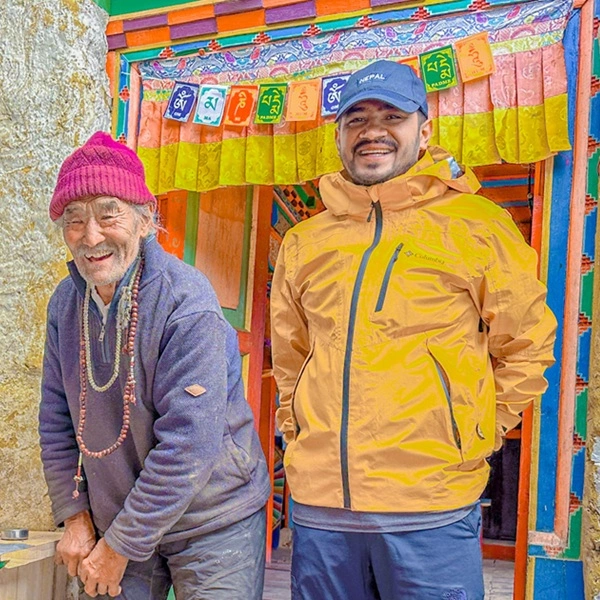
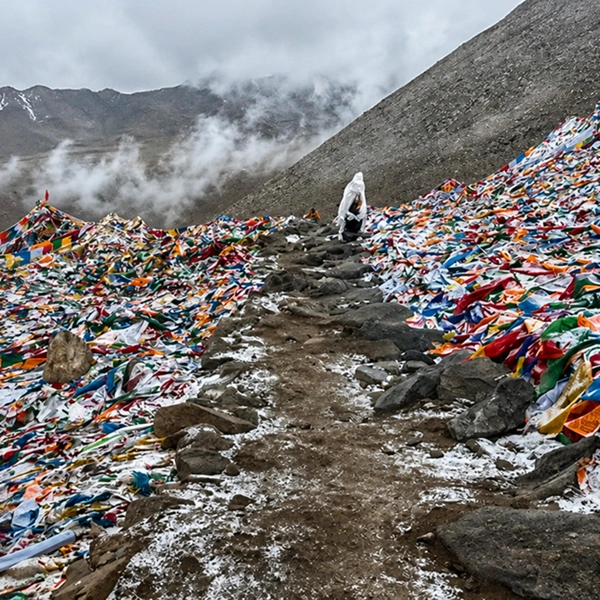
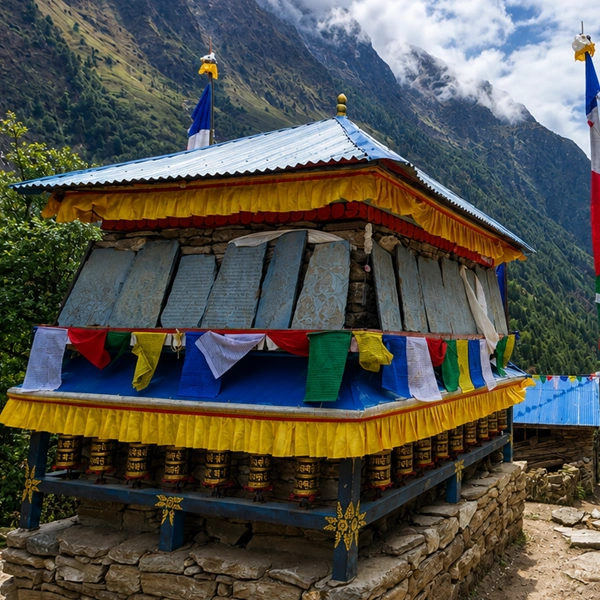
Travelers spending a substantial period in Nepal sooner or later notice that the country does not feel like one place. The villages of the high Khumbu around Namche and Tengboche feel like Tibet — prayer wheels at every approach, Buddhist monasteries on the ridgelines, Sherpa families with the distinct facial features and clothing of trans-Himalayan culture, and a daily rhythm built around yak husbandry and high-altitude trade.
The villages of the lower Terai around Lumbini or Janakpur feel like the Gangetic plains of north India — rice and sugarcane fields stretching to the horizon, Hindu temples with the classical architecture of the plains, Maithili-speaking communities whose cultural calendar runs through Chhath Puja and the great Mithila festivals.
The Kathmandu valley feels like neither — the Newar civilization has produced an urban culture with its own architectural tradition, its own pantheon of deities shared between Hindu and Buddhist communities, and its own distinct language with a literary tradition that predates the modern Nepali language by centuries.
This is not a coincidence. Nepal sits at the transition zone between two of the great cultural continents of Asia. The Indo-Gangetic plains civilization extends from Bengal across north India and meets the trans-Himalayan plateau at the Nepal border. The communities that live across this transition zone reflect both heritages in varying proportions depending on altitude, valley, and migration history.
The 2021 National Population and Housing Census enumerated 142 distinct caste and ethnic groups and 124 mother tongues across the country — an increase from 125 ethnic groups and 123 languages in the 2011 census. The expansion does not reflect new arrivals; it reflects the assertion of distinct cultural identity by communities previously subsumed under broader categorical labels.
This guide explains who these communities are, where they live, what they speak, what they practice, and what the traveler encounters when passing through their regions.
A note on terminology and data. The figures in this guide are from the 2021 National Population and Housing Census conducted by Nepal's National Statistics Office. The census provides the authoritative enumeration of ethnic groups and languages but its categorical taxonomy is contested in some cases by the communities themselves — cultural reality is more fluid than any classification system can fully capture.
Where we describe communities, we describe what travelers will encounter on the ground rather than the political category to which the community belongs. We use the term Adivasi-Janajati for indigenous nationalities throughout, as it is the term most widely used in Nepal.
The Five Broad Cultural Categories
The 142 ethnic groups fall into several broad cultural categories that help travelers understand the country's overall demographic shape. Each category has its own dominant language family, religion, and geographical territory.
|
Broad Category
|
Linguistic Family
|
Dominant Region
|
Religion
|
Share
|
|
Khas-Arya (Hill Caste)
|
Indo-Aryan
|
Hills and Karnali
|
Hindu
|
38.7%
|
|
Adivasi-Janajati (Indigenous)
|
Mostly Sino-Tibetan
|
Hills and high mountains
|
Buddhist / Kirat / Hindu
|
30.4%
|
|
Madhesi (Terai Caste)
|
Indo-Aryan
|
Terai plains
|
Hindu
|
20.8%
|
|
Muslims
|
Indo-Aryan
|
Terai (concentrated in Madhesh)
|
Islam
|
4.9%
|
|
Newar
|
Sino-Tibetan
|
Kathmandu Valley
|
Hindu / Buddhist (syncretic)
|
4.6%
|
The Khas-Arya category comprises the demographic plurality, including both the upper-caste hill Brahmins, Chhetris, Thakuris, and Sanyasis, and the historically marginalized Dalit communities of the hills (Bishwakarma, Pariyar, Mijar). The Adivasi-Janajati category is the umbrella term for the indigenous nationalities that travelers encounter in the dominant trekking regions — Magars, Tamangs, Gurungs, Rais, Limbus, Sherpas, Tharus, and dozens of smaller groups.
The Madhesi category covers the caste-stratified communities of the southern plains whose cultural and linguistic continuum extends across the open border into the Gangetic states of India. The Muslim community is concentrated in the Terai, particularly in the Madhesh province.
The Newar community is the historical urban civilization of the Kathmandu Valley and operates under its own internal Hindu-Buddhist caste system, distinct from the broader Khas-Arya structure.
Historical Background — The Muluki Ain and After
Understanding the contemporary ethnic taxonomy of Nepal requires brief historical context. The traditional social hierarchy was legally formalized by the Muluki Ain (National Code) of 1854 during the Rana period. The code integrated Nepal's diverse indigenous tribes into a rigid pan-Hindu caste framework based on ritual purity, commensality rules, and occupational division.
The system created hierarchical categories — the sacred-thread-wearing upper castes (Tagadhari), including Brahmins and Chhetris, the alcohol-drinking indigenous groups (Matawali), and the so-called untouchable castes (Pani Na Chalne) from whom water could not traditionally be accepted.
The Nepal government abolished the caste system and criminalized caste-based discrimination and untouchability in 1963. The 2008 transition from Hindu monarchy to secular republic and the 2015 federal constitution have further reshaped the formal recognition of ethnic and cultural identity. The state now actively documents the country's heterogeneity rather than enforcing the colonial-era taxonomy. The expansion from 125 to 142 recognized ethnic groups in the 2021 census reflects this paradigm shift.
The Dalit Communities
The communities historically categorized as untouchable under the Muluki Ain remain a meaningful share of the population today, though caste-based discrimination is illegal. The Bishwakarma (5.04% of the national population) are the largest Dalit community, traditionally associated with metalwork and craft trades.
The Pariyar (1.94%) and Mijar (1.55%) are the next-largest hill Dalit communities. In the Terai, the Chamar (1.35%), Musahar (0.91%), and Dusadh (0.86%) are the largest Madhesi Dalit communities.
Travelers spending substantial time in rural Nepal will encounter these communities frequently, often with limited visibility because of the residual social patterns left by the historical system. Sensitivity to this history matters for travelers who want to engage genuinely with Nepali rural society — assuming the contemporary social fabric is uniformly egalitarian misses an important historical reality.
"Nepal compresses one of the densest concentrations of ethnic, linguistic, and cultural diversity in the world into a country smaller than Florida."
The Top 30 Ethnic Groups by Population
The full 142-group enumeration is too detailed for general reference reading. The top 30 groups by population cover roughly 90% of the national population and account for the communities travelers actually encounter on the major trekking and cultural routes. The complete list is available from the National Statistics Office's published census reports.
|
Rank
|
Ethnic Group
|
Population
|
%
|
Region
|
|
1
|
Chhetri
|
4,796,995
|
16.45
|
Hills
|
|
2
|
Brahman - Hill
|
3,292,373
|
11.29
|
Hills
|
|
3
|
Magar
|
2,013,498
|
6.90
|
Western hills
|
|
4
|
Tharu
|
1,807,124
|
6.20
|
Terai
|
|
5
|
Tamang
|
1,639,866
|
5.62
|
Central hills
|
|
6
|
Bishwakarma
|
1,470,010
|
5.04
|
Hills
|
|
7
|
Musalman
|
1,418,677
|
4.86
|
Terai
|
|
8
|
Newar
|
1,341,363
|
4.60
|
Kathmandu Valley
|
|
9
|
Yadav
|
1,228,581
|
4.21
|
Terai
|
|
10
|
Rai
|
640,674
|
2.20
|
Eastern hills
|
|
11
|
Pariyar
|
565,932
|
1.94
|
Hills
|
|
12
|
Gurung
|
543,790
|
1.86
|
Western hills
|
|
13
|
Thakuri
|
494,470
|
1.70
|
Far-western hills
|
|
14
|
Mijar
|
452,229
|
1.55
|
Hills
|
|
15
|
Teli
|
431,347
|
1.48
|
Terai
|
|
16
|
Limbu
|
414,704
|
1.42
|
Eastern hills
|
|
17
|
Chamar
|
393,255
|
1.35
|
Terai
|
|
18
|
Kushwaha
|
355,707
|
1.22
|
Terai
|
|
19
|
Kurmi
|
277,786
|
0.95
|
Terai
|
|
20
|
Musahar
|
264,974
|
0.91
|
Terai
|
|
21
|
Dhanuk
|
252,105
|
0.86
|
Terai
|
|
22
|
Dusadh
|
250,977
|
0.86
|
Terai
|
|
23
|
Brahman - Terai
|
217,774
|
0.75
|
Terai
|
|
24
|
Mallaha
|
207,006
|
0.71
|
Terai
|
|
25
|
Sanyasi
|
198,849
|
0.68
|
Hills
|
|
26
|
Kewat
|
184,298
|
0.63
|
Terai
|
|
27
|
Kanu
|
152,868
|
0.52
|
Terai
|
|
28
|
Hajam
|
136,487
|
0.47
|
Terai
|
|
29
|
Kalwar
|
134,914
|
0.46
|
Terai
|
|
30
|
Sherpa
|
130,637
|
0.45
|
High mountains
|
Several observations from the top-30 list. The Chhetri community, at 16.45%, is the largest ethnic group in the country and the dominant community in the historical administrative and military apparatus of the Nepali state. The Hill Brahmins, at 11.29%, are the second-largest group and have historically dominated priestly and educational positions. The Magar at 6.90%, the Tharu at 6.20%, and the Tamang at 5.62% are the largest indigenous communities — and the communities travelers most commonly encounter in the trekking regions.
The Sherpa community at 0.45% (130,637 people) is significantly smaller than most travelers assume from the global reputation of the Khumbu region — the Sherpa community is geographically concentrated rather than numerically large, which is part of what gives the Khumbu its distinctive cultural texture compared to the more populous hill regions.
The Communities Travelers Encounter on the Major Routes
The trekking and cultural routes operate through specific cultural geographies that match specific ethnic communities. Understanding which communities live where helps travelers prepare for what they will encounter and frame the country's cultural depth beyond the trek itself.
Sherpa — The Khumbu (Everest Region)
The Sherpa community of the Khumbu and Solu regions is the cultural anchor of the Everest trekking economy. Sherpa families migrated from eastern Tibet several centuries ago and settled in the high valleys of the Khumbu where their trans-Himalayan trading networks and high-altitude adaptation gave them a near-monopoly on the supply chains across the Tibet-Nepal frontier.
The community practices Tibetan Buddhism of the Nyingma school. The monasteries at Tengboche, Pangboche, Thame, and Khumjung anchor the region's religious life. The Mani Rimdu festival at Tengboche in October-November is the major cultural observance of the year and one of the most photographed religious events in the Himalayan Buddhist calendar.
Travelers on the standard EBC and Three Passes routes spend most of their trekking days in Sherpa villages, eat in Sherpa-run lodges, and trek with Sherpa-led guide teams. The community's role in the modern mountaineering industry is foundational — almost all the major Everest expedition leadership for the past century has come from the Sherpa community.
Gurung and Magar — The Annapurna Region
The Gurung and Magar communities are the dominant ethnic groups in the Annapurna trekking region. The Gurung (who identify natively as Tamu) are concentrated around the Annapurna foothills — Ghandruk, Chhomrong, Sikles, Ghalegaun — and practice a syncretic blend of Tibetan Buddhism and Bon shamanism.
They celebrate Tamu Lhosar in late December as their traditional New Year. The Magar community is the third-largest ethnic group in the country, at 6.9%, and it dominates the western hills more broadly. Magars in the lower hills have been heavily integrated into Hindu ritual practice; Magars in the higher hills maintain stronger Buddhist affiliations.
The Magar village of Bandipur on the Pokhara-Kathmandu road is one of the most architecturally intact traditional villages in the country. The Gurung community has historically supplied the Gurkha regiments of the British and Indian armies, along with the Magars, and the Gurung village memorials to soldiers killed in the World Wars are visible features of the Annapurna foothill trails.
Tamang — The Langtang and Central Hills
The Tamang community is the largest indigenous community in Bagmati province and the dominant ethnic group across Langtang, Helambu, and the central hills surrounding Kathmandu. The Tamang community practices Tibetan Buddhism of the Nyingma school, and its cultural calendar centers on Buddhist observances, including Lhosar in February-March (Sonam Lhosar). The Tamang HeritageThe
Trail in the Rasuwa district is a dedicated cultural trekking route through Tamang villages, featuring traditional architecture, monastery visits, and homestays. The Helambu region, north of Kathmandu, is largely Tamang and has a distinctive cultural texture compared to the lower Kathmandu valley due to the community's stronger Tibetan Buddhist orientation.
Rai and Limbu — The Eastern Hills and Makalu Region
The Rai (2.20%) and Limbu (1.42%) communities are the dominant indigenous groups of the eastern hills. Together, they are known as Kirat — an umbrella term that covers multiple related communities sharing the Kirat religious tradition (Mundhum), which we cover in the religion section below. The Rai community is internally diverse, with multiple subgroups (Bantawa, Chamling, Kulung, Khaling, Thulung, Sampang, Mewahang, and others), each with its own language and ritual variations.
The Limbu community is more linguistically unified around the Limbu language (Yakthung). Travelers on the Makalu Base Camp trek, the Kanchenjunga trek, and the various eastern Nepal cultural routes operate through Rai and Limbu cultural territory. The Sakela festival in spring (Ubhauli) and autumn (Udhauli) is the major cultural observance of the Kirat year, and the Sakela dance is a distinctive cultural element of the eastern hills.
Newar — The Kathmandu Valley
The Newar community is the historical urban civilization of the Kathmandu Valley and operates as a distinct cultural category in Nepal's broader ethnic taxonomy. The community has its own language (Nepalbhasha) with a literary tradition that predates the modern Nepali language by several centuries.
The community has its own internal caste system that includes both Hindu and Buddhist sub-groups operating in parallel — the same family unit can include Hindu and Buddhist ritual specialists working on the same shrine. The architectural heritage of the Kathmandu Valley — the pagoda-roof temples of the Durbar Squares, the Patan Buddhist monasteries, the Bhaktapur Malla-era palace complexes — is Newar architecture.
The major festivals of the valley, including Indra Jatra, Rato Machhindranath Jatra, Bisket Jatra, and Yomari Punhi, are Newar festivals that the broader Kathmandu population participates in as cultural observances, even when the religious specifics are Newar-internal. Travelers in the valley spend much of their time in the Newar cultural space, whether they know it or not.
Tharu — The Terai
The Tharu community, at 6.20% of the national population, is the largest indigenous community of the Terai plains and the dominant cultural anchor of the wildlife and lowland Nepal travel experience. The community historically inhabited the malarial jungle belt that separated the Indo-Gangetic plains from the foothills — the natural malarial resistance the community developed over centuries kept the region sparsely settled by other groups until DDT spraying programs in the mid-twentieth century opened the area to migration.
Tharu cultural practice blends forest-based animism with Hindu integration. The Tharu New Year (Maghi) at the winter solstice and the multi-week Tharu version of Holi are major cultural observances. The Ranatharu sub-community, recently recognized as distinct, maintains particularly vibrant cultural practices, including elaborate Dalwa basket-weaving, intricately embroidered attire adorned with mirrors and coins, and architecturally distinctive mud-and-thatch houses. Travelers on Chitwan, Bardia, and Lumbini routes spend significant time in the Tharu cultural territory.
Madhesi Communities — The Eastern Terai
The eastern and central Terai is dominated by the Madhesi caste communities whose cultural and linguistic continuum extends across the open border into the Gangetic states of India. The major groups include the Yadav (4.21% nationally, dominant in dairy and agriculture), Teli (1.48%, traditionally oil-pressers), Kushwaha (1.22%, vegetable cultivators), Kurmi (0.95%, agriculturalists), and Brahman-Terai (0.75%, the Maithili priestly community).
The cultural practice aligns with mainstream Hinduism, and the festival calendar includes Chhath Puja, Holi, Diwali, and Mithila-specific cultural observances. Travelers on Janakpur cultural routes and Maithili heartland cultural travel operate through Madhesi territory. Janakpur is the cultural anchor of the Maithili world, and the city is among the most architecturally and culturally distinctive in the country.
The Language Map of Nepal
Nepal's 124 mother tongues fall into four major language families plus one language isolate. The distribution mirrors the broad cultural-geographic pattern — Indo-Aryan languages dominate the south and the lower hills; Tibeto-Burman languages dominate the middle hills and the high mountains; and a few smaller groups speak languages from the Austro-Asiatic and Dravidian families.
|
Language Family
|
Languages
|
% of Population
|
Main Examples
|
|
Indo-European (Indo-Aryan)
|
47
|
83.07%
|
Nepali, Maithili, Bhojpuri, Tharu, Avadhi
|
|
Sino-Tibetan (Tibeto-Burman)
|
72
|
16.59%
|
Tamang, Newar, Magar, Dhut, Gurung, Limbu, Sherpa
|
|
Austro-Asiatic
|
3
|
0.19%
|
Santali, Munda
|
|
Dravidian
|
1
|
0.13%
|
Uranw / Kurukh
|
|
Language Isolate
|
1
|
Negligible
|
Kusunda
|
The Sino-Tibetan family contains the most distinct languages (72) despite covering only 16.59% of the population — a measure of how fragmented the indigenous mountain linguistic landscape is. Many of these languages have fewer than 10,000 speakers, and several have fewer than 1,000. The Indo-Aryan family covers 83% of the population across just 47 languages because the larger languages (Nepali, Maithili, Bhojpuri, Tharu, Avadhi, Bajjika) each have millions of speakers.
The Top 20 Languages by Speaker Population
|
Rank
|
Language
|
Speakers
|
%
|
Family
|
|
1
|
Nepali
|
13,084,457
|
44.86
|
Indo-European
|
|
2
|
Maithili
|
3,222,389
|
11.05
|
Indo-European
|
|
3
|
Bhojpuri
|
1,820,795
|
6.24
|
Indo-European
|
|
4
|
Tharu
|
1,714,091
|
5.88
|
Indo-European
|
|
5
|
Tamang
|
1,423,075
|
4.88
|
Sino-Tibetan
|
|
6
|
Bajjika
|
1,133,764
|
3.89
|
Indo-European
|
|
7
|
Avadhi
|
864,276
|
2.96
|
Indo-European
|
|
8
|
Nepalbhasha (Newar)
|
863,380
|
2.96
|
Sino-Tibetan
|
|
9
|
Magar Dhut
|
810,315
|
2.78
|
Sino-Tibetan
|
|
10
|
Doteli
|
494,864
|
1.70
|
Indo-European
|
|
11
|
Urdu
|
413,785
|
1.42
|
Indo-European
|
|
12
|
Limbu
|
350,436
|
1.20
|
Sino-Tibetan
|
|
13
|
Gurung
|
328,074
|
1.12
|
Sino-Tibetan
|
|
14
|
Magahi
|
230,117
|
0.79
|
Indo-European
|
|
15
|
Baitadeli
|
152,666
|
0.52
|
Indo-European
|
|
16
|
Rai
|
144,512
|
0.50
|
Sino-Tibetan
|
|
17
|
Achhami
|
141,444
|
0.48
|
Indo-European
|
|
18
|
Bantawa
|
138,003
|
0.47
|
Sino-Tibetan
|
|
19
|
Rajbanshi
|
130,163
|
0.45
|
Indo-European
|
|
20
|
Sherpa
|
117,896
|
0.40
|
Sino-Tibetan
|
The top 20 languages cover roughly 94% of the national population. The remaining 104 languages collectively account for 6%. This is the pattern that creates the linguistic vulnerability picture — most of the very small languages are Sino-Tibetan mountain languages spoken by indigenous communities whose intergenerational transmission to children is decreasing as the communities integrate into the Nepali-medium school and economic system.
Language Shift and Endangerment
The 2021 census introduced a critical methodological advance — respondents were asked to identify their mother tongue, their second language, and their ancestral language separately. The gap between ancestral heritage and active mother tongue measures intergenerational language shift, and the data reveal a clear pattern of linguistic assimilation toward Nepali.
Nepali as the Absorbing Language
- Nepali ancestral heritage: 34.76% of the population claims Nepali ancestry
- Nepali active mother tongue: 44.86% of the population speaks Nepali as their daily first language
- Net gain: +10.1 percentage points — Nepali absorbs speakers from across the ethnic spectrum
- Nepali as second language: 46.23% of the population uses Nepali as a second language (up from 32.8% in 2011)
Severe Negative Retention Rates
- Magar Dhut: ancestral 4.28% vs active mother tongue 2.78% (loss of -1.5 percentage points)
- Nepalbhasha (Newari): ancestral 4.05% vs active mother tongue 2.96% (loss of -1.09 percentage points)
- Tamang: ancestral 5.50% vs active mother tongue 4.88% (loss of -0.62 percentage points)
- These patterns indicate substantial intergenerational language shift — children of these communities are increasingly raised in Nepali rather than in the ancestral language
The EGIDS Framework
Linguists assess language vitality using the Expanded Graded Intergenerational Disruption Scale (EGIDS). The framework runs from Level 0 (international) through Level 10 (extinct). Nepal's 124 languages occupy almost the full range of the scale. Nepali sits at Level 1 (national, fully institutionalized). Maithili, Bhojpuri, Avadhi, and Tharu sit at Levels 4-5 (developing or written, supported by literature and some educational infrastructure).
Tamang and Nepalbhasha sit at Level 2 (provincial, with recent recognition in the provincial language). Many smaller indigenous languages sit at Level 7 (shifting, where adults still use the language but children do not), including Danuwar, Kumal, Thakali, Surel, and Hayu. At the most endangered end, several languages are at EGIDS 8a or 8b (moribund or nearly extinct), where only the grandparent generation still speaks them.
Kusunda — The Language Isolate
The Kusunda language deserves particular mention. Documented with 23 surviving speakers in the 2021 census, Kusunda is a language isolate — it has no known genealogical relatives anywhere in the world and is distinct from the Indo-European and Sino-Tibetan families surrounding it.
The language was historically reduced to a single fluent speaker before intensive revitalization efforts led by the Language Commission of Nepal and indigenous activists, including Kamala Kusunda. Community classes have been established to teach the language to younger generations. The Kusunda case represents both the precarious state of Nepal's smallest indigenous languages and the genuine revitalization work happening to preserve them.
"Nepali operates as an absorbing language — more people speak it as a first language than claim it as ancestral heritage. The pattern is gentle on Nepali but harsh on the smaller indigenous mother tongues."
Religion and the Cultural Calendar
Religious distribution in Nepal correlates strongly with ethnic and linguistic background. The 2021 census records 81.19% Hindu, 8.21% Buddhist, 5.09% Muslim, 3.17% Kirat, 1.76% Christian, 0.35% Prakriti, and 0.23% Bon.
The Hindu Mainstream
Hindu practice is the dominant religious framework across the Khas-Arya hill communities, the Madhesi caste communities, and a significant portion of the lower-altitude Adivasi-Janajati communities. The festival calendar runs through Dashain (the great autumn festival), Tihar (the five-day light festival), Holi (the spring color festival), Krishna Janmashtami (Krishna's birth observance), Maha Shivaratri (the night of Shiva), Teej (the women's festival), and the regional observances, including Chhath Puja in the Terai. Hindu temples across the country range from the great pilgrimage anchor at Pashupatinath in Kathmandu to the small village shrines at the periphery of every settled area.
Tibetan Buddhism and the Trans-Himalayan Tradition
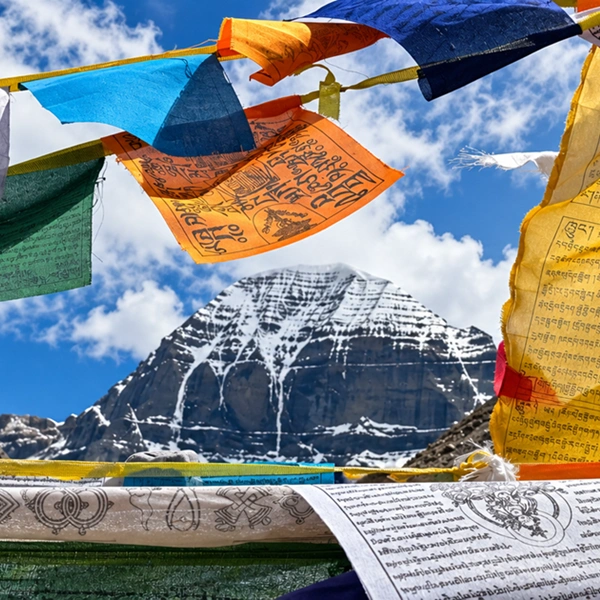
Tibetan Buddhism is the dominant religious framework in the high mountain valleys — the Khumbu (Sherpa), Mustang (Lo Manthang and the trans-Himalayan trade communities), Dolpo, Manaslu (Nubri valley), and Tsum Valley. The communities practice variants of Tibetan Buddhism, ranging from the Nyingma school in the Khumbu to the Sakya school in parts of Mustang.
The festival calendar follows the Tibetan lunar calendar with major observances including Lhosar (Tibetan New Year, varying by community — Gyalpo Lhosar in February-March for Tibetan and Sherpa communities, Sonam Lhosar for Tamang, Tamu Lhosar in December-January for Gurung), Saga Dawa (commemorating the Buddha's life), and Mani Rimdu at Tengboche in October-November. The Cham masked dances performed at the monasteries are the visual signature of the tradition.
Kirat Mundhum — The Eastern Tradition
The Kirat religion, practiced by the Rai, Limbu, Yakkha, and Sunuwar communities of the eastern hills, is an animistic and shamanistic tradition known as Mundhum. The theology centres on a supreme deity Tagera Ningwaphumang alongside ancestral figures Sumnima and Paruhang.
The religion is mediated by specialized shamans — Nakchhong among the Rai, Samba among the Limbu — who perform rituals connecting the community to nature, ancestors, and the agricultural cycle. The Sakela dance is the cultural anchor of Kirat religious practice — an intricate communal dance performed in spring (Ubhauli, the planting-season festival) and autumn (Udhauli, the harvest-season festival).
The choreography mimics the movements of birds and animals in the local environment, binding the community to its ecological niche.
Islam — The Terai Muslim Community
Nepal's Muslim community of 1.4 million is concentrated in the Terai, particularly in the Madhesh province. The community is overwhelmingly Sunni and culturally aligned with the broader Indo-Muslim civilization of the Gangetic plains.
Mosques across the Terai range from the historic centers in Nepalgunj, Birgunj, and Janakpur to the small village mosques in the Maithili and Bhojpuri heartland. Eid al-Fitr and Eid al-Adha are the major observances. A smaller Hill Muslim community (the Churaute) maintains a separate cultural identity rooted in the western hills.
Prakriti and Bon — The Indigenous Frameworks
The 2021 census formally recognized Prakriti (nature worship) and Bon (the pre-Buddhist Tibetan religion) as distinct religious categories. Prakriti is practised by some Adivasi-Janajati communities including elements of the Magar and Tharu populations who maintain pre-Hindu forest-based ritual practices.
Bon is practiced primarily in the trans-Himalayan communities of the high northern frontier and shares ritual and cosmological elements with both pre-Buddhist Tibetan tradition and the contemporary Bon revival communities in Tibet itself. Both traditions are sometimes practiced in syncretic combination with Hindu or Buddhist frameworks — religious identity in Nepal is often more layered than the census categories suggest.
Where Each Province Sits in the Cultural Geography
Nepal's seven federal provinces have distinctive demographic and cultural profiles that travelers should understand before planning routes.
- Bagmati Province: the most ethnically diverse province — 135 of 142 ethnic groups represented. Includes Kathmandu valley (Newar heartland), the Tamang central hills, the Langtang region, and the western Helambu. The Tamang community is the largest ethnic plurality here.
- Madhesh Province: the most linguistically concentrated province — Maithili and Bhojpuri dominate. Strong Madhesi caste presence and the largest concentration of Nepal's Muslim community. Cultural texture aligns with the Gangetic plains.
- Koshi Province (Province 1): the eastern hills and far-east plains. Strong Rai and Limbu (Kirat) presence in the hills. Tharu and Madhesi communities in the southern plains. Cultural anchor for the Sakela festival tradition.
- Gandaki Province: the central mountain region including Pokhara, the Annapurna foothills, and the Mustang district. Gurung and Magar communities dominate the foothills. Thakali and trans-Himalayan communities in the higher valleys.
- Lumbini Province: the western Terai and the Lumbini pilgrimage site. Significant Tharu presence in the western Terai and Madhesi communities in the central Terai. The Ranatharu sub-community is concentrated here.
- Karnali Province: the least diverse province — only 80 of 142 ethnic groups represented. Overwhelmingly, the Khas-Arya (Chhetri) population. Geographic and historical origin point of the Khas community and the Nepali language. Lowest bilingualism rate in the country because Nepali is already the dominant first language.
- Sudurpashchim Province: the far-western hills and Terai. Strong Khas-Arya presence in the hills with distinct far-western Indo-Aryan languages (Doteli, Baitadeli, Achhami, Bajhangi). Tharu and Ranatharu communities in the far-western Terai, including the districts of Kailali and Kanchanpur.
How This Diversity Shapes the Travel Experience
Understanding Nepal's ethnolinguistic complexity changes the texture of the travel experience in several specific ways.
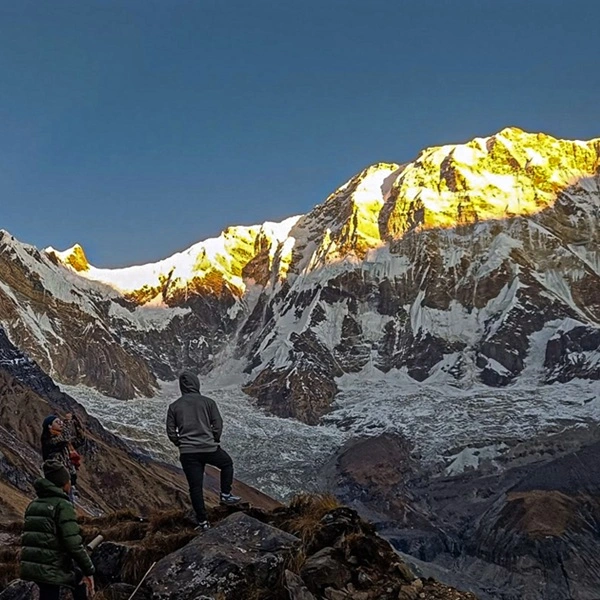
- Cultural transitions are visible on the trekking trails. The lower-altitude villages along the ABC route — from Gurung Ghandruk to mixed-community Chhomrong to higher-altitude Buddhist Bamboo and Deurali — track the cultural geography of the Annapurna region in miniature.
- Festivals encountered on the trek shape the experience. Travelers in the Khumbu during Mani Rimdu, the Tamang regions during Sonam Lhosar, the Kirat hills during Sakela, or the Newar valley during Indra Jatra encounter the cultural traditions as living practice rather than as museum exhibits.
- Language acknowledgments matter. Greeting a Sherpa innkeeper with the Tibetan-derived Tashi Delek rather than the Nepali Namaste registers a small but real cultural awareness. The same applies to Sewaro in Newari, Bhandai chu in Tamang, and the various regional greetings across the country.
- Food traditions vary by community. Dal-bhat-tarkari is the national staple, but the regional preparations differ meaningfully. Newar khaja sets, Tharu ghonghi (snail curry), Sherpa shyakpa (vegetable stew), and the Madhesi Mithila cuisine of Janakpur all carry distinct culinary traditions worth seeking out, where the route allows.
- Architectural heritage is community-specific. The pagoda temples of Kathmandu Valley are Newar. The stone-and-wood mountain houses of the high northern valleys are Tibetan-influenced. The mud-and-thatch Tharu houses of the western Terai are part of a distinct architectural tradition. Recognizing what travelers are looking at adds depth to the visual experience.
Frequently Asked Questions
How many ethnic groups and languages does Nepal have?
The 2021 National Population and Housing Census recorded 142 distinct caste and ethnic groups and 124 mother tongues. This was an increase from 125 ethnic groups and 123 languages in the 2011 census. The expansion reflects recognition of communities previously subsumed under broader categorical labels rather than of new arrivals — communities like the Pun, the Ranatharu, the Chumba-Nubri, and the Mugali successfully asserted distinct cultural identities in the 2021 enumeration.
What is the largest ethnic group in Nepal?
The Chhetri community, with 4,796,995 individuals (16.45% of the national population), is the largest single ethnic group. The Hill Brahmins at 3,292,373 (11.29%) are the second-largest. Together the Khas-Arya category (including Chhetri, Hill Brahmin, Thakuri, Sanyasi, and the Dalit communities) accounts for roughly 38.7% of the national population.
Why is Sherpa not a larger community, given the global recognition?
The Sherpa community, at 130,637 individuals (0.45% of the national population), is meaningfully smaller than most travelers assume from the global reputation of the Khumbu and its association with Mount Everest. The community is geographically concentrated in the Khumbu and Solu regions rather than distributed across the country.
The disproportionate global recognition reflects the community's central role in the modern mountaineering industry rather than its demographic share. Several of the most famous Everest expedition leaders, summiteers, and guides over the past century have come from this relatively small community.
What language do most Nepalis speak?
Nepali is the dominant language by speaker count — 13,084,457 individuals (44.86% of the population) speak it as their mother tongue, and a further 46.23% speak it as a second language. When first- and second-language speakers are combined, roughly 90% of the national population has functional Nepali. Maithili is the second-largest language at 11.05% (3.2 million speakers), followed by Bhojpuri at 6.24%, Tharu at 5.88%, Tamang at 4.88%, Bajjika at 3.89%, Avadhi at 2.96%, and Nepalbhasha (Newari) at 2.96%.
What religion is dominant in Nepal?
Hinduism is the dominant religion, accounting for 81.19% of the population. Buddhism follows at 8.21%, with a particular concentration in the high mountain valleys and among the trans-Himalayan communities. Islam at 5.09% is the third-largest religion, concentrated in the Terai.
The Kirat religion (Mundhum), at 3.17%, is practiced by the Rai, Limbu, Yakkha, and Sunuwar communities in the eastern hills. Christianity at 1.76% has grown over the past three decades. Prakriti (nature worship) and Bon are formally recognized separately. Religious practice in Nepal is often more syncretic than the census categories suggest — the same family unit can include practitioners of multiple traditions, and the same shrine can be venerated by Hindu and Buddhist communities simultaneously.
Which province has the most cultural diversity?
Bagmati Province (centered on the Kathmandu Valley) has 135 of the 142 recognized ethnic groups represented within its boundaries, making it the most ethnically diverse province. The valley itself anchors the Newar civilization, the surrounding central hills are heavily Tamang, and the migration patterns of the capital city have produced settled communities from every region of the country.
Which Nepali languages are most endangered?
Several Sino-Tibetan mountain languages sit at EGIDS Levels 7 (shifting), 8a (moribund), or 8b (nearly extinct) and are at risk of extinction within one or two generations. Tilung, Baram, Lungkhim, and several Rai sub-languages are at this critical stage. The Kusunda language, with 23 documented speakers in 2021, is the most precarious — and is also a language isolate with no known genealogical relatives anywhere in the world. Revitalization efforts are underway specifically for Kusunda, led by community activists and the Language Commission of Nepal.
How do these communities relate to the trekking and cultural travel experience?
Each major trekking and cultural route operates through specific cultural territory. The Everest trekking economy operates through Sherpa territory. The Annapurna routes operate through Gurung and Magar territory. The Langtang and Helambu routes operate through the Tamang territory.
The Makalu and Kanchenjunga routes operate through Rai and Limbu (Kirat) territory. The Kathmandu Valley cultural travel operates through the Newar territory. The Chitwan and Lumbini wildlife and cultural routes operate through the Tharu territory. Travelers spending substantial time in any single route encounter the cultural specifics of that community in detail — language, festivals, food, architecture, and daily ritual practice.
Where can I find the complete list of 142 ethnic groups and 124 languages?
The National Statistics Office of Nepal publishes the complete census data on its official portal. The 2021 National Population and Housing Census reports include the full enumeration of ethnic groups, languages, religions, and demographic distributions at the national, provincial, and district levels. We include the top 30 ethnic groups and the top 20 languages in this guide as representative references. For research purposes, the complete published reports from the National Statistics Office are the authoritative source.
Plan a Cultural Nepal Trip With Us
Tell us what cultural depth you want in your Nepal trip — the Newar architectural heritage of the Kathmandu Valley, the Sherpa monasteries of the Khumbu, the Tharu festival calendar in the Terai, the Tamang Heritage Trail, the Kirat communities of the eastern hills, or a combined cultural-and-trek itinerary that traverses several cultural territories. Our team builds the trip around the cultural priorities you specify and arranges access to the festivals, village homestays, and cultural specialists who bring the experience to life beyond the surface of standard tourism.