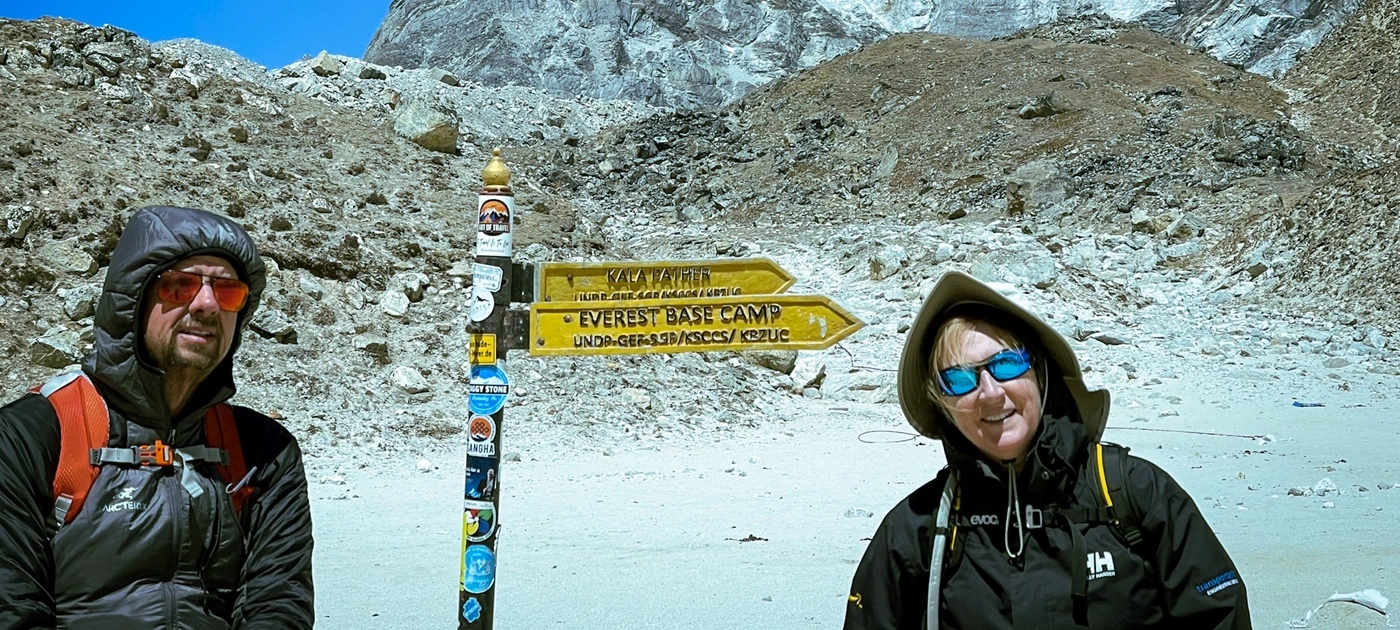
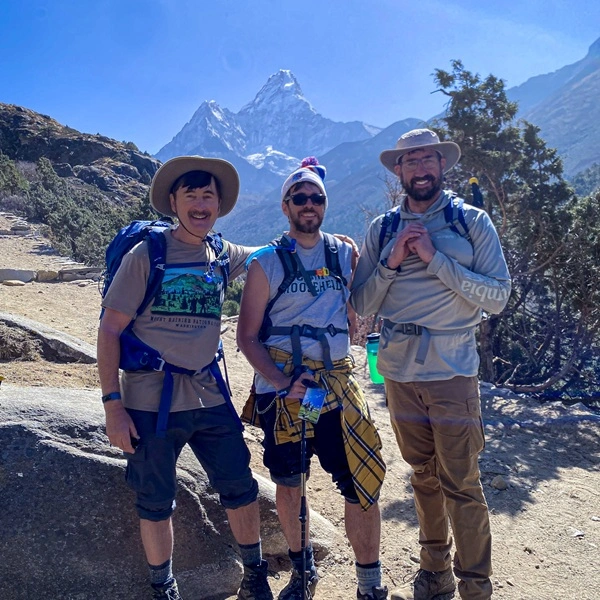
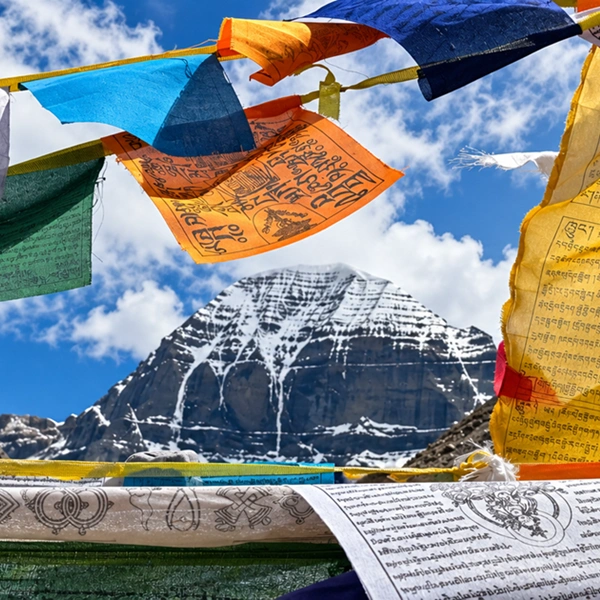
Most people picture the EBC trek as 14 punishing days of sleep deprivation, freezing teahouses, and a long, painful descent.
That is the budget version. It is not what we do at Alpine Luxury Treks.
Our Signature 12-day luxury itinerary reduces friction without sacrificing the experience. You still walk every step of the ascent. You still acclimatize properly. You still stand at base camp and watch the sunrise from Kala Patthar. What you skip is the suffering. Heated rooms instead of plywood teahouses. Private guides instead of crowded group tours. Helicopter to Lukla instead of the 5 AM drive to Manthali. Helicopter back from Gorak Shep instead of a four-day grinding descent.
This is the day-by-day breakdown. What happens, where you sleep, how far you walk, and what altitude you reach. Read it end to end. By the time you finish, you will know exactly what to expect.
Before the Itinerary: Understanding the Luxury Ceiling
True five-star luxury at altitude has limits. We are honest with every guest about them.
Below 4,200 meters, our lodges deliver world-class hospitality. Heated rooms. En-suite bathrooms. 24-hour hot water. Spa treatments at Namche. Gourmet meals.
Above 4,200 meters, the engineering reality changes. The land is permafrost. There is no local agriculture. Every brick must arrive by helicopter or yak. So in Lobuche and Gorak Shep, we use the best teahouses available. Luxury at that altitude means thick electric blankets, the warmest rooms, prioritized food hygiene, and intensive medical monitoring. Not en-suite bathrooms.
We tell you this upfront because guests who expect spa treatments at 5,000 meters will be disappointed. Guests who understand the ceiling appreciate what we deliver: maximum comfort possible at every elevation, not theoretical comfort that does not exist.
12-Day Itinerary at a Glance
|
Day
|
Route
|
Altitude
|
Walking
|
|
1
|
Arrival in Kathmandu
|
1,350 m
|
—
|
|
2
|
Heli to Lukla, trek to Phakding
|
2,610 m
|
3–4 hrs
|
|
3
|
Phakding to Namche Bazaar
|
3,440 m
|
6–8 hrs
|
|
4
|
Namche acclimatization day
|
3,880 m + back
|
3–4 hrs
|
|
5
|
Namche to Tengboche / Deboche
|
3,820 m
|
5–7 hrs
|
|
6
|
Deboche to Dingboche
|
4,410 m
|
5–7 hrs
|
|
7
|
Dingboche acclimatization (Nangkartshang)
|
5,083 m + back
|
4–5 hrs
|
|
8
|
Dingboche to Lobuche
|
4,940 m
|
6–8 hrs
|
|
9
|
Lobuche to Gorak Shep, then EBC
|
5,364 m
|
7–9 hrs
|
|
10
|
Sunrise at Kala Patthar, helicopter return to Kathmandu
|
5,545 m → 1,350 m
|
3–4 hrs
|
|
11
|
Kathmandu rest & buffer day
|
1,350 m
|
—
|
|
12
|
International departure
|
—
|
—
|
Day 1: Arrival in Kathmandu
Altitude: 1,350 m · Hotel: Dwarika’s, Yak & Yeti, or Marriott · Pace: Relaxed
Your trek begins the moment you land at Tribhuvan International Airport. Our representative meets you in arrivals with a welcome garland and walks you directly to a private vehicle. No queues. No hunting for taxis.
We check you into one of Kathmandu’s premier five-star properties. Dwarika’s Hotel for guests who want heritage and architectural grandeur. The Hotel Yak and Yeti for classic Kathmandu hospitality. The Kathmandu Marriott for modern five-star comfort. The choice is yours, made when you book.
The afternoon is yours. Sleep off the jet lag. Take a guided cultural tour to Boudhanath Stupa or Pashupatinath Temple. Wander the side streets of Thamel.
At 5 PM, your lead expedition guide meets you at the hotel for a comprehensive trek briefing. Safety protocols. Altitude prevention. Gear check. We hand you your expedition equipment: a high-altitude rated down jacket, a sub-zero sleeping bag, and a waterproof duffel bag. The day closes with a gourmet welcome dinner featuring Nepalese cuisine and a small cultural performance.
Day 2: Helicopter Flight to Lukla, Trek to Phakding
Altitude: 2,860 m → 2,610 m · Lodge: Yeti Mountain Home Phakding · Walking: 8 km, 3–4 hrs
This is where our luxury itinerary diverges from every standard trek.
Standard groups leave Kathmandu at 1 AM, drive 5 hours to Manthali airport, queue in the dark, and board a fixed-wing flight to Lukla. They arrive exhausted before the trek even starts. We do not put our guests through that.
Instead, we charter a private or semi-private helicopter directly from Kathmandu to Lukla. Departure is at a civilized 7 or 8 AM. The 35-minute flight delivers staggering aerial views of terraced hillsides, deep river valleys, and the first glimpse of the snow-capped Himalayan giants. You arrive at the dramatic Tenzing-Hillary Airport rested and excited.
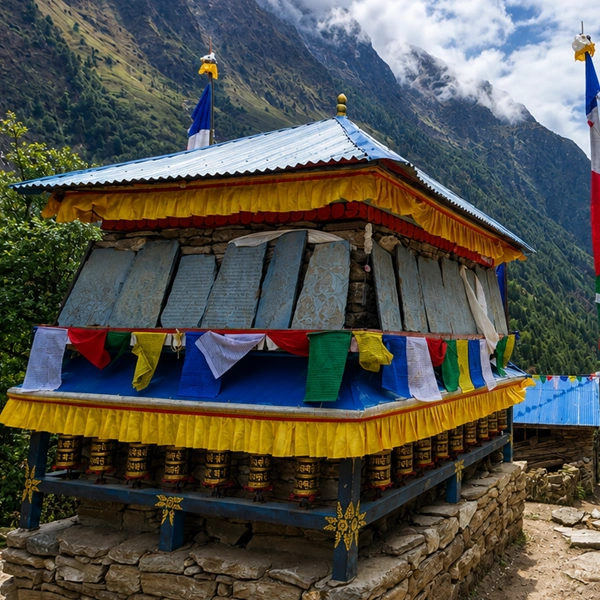
After a brief tea stop, we meet our porter and assistant guide team, and the trek officially begins. Day 1 on the trail is gentle. A 230-meter descent through pine and cedar forests toward the roaring Dudh Koshi River. You pass terraced fields and ancient mani walls carved with Buddhist mantras.
Three to four hours later, we arrive at Phakding (2,610 m). You stay at Yeti Mountain Home Phakding or The Himalayan Lodge. Heated rooms. High-pressure hot showers. Some properties even have a heated onsen-style spa pool to soothe the muscles.
Day 3: The Climb to Namche Bazaar
Altitude: 2,610 m → 3,440 m · Lodge: Yeti Mountain Home Namche · Walking: 11 km, 6–8 hrs
Today is the first significant physical test of the trek. The trail follows the Dudh Koshi north, crossing it several times on iconic suspension bridges draped in colorful prayer flags.
At Monjo (2,835 m), we officially enter Sagarmatha National Park, a UNESCO World Heritage site. After the small settlement of Jorsalle, we cross the famous Tenzing-Hillary suspension bridge, a long, high-strung walkway above the river confluence.
Then comes the climb. Two hours of relentless switchbacks up a steep pine-forested trail. Halfway up at the Larja Bridge viewpoint, you get your first distant glimpse of Mount Everest peering over the Lhotse-Nuptse ridge. It is a small, distant triangle. But it is Everest. It is real.
In the late afternoon, we arrive in Namche Bazaar (3,440 m). The town is built into the mountainside in a natural amphitheater. It is the commercial and cultural heart of the Khumbu, with bakeries, gear shops, and Tibetan markets. You check into Yeti Mountain Home Namche or the Namche Boutique Lodge. Natural wood interiors. Premium electric blankets. Direct mountain views from the bedroom window.
Day 4: Acclimatization Day in Namche Bazaar
Altitude: 3,440 m (sleep), 3,880 m (climb) · Walking: 3–4 hrs · Pace: Active rest
Your body needs this day. Two consecutive nights at 3,440 meters is non-negotiable for safe acclimatization. We will not skip it, no matter how strong you feel.
Acclimatization is not passive rest. It is active. The science is simple: climb high, sleep low. So after a hot organic breakfast, we hike up to the Hotel Everest View at 3,880 meters. The outdoor stone terrace gives you a sweeping 360-degree panorama of Everest, Lhotse, Nuptse, and the iconic spire of Ama Dablam. We pause for premium coffee or tea. Take the photographs you came for. Then descend back to Namche to sleep.
If you have the energy, we extend the hike to the twin Sherpa villages of Khumjung and Khunde. You can visit the Hillary School built by Sir Edmund Hillary, and the ancient Khumjung Monastery (which, by local tradition, houses a sacred Yeti scalp).
The afternoon is yours. Explore Namche’s markets. Visit the Sherpa Culture Museum. Or book a massage at the lodge spa, perfectly timed before the harder days ahead. We strongly recommend taking advantage of the spa now. There will not be one again until you return.
Day 5: Trek to Tengboche Monastery and Deboche
Altitude: 3,440 m → 3,820 m · Lodge: Rivendell Lodge or Yeti Mountain Lodge Deboche · Walking: 9–12 km, 5–7 hrs
This is one of the most scenic days of the entire trek.
We leave Namche along a high traverse trail that contours the ridge, offering continuous panoramic views of Everest, Nuptse, Lhotse, and Ama Dablam. The path eventually descends sharply into a rhododendron-filled valley to Phunki Tenga, where we stop for a carbohydrate-heavy lunch.
After lunch, the climb begins. Two strenuous hours through dense alpine forest up to the exposed Tengboche ridge (3,867 m).
Tengboche is the spiritual heart of the Khumbu. The magnificent Tengboche Monastery sits on this ridge with Ama Dablam looming behind it. If our timing aligns with the daily monastic schedule, you can sit silently in the prayer hall and listen to the monks chanting. Resonant. Ancient. Profound. A pause your soul will remember.
From Tengboche, we descend a short 20 minutes downhill to the sheltered hamlet of Deboche (3,820 m). Deboche sits in a forested pocket protected from the wind that whips across Tengboche. We stay at the Rivendell Lodge or the new Yeti Mountain Lodge Deboche. En-suite hot showers. Solar-powered architecture. Framed views of Ama Dablam from the dining hall.
Day 6: Trek to Dingboche, Above the Treeline
Altitude: 3,820 m → 4,410 m · Lodge: Hotel Bright Star Dingboche · Walking: 10–12 km, 5–7 hrs
Today, the air noticeably thins. The temperature drops. The landscape changes.
We leave Deboche by crossing the glacial Imja Khola river on a steel suspension bridge. The trail climbs steadily through Pangboche (3,980 m), the highest year-round permanent settlement in the valley. Stone houses. Small barley fields. All dwarfed by the sheer rock face of Ama Dablam directly above.
Then the treeline ends. Abruptly. The familiar pines and rhododendrons disappear. The landscape becomes alpine tundra. Low scrub bush. Glacial boulders. Vast open skies. The wind becomes a constant companion.
Five to six hours after departing Deboche, we arrive at Dingboche (4,410 m). The village is partitioned by miles of stone walls, built over generations to shelter fragile barley and potato crops from the high-altitude winds.
Dingboche is where our luxury crosses the engineering ceiling. We stay at Hotel Bright Star or the Himalayan Glacier Lodge. Heated mattresses. Attached bathrooms. These features require serious technical work at this altitude. Internal plumbing routinely freezes solid in winter. The fact that they exist here at all is a small miracle of mountain engineering.
Day 7: Acclimatization Hike up Nangkartshang Ridge
Altitude: 4,410 m → 5,083 m → 4,410 m · Walking: 4.5 km, 4–5 hrs
This is your second mandatory acclimatization day. Same principle as Namche. Climb high during the day. Return to Dingboche to sleep.
After breakfast, we begin the Nangkartshang ridge hike. It is rigorous. The trail zigzags up a steep rocky slope at the deliberate slow pace altitude demands. Stop, breathe, step, repeat.
At the top of the ridge, somewhere above 5,000 meters, the Himalayan world opens spectacularly. From this wind-blasted viewpoint, you see Mount Makalu (the world’s fifth-highest peak) for the first time. The immense Lhotse wall fills one quarter of the sky. The fluted ice ridges of Ama Dablam look close enough to touch.
The physiological work of this hike is profound. Climbing to 5,000+ meters and returning to 4,400 meters to sleep powerfully stimulates red blood cell production. Your body builds the oxygen-carrying capacity it needs for the days ahead.
By midday, we descend back to Dingboche. The afternoon is for recovery. Read by the stove. Hydrate aggressively. Eat carbohydrates. Tomorrow is hard.
Day 8: Trek to Lobuche via the Thukla Pass Memorials
Altitude: 4,410 m → 4,940 m · Lodge: Oxygen Inn or Pyramid Hotel · Walking: 12 km, 6–8 hrs
Today, we climb above the luxury ceiling and into the high glacial moraine. The character of the trek changes.
We leave Dingboche along the broad windswept valley floor of the Khumbu Khola. The glaciated peaks of Cholatse and Taboche tower on the left, casting long shadows. The trail eventually arrives at Dughla (Thukla) at the base of the Khumbu Glacier’s terminal moraine.
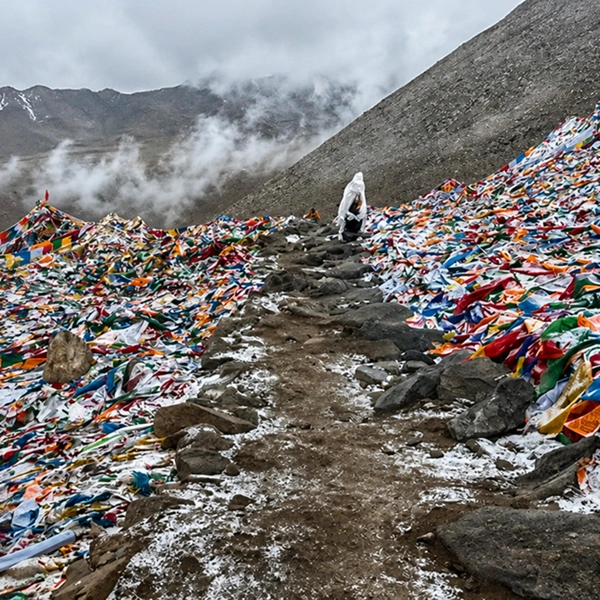
Then comes a notoriously steep ascent up the rocky face of the moraine. At the top of this climb is the Thukla Pass (4,830 m). It is a deeply moving, solemn place. Hundreds of stone memorials and prayer flag-draped chortens commemorate the climbers and Sherpas who lost their lives on Everest. Many of our guides have known the people whose names are carved here. We always pause. We always pay respect.
Beyond the memorials, the trail flattens out as it follows the lateral moraine of the Khumbu Glacier. We arrive in Lobuche (4,940 m) in the late afternoon.
Lobuche is a desolate outpost. We have officially crossed the luxury ceiling. We use the best available teahouses, the Oxygen Inn or the Pyramid Hotel. Luxury here is defined differently: thick electric blankets, the warmest available rooms reserved for our guests, attentive service from our crew, and intensified pulse oximetry monitoring. Your blood oxygen is naturally dropping into the low 70s. We watch carefully.
Day 9: The Push to Everest Base Camp
Altitude: 4,940 m → 5,164 m → 5,364 m → 5,164 m · Lodge: Buddha Lodge Gorak Shep · Walking: 8–9 km, 7–9 hrs
This is the day. The day you have trained for. The day you came for.
We start early. The trail from Lobuche to Gorak Shep is rugged and undulating, weaving over loose rocks and glacial scree. Above 5,000 meters, every step requires deep rhythmic breathing. Your guide enforces a slow, deliberate pace. There is no hurry.
Three hours later, we reach Gorak Shep (5,164 m). It is a desolate, sandy, frozen lakebed surrounded by towering snow-clad peaks. We pause for a hot lunch at our lodge, the Buddha Lodge or Everest Inn. You drop your daypack. You rest your legs.
Then the final push. The trail to Everest Base Camp weaves along the crest of the Khumbu Glacier. The terrain is alien: ice pinnacles, deep blue crevasses, shifting glacial debris. Eventually, at 5,364 meters, you arrive.
Standing at Everest Base Camp is an emotional moment that words struggle to do justice. You are at the literal foot of the highest mountain on the planet. The Khumbu Icefall cascades above. The amphitheater of the Himalayas surrounds you. If you arrive in spring, you walk past the colorful tent city of expedition climbers preparing for their summit push. If you arrive in autumn or winter, the silence is profound.
The summit of Everest itself is hidden from base camp, blocked by the massive shoulder of Nuptse. But you are here. You made it. We capture photographs by the iconic Base Camp boulder. Then we retrace our steps carefully back to Gorak Shep for a hard-earned night of rest at altitude.
Day 10: Sunrise at Kala Patthar, Helicopter Return to Kathmandu
Altitude: 5,164 m → 5,545 m → 1,350 m · Walking: 3–4 hrs · Heli: Gorak Shep → Kathmandu
To see the actual summit of Everest in all its glory, we have to climb one final hill. Kala Patthar at 5,545 meters.
We wake hours before dawn in freezing temperatures. Down jackets. Headlamps on. Hot tea in a thermos. Then we begin the steep, lung-burning climb up the black rocky slopes. This is arguably the most physically taxing segment of the entire trek. Steep gradient. Extreme altitude. Brutal cold.
And then the sun breaks the horizon.
The first golden light hits the summit of Everest while the valleys below stay in deep shadow. The peaks of Nuptse, Pumori, and Lhotse ignite around you. You stand at the supreme vantage point of the entire Khumbu valley. The sprawling Khumbu Glacier stretches beneath your feet. It is the defining visual moment of the expedition. Many guests cry. Many simply go silent. Both reactions are correct.
After descending to Gorak Shep for a celebratory breakfast, the magic of our luxury itinerary takes over. Instead of a punishing four-day pedestrian descent, you board a private helicopter at the sandy helipad.
The flight back to Kathmandu is breathtaking. You glide over the treacherous glaciers, soar past Tengboche Monastery, and plunge down the green river valleys you spent days conquering. One hour after liftoff, you land in Kathmandu. The contrast is profound and deeply welcome. From freezing oxygen-deprived Gorak Shep to your warm five-star hotel suite. In a single morning.
HOW THE HELICOPTER HELI LOGISTICS WORK
Above 5,000 meters, the thin air limits helicopter lift capacity. For safety, the aircraft typically performs a shuttle flight, taking two passengers at a time from Gorak Shep down to a lower-altitude pad at Pheriche, then continuing the journey to Kathmandu at normal capacity. Total journey time is roughly 90 minutes, including the shuttle. We coordinate only with safety-certified high-altitude operators.
Day 11: Kathmandu Rest, Spa Day, and Buffer Day
Altitude: 1,350 m · Hotel: Same as Day 1 · Pace: Pure recovery
This day exists for two important reasons.
First, it is your day of celebration. You just walked to the foot of Everest and back. Your legs are tired. Your skin is wind-chapped. Your soul is full. Sleep in. Order room service. Book a deep tissue massage. Walk through Thamel’s side streets. Eat at a real restaurant for the first time in 10 days. Buy gifts for the people back home.
Second, this is your weather buffer. Helicopter flights from Gorak Shep can occasionally be delayed by weather. If we have to wait a day in the mountains, this buffer day absorbs the delay so you do not miss your international flight home. It is a quiet logistical safety net we build into every itinerary.
If you want a guided tour, we can arrange a half-day visit to the monkey temple at Swayambhunath or the riverside cremation ghats at Pashupatinath. Or you can simply do nothing. Both are excellent choices.
Day 12: International Departure
Altitude: 1,350 m · Service: Private airport transfer
A leisurely breakfast. A final farewell with our team. A private vehicle to Tribhuvan International Airport.
We will meet you in the lobby with plenty of time before your flight. There is no rushing. We help with check-in. We say goodbye properly.
The trek is officially over. The memories last forever.
The Alternative: A 14-Day Itinerary with a Walking Descent
Some guests want to extend their time in the mountains. For them, we offer a traditional 14-day version that descends to Lukla rather than taking a helicopter from Gorak Shep.
On Day 10 of this version, after Kala Patthar, you descend through Gorak Shep to the lower oxygen-rich altitudes of Pheriche (4,250 m). The descent feels remarkably easy because your body is now superbly acclimatized. The thicker air provides a noticeable surge of energy.
Day 11 retraces through Pangboche and Tengboche back to Namche Bazaar. Returning to Namche feels like a homecoming. Hot showers. Bakeries. Real oxygen. Day 12 is the final descent along the Dudh Koshi back to Lukla, where we celebrate with a farewell dinner. Day 13 is the fixed-wing flight to Kathmandu. Day 14 is an international departure.
Both versions deliver you to base camp. Both are extraordinary. The 12-day helicopter return is faster, easier on the joints, and more exclusive. The 14-day walking descent is more immersive and meditative, and it rewards you with a slower farewell to the mountains. We will help you choose what fits.
What This Trip Costs
Our Signature 12-day Luxury Everest Base Camp Trek with helicopter logistics typically ranges from $5,500 to $8,500 per guest, depending on departure date, group size, and the level of helicopter charter selected (semi-private vs fully private).
The 14-day walking-descent version starts at $4,500 per guest.
Both rates include all in-country logistics: five-star Kathmandu hotels, all luxury lodges in the Khumbu, private helicopter charters, a dedicated Sherpa guide team, all meals on the trek, expedition gear (down jacket and sleeping bag), national park permits, and 24/7 medical support.
They do not include international airfare, Nepal visa, travel insurance with high-altitude evacuation coverage, gratuities for the team, and personal expenses. We send a detailed pricing breakdown when you make an inquiry.
This Is What We Do Best
Our Signature Everest Base Camp Trek is the trip we have spent more time refining than any other in our portfolio. Every overnight is the result of years of testing properties. Every meal has been planned with input from altitude nutrition specialists. Every helicopter charter is booked with operators we trust with our own family members.
If you have read this far, you are seriously considering Everest. The next step is a conversation. Tell us when you want to go. Tell us about your fitness, your medical history, and your travel companions. We will design a trek that fits your body, your timeline, and your expectations.
Then we will get you to base camp safely. And we will get you home with the memories you came for.
Ready to plan your luxury Everest Base Camp trek?
Talk to our team about a 2026 departure. We will send you a personalized itinerary, gear list, and full pricing breakdown within 48 hours.