If you are in your 60s, 70s, or beyond, the way you travel has changed. The ten-monument days are behind you. What you want now is travel that restores rather than depletes. Travel that respects the rhythm your body sets, not the rhythm a tour schedule demands.
Bhutan is built for this.
The country operates on a philosophy called Gross National Happiness. That is not a marketing slogan. It is the constitutional framework that governs every policy decision in the Kingdom, including those related to tourism. The result is a country with no mass tourism, no overcrowded monuments, and a culture that holds deep, genuine reverence for elders.
At Alpine Luxury Treks, we have been building senior-specific Bhutan wellness itineraries for over a decade. We know which valleys sit at manageable altitudes. We know which lodges have flat access and elevators. We know which yoga instructors can adapt to arthritic knees. And we know when the Dotsho hot stone bath needs its temperature adjusted for a guest with blood pressure concerns.
This is not generic wellness travel. This is medical-aware wellness travel, designed around your body, your pace, and your comfort.
Why Bhutan Works for Retirement Wellness Travel
Three reasons. Each one matters for travelers over 60.
No Crowds. Ever.
Bhutan charges a mandatory Sustainable Development Fee of USD 100 per person per night. This acts as a structural filter. While other Himalayan destinations receive millions of visitors annually, Bhutan caps its visitor intake at around 300,000. The monasteries are quiet. The trails are empty. The lodges feel private.
For older travelers who find crowds physically and psychologically draining, this is the single most important feature of Bhutan as a destination.
A Culture That Respects Elders
In Bhutanese culture, age carries authority and warmth. Your guide will not rush you. Hotel staff will not treat you as an inconvenience. The pace of daily Bhutanese life — especially in rural valleys — aligns naturally with a slower, more intentional rhythm of travel.
We can arrange guides who speak fluent German, French, or Italian, ensuring that every cultural explanation, meditation instruction, and medical coordination is communicated clearly in your native language.
Altitude Is Manageable — With the Right Route
The most common concern our senior guests have is altitude. It is a valid concern. But Bhutan’s geography is diverse, and we use that diversity strategically.
The Punakha Valley — our primary wellness base for senior travelers — sits at an elevation of 1,250-1,310 meters. That is lower than many European ski resorts. Breathing is effortless. The climate is warm.
Paro and Thimphu are at around 2,250-2,350 meters. Safe for nearly all seniors who pace themselves for the first day or two.
The higher valleys — Phobjikha at 2,900 to 3,000 meters, and mountain passes above 3,700 meters — are visited only after acclimatization, and only if the guest is comfortable. We never push altitude. We build gradual acclimatization directly into the route.
Altitude Reference for Senior Travelers
|
Destination
|
Altitude (m)
|
Altitude (ft)
|
Our Assessment for Seniors
|
|
Punakha Valley
|
1,250–1,310 m
|
4,100–4,300 ft
|
Ideal senior wellness base. Low altitude, warm climate, effortless breathing.
|
|
Paro Valley
|
2,250 m
|
7,380 ft
|
Moderate altitude. Allow one to two gentle rest days on arrival.
|
|
Thimphu City
|
2,320–2,350 m
|
7,610–7,710 ft
|
Moderate altitude. Safe with paced activity.
|
|
Phobjikha Valley
|
2,900–3,000 m
|
9,500–9,840 ft
|
Higher altitude. Visit later in the itinerary after acclimatization.
|
|
Chelela Pass
|
3,700–3,988 m
|
12,140–13,080 ft
|
High pass. Brief scenic photo stops only. No extended stays.
|
When to Travel: Season Guide for Seniors
Joint health, respiratory comfort, and trail safety all depend on timing. Here is when we recommend our senior guests travel to Bhutan.
|
Season
|
Paro Temp (Day/Night)
|
Punakha Temp (Day/Night)
|
Our Recommendation
|
|
Spring (Mar–May)
|
23°C / 12°C
|
28°C / 19°C
|
Highly recommended. Mild, blooming valleys are perfect for outdoor yoga and comfortable walks.
|
|
Autumn (Sep–Nov)
|
19°C / 7°C
|
26°C / 15°C
|
Highly recommended. Crisp, clear air, excellent visibility, and comfortable sleeping temperatures.
|
|
Summer (Jun–Aug)
|
27°C / 15°C
|
30°C / 21°C
|
Not recommended. Heavy monsoon rains create slippery paths and high humidity.
|
|
Winter (Dec–Feb)
|
11°C / -2°C
|
19°C / 6°C
|
Caution. Punakha stays mild, but nights in Paro and Thimphu can aggravate arthritis.
|
The Three Pillars of a Senior Wellness Retreat in Bhutan
Every wellness itinerary we build for senior guests rests on three activities. Each one is adapted to your mobility, energy level, and medical profile before you arrive.
1. Gentle Yoga
We do not book Vinyasa flows for our senior guests. We do not book hot yoga. We do not book anything that spikes heart rate or demands cardiovascular effort at altitude.
What we book is restorative yoga. Slow, deliberate stretching. Prop-assisted postures. Chair yoga for guests who find floor work difficult due to knee or hip issues. Pranayama (breathwork) that is clinically proven to lower blood pressure and support altitude acclimatization.
Properties like Six Senses Bhutan and &Beyond Punakha River Lodge offer slow-flow sessions held outdoors in the morning. Pine-scented air. Valley views. Sessions last 30 to 45 minutes. No performance pressure. No difficult poses.
For guests who have never done yoga, we start with breathwork only. Five minutes of guided inhale-exhale with eyes closed, sitting in a comfortable chair on a terrace. That alone, at this altitude and in this silence, is enough to shift how the body feels for the rest of the day.
2. Meditation and Mindfulness
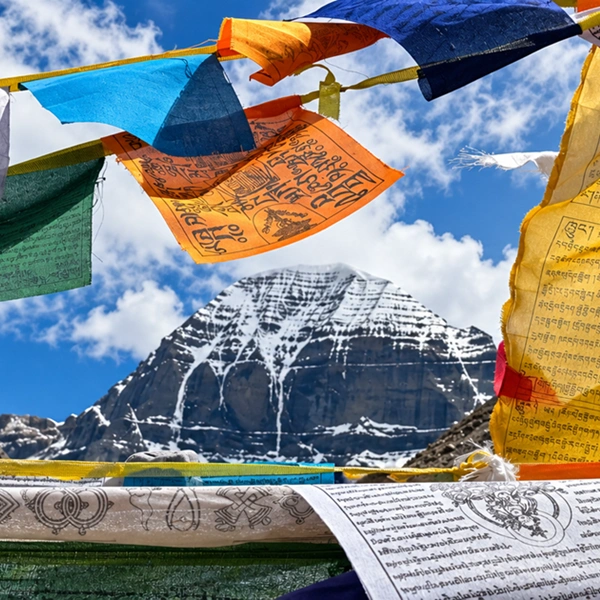
Bhutan is a naturally meditative country. The silent courtyards of ancient Dzongs. The slow rhythm of rural agricultural life. The flutter of prayer flags. The deep-toned chanting of monks. The country itself invites you to slow down.
We do not ask our senior guests to sit cross-legged on a hard floor. We do not require formal meditation postures. What we do is create comfortable settings where stillness comes naturally.
Guided meditation at monasteries: Sitting comfortably on a cushioned bench in the courtyard of a 7th-century temple like Kyichu Lhakhang. Listening to the rhythmic chanting of resident monks. No participation required. Just listening.
Walking meditation in peaceful valleys: Slow, mindful walks along the flat wooden boardwalks of the Phobjikha Valley. Shinrin-yoku (forest bathing) among blue pines. Black-necked cranes overhead in the winter months.
Sound healing: Many of our partner lodges offer acoustic meditation using traditional Tibetan singing bowls. Sound frequencies that induce deep relaxation. No physical effort required at all.
We tell every senior guest the same thing: formal sitting is entirely optional. You can simply listen, observe, reflect, and allow the quiet of the Himalayas to do the work.
3. The Dotsho: Traditional Hot Stone Healing Bath
The Dotsho is the single most physically restorative experience available in Bhutan for older travelers. It is centuries old. It is deeply rooted in Sowa Rigpa (gSo-ba Rig-pa), the traditional Bhutanese medical system dating back to the 7th century.
The process is slow and intentional. River stones are selected and roasted over an open fire until they glow red. They are deposited into a partitioned section of a traditional wooden tub filled with pure mountain spring water. The stones release calcium, magnesium, and iron into the water. Simultaneously, local medicinal plants — most notably Artemisia absinthium (wormwood leaves) — are infused into the bath.
The result is a deeply aromatic mineral soak that relieves joint pain, stiffness, arthritis, and hypertension. For our senior guests recovering from long-haul flights or adjusting to altitude, the Dotsho is the single most valuable physical treatment we schedule.
After the bath, your muscles are perfectly warmed. This is the ideal moment for a gentle herbal massage, followed by quiet time in a warm robe with organic herbal tea.
The intense heat of the Dotsho causes blood vessels to dilate, lowering blood pressure while increasing the heart's workload. This is usually safe for most seniors. However, if you have a history of cardiovascular issues, advanced diabetes, or peripheral neuropathy (reduced sensation in extremities), we need to know before your trip. We will either adjust the water temperature or substitute the bath with a milder herbal steam session. We always discuss this during our initial health consultation. Your safety comes first, always.
Lodges We Recommend for Senior Guests
Not every luxury lodge in Bhutan works for senior travelers. We personally vet every property we book for three things: flat access (ground-floor rooms, elevators, or single-story layouts), walk-in bathrooms with safety features, and warm temperature-controlled rooms.
Amankora lodges across all five valleys are single-story with barrier-free layouts. No stairs between your room and any public space. The bukhari wood stoves keep rooms warm through cold Paro nights.
Zhiwa Ling Heritage in Paro features ground-floor suites. The hotel itself was built over five years without nails — in the traditional fortress style — and offers the country’s largest indoor heated swimming pool, as well as outdoor Dotsho baths.
Le Méridien Thimphu has spacious elevators, walk-in showers, and climate-controlled rooms. A strong choice for our guests who want international-brand consistency in the capital.
&Beyond Punakha River Lodge is our most-booked property for senior wellness stays in the low-altitude Punakha Valley. Maximum 20 guests at any time. Suspended tented suites with outdoor showers and star baths. The intimacy and river-side calm make it ideal for guests seeking absolute stillness.
Bhutan Spirit Sanctuary in the Neyphu Valley is the country’s only all-inclusive wellness retreat rooted entirely in traditional Bhutanese medicine. Six treatment rooms. Heated indoor pool with floor-to-ceiling glass. A mandatory consultation with an in-house Traditional Medicine Doctor on arrival. For our most wellness-committed senior guests, this is the anchor property.
Sample 7-Day Senior Wellness Retreat
Here is how we typically structure a wellness-focused Bhutan trip for guests over 60. The key principle: rest comes first. Activity follows only when the body is ready.
Day 1- Arrival and Gentle Settling In
Flight into Paro International Airport, typically connecting through Bangkok, Delhi, or Kathmandu. Your dedicated guide and driver meet you at the terminal and handle all luggage. Slow 1-hour transfer along the flat Paro river valley road to Thimphu.
Check in at your hotel (flat access, elevator, warm room confirmed in advance). No scheduled activity. A short flat nature walk around the hotel grounds, if you feel up to it, or a session of terrace chair yoga to help your lungs adjust. Welcome, talk over herbal tea.
Day 2- Light Yoga, Meditation, and Thimphu Culture
Morning gentle yoga session tailored to your mobility. Deep breathing to aid acclimatization. 30 to 45 minutes. No floor work unless you choose it.
Late morning visit to the Buddha Dordenma. Your vehicle drops you directly on the broad, flat viewing platform — no hill climbing. Sweeping valley views.
Afternoon guided meditation in the shaded flat courtyard of the National Memorial Chorten. You sit on benches alongside elderly Bhutanese locals who gather there daily to spin prayer wheels and socialize. This is one of the most quietly powerful moments in any Bhutan trip.
Day 3 -Transfer to Punakha + First Dotsho
Today, we descend to the warmer, lower Punakha Valley. The drive takes about 3 hours with a rest stop at the Dochula Pass (3,150 meters) to see the 108 memorial chortens and Himalayan panorama. Your time at altitude is brief — 15 minutes for photos.
Afternoon arrival at your Punakha lodge. First traditional Dotsho hot stone bath. Water temperature pre-verified for your blood pressure profile. Artemisia herbs infused. After the soak, an optional herbal massage. Late afternoon, deep rest, tea, and journaling by the river.
Day 4- No-Obligation Rest Day
This is a day with no scheduled activity. You choose what your body needs.
Options: morning yoga on the lodge terrace. A second Dotsho bath. A gentle herbal facial. A quiet afternoon reading on your balcony overlooking the Mo Chhu river. If you feel energized, take a flat 30-minute walk to the Punakha Suspension Bridge. If not, the day is yours.
This is the day our senior guests consistently describe as the most restorative of their entire trip. The absence of obligation is itself a form of luxury.
Day 5- Valley Walk and Picnic
Easy flat walk in the Punakha Valley. We might visit Chimi Lhakhang — a temple on perfectly level ground. Or a gentle stroll along the river with prayer flags. No inclines.
Picnic-style lunch set up for you in a peaceful spot overlooking the rice terraces. The lodge’s culinary team prepares this specifically for your dietary needs.
Afternoon optional monastery visit with quiet meditation time. Or an extended spa session at the lodge.
Day 6- Optional Phobjikha Valley Excursion
If you are acclimatized and energized, we offer a day trip to the Phobjikha Valley (2,900 meters). The drive is about 3 hours each way. Flat wooden boardwalks along the nature trail. Black-necked cranes are visible from October through early March. The walking is completely level.
If you prefer to stay in Punakha, this is another rest day with yoga, spa treatments, and valley views.
Day 7- Closing Yoga, Reflection, and Departure
Final gentle yoga or mindful movement session. A closing meditation circle to integrate the stillness you have cultivated. Nourishing breakfast.
Return drive to Paro with a stop at Kyichu Lhakhang — one of Bhutan’s oldest temples, sitting on perfectly flat ground. Light a final butter lamp without having to navigate steep stairs. Transfer to Paro airport for your departure.
“We had the pleasure of hosting Gerhard and Ingrid Weber from Munich, both 74 years old, in October 2024. Gerhard has mild osteoarthritis. Ingrid uses a walking stick occasionally. They were anxious about the altitude before arrival. We based them in the Punakha Valley at 1,280 meters for five of their seven nights, arranged three Dotsho hot stone baths with adjusted water temperature for Gerhard’s blood pressure, and scheduled zero steep walks. Ingrid told us on Day 5: ‘I have not felt this physically relaxed in three years.’ They returned to Munich and referred two couples to us within six weeks.”
“In April 2025, we hosted Françoise Dupont from Lyon, 68 years old, traveling solo for the first time after losing her husband. She wanted quietness and spiritual restoration. We arranged a 9-day itinerary anchored at Bhutan Spirit Sanctuary with a French-speaking guide. Her Traditional Medicine Doctor consultation lasted 75 minutes. On her final evening, Françoise wrote us a note that read: ‘I came to Bhutan looking for peace. I found it on the second day and carried it for the remaining seven.’ She is returning in autumn 2026.”
How We Adapt Every Detail for Senior Travelers
Health-First Consultation
Before we design your itinerary, we ask specific medical questions. Joint health. Blood pressure. Mobility limitations. Medications. This is not intrusive — it is essential. Knowing your profile allows us to select the right altitude, verify that the Dotsho is safe for you, brief the lodge on dietary needs (swapping fiery Ema Datshi for mild buckwheat and red rice dishes if necessary), and prepare your guide for any medical coordination.
Flat Access and Comfort-Led Design
We personally verify that every property we book for a senior guest has ground-floor or elevator access, walk-in bathrooms, warm, temperature-controlled rooms, and short distances to the dining/spa areas. This is non-negotiable.
No-Obligation Flexibility
Every day on your itinerary includes a clear “rest alternative.” If you wake up without the energy for the scheduled activity, you skip it. Your guide and driver are exclusively yours — the schedule bends to your energy, not the other way around.
European-Friendly Logistics
We handle every piece of bureaucracy. Visa processing (including the 40 USD application fee). SDF payments (100 USD per person per night). Travel insurance vetting — we ensure your European policy includes medical evacuation coverage for emergency flights to Bangkok or Singapore. Comfortable flight routing from Europe, typically via Bangkok or Delhi.
Medical Support Infrastructure in Bhutan
Senior travelers understandably want to know what happens if something goes wrong medically. Bhutan’s medical infrastructure is basic but functional, and our contingency planning covers the gaps.
Thimphu is home to the Jigme Dorji Wangchuck National Referral Hospital (JDWNRH) — a large facility with emergency departments, MRI diagnostics, cardiology, and orthopedic care. Paro has smaller district medical facilities.
For serious emergencies, we coordinate medical evacuation flights to advanced hospitals in Bangkok or Singapore through your travel insurance. We verify this coverage is in place before you depart Europe. In fifteen years of booking senior Bhutan trips, we have never needed to activate an emergency evacuation. But we are prepared every time.
Driving Distances Between Wellness Destinations
Bhutan’s roads are mountainous. To reassure you about vehicle time, here are the approximate driving times between our key senior wellness destinations. We use luxury SUVs with excellent suspension and take frequent rest stops.
|
Route
|
Distance
|
Drive Time
|
Terrain Note
|
|
Paro to Thimphu
|
65 km
|
1–1.5 hours
|
Smooth, flat river valley road. Comfortable throughout.
|
|
Thimphu to Punakha
|
77 km
|
3 hours
|
Ascends Dochula Pass, then descends. Brief time at altitude. Scenic.
|
|
Punakha to Phobjikha
|
78 km
|
3 hours
|
Winding roads. We break often for photos and fresh air.
|
|
Phobjikha to Paro
|
188 km
|
5.5–6 hours
|
Longest transit. We ensure comfort, hydration, and regular stops.
|
Frequently Asked Questions
Is Bhutan safe for older travelers?
Yes. Bhutan has a very low crime rate and a deeply respectful culture. The regulated tourism model means you are always accompanied by a licensed guide and a dedicated driver. You will never navigate complex terrain or logistics on your own. Alpine Luxury Treks briefs your guide on your specific medical and mobility needs before your trip begins.
Is yoga in Bhutan suitable for seniors?
Yes. We book only gentle, restorative, and hatha-style yoga for our senior guests. Instructors are trained to adapt poses for older bodies, using chair yoga and prop-assisted postures. Sessions focus heavily on breathwork (pranayama) and meditation rather than cardiovascular effort. No prior experience is needed.
Can I skip hikes and just enjoy yoga and baths?
Yes. Many of our senior itineraries include zero hikes. You can spend your entire retreat with daily gentle yoga, Dotsho hot stone baths, herbal massages, guided meditation, and scenic drives where the views come to you. Your guide and driver are exclusively yours — the schedule bends to your energy level.
Is the hot stone bath safe for seniors with health conditions?
For most seniors, the Dotsho is safe and deeply restorative. However, the intense heat dilates blood vessels and increases the heart's workload. If you have a history of cardiovascular disease, advanced diabetes, or peripheral neuropathy, we need to know before your trip. We will either adjust the water temperature or substitute with a milder herbal steam session. We discuss this during our initial health consultation.
What altitude is safe for seniors in Bhutan?
The Punakha Valley (1,250–1,310 meters) is our primary wellness base for senior guests, lower than many European ski resorts. Paro and Thimphu (around 2,250–2,350 meters) are moderate and safe with one to two gentle rest days on arrival. Higher valleys (Phobjikha at 2,900–3,000 meters) are visited only after acclimatization and only if the guest is comfortable.
What medical support is available in Bhutan?
Thimphu has the Jigme Dorji Wangchuck National Referral Hospital, which offers emergency departments, MRI, and specialist care. For serious emergencies, we coordinate medical evacuation to Bangkok or Singapore through your travel insurance. We verify that your European insurance includes medical evacuation coverage before departure.
When is the best season for senior travelers to visit Bhutan?
Spring (March to May) and autumn (September to November) are the two ideal windows. Temperatures in the Punakha Valley reach 26 to 28°C during the day in both seasons — warm enough for comfortable outdoor yoga and walks. The summer monsoon (June to August) makes paths slippery. Winter nights in Paro and Thimphu can drop below freezing, which can aggravate arthritis.
Do I need to be physically fit to visit Bhutan?
No. Our senior wellness itineraries are designed for travelers of all fitness levels, including those with limited mobility. We build flat access into every property, eliminate steep walks, and include no-obligation rest days. Guests using walking sticks travel with us regularly. The only requirement is that you share your health profile with us in advance so we can design around your needs.
Can you arrange multilingual guides for European seniors?
Yes. We arrange Bhutanese guides who speak fluent German, French, or Italian upon request. This ensures that every cultural explanation, meditation instruction, and medical coordination is communicated clearly in your native language.
How far in advance should I book a senior wellness retreat in Bhutan?
Six to nine months for standard peak-season travel. Bhutan’s senior-friendly lodges have limited inventory — Amankora lodges are single-story with limited suites, Bhutan Spirit Sanctuary has only 28 rooms, and &Beyond Punakha River Lodge accepts a maximum of 20 guests. Ground-floor rooms book first. We recommend contacting us at least six months before your intended travel dates.
The Final Word
Bhutan is not a destination that demands your energy. It is a destination that gives it back.
For travelers in their 60s, 70s, and beyond, the combination of low-altitude wellness bases, traditional healing baths, gentle yoga adapted to aging bodies, and a culture that genuinely honors elders creates something rare: a trip that leaves you physically better than when you arrived.
We have been building these itineraries at Alpine Luxury Treks for over a decade. Every detail is adapted around your body, your pace, and your comfort. We handle altitude planning, medical coordination, visa bureaucracy, flight routing from Europe, and lodge vetting. You arrive, and everything works.
Tell us about your health, your travel dreams, and your wellness goals. We will design a gentle Bhutan retreat tailored precisely to your needs.
Ready to plan your senior wellness retreat in Bhutan?
Book a free 20-minute consultation. Share your health profile, travel preferences, and wellness goals, and we will design a gentle Bhutan retreat around your exact needs.
Updated April 2026 by the Alpine Luxury Treks team — based on a decade of senior-specific Bhutan wellness itineraries.