The Altitude Rule: Where Children Can and Cannot Go
|
Age
|
Max Altitude
|
What This Means
|
|
Under 2
|
2,500m (Kathmandu)
|
No altitude gain beyond the valley. Safari, cultural touring, hotel-based. Helicopter scenic flights are possible, but not high-altitude landings.
|
|
2-5
|
3,000m
|
Kathmandu Valley, Pokhara, Nagarkot (2,100m), Dhulikhel (1,500m), and Chitwan. Short day hikes below 2,000m. No trekking lodges.
|
|
6-9
|
3,500m
|
Annapurna foothills (Ker & Downey lodges max out at 2,000m). Namche Bazaar (3,440m) is possible for fit, acclimatized older children with medical monitoring. Discuss with your pediatrician.
|
|
10-12
|
4,000m with monitoring
|
Luxury Annapurna treks. Lower Everest region to Namche. Daily pulse-oximeter checks mandatory. Helicopter evacuation insurance required.
|
|
13+
|
5,000m+ with full protocol
|
A full EBC luxury trek is feasible with proper acclimatization, a 1:2 guide ratio, and medical support. Helicopter return recommended.
|
Children cannot communicate altitude symptoms as clearly as adults. Headache, irritability, loss of appetite, and disturbed sleep may all be AMS or may all be a tired child. On a private family trek, the guide monitors each child's pulse with a pulse oximeter twice daily and has unilateral authority to halt the ascent or initiate a descent. We do not take children above 3,500m without a pediatrician’s written clearance and helicopter evacuation insurance.
The Five Family Zones
Zone 1: Kathmandu Valley — Living Classroom
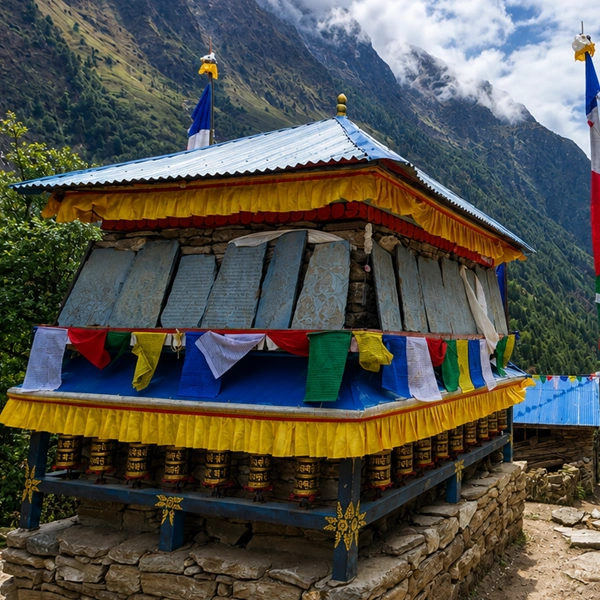
Seven UNESCO World Heritage Sites within 25 km. For children, this is a living classroom: the monkey temple (Swayambhunath), where monkeys steal sunglasses; the cremation ghats at Pashupatinath, where fire and faith intersect; the massive mandala of Boudhanath, where you spin prayer wheels and light butter lamps.
We build child-specific cultural programming: pottery workshops in Bhaktapur (children make their own clay cups), an introduction to Thangka painting (simplified for ages 8+), mask-making at a Newari artisan’s studio, and cooking classes where children learn to fold momos.
Where to stay: Dwarika’s Hotel (family suites with connecting rooms, courtyard for children to explore safely). Hyatt Regency (37-acre grounds with pool — the best family hotel for space). Hyatt Centric Soalteemode (rooftop pool, modern energy, easier for teenagers).
Zone 2: Dhulikhel / Nagarkot — Mountain Views Without Altitude
One hour from Kathmandu. Elevation 1,500-2,100m. Safe for all ages. Dwarika’s Resort Dhulikhel: family yoga, organic farm tours (children feed animals and harvest vegetables), pottery lessons, mountain-view infinity pool. Kavya Himalayas Nagarkot: 140 sq m one-bedroom villas with floor-to-ceiling Himalayan views — families can see Everest from the living room without going anywhere near it.
Zone 3: Pokhara — The Adventure Base
Phewa Lake boat rides (children love the colorful wooden doongas). Sarangkot sunrise (drive up, no hiking required). Davis Falls and the Gupteshwor Cave (underground waterfall — children are mesmerized). International Mountain Museum (interactive, educational). The Pavilions Himalayas: an organic farm where children milk buffalo, thresh rice, and eat food they helped harvest. Infinity pool. Standalone villas with space for families to spread out.
For active families: the Annapurna Base Camp helicopter from Pokhara lands inside a glacial basin at 4,130m. Children 10+ with pediatrician clearance can do this — the exposure is brief (15-20 minutes on the ground), and the helicopter provides rapid descent. Younger children: ultralight scenic flights (15-30 minutes, $150-230, children must meet minimum weight requirements).
Zone 4: Annapurna Foothills — The Family Trek
The Ker & Downey luxury lodge network is the family trekking solution. Lodges at Birethanti (1,097m), Majgaon (1,408m), Tomijong (1,432m), Landruk (1,639m), Dhampus (1,740m), and Ghandruk (1,981m) — all below 2,000m. Separated by half-day walks through terraced fields, rhododendron forests, and traditional Gurung villages. Hot water bottles in beds. Complimentary massages for parents. En-suite bathrooms. Organic meals. Down jackets provided.
Children walk 3-4 hours per day on well-maintained trails. Porters carry everything. The guide adjusts the pace to the youngest child. This is the Nepal trek that works for families with children aged 6 and up. It is not the Everest region. It is better for families.
Zone 5: Chitwan — The Family Safari
Meghauli Serai (Taj): family villas with plunge pools. Children watch rhinos and elephants from the pool deck. Private Jeep safaris with expert naturalists who are trained to engage children — tracking pugmarks, identifying birds, spotting crocodiles on the riverbank. Canoe rides on the Rapti River. Tharu cultural dance performances in the evening.
Barahi Jungle Lodge: freeform infinity pool with shallow area (safe for younger children). Standalone riverside cottages. Personalized naturalist guides. No walking safaris for children under 12 (safety protocol — apex predator proximity requires absolute silence and stillness that young children cannot sustain).
Tiger Tops Karnali in Bardia is the finest wildlife lodge in Nepal. But Bardia is remote, the access is long, and the signature experience is the walking safari, which is unsuitable for children under 12. Families with teenagers 14+ can consider Bardia. For families with younger children, Chitwan is the right choice: more accessible, more infrastructure, equally spectacular wildlife, and lodges designed for families.
What Children Remember Most
We have sent hundreds of families to Nepal. The experiences children talk about years later are rarely the ones parents expected. They remember the monkey that stole their hat at Swayambhunath. The rhinoceros they saw from the pool.
The momo they folded in a cooking class in Kathmandu. The farmer who let them ride on a buffalo in Dhulikhel. The sunrise they watched from bed at Sarangkot. The prayer wheel they spun at Boudhanath was taller than they were. Design the trip around what children actually engage with, not around what looks impressive on a brochure.
Three Family Itineraries
7 Days: The Family Golden Triangle (All Ages)
|
Day
|
Location
|
Family Experience
|
|
1-2
|
Kathmandu
|
VIP arrival. Dwarika’s or Hyatt Regency. Swayambhunath (monkeys). Boudhanath (prayer wheels, butter lamps). Pottery workshop, Bhaktapur. Momo cooking class.
|
|
3
|
Nagarkot / Dhulikhel
|
Drive to the valley rim. Kavya or Dwarika’s Resort. Farm tour. Mountain views. Pool. Family yoga.
|
|
4-5
|
Pokhara
|
Fly KTM-Pokhara. Pavilions Himalayas. Phewa Lake boat. Sarangkot sunrise (drive). Davis Falls. Museum.
|
|
6-7
|
Chitwan
|
Fly to Chitwan. Meghauli Serai. Jeep safari (rhinos). Canoe. Tharu dance. Pool time. Return KTM. VIP departure.
|
10 Days: Add the Annapurna Trek (Ages 6+)
Days 1-3: Kathmandu and Dhulikhel (as above). Days 4-7: Ker & Downey Annapurna foothills trek (4 days, 3 lodges, max 2,000m). Half-day walks. Village visits. Rhododendron forests. Hot water bottles. Massages. Days 8-9: Chitwan safari. Day 10: Return. Krishnarpan feast (children get a simplified 6-course version).
14 Days: The Full Family Expedition (Ages 10+)
Days 1-3: Kathmandu deep-cultural program with an art historian. Days 4-5: Dhulikhel wellness. Days 6-9: Annapurna foothills trek (extended, 4 lodges). Day 10: Pokhara rest day — lake, paragliding for teenagers, ultralight for the brave. Day 11: ABC helicopter (10+ with clearance). Days 12-13: Chitwan safari. Day 14: Return. Budget: $5,000- $ 9,000 per person, depending on family size and helicopter inclusion.
Frequently Asked Questions
At what age can children trek in Nepal?
From age 6 on, the Annapurna foothills (Ker & Downey lodges, max 2,000m, half-day walks). From age 10, with medical clearance for higher-altitude treks to Namche Bazaar (3,440m). From age 13+ for the full EBC luxury trek with proper acclimatization, medical monitoring, and helicopter return.
Is the Everest helicopter safe for children?
Children must meet the helicopter operator’s minimum weight requirement (typically 25-30 kg). The Kala Patthar landing (5,545m) is a brief 10-15 minute stop. Children 10+ with pediatrician clearance can do this. For younger children, the Annapurna Base Camp helicopter from Pokhara (4,130m, briefer exposure) is a better option.
Which hotel is best for families in Kathmandu?
Hyatt Regency: 37-acre grounds, pool, space. Dwarika’s: family suites with connecting rooms, courtyard, cultural depth. Hyatt Centric Soalteemode: rooftop pool, modern energy, better for teenagers.
Can young children do a safari in Chitwan?
Yes. Chitwan Jeep safaris are suitable for all ages. Children watch rhinos and elephants from the vehicle. Meghauli Serai and Barahi have family-friendly pools and riverside cottages. Walking safaris are not permitted for children under 12 due to the proximity of apex predators. Bardia is not recommended for families with children under 14.
What is the best family trek in Nepal?
The Ker & Downey Annapurna foothills circuit. Lodges at 1,097-1,981m. Half-day walks. Hot showers. En-suite bathrooms. Organic meals. Porters carry everything. Down jackets provided. Suitable for children aged 6+. It is the only luxury trek network in Nepal designed for family pacing.
How do you handle altitude sickness in children?
Private guide monitors every child with a pulse oximeter twice daily. The guide has unilateral authority to halt ascent or initiate descent. Helicopter evacuation insurance mandatory. We do not take children above 3,500m without a pediatrician’s written clearance. Diamox is not routinely prescribed for children — discuss with your doctor before departure.
What do children enjoy most in Nepal?
The monkeys at Swayambhunath. The rhinoceros from the pool at Meghauli Serai. Folding momos in a Kathmandu cooking class. Riding a buffalo at an organic farm. Spinning prayer wheels at Boudhanath. Pottery workshops in Bhaktapur. The sunrise from bed at Sarangkot. Design around what children engage with, not what photographs well.
Can you arrange childcare or nanny services?
Yes. In Kathmandu and Pokhara, we arrange vetted English-speaking childcare at the hotel for evenings when parents want a private dinner. On trek, the guide team includes a dedicated porter-assistant for families with young children. At Chitwan, the naturalist adapts the safari program to the youngest child’s attention span.
How much does a luxury family trip cost?
7-day Golden Triangle: $4,000-6,000 per adult, children 50-75% depending on age and room sharing. 10-day Annapurna trek: $6,000- $ 8,000 per adult. 14-day full expedition with helicopter: $8,000-12,000 per adult. We price family trips on a per-family basis rather than strictly per person.
When is the best time for a family trip to Nepal?
Spring (March-May): warm, stable weather, rhododendron bloom, excellent safari visibility. Autumn (October-November): clearest mountain views, festival season (Dashain, Tihar — children love Tihar’s lights and the dog-worship day). Avoid the monsoon (June-August) for families. Winter works for Chitwan and Kathmandu, but it is too cold for trekking in the foothills.
The Final Word
Nepal with children is not a watered-down version of Nepal without children. It is a different trip — and in many ways a better one. Children see what adults have learned to walk past. They stop for the monkey. They ask the guide why the prayer wheel spins clockwise. They remember the rhinoceros from the pool and the momo they folded in the kitchen. The mountains are the backdrop. The experiences are the foreground.
Tell us your children’s ages and your travel dates. We will build the Nepal that works for your family — not a compromise, but a design.
Planning Nepal with your family?
Tell us your children’s ages, your travel dates, and what matters most: mountains, wildlife, culture, or all three. We built from there.