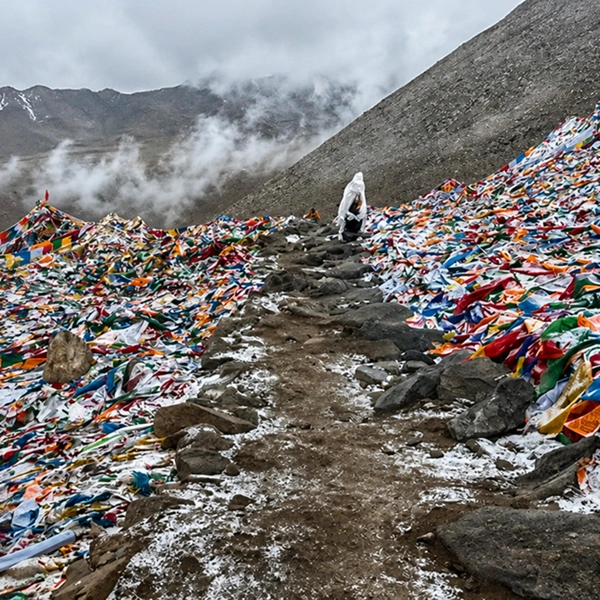
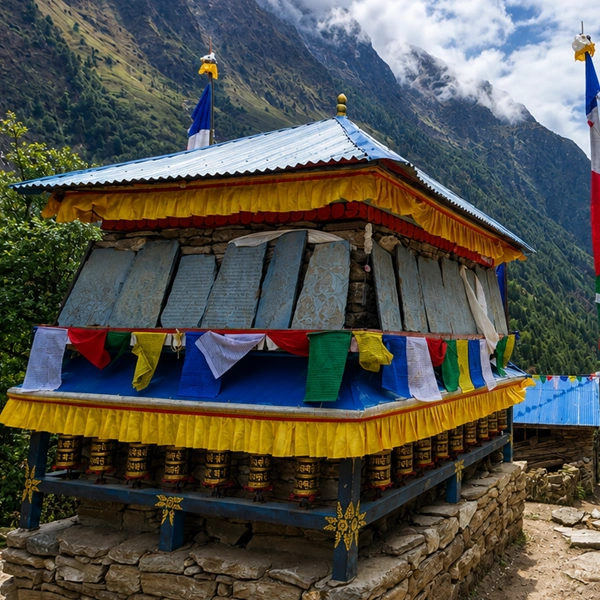
Nepal and Bhutan share a mountain range, a broad Buddhist heritage, and a 45- to 75-minute flight between Kathmandu and Paro. They share almost nothing else.
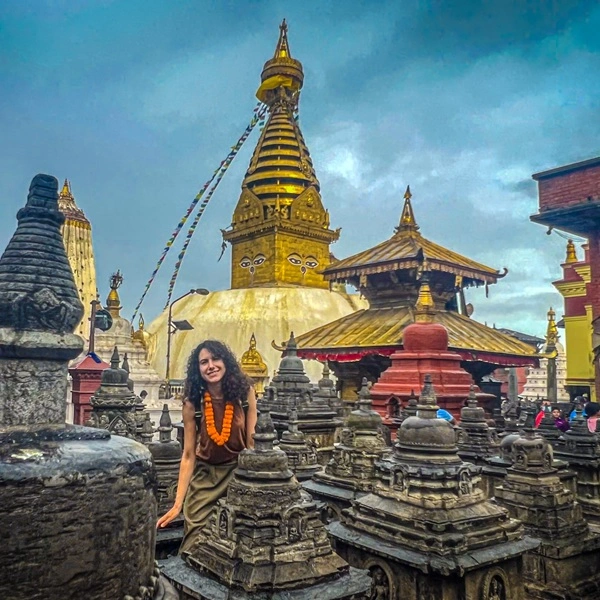
Nepal is the louder, bigger, more complex country. Kathmandu is a medieval city stacked with UNESCO World Heritage sites, honking traffic, and 1.5 million people. Pokhara is a lake town at an elevation of 800 meters, facing the Annapurna range. The Everest region is a high-altitude alpine wilderness. Chitwan and Bardia are subtropical national parks where Bengal tigers and one-horned rhinos live. The cultural texture is Hindu-Buddhist, messy, vibrant, and generous.
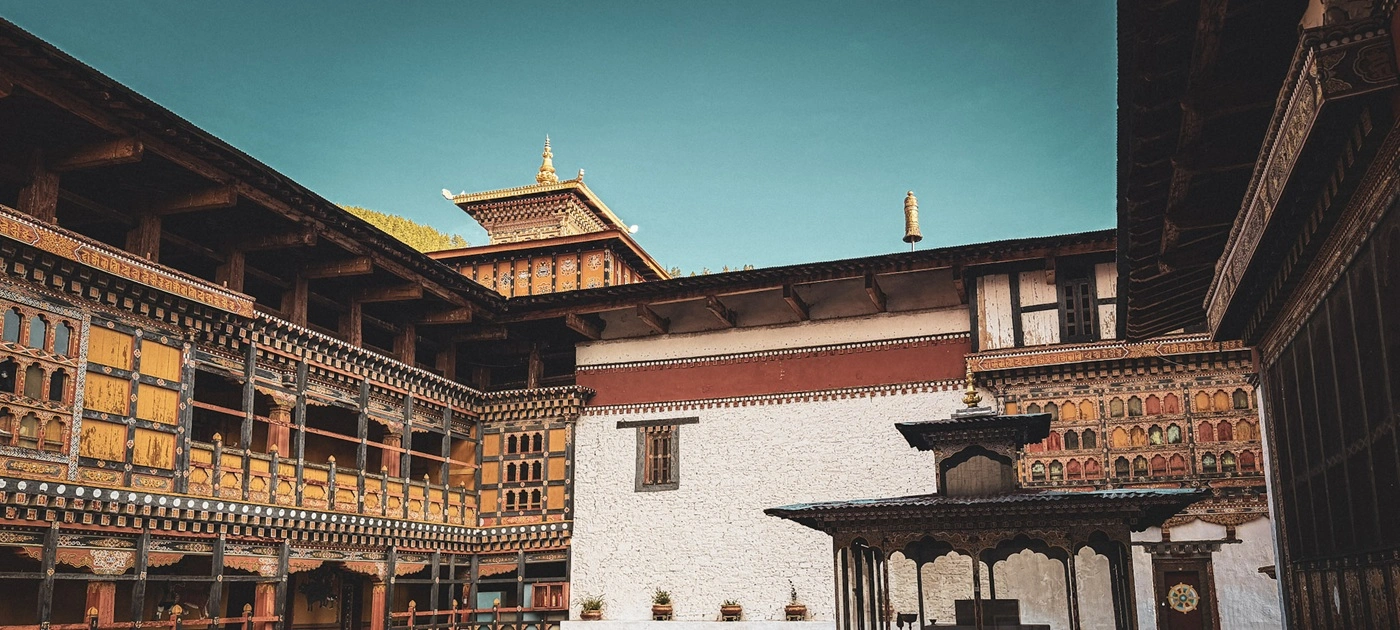
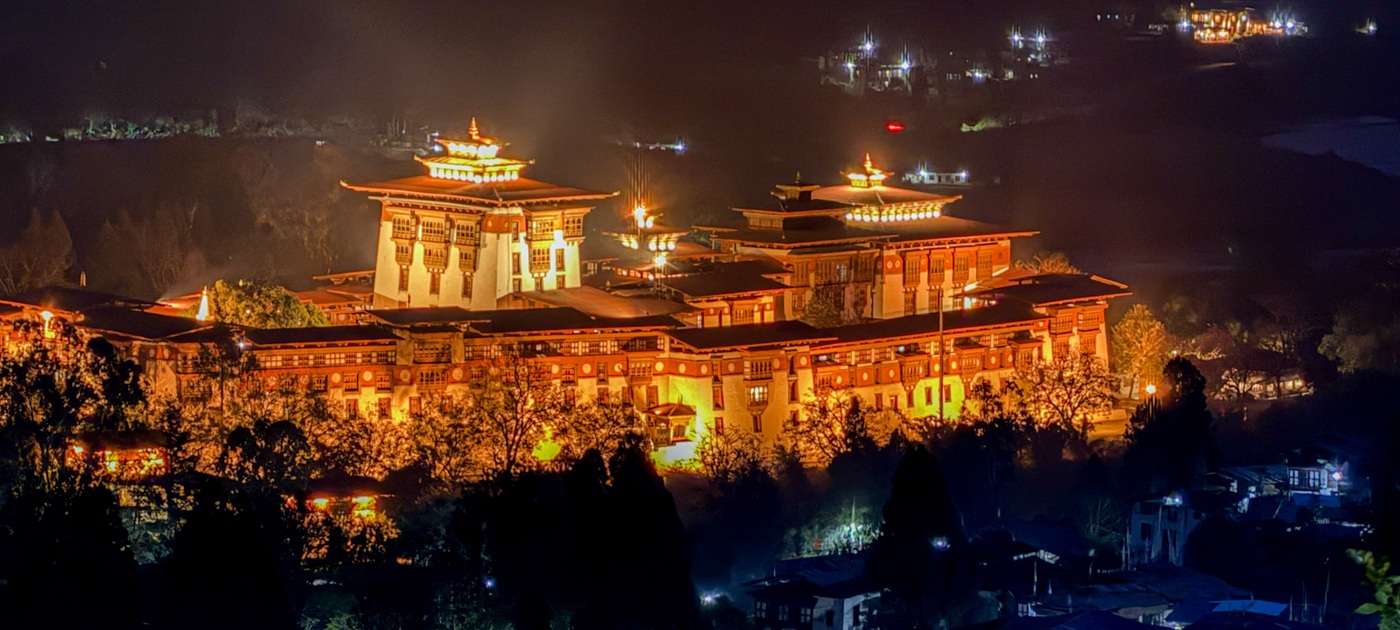
Bhutan is the quieter, smaller, more controlled country. Paro and Thimphu sit at 2,250 meters in pine-forested valleys, watched over by whitewashed dzongs. The state philosophy is Gross National Happiness. Television arrived in 1999. Every visitor pays a mandatory Sustainable Development Fee of 100 USD per night. The cultural texture is Vajrayana Buddhist, calm, deliberate, and structurally protected from mass tourism.
The combination works precisely because of these differences. Nepal gives you energy, variety, and altitude. Bhutan gives you quiet, depth, and a pace that feels like the mountains themselves set it. Together, they produce a two- to three-week Himalayan journey that is difficult to match elsewhere in Asia.
At Alpine Luxury Treks, we are one of the few operators that run both countries from our base in Kathmandu. Our guides operate across both borders. Our logistics team manages the Kathmandu-Paro flight connection, separate visa processes, and hotel coordination across both countries as a single, unified itinerary. This guide covers everything you need to know to plan a combination trip for 2026.
In This Guide
- Why the Nepal-Bhutan combination works
- The logistics: flights, visas, and the Kathmandu-Paro connection
- Four sample combination itineraries
- A side-by-side comparison: Nepal vs Bhutan
- Seasonal alignment: when both countries work together
- When NOT to combine (honest advice)
- What a combined trip actually costs in 2026
- How do we design combination itineraries
- Frequently asked questions
Why the Nepal-Bhutan Combination Works
Most Himalayan destinations are variations on the same theme — different valleys, similar architecture, overlapping cultures. Nepal and Bhutan are exceptions. They share the same mountain range but almost nothing else about the travel experience. This contrast is exactly why they pair so well.
Complementary Experiences, Not Redundant Ones
Nepal offers urban density (Kathmandu), wildlife safari (Chitwan, Bardia), aggressive mountain trekking (EBC, Annapurna), and a democratic, chaotic, richly textured Hindu-Buddhist culture. Bhutan offers regulated calm, Vajrayana Buddhist monasteries, fortress-like dzongs, Tshechu festivals, and a tourism model deliberately designed to limit visitors and preserve silence.
A guest who spends seven days in Nepal and seven days in Bhutan does not feel like they visited two versions of the same country. They feel like they visited two countries that happen to share a latitude. The transition from Kathmandu’s sensory intensity to Paro’s pine-forest calm is itself one of the most commented-on aspects of the trip.
The 45-Minute Connection
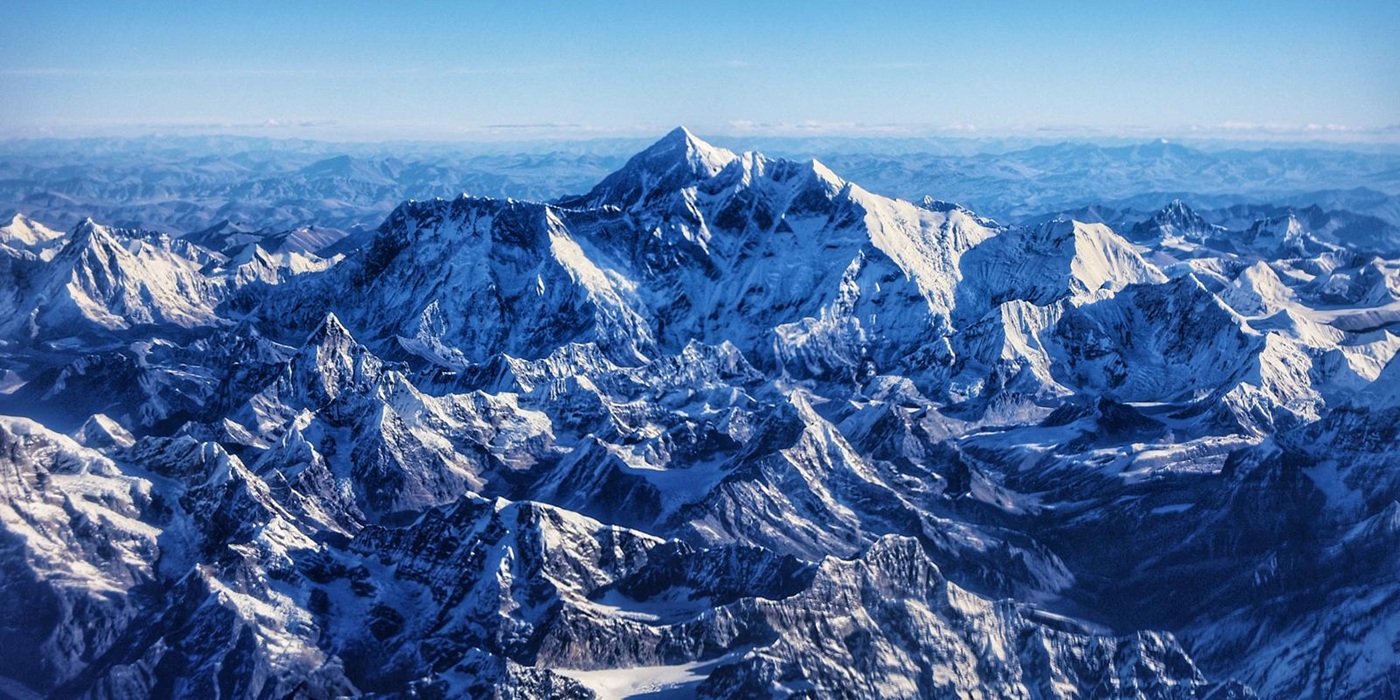
The flight from Kathmandu to Paro takes 45 to 75 minutes, depending on the aircraft. Drukair and Bhutan Airlines operate multiple daily flights during peak season. On a clear day, the flight itself delivers one of the most spectacular Himalayan panoramas in commercial aviation — the left side of the aircraft faces the Everest range, including Everest, Lhotse, and Makalu.
This proximity means a combination trip does not waste days on long-haul repositioning flights. You are genuinely moving between two radically different experiences in less time than most European city-to-city flights.
Single-Operator Simplicity
Most travelers attempting a Nepal-Bhutan combination end up working with two separate operators — one in each country — which creates coordination gaps at the handoff points (airport transfers, luggage logistics, guide handovers, flight timing misalignment). At Alpine Luxury Treks, we run both sides as a single itinerary with unified logistics. Your Kathmandu guide hands your dossier directly to your Paro guide. Your Bhutan hotel bookings are coordinated with your Nepal hotel bookings. Your flight timing is managed end-to-end. This eliminates the handoff friction entirely.
The Logistics: Flights, Visas, and the Kathmandu-Paro Connection
Flights
Two airlines fly from Kathmandu to Paro: Drukair (the Bhutanese national carrier) and Bhutan Airlines. Both operate Airbus A319 or A320 aircraft. During peak season (October-November and March-April), there are typically 2-3 daily flights in each direction. Flight time is approximately 60-75 minutes.
Seat availability books out early during peak weeks — especially Paro Tshechu week in late March and Dashain-Tihar weeks in October-November. We lock flight inventory 9-12 months ahead for combination trips during these windows.
Private jet charters from Kathmandu to Paro are also available through specialized aviation firms. Light jets (Cessna Citation CJ3+, Embraer Phenom 300) run 8,000-12,000 USD one-way. The approach into Paro requires pilots with specific Paro-certified training — fewer than two dozen pilots worldwide hold this qualification.
Visas
Nepal and Bhutan have separate visa processes, and understanding both is essential for smooth combination travel.
Nepal visa: Available on arrival at Tribhuvan International Airport (Kathmandu) for most nationalities. 15-day visa costs 30 USD, 30-day visa costs 50 USD, 90-day visa costs 125 USD. Multiple entries available. Processing time: approximately 15-30 minutes at the airport immigration counter.
Bhutan visa: Processed in advance through your licensed Bhutanese operator (that is, us). The visa application requires passport details, a professional photo, confirmed hotel bookings, and proof of SDF payment. Processing typically takes 5-7 business days. The visa approval letter is issued electronically, and the physical visa stamp is affixed to your passport upon arrival in Paro. The mandatory Sustainable Development Fee of 100 USD per night must be paid before the visa is processed.
We handle both visa processes for combination travelers as part of our standard logistics package. The key sequencing point is that the Bhutan visa must be confirmed before the Kathmandu-Paro flight tickets can be locked. We manage this timeline so that everything aligns without gaps.
The Handover Day
Every combination itinerary has a transition day — the day you fly from Kathmandu to Paro (or Paro to Kathmandu). We design this day to be genuinely enjoyable, not just a logistical transit.
If flying Kathmandu → Paro: morning flight (typically departing 9-10 AM), arriving in Paro by late morning. Afternoon free for Paro Valley orientation — Kyichu Lhakhang temple visit, craft shops near the cantilever bridge, or rest at your hotel. The transition from Nepal’s intensity to Bhutan’s calm is palpable within an hour of landing.
If flying Paro → Kathmandu: morning flight, arriving Kathmandu by late morning. Afternoon available for Kathmandu cultural visits or airport transfer for international departure. We recommend building at least one full day in Kathmandu after returning from Bhutan to buffer against flight delays and decompress before the international flight home.
Four Sample Combination Itineraries
We design every combination trip bespoke, but these four frameworks represent the patterns most of our guests fall into. Use them as starting points. We adjust based on your specific priorities, fitness, and seasonal window.
The Cultural Immersion (14 Days)
This is our most-booked combination framework. Seven days in Nepal focused on the cultural depth of the Kathmandu Valley, plus seven days in Bhutan covering the classic Paro-Thimphu-Punakha circuit.
|
Days
|
Nepal Leg
|
Focus
|
|
1–2
|
Kathmandu Valley — Durbar Squares, Boudhanath, Swayambhunath, Patan
|
UNESCO heritage, Hindu-Buddhist contrast, urban immersion
|
|
3–4
|
Pokhara — domestic flight, Sarangkot sunrise, lakeside, Annapurna views
|
Mountain panorama, relaxation, pre-Bhutan pause
|
|
5–7
|
Chitwan — luxury safari at Meghauli Serai, rhino/tiger drives, canoe
|
Subtropical wildlife, a total climate contrast from the mountains
|
|
8
|
Kathmandu → Paro flight (transition day)
|
Himalayan flight, Paro arrival, Kyichu Lhakhang
|
|
9
|
Bhutan — Tiger’s Nest hike
|
Bhutan’s spiritual center, 4-5 hour round-trip
|
|
10
|
Bhutan — Paro to Thimphu, dzong visits, market
|
Capital culture, National Memorial Chorten, crafts
|
|
11–12
|
Bhutan — Thimphu to Punakha via Dochula Pass
|
108 chortens, Punakha Dzong, farmhouse visit
|
|
13–14
|
Bhutan — Punakha to Paro, Dotsho bath, departure
|
Wellness close, packing, Paro departure
|
The Trek + Culture (18–21 Days)
Nepal trekking (EBC or Annapurna Base Camp) combined with a Bhutan cultural circuit. This is a two- to three-week trip that covers both countries in depth.
The typical structure: 10-14 days of Nepal trekking followed by 7-8 days of Bhutan cultural immersion. We always sequence Nepal first because trekking at altitude is better done while you are physically fresh. The Bhutan leg serves as both a cultural depth and a physical recovery from the trek — Bhutan’s pace, wellness programming (Dotsho baths), and lower daily physical demands let your body recover after 10-14 days at altitude.
Alternatively, begin with Bhutan (7-8 days of gradual altitude acclimatization at 2,250 meters in Paro/Thimphu, then 3,000 meters in Gangtey), then fly to Kathmandu and begin the Nepal trek with a physiological advantage from the Bhutan altitude exposure. This sequencing works particularly well for EBC, where the starting altitude at Lukla (2,860 meters) is close to what your body has already adjusted to in Bhutan.
The Luxury Circuit (21 Days)
For travelers with three weeks and strong budgets, this is the full Himalayan luxury experience. Amankora or Six Senses circuit in Bhutan (5 lodges, 10-12 days) combined with Nepal’s top-tier luxury properties (Dwarika’s Kathmandu, Tiger Mountain Pokhara, Meghauli Serai Chitwan) for 8-10 days.
This is the itinerary we build for returning guests who have already done one country and want to see the other in depth, or for honeymoons and milestone celebrations where the trip itself is the gift. Total cost for two travelers at this tier typically runs 25,000-40,000 USD per person, all-inclusive.
The Highlights Sprint (10 Days)
For guests with tighter time windows, a 10-day combination offers the essential highlights of both countries without the depth of the longer itineraries.
The typical structure: three days in Kathmandu (Durbar Squares, Boudhanath, Patan, Bhaktapur), then fly to Paro for six days in Bhutan (Tiger’s Nest, Thimphu, Punakha, farmhouse visit), then fly back to Kathmandu for departure.
This sprint version works, but we are honest about its limitations: it does not include trekking, a Chitwan or Bardia safari, or a visit to Pokhara. If you have only 10 days, you are choosing a culturally focused trip that covers both capitals and Bhutan’s western valleys at a brisk but manageable pace.
“In October 2024, we hosted Robert and Eleanor Fitzgerald from London — both semi-retired civil servants — on an 18-day Nepal-Bhutan combination. The Nepal leg covered Kathmandu Valley, a luxury ABC trek to 4,130 meters, and two nights at Meghauli Serai in Chitwan. The Bhutan leg covered Paro, Thimphu, and Punakha on the Amankora circuit. Eleanor told us on the flight back from Paro to Kathmandu: ‘Nepal was thrilling. Bhutan was healing. I can’t imagine having visited one without the other.’ Robert added: ‘You need both countries to understand the Himalayas. One is the body. The other is the mind.’ They are now planning a second combination trip with their adult children for November 2026.”
Nepal vs Bhutan: A Side-by-Side Comparison
Understanding how the two countries differ helps you decide how to weigh the itinerary. Below is our honest operational comparison.
|
Category
|
Nepal
|
Bhutan
|
|
Tourism model
|
Open access, ~1.5 million visitors/year
|
High Value Low Volume, ~300,000 visitors/year, 100 USD/night SDF
|
|
Trekking
|
World-class. EBC, Annapurna, Manaslu, Upper Mustang, Snowman
|
Limited. Druk Path, Jomolhari. Trek culture is not the primary draw
|
|
Wildlife safari
|
Excellent. Chitwan and Bardia — Bengal tigers, rhinos, elephants
|
None (no comparable safari infrastructure)
|
|
Cultural character
|
Hindu-Buddhist blend, medieval cities, ancient temples, vibrant chaos
|
Vajrayana Buddhism, fortress-monasteries, controlled calm, regulated pace
|
|
Festivals
|
Dashain, Tihar, Holi, Indra Jatra, Buddha Jayanti — Hindu-Buddhist
|
Tshechu festivals, Cham masked dances, Thongdrel unfurling — Vajrayana
|
|
Accommodation style
|
Heritage boutique hotels, trekking lodges, safari lodges
|
Multi-valley luxury circuits (Amankora, Six Senses, COMO Uma)
|
|
Travel pace
|
Varied — urban intensity to remote trekking solitude
|
Uniformly slow and deliberate
|
|
Visa
|
On arrival, most nationalities, 30-50 USD
|
Pre-arranged through a licensed operator, SDF must be prepaid
|
|
Best for
|
Adventure, variety, energy, physical challenge
|
Calm, spiritual depth, cultural immersion, structured quiet
|
The combination works because these profiles are complementary rather than overlapping. Nepal gives you range and intensity. Bhutan gives you focus and quiet. The transition between them — especially Nepal-first, Bhutan-second — creates a narrative arc that travelers describe as one of the most meaningful aspects of the trip.
Seasonal Alignment: When Both Countries Work Together
Nepal and Bhutan share a broadly similar seasonal structure (both are monsoon-affected Himalayan countries), which makes the timing of the combination relatively straightforward. The optimal windows overlap.
The Golden Windows
October through mid-November is the single strongest window for a combination trip. Both countries are post-monsoon, clear, and in peak condition. Nepal’s Himalayan visibility is at its annual best. Bhutan’s Thimphu Tshechu (September 21-23, 2026) falls at the front edge; the Black-Necked Crane Festival (November 11) falls at the back edge. Nepal’s Dashain (October 12-26) and Tihar (November 8-12) are in full swing.
Late March through April is the strong second window. Nepal’s rhododendron bloom is active. Bhutan’s Paro Tshechu (March 29 – April 2, 2026) creates a natural anchor for the Bhutan leg. Both countries enjoy stable, warming weather.
Workable Shoulder Windows
Early to mid-May works for both countries, but with increasing valley haze in Nepal and pre-monsoon cloud building in Bhutan. Mid-to-late September works, but the front edge of the post-monsoon transition can be wet, especially in Nepal.
February is a viable winter option for culturally focused combination trips (no trekking, no high-altitude components). Nepal’s Kathmandu Valley is clear and pleasant. Bhutan’s Punakha Drubchen and Tshechu (February 24-28, 2026) fall in this window. Both countries have lower hotel rates and lighter visitor volume.
Windows to Avoid
June through August: both countries are in the monsoon. Nepal is wet and landslide-prone. Bhutan’s cultural circuit functions, but without the clear Himalayan views. The one exception: Upper Mustang in Nepal stays dry during the monsoon. If you are combining Upper Mustang with Bhutan in June-August, it works — but this is a specialist itinerary.
January: Bhutan’s Paro and Thimphu are cold but manageable. Nepal’s Kathmandu Valley is fine, but trekking above 4,000 meters is closed. Only works for a pure cultural combination with no trekking component.
When Not to Combine Nepal and Bhutan
We say this to about 15 percent of the travelers who ask us about combination trips: you should visit one country at a time, not both.
If you have only 7-8 days in total, you do not have enough time to visit both countries in any meaningful depth. Pick one. The handover logistics eat up a full day each way, and the remaining days would be too rushed.
If your primary interest is a specific Nepal trek, the trek itself needs all of your available time. An EBC luxury trek takes 14-16 days. An Annapurna Circuit takes 14-18 days. Adding Bhutan onto these commitments stretches the total trip to 21-24 days, which exceeds most travelers’ vacation windows. Do the trek now. Come back for Bhutan separately.
If you want to go deep in Bhutan, Bhutan rewards slow, extended visits. If your primary draw is a 10-12-day Amankora or Six Senses circuit covering all five valleys, adding Nepal risks diluting the Bhutan experience. Bhutan is designed to be savored, not rushed through as a prelude to something else.
If your budget is under 10,000 USD per person, a proper combination trip with luxury accommodation in both countries realistically costs 15,000-25,000 USD per person for 14-21 days. If the budget is tight, focus on one country and do it properly rather than spreading across two at a lower-quality tier.
What a Combined Nepal-Bhutan Trip Actually Costs in 2026
Pricing transparency matters here because the two countries have fundamentally different cost structures. Nepal’s tourism economy is open and price-competitive. Bhutan’s tourism economy is premium-regulated through the SDF. Combining them creates a blended cost profile.
|
Combination Framework
|
Duration
|
2026 Price Range (per person)
|
|
Highlights Sprint (culture + culture)
|
10 days
|
8,000–12,000 USD
|
|
Cultural Immersion (Nepal culture + Bhutan circuit)
|
14 days
|
12,000–18,000 USD
|
|
Trek + Culture (Nepal trek + Bhutan circuit)
|
18–21 days
|
18,000–28,000 USD
|
|
Full Luxury Circuit (Aman/Six Senses + Nepal premium)
|
21 days
|
25,000–40,000 USD
|
These prices include: all accommodation (luxury hotels and boutique lodges), all meals, private licensed guides in both countries, private drivers and vehicles, domestic flights (including Kathmandu-Paro), Bhutan’s Sustainable Development Fee, Nepal trekking permits where applicable, all monument entrance fees, and visa processing assistance. International flights to Kathmandu are additional.
The Bhutan leg is the dominant cost driver across all combination frameworks. Bhutan’s 100 USD/night SDF (mandatory for every international visitor), plus the higher average accommodation costs at circuit-brand lodges, mean the Bhutan portion typically accounts for 55-65 percent of the total trip cost, even when the Nepal leg is longer. Understanding this helps manage expectations.
How We Design Combination Itineraries
Every combination trip we build starts with three questions.
Which Country Is the Priority?
For some guests, Nepal is the draw, and Bhutan is the extension. For others, Bhutan is the draw, and Nepal is the launchpad. For a third category, both countries carry equal weight. The answer to this question determines the time split — 60/40, 50/50, or 70/30 — and the sequencing.
Nepal First or Bhutan First?
We recommend Nepal first for most combination travelers. The reason is experiential: Nepal’s sensory intensity — Kathmandu’s medieval streets, the altitude challenge of trekking, the wildness of Chitwan — benefits from being experienced while you are physically and emotionally fresh. Bhutan’s calm pace then serves as a natural decompression and recovery in the second half of the trip.
Bhutan first works best for guests who are anxious about Bhutan’s tighter logistics (flight reliability to Paro, SDF processing, pre-arranged visa) and want to complete a more structured country before shifting to Nepal’s more flexible environment. It also works well if Bhutan’s altitude (Paro at 2,250 meters) serves as acclimatization before a Nepal trek starting at a similar altitude.
What Are You Willing to Skip?
This is the honest question. A 14-21-day combined trip cannot include everything that both countries offer. You have to choose. Trekking in Nepal means no Chitwan safari — or a shorter Bhutan leg. A full 5-valley Bhutan circuit (10-12 days) means a shorter Nepal leg. The Phobjikha Valley in Bhutan means adding 2 days. Upper Mustang in Nepal means adding 9 days.
We help guests decide what to cut by asking what they will remember in five years. Usually, the answer clarifies the priority quickly.
“In November 2024, we hosted Sarah and Thomas Bergmann from Hamburg on a 21-day luxury combination. The Nepal leg included Kathmandu, Chitwan, and a luxury ABC trek. The Bhutan leg included the Amankora circuit across all five valleys. Thomas is a professional landscape photographer. He told us at the end of the trip: ‘Three weeks in the Himalayas and I never repeated a landscape. Nepal gave me drama. Bhutan gave me silence. My best photographs came from the first and the last day of the trip — Kathmandu Durbar Square at dawn and the Phobjikha Valley at dusk.’”
Frequently Asked Questions
Can I visit Nepal and Bhutan on the same trip?
Yes, and the combination works logistically well because the Kathmandu-Paro flight takes only 45-75 minutes. Most travelers spend 7-14 days in Nepal, followed by 7-10 days in Bhutan, with the Kathmandu-Paro flight serving as the transition day. Separate visa processes are required for each country — Nepal issues visas on arrival; Bhutan requires a pre-arranged visa through a licensed operator. We handle both processes as part of our standard logistics package.
How many days do I need for a Nepal-Bhutan combination trip?
Fourteen days is the minimum for a meaningful combination at moderate depth — seven days per country. Eighteen to twenty-one days allows for trekking in Nepal, plus a full Bhutan cultural circuit. Ten days works for a highlights-only sprint, but it is tight and excludes trekking and safari. If you have fewer than 10 days total, we recommend visiting one country at a time rather than rushing both.
How much does a combined Nepal-Bhutan trip cost?
A genuine luxury combination trip for two people typically costs between 12,000 and 28,000 USD per person for 14-21 days, depending on the configuration. The Bhutan leg is the dominant cost driver due to the mandatory 100 USD-per-night Sustainable Development Fee and higher average accommodation costs at Bhutan’s circuit-brand lodges (Amankora, Six Senses, COMO Uma). Prices include all accommodation, meals, domestic flights, guides, drivers, permits, SDF, and visa processing. International flights to Kathmandu are additional.
Should I visit Nepal or Bhutan first?
We recommend Nepal first for most combination travelers. Nepal’s sensory intensity benefits from being experienced while you are physically fresh. Bhutan’s calm pace then serves as natural decompression in the second half of the trip. Bhutan is best for guests who prefer a more structured country to Nepal’s more flexible environment, or for guests using Bhutan’s 2,250-meter altitude to acclimatize before a Nepal trek.
What is the best time of year for a Nepal-Bhutan combined trip?
October through mid-November is the single best window. Both countries are post-monsoon, clear, and in peak condition. Late March through April is the strong second recommendation. February works for cultural-only trips without trekking. June through August should be avoided for most combinations because both countries are in monsoon — the exception being Upper Mustang in Nepal, which remains dry year-round.
Can I trek in Nepal and then visit Bhutan?
Yes — this is one of our most popular combination frameworks. Typically, 10-14 days of trekking in Nepal (EBC or Annapurna Base Camp), followed by 7-8 days in Bhutan. The Bhutan leg serves as both cultural depth and physical recovery from the altitude and exertion of the trek. The total trip runs 18-21 days. We always sequence Nepal first, so you trek while physically fresh and use Bhutan’s slower pace for restoration.
Do I need two separate operators for Nepal and Bhutan?
No. Alpine Luxury Treks operates in both countries from our base in Kathmandu. We manage the entire combination as a single unified itinerary — Nepal guides, Bhutan guides, the Kathmandu-Paro flight, both visa processes, and all hotel coordination across both countries. This eliminates the handoff friction that occurs when travelers use separate operators in each country.
Can I combine Nepal and Bhutan for a honeymoon?
Yes — the Nepal-Bhutan combination is one of our most popular honeymoon itinerary structures. A typical honeymoon combination runs 14-16 days: Dwarika’s Hotel in Kathmandu (heritage luxury), Tiger Mountain Pokhara Lodge for Annapurna views, Meghauli Serai for Chitwan safari, then the Amankora or Six Senses circuit in Bhutan with Dotsho hot stone baths and private cultural programming. October and early April are the peak honeymoon windows.
How far in advance should I book a combined trip?
Nine to twelve months ahead for peak-season combinations (October-November or late March-April). Twelve months ahead if the trip is built around a specific festival (Paro Tshechu, Dashain, Tihar). Six to nine months for shoulder and winter combinations. The longest lead-time items are the Kathmandu-Paro flights (which sell out early during festival weeks) and the Bhutan circuit-brand lodge inventory (Amankora and Six Senses sell out for the busiest October and March weeks a full year ahead).
Can I extend a Nepal-Bhutan trip to include Tibet?
Yes, logistically, though it adds significant complexity. Tibet requires a separate Chinese-issued Tibet Travel Permit, a pre-arranged group itinerary through a licensed Tibetan tour operator, and entry through specific points (usually by Kathmandu-Lhasa flight or the overland Friendship Highway). A Nepal-Bhutan-Tibet combination typically runs 21-28 days and costs 30,000-45,000 USD per person. These are specialist itineraries that we design on a case-by-case basis.
The Final Word
Most travelers who visit Nepal and Bhutan separately end up wishing they had combined them. Most travelers who combine them say the transition between the two countries is one of the most meaningful parts of the trip.
The math is simple. Forty-five minutes apart by air. Radically different in character. Complementary rather than redundant. And manageable in a single 14- to 21-day trip that, when properly designed, does not feel rushed.
Tell us your travel window, your priorities, and your available time. We will recommend the right combination, build the itinerary around what genuinely fits, lock the flights and the hotels across both countries, and manage every logistical detail so the transition between Nepal and Bhutan feels as natural as the mountains that connect them.
Planning a Nepal-Bhutan combo for 2026?
Tell us your travel window and priorities. We design the full itinerary across both countries as a single unified trip — flights, guides, hotels, visas, SDF, and every logistical detail in between.