The Outer Circuit and the Inner Circuit
There are two ways to walk around Mount Kailash. They are not interchangeable. They serve different spiritual purposes, demand different physical capabilities, and visit entirely different sacred sites. The Outer Kora circles the base. The Inner Kora penetrates the mountain’s core. Understanding the difference is essential before you decide which to attempt.
In This Guide
- The comparison: Outer Kora vs Inner Kora at a glance
- The Outer Kora: day-by-day route and sacred sites
- The Inner Kora: the one-day extreme circuit
- Who should attempt which
- Gear and safety
- Frequently asked questions
Outer Kora vs Inner Kora: The Comparison
|
Attribute
|
Outer Kora
|
Inner Kora
|
|
Distance
|
~52 km
|
~34 km
|
|
Duration
|
2–3 days with overnight stops
|
1 very long day (8–12+ hours). No camping.
|
|
Highest point
|
Dolma La Pass: 5,630m
|
13 Golden Chortens: 5,860m
|
|
Elevation gain
|
~1,000–1,300m
|
~1,100m (at higher average altitude)
|
|
Terrain
|
Well-marked trails. Gradual valleys to a steep pass.
|
Unmarked, rugged. Rock scrambling with fixed ropes.
|
|
Accommodation
|
Basic lodges at Dirapuk (5,080m) and Zutulpuk (4,835m)
|
None. Return to Darchen by nightfall.
|
|
Water/food
|
Tea-houses at Dirapuk/Zutulpuk. Yaks/porters available.
|
Only at Selung and Gyangdrak monasteries. Carry everything.
|
|
Difficulty
|
Moderate–strenuous. Most acclimatized trekkers succeed.
|
Extreme. Only experienced high-altitude mountaineers.
|
|
Permits
|
Standard Tibet permit matrix (TTP, Group Visa, ATP, Military).
|
Same permits + special Nandi Parvat permission via guide.
|
|
Sacred sites
|
Yamadwar, Dirapuk shrine, Dolma La (death/rebirth), Gauri Kund, Milarepa’s cave
|
Nandi Parvat, Saptarishi Cave, 13 Golden Chortens, Ashtapad (Jain)
|
|
Who
|
Most pilgrims. First-time high-altitude trekkers with acclimatization.
|
Highly trained trekkers. Traditionally, after 13 Outer Koras.
|
The Outer Kora: Day by Day
Day 1: Darchen to Dirapuk (20 km)
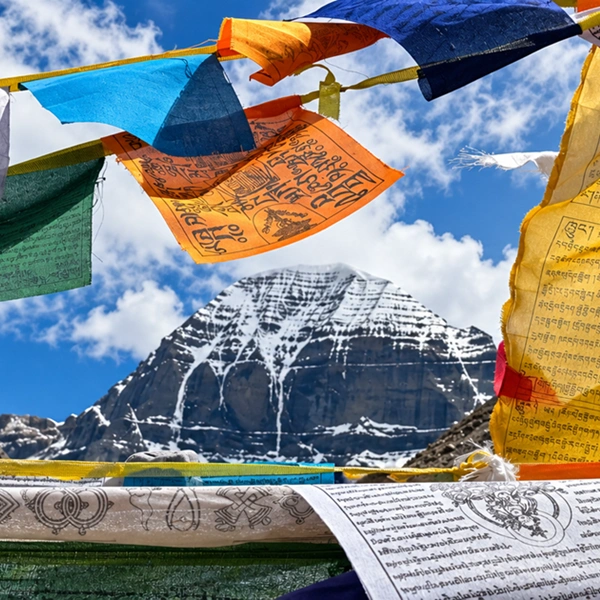
Start at Darchen (4,675m). Many pilgrims ride the first 7 km to Yamadwar (“Gate of Death”) — the traditional starting point, marked by the massive Tarboche prayer flagpole. From Yamadwar, the trail follows the Lha Chu valley northward. The walking is relatively gentle: 200 meters of ascent over the full day. You arrive at Dirapuk Monastery (5,080m) with the north face of Kailash directly in front of you — the closest and most dramatic view of the mountain on either circuit.
Day 2: Dirapuk to Zutulpuk via Dolma La (22 km)
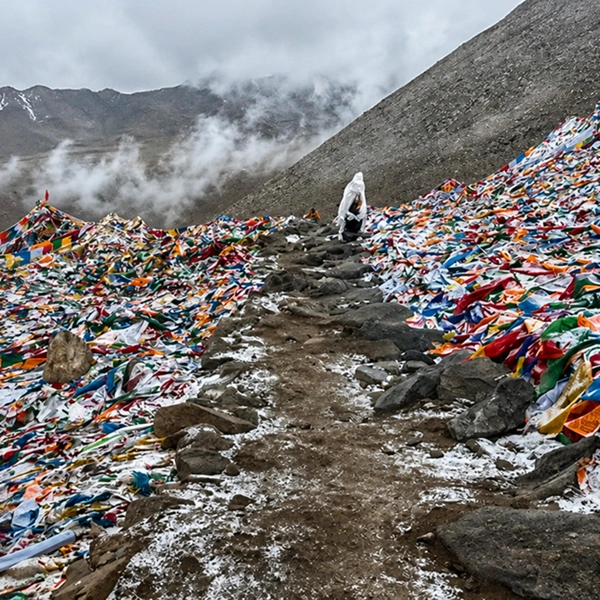
The hardest day. A steep 600-meter climb from Dirapuk to the Dolma La Pass (5,630m) in thin air. Most pilgrims take 4–6 hours for the ascent. At the top: prayer flags in every direction, the ritual of symbolic death and rebirth (crossing the pass cleanses the sins of a lifetime), and offerings left by thousands of pilgrims.
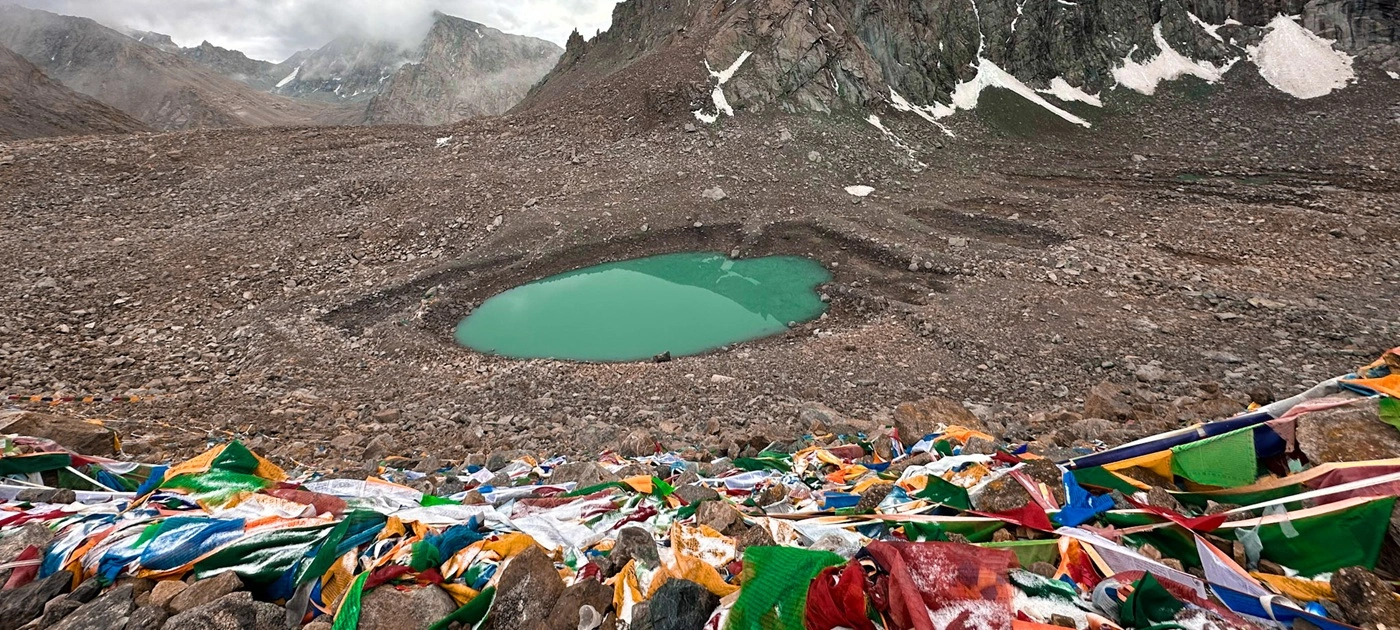
Just below the pass on the descent: Gauri Kund, the turquoise frozen lake where the goddess Parvati is said to have bathed. The descent continues to Zutulpuk Monastery (4,835m), where Milarepa’s meditation cave is the primary sacred site. Total hiking time: 8–14 hours, depending on fitness and altitude tolerance. This is the day that breaks people or transforms them.
Day 3: Zutulpuk to Darchen (10–14 km)
A gentle descent back to Darchen. The shortest day. Most pilgrims complete it in 3—4 hours. The Kora is complete.
Yamadwar (Gate of Death) → Tarboche flagpole → Charan Sparsh (Kailash footprint) → Dirapuk Monastery (north face shrine) → Dolma La Pass (death and rebirth) → Gauri Kund (Parvati’s lake) → Milarepa’s Cave at Zutulpuk. Each site marks a station in the spiritual narrative. The Kora is not just a trek. It is a sequence of ritual encounters with the mountain.
The Inner Kora: The One-Day Extreme Circuit
The Inner Kora circles the south face of Kailash, circumambulating Nandi Parvat (Mt Yinjietuo) — the peak shaped like Shiva’s bull. It is a single-day circuit with no lodges, camps, or rescue infrastructure. You leave Darchen at dawn and must return by nightfall.
The Route
Darchen (4,675m) to Selung Monastery (5,020m): 4.5 km. From Selung, the trail climbs steeply to the 13 Golden Chortens and Saptarishi Cave (5,860m) on the southern cliff. This is the highest point — 230 meters higher than Dolma La, higher than Everest Base Camp.
The exposed climb uses fixed ropes and prayer-flag lines. From the chortens, traverse the Nandi Pass (5,805m) and descend via Gyangdrak Monastery (5,060m) back to Darchen. Total: approximately 34 km and 1,100 meters of elevation gain, completed in 8–12+ hours.
The Sacred Sites
Nandi Parvat: the peak shaped like Shiva’s bull, sacred to Hindus. The 13 Golden Chortens: an altar of 13 stupas enshrining Drigung monks, where pilgrims touch the rock face. Saptarishi Cave: meditation site of the seven great sages. Ashtapad: visible from the Inner circuit, the hill where the first Jain Tirthankara achieved liberation. The Atmalinga: a mystic ice formation said to be the source of the sacred Kailash River.
Local tradition holds that the Inner Kora should only be attempted after completing 12 or 13 Outer circumambulations. In practice, most foreign pilgrims who attempt the Inner Kora have completed only one or two Outers. We do not enforce the traditional requirement.
But we do enforce a fitness requirement: the Inner Kora is available only to guests who demonstrate strong performance on the Outer Kora (particularly the Dolma La ascent) and who our guide assesses as physically capable of a 10-12 hour day above 5,000 meters with no support infrastructure.
Who Should Attempt Which
The Outer Kora
Most pilgrims. Most trekkers have reasonable fitness and proper acclimatization. First-time high-altitude visitors. Pilgrims aged 18-70 (the Chinese age limit). The Outer Kora is demanding but achievable for anyone who has acclimatized properly at Saga and Darchen and is prepared for the Day 2 pass. We provide porters, ponies, emergency oxygen, and a cook team.
The Inner Kora
Experienced high-altitude trekkers with technical scrambling ability. People who have successfully crossed Dolma La feel strong. People are comfortable with 10-12 hours of continuous exertion at elevations above 5,000 meters, with no rescue infrastructure, no phone signal, and no shelter. This is not a casual add-on. It is a mountaineering-grade day at nearly 6,000 meters.
Complete the Outer Kora first. Rest for one day in Darchen. If our guide assesses you as fit for the Inner Kora, attempt it on Day 4. We provide an experienced mountaineering guide, high-calorie supplies, emergency oxygen, and a satellite phone. The Inner Kora is offered as an optional excursion within our 14-day and 16-day Kailash itineraries. It is never the default.
Gear and Safety
For the Outer Kora
Sub-zero sleeping bag (rated to -10°C or below). Thermal base layers, insulating mid-layers, and a waterproof windshell. Broken-in hiking boots. Trekking poles. Headlamp. Power bank. High-energy snacks. Water purification. Personal medications, including Diamox. Sunglasses, high-SPF sunscreen, lip balm. We provide porters for day-packs and emergency oxygen.
For the Inner Kora (Additional)
Everything from the Outer list, plus all food and water for a full 10-12-hour day (no resupply beyond Selung and Gyangdrak). Helmet recommended for rockfall sections. Gloves with grip for fixed-rope scrambling. The guide carried a satellite phone. The Inner Kora has no mobile signal, no medical facilities, and no evacuation capability. Self-sufficiency is absolute.
There are no ATMs above Saga. No credit card machines in Darchen. Carry sufficient cash in USD, INR, or CNY. Pony and porter hire at Darchen is cash-only and negotiated locally.
Frequently Asked Questions
What is the difference between the Outer Kora and Inner Kora?
The Outer Kora (52 km, 2-3 days) circles the entire base of Mount Kailash, crossing the Dolma La Pass at 5,630m. It visits Yamadwar, Dirapuk, Gauri Kund, and Milarepa’s cave. The Inner Kora (34 km, 1 day) circles only the south face (Nandi Parvat), reaching 5,860m over exposed rock with fixed ropes. It visits the 13 Golden Chortens, Saptarishi Cave, and Ashtapad. The Inner has no lodges, no water, and no rescue infrastructure.
Do I need to complete 13 Outer Koras before the Inner?
Tradition says yes. In practice, most foreign pilgrims who attempt the Inner Kora have completed only one or two Outers. We require successful completion of the Outer Kora (particularly the Dolma La crossing) and a positive fitness assessment from our guide before approving the Inner Kora attempt.
How long does the Outer Kora take?
Two to three days. Day 1: Darchen to Dirapuk (20 km, 5-7 hours). Day 2: Dirapuk to Zutulpuk via Dolma La (22 km, 8-14 hours). Day 3: Zutulpuk to Darchen (10-14 km, 3-4 hours). Day 2 is the hardest: a 600m climb to 5,630m in thin air.
How long does the Inner Kora take?
One very long day: 8-12+ hours of continuous trekking and scrambling. Start at dawn from Darchen. Return to Darchen by nightfall. There is no camping or overnight option along the route.
What is the highest point on each circuit?
Outer Kora: Dolma La Pass at 5,630m. Inner Kora: the 13 Golden Chortens at 5,860m. The Inner Kora’s highest point is 230m higher than Dolma La and higher than Everest Base Camp.
What sacred sites are only on the Inner Kora?
Nandi Parvat (Shiva’s bull), the 13 Golden Chortens (Drigung monk altar), Saptarishi Cave (seven sages’ meditation site), Ashtapad (Jain liberation hill), and the Atmalinga ice formation. These sites are not accessible from the Outer circuit.
Do I need extra permits for the Inner Kora?
The standard Tibet permit matrix (TTP, Group Visa, ATP, Military Permit) covers both circuits. The Inner Kora requires an additional Nandi Parvat permission arranged through your guide. No separate embassy processing is needed.
Can I do both in one trip?
Yes. Our 14-day itinerary schedules the Outer Kora on Days 9-11, a rest day on Day 12, and the Inner Kora as an optional excursion on Day 13 for guests assessed as fit. This is the standard format for combining both circuits.
What gear do I need for the Inner Kora that I don’t need for the Outer?
All food and water for a full 10-12 hour day (no resupply). Gloves with grip for rope scrambling. Helmet recommended for rockfall sections. The guide carries a satellite phone and emergency oxygen. Self-sufficiency is absolute on the Inner circuit.
Is the Inner Kora worth it?
For experienced trekkers who are strong at altitude: yes. The 13 Golden Chortens at 5,860m offer the closest view of Kailash’s south face. The sacred sites (Saptarishi Cave, Nandi Parvat, Ashtapad) are inaccessible from the Outer circuit. The Inner Kora is the pilgrimage within the pilgrimage. But it is genuinely extreme. Most pilgrims complete only the Outer Kora and find it fully sufficient.
The Final Word
The Outer Kora is the pilgrimage. The Inner Kora is the pilgrimage within the pilgrimage. The Outer takes you around the mountain. The Inner takes you into it. Most people walk the Outer and find it transformative. A few walk both and find the Inner is where the mountain stops being a backdrop and becomes the thing you are climbing on, clinging to, and surrendering to.
We build both options into our Kailash itineraries. The Outer is the plan. The Inner is the possibility. Tell us your fitness level and ambition, and we will honestly tell you which circuit is right for you.
Planning your Kailash Kora?
Tell us your trekking experience and altitude history. We will recommend the right circuit and build the itinerary around it.