The Khumbu’s Nineteen Days of Hidden Ritual and Sacred Dance
The name encodes the theology. “Mani” comes from Om Mani Padme Hum, the six-syllable mantra of Avalokiteshvara, the Buddha of Compassion. “Rimdu” refers to the Rilwu — the small red pills that absorb the vibrational power of that mantra over sixteen days of continuous chanting, then are placed on the tongues of the gathered community as physical transmissions of healing, protection, and Enlightenment.
The festival is not native to Nepal. It descended from the Rongbuk Monastery on the north face of Everest in Tibet, carried south by Sherpa lamas in the early 20th century as the Sherpa people — who had migrated from eastern Tibet roughly 600 years ago — built institutional Buddhism in their new homeland. The first Mani Rimdu at Tengboche was performed around 1938. The rituals belong to the Anuttarayoga Tantra, the highest system of tantric practice in Tibetan Buddhism.
At Alpine Luxury Treks, we time our autumn Everest-region itineraries around the Tengboche Mani Rimdu whenever the dates align. This guide explains what the festival actually is — not just the three public days that trekkers see, but the sixteen hidden days that make those three days possible.
In This Guide
- The mythology: Guru Rinpoche conquers the demons of Tibet
- The 19-day ritual cycle: what happens behind closed doors
- The three public days: pills, dances, and fire
- The 16 Cham dances: performative theology, not performance
- The sacred Rilwu pills: spiritual pharmacology
- Three monasteries, three festivals: Tengboche, Chiwong, Thame
- Getting there: trek logistics and 2026 dates
- Frequently asked questions
Guru Rinpoche Conquers the Demons of Tibet
The festival commemorates a specific historical event: the 8th-century establishment of Buddhism in Tibet by the Indian tantric master Padmasambhava, known throughout the Himalayas as Guru Rinpoche. Before his arrival, Tibet was dominated by Bon, an indigenous religion whose spirits and deities controlled the landscape. Guru Rinpoche did not destroy them. He subjugated them, bound them through tantric power, and converted them into protectors of the Buddhist dharma. The demons of the old religion became the guardians of the new one.
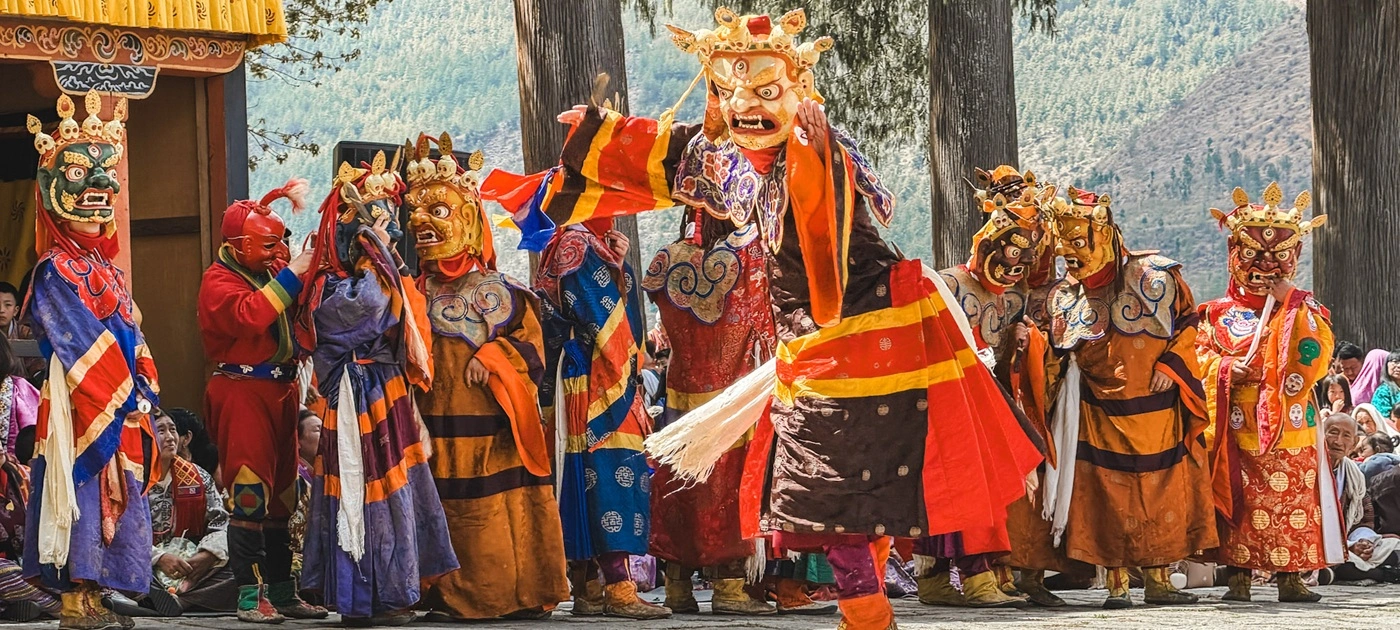
This is the story the Cham dances tell every year. The wrathful masked figures are not enemies. They are former enemies who have been conquered and transformed. The skeleton dancers remind the audience of death. The Black Hat dancers use ritual daggers to pin down the ego. The animal-masked monks represent the chaotic natural forces that Guru Rinpoche tamed. The entire performance is a re-enactment of how order was imposed on chaos — not through destruction, but through transformation.
For the Sherpa communities of the Khumbu, living at extreme altitude in an environment that threatens them with avalanches, glacial floods, and drought, this mythology is not abstract. The festival literally asks the deities to protect the valley for another year. The masked dances are the mechanism of that request.
The 19-Day Ritual Cycle: What Happens Behind Closed Doors
The three public days that trekkers attend are days 14, 15, and 16 of a 19-day sequence. The preceding thirteen days of hidden monastic ritual are what generate the spiritual energy that the public days distribute. Without those thirteen days, the public spectacle would be, in the monks’ understanding, spiritually inert.
|
Days
|
What Happens
|
|
1–5
|
Exorcism and site purification. Construction of the Sand Mandala — a geometric palace of coloured sand representing the divine realm of Garwang Thoze Chenpo (Lord of the Dance, Destroyer of Illusion). Millions of grains were laid by hand using metal funnels (chakpur). Protective blades positioned around the perimeter. Tormas (conical barley-flour-and-butter sculptures) were crafted as receptacles for deity energy. A bowl of Rilwu pills is placed at the mandala’s center.
|
|
6–12
|
Intensive Deity Yoga and mantra recitation. Om Ah Hung Rhi, Om Mani Padme Hum chanted thousands of times. Tibetan instruments (gyaling oboes, zang dung copper trumpets, rolmo cymbals, gong drums) alter the vibrational frequency of the space. The chanting is directed into the Rilwu pills at the mandala’s heart, charging them with healing energy over 7 consecutive days.
|
|
13
|
Closed rehearsal of the Cham dances. Monks take strict vows.
|
|
14
|
WONG (public): Full-moon empowerment ceremony. The Head Lama distributes sacred threads, Rilwu pills, and Tshereel (long-life pills) to the gathered crowd. The pills are physical transmissions of the 12 days of chanting.
|
|
15
|
CHHAM (public): The 16 sacred masked dances. Monks channel the deities they represent. The story of Guru Rinpoche’s conquest is performed. Black Hat dancers, skeleton dancers, animal-masked warriors, Dakinis, and comic interludes.
|
|
16
|
JINSAK (public): The fire puja. Grain, ghee, and wood are burned in a ritual fire pit. The community’s accumulated negative karma is fed to the flames. Immediately after: LHOKPAR — the Sand Mandala is swept away in seconds. The most beautiful thing the monks made is destroyed to teach impermanence.
|
|
17–19
|
Closing rites. The mandala sand is carried to a river and offered to the Nagas (water deities), dispersing the blessings through the valley’s water system. Protective borders released. Monastery returns to routine.
|
The construction takes four days. Millions of grains of naturally dyed sand, extracted from specific sacred sites in the surrounding hills, are laid using metal funnels (chakpur) to create a geometric representation of a divine palace. The destruction takes seconds. After the fire puja on Day 16, the monks sweep the entire mandala into a grey pile. The sand is carried to a river. This deliberate destruction of something exquisitely beautiful is Buddhism’s most powerful physical teaching on impermanence: nothing you build — not a sand palace, not a career, not a body — will last. The only question is whether you understood that while you were building it.
The 16 Cham Dances: Performative Theology
The Cham dances on Day 15 are the visual apex of the festival. They are not folk art. They are not theatre. When a monk puts on a consecrated mask, he becomes the deity. His body is no longer his own. The 16 acts form a kinetic scripture for a community where many members cannot read — transmitting Vajrayana doctrine through movement, costume, and sound.
Key Dances
The Black Hat Dance (Shanak Chham): monks in wide-brimmed black hats with peacock feathers use ritual daggers (phurba) to pin down and destroy the afflictive emotions that cause human suffering. The fierce demeanor is not anger. It is the forceful application of love required to shock people out of ignorance.
The Skeleton Dance (Durdag Cham): monks in tight white costumes painted with red skeletal lines and skull masks. A memento mori. The body is temporary. Practice the dharma before your time expires.
The Dance of the Four Protectors (Ging Tsholing Cham): four figures in bright paper masks charge into the courtyard, cymbals and drums in hand, mock-scaring children. They represent wisdom and compassion, defending the dharma. The scaring is both comedy and pedagogy.
The Dakini Dance: performed in extreme slow motion. Five dancers represent the male (masked, navigating the physical world through cunning) and female (unmasked, representing pure knowledge) aspects of enlightenment. Their stillness heralds Guru Rinpoche’s arrival.
The Founding of Samye (Nga-cham): six dancers in yellow robes beat large drums, re-enacting the consecration of Tibet’s first Buddhist monastery in the 8th century. This dance anchors the Sherpas’ identity to the Tibetan motherland they left 600 years ago.
Comic interludes between the sacred dances provide psychological relief. Clowns and jesters break the intensity. The festival understands that an audience overwhelmed by wrathful deities needs to laugh before it can absorb the next teaching.
The Sacred Rilwu Pills: What You Receive on Your Tongue
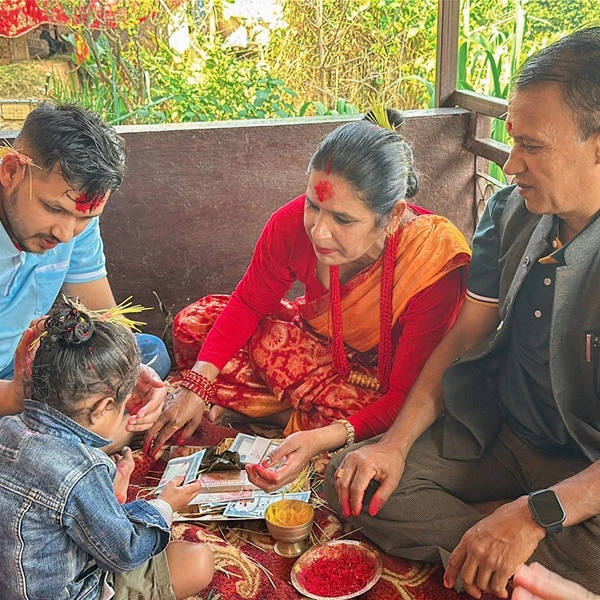
On Day 14, the Head Lama places a small red pill on your tongue. This is not a symbolic gesture. In the Sherpa understanding, you are receiving a physical object that has absorbed twelve days of continuous mantra chanting and the concentrated spiritual energy of the entire monastic body.
The pills (Mani Rilwu) are manufactured from roasted barley flour mixed with up to 140 ingredients, including calcinated precious metals and gemstones (gold, silver, turquoise, sapphire), rare botanicals (saffron, nutmeg, chebulic myrobalan), and holy water sourced from Tibetan pilgrimage sites. The most potent variations contain Tsothel — a refined, detoxified mercury compound considered the supreme ingredient in Tibetan pharmacology.
According to the monks, the material ingredients possess only latent potential. The true efficacy is activated through the ritual empowerment — the days of chanting. The pills are administered to treat conditions ranging from gastrointestinal disorders to blood toxicity, and to provide prophylactic protection against spiritual contamination. Whether or not you share the pharmacological framework, the pill on your tongue is the moment when the 19-day hidden ritual makes contact with the world outside the monastery doors.
Three Monasteries, Three Festivals
|
|
Tengboche
|
Chiwong
|
Thame
|
|
Altitude
|
3,867m
|
2,900m
|
3,800m
|
|
Region
|
Upper Khumbu (EBC route)
|
Lower Khumbu (Solu)
|
Bhote Koshi valley
|
|
2026 Dates
|
Oct 24–26
|
Late Oct / early Nov
|
May 18–20
|
|
Founded
|
1916 by Lama Gulu
|
1923 by Lama Sangwa Dorje
|
Historic salt-trade route
|
|
Crowd
|
Largest — peak trekking season
|
Smallest — intimate, fewer tourists
|
Moderate — spring season
|
|
Backdrop
|
Ama Dablam, Lhotse, Everest
|
Cliffside above Dudh Koshi
|
Nangpa La route to Tibet
|
Tengboche is the most famous and most attended. It sits on the standard Everest Base Camp trekking route, with Ama Dablam directly behind the courtyard. The autumn timing aligns perfectly with peak trekking season, which means crowds — up to 600 trekkers per week pass through during the festival period.
Chiwong is the connoisseur’s choice. Lower altitude, fewer tourists, and deeper esoteric lineage — the late Trulshig Rinpoche presided over ceremonies here for nearly half a century. It integrates beautifully into the Pikey Peak trek, which Sir Edmund Hillary considered the finest Himalayan panorama.
Thame celebrates in spring (May), six months offset from the other two. It serves the communities along the ancient salt-trading route toward the Nangpa La pass. The timing of the spring makes it combinable with a pre-monsoon EBC trek.
Getting There: Trek Logistics and 2026 Dates
Tengboche (Oct 24–26, 2026)
Fly Kathmandu to Lukla (35 minutes; note: peak-season flights may depart from Ramechhap, requiring a 4-hour pre-dawn drive). Trek Lukla to Namche Bazaar (2 days). Acclimatize in Namche (1 day). Trek Namche to Tengboche (1 day, 5-6 hours through rhododendron forest). Attend the three public days. Then either return to Lukla or continue to Everest Base Camp. Total: 12–16 days.
Chiwong (Late Oct / Early Nov, 2026)
Overland jeep from Kathmandu to Dhap Bazaar (8-10 hours). Trek via Pikey Peak (4,065m) to Junbesi, then to Chiwong. Total: 10–12 days, including the festival. Lower altitude. Fewer permits. More intimate. Exact dates are confirmed by the monastery 2–3 months in advance.
Thame (May 18–20, 2026)
Same Lukla access as Tengboche, but the route diverges at Namche toward the Bhote Koshi valley. Trek Namche to Thame (1 day). Combinable with a spring EBC trek. Total: 12–16 days.
Permits
Upper Khumbu (Tengboche, Thame): Khumbu Pasang Lhamu Rural Municipality Entry Permit (NPR 2,000) plus Sagarmatha National Park Entry Permit (NPR 3,000). Total approximately USD 40–45. Lower Khumbu (Chiwong): TIMS card (NPR 1,000–2,000) plus local area permits (USD 20/week). A licensed guide is required for all routes — no solo trekking permitted. We handle all permit processing.
“In October 2025, we timed a 14-day Everest-region itinerary for Hiroshi and Keiko Tanaka from Kyoto so they would arrive at Tengboche on the first public day. Hiroshi, a professor of comparative religion, had studied Vajrayana ritual for decades. On Day 14 (the Wong), the Tengboche Rinpoche placed a Rilwu pill on his tongue. Hiroshi stood in the courtyard afterward, silent, holding the thread of sacredness the Rinpoche had tied around his wrist. He told Keiko: ‘I have read about the pharmacology of these pills in medical texts. I have analysed the mandala construction in academic papers. I have watched video recordings of the Cham. But standing in the courtyard at 3,867 metres with Ama Dablam behind me and a pill dissolving on my tongue that has been chanted over for twelve days — the scholarship prepared me for everything except how it would feel.’ The next day, he watched the Sand Mandala swept away in seconds. He did not speak for an hour.”
Circumambulate all religious structures clockwise (keep them on your right). Never touch mani stones, prayer wheels, or ritual instruments. Remove shoes before entering the monastery. Remove hats and sunglasses inside temples. Do not point the soles of your feet toward the altar, monks, or mandala. Photography of the outdoor Cham dances is generally permitted; flash photography and filming inside the inner sanctum is restricted. Ask permission before photographing monks or devotees. Dress modestly — shoulders and knees covered. Our guides brief every guest on Sherpa Buddhist etiquette before arrival at the monastery.
Frequently Asked Questions
What is Mani Rimdu?
Mani Rimdu is a 19-day Buddhist festival in the Khumbu region of Nepal, rooted in the Nyingma school of Tibetan Buddhism. It commemorates Guru Rinpoche’s 8th-century subjugation of the demons of Tibet. The festival features the construction and destruction of a sand mandala, intensive mantra chanting, the consecration of sacred Rilwu pills, 16 Cham masked dances, and a fire puja. Three public days are preceded by 16 days of hidden monastic ritual. It takes place at Tengboche, Chiwong, and Thame monasteries.
When is Mani Rimdu in 2026?
Tengboche: October 24, 25, 26 (public days). Chiwong: late October or early November (dates confirmed 2–3 months ahead). Thame: May 18, 19, 20. Dates follow the Tibetan lunar calendar and may shift by 1–2 days based on astrological calculations. We confirm exact dates with the monasteries before finalizing itineraries.
What are the Rilwu pills?
Small red pills made from barley flour mixed with up to 140 ingredients (precious metals, gemstones, rare botanicals, holy water) are placed at the center of the sand mandala during the 19-day ritual. Monks chant mantras into them for 12 consecutive days. The Head Lama distributes the pills to the public on Day 14. They are considered physical transmissions of healing, protection, and Enlightenment — not merely symbolic objects.
What is the sand mandala?
A geometric representation of a divine palace, constructed grain by grain over four days using naturally dyed sand and metal funnels (chakpur). Protective blades guard its perimeter. The Rilwu pills sit at its center. On Day 16, after the fire puja, the mandala is swept away in seconds. The deliberate destruction teaches the Buddhist doctrine of impermanence. The mixed sand is carried to a river and offered to the water deities.
What are the Cham dances?
Sixteen sacred masked dances are performed by monks on Day 15. They are not entertainment — the monks channel the deities they represent. Key dances include the Black Hat Dance (exorcism using ritual daggers), the Skeleton Dance (memento mori), the Dakini Dance (pure knowledge), and the Founding of Samye (re-enacting the construction of Tibet’s first monastery). Comic interludes between dances provide psychological relief.
Which monastery should I visit?
Tengboche (3,867m) has the most dramatic mountain backdrop (Ama Dablam, Everest, Lhotse) and the largest gathering, but also the most crowded. Chiwong (2,900m) for the most intimate, least commercialized experience at a lower altitude. Thame (3,800m) for a spring festival, combinable with a pre-monsoon EBC trek. We recommend Tengboche for first-time Khumbu visitors and Chiwong for cultural depth.
How long is the trek to Tengboche?
Five to six days from Lukla (2,800m). Fly from Kathmandu to Lukla (35 minutes). Trek to Phakding (Day 1), Namche Bazaar (Day 2), acclimatize in Namche (Day 3), trek to Tengboche (Day 4-5, 5-6 hours through rhododendron forest). Total itinerary including festival attendance and return: 12–16 days.
What permits do I need?
Upper Khumbu (Tengboche, Thame): Khumbu Pasang Lhamu Rural Municipality Entry Permit (NPR 2,000) plus Sagarmatha National Park Permit (NPR 3,000). Total approximately USD 40–45. Lower Khumbu (Chiwong): TIMS card plus local area permits. A licensed guide is required on all routes — no solo trekking is permitted. We process all permits.
Is Mani Rimdu suitable for non-Buddhists?
Yes. The public days are open to all visitors. The Head Lama distributes Rilwu pills to foreign trekkers as well as to Sherpa devotees. The Cham dances are performed in an open courtyard. What is required is not religious affiliation but respectful behavior: clockwise circumambulation, modest dress, shoe removal in temples, and acoustic restraint during chanting. Our guides provide a full cultural briefing before arrival.
How far in advance should I book?
Four to six months for Tengboche — the festival coincides with peak autumn trekking season, and tea house capacity on the EBC route is limited. Two to three months for Chiwong, which sees significantly lower demand. We build Mani Rimdu timing into our autumn and spring Khumbu itineraries as soon as the monastery confirms the year’s dates.
The Final Word
Mani Rimdu is the festival where you see two things simultaneously: a tradition that has traveled 600 years and 500 kilometers from the Tibetan plateau to take root in the Nepali Himalayas, and a community that uses that tradition to hold itself together against altitude, avalanche, climate change, and the pressures of a globalized economy.
The sand mandala takes four days to build and seconds to destroy. The Rilwu pills take twelve days to consecrate and dissolve on your tongue in a moment. The Cham dances tell the story of a world where chaos was not destroyed but transformed. And the fire puja burns the year’s accumulated negativity into smoke that rises above Tengboche toward Ama Dablam.
If you are trekking in the Khumbu in late October, please let us know. We will time your itinerary so you arrive at Tengboche the day the monastery doors open.
Planning a trek timed to Mani Rimdu?
Tell us whether you prefer Tengboche (October), Chiwong (November), or Thame (May). We will confirm the festival dates with the monastery and build a Khumbu itinerary around them.