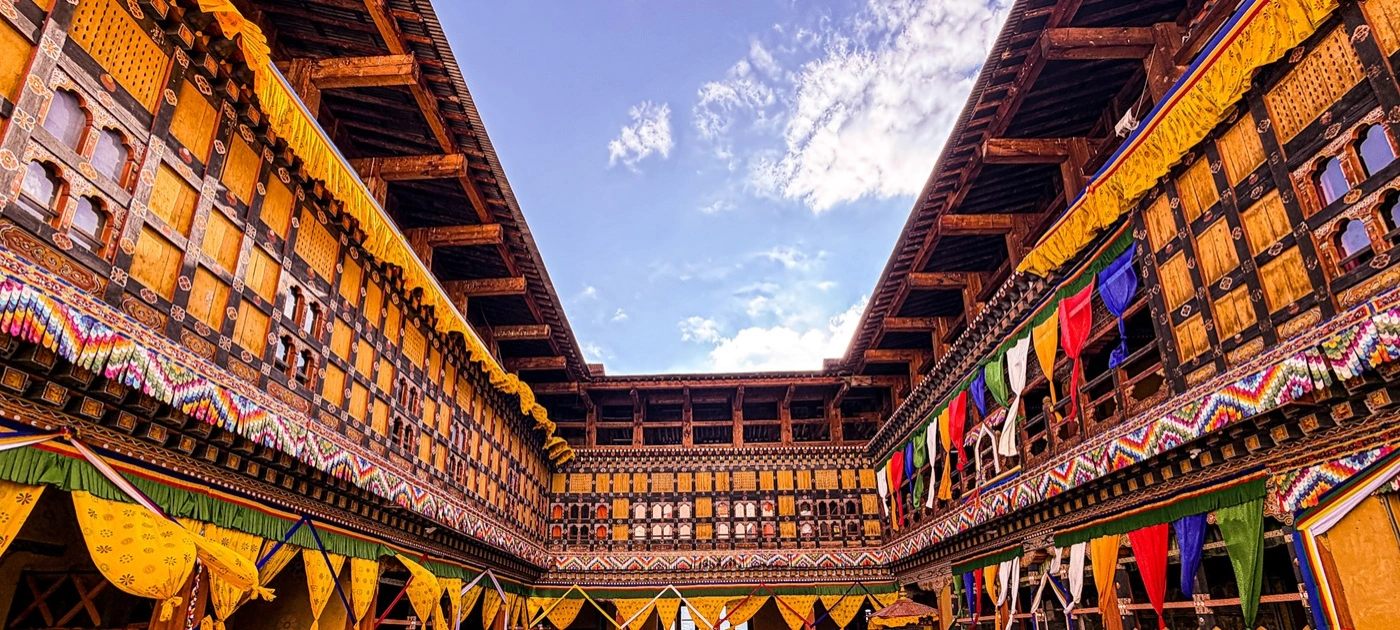
2026: SDF, Lodges, Valleys, and What to Expect
What It Costs: The Sustainable Development Fee
|
Who
|
SDF (through Aug 2027)
|
Notes
|
|
International adult
|
$100/night
|
50% discount from the standard $200. Locked through 31 Aug 2027.
|
|
Child 6-12
|
$50/night
|
50% of the adult rate.
|
|
Child under 6
|
Free
|
Exempt.
|
|
Indian nationals
|
INR 1,200/night (~$15)
|
Separate regional rate.
|
|
Visa fee
|
$40 one-time
|
Processed via e-visa in 72 hours.
|
|
GST on tourism services
|
5%
|
Applied to hotels, flights, and transport. NOT to SDF or visa.
|
The SDF represents 25-30% of your total trip cost. A 10-night journey: $1,000/adult in SDF alone, anchoring a baseline of $3,090-3,940/person before luxury accommodation. Cancellation refunds: 30+ days = full refund (minus $40 fee); 15-30 days = 50%; 7-14 days = 25%; under 7 days = none. We handle the e-visa, SDF payment, and all logistics. You provide a passport scan.
When to Go
Spring (March-May): rhododendron bloom, clear mountain views, major festivals. The primary peak season. Autumn (September-November): the sharpest clarity, the start of the black-necked crane migration in Phobjikha Valley.
Winter (December-February): cold but spectacular. Passes may snow close, but Punakha (at a lower altitude) stays temperate. Total seclusion. Summer (June-August): monsoon. Heavy rain. Peaks obscured. Insect repellent essential. Not recommended for luxury travel.
How Many Days
|
Days
|
Valleys
|
What You Get
|
|
5
|
Paro + Thimphu
|
Tiger’s Nest hike. Buddha Dordenma. Capital cultural program. One lodge circuit. The concentrated western Bhutan experience.
|
|
7
|
Paro + Thimphu + Punakha
|
Adds the subtropical valley. Punakha Dzong at the river confluence. Riverside picnics. White-water rafting (seasonal). Cantilevered or safari-style lodges. The most popular length.
|
|
10+
|
All five valleys
|
Adds Gangtey/Phobjikha (black-necked cranes, glamping) and Bumthang (spiritual heartland, yathra textiles, ancient temples). The definitive circuit. Multi-lodge transitions. In Bhutan, nobody rushes through.
|
Getting There
Fly to Paro International Airport (PBH) on Drukair or Bhutan Airlines from Kathmandu (45 min), Bangkok, Delhi, or Singapore. The approach between 18,000-foot peaks requires specially certified pilots. Business class: priority boarding, Bhutanese gourmet meal, 40 kg luggage. VIP Meet and Assist at Paro ($149+): agent at the airbridge, expedited passport control, baggage porterage, direct handover to your lodge driver.
Getting Around
No Mercedes sedans. No BMWs. Bhutan’s mountain roads require SUVs. The Toyota Land Cruiser and Land Cruiser Prado are the luxury standard — air-conditioned, spacious, registered on commercial plates for unrestricted district movement. The drives between valleys are winding (hundreds of switchbacks). Motion sickness: carry Dramamine or acupressure bands, or use helicopter transfers.
Helicopter Transfers
|
Route
|
Flight Time
|
Cost (USD)
|
What It Replaces
|
|
Paro scenic flight
|
30 min
|
$2,500
|
Tiger’s Nest flyover + Paro Dzong + Mt Jomolhari.
|
|
Paro extended safari
|
90 min
|
$7,500
|
+ Lingshi Dzong + Mt Jichu Drakey + Jangothang pit stop.
|
|
Paro → Thimphu
|
Transit
|
$1,458
|
1-hour drive through winding roads.
|
|
Paro → Punakha
|
Transit
|
$3,646
|
4-hour drive over Dochula Pass (3,100m).
|
|
Paro → Bumthang
|
Transit
|
$8,021
|
2-day drive through central Bhutan.
|
|
Paro → Laya
|
Transit
|
$5,833
|
Roadless northern frontier. No drive option.
|
The Three Lodge Circuits
Amankora — 5 Lodges, 72 Suites, 2 MICHELIN Keys
The pioneer. Minimalist architecture by Kerry Hill. Every suite has a bukhari wood-burning stove and a terrazzo bathtub. No televisions. Paro: 24 suites in blue-pine forest, Drukgyel Dzong illuminated at night as your dinner backdrop, khempa-herb hot stone baths. Thimphu: 16 suites adjacent to the royal palace grounds, traditional dance shows.
Punakha: reached via prayer-flag suspension bridge over the Mo Chhu, centered on a restored 300-year-old farmhouse. Gangtey: the Potato Shed Dinner (moonlit walk to a candle-lit agricultural shed, yak meatballs, drumming). Bumthang: adjacent to the palace of the 2nd King. Farm-to-table throughout. ~$1,500/night.
Six Senses — 5 Lodges, 82 Suites, GSTC-Certified
Each lodge is designed in response to its landscape. Thimphu (Palace in the Sky): sunken terrace, infinity pool, apple orchards at cloud level. Punakha (Flying Farmhouse): cantilevered over rice terraces. Paro: Stone Ruins built into a 16th-century fortress, Ruins Regale dinner among ancient walls.
Gangtey: Cowshed Dinner. The largest spa infrastructure in the country. Sleep-enhancement protocols. Organic in-house food production. Executive Chef Isa Raku. Riverside Pomegranate Martinis in Punakha. ~$1,500/night.
COMO Uma — 2 Properties, Culinary Focus
Paro: 29 keys, 9 freestanding villas in pine forest. Closest luxury hotel to the Tiger’s Nest trailhead (15 minutes from breakfast to the trail). COMO Villa: 3,300 sqft, courtyard fire pit, private spa, butler. Punakha: 11 rooms on a bend of the Mo Chhu.
COMO Shambhala Retreat: hot-stone bathhouses, yoga studio, stone-walled pool. Bukhari restaurant under Executive Chef Natalie Bolt: wellness broths, buckwheat, farm-to-table. ~$400/night (Paro), varying (Punakha).
The Independents
Pemako Thimphu (fortress architecture, heated pool, in-house lama for private blessings). Pemako Punakha (Bill Bensley tented villas, private plunge pools). Gangtey Lodge (quietcation, deep bathtubs overlooking the valley).
&Beyond Punakha River Lodge (African safari aesthetic on the Mo Chhu). Zhiwa Ling Heritage Paro (100% Bhutanese-owned, traditional woodwork). Bhutan Spirit Sanctuary (all-inclusive Sowa Rigpa wellness). Taj Paro Resort & Spa (45 stone-and-timber keys, Tiger’s Nest views). Le Méridien Paro and Thimphu for brand familiarity and point redemptions.
What You Eat
Bhutanese food is defined by chilies (treated as vegetables rather than spices), cheese (ema datshi is the national dish — chilies in a cheese sauce), red rice, and buckwheat.
The luxury lodges reimagine this foundation through farm-to-table execution: organic produce from micro-valley farms, yak butter from high-altitude herders, wildflower honey from temperate central regions.
Bhutan is exceptionally vegetarian-friendly — Buddhist tenets restrict mass slaughter. Communicate dietary needs clearly regarding the dairy-heavy sauces.
The defining dining experiences: Amankora’s Potato Shed Dinner in Gangtey (moonlit walk, 100 candles, potbelly stove, drumming, yak meatballs). Six Senses’ Ruins Regale in Paro (candlelight among 16th-century stone ruins, live folk music, archery demonstrations).
Six Senses’ Cowshed Dinner in Gangtey. Riverside Pomegranate Martinis cantilevered over rice terraces in Punakha. COMO’s Bukhari (COMO Shambhala wellness cuisine, farm-fresh, buckwheat).
And across every Amankora lodge: momos served with fiery chili sauces during pre-dinner cocktails, transforming a humble dumpling into a daily ritual as you transition between valleys.
What You Do That Nobody Else Does
Private Monastic Blessings
Spiritual encounters in Bhutan cannot be purchased from a menu. They are facilitated through institutional relationships with the Dratshang (central monastic body). We secure access to cloisters not in retreat and chapels not closed for restoration. Private butter lamp ceremonies at dawn before public hours. Personal oral transmissions (lung) with senior teachers.
The Tshewang longevity blessing: bells, drums, specific chants conferring vitality. After-hours dzong access to experience morning prayers or evening rituals. Protocol: remove shoes, cover shoulders and knees, cease photography in inner chapels, present khatas and cash donations with both hands and a slight bow.
Tshechu Festival VIP Access
Front-row reserved seating at the Paro or Thimphu Tshechus (annual masked dance festivals). Private cultural exhibitions on lodge grounds. Translated interactions with performers, spiritual leaders, and astrologers. The masked dances are not performances. They are liturgical acts that bring Buddhist mythology to life in the courtyard of a 17th-century fortress.
Textiles and Archery
Private viewing at the Royal Textile Academy in Thimphu (patronized by the Queen Mother). Interaction with master weavers. Yathra weaving observation in Bumthang. Museum-grade textile acquisition from the source. Archery: the national obsession. Bhutanese targets are placed at 460 feet (vs 164 feet in Olympic archery).
Competitions involve taunting songs, dances, and cheerleading designed to break concentration. Feathers for arrows were collected from the ground (in accordance with Buddhist prohibitions on killing birds). Private lessons at COMO Uma and Amankora using traditional bamboo bows.
Wilderness Beyond the Lodges
Phobjikha Valley glamping: Gangtey Tent Resort. Luxury canvas suites with in-floor radiant heating, humidifiers, and ensuite bathrooms. Archery, wetland walks, and hot stone baths. The valley is a RAMSAR-protected wetland and the wintering ground of the endangered black-necked crane (November-March).
Mobile luxury camping: Nordic Tipis and luxury canvas deployed by operators like Guides of Bhutan in roadless wilderness — Haa and Laya valleys. Full-sized beds. Off-grid hot-stone massages. Private chef campfire masterclasses.
Heli-supported Snowman Trek: the world’s hardest trek distilled into a helicopter-supported micro-expedition. Fly over 7,326m Jomolhari and Jichu Drakey. Execute scenic segments on foot. Return to luxury lodges at night. Yak and horse gear transport. Satellite communications. Mandatory unlimited helicopter rescue insurance to 6,000m.
The Practical Realities
Altitude: Paro sits at 2,250m, Thimphu at 2,350m, and the Dochula Pass at 3,100m. Acclimatize in Paro first. Slow walks before the Tiger’s Nest. Lodges have wellness facilities for recovery.
Cash: Bhutan is predominantly cash-driven. Luxury lodges accept credit cards, but with a 7% surcharge. Indian Rupees accepted, but large denominations (over 500) are banned. Your guide manages currency exchange.
Medical: basic clinics only in major towns. Severe emergencies require helicopter evacuation. Travel insurance covering high-altitude rescue is mandatory for any expedition-level activity.
Frequently Asked Questions
How much does a luxury Bhutan trip cost?
SDF: $100/night/adult (through August 2027). Visa: $40. Baseline 10-night cost (SDF + flights + mid-range hotels + guide): $3,090-3,940/person. With the Amankora or Six Senses circuit: $18,000- $ 25,000 per person. With COMO Uma: $8,000- $ 12,000 per person. Helicopter transfers add $1,458 to $ 8,021 per route.
What is the SDF?
Sustainable Development Fee. $100/night/adult (discounted from $200, locked through August 2027). Funds free healthcare, education, and carbon-negative infrastructure. Children 6-12: $50. Under 6: free. Indian nationals: INR 1,200. Paid via e-visa application. Refund tiers: 30+ days = full; 15-30 = 50%; 7-14 = 25%; under 7 = none.
How many days do I need?
5 days: Paro + Thimphu (Tiger’s Nest + cultural programme). 7 days: adds Punakha (Dzong, riverside, subtropical valley). 10+ days: adds Gangtey (cranes, glamping) and Bumthang (spiritual heartland, textiles). We recommend 7 for first-timers. 10 for the definitive experience.
Which lodge circuit is best?
Amankora: minimalist, no TVs, farm-to-table, MICHELIN Keys, theatrical dining (Potato Shed). Six Senses: wellness, sustainability, dramatic architecture (Flying Farmhouse, Stone Ruins), GSTC-certified. COMO Uma: culinary focus, best value, closest to Tiger’s Nest trailhead. All three are extraordinary. Choose based on priority: zen, wellness, or food.
Do I need a helicopter?
No, the drives are scenic and manageable with a good vehicle. But helicopters transform the experience: Paro to Punakha in 30 minutes instead of 4 hours over the Dochula Pass. Paro to Bumthang in one flight instead of 2 days. For 10+ day circuits covering all five valleys, at least one helicopter transfer is strongly recommended for comfort and time efficiency.
What is the Potato Shed Dinner?
Amankora Gangtey’s signature experience. You walk down a moonlit dirt road guided by flashlights. You enter a traditional agricultural shed. Inside: hundreds of candles, a potbelly stove, ceramic plates, yak meatballs, bonfires outside the door, drumming. It is dinner in a shed at 3,000 metres and it is unforgettable.
Can I see black-necked cranes?
Yes. In the Phobjikha Valley (Gangtey), from November to March. Endangered and sacred in Bhutan. The cranes arrive from Tibet to winter in the wetlands. Gangtey Lodge and Six Senses Gangtey have direct viewing access. The Phobjikha Valley is a RAMSAR-protected wetland.
Is Bhutan suitable for families?
Yes. SDF: children 6-12 pay $50/night, under 6 free. COMO Uma and Amankora welcome families. Private archery lessons (traditional bamboo bows). The Tiger’s Nest hike is manageable for children 10+ with horse support for Phase 1. Lower-altitude valleys (Punakha, Phobjikha) are comfortable for all ages.
What is Gelephu Mindfulness City?
Bhutan’s future — a Special Administrative Region on the Indian border, designed by BIG (Bjarke Ingels Group). Biophilic design. Car-free districts. Bhutan’s second international airport (breaking the Paro bottleneck). Sowa Rigpa wellness centers. Royal Manas National Park access. Expected major phases from 2028.
When is the best time to visit Bhutan?
Spring (March-May): rhododendron bloom, festivals, clear views. The peak season. Autumn (September-November): sharpest clarity, cranes arrive, comfortable temperatures. Winter: cold nights but spectacular clarity, total seclusion, Punakha stays warm. Avoid the monsoon (June-August).
The Final Word
Bhutan is the only country on earth where the luxury is the country itself. The carbon-negative air. The constitutional commitment to happiness over GDP. The $100/night fee funds healthcare for every citizen. The rule that no building may be taller than a temple.
The three competing ultra-luxury lodge circuits that move you from valley to valley without ever dropping below five-star standards. The potato shed with 100 candles. The archery with targets at 460 feet and taunting songs. The butter lamp ceremony at dawn in a dzong, where you remove your shoes and present a white silk scarf with both hands.
You do not visit Bhutan. You enter a different operating system for a country — one that has decided happiness is a constitutional right, nature is non-negotiable, and a meal in a candlelit shed is a finer experience than any Michelin restaurant on earth. Tell us your dates and how many valleys you want.