Kailash kora pony and porter hire runs on rules nobody warns you about: everything must be booked and paid at Darchen before the trail begins, ponies are assigned by lottery rather than chosen, no refunds exist, and every rider dismounts at the Dolma La summit to walk the descent. Here is the entire system — costs, weight limits, and all.
Kailash Kora Pony and Porter Hire: Rules, Costs, and the System Nobody Explains

Kailash kora pony and porter hire is the part of the pilgrimage most likely to surprise you, because it operates on rules that exist nowhere else in Himalayan trekking — and pilgrims who discover them on the trail discover them too late.
The support system that carries bags and tired bodies around the 52-kilometer circuit is real, well-organized, and genuinely protective of both pilgrims and animals. It is also rigid in ways no brochure mentions.
Three of its rules decide everything: all hiring happens at Darchen before the trail begins, with none available mid-route; animals are assigned by lottery, not chosen; and no pony carries a rider down from the Dolma La — the descent belongs to your own legs, every time.
We arrange this system for every guest as part of trip design, and this guide is the briefing we give before anyone reaches Darchen: how hiring actually works, what it costs, the weight rules that protect the ponies, and what happens when a pilgrim cannot continue.
The Iron Rules: Decided Before Yamadwar, or Not at All
The single most important fact in this guide is a deadline. Every pony, every porter, every yak must be arranged and paid for at Darchen before your group passes the trailhead — and once you are on the circuit, no support can be hired at any price. There are no handlers waiting mid-route, no relay stations, no rescue ponies for the exhausted.
The trap this creates is predictable and cruel: a pilgrim feeling strong at Darchen declines support, meets the altitude honestly on the climb toward the pass, and discovers that the decision was already final two days earlier. We counsel most guests to book at least a porter, and anyone with the slightest doubt to book the pony — because the cost of unused support is money, and the cost of missing support is the pilgrimage.
The second iron rule follows from the first: payments are non-refundable. A pilgrim who books a pony and abandons the kora on the first morning receives nothing back, pro-rated or otherwise. Price it as insurance, not as a service you must consume.
The Token Draw: Why You Cannot Choose Your Pony
Pony operations at Kailash are run by a local Tibetan cooperative in Darchen, and its allocation system surprises everyone: you cannot inspect animals, negotiate with handlers, or select a mount. Your Tibetan guide registers the booking with the cooperative, tokens are issued, and animals are assigned by randomized draw. The pony you get — its size, temperament, and handler — is a matter of chance.
The system exists for good reasons. It distributes work fairly across the herding families whose livelihood this is, prevents bidding wars and touting at the trailhead, and keeps the whole operation orderly at a site that hosts thousands of pilgrims in peak weeks.
For you, the practical meaning is simple: hiring runs through your operator's guide, not through personal bargaining, and the right time to arrange it is when your trip is designed — because in the peak windows the cooperative's pool simply runs out, and no relationship or premium reopens it.
What a Pony Actually Does — and What It Never Will
Now the correction to the picture in most pilgrims' heads: a pony is not a ride around the mountain. It is a ride up the mountain, with strict limits even there.
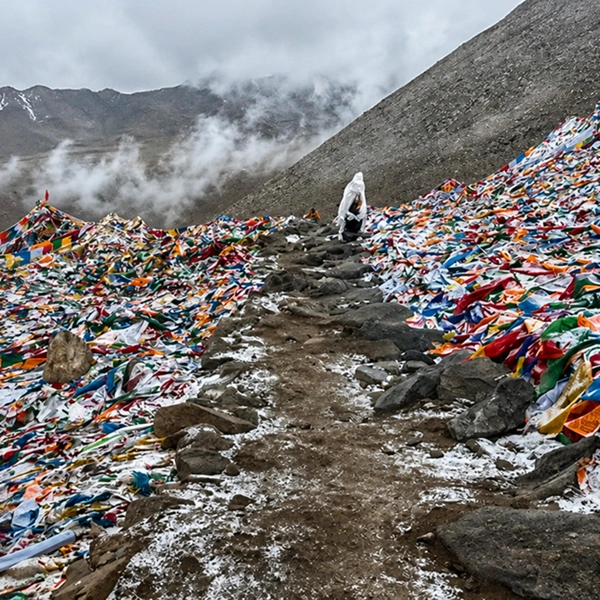
The riding segment runs from the Darchen side to the summit of the Dolma La at about 5,630 meters — and there it ends absolutely.
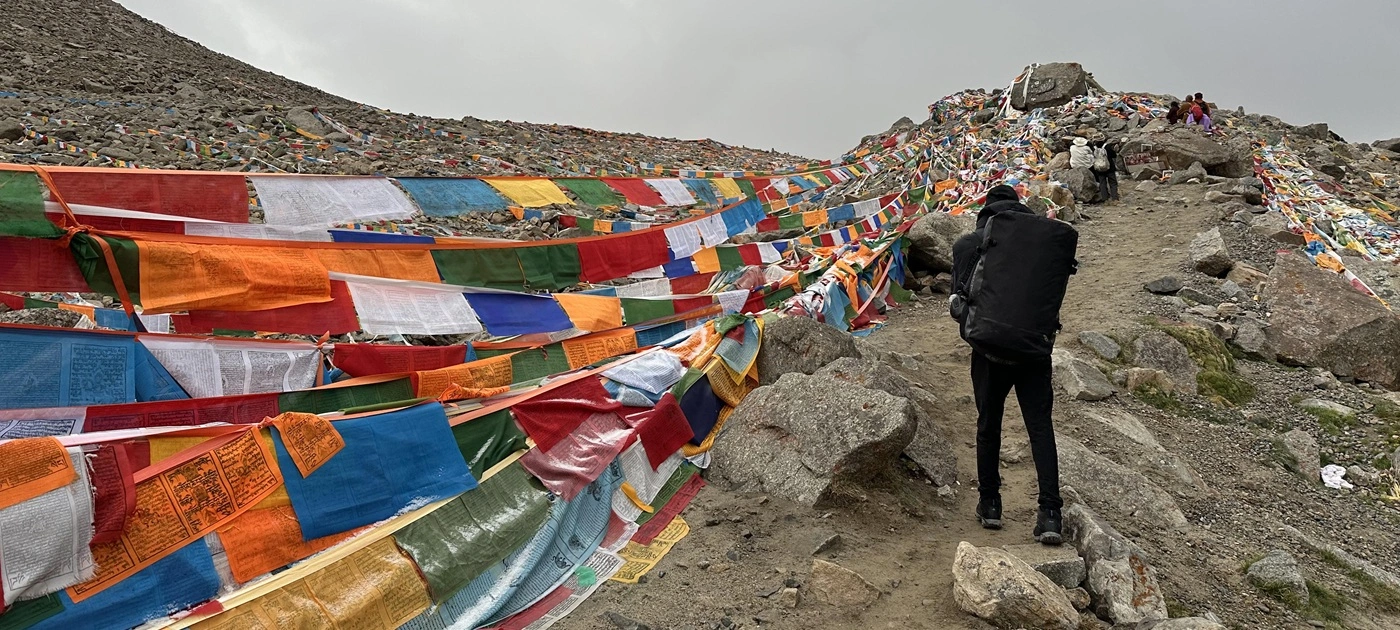
Ponies are barred from carrying riders down the far side, where the trail drops steeply over loose scree and irregular stone steps that make a mounted descent dangerous for animal and rider alike. Every pilgrim, however old or spent, dismounts at the prayer flags and walks the descent — the reality our Dolma La guide describes in full, and the reason our training guide drills descent conditioning even for guests who plan to ride.
Nor is the ascent a continuous ride. On the hardest day, handlers enforce mandatory walking across several kilometers of terrain too steep, narrow, or unstable to navigate mounted — even fully-paid riders lead their pony through these sections on foot. Book the pony as what it truly is: a powerful reduction of the climb's burden, not an exemption from the mountain. The mountain exempts no one.
Porters and Yaks: The Load-Carrying Choices
For pilgrims who want to walk but not carry, two options exist, and they are not equal.
A personal porter is the flexible choice: a local carrier who takes your kora duffel on his back, knows every stone of the path, and typically walks ahead to have your bag waiting at the night's guesthouse. Porter loads are capped — expect a limit in the low teens of kilograms — and the porter's pace-ahead rhythm creates the one rule that matters: anything you might need during the walking day cannot travel in the portered bag.
Yaks are the expedition option that rarely suits pilgrims. Cooperative rules require hiring a herder together with a minimum of two animals, which prices the option for groups rather than individuals — and yak caravans move at their own rigid pace, stopping for no one's photograph or headache. For a private pilgrim or couple, the porter wins on every axis: cost, flexibility, and the quiet companionship of someone who belongs to the trail.
The Three-Bag System That Makes It Work
Gear on the kora divides into three containers, and sorting them correctly at Darchen is half the logistics of the circuit.
The stored bag: your main luggage — the suitcase, spare clothing, everything not needed for three days — stays behind at Darchen, held without charge in your operator's vehicle or the hotel's locked storage. The kora duffel: a compact soft bag under roughly thirteen kilograms, handed to the porter, holding your sleeping-bag layer, night clothing, and spare warmth.
The daypack: three to five kilograms on your own back, and this one is life-support — water in an insulated flask, personal medicines, any portable oxygen, sun protection, and a windproof layer, because the portered duffel is unreachable until evening.
Pack the daypack as if the porter did not exist. That single habit prevents nearly every mid-trail gear crisis we have ever seen.
What It All Costs
Support services are cash transactions in Chinese yuan, paid at Darchen — no cards, no mobile payments, no other currency, as our what-to-expect briefing explains.
Rates are set by the cooperative but move with the season, and in the peak festival weeks on-the-spot prices can spike by half again or more over baseline. Treat the figures below as recent-season orientation, confirmed exactly when your trip is designed:
| Service | Recent-season range (CNY) | Structure |
|---|---|---|
| Pony + handler, full kora | 2,400 – 5,000 | Flat three-day rate; ascent riding only |
| Personal porter, full kora | 800 – 1,400 | Flat three-day rate; load capped |
| Pony, per-day alternative | 700 – 1,000 / day | Season-dependent |
| Porter, per-day alternative | 250 – 450 / day | Season-dependent |
| Yak transport | 1,200 / day | Herder + two-yak minimum; groups only |
| Groom bag-carry surcharge | 50 | Small bag carried by the handler |
Departures are exactly when the pools run dry, and the premiums appear; one more argument for the quieter windows our best-time guide recommends.
Second, pilgrims on the Indian government's bilateral routes operate under a different schedule with an earlier decision point — support must be finalized at Purang before the group ever reaches the lake — while Nepal-side private travelers decide at Darchen with more flexibility and current rates.
The Weight Rules That Protect the Animals
The system's most misunderstood rules are its weight limits, and they deserve defending, because they are animal welfare written as arithmetic.
The Tibetan ponies of the kora are small, superbly adapted animals, and equine science sets their safe carrying capacity at roughly one-fifth of body weight.
For animals of their stature, that means a total load — rider, saddle, and daypack together — in the range of sixty-five to seventy-five kilograms. Beyond that threshold, and especially in air this thin, a horse tips from aerobic work into genuine physiological distress.
The practical consequence is that the cooperative and guides apply rider-weight screening: heavier pilgrims may face surcharges, and those well above the safe threshold can be declined a mount altogether — with similar limits already applying on the small aircraft and helicopters of the approach corridors.
We brief this early and without embarrassment, because the honest answer for a heavier pilgrim is a better-designed journey — stronger training, a porter instead of a pony, more acclimatization time — not an overloaded animal on a 5,000-meter pass.
Welfare standards on the kora are rising more broadly, benchmarked against schemes pioneered elsewhere in the Himalaya — capped pack loads, supplementary feed, mandated rest, and zero tolerance for mistreatment — a direction we support completely and factor into which handlers our guides work with. The kora is a circuit of compassion. It should be one for the animals that serve it, too.
Who Gets Stopped at Darchen — and What It Costs Them
Here is the honest paragraph most operators omit. Eligibility for the kora is layered: the standard Tibet permit system runs from eighteen to seventy, strictly enforced; the Indian government route applies its own tighter ceilings; experienced private operators can occasionally secure permits for exceptionally fit pilgrims just past seventy, on comprehensive medical evidence; and separately from all permits, guides and local officers hold discretion to stop pilgrims — particularly in the older brackets — from beginning the circuit at all if their condition looks unequal to it, a framework our senior citizens' guide covers in depth.
A pilgrim stopped at Darchen waits there while the group completes the three-day circuit — and the waiting is not free. Extra nights of food and lodging in Darchen fall directly to the stopped pilgrim, paid in cash outside any package rate.
It is a hard rule, honestly stated, and it is one more reason the medical preparation and honest self-assessment we urge before booking matter more than any service you can hire.
The dignified alternatives exist and are real pilgrimages in their own right — the lake-focused yatra, the aerial darshan — and choosing one deliberately beats being assigned one at the trailhead.
If Something Goes Wrong Out There
Evacuation on the kora is a tale of three sectors, and knowing it reframes the whole risk picture. The first valley, up to Dirapuk, is reachable by rough road: a pilgrim in trouble there can be driven back to Darchen by emergency jeep for a modest cash fee. The final valley, from Zuthulpuk down, is likewise vehicle-accessible, with onward road transfer possible to the medical facilities at Purang.
The middle — the Dolma La itself — is the exposed heart. No vehicle reaches the pass, and no helicopter can come, as our insurance guide explains; a pilgrim who collapses on the climb is carried down by guides and porters, slowly, on human strength. That fact should not frighten you.
It should organize you: it is why the daily oximeter checks matter, why guides' turn-back decisions are final, why the pony decision errs toward yes, and why the descent training happens months before Darchen.
The system, taken whole — the pre-booking, the tokens, the weight rules, the sector logistics — is not bureaucracy for its own sake. It is how a fragile place keeps thousands of pilgrims and hundreds of animals safe through the world's highest pilgrimage season.
Travel with an operator who knows it cold, and the whole apparatus becomes invisible: tokens arranged before you arrive, bags sorted, cash planned, contingencies rehearsed.
That is precisely what our private Kailash Mansarovar journey includes, in keeping with the standards we maintain across all our luxury travel in the Himalayas.
FAQs — Kora Support Services
How much does a pony cost on the Kailash kora?
Recent seasons have seen full-kora pony-and-handler rates of roughly CNY 2,400–5,000 as a flat three-day arrangement, with personal porters at roughly CNY 800–1,400 — paid in cash yuan at Darchen, cards and other currencies not accepted. In peak festival weeks, on-the-spot rates can spike by half or more, and availability runs out entirely. Confirm current rates when you plan your trip, rather than budgeting from any published figure.
Can you hire a pony mid-way on the Kailash kora?
No — this is the circuit's most unforgiving rule. All pony, porter, and yak arrangements must be finalized and paid at Darchen before the group passes the trailhead; no support of any kind can be hired once you are on the route, at any price. A pilgrim who declines support and later struggles has no remedy but their guides. When in doubt at Darchen, book the support — unused help costs money; missing help costs the pilgrimage.
Do ponies carry you the whole way around Mount Kailash?
No. The riding segment runs only from the Darchen side up to the summit of the Dolma La, where every rider dismounts — ponies are barred from the steep, loose descent, which all pilgrims walk on foot. Even on the ascent, handlers enforce mandatory walking through several kilometers of terrain too steep or unstable to ride. A pony reduces the climb's burden substantially; it does not exempt anyone from the mountain.
How much can a porter carry on the Kailash kora?
Porter loads are capped by the local cooperative at a low-teens kilogram limit, so your kora duffel must pack compact — sleeping layer, night clothing, spare warmth — while everything else stays in free storage at Darchen. Porters typically walk ahead and meet you at the night's guesthouse, which means the portered bag is unreachable during the day: medicines, water, sun protection, and a wind layer must ride in your own small daypack.
Is there a weight limit for riding a pony at Kailash?
Effectively yes. The kora's small Tibetan ponies can safely carry about one-fifth of their body weight — a total load, including saddle and daypack, of roughly sixty-five to seventy-five kilograms. The cooperative and guides screen accordingly: heavier riders may face surcharges or be declined a mount, and similar limits apply to small aircraft on the approach corridors. These limits are enforced honestly for animal welfare, and the right answer for heavier pilgrims is stronger preparation and porter support.
Can you hire yaks on the Kailash kora?
Yes, but they suit groups, not individuals: cooperative rules require hiring a herder with a minimum of two yaks, and the caravans move at a rigid pace with no individual stops. For a private pilgrim or couple, a personal porter is better on cost, flexibility, and companionship. Yaks earn their place on large expeditions moving serious equipment — which is not what a supported pilgrimage requires.
What happens if you can't continue the Kailash kora?
It depends where. In the first valley, an emergency jeep can return you to Darchen from the Dirapuk side for a modest cash fee; from the Zuthulpuk valley, vehicles can likewise reach you, with onward transfer to the medical center at Purang. On the Dolma La itself no vehicle or helicopter can come — guides and porters carry the stricken down on foot. Pilgrims stopped before starting wait at Darchen, paying their own extra food and lodging in cash.
Where do you leave your main luggage during the Kailash kora?
At Darchen, free of charge — large suitcases and non-essential gear are stored in your operator's locked vehicle or the hotel's storage room for the three days of the circuit. You carry forward only two bags: a compact duffel under roughly thirteen kilograms for the porter, and a three-to-five-kilogram daypack on your own back with the day's essentials. Sorting the three bags correctly at Darchen is half the logistics of the kora.
Need Help? Call Us+977 9851013196orChat with us on WhatsApp
Need Help? Call Us+977 9851013196