Sustainable trekking in the Everest region has moved from slogan to system: a waste economy where trekkers hand-carry recycling down the mountain, porter welfare standards audited rather than assumed, greenhouse kitchens, and carbon offset through local reforestation. The world's most famous trail is under real pressure — and the best journeys now help relieve it.
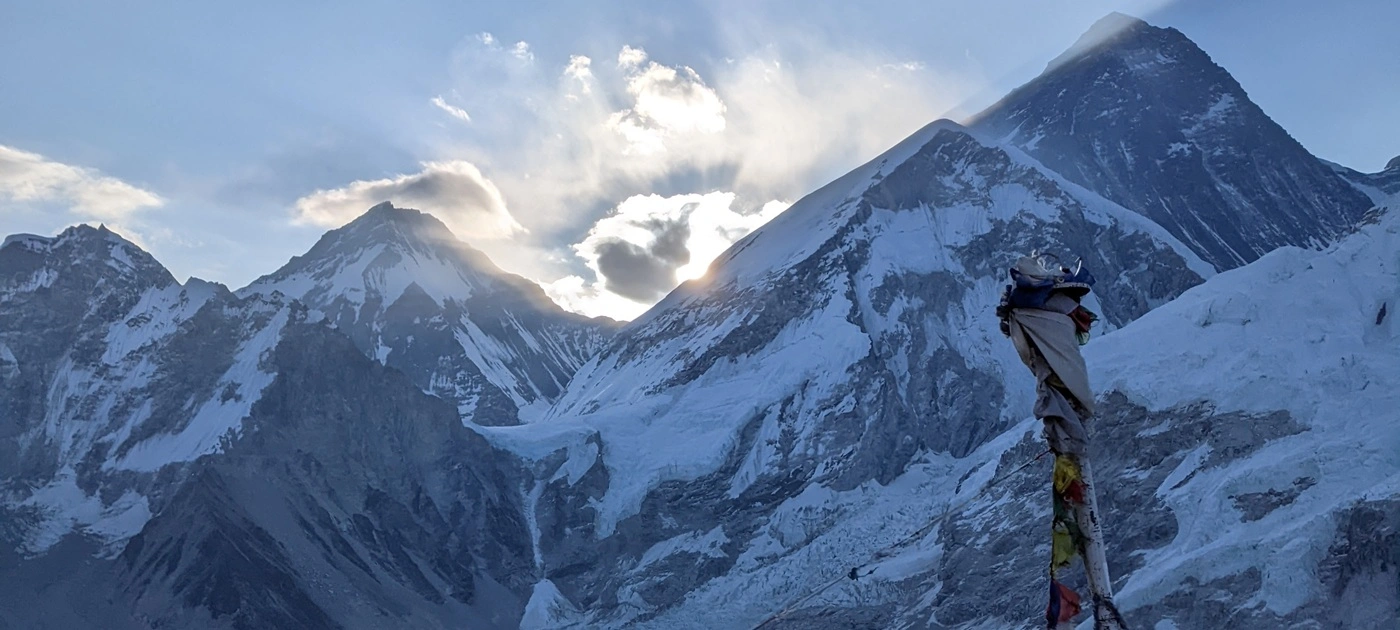
Sustainable Trekking in the Everest Region: Luxury That Gives Back

Sustainable trekking in the Everest region is no longer a niche preference — it is the condition on which this trail keeps its soul. The Khumbu receives tens of thousands of trekkers a year into a high-altitude ecosystem with no roads, no municipal recycling, and villages never built for the volume.
For decades, the region absorbed that pressure the only way it could: burn pits and buried landfills, some at heartbreaking altitudes.
That era is ending, and what is replacing it is genuinely worth knowing about — a circular waste economy where descending trekkers carry recycling off the mountain with their own hands, lodges that grow their food and audit their footprint, porter welfare standards with teeth, and carbon programs that plant forests in Nepal rather than buying certificates abroad.
We design our Everest journeys deliberately within this system because we believe the version of luxury worth selling is the one the Khumbu can survive. Here is the honest picture: the problem, the fixes, and exactly how a well-designed trek becomes part of the solution.
The Pressure on Paradise
Start with the honest numbers, because the fixes only make sense against them. The Everest region receives on the order of eighty thousand visitors a year, generating some two hundred tonnes of solid waste annually — in a national park where every object that arrives must eventually leave by air, by animal, or on a human back. Historically most of it never left: by the late 2010s, roughly seventy-five informal landfills dotted the Khumbu, including an open pit near Gorak Shep above five thousand meters.
The consequences reach further than the eye. Burning mixed waste releases toxins into mountain air; rain seeping through unlined pits, together with leaking lodge septic systems, has been linked to gastrointestinal illness in residents and trekkers alike. And the wider environment is under its own siege — studies have reported startling glacier retreat on Everest's highest ice and microplastics in Khumbu snow and streams.
None of this is a reason to stay away. It is the reason to come well — because the region's most effective conservation funding is the thoughtful traveler, and the difference between harm and help is mostly in how the journey is designed.
Sagarmatha Next and the Waste That Walks Itself Out
The most inventive answer to the waste crisis sits on the trail itself, at Syangboche above Namche: Sagarmatha Next, a non-profit center created by a partnership of conservation foundations with the Sagarmatha Pollution Control Committee (SPCC) — the local body that has long managed the park's waste. The center is worth an hour of any itinerary: a waste lab, an art gallery of upcycled works, and an interactive learning space that turns the region's hardest problem into its most compelling exhibit.
Its logistical masterpiece is the Carry Me Back program. The SPCC gathers waste from trail bins and legacy pits and transports it to the Syangboche facility, where it is sorted, shredded, and compressed into one-kilogram bags.
Descending trekkers and guides clip a bag to their packs and carry it to Lukla; aircraft returning to Kathmandu — which would otherwise fly down light — take it to recycling partners in the city. Thousands of participants have walked tonnes of waste off the mountain this way, one kilogram at a time.
We brief every guest on the program, and most choose to carry. It costs nothing, weighs almost nothing against a trekking pack, and changes something in how the descent feels: you leave the Khumbu having physically taken a piece of its burden with you.
The center's workshop even melts and remolds shredded bottle caps into topographic models of Everest itself — sold on site, with proceeds funding the SPCC's work. The mountain, recycled into the mountain.
The Rules That Guard the Mountain
Behind the community programs stands a regulatory spine, and travelers should know it exists because it signals a region defending itself seriously.
Climbing expeditions attempting Everest post a garbage deposit of around four thousand US dollars, refunded only when the team brings a required weight of waste back down from the high camps. Human waste from Base Camp is collected under a per-kilogram fee and carried off the mountain in sealed drums, protecting the glacial meltwater that villages downstream drink.
And at the certified lodges, single-use plastic water bottles have disappeared from sale, replaced by filtered refills — one reason the refillable bottle on our packing lists is not a suggestion.
Aviation has its rules too, and it is one every luxury traveler should hear honestly: Nepal's civil aviation authority has restricted helicopter landings on Kala Patthar, the famous viewpoint above Gorak Shep — sightseeing flights may overfly but not touch down, with landings reserved for search and rescue.
We support the restriction without reservation. The viewpoint earns its meaning on foot, and a rescue helicopter that can always land is worth more than a photograph that saves a walk.
How the Best Lodges Earn Their Footprint
The lodges we build itineraries around treat sustainability as engineering, not signage. Solar-thermal arrays heat the showers; insulated sunrooms in the western valleys bank the day's heat against the night; greenhouse kitchens cut the air-freight that fresh food would otherwise demand — the systems our food guide describes in full. Waste is segregated at source, especially at the park boundary, and one network on the trail carries independent Travelife certification for its audited standards, including an outright ban on selling plastic bottles.
The community layer runs just as deep. A rent-free cafe at the Lukla gateway trains local mountaineering families in hospitality skills under a "Learn to Earn" program, its proceeds funding vocational education.
In the Thame valley, guest contributions have built a safe connecting trail between villages. These are the mechanisms behind the restraint-as-luxury model our lodge guide profiles — small properties, local hiring, revenue that stays in the valleys.
And one honest sentence belongs here, because sustainability writing too often pretends otherwise: even the best high-altitude properties live with physics.
Pipes can freeze on the coldest mornings, hot water and generator hours may run to schedules, solar systems dim under cloud. A serious operator briefs you on this rather than promising the impossible — the same honesty we practice about every altitude on every route.
The People Who Carry It: Porter Welfare as a Luxury Standard
Nothing moves in the Khumbu without porters — the seasonal workforce, six figures strong across Nepal, that carries the gear, food, and fuel behind every trek. Portering channels tourist money straight into mountain villages, and done right, it is dignified, well-paid mountain work. Done wrong — overloaded, under-equipped, sleeping in storage rooms — it is exploitation wearing a trekking company's logo.
The industry benchmark is the International Porter Protection Group's five welfare standards, and the difference between baseline compliance and genuine care looks like this:
| Welfare dimension | Industry baseline | Responsible luxury protocol |
|---|---|---|
| Load limits | 30 kg maximum, often including personal gear | Voluntary 20–25 kg caps to cut strain at altitude |
| Equipment | Basic issue, variable quality | Professional down jackets, insulated boots, and sleeping bags mandatory above 4,000 m |
| Shelter & food | Sometimes common areas or storage spaces | Indoor lodge beds and the same meals as the trekking group |
| Medical care | Minimal, inconsistent | Insurance including altitude illness, with evacuation access |
| Wages | Legal floor, sometimes delayed | Above-floor pay, on time, every time |
This is where a luxury operator's ethics are actually tested — not in the thread count, but in how the person carrying the duffel sleeps. We hold our crews to the responsible column, and we invite guests to notice: meet the team, learn names, see the gear.
A journey whose comfort is built on someone else's hardship is not luxury by any definition we accept.
Carbon, Helicopters, and Offsetting That Stays in Nepal
The helicopter question deserves the same honesty. Rotary access has transformed Himalayan travel — compressing itineraries, opening the region to travelers who could not walk three weeks, and above all providing the rapid-evacuation safety net that makes high-altitude trekking survivable when things go wrong. We use helicopters for exactly those reasons, and our guests benefit from every one of them.
They also burn fuel, make noise that wildlife notices, and deposit soot where glaciers least need it. The honest response is not to pretend otherwise but to fly purposefully — safety and access, not joyriding — respect the landing restrictions, and offset in a way that means something.
On offsetting, the emerging best practice in Nepal is local and auditable rather than anonymous and global: operators funding native reforestation inside the country, from dense-planting Miyawaki forest projects in the Kathmandu Valley — thousands of native trees across dozens of species, with social employment built in — to the fruit-tree planting programs in mountain communities that our lodge partners run with conservation trusts.
Trees you could visit beat certificates you cannot. That is the standard we point our own programs toward, and the question worth asking any operator who claims to be carbon-conscious.
Booking as a Conservation Act
Here is the reframe we offer every guest, and we mean it literally: in the Khumbu, how you book is a conservation decision. The national direction of travel — away from volume, toward high-value, lower-impact tourism — only works if travelers choose the operators, lodges, and practices that embody it. Every choice on this page is bookable: the certified lodges, the porter standards, the Carry Me Back kilogram, the offset that plants a forest in Nepal.
So ask the questions of any operator, ours included: What do your porters carry, wear, and earn? Which certifications do your lodges hold?
Where does your offset money physically go? Will my itinerary include Sagarmatha Next? A company with good answers will love you for asking. A company without them was hoping you wouldn't.
The Everest region gave trekking its most famous trail and its deepest culture — the living heritage our Sherpa guide honors.
Traveling it sustainably is not a sacrifice of luxury; done properly, it is the luxury: quieter trails, honest comfort, and the knowledge that your journey strengthened the place. That is how we build every Everest departure, on the standards we keep across all our luxury travel in the Himalayas.
FAQs — Sustainable Everest Travel
What is the Carry Me Back program on the Everest trek?
A crowdsourced waste-removal initiative run by Sagarmatha Next with the Sagarmatha Pollution Control Committee: waste collected from trails and legacy pits is sorted, shredded, and compressed into one-kilogram bags at Syangboche, and descending trekkers voluntarily clip a bag to their packs and carry it to Lukla, where aircraft fly it to Kathmandu recyclers. Thousands of participants have removed tonnes of waste this way — one kilogram at a time.
How serious is the waste problem in the Everest region?
Serious enough to have reshaped the region's policies: on the order of eighty thousand annual visitors generate some two hundred tonnes of solid waste in a park with no roads or municipal recycling, and by the late 2010s roughly seventy-five informal landfill pits existed across the Khumbu, including one near Gorak Shep. Burning and seepage have been linked to air and water contamination — which is precisely what the new circular-waste systems now address.
What is the garbage deposit for climbing Mount Everest?
Expeditions attempting Everest post a refundable deposit of around four thousand US dollars, returned only if the team brings a required weight of waste back down from the high camps. Base Camp human waste is separately collected under per-kilogram fees and carried off the mountain in sealed drums to protect glacial water sources. Trekkers face no deposit — their equivalent contribution is following pack-in pack-out practice and, ideally, carrying a Carry Me Back bag.
What are the IPPG porter welfare guidelines?
The International Porter Protection Group's five standards, the industry's ethical benchmark: enforced maximum load limits, appropriate high-altitude clothing and footwear, proper shelter and food equal to the rest of the team, access to medical care and insurance covering altitude illness, and fair wages paid on time. Responsible luxury operators exceed the baseline — voluntary 20–25 kg loads, mandatory down equipment above 4,000 metres, indoor beds, and identical meals.
Are helicopters allowed to land on Kala Patthar?
No — Nepal's civil aviation authority has restricted landings on the famous viewpoint above Gorak Shep, permitting sightseeing flights to overfly but not touch down, while keeping unrestricted access for search-and-rescue operations. The restriction protects both the experience and the environment, and responsible operators support it: the viewpoint is earned on foot, and the helicopter's highest purpose in the Khumbu is safety.
How do Everest lodges reduce their environmental impact?
The serious ones engineer it: solar-thermal water heating, insulated sunrooms that bank daytime heat, on-site greenhouses that cut air-freighted food, source-segregated waste, bans on selling single-use plastic bottles, and independent certification of the whole system at the leading network. Community mechanisms — local hiring, hospitality training programs, guest-funded village infrastructure — keep the revenue in the valleys that host the trail.
How can trekkers reduce their impact on the Everest trail?
Carry a refillable bottle and use filtered refills; refuse single-use plastic; pack out what you pack in; carry a one-kilogram Carry Me Back bag on your descent; visit Sagarmatha Next to understand the system you're walking through; choose operators with audited porter standards and certified lodges; and treat the helicopter as a safety tool rather than a shortcut collection. Individually small, these choices are precisely how the region's model works.
Do luxury trekking operators offset their carbon in Nepal?
The best practice now emerging is local, auditable offsetting rather than anonymous global credits: operators fund native reforestation inside Nepal — from dense Miyawaki-method forest plots in the Kathmandu Valley planted with dozens of native species, to fruit-tree programs in mountain communities run with conservation trusts. The test worth applying to any operator's claim is simple: can you visit the trees? Local, verifiable projects beat certificates every time.
Need Help? Call Us+977 9851013196orChat with us on WhatsApp

Need Help? Call Us+977 9851013196