Food on the Everest Base Camp trek has become one of its quiet luxuries: greenhouse salads at 4,250 meters, fresh pasta in Namche, and a champagne breakfast facing the Mahalangur wall. But eating well up there is an engineering feat — water boils too cool to cook an egg, and thin air steals a third of your sense of taste. Here is how the best kitchens beat the altitude.
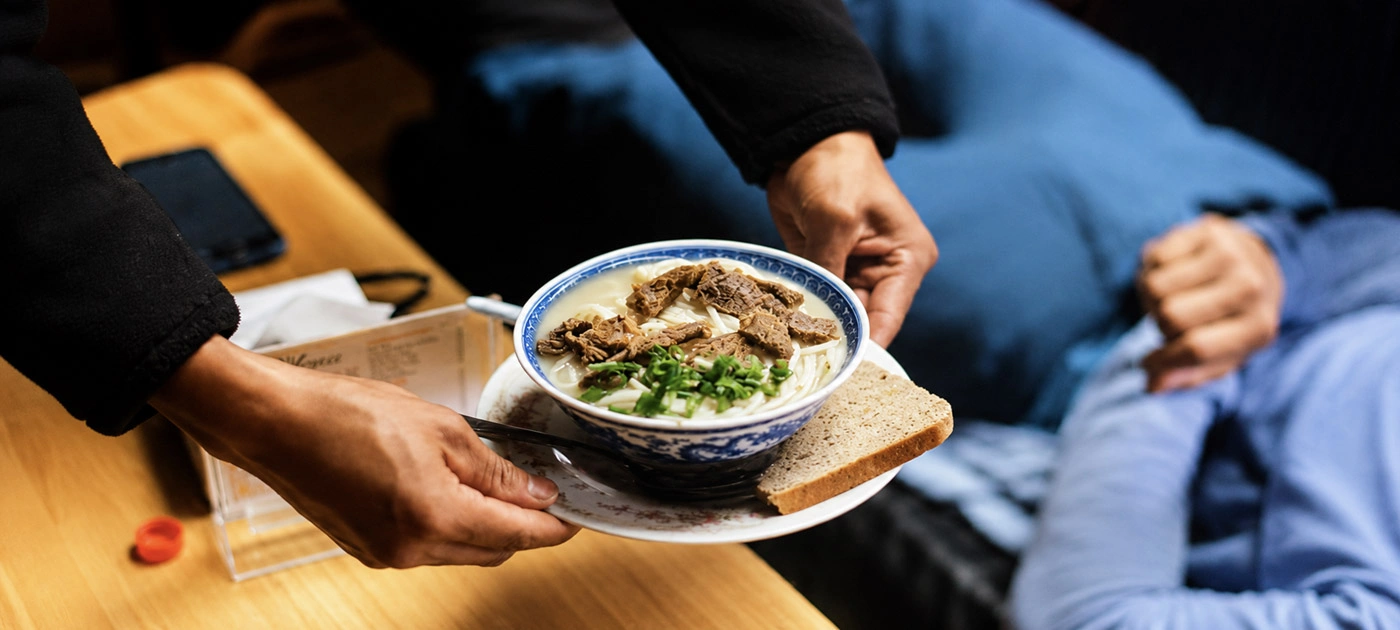
Food on the Everest Base Camp Trek: The Luxury Kitchen at 5,000 Metres

Food on the Everest Base Camp trek used to be an endurance category: repetitive starches off a yak-dung stove, eaten in a plywood dining room because there was nothing else. That era is over. Today the trail's best kitchens serve greenhouse-grown salads at altitudes where nights freeze, hand-made pasta below the world's highest peaks, and — at one famous ridge-top dining room — a Japanese lunch with the Mahalangur wall filling the windows.
What makes this remarkable is not the menus. It is the physics stacked against them. Above 3,000 meters, water refuses to get hot enough to cook properly, your own sense of taste fades with the oxygen, digestion slows, and every fresh ingredient arrives by helicopter or on someone's back. Great food up here is not sourced; it is engineered.
We plan our Everest journeys around these kitchens deliberately, because on this trek food is physiology before it is pleasure. Here is the whole picture — the science, the supply lines, the lodges that cook seriously, and how high the good eating actually goes.
Why Food Is a Safety System Before It Is a Pleasure
The medical case comes first, because it explains why we treat dining as itinerary design rather than a perk. Acclimatization is metabolically expensive — the elevated heart rate, the deeper breathing, the production of new red blood cells all burn energy hard — precisely as altitude quietly deletes your appetite. Left alone, that mismatch strips weight and strength from trekkers day by day.
The kitchens that matter counteract it by design: nutrient-dense, highly digestible calories, served warm, made appetizing enough that you eat properly even when hunger has gone missing. A trekker who eats well and sleeps warm adapts faster and walks stronger — the same recovery logic that runs through our approach to altitude and through the heated rooms in our lodge guide.
So read everything below as safety infrastructure wearing a tablecloth. The pleasure is real. The physiology is the point.
The Physics: Why Water Fails Above Namche
Here is the fact that reorganizes every kitchen on this trail: the boiling point of water falls roughly one degree for every 300 meters you climb — and with it goes the cook's most basic tool.
| Altitude | Water boils at | What that does to cooking |
|---|---|---|
| Sea level | 100°C | Everything works as written |
| Lukla (2,860 m) | ~90.5°C | Breads rise oddly; boiling slows |
| Namche (3,440 m) | ~88.5°C | Tea and coffee under-extract; dense starches won't soften |
| Tengboche (3,867 m) | ~87°C | Lentils and tough cuts stay rubbery in an open pot |
| Dingboche (4,410 m) | ~85°C | Water can't pasteurize reliably; dairy curdles easily |
| Gorak Shep (5,164 m) | ~83°C | An open pot can no longer firmly set an egg white |
| Base Camp (5,364 m) | ~82°C | Open boiling cannot safely cook raw protein |
The egg is the perfect illustration. Egg whites need about 80°C to set firm — and near Base Camp, open water boils barely above that, losing its heat to steam instead of the egg. Boil one in an open pot at Gorak Shep, and you get runny, under-cooked albumen no matter how long you wait.
Serious kitchens solve this two ways: commercial pressure cookers, which raise the boiling point back above 100°C by sealing the vessel, and hard dry-heat — cast-iron searing at 150°C-plus — which cooks proteins safely where water never could. When your trekking dinner arrives properly cooked at 4,000 meters, one of those two machines is why.
Why Everything Tastes Bland — and the Sherpa Answer
The second saboteur is your own nose. High-altitude air is thin and desert-dry, and it dulls the olfactory system that carries most of what we call taste — perception can fall by as much as a third, which is why a dish seasoned perfectly at sea level tastes like cardboard at Dingboche.
The best kitchens fight back with aroma rather than salt, and the arsenal is local: wild mountain ginger, fresh garlic, turmeric, coriander, fenugreek, and jimbu — the Himalayan aromatic leaf that gives Sherpa and Newari cooking its distinctive depth.
These are flavor engineering and mountain tradition in the same spoonful: garlic and ginger have been used by Himalayan peoples for generations as warming, settling aids at altitude, and ginger tea remains the trail's kindest answer to a queasy morning.
And then there is po cha — Sherpa butter tea, strong black tea churned with yak butter and salt. First-timers blink at it; by Kongde, most guests understand it completely: salt and rich, warming fat, exactly what a cold body at 4,250 meters is asking for.
Drink it the way it is offered, as hospitality — the culture our Sherpa heritage guide explores — and you will find the taste follows.
The Supply Chain With No Roads
Every fresh thing you eat above Lukla arrived by air or on foot — there are no roads in the Khumbu — and understanding that chain tells you where to eat and where to be careful.
The trail's best networks solve supply by growing their own: double-walled, solar-heated greenhouses at key lodges — including Monjo and, remarkably, Kongde at 4,250 meters — harvest spinach, mustard greens, and alpine herbs daily even when nights freeze.
What can't be grown is flown: the top kitchens bring proteins and delicate ingredients from Kathmandu by dedicated helicopter cargo, skipping the multi-day open-air portage during which standard supplies too often lose their cold chain.
That last detail is the safety line every trekker should hold: at standard teahouses, skip raw vegetables, salads, and unpeeled fruit — the pathogen risk is real, and a stomach bug at altitude cascades fast, as our altitude guide explains.
At the serious lodges, the calculus flips: their salads come from their own greenhouse that morning, and their water runs through multi-stage filtration — mechanical, carbon, and ultraviolet — because at these altitudes, boiling alone cannot be trusted to sterilize.
Eat adventurously where the kitchen has earned it, and conservatively everywhere else.
Where You'll Actually Eat Well
Three kitchens and networks define the trail's top table, and each cooks with its own personality.
Hotel Everest View, on its ridge at 3,880 meters, remains the grandest single dining room in the Khumbu — an intimate stone hall built around a sacred inscribed boulder, opening to a terrace that faces the Mahalangur giants.
Its chefs, career specialists in high-altitude cooking, serve a menu that has become legend precisely for its improbability: Japanese oyakodon at nearly 4,000 meters, filet mignon with organic greens, and a champagne breakfast that may be the single most photographed meal in the Himalaya. Lunch here, walked up from Namche on an acclimatization day, is one of the trek's defining hours.
Mountain Lodges of Nepal cooks the way it builds — local materials, real warmth. Fire-baked pizzas from greenhouse produce at Lukla, hand-crafted momos with local cheese, fresh pastas at Namche, and the network's signature Dining al Fresco rhythm: warm Gurung bread broken on the morning terrace, a happy hour of hot drinks and snacks at sunset, then a long shared table by the hearth. At Kongde, the glass-walled dining room adds fine wine and five 8,000-meter peaks to dinner.
Everest Summit Lodges — with quiet properties at Lukla, Monjo, Mende, Tashinga, and Pangboche, several deliberately set off the busy trail — runs an all-inclusive multi-course table: homemade soups (the slow-simmered garlic and mushroom is the one guests remember), local and international mains, fresh tarts, and unlimited juices and proper coffee with breakfast and dinner. It is the connoisseur's route for travelers who prefer their evenings peaceful.
The Luxury Ceiling: How High Good Eating Goes
Now the honest geography, because no serious guide should imply the champagne reaches Base Camp. Around 4,200 meters, the trail crosses what we call the luxury ceiling: above it, permafrost, weather, and the absence of agriculture make fully plumbed, centrally heated boutique lodges unworkable, and the dining changes tier with the beds.
Dingboche, just above the line, still offers genuine comfort — attached bathrooms, hot showers, electric blankets, kitchens that cook properly with pressure and cast iron. Lobuche and Gorak Shep are simpler again: decent twin rooms, stove-heated dining halls, honest hot food built on the digestible-and-warm principle rather than any pretense of fine dining.
There is one glittering exception. In the spring climbing season, private geodesic dome camps rise directly on the Khumbu Glacier at Base Camp itself — insulated floors, real beds, and a heated dining dome with a barista-run espresso bar and a private culinary team cooking from ingredients flown in daily.
Outside that season, the wiser luxury play is the one we design by default: sleep and dine well below the ceiling, touch Base Camp rested, and let a private helicopter carry you from Gorak Shep back toward Kathmandu instead of retracing three hard days on foot — the same trek-and-fly logic in our lodge guide.
Every Diet, Handled — and What Altitude Does to Digestion
The trail's serious kitchens now handle vegetarian, vegan, gluten-free, halal, and dairy-free requirements as routine, not exception — chefs will cook without ghee or dairy thickeners on request and substitute plant oils cleanly. The requirement is only that your operator communicates it ahead, lodge by lodge, which is part of how we build every itinerary.
There is also an altitude-specific reason to eat differently as you climb. Above roughly 4,400 meters, digestion measurably slows — the body is routing its oxygen to heart and lungs, not the gut — and heavy dairy in particular starts to sit badly as enzyme production dips.
The kitchens that understand this design their upper-altitude menus around easily digestible plant proteins, clean carbohydrates like steamed rice and quinoa, and clear vegetable broths: food that fuels the pass without fighting you.
The summary we give every guest: eat more than you feel like, drink more than you think you need, favor warm and simple as you go higher — and let the kitchens below the ceiling spoil you properly on the way up and the way down. Dining is designed into every one of our Everest journeys for exactly that arc, on the standards we keep across all our luxury travel in the Himalayas.
FAQs — Eating on the Everest Trail
What food do you eat on the Everest Base Camp trek?
At the luxury tier: greenhouse salads and fresh herbs grown on-site, fire-baked pizzas, handmade momos and pastas, multi-course dinners with homemade soups and fresh desserts — and at Hotel Everest View, Japanese dishes and a famous champagne breakfast. At standard teahouses, expect simpler fare built on rice, lentils, noodles, and potatoes. Above roughly 4,400 meters, menus everywhere shift toward warm, easily digestible dishes by design.
Why can't you boil an egg properly near Everest Base Camp?
Because water's boiling point falls about one degree per 300 meters of altitude — at Gorak Shep it boils around 83°C, barely above the 80°C an egg white needs to set firm, and the water sheds its heat to steam instead of the egg. The result of open-pot boiling is runny, under-cooked albumen regardless of time. Serious kitchens solve it with pressure cookers or high-heat cast-iron cooking instead.
Why does food taste bland at high altitude?
Thin, extremely dry air dulls the olfactory system that carries most of what we perceive as taste — sensitivity can drop by as much as a third, so dishes seasoned perfectly at sea level taste flat at 4,000 meters. Good high-altitude kitchens compensate with aroma rather than salt, leaning on ginger, garlic, turmeric, coriander, fenugreek, and jimbu, the Himalayan aromatic leaf central to Sherpa and Newari cooking.
How do Everest lodges get fresh food with no roads?
Two ways: they grow it, and they fly it. The leading lodge networks run double-walled, solar-heated greenhouses — at Monjo, and even at Kongde at 4,250 meters — harvesting fresh greens daily through freezing nights, while proteins and delicate ingredients arrive from Kathmandu by dedicated helicopter cargo. Everything else in the Khumbu still travels the old way: flown to Lukla, then carried by yaks, mules, and porters.
Is the food safe to eat on the Everest Base Camp trek?
At the serious lodges, yes — their produce comes from their own greenhouses and their water runs through multi-stage filtration with UV sterilization, because boiling alone can't be trusted at altitudes where water boils below pasteurization temperatures. At standard teahouses, be conservative: skip raw vegetables, salads, and unpeeled fruit, and drink only treated water. A stomach bug at altitude dehydrates fast and can cascade into altitude illness.
Can vegan or gluten-free diets be handled on the trek?
At the luxury tier, routinely — kitchens accommodate vegetarian, vegan, gluten-free, halal, and dairy-free diets, cooking without ghee or dairy thickeners on request and substituting plant oils. The key is advance coordination: your operator should communicate requirements lodge by lodge before departure. Plant-forward eating actually suits altitude well, since digestion slows above 4,400 meters and heavy dairy sits hardest.
What is the luxury ceiling on the Everest Base Camp route?
The line around 4,200 meters above which permafrost, extreme weather, and the lack of agriculture make fully plumbed, heated boutique lodges unworkable. Below it sit the trail's true luxury properties; just above, Dingboche offers strong comfort-tier lodging; higher still, Lobuche and Gorak Shep provide simple rooms and stove-heated dining halls. Spring-season glacier dome camps at Base Camp are the one seasonal exception.
What is Sherpa butter tea?
Po cha — strong black tea churned with yak butter and salt, the Khumbu's traditional drink of hospitality and altitude. The salty, rich taste surprises first-timers, but its logic is sound at 4,000 meters: fat for warmth and sustained energy, salt for electrolytes, warmth for a cold body. Accept it when offered — it is hospitality first — and by the high lodges most trekkers have genuinely acquired the taste.
Need Help? Call Us+977 9851013196orChat with us on WhatsApp
Need Help? Call Us+977 9851013196