Sherpa culture is the living heart of the Everest Base Camp trek: centuries-old monasteries blessing climbers bound for the summit, masked dances at the autumn Mani Rimdu festival, peaks revered as deities rather than trophies, and a guiding tradition that became the most respected in world mountaineering. Here is the culture you walk through — and how to meet it well.
Sherpa Culture on the Luxury Everest Trek: A Living Heritage Guide

Sherpa culture is what turns the Everest Base Camp trail from the world's most famous walk into something closer to a pilgrimage — and most trekkers pass through it half-blind, seeing prayer flags as decoration and monasteries as photo stops. That is a loss on both sides. The Khumbu is not a backdrop for mountain scenery; it is the homeland of a people whose faith, hospitality, and mountain mastery shape every day you spend there.
We have walked this valley with Sherpa colleagues for years, and the briefing we give guests before every departure begins the same way: you are entering someone's home, and the home happens to be sacred. Understood that way, the trek doubles in depth without adding a single kilometer.
This is that briefing, in full — the people, the sacred peaks, the monasteries worth your unhurried time, the festival that fills the autumn full moon, the etiquette that earns you welcome, and the remarkable story of how the people of this valley became the most respected mountain guides on earth.
The People of the East
The Sherpas' own name tells their story: shar-pa, "people of the east," a Tibetan Buddhist people whose ancestors crossed the high passes from eastern Tibet centuries ago and settled the valleys beneath the mountains they revered. They brought their faith, their yak-herding and trading life, and a physiological inheritance that generations at altitude have only deepened.
What visitors notice first, though, is rarely any of that. It is the hospitality — a culture in which the guest is honored, tea appears before questions, and warmth toward strangers is not a service standard but a value. The lodge world we described in our guide to the Khumbu's luxury lodges grew directly out of that tradition: Sherpa homes that opened to travelers and, over two generations, learned to host the world.
Hold both truths as you walk: this is one of the great hospitality cultures, and it is also a community, not a performance. The difference between a tourist and a guest is mostly in how you arrive.
Mountains as Deities, Not Trophies
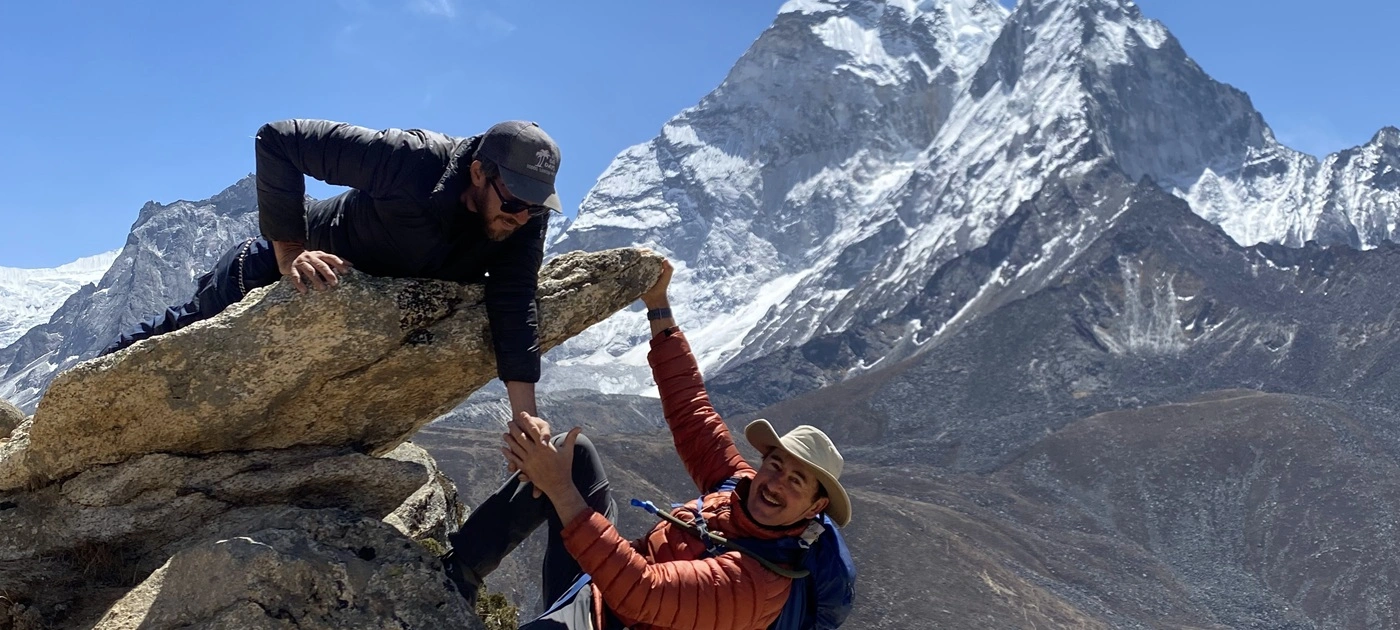
The single most important thing to understand about the Khumbu is that, to its people, the peaks are alive. Everest is Chomolungma, honored as the seat of a protective goddess. And the mountain that matters most locally is not Everest at all but Khumbila, the rocky pyramid above Namche and Khumjung — the dwelling of the valley's guardian deity, a peak so sacred it has never been climbed and, by local consensus, never will be.
This is why expedition teams hold a puja before touching a mountain: an altar of stone, juniper smoke rising, offerings made, and a lama's blessing asked for the climbers and their equipment before a single crampon bites the ice. The most accomplished Sherpa mountaineers alive still will not climb without it.
For trekkers, the practical translation is a shift in posture. You are not walking through scenery toward a trophy; you are walking through a sanctified landscape as a guest of its guardians. Trekkers who make that shift describe the same route as a different journey entirely.
The Monasteries: Where the Valley's Heart Beats
The Khumbu's gompas are working monasteries, not museums — places of daily practice where the region's spiritual life has run unbroken for centuries. Four reward unhurried visits, and a well-designed itinerary builds real time at each rather than a glance in passing:
| Monastery | Where / altitude | Why it matters |
|---|---|---|
| Tengboche | Ridge-top at 3,867 m | The Khumbu's spiritual center — founded in 1916, rebuilt after the 1934 earthquake and again after the 1989 fire, each time by the community's own hands. Climbers bound for Everest stop here for blessing; the amphitheater of Ama Dablam, Everest, and Lhotse behind it is the most sacred view in the valley |
| Pangboche | Above the Imja Khola, en route to Base Camp | The valley's oldest gompa, founded over three centuries ago and tied to the hermit-lama who first sanctified the Khumbu; its relics and ancient murals carry the region's deepest history |
| Thame | Cliffside above the quiet western valley | The monastery of the climbers' valley — the home region of many of Everest's greatest mountaineers — and among the most atmospheric settings in the Himalaya |
| Khumjung | The green-roofed village below Khumbila | Village gompa famous for its guarded relic said to be a yeti scalp — held in a locked case and shown with a smile that lets you decide for yourself |
The right way to visit any of them is with time and a guide who belongs: morning prayers attended quietly, a donation made, questions asked of the monks through someone they know. That access — unhurried, personally introduced — is precisely what a private itinerary buys, and it is worth more than any upgrade in bedding.
Mani Rimdu: The Festival of the Autumn Full Moon
Time your trek to the autumn full moon and you may witness the Khumbu at its most alive. Mani Rimdu, the region's great festival, unfolds at Tengboche across more than two weeks of closed ritual preparation before opening to the public for its climactic days — and everything about it repays understanding.
The monks first spend days constructing an intricate sand mandala, grain by coloured grain, at the center of the ritual. The public days then begin with the Wong, the great blessing ceremony, when the abbot distributes sacred pills and long-life blessings to a courtyard packed with Sherpas from every village in the valley.
The following day brings the Chham — the masked dances — in which monks embody protective deities and comic figures alike, enacting the triumph of Buddhist teaching over older hostile forces in choreography passed down for generations. The festival closes with the Jinsak fire offering, and the mandala that took days to build is ceremonially dissolved — impermanence enacted, not just preached.
Exact dates follow the lunar calendar and shift each year, so we confirm them at booking and design festival departures around them — lodging near Tengboche fills far ahead for those days, and being positioned within an easy walk of the courtyard, rested and acclimatized, is the difference between witnessing Mani Rimdu and glimpsing it.
The Etiquette That Earns Your Welcome
Sherpa culture is generous to guests and quietly attentive to how they behave, and a handful of customs mark the difference between a welcome visitor and a tolerated one.
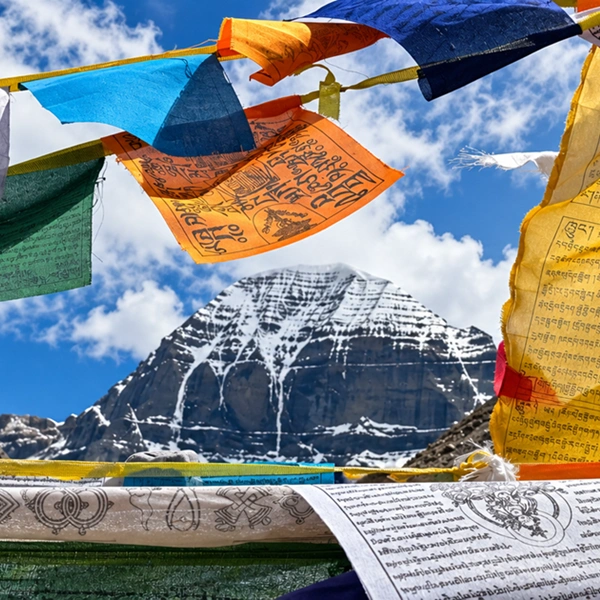
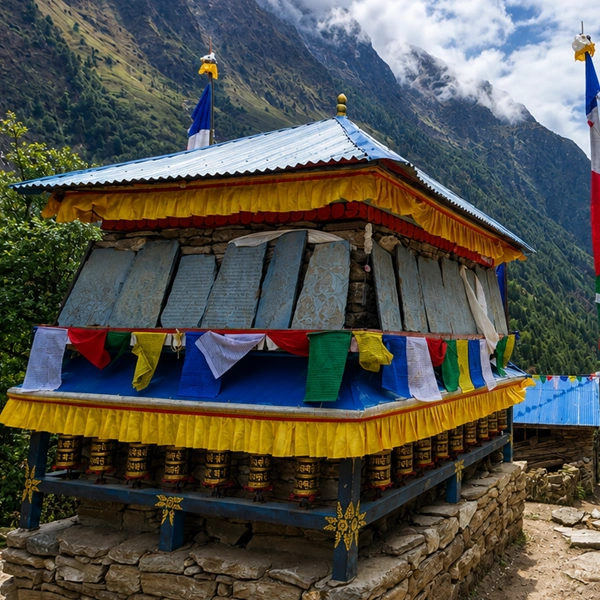
Move through the sacred landscape the way it was designed: pass mani walls, chortens, and prayer wheels on your left, keeping the sacred object to your right — the clockwise direction of all Buddhist circumambulation. Spin prayer wheels clockwise too, and never sit or stand on a mani stone for a photograph. At monasteries, remove your hat and shoes where indicated, ask before photographing anything or anyone, keep your voice low during prayers, and leave a donation — the gompas run on them.
The khata, the white silk scarf, is the culture's gesture of honor: you may receive one at a welcome or a blessing, draped over your neck. Receive it with both hands and a slight bow, and wear it rather than stuffing it in a pocket — it is a blessing made visible. Around homes and lodges, the hearth is the heart of the household; never throw rubbish into a fire, and accept tea when offered, at least a sip, because refusing hospitality outright refuses the relationship it expresses.
None of this is onerous. It is the grammar of respect — and guests who speak even a little of it are received with a warmth that transforms the trek.
From Porters to the World's Most Respected Guides
The story most trekkers know about Sherpas — high-altitude porters carrying loads for foreign expeditions — is two generations out of date, and correcting it matters, because the modern reality is one of the great professional ascents in mountain history.
Today's leading Sherpa mountaineers are certified international mountain guides, trained and examined to the same worldwide standard as their European counterparts, with Nepal's guiding profession organized under its own national guide association and a two-tier licensing system separating general trekking guides from high-altitude specialists.
Sherpa-owned expedition companies now lead the industry on Everest itself, and Sherpa guides hold records — for summits, for speed, for rescues at the edge of the possible — that place them among the finest alpinists alive, on any continent.
For you as a guest, this professionalization is a safety fact before it is a story. The guide leading your trek belongs to a tradition that combines inherited altitude physiology, generations of mountain craft, and modern certified training — a combination that exists nowhere else on earth. When we say your journey is guided by Sherpa professionals, that sentence carries the full weight of this history.
Walking It Well
Everything in this guide reduces to one design principle: culture is not an add-on to the Everest trek — it is the trek, for those equipped to see it. A journey built well strings the monasteries, the festival calendar, the etiquette briefing, and the company of guides who belong to this valley into the same itinerary that delivers the mountain views and the comfortable nights — the version of the Khumbu our lodge guide describes, filled with its meaning.
That is how we build every Everest journey: unhurried monastery time with personal introductions, festival-timed departures when the calendar allows, and Sherpa colleagues who are cultural interpreters as much as route-finders, on the standards we keep across all our luxury travel in the Himalayas. The mountains will take your breath away regardless. The culture, met well, gives something back that lasts far longer than the view.
FAQs — Sherpa Culture and the Khumbu
What is Sherpa culture known for?
A Tibetan Buddhist heritage carried from eastern Tibet centuries ago — the name shar-pa means "people of the east" — expressed today in working monasteries, sacred peaks honored as deities, masked festival dances, legendary hospitality, and the most respected mountain-guiding tradition on earth. On the Everest Base Camp trail, all of it is living practice rather than heritage display: the trek passes directly through it.
Which monasteries can you visit on the Everest Base Camp trek?
Four reward real time: Tengboche at 3,867 meters, the Khumbu's spiritual center, founded in 1916 and twice rebuilt by its community; Pangboche, the valley's oldest at over three centuries; Thame's cliffside gompa in the western valley that raised many of Everest's greatest climbers; and Khumjung's village monastery with its famous guarded relic. Visit with a local guide, attend morning prayers quietly, and leave a donation.
What is the Mani Rimdu festival?
The Khumbu's great autumn festival at Tengboche Monastery: weeks of closed ritual preparation around an intricate sand mandala, then public days beginning with the Wong blessing ceremony, followed by the Chham masked dances in which monks embody protective deities, and closing with the Jinsak fire offering and the mandala's ceremonial dissolution. Dates follow the lunar calendar and shift annually, so festival-timed treks are confirmed at booking.
What etiquette should trekkers follow at Sherpa monasteries and mani walls?
Pass mani walls, chortens, and prayer wheels keeping them on your right — the clockwise direction of Buddhist practice — and spin prayer wheels clockwise. At monasteries, remove hats and shoes where indicated, ask before photographing, keep voices low during prayers, and leave a donation. Never sit on mani stones for photos, never throw anything into a hearth fire, and accept offered tea with at least a sip.
Why do Sherpas consider Everest and the Khumbu peaks sacred?
In Sherpa Buddhist tradition, the peaks are the dwellings of deities: Everest is Chomolungma, seat of a protective goddess, and Khumbila above Namche houses the valley's guardian deity — a mountain never climbed and, by local consensus, never to be. This is why expeditions hold a puja blessing ceremony before setting foot on a mountain, and why the trail itself is best walked as a guest in a sanctified landscape.
How did Sherpas become the world's most famous mountain guides?
Through a two-generation professional ascent: from the high-altitude porters of early expeditions to today's internationally certified mountain guides, trained to the same worldwide standard as their European counterparts under Nepal's own guide association and licensing system. Combined with inherited altitude physiology and generations of mountain craft, Sherpa guides now lead the industry on Everest and hold records that rank them among the finest alpinists alive.
What is a khata and when do you receive one?
The white silk scarf is the culture's gesture of honor and blessing—draped over your neck at welcomes, farewells, and monastery blessings. Receive it with both hands and a slight bow, and wear it rather than pocketing it: a khata is a blessing made visible. Offering one in return, at a farewell or in thanks to a guide, is a gesture that is always understood and always appreciated.
Can a luxury Everest trek include real Sherpa cultural experiences?
That is precisely what a well-designed private itinerary buys: unhurried monastery visits with personal introductions rather than drive-by photo stops, departures timed to the Mani Rimdu festival when the lunar calendar allows, evenings in Sherpa-built lodges, and guides who interpret the culture they belong to. Comfort and depth are not competitors on this trail — the best journeys deliver both, a short walk apart.
Need Help? Call Us+977 9851013196orChat with us on WhatsApp
Need Help? Call Us+977 9851013196