The Fire Horse Year Pilgrimage
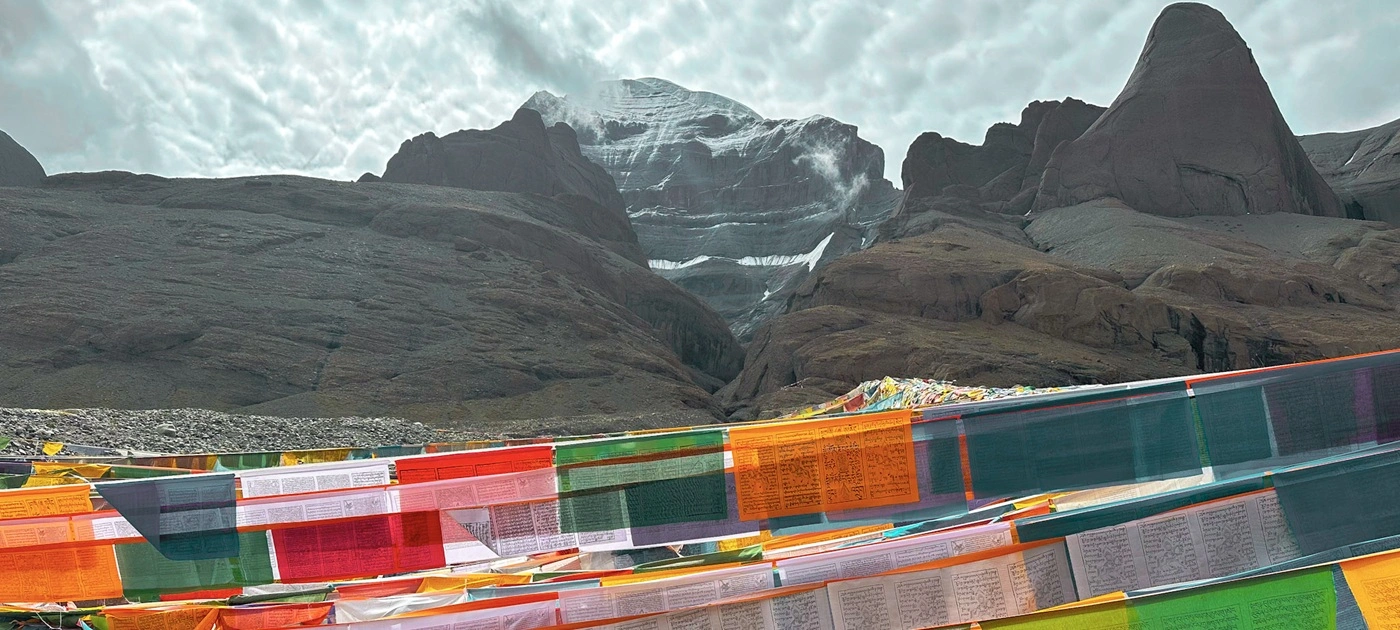
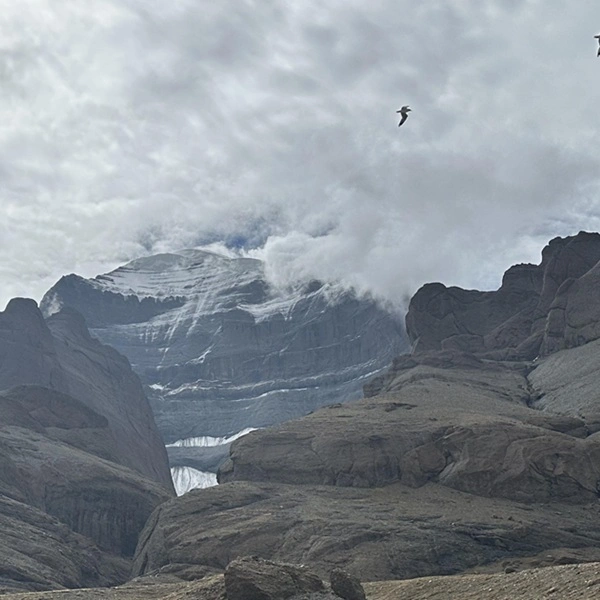
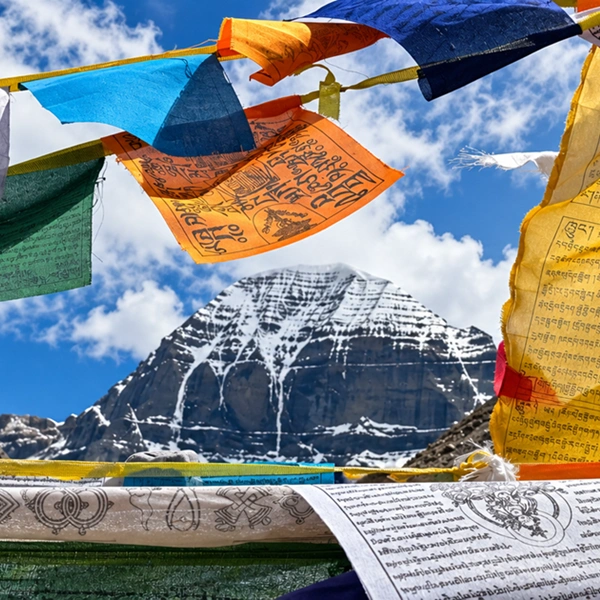
Mount Kailash stands at 6,638 meters in the Ngari Prefecture of western Tibet. It has never been climbed. Not because it cannot be. Peaks of equal technical difficulty have been summited. Kailash remains unclimbed because four religions — Hinduism, Buddhism, Jainism, and the indigenous Tibetan Bon — consider it the axis mundi, the center of the universe, the place where heaven meets earth. To climb it would be an act of desecration so profound that even Reinhold Messner declined the invitation.
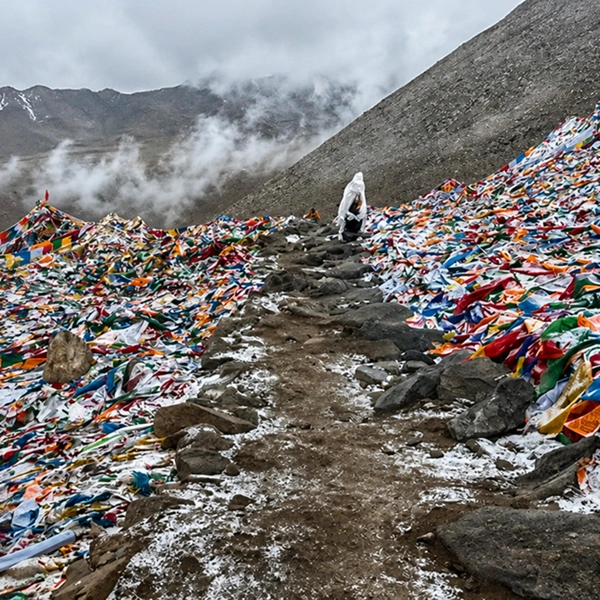
Instead, pilgrims walk around it. The Kora (Parikrama) is a 52-kilometer trek around the base of the mountain, crossing the Dolma La Pass at 5,630 meters. In a standard year, completing one Kora is believed to cleanse the sins of an entire lifetime. In a Horse Year — which occurs every twelve years — one Kora equals thirteen. In a Fire Horse Year — which occurs every sixty years — the purification reaches its maximum intensity. And in the month of Saga Dawa during a Fire Horse Year — which is what happens in May 2026 — the mathematics of spiritual merit become, in the words of Tibetan scripture, “a code of merit spanning a thousand years.”
At Alpine Luxury Treks, we operate Kailash Mansarovar Yatra itineraries via the overland Nepal route and the Lhasa fly-in route. We also arrange helicopter-assisted access through Simikot for guests who want to minimize overland transit. This guide explains the 2026 season’s extraordinary significance, the logistics, the permits, and what to expect physically and spiritually.
In This Guide
- The Fire Horse Year: why 2026 matters more than any year until 2086
- The 13x multiplier and the Saga Dawa convergence
- The mythology: Milarepa, the Buddha, and the unclimbed mountain
- The Kora: 52 kilometers around the axis of the universe
- The Tarboche flagpole ceremony
- The four routes to Kailash
- The permit labyrinth: visas, TTPs, and military clearances
- The 2026 fixed departures and booking urgency
- Frequently asked questions
The Fire Horse Year: Why 2026 Is a Once-in-a-Lifetime Window
The Tibetan and Chinese astrological systems operate on a 60-year cycle that pairs twelve zodiac animals with five elements: Wood, Fire, Earth, Metal, and Water. The Horse represents spiritual vitality, physical strength, and the speed of spiritual evolution. Fire represents karmic purification, ego-destruction, and cosmic illumination. The Fire Horse combination occurs once every sixty years.
|
Year
|
Element + Horse
|
Significance
|
|
1966
|
Fire Horse
|
Last Fire Horse Year. Kailash largely inaccessible to international pilgrims.
|
|
2026
|
Fire Horse
|
THIS YEAR. 13x Kora multiplier + Saga Dawa 100,000x. Visa reopening after 5-year freeze.
|
|
2038
|
Earth Horse
|
Next Horse Year. 13x multiplier returns, but without the Fire element.
|
|
2086
|
Fire Horse
|
Next Fire Horse Year. 60 years from now.
|
The psychological effect of this timing is absolute. Pilgrims who might have deferred the journey for years are accelerating their plans. Missing 2026 means waiting until 2038 for the next Horse Year — without the Fire element. Missing the Fire Horse means waiting until 2086. The scarcity is real, and it is driving booking behavior across the entire Himalayan travel market.
The 13x Multiplier and the Saga Dawa Convergence
The theological economics of 2026 stack in a way that will not repeat for sixty years.
In any Horse Year, one Kora around Kailash yields the karmic merit of thirteen standard Koras. This is the baseline multiplier. For a pilgrim who may only be able to make the journey once in their life, the ability to compress thirteen lifetimes of spiritual cleansing into a single 52-kilometer trek is an extraordinary incentive.
During Saga Dawa — the fourth Tibetan lunar month, commemorating the Buddha’s birth, Enlightenment, and death — all actions are multiplied 100,000 times. In 2026, Saga Dawa Duchen (the full moon apex) falls on May 31.
When the 13x Horse Year multiplier is layered over the 100,000x Saga Dawa multiplier, the theological incentive reaches its absolute ceiling. Tibetan scripture states explicitly: circling the sacred mountain during this window is worth an entire lifetime of rigorous spiritual practice.
The fixed departure batches that synchronize arrival at Kailash with the May 31 full moon are the most fiercely contested commodities in the 2026 Himalayan travel market. They sell out first.
The Mythology: Milarepa, the Buddha, and the Unclimbed Mountain
The Buddha’s Birth in a Horse Year
Buddhist tradition holds that Siddhartha Gautama was born during a Year of the Horse. Because the founder of the dharma entered the physical realm during this zodiac cycle, every Horse Year functions as a temporal monument to his birth — and the gathering of divine forces at Kailash during this period transforms the mountain into a living temple.
Milarepa vs Naro Bonchung: The Contest for the Mountain
Before Buddhism reached the Tibetan plateau, Kailash was the unchallenged domain of the Bon religion, which considered it the seat of the sky goddess Sipaimen. The theological transition is immortalized in an 11th-century legend.
The Bon master Naro Bonchung challenged the Buddhist yogi Milarepa to a contest: whoever reached the summit of Kailash first would claim the mountain for their faith. Naro Bonchung used a flying drum and esoteric rituals to propel himself upward with immense speed. Milarepa sat at the base and waited. At dawn, he rode the first ray of morning sunlight directly to the summit, placing his footprint on the south face.
Out of compassion rather than conquest, Milarepa offered the nearby Bonri Mountain to the Bon followers as their sacred site, while securing Kailash as the supreme Buddhist pilgrimage destination. Tibetan texts assert this victory occurred during a Horse Year — cementing the cyclical return of the Horse as a period of absolute spiritual triumph at Kailash.
WHY THE MOUNTAIN REMAINS UNCLIMBED
Milarepa is the only figure in mythological or recorded history to have reached the summit. In contemporary reality, climbing Kailash is prohibited by all four religions and enforced by Chinese law. The ban is not primarily about technical difficulty. It is about cosmic purity. Climbing Kailash would disrupt the sacred energies that millions of pilgrims depend on. Even Reinhold Messner declined the invitation. The spiritual imperative is not to conquer the mountain vertically but to circumambulate it horizontally — interacting with the landscape through prostrations and meditative walking, not through the ego of summiting.
The Kora: 52 Kilometers Around the Axis of the Universe
The Kora begins and ends in Darchen (4,575m), the dusty base-camp town at the southern foot of Kailash. The route runs clockwise (for Buddhists and Hindus; Bon practitioners walk counter-clockwise), passing through some of the most hostile terrain on earth.
|
Segment
|
Altitude
|
What You Experience
|
|
Darchen to Dirapuk
|
4,575–4,890m
|
The north face of Kailash appears. Trek along the Lha Chu valley. Overnight at Dirapuk Monastery with the mountain’s most dramatic view.
|
|
Dirapuk to Dolma La
|
4,890–5,630m
|
The hardest section. Steep ascent through boulder fields. Oxygen at roughly half sea-level density. The pass is draped in prayer flags.
|
|
Dolma La to Zutulpuk
|
5,630–4,790m
|
Descent past the frozen turquoise waters of Gauri Kund (Lake of Compassion). Overnight at Zutulpuk Monastery.
|
|
Zutulpuk to Darchen
|
4,790–4,575m
|
Final descent back to the starting point. The Kora is complete.
|
Most pilgrims complete the Kora in two to three days. Devout practitioners performing full-body prostrations along the entire route can take two to three weeks. At 5,630 meters, even low-intensity physical activity is exhausting. The Chinese authorities enforce strict age limits (18-70) and require a comprehensive medical certificate proving cardiovascular and respiratory fitness.
The Tarboche Flagpole Ceremony
Before the Kora begins, the Saga Dawa festival at Kailash is inaugurated by the Tarboche flagpole ceremony. In a wide valley near the trek’s starting point, a massive wooden pole, draped in thousands of prayer flags, is lowered, stripped of its weathered flags, and replaced with fresh offerings from pilgrims across the globe.
Directed by high lamas and accompanied by long copper trumpets and crashing cymbals, the pole is hoisted upright by the combined strength of the crowd. Its final angle determines the region’s fate for the year. A slight tilt toward the mountain: exceptional auspiciousness. A tilt away: impending disaster. When the pole stands true, the valley erupts with the cry “Lha Gyalo!” — “The gods are victorious.”
The Four Routes to Kailash
|
Route
|
Days
|
Cost
|
Profile
|
|
Overland via Nepal
|
14 days
|
From $3,600
|
Kathmandu to Kailash via Kerung or Kodari border. Most accessible and cost-effective. Rapid altitude gain requires strong acclimatization.
|
|
Lhasa Fly-In
|
16–17 days
|
From $4,200
|
Fly to Lhasa (3,656m), overland to Ngari via Shigatse. Gradual acclimatization. Cultural immersion at Potala Palace and Tashilhunpo.
|
|
Helicopter via Simikot
|
13 days
|
From $5,500
|
Kathmandu → Nepalgunj → Simikot → helicopter to Hilsa border. Minimizes overland transit. Favored by older demographics.
|
|
India MEA Routes
|
20–24 days
|
Govt. rates
|
Lipulekh Pass (Uttarakhand) or Nathu La (Sikkim). Government-organised. Rigorous medical screening. Subject to bilateral quotas.
|
We operate the Nepal overland route (14 days) and the Lhasa fly-in route (16-17 days). For guests who want to minimize physical strain, we arrange the helicopter-assisted route through Simikot. All routes converge at Darchen for the Kora.
The Permit Labyrinth
Independent travel to Tibet is prohibited. All international travelers must join an organized group with a registered operator. The permit architecture is multi-layered, sequential, and time-sensitive.
The Five Permits
Chinese Group Visa: issued at the Chinese Embassy in Kathmandu, replacing individual visas. In 2026, a new Digital ID verification system with facial recognition was introduced. Tibet Travel Permit (TTP): issued by the Tibet Tourism Bureau in Lhasa — the foundational document for entering Tibet.
Alien’s Travel Permit (ATP): issued by the Public Security Bureau for travel outside Lhasa prefecture into restricted areas. Military Area Entry Permit: required for the Ngari Prefecture border region. Foreign Affairs Permit: background checks, up to 30 days processing.
Passport scans and detailed itineraries must be submitted 30-45 days in advance. In a Fire Horse Year, permit quotas are under extreme pressure. “Wait-and-see” booking strategies will result in failure for the 2026 season. Early, confirmed bookings are the only viable path.
THE GEOPOLITICAL REOPENING
From 2020 through early 2026, the Kailash Yatra was frozen: first by COVID border closures, then by the India-China military confrontation in Galwan Valley. In April 2026, following high-level bilateral agreements, India formally resumed tourist visas for Chinese nationals, and the Kailash Mansarovar Yatra reopened for Indian citizens via Nepal as a transit route. The Kodari border (Sino-Nepal Friendship Highway) is operational as an alternative to the flood-prone Kerung route. China has also extended visa-free entry for citizens of 38 countries through December 31, 2026 — though visa-free travelers still require the full Tibet permit matrix. Five years of suppressed demand are now flooding into a single season.
2026 Fixed Departures and Booking Urgency
All Kailash itineraries operate on fixed departure dates synchronized with the lunar cycle. The most sought-after departures align with arrival at the mountain with the full moon (Purnima), when performing the Kora or bathing in Mansarovar is believed to further multiply merit.
|
Full Moon Date
|
Departure (KTM)
|
Significance
|
|
May 24
|
May 24
|
PEAK: Saga Dawa convergence. 13x + 100,000x multipliers. First to sell out.
|
|
June 23
|
June 23
|
High summer. Clear skies. Strong demand.
|
|
July 23
|
July 23
|
Monsoon transition. Weather variable.
|
|
August 21
|
August 21
|
Late summer. Moderate demand.
|
|
September 20
|
September 20
|
Season finale. Post-monsoon clarity.
|
Costs have surged approximately 20% for 2026, with standard overland packages starting around $3,600 per person. The drivers: increased permit fees, rising transport costs, shortages of yaks and high-altitude porters for the Kora, and the sheer demand pressure of the Fire Horse Year.
For the May Saga Dawa departure, book 6-9 months in advance. For June-September departures: 3-6 months ahead. Permit processing requires passport scans 30-45 days before departure. We begin Kailash 2026 bookings immediately upon confirmation of the date and manage the entire permit chain from Kathmandu.
“In 2014 (the last Wood Horse Year), we took Marguerite and Jean-Luc Perrin from Lyon on the 14-day overland route. Jean-Luc, a retired cardiologist, had monitored his own oxygen saturation throughout the trek. At Dolma La Pass (5,630m), his SpO2 dropped to 72%. He stood at the top, surrounded by prayer flags, breathing hard, and looked down at the turquoise frozen surface of Gauri Kund below. He turned to Marguerite and said: ‘My instruments say my body should not be functioning at this oxygen level. My legs say otherwise. I think the Tibetans have a point about the multiplier.’ They have already confirmed their booking for the May 2026 Fire Horse departure. Marguerite told us: ‘We did the Horse Year. We are not missing the Fire Horse.’”
Frequently Asked Questions
What is the Fire Horse Year?
The Fire Horse Year occurs once every 60 years when the Horse zodiac aligns with the Fire element in the Tibetan and Chinese astrological 60-year cycle. In 2026, this alignment runs from February 17, 2026 to February 5, 2027. The Horse represents spiritual vitality and speed. Fire represents karmic purification and transformation. The combination creates a window of maximum spiritual acceleration. The last Fire Horse Year was 1966. The next will be 2086.
What is the 13x multiplier?
During any Year of the Horse (every 12 years), completing one circumambulation (Kora) of Mount Kailash is believed to yield the karmic merit of 13 standard Koras. This is a universally held doctrine among Buddhist, Hindu, and Bon pilgrims. The 13x multiplier applies throughout the entire 2026 Fire Horse Year, from February 17, 2026, to February 5, 2027.
What is the Saga Dawa convergence?
Saga Dawa is the fourth Tibetan lunar month, commemorating the Buddha’s birth, Enlightenment, and death. During Saga Dawa, all actions are multiplied 100,000 times. In 2026, Saga Dawa Düchen (the full moon apex) falls on May 31. When the 100,000x Saga Dawa multiplier is layered over the 13x Horse Year multiplier, the theological incentive reaches its absolute ceiling. The May fixed departures that align with this window are the first to sell out.
How long is the Kailash Kora?
The Kora is a 52-kilometer trek around the base of Mount Kailash, starting and ending in Darchen (4,575m). The route crosses the Dolma La Pass at 5,630 meters. Most pilgrims complete it in 2-3 days. At 5,630m, oxygen levels are roughly half of sea level. Chinese authorities enforce age limits (18-70) and require a medical certificate proving cardiovascular and respiratory fitness.
Why has Kailash never been climbed?
Mount Kailash (6,638m) is sacred to four religions: Hinduism, Buddhism, Jainism, and Bon. Climbing it is considered an act of desecration that would disrupt the mountain’s cosmic energies. Chinese authorities maintain a strict, enforced ban on climbing permits. Even Reinhold Messner declined the invitation to attempt the peak. The spiritual imperative is circumambulation, not summiting.
What route do you recommend?
For most guests, we recommend the 14-day overland route from Kathmandu via the Kerung or Kodari border. It is the most accessible and cost-effective option. For guests who want gradual acclimatization and cultural immersion, the 16-17 day Lhasa fly-in route includes the Potala Palace and Tashilhunpo Monastery. For guests who want to minimize physical strain, the 13-day helicopter-assisted route through Simikot significantly reduces overland transit.
What permits do I need?
Five permits in sequence: Chinese Group Visa (processed in Kathmandu), Tibet Travel Permit (TTP), Alien’s Travel Permit (ATP), Military Area Entry Permit, and Foreign Affairs Permit. Independent travel is prohibited — you must join an organized group with a registered operator. Passport scans and itineraries must be submitted 30-45 days before departure. We handle the entire permit chain.
How much does the 2026 Yatra cost?
Standard overland packages from Kathmandu start around $3,600 USD per person (14 days). The Lhasa fly-in route starts around $4,200 (16-17 days). The helicopter-assisted Simikot route starts around $5,500 (13 days). Costs have surged approximately 20% for 2026 due to the Fire Horse Year demand, increased permit fees, and shortages of high-altitude porters and yaks.
What is the Tarboche flagpole ceremony?
The annual Saga Dawa ceremony at Kailash, where a massive prayer-flag-covered pole is lowered, stripped of its old flags, and re-raised with fresh offerings by the collective strength of the pilgrims. Directed by high lamas with trumpets and cymbals, the pole’s final angle determines the region’s fortune: a tilt toward the mountain means auspiciousness, a tilt away means trouble. The crowd shouts “Lha Gyalo!” (“The gods are victorious”) when the pole stands true.
How far in advance should I book?
For the May Saga Dawa departure: 6-9 months ahead. For June-September departures: 3-6 months ahead. The 2026 Fire Horse Year has created unprecedented demand. Permit quotas are limited. Accommodation in Darchen is basic and finite. The May batches sell out first. We recommend confirming as early as possible.
The Final Word
The 2026 Kailash Mansarovar Yatra is not a trip you reschedule. The Fire Horse Year will not return until 2086. The 13x multiplier will not stack with the 100,000x Saga Dawa convergence again in any living pilgrim’s lifetime. The visas have reopened after five years. The mountain is there, unclimbed, unclimbable, waiting at the center of the universe for the people who walk around it.
If you have thought about making this journey — if it has sat on your list for years, deferred by finances, fitness, or timing — 2026 is the year. The Tibetans have a word for this kind of window. They call it a düchen. A great occasion. This is the greatest one in sixty years. Tell us your dates.
Ready for the Fire Horse Year?
Tell us your preferred departure window. We will confirm availability, process the five-tier permit chain, and build your Kailash itinerary — overland, fly-in, or helicopter-assisted.