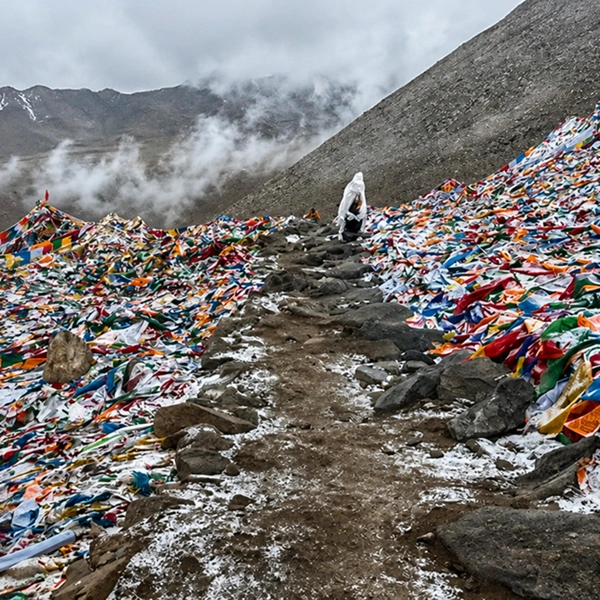
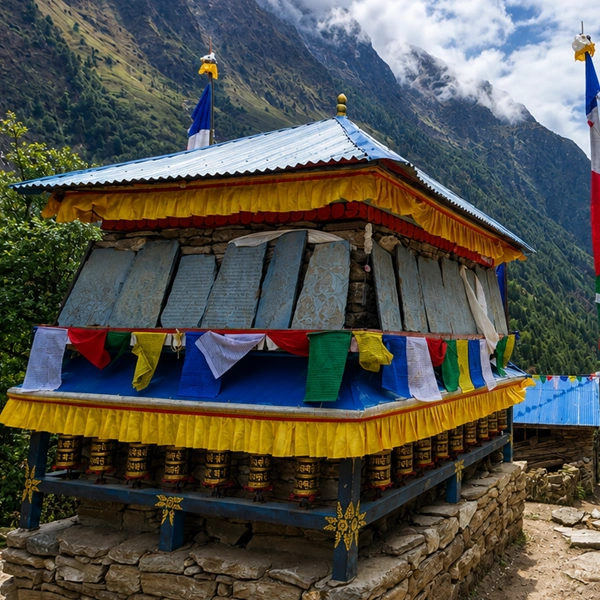
Kailash Yatra timing is determined by two calendars, neither of which is yours. The Tibetan lunar calendar fixes Saga Dawa, the festival that fills the mountain with pilgrims.
The astronomical calendar determines the full moons that Hindu tradition considers the most auspicious nights to stand at Lake Mansarovar.
Get both right, and you arrive at Kailash in the week you were meant to be there. Get them wrong, and you spend the holiest night of your journey on a bus.
We plan every Kailash departure backward from the moon, and this guide shares the method: how the two calendars interact, which Purnima suits which pilgrim, how a Horse Year changes things, and which month gives you the mountain at its clearest.
No year-specific dates appear here on purpose — the lunar calendar moves every season, so we confirm your exact festival and full-moon dates at booking.
How Kailash Yatra timing works: two calendars, one mountain
The season itself is fixed by weather: roughly May to mid-October, between the spring thaw and the first serious snow on the Dolma La Pass at 5,630 meters. Inside that window, the calendar work begins.
Buddhist pilgrims orient the season around Saga Dawa, the fourth month of the Tibetan lunar calendar. Hindu pilgrims orient it around Purnima — the full-moon days that carry their own observances from Buddha Purnima in late spring to Sharad Purnima as the season closes.
Here is the detail that catches people out. The Tibetan festival calendar and the astronomical full moon do not always agree; in some years, they miss each other by a single day. If you want the flagpole ceremony and the full moon over Mansarovar, plan to be at the mountain across that whole window, not for one night.
Full moons: why pilgrims aim for Purnima
A full-moon arrival is the single most requested timing on this pilgrimage, for reasons both devotional and practical.
In Hindu tradition, Purnima is dedicated to prayer, fasting, and ritual purification—making a Mansarovar bath or a shoreline puja on that night especially significant. In Tibetan Buddhism, the full moon of the fourth lunar month is the holiest day of the year.
The practical side is what you see. Western Tibet sits high, dry, and almost cloudless outside the monsoon, and a full moon at 4,600 meters silvers the whole plateau — Kailash's face luminous, the lake holding its reflection.
Photographers plan entire journeys around it.
The planning rule is simple, and it is the one figure to memorize. A full-moon Kailash Yatra departs Kathmandu about seven days before the full moon, because the drive and acclimatization to Lake Mansarovar take close to a week.
Work backward from the moon; never toward it.
Saga Dawa: the peak of the Kailash year
Saga Dawa Düchen falls on the full moon of the fourth Tibetan lunar month, which usually lands between late May and mid-June; the exact Gregorian date shifts every year, and we confirm it at booking.
It commemorates the Buddha's birth, enlightenment, and parinirvana in a single day, and tradition holds that the merit of every action during this month is multiplied a hundred-thousand-fold.
The festival's climax happens at Tarboche, a wide valley near the kora's starting gate.
The great prayer flagpole is lowered, stripped of its weathered flags, re-dressed with fresh offerings, and hoisted upright by the crowd to the sound of long copper horns and cymbals.
Monastic astrologers read the angle at which the pole settles as an omen for the year; when it stands true, the valley answers with the cry "Lha Gyalo" — the gods are victorious.
The trade-off is honest, and we state it to every guest. Saga Dawa week is simultaneously the most powerful and the most demanding time to travel: Darchen's limited beds fill up, vehicles are fully committed, and the permit queue lengthens sharply.
If the festival is the point, book far ahead and accept the crowds as part of it. If the mountain is the point, autumn is the wiser week.
Horse Years: when one kora counts as thirteen
In a Tibetan Horse Year, which returns every twelve years, one kora of Mount Kailash is traditionally counted as thirteen.
Buddhist tradition holds that the Buddha was born in a Horse Year, and pilgrim numbers surge accordingly — the effect compounds when a Horse Year's Saga Dawa arrives, because both multipliers land on the same mountain in the same month.
That surge has a hard administrative edge. Darchen (4,575 m) holds only a few hundred commercial beds, and the two overnight stops on the 52-kilometer Kora hold fewer than a hundred each.
In past Horse Years, Chinese authorities have responded to the Saga Dawa crush by temporarily suspending Tibet permits for Indian passport holders — historically the largest single pilgrim group — for several weeks around the festival.
If a Horse Year is your target, confirm the permit situation for your passport before you set your heart on the festival window.
Nationality also shapes how groups are formed: travelers on foreign passports are generally processed separately from Indian passport holders under the Kathmandu group-visa system, and an OCI card does not change which queue you stand in.
Our Tibet visa and permit guide for Kailash walks through the full stack.
Hindu festival alignments through the season
Several Purnimas inside the Kailash season carry their own observances, and a yatra timed to one of them gains a second layer of meaning.
All of these move with the lunar calendar, so treat the months below as the usual pattern rather than fixed dates.
Buddha Purnima — the late-spring full moon marking the Buddha's birth — traditionally opens the season on dry, pre-monsoon ground.
Guru Purnima, honoring spiritual teachers, falls in high summer at the height of the monsoon and, in the Tibetan calendar, aligns with incense offerings to Guru Rinpoche.
Janai Purnima, in the month of Shravan sacred to Lord Shiva, is an exceptional alignment for Kailash — the mountain Hindus revere as Shiva's abode. Bhadrapada Purnima opens Pitru Paksha, the fortnight of ancestral rites, giving early autumn particular weight for pilgrims who combine the kora with offerings for their forebears. Sharad Purnima closes the season as the cold arrives.
We flag these alignments to guests at the planning stage, because a pilgrim who discovers one after booking always wishes they had known.
The season month by month
Late spring opens on dry ground: clear days, hard frosts at night, reliable roads on both sides of the border, and the quietest trails of the pre-festival period. It is the connoisseur's window for visibility.
Early summer is the festival peak and the busiest stretch of the year. Conditions are generally good, though the first monsoon rains can start working on the Nepal-side border roads late in the window.
This is the period that punishes late planners—permits and Darchen beds must be secured months in advance.
The monsoon months bring rain to the Nepalese approach, with a risk of landslides on the overland border road.
The Tibetan plateau itself sits in a rain shadow and remains largely dry, which is why the yatra keeps running—the question becomes route choice, covered below.
Early autumn is, for most pilgrims, the finest stretch of the whole season. The monsoon withdraws, the air clears to exceptional transparency, the trails dry, and the summer crowds are gone.
Pitru Paksha gives Hindu pilgrims a devotional reason to be exactly here, exactly now.
Mid-autumn stays crisp and clear before the cold deepens and early snow threatens the pass.
Access restrictions have historically sometimes applied late in the season, so the earlier half of autumn's close is the safer target — and serious cold-weather gear is not optional.
Monsoon route choice: overland, fly-in, or helicopter
For monsoon-season departures, we recommend the Lhasa fly-in routing; for dry-season departures, the overland road via Kerung is excellent. The reasoning is entirely about which side of the Himalayas the weather sits on.
The overland route's exposure is Nepali: the border approach can wash out in heavy rain.
Once across, the plateau highways are paved, dry, and reliable, and the gradual overland ascent gives the best acclimatization profile of any routing before the kora's crossing of the Dolma La.
The helicopter route via Simikot and Hilsa dramatically cuts overland transit time, which is why older pilgrims favor it — but it is the most weather-sensitive option during the monsoon.
Fog grounds flights for days at a time, and we brief every guest on the genuine possibility of sitting in Simikot for two or three of them.
Our Kailash Yatra helicopter route guide covers that decision in full, and pilgrims choosing purely on weather should read our companion piece on the best time to visit Kailash.
When to book
Commit ninety days ahead as a working minimum, and further for a festival departure.
The binding constraint is not flights or lodges but the layered permit system for the restricted border prefecture where Kailash sits — its slowest clearances take weeks, run in sequence, and cannot be expedited.
Travelers entering via Nepal also need several working days physically in Kathmandu before departure for in-person group-visa processing, and because that office keeps limited weekdays, a weekend arrival can quietly cost you days.
Pilgrims over seventy carry additional medical documentation requirements, which our Kailash guide for senior citizens explains in full.
One wider planning note from our operations desk. India's great pilgrimage cycles — a Kumbh Mela above all — periodically absorb enormous flight, rail, and hotel capacity across the subcontinent, and the squeeze spills into Kathmandu.
When a major bathing season overlaps the monsoon months, book your international connections unusually early and build real buffer days rather than tight ones.
Choosing your week
If the festival is the point, aim for Saga Dawa and accept the crowds as part of what you came for — booked far ahead, with your dates confirmed against that year's lunar calendar.
If the mountain is the point, take early autumn: dry trails, empty passes, and the sharpest views of the year.
If a Purnima night at Mansarovar is the point, tell us which observance matters to you, and we will set the departure seven days ahead of that moon. And if a Horse Year is approaching, plan early of all.
Whichever week you choose, the journey is built the same way we build all our luxury travel in the Himalayas: permits lodged early, the moon timed to your arrival at the lake, and pacing that gets you over the pass well.
When you are ready to set your week, our private Kailash Mansarovar Yatra turns the calendar into an itinerary.
FAQs
How many days before the full moon should a Kailash Yatra depart from Kathmandu?
About seven. Reaching Lake Mansarovar from Kathmandu takes close to a week of driving and acclimatization, so a departure roughly seven days ahead of the full moon places you at the lake — rested and acclimatized — on the Purnima night itself. We build full-moon itineraries backward from the target moon, never forward from a convenient departure date.
When does the Saga Dawa fall at Mount Kailash?
Saga Dawa is the fourth month of the Tibetan lunar calendar, and its climax, Saga Dawa Düchen, falls on that month's full moon — usually between late May and mid-June. The Gregorian date shifts every year, and in some years the festival day and the astronomical full moon miss each other by a day. Exact dates are confirmed at booking per the lunar calendar.
What happens at the Tarboche flagpole ceremony?
The great prayer flagpole near the kora's starting gate is lowered, stripped of its old flags, re-dressed with fresh offerings, and raised by the crowd under the direction of senior lamas. Astrologers read the pole's final angle as an omen for the year ahead, and when it stands true, the valley answers with the cry "Lha Gyalo" — the gods are victorious.
What is a Horse Year kora at Mount Kailash worth?
Tradition counts one kora completed in a Horse Year as thirteen, because Buddhist belief holds that the Buddha was born in a Horse Year. The Horse Year returns every twelve years and draws the largest pilgrim numbers of any cycle, with the surge concentrated on Saga Dawa. Anyone targeting a Horse Year should book earliest of all and confirm dates against that year's lunar calendar.
Do permit rules change for Indian passport holders during Saga Dawa?
They have in the past Horse Years. Faced with Darchen's few hundred beds and a festival influx of hundreds of thousands, Chinese authorities have historically suspended Tibet permits for Indian passport holders for several weeks around a Horse Year Saga Dawa. It is a capacity measure, not a fixed rule — confirm the current position for your passport at booking before setting your heart on the festival window.
Which month has the clearest skies for the Kailash Kora?
Early autumn, once the monsoon withdraws. The air over western Tibet clears to exceptional transparency, the trails dry out, the summer crowds disperse, and the season's autumn full moon opens Pitru Paksha — giving Hindu pilgrims a devotional reason to travel in precisely the window with the finest conditions.
Can the Kailash Yatra run during the monsoon?
Yes, because the Tibetan Plateau sits in a rain shadow and stays largely dry while the rain falls on the Nepalese side. The exposure is the border approach road, which can wash out — so for monsoon departures, we recommend the Lhasa fly-in routing on paved plateau highways, with the Simikot helicopter route reserved for travelers who accept the real risk of fog delays.
Which Hindu Purnimas align with the Kailash season?
Buddha Purnima opens the season in late spring; Guru Purnima falls in high summer; Janai Purnima arrives in Shravan, the month of Lord Shiva; Bhadrapada Purnima opens Pitru Paksha in early autumn; and Sharad Purnima closes the season. All move with the lunar calendar, so the month is the pattern and the date is confirmed each year.
How early should a Saga Dawa departure to Kailash be booked?
Well beyond our standing ninety-day minimum — the festival window sells Darchen's limited beds and the region's vehicle fleet months ahead, and the layered permit stack for the border prefecture cannot be expedited.
Travelers entering via Nepal also need several working days in Kathmandu for in-person group-visa processing before departing.