What to expect on the Kailash Yatra is not what the brochures show: dormitory nights at 5,000 meters, pit toilets without running water, cash-only country past Saga, and strict bans on everything from hard suitcases to taking lake water home. We brief every guest on all of it — then engineer comfort around what can be engineered.
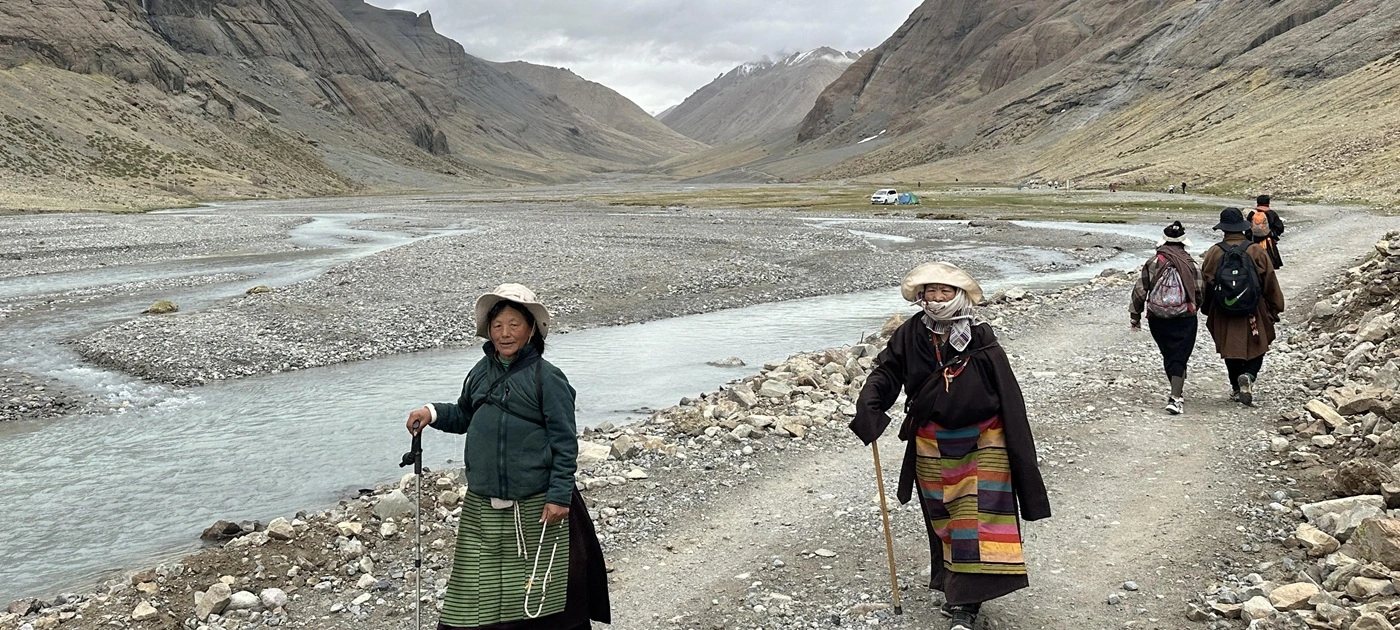
What to Expect on the Kailash Yatra

What to expect on the Kailash Yatra deserves a truthful answer, and truthful answers are rare in this market. The brochures show golden dawns on the north face. They do not show the dormitory at Dirapuk, the pit toilet at minus ten, or the moment a border scanner finds the jar of homemade ghee.
We give every guest what we call the honest briefing before a single payment is taken, on a simple theory: pilgrims who know the realities arrive prepared, stay healthy, and come home transformed rather than shocked. Pilgrims sold a five-star fantasy meet the mountain angry.
So here is that briefing, in public: documents, sleep, sanitation, bans, money, and weather — the unspoken half of the yatra — followed by the part that is our job: what a serious operator engineers around, and what no operator honestly can.
Documents First, Always: The Rule the Stranded Learn Late
The hardest rule of this pilgrimage is administrative, and this season proved it publicly: reports this summer described dozens of Indian pilgrims stranded in Kathmandu after operators began journeys expecting visas and permits to arrive en route — prompting an official advisory from India's Ministry of External Affairs warning against traveling without confirmed documentation in hand.
Our policy predates the advisory and will outlast it: no guest departs home until the physical papers — visa and the full Tibet permit stack — are verified and held. Not "approved in principle." Held.
The system allows no shortcuts anyway. Permits for the far west take weeks, the process is digitized end to end, and final authority sits with border officials and on-site staff who can turn a pilgrim back without appeal or refund. The ninety-day booking rule we repeat across every guide exists precisely so this section of the briefing stays boring.
The Age Question, Answered Honestly
Age rules for Kailash are layered, have tightened, and shift between seasons and nationalities — which is why we refuse to publish a single number and call it settled. The permit system carries an upper cap around seventy; stricter caps have been reported for some passports on some routes; and separate from permits entirely, on-site officials and guides hold discretion over who proceeds onto the kora itself, monitoring age and physiological readings without obligation to compensate a veto.
What this means practically: the deciding documents are your passport and your medical file, and the deciding conversation is the one we have with the permit authorities for your specific case, well before booking. Our senior citizens' guide covers the medical side in depth — and, crucially, the dignified alternatives that exist when the trekking permit does not: the lake-focused yatra, the Aerial Darshan, and the Limi Lapcha viewpoint.
No pilgrim we serve discovers an age rule at a border. That is the entire promise.
The Sleep You Will Actually Get
The kora's overnight stops are guesthouses in the loosest sense: uninsulated stone and mud-brick rooms, dormitory layouts sleeping four to twelve, bedding of uncertain history, and drafts that ignore walls. There is no heated lodge on the mountain; anyone who implies otherwise is selling something that does not exist at 5,000 meters.
Altitude then edits the sleep itself. Above 5,000 meters, many travelers breathe in the cyclical pattern physicians call periodic breathing — quick breaths, then a pause that startles you half-awake — while the same thin air quietly deletes your appetite just when your body is burning fuel fastest.
Our countermeasures are unglamorous and effective: our own clean bedding systems and sleeping bags rated well below freezing laid over every guesthouse bed, private or small-share rooms wherever inventory allows, and a kitchen policy of carbohydrate-dense meals served warm and eaten deliberately, appetite or not. You will still sleep at altitude, lightly. You will sleep clean, warm, and fed.
Toilets, Water, and the Hygiene Cascade
Here is the paragraph competitors omit: sanitation on the kora and at the lake is primitive. High camps use communal pit toilets — openings over deep pits, no flush, no light worth trusting — and because plumbing freezes solid at these temperatures, there is no running water to wash with anywhere on the circuit. Around Mansarovar, basic squat facilities and open ground do the same work.
This is not merely unpleasant; at altitude it is a medical mechanism. Cold, dry air cracks the body's mucosal defenses while hypoxia dampens immunity, so poor hand hygiene converts efficiently into gastroenteritis — and diarrhea at 4,500-plus meters strips fluids so fast it can cascade into the serious altitude illnesses our altitude guide describes. A stomach bug down low is a bad day; up here it is a risk multiplier.
So hygiene travels as equipment. Every guest kit carries alcohol sanitizer and biodegradable wipes as a complete substitute for washing; our crews run sanitation stations at every meal; drinking water is boiled from source and then chemically or UV-treated as a second barrier — double-treated, always. And yes, we carry our own toilet tent to the camps. It is the least spiritual item on the packing list, and the one guests bless most often.
What You Cannot Bring
The banned list surprises everyone, so we brief it early. Hard-shell and wheeled suitcases are barred outright — rigid frames bruise the yaks and mules that carry loads, and wheels die on the first boulder field — so everything travels in soft weather-resistant duffels under the weight cap, and we run the pack-check in Kathmandu.
Aerosol sprays stay home (canisters misbehave at altitude), as do single-use plastic bottles, banned under local environmental law; an insulated metal thermos replaces them and keeps water liquid where bottles freeze.
Biosecurity at the border removes fresh fruit, vegetables, seeds, meat, and unpasteurized dairy — including, to the annual heartbreak of many pilgrims, homemade ghee, which is confiscated as an unpasteurized animal product. Commercially sealed foods pass: energy bars, instant noodles, vacuum-packed dry fruit. Bring the sealed version of everything you love.
Electronics carry the sharpest rules. Satellite phones and messengers are strictly prohibited under Chinese law, with penalties that reach confiscation, fines, and worse — and even passive GPS sports watches, though legal, routinely trigger long secondary screenings because scanners cannot instantly tell receivers from transmitters.
Ours ride in checked duffels through every checkpoint, and the kora proceeds as it always has: a complete disconnection, cellular silence included, that most guests rank afterward among the journey's gifts.
What You Cannot Take Home
The rule that moves pilgrims most arrived recently and reverses centuries of practice: nothing of the sacred landscape leaves it. Mansarovar water, Kailash stones, soil, pebbles — all are under a complete export ban, enforced at checkpoints with baggage scanners and physical searches. The same regulatory turn ended shoreline immersion and open-air fire rituals at the lake: bathing in Mansarovar directly is prohibited, havans and incense at the shore are barred, and the compliant devotions are silent prayer at the waterline and symbolic cleansing with collected water, performed in shelter away from the shore.
We hold two thoughts about this at once, and say both to guests. The rules protect a fragile place from the erosion of tens of thousands of annual visitors, and they are the law of the land you are entering — so we design ritual within them, beautifully, rather than test them. And the essence travels anyway: what the yatra gives was never in a bottle.
Where authorized jal is available through licensed channels, we arrange it. Where it is not, the mountain's answer is the one it has always given: come, and carry it home inside.
The Money Reality: Three Currencies, One Rule
The route crosses three currency zones, and the mistakes are predictable enough to list. Indian rupees work for small spending in Nepal — but INR notes of 200, 500, and 2,000 are illegal to carry in Nepal and are confiscated; bring only small denominations or exchange on arrival.
Nepali rupees cover everything on the Nepal side and nothing beyond it. Inside Tibet, Chinese yuan is the only money that exists in practice: past Saga there are no ATMs, no card terminals, and no mobile wallets that will know your name.
Budget the yuan honestly. Pony and porter hire on the kora, guide-team tips, and any emergency transport are cash transactions, and pony rates climb steeply in peak windows — carrying the equivalent of several hundred US dollars in yuan is prudence, not extravagance.
Our system removes the guesswork: a currency briefing and exchange stop in Kathmandu, a written cash plan per guest, and our crew handling every on-mountain payment except your personal tips, which remain — properly — yours to give.
The Waiting: Weather Owns the Schedule
Somewhere on almost every yatra, you will wait. The Simikot–Hilsa air corridor flies only in clear, calm conditions; the overland borders answer to monsoon landslides; and when weather closes a link, hundreds of pilgrims can pool in villages never built to hold them — a crush that worsens sharply around full-moon dates, when demand spikes and flight slots are systematically oversold across the market. Our best-time guide maps the seasonal pattern; our helicopter-route guide details the corridor's mechanics.
Design absorbs what forecasts cannot. We hold three to four true buffer days on air-dependent itineraries, position the buffers where delays are recoverable, never book the oversold full-moon crush, and carry our own reserves — food, oxygen, and accommodation arrangements — so a stranded day with us is a rest day, not a scramble.
The briefing's last honest line: sometimes the mountain says not yet. Pilgrims who arrive knowing that tend, strangely, to be the ones it lets through.
What We Engineer, and What We Prepare You For
Read back through this list, and it sorts itself into two columns. Engineerable: bedding, sanitation, food safety, water treatment, cash logistics, gear compliance, buffer architecture, document certainty. Those we solve — that is what the word luxury means at 5,000 meters, and it is all in the operational standards behind our private Kailash Mansarovar journey.
Not engineerable: the altitude in your lungs, the dormitory walls, the pit toilet's existence, the ban on bottling the sacred, the weather's veto. Those we prepare you for, truthfully, months out — because the pilgrims who struggle at Kailash are almost never the ones who knew.
That is the whole philosophy, and it extends across all our luxury travel in the Himalayas: we would rather lose a booking to honesty than win one with a brochure the mountain will contradict. Ask us anything about the realities above — the first call is exactly this briefing, made personal.
FAQs — Kailash Yatra Realities
What are the toilets like on the Kailash kora?
Basic pit toilets — openings over deep collection pits, communal, unheated, and without running water, because plumbing freezes at these altitudes. Around Mansarovar, simple squat facilities and open ground serve the same role. Serious operators compensate with carried toilet tents, sanitation stations at meals, and hygiene kits of alcohol sanitizer and biodegradable wipes, which function as your complete substitute for washing on the circuit.
Can you take Mansarovar water home?
No. A complete export ban now covers Mansarovar water along with soil, stones, and pebbles from the Kailash region, enforced at border checkpoints with baggage scanners and searches. Direct bathing in the lake and shoreline fire rituals are likewise prohibited; the compliant devotions are silent prayer, symbolic cleansing with collected water away from the shore, and — where available — authorized jal arranged through licensed channels.
Why is hard-shell luggage banned on the Kailash Yatra?
Because loads travel on yaks and mules, rigid frames cause soft-tissue and bone injuries, while plastic wheels shatter on the unpaved, boulder-strewn trails within hours. All gear must pack into soft-sided, weather-resistant duffels within the weight cap. Reputable operators run a pack-check in Kathmandu before departure so the rule never becomes a border-day surprise.
Is there phone signal on the Kailash kora?
No — cellular coverage disappears for the full three-day circuit, and satellite phones and messengers are strictly prohibited under Chinese law, with serious penalties. Even passive GPS sports watches can trigger lengthy secondary screening at checkpoints and are best carried in checked duffels. Treat the kora as a complete disconnection; most pilgrims come to count that silence among the journey's gifts.
What food is served on the Kailash Yatra?
Strictly vegetarian, carbohydrate-forward meals — flatbreads, rice, lentils, noodle soups — prepared by the expedition kitchen crew, designed to fuel bodies whose appetites altitude suppresses. Drinking water is boiled from glacial sources and should be chemically or UV-treated as a second barrier. Fresh produce, meat, and unpasteurized dairy (homemade ghee included) cannot cross the border; bring sealed commercial snacks from home.
What cash should you carry for the Kailash Yatra?
Three currencies, one rule: cards stop working. Small-denomination Indian rupees for Nepal only (INR 200, 500, and 2,000 notes are illegal in Nepal and confiscated), Nepali rupees for the Nepal side, and Chinese yuan for everything in Tibet — where no ATMs or card terminals exist past Saga. Budget several hundred US dollars' worth of yuan for pony hire, tips, and contingencies, and let your operator run a written cash plan.
Why can't you bring ghee into Tibet?
Biosecurity: border controls prohibit unpasteurized animal products to prevent agricultural disease transmission, and homemade ghee — being exactly that — is confiscated on inspection, along with fresh fruit, vegetables, seeds, and meat. Commercially produced, sealed, shelf-stable foods pass without issue, so pilgrims who want ghee for ritual or comfort should carry a factory-sealed commercial version instead.
What happens if bad weather delays the Kailash Yatra?
The schedule waits — flights on the Simikot–Hilsa corridor fly only in clear conditions, and monsoon landslides periodically close the overland borders, occasionally pooling large numbers of pilgrims in small staging villages. Sound itineraries carry three to four genuine buffer days, avoid the oversold full-moon windows, and travel with reserve food, oxygen, and accommodation plans so a weather day becomes a rest day rather than an emergency.
Need Help? Call Us+977 9851013196orChat with us on WhatsApp
Need Help? Call Us+977 9851013196