The best time to visit Mount Kailash is September, when post-monsoon skies give the year's clearest views of the peak, with late May to June as the great spiritual window around Saga Dawa. July and August bring monsoon risk to the approach roads, and November through March the region closes outright. Here is the full calendar, month by month.
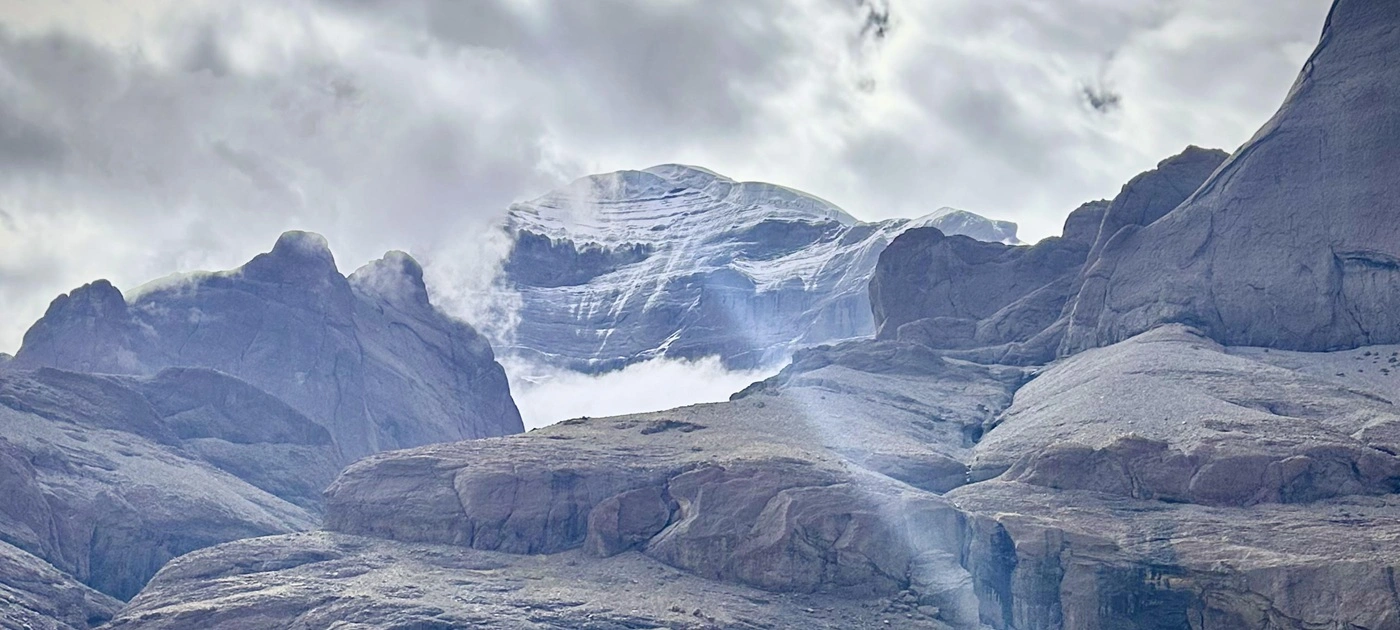
Best Time to Visit Mount Kailash: A Month-by-Month Guide

The best time to visit Mount Kailash has a short answer and a long one. Short: September, when the washed post-monsoon atmosphere delivers the clearest view of the mountain of the year, with late May to June as the spiritual high season around Saga Dawa.
Long: it depends on whether you are chasing visibility, festival energy, solitude, or — in a Horse Year like this one — merit itself.
The long answer matters because Kailash punishes bad timing harder than almost any destination we run. The kora crosses the Dolma La at about 5,630 meters; Darchen's winter nights fall to minus twenty and beyond; and the roads in from Nepal answer to the monsoon whether your permits do or not.
Here is the whole calendar — weather, festivals, borders, and paperwork — the way we walk clients through it on the first call.
Darchen by the Numbers: The Monthly Table
Historical averages for Darchen, the kora's base at about 4,575 meters, tell most of the seasonal story at a glance:
| Month | Avg high/low (°C) | Precipitation | Conditions | Status |
|---|---|---|---|---|
| January | −4 / −16 | 7 mm snow | Severe freeze, extreme wind | Closed |
| February | −3 / −14 | 10 mm snow | High winds, sub-zero days | Closed |
| March | 0 / −10 | 15 mm snow | Windiest month; iced passes | Closed/restricted |
| April | 6 / −7 | 2 mm | Thaw begins; clear, cold nights | Restricted opening |
| May | 12 / −3 | 24 mm | Dry trails, high clarity | Highly favorable |
| June | 14 / 0 | 32 mm | Warmest days, long light | Highly favorable |
| July | 14 / 3 | 54 mm | Cloud cover, muddy trails | Marginal |
| August | 13 / 3 | 125 mm | Peak rain; border landslide risk | Marginal |
| September | 11 / −1 | 15 mm | Washed skies, dry trails | Optimal |
| October | 6 / −8 | 20 mm | Clear early; storms late month | Favorable (first half) |
| November | 1 / −12 | 7 mm snow | Freeze transition, rising wind | Closed |
| December | −2 / −15 | 5 mm snow | Severe cold, snowed passes | Closed |
Two footnotes carry the table's real weight. First, these are Darchen figures — the Dolma La runs colder and wilder than every row above, in every month. Second, the plateau sits partly in the Himalaya's rain shadow, so the August number that matters most isn't Darchen's rain — it's what that same monsoon does to the roads through Nepal.
Spring (April–May): The Awakening
April opens the gate, barely. Skies are often glass-clear, and the plateau is at its emptiest, but nights sink well below freezing, the shaded northern descent from the Dolma La holds hard-packed ice, and kora guesthouses are only partially staffed. We run April only for experienced, well-equipped parties who value solitude over comfort.
May is the true spring: days near twelve degrees, dry trails, exceptional visibility, and the season's services fully awake. It is also when the spiritual calendar begins to stir, with Saga Dawa's window typically opening in late May.
Spring packing is winter packing with sunscreen: high-loft down and full thermals alongside serious sun protection, and light waterproof overboots earn their place on the icy descent early in the season. Cold, dry air also rewards a face covering for the airways — a small item guests thank us for at 5,000 meters.
Summer (June–August): Warmth With an Asterisk
June is the summer sweet spot: the year's warmest days, the longest light, dry negotiable trails, and — depending on the lunar calendar — festival energy carrying over. If your dates must fall in summer, make them June.
July and August are the asterisk. The rain shadow spares Ngari the deluge that soaks southern ranges, but cloud regularly hides the peak — a genuine heartbreak for pilgrims who crossed the world for darshan — and August's rains turn kora paths greasy.
The graver problem sits behind you: the monsoon hammers the Nepal approach corridors, where landslides and washouts routinely close roads and ground flights.
Summer gear shifts to fast-drying layers under real rain protection: wicking shirts, a packable down for the pass (carried in every month of the year — that rule never lapses), and a breathable waterproof shell that has been tested, not just purchased.
Autumn (September–October): The Premier Window
September is the finest month on the Kailash calendar, and it isn't close. The monsoon's last act is to rinse the sky: dust and haze vanish, the peak stands in hard-edged clarity for days at a stretch, trails dry out, and the Saga Dawa crowds are a memory.
Days hold near eleven degrees; nights dip just below freezing; guesthouses run at their most reliable. Photographers, trekkers, and quiet-seeking pilgrims should simply book September and stop deliberating.
October's first half extends the gift with sharper cold and thinner crowds. Then the door swings: past mid-month, night temperatures dive, cyclonic snowstorms begin stalking the passes, and kora guesthouses shutter one by one.
Autumn packing is the hybrid: mid-weight layers for the valleys with full winter insulation — heavy down, insulated gloves, warm headwear — carried on the trail without exception, because an October storm does not consult the averages.
Winter (November–March): The Shutdown
There is no winter Kailash season, and honesty requires saying it flatly. Nights reach minus twenty to minus thirty, gale-force winds stack brutal wind-chill on top, snow closes the passes and roads, water sources freeze solid, guesthouses lock their doors — and the permit system stops issuing anyway. The region is closed to international travelers, and the mountain keeps those months for itself.
March deserves its own line: beyond the weather (it is the windiest month of the year), the region has historically remained closed through March for administrative reasons, with access resuming in spring. Recent seasons have seen that window shift — this year permits reportedly opened in mid-March — but planners should treat March as unavailable until an operator confirms otherwise for the specific season.
The practical rule we give clients: the realistic booking canvas runs from late April to mid-October, with two peaks painted on it — one spiritual, one meteorological.
Saga Dawa and the Spiritual Calendar
For a great many pilgrims, the calendar that decides everything is lunar. Saga Dawa, the holy month commemorating the Buddha's birth, enlightenment, and parinirvana, falls in the fourth Tibetan month — typically late May into June — and peaks on its full-moon day, Saga Dawa Düchen.
At Kailash, the festival centers on Tarboche, where the great flagpole is lowered, re-dressed in fresh prayer flags, and raised again before thousands, with a continuous river of pilgrims turning the kora and dawn charity offered in the old custom.
Layered over the annual cycle runs the twelve-year one: in a Tibetan Horse Year, tradition counts a single kora as thirteen, and this Fire Horse year — the rarest sixty-year form of it — runs until the Tibetan New Year in early 2027.
The quiet implication is the best planning insight of the season: a September kora this autumn combines the year's finest weather with the Horse Year's multiplied merit, without the Saga Dawa crush. It is the window we are recommending to every pilgrim who asks.
Future festival timing follows the lunar calendar, so exact Gregorian dates shift each year — the upcoming windows fall in mid-June 2027, early June 2028, late May 2029, and mid-May 2030 — and we confirm precise dates at booking.
Festival-window departures need everything earlier: Darchen beds, vehicles, and permit queues all stretch to capacity, and three to four months of lead time is the honest minimum.
The Borders: Where the Monsoon Actually Bites
The overland gates between Nepal and Tibet are the calendar's hidden variable. The primary crossing at Rasuwagadhi–Gyirong threads a steep river gorge that the monsoon treats roughly: recent seasons have brought landslides on the approach road and, last summer, a flood that took out the border bridge entirely, closing the corridor for months before a temporary bridge restored crossings around the turn of the year.
The route runs — we use it constantly, as our Kerung-route guide details — but in July and August its reliability is a weather forecast, not a fact.
The old Zhangmu crossing has been pressed back into occasional service as a backup, with its own quirk: vehicles cannot drive the final stretch to the border, so travelers transfer at Nyalam to a small pool of designated shuttles, which can stall large groups for hours.
Our operational translation is simple: avoid overland border transit in July and August wherever the itinerary allows, hold buffer days when it doesn't, and let us confirm the live status of both crossings at booking — it changes, and we track it.
Permits, Visas, and the Clock
Paperwork sets the true earliest date you can go, whatever the weather says. Kailash sits in a sensitive border prefecture, so the full stack runs deep: the Tibet Travel Permit as the baseline, the Alien's Travel Permit beyond Lhasa, and the slow military and foreign-affairs clearances for the far west — the last of these needing several weeks on their own, with no expediting and no manual override in a now fully digitized system where even a passport-photo mismatch can void an entry at the e-gates.
Visa rules for Nepal-side entry have recently shifted and deserve a live check rather than an old blog's memory: the traditional Kathmandu group visa (issued to groups traveling together, and which cancels any individual Chinese visa already in your passport — frequent China travelers, guard that ten-year visa) now reportedly sits alongside newer pathways, including entry on individual Chinese visas and visa-free access for several dozen nationalities.
The permits, however, exempt no one: every traveler, visa-free or not, still needs the full Tibet stack arranged through a licensed operator. We confirm the current rules for your passport at booking, because they are genuinely in motion.
The timing rule survives every policy shift: commit ninety days out. It clears the slowest permit with room to spare, beats the festival queues, and turns every deadline in this section into someone else's problem — specifically, ours.
The Verdict, Window by Window
Choose September for the clearest mountain, dry trails, reliable services, and — this year — Horse Year merit without Horse Year crowds; it is the best all-around answer we can give.
Choose late May–June for Saga Dawa's once-a-year spectacle at Tarboche, booked three to four months deep and priced accordingly. Choose June when summer is your only canvas, early October for sharp solitude, and nothing at all from November through March, when the mountain is closed and means it.
Then pair the window with the right way in — our comparison of the three Kailash routes matches each season's realities to each corridor — check your body against our altitude guide, and let the deeper pull of the place, told in our Mount Kailash mysteries, do the rest.
When the window is chosen, our private Kailash Mansarovar journey holds it: permits lodged ninety days out, borders tracked live, and the standards we keep across all our luxury travel in the Himalayas doing the quiet work underneath.
FAQs — Timing the Kailash Journey
What is the best month to visit Mount Kailash?
September, decisively. The retreating monsoon rinses the atmosphere, giving the year's clearest views of the peak, while trails dry out, guesthouses run reliably, and the Saga Dawa crowds are long gone. Days average around eleven degrees with nights just below freezing. Late May to June is the runner-up — warmer and festival-charged, but busier and with lingering ice possible on the Dolma La early in the window.
Can you do the Kailash kora in winter?
No. From November through March the region is effectively closed: nights fall to minus twenty or thirty, gales create extreme wind-chill, snow blocks the passes and roads, guesthouses shut, water sources freeze, and the permit system stops issuing. This is not a hardy-traveler challenge but an administrative and physical shutdown. The realistic season runs from late April to mid-October.
What is the weather like at Darchen in September?
The year's best: daytime highs around eleven degrees, nights dipping to about minus one, roughly 15 mm of precipitation for the whole month, and post-monsoon air so clean the peak stands in hard-edged clarity for days at a stretch. Carry full winter insulation for the Dolma La regardless — the pass runs far colder than Darchen in every month of the year.
When is Saga Dawa at Mount Kailash?
In the fourth month of the Tibetan lunar calendar — typically late May into June — peaking on the full-moon day, Saga Dawa Düchen, when the great Tarboche flagpole is re-dressed and raised before thousands of pilgrims. Because the lunar calendar shifts against Gregorian dates each year, exact festival dates move; we confirm them at booking and recommend reserving three to four months ahead for festival windows.
Is the Kailash region open in March?
Plan as if it is not. March combines the year's fiercest winds with iced passes, and the region has historically remained closed to foreign travelers through the month for administrative reasons, with permits resuming in spring. Recent seasons have seen that window flex, so an operator can confirm the live position for a given year — but no responsible itinerary should depend on March access.
Does the monsoon affect the Kailash Yatra?
Yes — mostly from behind. The plateau itself sits partly in the rain shadow, so August's rain at Darchen is modest, though cloud often hides the peak. The real damage lands on the approach corridors through Nepal, where July–August landslides and floods routinely close border roads and ground flights, including a recent washout of the main border bridge. Avoid overland border transit in those months where possible.
How far in advance should you book a Kailash tour?
Ninety days is our working rule, and it is not padding: the military and foreign-affairs clearances for western Tibet take several weeks with no expediting, the permit system is fully digitized with zero manual override, and festival-window inventory in Darchen sells out three to four months ahead. Book at ninety days and every deadline in the process becomes routine instead of a gamble.
Why is a Horse Year special for the Kailash kora?
Tibetan tradition holds that a single kora completed in a Horse Year carries the merit of thirteen — a belief that reliably surges pilgrim numbers once every twelve years, and even more in the rare Fire Horse form of the cycle. A Horse Year runs the full Tibetan lunar year, not just the festival season, so autumn koras within it earn the same multiplied merit with far smaller crowds.
Need Help? Call Us+977 9851013196orChat with us on WhatsApp
Need Help? Call Us+977 9851013196