The Kailash Yatra for senior citizens is entirely achievable with the right design: age limits run to 70 on official routes and case-by-case beyond with private operators, medical clearance is the true gatekeeper, and the pony rule, rest-day pacing, and two remarkable no-trek alternatives — the Aerial Darshan and Limi Lapcha — put the mountain within reach of almost every devotee.
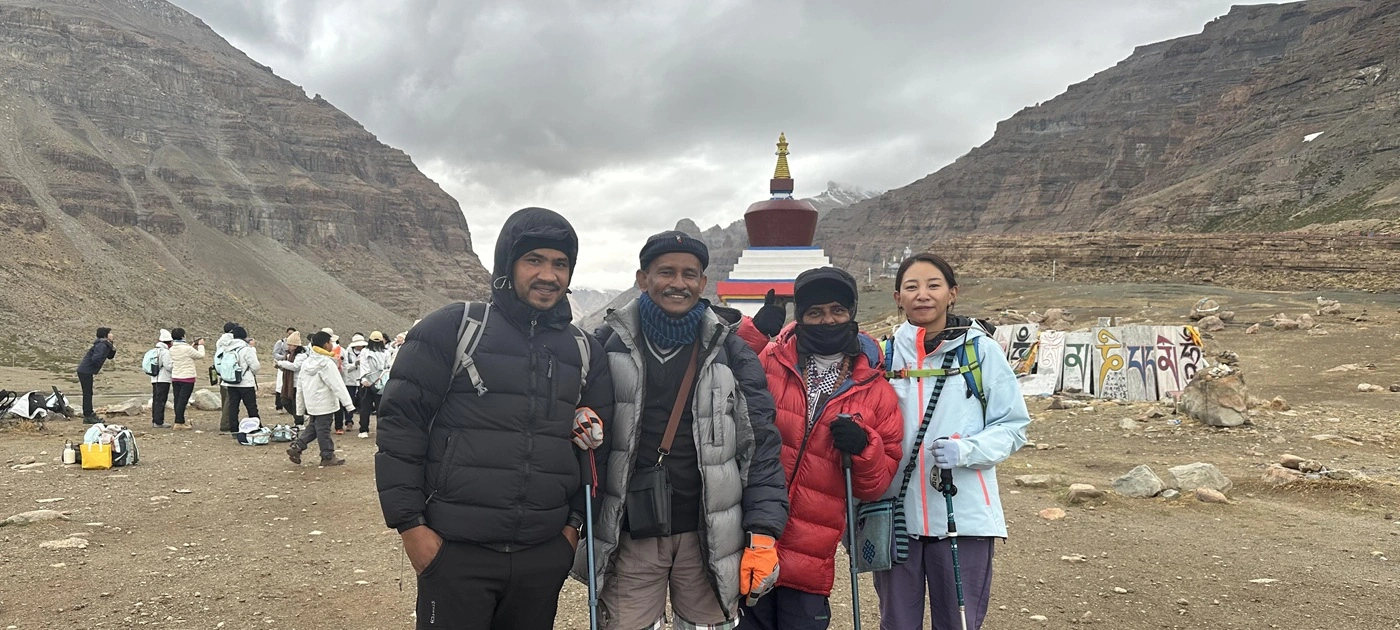
Kailash Yatra for Senior Citizens: The Complete Safe-Passage Guide

The Kailash Yatra for senior citizens is the question our Kathmandu office answers most, and this Tibetan Fire Horse year — the once-in-sixty-years alignment that tradition holds — has multiplied the askers. Sons book for fathers; grandmothers call for themselves.
The answer we give is careful and genuinely hopeful: age on paper matters far less than heart, lungs, and design.
The yatra crosses the Dolma La at about 5,630 meters, where oxygen falls to roughly half of sea level. That is a serious environment for any body, and an unforgiving one for unprepared older bodies.
But between the right route, honest medical screening, pony support, and — for those who should not trek at all — two dignified alternatives most operators never mention, nearly every devotee can meet the mountain in some true form. Here is the complete map.
Age Limits: What the Rules Actually Say
Two systems govern older pilgrims, and they differ meaningfully. The Government of India's official routes via Lipulekh and Nathu La cap participation strictly at 70 years, enforce a body-mass-index ceiling of 25, admit Indian passport holders only, and select through an oversubscribed lottery.
The Nepal-side private routes — the Kerung road and the Simikot–Hilsa helicopter corridor — follow a recommended limit of 70 but assess older applicants case by case: healthy pilgrims into their early seventies are regularly cleared with comprehensive medical certification, prior altitude experience, and demonstrated conditioning, and the fitness view is holistic rather than a single BMI number.
These routes are open to Indian nationals, NRIs, OCI and PIO cardholders, and foreign passport holders alike, with guaranteed booking through licensed operators rather than a lottery.
Our own position sits between rule and judgment: we have taken fit pilgrims past seventy over the pass, and we have counseled fit sixty-year-olds toward the lake instead. The certificate opens the conversation; the whole clinical picture decides it.
Medical Clearance: The True Gatekeeper
Every senior pilgrim needs formal clearance from a physician, dated within three months of travel, declaring fitness for sustained exertion above 5,000 meters — and the tests behind that letter are not paperwork; they are the safety system.
The standard panel: a resting and stress ECG to surface silent cardiac trouble, blood pressure consistently controlled below 140/90, resting oxygen saturation of 95 percent or better at sea level, a chest X-ray with spirometry for the lungs, and blood work covering hemoglobin, glucose, and kidney function.
Some conditions close the door absolutely, and kindness requires saying so plainly: a heart attack, bypass, or stenting within two years; unstable angina or uncontrolled arrhythmia; moderate-to-severe COPD or uncontrolled asthma; brittle diabetes; severe anemia; seizures within the past year; recent major surgery.
Others — well-controlled hypertension or type 2 diabetes, mild seasonal asthma, stable treated conditions — are compatible with the yatra given specialist sign-off and disciplined management on the road.
One caution the brochures never carry: a smooth high-altitude trip years ago is not a guarantee now. Aging changes the cardiovascular system's reserve, and sleep apnea in particular worsens sharply at altitude. Screen as if it were the first time, because physiologically it is.
The Twelve-Week Runway
We ask every senior guest to treat the three months before departure as part of the yatra itself. The first month builds the aerobic base: brisk daily walking from three kilometers toward five, with attention to deep, rhythmic breathing.
The second adds the vertical — an hour of daily walking plus stair sessions several times a week, four or five floors up and down, the closest home rehearsal for the pass that exists.
The final month is the dress rehearsal: two long walks of eight to ten kilometers weekly, some of them carrying a light five-kilogram daypack, plus gentle squats and lunges for the muscles that will brake the descent.
Fifteen minutes of daily pranayama — alternate-nostril breathing in particular — measurably improves the calm, efficient breathing that altitude rewards.
None of this requires athleticism. It requires twelve weeks of showing up, which is, fittingly, also what the kora requires.
The Senior Route: Flights In, Rest Days Held
For most older pilgrims, we recommend the helicopter corridor, precisely because it replaces days of punishing plateau driving with short flights — provided its rest architecture is kept sacred.
The sequence: Kathmandu to low, warm Nepalgunj for final preparations at 152 meters; the morning mountain flight to Simikot at 2,910 meters and a mandatory night there; the short helicopter to the Hilsa border; then the drive to Taklakot, where we hold seniors for two full nights, not one, before the lakes.
Our full helicopter-route guide covers the mechanics; the senior variation is simply more patience at every rung.
The route's honest caveats stand: weather grounds these flights regularly, so schedules need buffer days and ten days of personal medications carried against delay; luggage rides in soft duffels under the strict helicopter weight cap; and there are no ATMs beyond Nepalgunj, so cash in yuan and rupees travels with you.
Seniors should also avoid full-moon departure windows, when crowds swell and delays compound at Simikot and Hilsa.
For seniors with more time than urgency, the Kerung road remains a gentler physiological staircase, and our route comparison lays out the whole choice.
On every route, the discipline is identical: three to four liters of fluids daily, no alcohol, no daytime naps at altitude (they quietly lower blood oxygen), and oximeter checks every day without exception.
On the Kora: The Pony Strategy and the One Hard Rule
Seniors cleared for the full kora walk it differently, and should. The core tool is the pony-and-handler hired at Darchen — from approximately USD 150 to 300 for the circuit — carrying the pilgrim through the long first-stage approach and the grinding ascent toward the Dolma La, saving the heart precisely where the trail spends it.
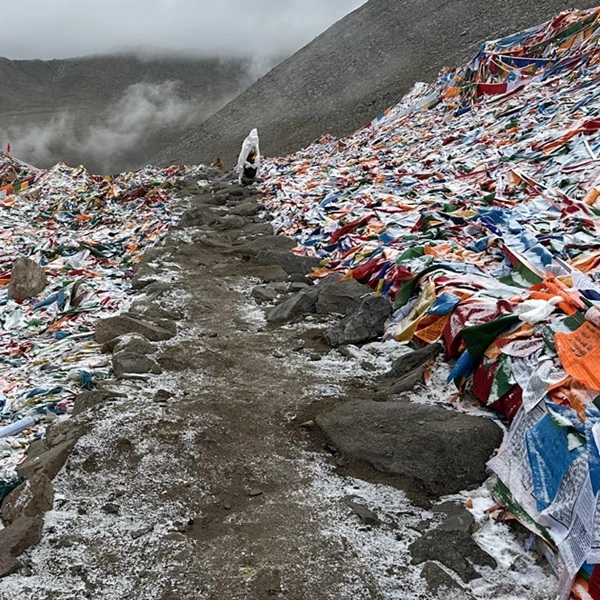
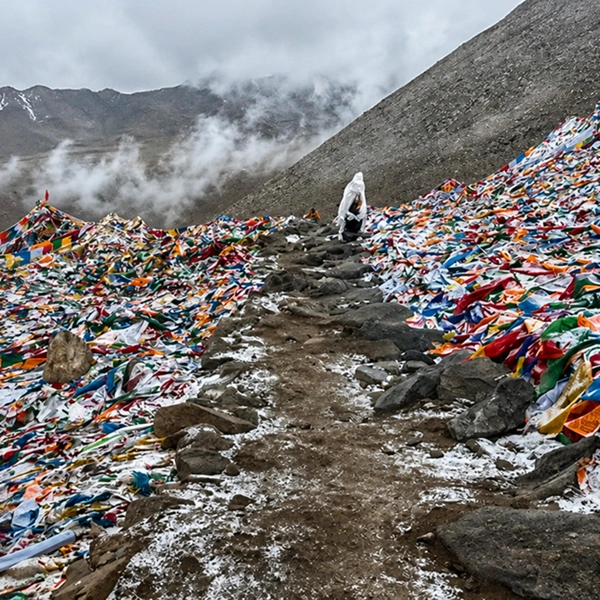
Then comes the rule that shapes everything, and no operator can waive it: at the top of the pass, everyone dismounts. The steep scree descent is closed to riders because a laden animal's slip there is unsurvivable arithmetic, so every pilgrim — at seventy as at twenty-five — walks that section on foot to the valley floor.
Our deep guide to the Dolma La Pass tells the whole crossing honestly; for seniors, the practical meaning is this: knees, balance, broken-in boots, and trekking poles are non-negotiable, and the descent, not the climb, is what the twelve-week runway truly trains for.
Pace is the final protection. Our guides walk seniors on a fixed slow rhythm with scheduled rests, and no one races anyone. The mountain counts circuits, not hours.
The Mansarovar Yatra: Complete Without the Kora
Here is the counsel that surprises families most: a yatra that stops at the lake is not a lesser yatra. Lake Mansarovar at 4,590 meters offers the pilgrimage's deepest rituals with a fraction of the kora's physical demand — darshan of Kailash across the water, pujas at the shoreline, the parikrama of the lake made respectfully by vehicle, and Chiu Gompa's cave of Guru Rinpoche an easy visit.
Ritual practice at the lake now follows environmental rules that older pilgrims should know before they come, as enforcement has tightened in recent seasons: direct immersion in the lake is restricted, so the compliant bath is symbolic — clean lake water collected and poured in a sheltered spot away from the shore; soaps and detergents are banned near the water; open-air fire rituals at the shoreline are prohibited, while silent prayer and mantra face no limit; and carrying lake water, stones, or soil across the border is not permitted, with licensed operators occasionally able to provide authorized jal instead. We brief every group on the current rules at booking, because they continue to evolve.
Held this way, the lake yatra is not a consolation. Several of our most moved guests never walked a step of the kora.
When Tibet Itself Is Off the Table: Two Remarkable Alternatives
For devotees whose health closes the border — or who simply cannot face the logistics — two options deliver true darshan without a Chinese visa, a permit stack, or a single high-altitude night.
The Kailash Aerial Darshan flies from low-lying Nepalgunj in a pressurized aircraft to around 27,000 feet, above the summit itself, circling for clear window views of Kailash and Mansarovar while the body never leaves sea-level comfort. There is no age limit, no altitude exposure, and the short package typically includes a pre-flight havan ceremony. Pilgrims with pacemakers, respiratory limits, or advanced age — travelers no responsible operator could take to Darchen — have wept at that window.
The Limi Lapcha journey is the overland cousin: a high-clearance jeep route through Nepal's remote Limi valley in Humla to the Lapcha La pass near 4,935 meters, where the south face of Kailash and the sheet of Mansarovar stand in full view just kilometers beyond the border — with traditional puja performed right at the viewpoint, entirely on Nepali soil, no Chinese paperwork involved. It carries real altitude for a day, so screening still applies, but it trades the kora's three days for a viewpoint and a drive.
We plan both, often for the elder members of a family whose younger generation walks the kora the same week. Everyone meets the same mountain.
Packing and the Border: The Unromantic Essentials
The border realities deserve one plain paragraph, because they trip up seniors disproportionately. Luggage travels in soft duffels only — hard rolling cases are refused for the yaks' and porters' sake.
Every medication crosses in original labeled packaging with a matching signed prescription, and some common Indian and Western remedies are restricted in China — codeine-based syrups and pseudoephedrine decongestants chief among them — so the medical kit is built with your physician against the permitted list, with altitude and antibiotic standards like acetazolamide, paracetamol, and ibuprofen posing no issue. Satellite communicators and drones are prohibited; standard phones and cameras are fine; any imagery or literature of a political or sensitive religious nature must stay home, full stop.
Clothing follows the three-layer law with no cotton anywhere against the skin: wicking merino base, insulating fleece or down, and a windproof waterproof shell, supplemented for seniors by dedicated sleeping socks, a warm beanie, and a silk liner for lodge bedding. Insurance must explicitly cover helicopter evacuation at altitude — evacuation charters run from roughly USD 25,000, and the modest specialized rider that covers them is the cheapest important thing on the packing list.
Every one of these details is handled in our pre-departure sessions in Kathmandu. Seniors travel best when the only surprises left are the mountains.
The Honest Summary
A senior citizen with a clear cardiac and pulmonary screen, twelve weeks of conditioning, the helicopter route's rest days held intact, and a pony to the pass can complete the full Kailash kora — the descent walked slowly on good knees and poles.
A senior who should not cross the Dolma La can keep a complete and profound yatra at Mansarovar.
And a devotee who cannot enter Tibet at all can still take darshan from the Aerial Darshan's window or the Lapcha La viewpoint.
There is, in other words, a version of this pilgrimage for almost everybody that longs for it. Our private Kailash Mansarovar journey designs all four versions — often within one family — to the standards we keep across all our luxury travel in the Himalayas.
Tell us the age, the medical picture, and the longing, and we will tell you which mountain-meeting is yours.
FAQs — Kailash Yatra for Senior Citizens
What is the age limit for the Kailash Mansarovar Yatra?
India's official government routes cap participation strictly at 70 with a BMI ceiling of 25 and a lottery for Indian nationals only. Nepal-side private routes recommend 70 but clear healthy pilgrims into their early seventies case by case, given comprehensive medical certification and conditioning, and are open to NRIs, OCI/PIO holders, and foreign nationals with guaranteed booking through licensed operators.
Can a 72-year-old do the Kailash Yatra?
Often yes, via the Nepal private routes — the deciding factors are a clean cardiac and pulmonary screen dated within three months, twelve weeks of documented conditioning, and ideally prior altitude experience, not the birth date itself. We assess each case with the full medical file, recommend the helicopter route with doubled rest days, mandate pony support to the pass, and are equally honest when the lake yatra is the wiser form.
What medical tests are required for the Kailash Yatra?
The standard senior panel: resting and stress ECG, blood pressure consistently under 140/90, resting oxygen saturation of 95 percent or higher at sea level, chest X-ray with spirometry, and blood work covering hemoglobin, glucose, and kidney function — reviewed by a physician who then certifies fitness for travel above 5,000 meters in a letter dated within three months of departure. Recent cardiac events, moderate-to-severe COPD, and uncontrolled conditions are disqualifying.
Can seniors ride a pony around the Kailash kora?
Yes, for most of it — a pony and handler hired at Darchen, from approximately USD 150–300, carries the pilgrim through the long approach and the climb toward the Dolma La. The exception is absolute: every rider dismounts at the pass, because the steep scree descent is closed to mounted travel, and walks that section on foot with poles until the trail levels. Knees and balance, not stamina, decide senior readiness.
What is the Kailash Aerial Darshan? A no-trek, no-visa alternative: a pressurized aircraft departs low-altitude Nepalgunj and flies to around 27,000 feet — above the summit itself — for clear window darshan of Mount Kailash and Lake Mansarovar, with the body never exposed to altitude. There is no age limit, making it suitable for devotees with pacemakers, respiratory limits, or advanced age, and packages typically include a pre-flight havan ceremony.
What is the Limi Lapcha viewpoint of Kailash?
A jeep-based route through Nepal's remote Limi valley in Humla to the Lapcha La pass near 4,935 meters, where the south face of Kailash and Lake Mansarovar stand in full view across the nearby border — entirely on Nepali soil, with no Chinese visa or permits, and traditional puja performed at the viewpoint. It involves one serious-altitude day by vehicle, so medical screening still applies, but no trekking.
Can seniors skip the kora and only visit Lake Mansarovar?
Yes, and it is a complete yatra in its own right: darshan of Kailash across the water, shoreline pujas, a respectful vehicle parikrama of the lake, and Chiu Gompa's sacred cave — all at far lower exertion than the kora. Ritual practice follows current environmental rules, including restrictions on direct immersion and on carrying lake water or stones across the border, which we confirm and brief at booking.
What medications should seniors carry for the Kailash Yatra?
A physician-built kit, packed in original labeled packaging with matching prescriptions: personal chronic-condition medicines with a ten-day buffer against weather delays, an altitude plan discussed with your doctor (acetazolamide is the standard preventive; emergency medicines for severe altitude illness belong in the guide team's managed kit), plus paracetamol or ibuprofen and rehydration salts. Note that codeine-based and pseudoephedrine products are restricted at Chinese entry — build the kit against the permitted list.
Need Help? Call Us+977 9851013196orChat with us on WhatsApp
Need Help? Call Us+977 9851013196