Why Chitwan
Chitwan is the counterweight to everything else in Nepal. The mountains are vertical. Chitwan is flat. The Khumbu is freezing. Chitwan is subtropical. The trekking regions demand physical endurance. Chitwan demands nothing except your attention. For families with young children, for seniors, for honeymooners, and for any traveler who wants Nepal’s wildlife without Nepal’s altitude, Chitwan is the answer.
Nepal’s oldest national park. UNESCO World Heritage Site since 1984. 932 square kilometers of sal forest, riverine grassland, and alluvial floodplain. The Rapti and Narayani rivers define its northern boundary. The Churia Hills define its southern. Between them: one of the densest concentrations of megafauna in Asia.
The Wildlife: What You Will See
|
Species
|
Probability
|
Where and How
|
|
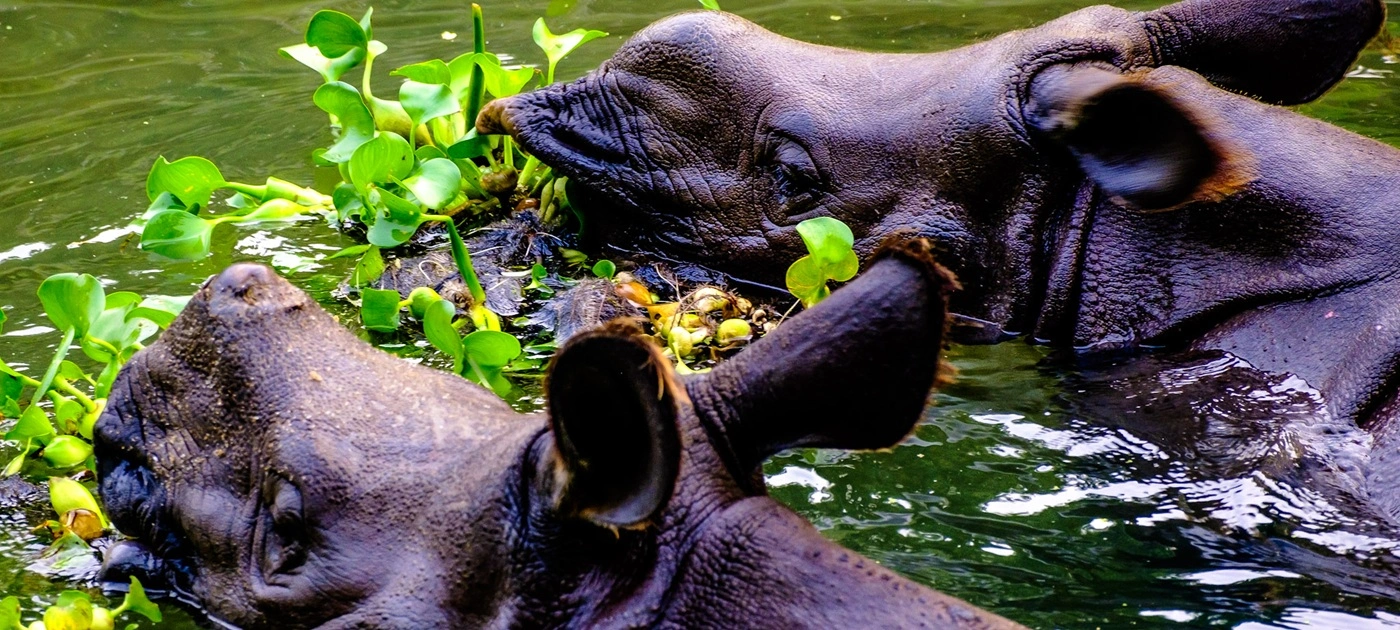
One-horned rhinoceros
|
Near-certain
|
600+ in the park. Visible from lodge decks, on Jeep safari, and from canoes on the Rapti. Morning safaris into buffer zones almost guarantee sightings.
|
|
Bengal tiger
|
Possible (season-dependent)
|
Tracked by expert naturalists following pugmarks and territorial patterns. Best sightings: late spring when the grass is cut low, and tigers approach water. Multi-day stays increase the probability.
|
|
Sloth bear
|
Occasional
|
Nocturnal. Spotted on early morning Jeep safaris in the Sal forest. More common in buffer zones.
|
|
Wild Asian elephant
|
Occasional
|
Herds cross the river seasonally. Visible from lodge decks during migration.
|
|
Gharial crocodile
|
Near-certain
|
Rapti and Narayani riverbanks. Visible from canoes. Critically endangered — Chitwan is one of their last habitats.
|
|
Marsh mugger crocodile
|
Common
|
Basking on riverbanks. Spotted on every canoe ride.
|
|
Birds (800+ species)
|
Guaranteed
|
Kingfishers, hornbills, eagles, storks, and bee-eaters. Chitwan is a premier birding destination. Dedicated bird photography safaris available.
|
The Three Lodges
Meghauli Serai — A Taj Safari
The Taj Group’s safari property on the Rapti River. 29 rooms: 16 luxury villas and a Presidential Suite, each with a private plunge pool facing the river and the national park. The central lounge is anchored by a chandelier of 10,000 hand-painted local beads — local artistry meeting Taj-standard opulence.
Expert naturalists for private Jeep safaris. Canoe rides on the Rapti at sunrise. “Breakfast in the Park” is served directly in the wilderness. Private romantic poolside dining. Bush dinners in jungle clearings with bonfire and traditional Tharu stick-dance performances. Jiva Spa for post-safari recovery. The riverside architecture means you watch wildlife from your pool — rhinos bathing, elephants crossing, crocodiles basking.
Barahi Jungle Lodge
34 boutique huts along the Rapti River. Thatched roofs, bamboo, wood interiors, hand-crafted bathtubs. The Presidential Suite: two bedrooms, private pool, fire pit, dedicated BBQ area, and butler service. Freeform infinity pool with shallow area. Ayurvedic spa with Jacuzzi, sauna, and steam room. No single-use plastic policy.
Barahi’s signature: the Rangshala Bush Dinner. A secluded jungle clearing lit by scores of lanterns and bonfires. Multi-course Tharu-inspired cuisine is served under the stars while the jungle’s nocturnal soundscape provides the atmosphere.
Sundowner experiences at the Rapti-Narayani confluence with live cooking stations on the riverbank. Personalized naturalist guides for every guest — many with 20+ years of specific Chitwan tracking experience. Since 2012, the lodge has transformed barren grassland into lush forest through massive reforestation. 97% of staff are from local villages.
Tiger Tops Tharu Lodge
The conservation pioneer. Tiger Tops invented luxury safari tourism in Nepal in the 1960s. The Tharu Lodge in Chitwan (distinct from the Karnali Lodge in Bardia) carries that legacy: traditional Tharu longhouse architecture, deep community integration, and naturalist guides with institutional knowledge of the park’s wildlife corridors. The focus is conservation-led luxury — stripped-back comfort where the jungle is the primary amenity.
|
Lodge
|
From / Night
|
Defining Feature
|
|
Meghauli Serai (Taj)
|
$300–700
|
Taj-standard opulence. Plunge-pool villas on the Rapti. Jiva Spa. 10,000-bead chandelier. Butler service.
|
|
Barahi Jungle Lodge
|
$200–400
|
Presidential Suite with private pool. Rangshala bush dinner. Reforestation since 2012. 97% local staff.
|
|
Tiger Tops Tharu Lodge
|
$180–300
|
Conservation legacy. Tharu longhouse architecture. Institutional wildlife knowledge. Community-led.
|
How the Safari Works
Private Jeep Safari
Early morning (6 AM) or late afternoon (3 PM). Private open-top or enclosed Jeep with a dedicated expert naturalist. The naturalist reads the forest: pugmarks, alarm calls from spotted deer, territorial scratch marks on sal trees. Routes penetrate deep into the buffer zones and, with permits, the core zone. Duration: 3-4 hours per session. This is how you find tigers — patience, silence, and a guide who has mapped the territorial patterns for years.
Canoe Safari
Dugout canoe on the Rapti River at sunrise. Two paddlers, one naturalist. You drift silently downstream while gharial crocodiles bask on the banks, kingfishers dive for fish, and, occasionally, a rhinoceros wades in the shallows. Duration: 1-2 hours. No physical exertion. The canoe does the work. This is the most peaceful wildlife experience in Nepal.
Walking Safari
On foot through the sal forest and grasslands with a lead naturalist and an armed park ranger. Tracking rhinos by sound and sign. The intensity is incomparable to any vehicle-based safari — you hear the forest, smell the forest, and feel the proximity of the animals. Groups capped at 10 with a minimum of two guides. Neutral clothing. No perfumes. 50-meter minimum distance from rhinos and tigers. 20 meters from birds and deer. Not suitable for children under 12 or guests with mobility limitations.
Bird Photography Safari
Dedicated half-day or full-day birding with a specialist ornithological guide. 800+ species, including the giant hornbill, lesser adjutant stork, Bengal florican, and paradise flycatcher. The Rapti riverbanks and the Bishazari Tal (Twenty Thousand Lakes) wetlands are the prime birding zones. We provide hides and long-lens positioning guidance for serious photographers.
The Dining
Meghauli Serai: Breakfast in the Park (served in the wilderness, white-tablecloth setup with forest sounds). Private poolside dinner for couples. Multi-course bush dinner with bonfire and Tharu dance. Barahi: Rangshala Dinner in a lantern-lit jungle clearing. Sundowner cocktails at the river confluence with live cooking stations. Turtle Deck casual dining overlooking the river. Tiger’s Den bar.
Tharu Cultural Immersion
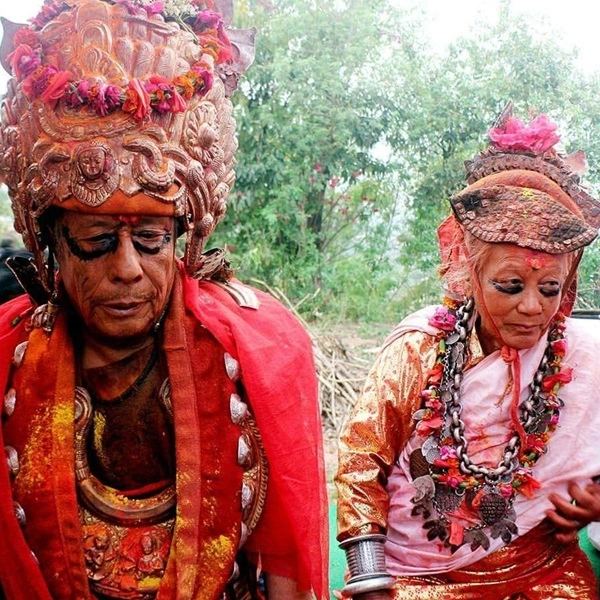
The Tharu people are the indigenous inhabitants of the Terai. Evening performances at every lodge include traditional stick dances (men clashing long bamboo sticks in rhythmic patterns) and the Peacock Dance (women in vibrant costumes mimicking the movement of peacocks). Beyond the stage performances, we arrange private Tharu village visits: walking through stilted houses, learning about traditional fishing techniques, watching women weave baskets from elephant grass, and sharing rice wine (jaand) with the community elders.
Getting Here
|
Option
|
Duration / Cost
|
Notes
|
|
Flight KTM-Bharatpur
|
25 min / $90–130
|
Buddha Air or Yeti Airlines. Shortest option. 30-min drive from the airport to the lodge.
|
|
Private SUV
|
5-6 hours / $115–150/day
|
Scenic drive through the Trishuli River valley. Photography stops. Flexible timing.
|
|
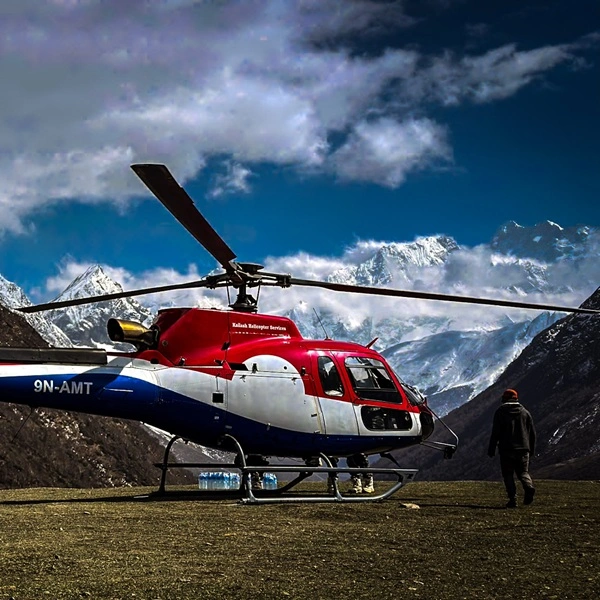
Helicopter charter
|
45 min / $2,000–2,500
|
Direct lodge-to-lodge transfer. Eliminates the road entirely. Both Meghauli and Barahi have helipads.
|
|
VIP tourist bus
|
6-7 hours / $20–40
|
Sofa-style reclining seats. Fixed schedule. Budget-friendly but no flexibility.
|
When to Come
|
Season
|
Months
|
What You Get
|
|
Spring
|
Mar–May
|
THE BEST SEASON. Grass cut low (clear visibility). Animals congregate at shrinking water sources. Highest tiger sighting probability. Warm (up to 35°C — pool essential).
|
|
Autumn
|
Oct–Nov
|
Post-monsoon. Lush green landscape. Good wildlife. Pleasant temperatures. Pairs perfectly with the Kathmandu festival season (Dashain, Tihar).
|
|
Winter
|
Dec–Feb
|
Cool mornings (fog possible). Clear afternoons. Excellent birding. Quiet lodges — maximum exclusivity. Some lodges offer discounted rates.
|
|
Monsoon
|
Jun–Sep
|
Heavy rain. Leeches on trails. River flooding closes some safari routes. Most lodges remain open, but visibility is reduced. Lowest prices.
|
Two nights is the minimum for a meaningful Chitwan experience: one morning Jeep safari, one canoe ride, one bush dinner. Three nights allow for a second Jeep safari (which dramatically increases tiger-sighting probability), a walking safari, and a Tharu village visit. Five nights is for dedicated wildlife photographers or guests who want the deep-immersion rhythm: morning safari, midday pool, afternoon safari, evening dinner, repeat.
Frequently Asked Questions
Is Chitwan suitable for all ages and fitness levels?
Yes. Elevation 200m. Zero altitude risk. Jeep safari from the vehicle. Canoe from the boat. A pool at every lodge. Bush had dinner at the table. The only activity that requires fitness is the walking safari, which is optional and not recommended for children under 12 or for guests with mobility limitations.
What is the best lodge in Chitwan?
Meghauli Serai (Taj) for Taj-standard luxury: plunge-pool villas, butler service, Jiva Spa, Breakfast in the Park. Barahi Jungle Lodge for eco-conscious boutique luxury: Presidential Suite, Rangshala bush dinner, 97% local staff. Tiger Tops Tharu Lodge for conservation heritage and institutional wildlife knowledge.
Will I see a tiger?
Tiger sightings are never guaranteed. Spring (March-May) offers the highest probability: grass is cut, animals concentrate at water sources, and visibility is at its peak. Multi-day stays (3+ nights) with morning and afternoon Jeep safaris significantly increase your chances. Expert naturalists track individual tigers by territory and movement patterns.
Will I see a rhinoceros?
Near-certain. Chitwan has 600+ one-horned rhinoceroses. They are visible from lodge decks, on Jeep safaris, and from canoes on the Rapti River. Morning buffer-zone safaris almost guarantee sightings.
What is a bush dinner?
A multi-course dinner served in a secluded jungle clearing lit by scores of lanterns and bonfires. Barahi’s Rangshala Dinner is the benchmark. Tharu-inspired cuisine under the stars with the jungle’s nocturnal soundscape as the backdrop. Meghauli Serai offers similar experiences with private setups for couples.
Is Chitwan good for families?
Excellent. Flat terrain. Vehicle-based safaris. Pools with shallow areas (Barahi). Children are fascinated by rhinoceroses, crocodiles, and Tharu dance performances. Walking safaris are not suitable for children under 12. Meghauli Serai and Barahi both comfortably accommodate families.
How do I get to Chitwan?
Flight to Bharatpur (25 min from KTM, $90-130) then 30-min drive. Private SUV (5-6 hours, $115-150/day). Helicopter charter direct to lodge helipad (45 min, $2,000-2,500). We recommend the flight for time efficiency and the drive for guests who want to see the Trishuli Valley scenery.
When is the best time for Chitwan?
Spring (March-May): best wildlife visibility, highest tiger probability, warm. Autumn (October-November): lush, pleasant temperatures, paired with Kathmandu festivals. Winter: cool mornings, quiet lodges, excellent birding. Avoid the monsoon (June-September) unless budget-focused.
How many nights should I spend?
Minimum two (one Jeep safari, one canoe, one bush dinner). Three for a second Jeep safari and walking safari (significantly increases tiger probability). Five for dedicated wildlife photography or deep immersion.
How does Chitwan compare to Bardia?
Chitwan: more accessible, higher rhinoceros density, better infrastructure, more lodge options, family-friendly. Bardia: more remote, higher tiger density, fewer tourists, walking safaris (rare in Asia), Tiger Tops Karnali Lodge. For most luxury travelers, Chitwan is the right first choice. Bardia is for return visitors or dedicated tiger seekers willing to travel further.
The Final Word
Chitwan is the part of Nepal that requires nothing from you except your presence. No altitude. No trekking. No physical endurance. You sit in the Jeep, and the naturalist finds the tiger. You sit in the canoe, and the river carries you past the crocodile. You sit at the table, and the jungle dinner comes to you. You lie in the plunge pool, and the rhinoceros bathes in the river ten meters away without knowing you exist.
This is not passive. It is receptive. The jungle reveals itself to people who are still. The lodges are designed to make you still. And the wildlife is there because 932 square kilometers of protected forest have kept it there since 1973. We include Chitwan in almost every Nepal itinerary. For many guests, it is the highlight they did not expect. Tell us your dates.
Adding Chitwan to your Nepal itinerary?
Two nights minimum. Three for tiger probability. Five for deep immersion. Tell us your dates, and we'll build the safari around the season.