The Temples Nobody Talks About
Kyichu Lhakhang — 7th Century, Built Overnight
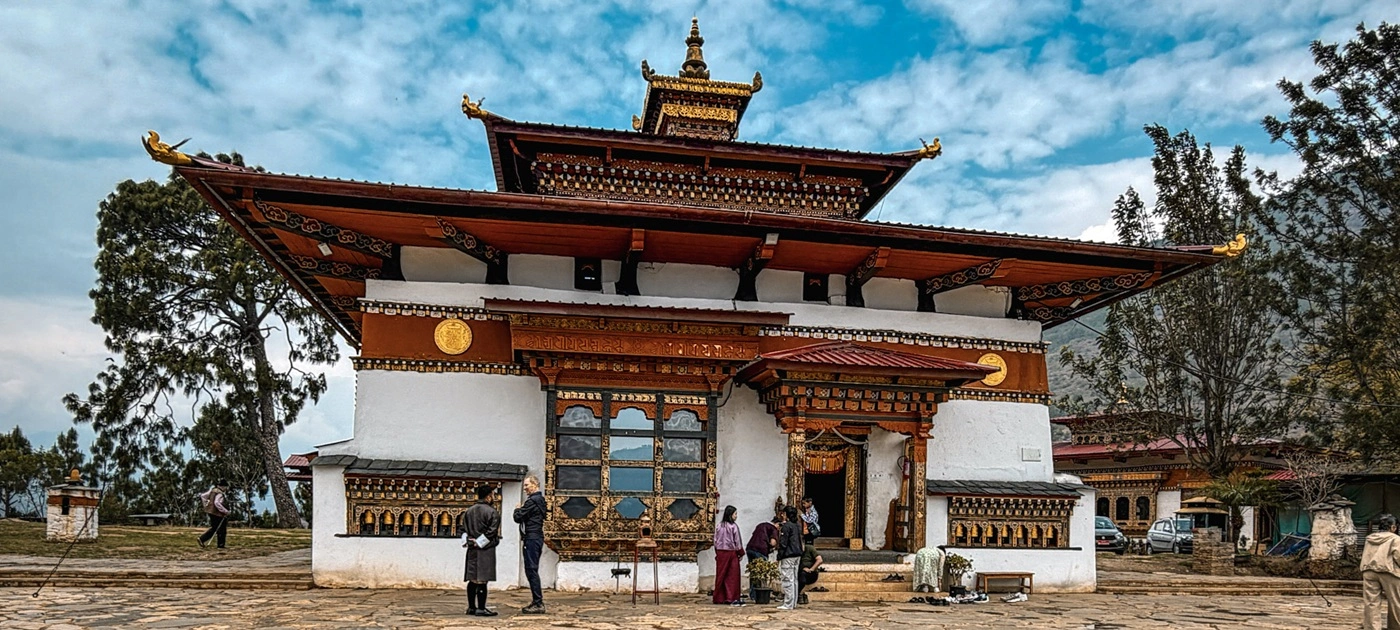
One of the oldest temples in Bhutan. Built by the Tibetan Emperor Songtsan Gampo in the 7th century as part of a network of 108 temples constructed overnight to pin down a mythological giant demoness who was blocking the spread of Buddhism across the Himalayas. Each temple pinned a different part of her body. Kyichu Lhakhang pinned her left foot.
The temple exudes 1,400 years of devotion. Through our network, we arrange private blessing ceremonies with the resident monks. You enter the inner sanctum. You light butter lamps at the altar. A senior lama performs rituals and chants — deep, rumbling vocal harmonics that reverberate through the ancient wooden architecture.
The ceremony culminates in a personalized blessing: for health, safe travels, or to mark a milestone (honeymoon, engagement, anniversary). This is followed by a private circumambulation of the shrine. The experience is completely divorced from the standard tourist visit.
Ta Dzong — The National Museum in a Watchtower
Built in 1649 by La Ngonpa Tenzin Drugdra (the first Governor of Paro) as a watchtower to protect the valley from Tibetan invasions. The word “Ta” means “to see” in Dzongkha. The building is conch-shell-shaped — massive, circular, and unique in Bhutanese architecture.
The fourth floor was historically a prison, isolated by a removable bridge. An underground passage connected the fortress to the Paro River to ensure a water supply during sieges. By the 1950s, it was near collapse. It was renovated and consecrated as the National Museum by the Third King in 1968.
Over 3,000 artifacts spanning a millennium. We arrange private curator-led tours. The curator transforms the visit into a chronological journey through Bhutan’s transition from the Stone Age to a modern Buddhist kingdom. Key galleries: the Guardians of the Four Directions (first gallery), the Raven Crown worn by the first King (third gallery), royal silk kiras and a Zenith Radio belonging to early royalty (fourth gallery), the Khesar Ling Lhakhang (seventh gallery), and the top gallery representing the body, speech, and mind of the Adi-Buddha.
Where to Stay
|
Lodge
|
From/Night
|
Suites
|
What Defines It
|
|
Amankora Paro
|
$1,500
|
24
|
Pine forest. Kerry Hill design. Terrazzo baths. Bukhari stoves. Drukgyel Dzong illuminated at night as your dinner backdrop (Amankora pays the electricity).
Head guide: 20+ years tenure. Forest bathing. Bespoke nightly gifts. Traditional dress-tying for you.
|
|
Six Senses Paro
|
$1,500
|
16 + villas
|
Built into 12th/16th-century stone ruins above the National Museum. GSTC-certified. 3-bedroom villa: private spa (massage beds, steam, soaking tubs), courtyard fire pit, private chef dinners. Underground spa. Singing bowl rituals. Wellness shots each morning.
|
|
COMO Uma Paro
|
$400
|
29
|
10 min from the airport. COMO Villa: 300 sqm, courtyard fire pit, private spa, butler. Bukhari restaurant (Royal Family dining).
Organic kitchen garden. Private archery ground. Walking stick rentals for treks. The most accessible luxury entry point.
|
|
Zhiwa Ling
|
Premium
|
Multiple
|
100% Bhutanese-owned. Largest rooms in Bhutan. Royal Raven Two-Bedroom Suite. Samden Meditation House with Tiger’s Nest view. Indoor pool. Heated floors. Traditional woodwork throughout.
|
|
Le Méridien
|
Premium
|
59
|
Paro River frontage. Eastern Himalaya panorama. Explore Spa (circadian rhythm, Natura Bissé). 612 sqm meeting space. Marriott loyalty points.
|
The Spa: Five Approaches to Wellness
Six Senses Spa — Built Underground
Partially underground to minimize its visual footprint. Four massage rooms. Outdoor sauna with cool dip pool. Yoga studio. A meditation cave. Singing bowl rituals before and after every treatment.
Wild turmeric purification. Kashmir lavender skin therapy. Products: Subtle Energies. 45-minute Yoga Nidra ($90). Private yoga instruction ($125/hour). This is the spa that takes wellness as seriously as the monastery next door takes prayer.
COMO Shambhala Retreat
Open 9 AM to 9 PM. Asian-inspired holistic therapies. Ayurvedic treatments. Multi-day packages: Detox, Revitalize, Himalayan Rejuvenation. Each of the eight villas has its own therapy suite — you receive treatments in your room without entering public space. Guided hikes integrated with nutrition-optimized dining. The most privacy-focused spa in the valley.
Explore Spa at Le Méridien
European heritage. Therapies aligned to your circadian rhythm: Energizing (morning), Grounding (midday), Balancing (evening). Epicurean Body Wrap. Chakra Art Massage. Four Hands signature treatment. Natura Bissé Vitality Facial (€150). Alqvimia Eternal Youth treatment (€250, 90 min). The most product-forward spa in Paro.
Menlha Spa at Zhiwa Ling
Grounded in Buddhist spirituality. Treatments dedicated to Tara — the goddess of compassion, healing, wisdom, and fearlessness. Therapists invoke Tara’s healing energy at the start. Himalayan singing bowls close every session. The most spiritually integrated spa in Paro.
Amankora Spa
The Dotsho hot stone bath is elevated to the level of fine art. River stones heated over a wood fire until glowing red, submerged in mountain water infused with khempa (Artemisia). Private Bhutanese bathhouses with valley views. Sliding bamboo doors. Seamless transition into deep-tissue massage. Hot-oil Ayurvedic head massage. Cedarwood incense throughout.
What to Eat
Bukhari at COMO Uma Paro
The restaurant where the Bhutanese Royal Family eats. Circular pavilion. Named after the traditional fireplace that dominates the room. Organic kitchen garden maintained with local Paro Valley farmers.
Seasonal: buckwheat, pumpkin, wild mushrooms. Clean, vibrant flavors. COMO Shambhala wellness cuisine alongside comfort classics. The benchmark restaurant in Paro.
Ruins Regale at Six Senses
You put on traditional attire (kira or gho). You walk into 12th-century candlelit stone ruins. Cocktails crafted for the evening. A Bhutanese menu cooked entirely over open fire. The most theatrical dining experience in the country — and it happens among walls that have been standing since before the Magna Carta was signed.
The Private Farmhouse Dinner
A 200-year-old noble family farmhouse in Dop Shari. Welcomed with ara (saffron-infused rice wine). Multi-course: yak momos, red rice, ema datshi, buckwheat pancakes. Live Bhutanese folk musicians performing ancient songs. The dining room is the family’s actual room. The recipes are the family’s actual recipes. Nothing is staged except the music, and the music has been played in this valley for centuries.
The Valley Restaurants
Sonam Trophel: family-owned since 1993, main street, the best momos and thukpa in Paro. Tou Zaiga: run by the Bondey Institute of Hotel and Tourism, young chefs are trained to five-star standards, Orient-meets-Occident fusion. Mountain Café & Roastery: two-story, artisan coffee roasted in-house, continental vegetarian. The standalone dining scene proves that Paro has grown beyond the lodges.
Helicopter, Archery, and Mountain Biking
|
Experience
|
Duration
|
Cost (USD)
|
What You Get
|
|
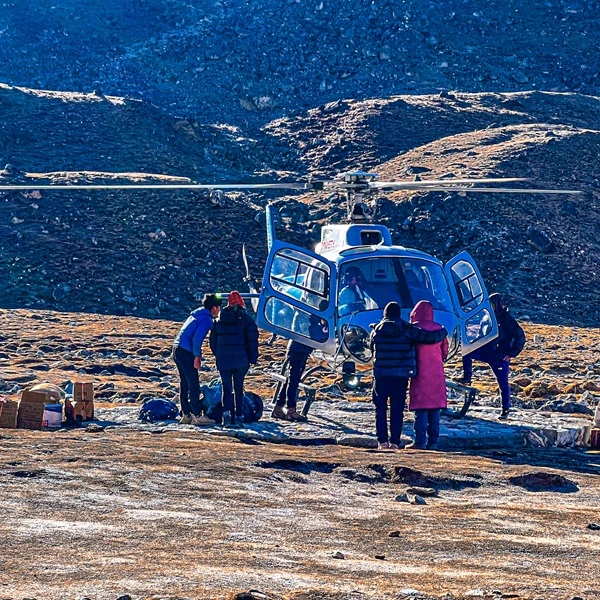
Tiger’s Nest aerial tour
|
30 min
|
$2,500
|
Eye-level orbit of the monastery. Rinpung Dzong. Kyichu. Paro Valley.
|
|
Mt Jomolhari deep scenic
|
60 min
|
$5,000
|
Tiger’s Nest + Jomolhari + turquoise lakes + Jangothang landing.
|
|
Paro → Punakha transfer
|
~40 min
|
$5,833
|
Eliminates a 4-hour drive over Dochula Pass.
|
|
Private archery lesson
|
90 min
|
Included
|
Traditional bamboo bows at COMO Uma or Amankora. One-on-one coaching. Songs, dances, ara, and friendly taunting.
|
|
Chele La mountain biking
|
Half day
|
$150-300
|
Descent from 13,000 feet through spruce and larch forest. The highest motorable pass in Bhutan. Thrilling, bumpy, spectacular.
|
|
Valley floor cycling
|
2-3 hours
|
$80-150
|
Flat terraced paddies. Dzongs and temples en route. Silent, intimate exploration.
|
Master Weaving
Textiles are the highest art form in Bhutan. We arrange private visits to the Gagyel Lhundrup Weaving Center — the facility that produces ceremonial garments for Bhutanese royalty. You see raw silk spinning, the application of natural botanical dyes, and the mathematical precision of geometric patterns such as the Bumthap weave.
You understand why a single silk kira takes months and costs $6,000. You understand why weaving is the skill that takes six years of apprenticeship before you are trusted with a loom. And you understand why the gho and kira are not costumes. They are the national dress, mandated daily for every citizen in professional and governmental settings.
Frequently Asked Questions
What is there to do in Paro besides Tiger’s Nest?
Kyichu Lhakhang (7th-century temple, private blessing). Ta Dzong National Museum (private curator tour, 3,000+ artifacts, Raven Crown). Drukgyel Dzong ruins. Master weaving at Gagyel Lhundrup. Private archery. Chele La mountain biking (13,000 feet). Dotsho hot stone bath. Ruins Regale dinner at Six Senses. Private farmhouse dinner. Helicopter scenic flights. Riverside picnics.
What is Kyichu Lhakhang?
One of the oldest temples in Bhutan. 7th century. Built by the Tibetan Emperor Songtsan Gampo as part of 108 temples to pin down a mythological demoness. Private blessing ceremonies with resident monks: butter lamps, chanting, personalized blessing, and circumambulation. Profoundly sacred.
What is the best hotel in Paro?
Amankora ($1,500-7,000): pine forest, minimalist, Drukgyel Dzong lit at night, 20-year head guide. Six Senses ($1,500-5,000): built into 12th-century ruins, underground spa, GSTC, 3-bedroom villa with private spa. COMO Uma ($400-1,500): best value, Bukhari (Royal Family dining), 300 sqm villa. Zhiwa Ling: Bhutanese-owned, Samden Meditation House. Le Méridien: riverside, Explore Spa, Marriott points.
What is the Ruins Regale dinner?
Six Senses Paro’s signature. You dress in a traditional kira or gho. You dine among candlelit 12th-century stone ruins. Cocktails. A Bhutanese menu cooked over an open fire. The most theatrical dining experience in Bhutan. Walls older than the Magna Carta.
Where does the Bhutanese Royal Family eat?
Bukhari at COMO Uma Paro. Circular pavilion restaurant. Organic kitchen garden. Seasonal buckwheat, pumpkin, wild mushrooms. COMO Shambhala wellness cuisine. The most refined restaurant in the valley.
What is the Dotsho hot stone bath?
River stones heated over fire until glowing red, submerged in mountain water infused with Artemisia herbs. Releases calcium, magnesium, and iron. Deep muscular relaxation. Every luxury lodge offers it. Amankora and COMO elevate it with private bathhouses, valley views, and seamless transition into massage.
Can I go mountain biking from Paro?
Yes. The Chele La descent: 13,000 feet, through spruce and larch forest, the highest motorable pass in Bhutan. Half-day guided experience. Valley floor cycling: flat, terraced paddies, dzongs, and temples en route. Both arranged through your lodge or our guides.
What is the Ta Dzong?
The National Museum. Built in 1649 as a watchtower. Conch-shell shape. 3,000+ artifacts. Private curator tours available. Key exhibits: the Raven Crown (first King), royal silk kiras, Zenith Radio, and galleries spanning Bhutan’s journey from the Stone Age to modern Buddhism.
How many days should I spend in Paro?
Minimum 2 nights: Tiger’s Nest + one temple + Dotsho recovery. Recommended 3 nights: adds Ta Dzong curator tour, Kyichu blessing, private farmhouse dinner, and archery. Extended 4-5 nights: adds a helicopter scenic flight, Chele La biking, a deeper spa program, a riverside picnic, and a master weaving visit.
Is Paro suitable for families?
Yes. COMO Uma: archery, walking stick rentals, COMO Villa with butler. Zhiwa Ling: heated pool, spacious suites, Samden Meditation House for older children. Six Senses: 3-bedroom villa for multi-generational families. Mountain biking (valley floor) for ages 10+. The Ta Dzong museum engages children 8+.
The Final Word
Everyone comes to Paro for the Tiger’s Nest. Very few stay long enough to discover what the valley holds beyond it: a 7th-century temple where a monk enters a vocal trance and blesses your marriage in the inner sanctum. A watchtower shaped like a conch shell that houses the crown the first king wore.
A lodge that illuminates a 17th-century fortress at its own expense so you can eat dinner with the ruins glowing behind you. A spa built underground with a meditation cave and singing bowls.
A restaurant where the royal family eats buckwheat and wild mushrooms from the garden outside the kitchen. And a 200-year-old farmhouse where a noble family serves you saffron rice wine while musicians play songs that are older than the building.
The Tiger’s Nest is the reason you come to Paro. Everything else is the reason you stay. Tell us how many nights.