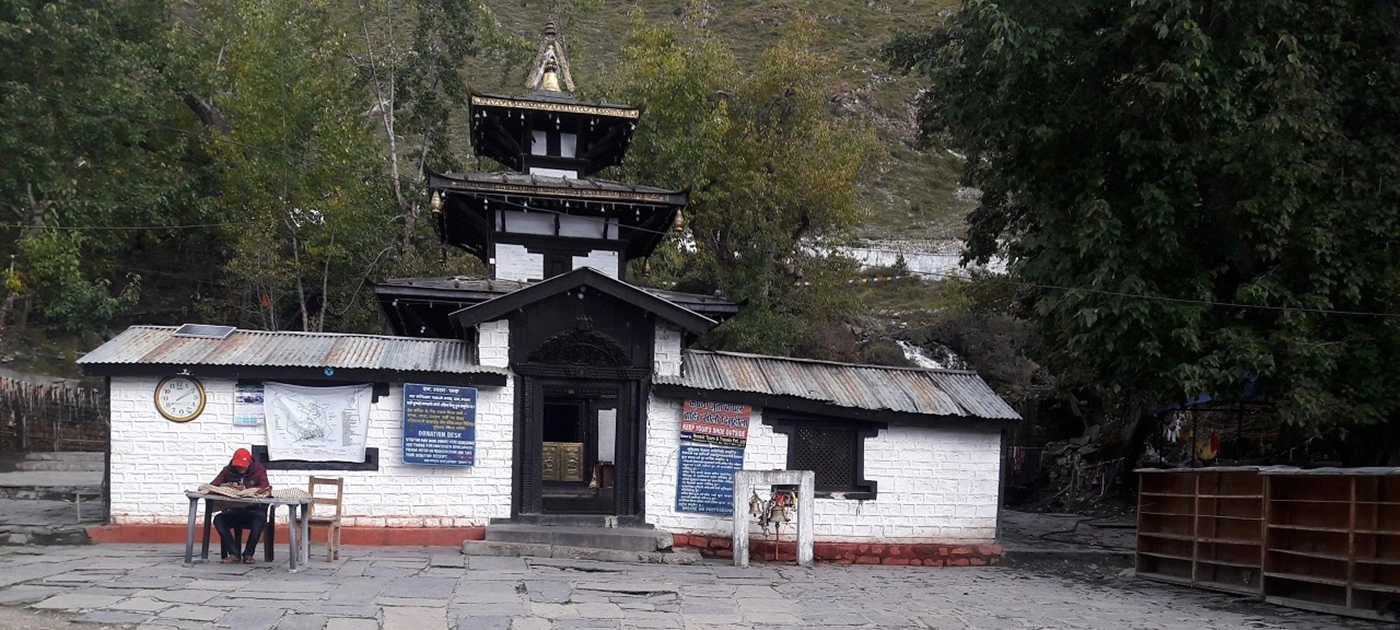
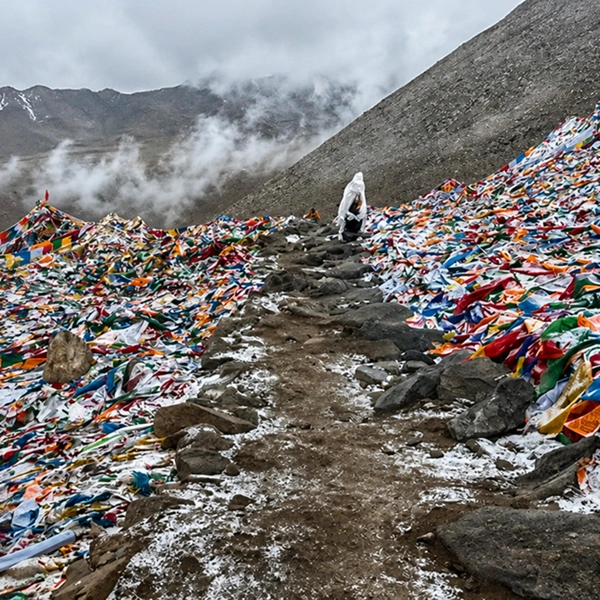
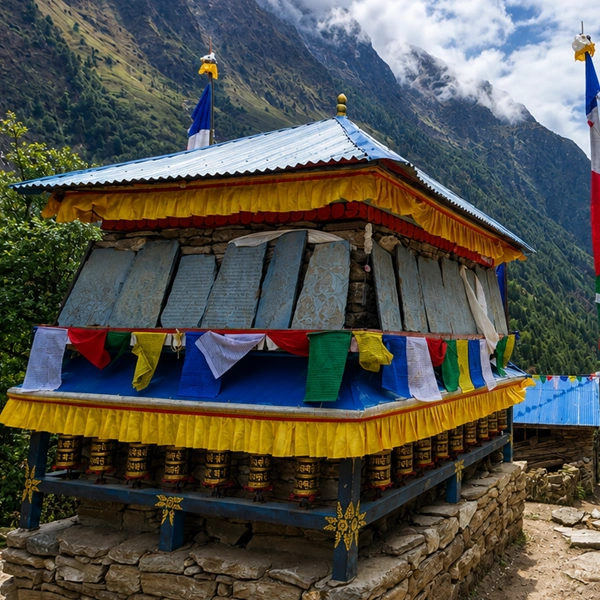
Muktinath Temple stands at roughly 3,800 meters in Nepal's Mustang District, and it is a rare shrine where a Buddhist nun performs daily rituals inside a Vishnu temple.
Hindus call this valley Mukti Kshetra, the place of liberation. Tibetan Buddhists call it Chumig Gyatsa, the place of a hundred waters.
Both walk the same courtyard, ring the same bells, and bathe under the same 108 icy spouts.
We run private journeys to Muktinath every spring and autumn, and this guide gathers what our guests ask us before they go. Geography first, then faith, then the practical layer of flights, permits, and altitude.
Where Is Muktinath Temple?
Muktinath sits in the Muktinath Valley of lower Mustang, north of the main Himalayan wall, at the foot of the Thorong La Pass (5,416 m). The nearest airstrip is Jomsom, about 21 km away by road. Pokhara lies a 20-minute flight south of Jomsom; Kathmandu is a further 25-minute flight east of Pokhara.
The setting explains much of the temple's pull. You stand behind Dhaulagiri and Nilgiri in the rain shadow of the Annapurna massif, in a dry, wind-carved landscape that looks more like Tibet than the green hills most first-time visitors picture as Nepal.
Poplars mark the villages. Everything else is ochre rock and sky.
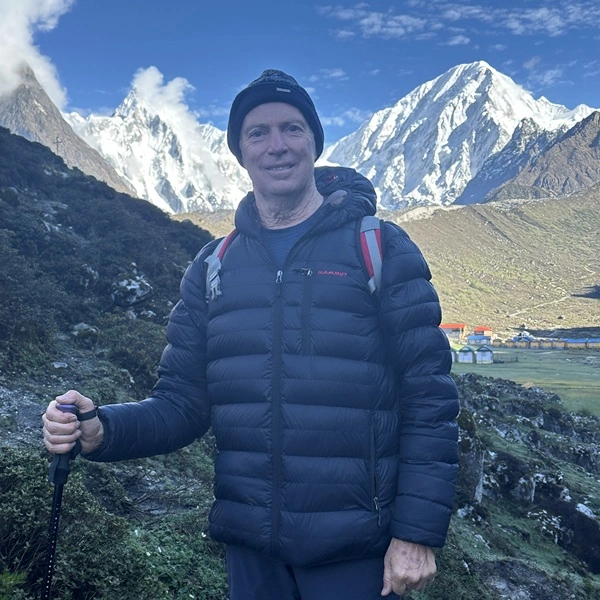
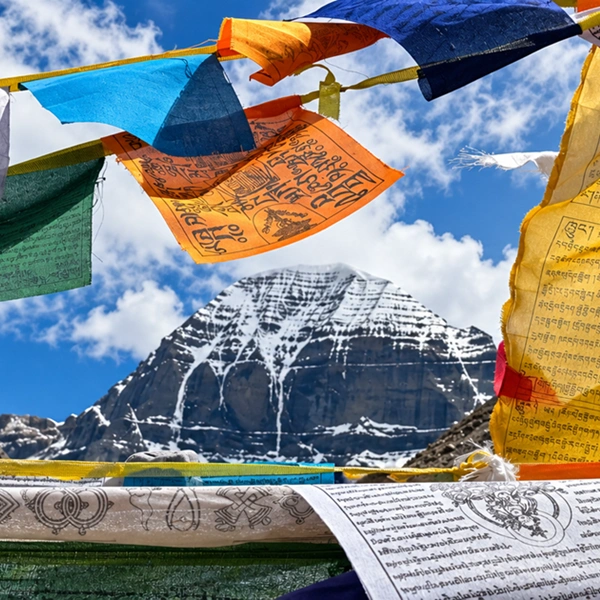
The pilgrim village below the temple is Ranipauwa, where the jeeps and ponies stop. From there, a gentle stone path climbs about 20 minutes to the temple gate. Trekkers on the Annapurna Circuit arrive from the opposite direction, descending from Thorong La into the shrine's back garden of prayer flags.
One Shrine, Two Living Faiths
Muktinath is sacred to Hindus as one of the 108 Divya Desams, the Vaishnavite shrines praised by the Tamil Alvar saints, and it is counted among the eight Svayam Vyakta Kshetras, where Vishnu is held to have manifested himself.
Some traditions also list the site among the Shakti Peethas. For a Hindu pilgrim, darshan here carries the promise the name states plainly: mukti, liberation.
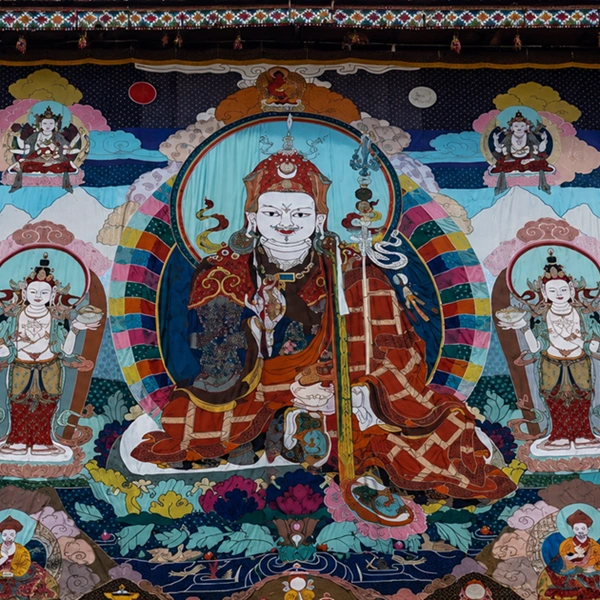
For Tibetan Buddhists, the same ground is Chumig Gyatsa, one of the 24 tantric places. Guru Rinpoche, who brought Buddhism to Tibet, is said to have meditated here on his journey north.
The main image is honored as Avalokiteshvara, and the small Mharme Lha Khang gompa in the same compound keeps butter lamps burning for Guru Rinpoche himself.
What moves people most is not the theology but the sharing. The pagoda-roofed Vishnu temple is tended by a Buddhist nun from the local community, and nobody at Muktinath finds this remarkable.
Hindu sadhus from Tamil Nadu and Tibetan grandmothers from Mustang queue at the same spouts. Two faiths, one spring line, no argument.
The 108 Waterspouts, Two Kundas, and the Eternal Flame
The central ritual at Muktinath Temple is the water circuit. Behind the main shrine, 108 bull-head spouts channel a glacial spring in a long arc, and pilgrims pass under every one of them, always moving clockwise. The number mirrors the 108 Divya Desams and the 108 beads of a mala.
In front of the temple wait the two kundas, the Lakshmi and Saraswati ponds. Devout pilgrims immerse fully in both. The water hovers near freezing even in May, so most guests manage the spouts with cupped hands and save the full plunge for the truly resolved.
Our guides carry towels, thermoses of ginger tea, and a dry change of clothes to the kunda steps as standing practice.
A short walk south stands the Jwala Mai temple, where a natural gas flame burns beside a flowing spring inside the same dark chamber. Fire from water.
Hindus honor it as Jwala Mai, the goddess of flame; Buddhists read it as an offering lit by Guru Rinpoche. Ask the caretaker to point out the flame, as many visitors miss it entirely in the dim light.
The Kali Gandaki River below the valley supplies the shrine's third wonder: saligrams, the black ammonite fossils worshipped as embodiments of Vishnu. Riverbed stones here are sacred; buy from licensed sellers in Jomsom rather than pocketing your own.
How to Reach Muktinath Temple
The fastest route to Muktinath Temple is a private helicopter from Pokhara, landing near Ranipauwa in under half an hour.
From Kathmandu, we position guests to Pokhara by fixed-wing first, then fly the final leg past the Annapurna and Dhaulagiri faces up the Kali Gandaki, the deepest gorge on earth. Mustang sits on our helicopter-access list for a simple reason: the road alternative is a long mountain drive we would rather you spend at the shrine.
The classic overland route runs from Pokhara to Jomsom by air, then 21 km by private jeep through Kagbeni, the walled village at the gate of Upper Mustang. Count on 90 minutes to two hours on the jeep track, longer after rain.
Flights into Jomsom operate only in the early morning, before the valley wind rises, so schedules are genuinely weather-bound, and we always build slack into them.
Road purists can drive the whole way from Pokhara up the Kali Gandaki corridor. It is a full day, rough in stretches, and we recommend it only for guests who want the gorge itself as the experience.
Trekkers reach Muktinath on foot over Thorong La as the reward stage of the Annapurna Circuit.
On our departures, darshan is scheduled for early morning, before the day-trip helicopters arrive from Pokhara and while the light is still soft on Dhaulagiri. That single timing decision changes the whole feel of the courtyard.
Best Time for Muktinath Darshan
The best windows are mid-March to mid-June (spring) and mid-October to mid-December (autumn). Spring brings stable flying weather to Jomsom and apple blossoms to the Kali Gandaki villages. Autumn gives the sharpest mountain light and the busiest pilgrim season, with Indian yatri groups at their peak.
Mustang holds a quiet advantage over the rest of Nepal: the rain shadow. Because the valley sits behind the Annapurna wall, monsoon rainfall here is a fraction of Pokhara's, and Muktinath stays reachable in summer when most trekking regions close. Flights remain the constraint, not the trail.
Winter darshan is possible and startlingly beautiful, though nights fall well below freezing and snow can shut the road above Kagbeni for a day or two at a time.
The temple itself stays open year-round. Festival timing follows the lunar calendar: the Yartung horse festival fills Ranipauwa in late summer, and Janai Purnima draws bathing pilgrims to the kundas around the full moon of the same season. Exact dates shift each year and are confirmed at the time of booking.
Altitude, Health, and Comfort at 3,800 Meters
Muktinath's altitude deserves respect, especially for fly-in pilgrims. Pokhara sits at 822 meters; a helicopter can put you nearly 3,000 meters higher in 30 minutes, a bigger physiological jump than most itineraries in Nepal ever ask of you.
The visit works because it is short. Land, walk gently, take darshan, and descend the same day.
Move slowly on the path above Ranipauwa and let the ponies carry anyone who wants them. Our guides check every guest with a pulse oximeter before the climb to the gate, and we keep bottled oxygen in the helicopter as standard kit.
Headache, nausea, or unusual breathlessness means we shorten the visit rather than push through it.
Guests staying overnight sleep better in a valley lower than Jomsom or Marpha, at around 2,700 meters. Hydrate from the morning of the flight, skip alcohol the night before, and speak to your doctor in advance if you have a heart or lung condition.
Our full acclimatization approach is covered in our altitude and health guide.
Permits and Paperwork for Muktinath
Every foreign visitor to Muktinath needs an Annapurna Conservation Area Permit because the temple lies within the conservation area managed by the National Trust for Nature Conservation.
Trekkers arriving over Thorong La also carry a TIMS card. Fees differ for SAARC and other nationals and are revised periodically, so we refer to our regularly updated Nepal permits and fees page and to official sources for the latest numbers.
On any Alpine Luxury Treks journey, we arrange every permit before you land in Nepal.
You carry your passport and two spare photos; the paperwork is our problem. Indian nationals do not require a visa for Nepal, which is one reason Muktinath pairs so naturally with a longer pilgrimage itinerary such as the Kailash Mansarovar Yatra routed through Nepal.
Frequently Asked Questions About Muktinath Temple
How high is Muktinath Temple, and is altitude sickness a risk there? Muktinath Temple stands at roughly 3,800 meters, high enough that altitude matters. Day visitors who fly in, take darshan calmly, and descend the same day rarely have problems. Anyone sleeping in the Muktinath Valley should ascend gradually and watch for headache or nausea. We run oximeter checks and carry oxygen on every helicopter departure.
Why is Muktinath Temple sacred to both Hindus and Buddhists?
Because both traditions claim the same ground independently. Hindus revere Muktinath as Mukti Kshetra, one of the 108 Divya Desams and eight Svayam Vyakta shrines of Vishnu. Buddhists know it as Chumig Gyatsa, a meditation site of Guru Rinpoche where the image is honored as Avalokiteshvara. A Buddhist nun serves the Vishnu temple, which says everything.
Can you reach Muktinath Temple by helicopter?
Yes. A private helicopter from Pokhara lands near Ranipauwa, below the temple, in under 30 minutes, followed by a gentle 20-minute walk or pony ride to the gate. It is the most comfortable route for older pilgrims and the only way to take darshan and return to Pokhara before lunch. We schedule the flight for early morning, when the wind and the courtyard are both quiet.
What do the 108 waterspouts at Muktinath represent?
The 108 bull-head spouts, called muktidhara, echo the sacred number woven through both faiths: the 108 Divya Desams of Vaishnavism and the 108 beads of a prayer mala. Passing clockwise under all 108 streams of glacial spring water is held to wash away the karma of past lives. Most pilgrims follow the spouts with a dip in the two kundas in front of the temple.
Which permits do you need to visit Muktinath Temple?
All foreign visitors need the Annapurna Conservation Area Permit, since Muktinath lies inside the conservation area. Trekkers crossing Thorong La also carry a TIMS card. Fees vary by nationality and change periodically, so check the official sources or our permits page for current figures. On our private journeys, we obtain every document before you arrive.
What is the best season for Muktinath darshan?
Mid-March to mid-June and mid-October to mid-December give the most reliable flights into Jomsom and the clearest mountain views. Muktinath's rain-shadow position also keeps it accessible through the summer monsoon, when flight delays are the main risk rather than rain on the trail. Autumn is the peak pilgrimage season, so we book flights and rooms months in advance.
Is Muktinath Temple open in winter?
Yes, the temple stays open year-round, and winter mornings in the empty courtyard are among the finest we know. Expect hard frost, occasional snow on the road above Kagbeni, and short delays after storms. The kundas become a test of true devotion. Dress for well below freezing and keep a flexible day in the plan for weather.
Muktinath rewards travelers who come for the meeting of faiths as much as for the mountain setting. If the valley calls you, our pilgrimage and cultural journeys can place the temple inside a private Mustang itinerary built around your pace, or we will design a Muktinath programme of its own for your dates.